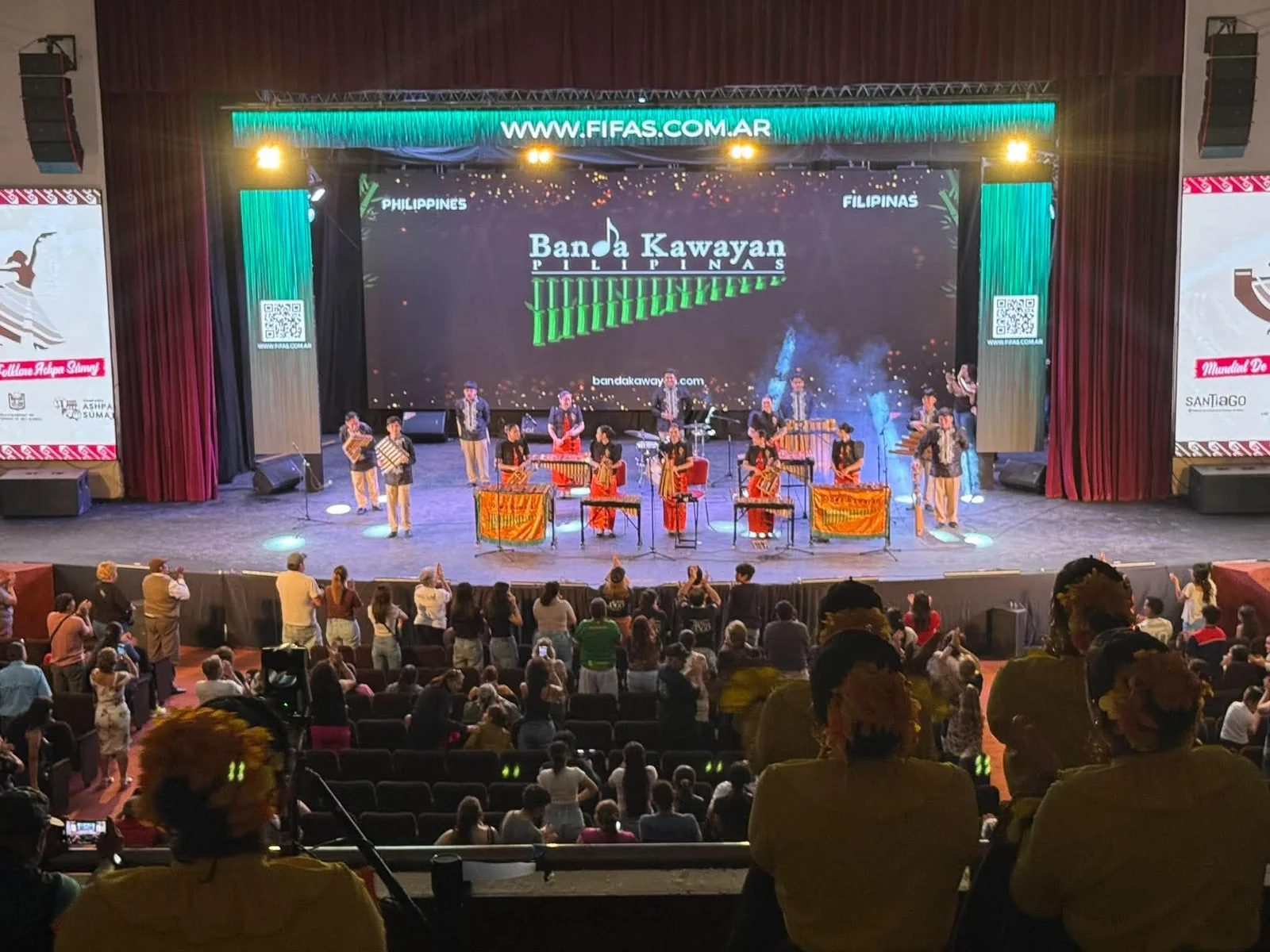
Banda Kawayan Pilipinas has taken Filipino bamboo music to Argentina as part of the Philippine delegation at the 20th Festival Internacional de Folklore Ashpa Súmaj (FIFAS) in Las Termas de Río Hondo, Santiago del Estero. The festival runs from October 6 to 12, 2026, and brings together cultural performers in a week built around folklore, performance, and exchange.
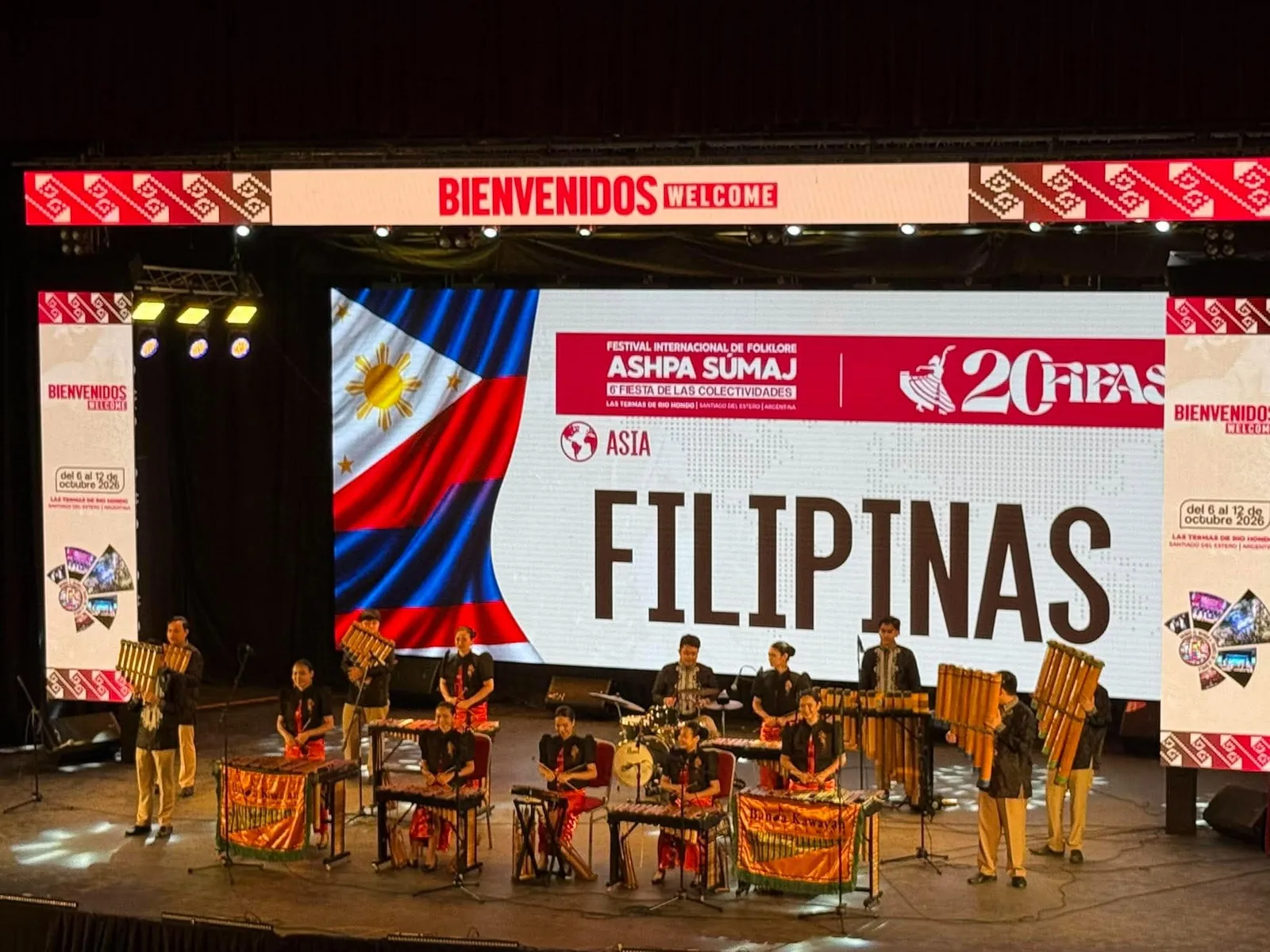
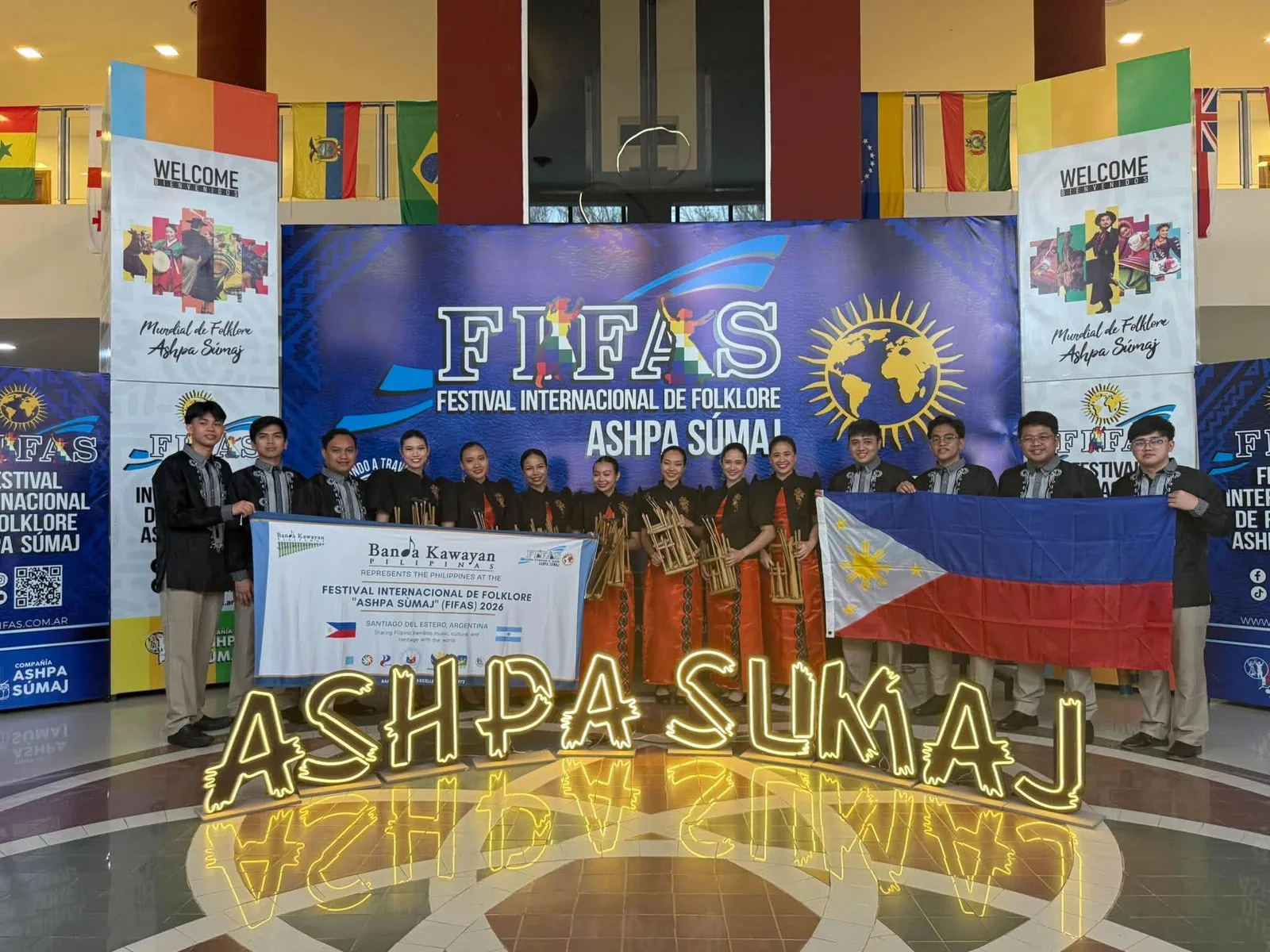
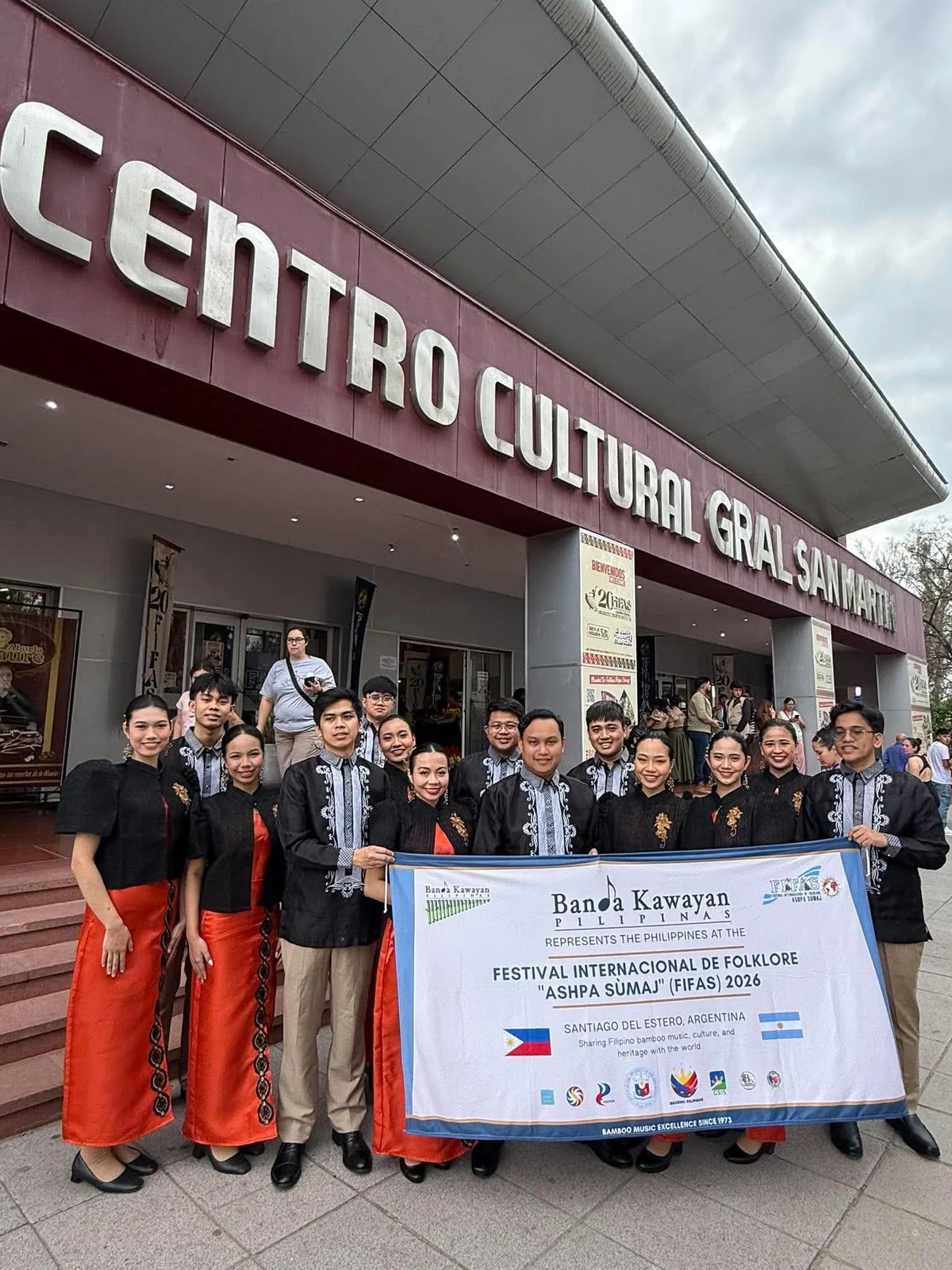
The Manila-based ensemble told Bakasyon.ph that the opening appearance marked its first performance in South America. Event photographs supplied by the group show Banda Kawayan Pilipinas on the FIFAS stage under a large “FILIPINAS” display and at the festival venue with Philippine flags and bamboo instruments. The organization also supplied the photographs specifically for possible publication.
Photo note: Event photographs in this article were supplied by Banda Kawayan Pilipinas for possible publication. No individual photographer credit was included with the material sent to Bakasyon.ph.
What happened at FIFAS 2026 in Argentina
The official FIFAS website lists the 20th edition of the Festival Internacional de Folklore Ashpa Súmaj for October 6–12, 2026 in Las Termas de Río Hondo, in Argentina’s Santiago del Estero province. The event is organized around international folklore and cultural performance, alongside the sixth Fiesta Nacional de las Colectividades.
According to the release sent directly by Banda Kawayan Pilipinas, its opening performance included the Filipino folk song Magtanim ay ’Di Biro and a special rendition of Muchachos, a choice the group said received a warm response from the audience. Bakasyon.ph could verify the festival dates and location independently, while the specific opening-set details are attributed to Banda Kawayan Pilipinas because an official FIFAS program archive confirming those individual songs was not available in the sources checked on October 7.
The appearance is different from a typical travel-news item because it puts a living Philippine performance tradition in front of an international audience. It also gives travelers and culture-focused readers another way to understand the Philippines beyond beaches, landmarks, and food: through music, instrument-making, performance, and the people keeping those practices visible.
Who is Banda Kawayan Pilipinas?
Banda Kawayan Pilipinas is a Manila-based performing arts ensemble built around handcrafted bamboo instruments. Its official history traces the group to 1973 at the Philippine College of Commerce Laboratory High School, where principal Gloria R. Talastas and music teacher Siegfredo B. Calabig helped establish a bamboo orchestra. The institution later became the Polytechnic University of the Philippines, and the ensemble performed for decades as PUP Banda Kawayan before adopting its current independent identity.
The organization says it registered in 2014 as a private, non-stock, nonprofit cultural group. Its mission centers on presenting Filipino ingenuity and artistry through bamboo music while giving younger performers opportunities to develop as musicians.
Press material for the Argentina trip describes the ensemble’s current sound as a mix of bamboo marimbas, bumbongs, angklungs, and the Kalagong, an instrument developed by founder Prof. Siegfredo Calabig. The exact lineup can change by performance, but the visual identity is unmistakable: bamboo is not decoration around the music; it is the material through which much of the ensemble’s sound is made.
Why bamboo music has a deeper Philippine context
Bamboo music is much broader than any one orchestra. The National Commission for Culture and the Arts notes that the Philippines is home to a wide range of bamboo instruments used in different ethnolinguistic communities, with forms and performance practices that vary according to local history and social setting.
That distinction matters. Banda Kawayan Pilipinas is a contemporary performing ensemble with its own repertoire, instrument designs, arrangements, and history; it should not be treated as a stand-in for every indigenous bamboo-music tradition in the country. What it does show clearly is how bamboo remains part of Philippine musical life in both inherited and newly developed forms.
For a traveler, that is useful cultural context. Heritage is not only something preserved behind glass. It can be heard in a performance, learned through a workshop, carried through community celebrations, or reworked by contemporary artists. Bakasyon’s Food & Culture guides use the same principle: understand a place by paying attention to what people make, perform, cook, celebrate, and pass forward.
Why the Argentina appearance matters
Banda Kawayan Pilipinas described the trip as its first performance in South America. That specific “first” remains the organization’s own claim rather than an independently reconstructed record of every appearance in its five-decade history, so Bakasyon.ph is treating it as attributed information.
Even with that caveat, the cultural exchange itself is visible. One supplied photograph shows the group holding the Philippine flag beneath FIFAS signage; another shows the ensemble performing to an audience in Las Termas de Río Hondo. The combination of a Filipino folk song and, according to the group, a rendition of Muchachos is also a simple example of how international cultural events can work in practice: a delegation brings something recognizably its own while also making room for the host audience.
Where travelers can connect this story back to the Philippines
You do not need to follow an overseas festival circuit to encounter living Filipino culture. A good starting point is to plan around events and places where culture is being practiced rather than simply displayed. Bakasyon’s Philippines festival calendar is designed around that idea, with reminders to verify current schedules and to treat festivals as community events rather than photo backdrops.
In Metro Manila, cultural discovery can also sit alongside ordinary city travel. The Manila travel guide connects historic districts, food neighborhoods, and contemporary city life, while the Intramuros guide gives a more heritage-focused route through art, architecture, and history. For performances, exhibitions, and cultural programs, check official schedules from venues and cultural institutions close to your travel dates rather than assuming a group has a permanent public show.
Source and verification note
Bakasyon.ph received the event release and photographs directly from Banda Kawayan Pilipinas on October 7, 2026, with the photographs offered for consideration and possible publication. The release is the source for the group’s statement that the appearance was its first in South America and for the reported opening-set details. Festival dates and location were cross-checked against the official FIFAS website. Group history and organizational background were checked against Banda Kawayan Pilipinas’ official website. Broader context on Philippine bamboo-music traditions was checked against the National Commission for Culture and the Arts. A pre-event report published by Journal Online also documented the planned Philippine participation before the festival began.
No award claim is being made in this article. If the festival later publishes official results, awards, or a complete performance program relevant to the Philippine delegation, those can be verified separately rather than inferred from promotional material.