Pulong Kabyawan: Finding Solace Beyond the Clock
A countryside pause in Pulilan, Bulacan — through the eyes of seven Bulacan State University tourism students. Firsthand visit: September 23, 2026.
We left Bulacan State University in Malolos expecting a visit to a café. Our group booked an inDrive car, talked about what we might find, and watched familiar roads pass by on the way to Pulilan. We did not know that a simple afternoon outside our routine would bring back so many childhood memories.
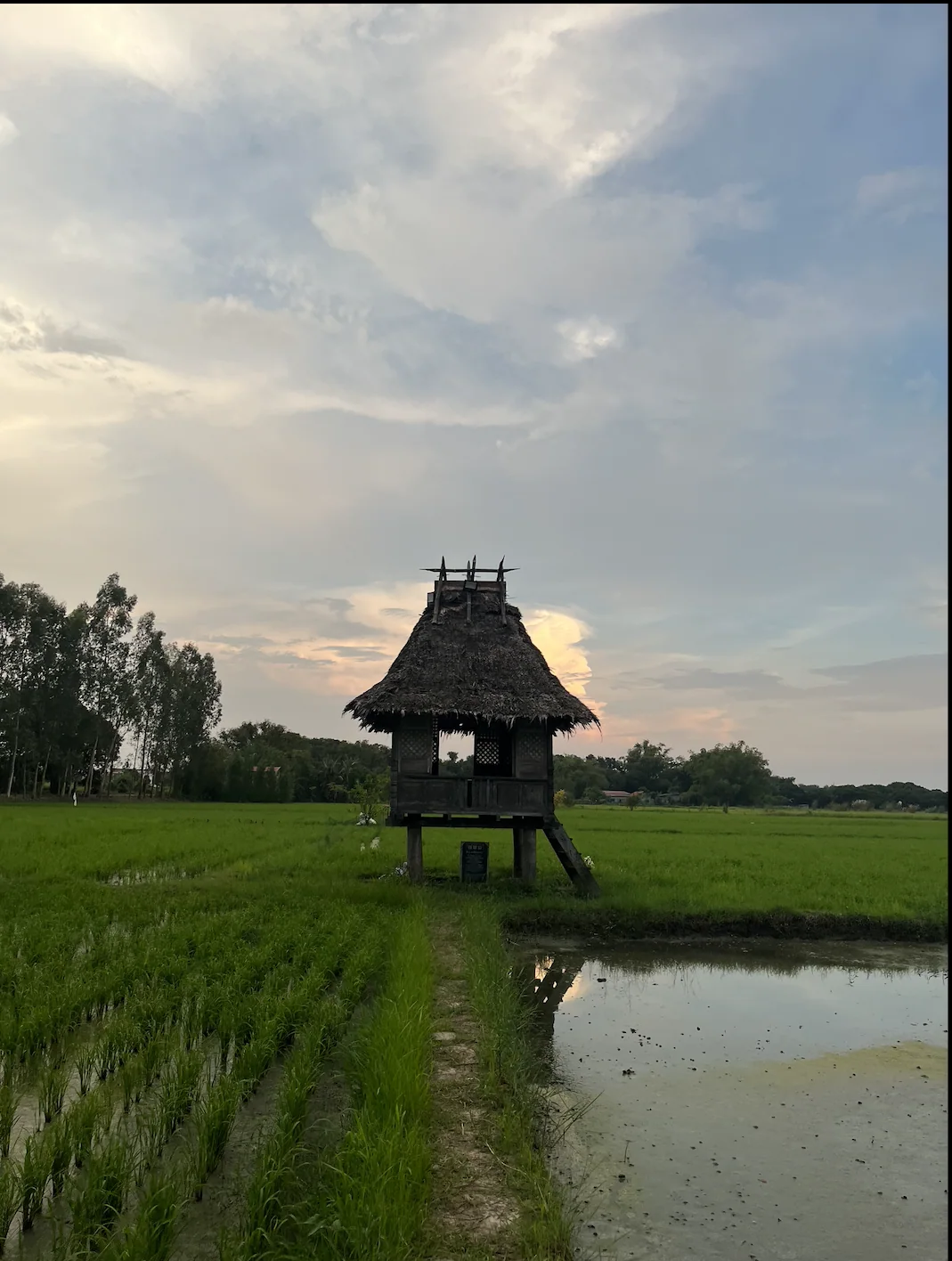
At Pulong Kabyawan, the first impression was not of a busy attraction. It was the open view of the fields, the shade of trees and the unhurried atmosphere. We came for a change of scenery. What stayed with us was the feeling of having room to pause.
A place that feels familiar
There is something about an open field that brings back afternoons when the biggest concern was getting home before sunset. We remembered sharing merienda with neighborhood friends, playing until we were sweaty, and returning home with muddy slippers or small scrapes after a long day outside. We were standing somewhere new, but the memories it stirred felt close to home.
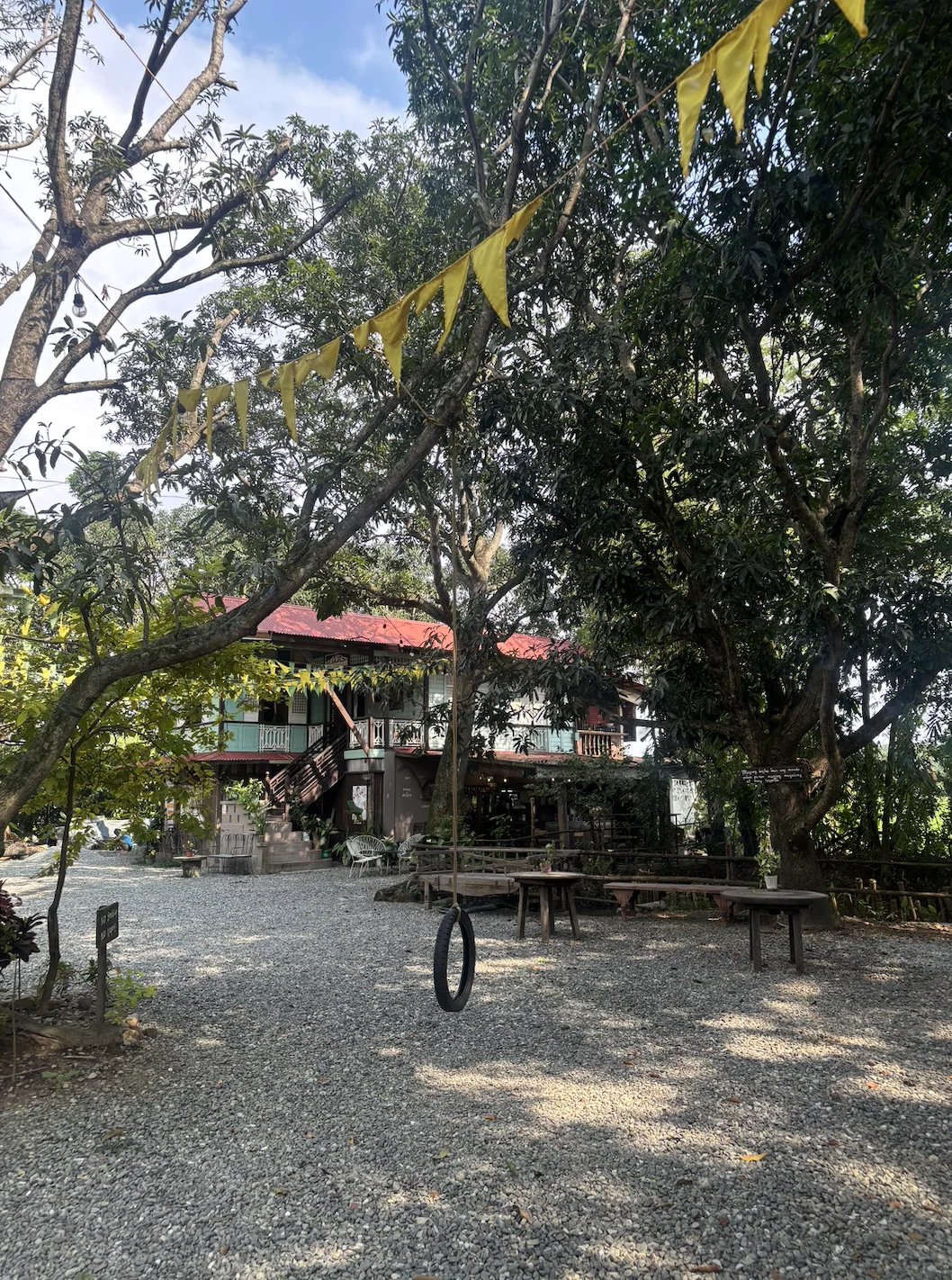
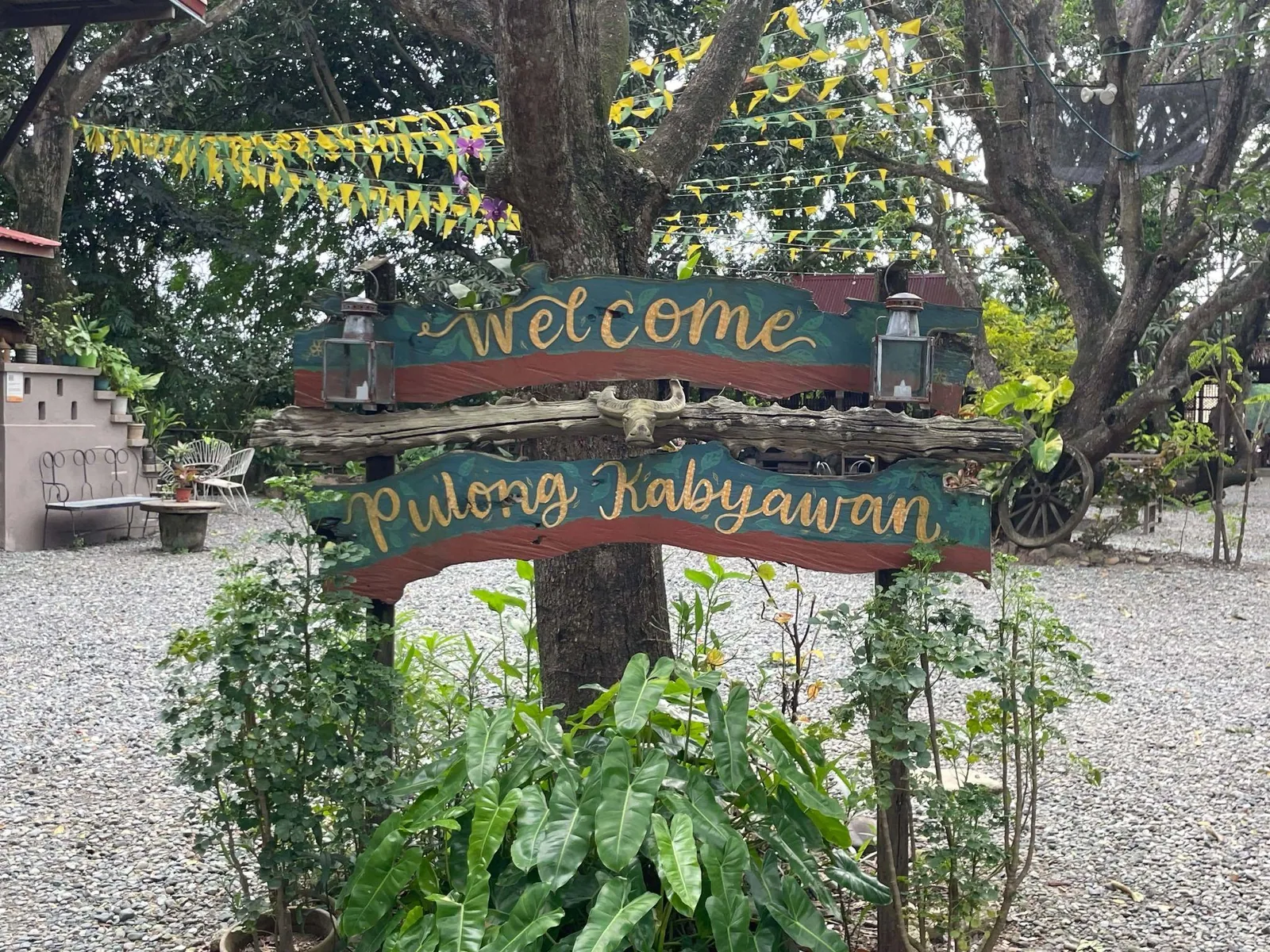
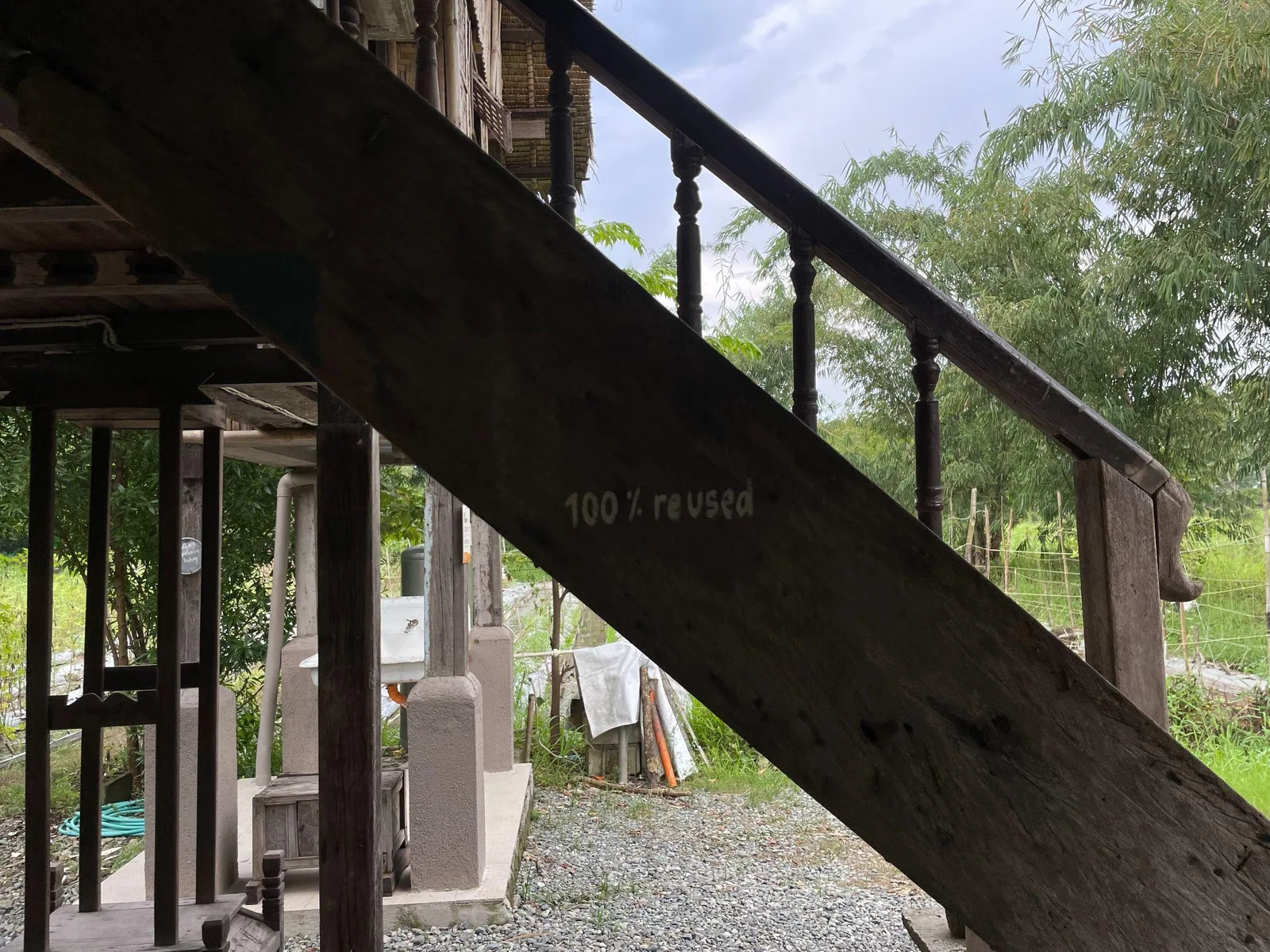
The café grounds reinforced that feeling. Traditional materials, shaded places to sit and simple structures sit alongside the fields. They gave us time to notice details instead of rushing from one activity to another. At a time when classes, group projects and notifications seem never-ending, that slower pace was a welcome change.
More than a café: Pulilan’s agricultural heritage
We also noticed traditional agricultural tools displayed around the site. These were not merely decorations to us. They reminded us of the work, patience and knowledge involved in growing food, and of the generations whose livelihoods depended on farming.
That connection has a documented history. In May 2026, the Philippine Information Agency reported that Pulong Kabyawan hosted the Pulilan Mandala International Art Festival, highlighting rice-farming traditions shared across Southeast Asia and displaying agricultural implements from the Philippines and the wider region. [1]
A 2023 Cartellino feature describes Pulong Kabyawan as a community-based farm-tourism and heritage project shaped by local farmers and cultural workers amid pressure on agricultural land in Barangay Inaon. It also describes a museum and artwork connected to rural life. [2] Knowing this context made the fields around us feel like something worth protecting, not just photographing.
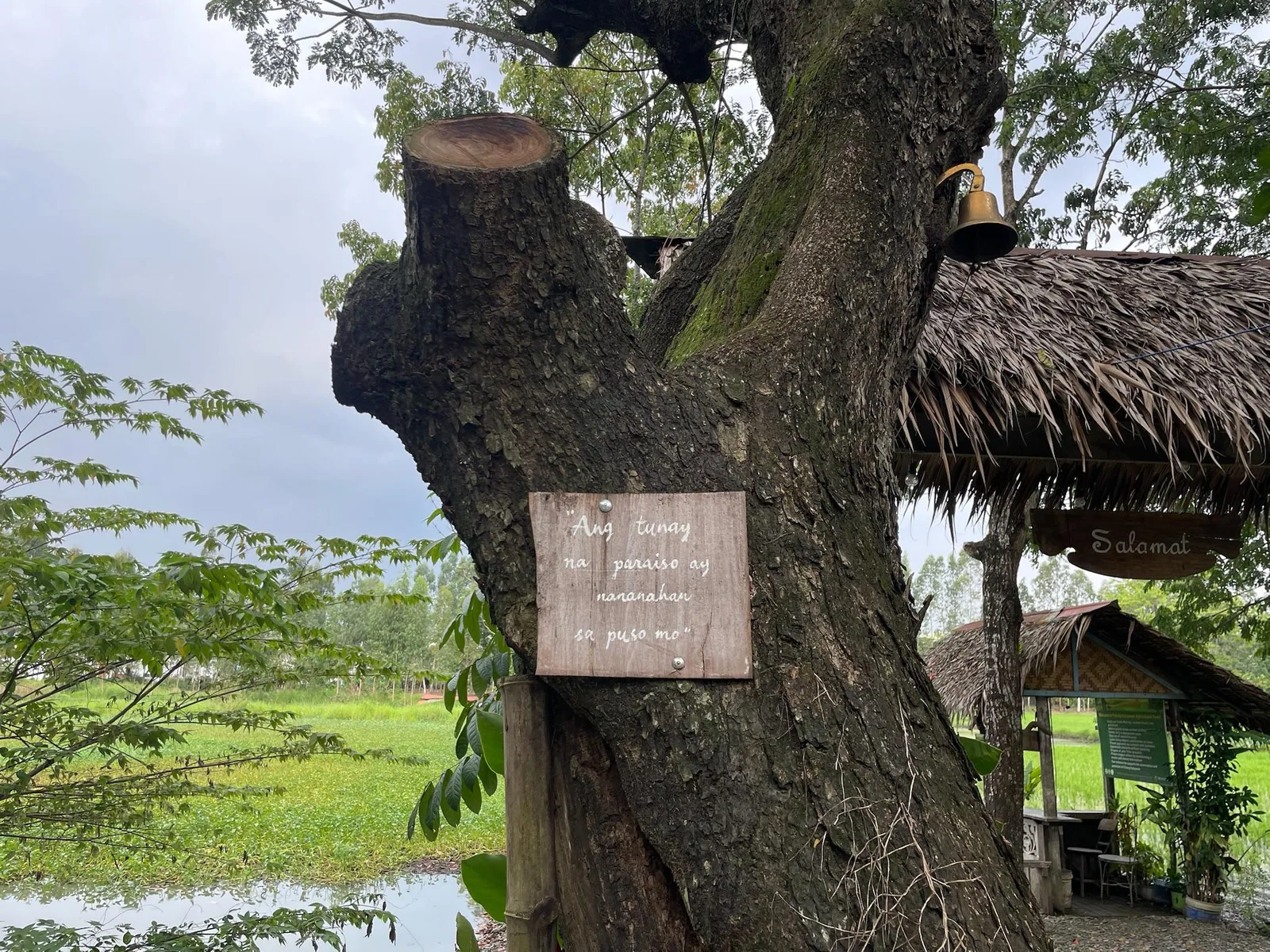
Food, conversation and a little time to slow down
Food was part of the experience too. The setting encouraged us to sit, talk and appreciate a simple meal rather than hurry through it. The connection between farming and food is not just a theme here: Cartellino reported that the café serves locally produced food, including rice grown on the farm. [2]
For visitors planning a meal, our group received these indicative Kape’t Bahay café prices in October 2026: pesto pasta around ₱250, daing na bangus around ₱300, Longganisang Pulilan around ₱350 and drinks around ₱150–₱200. These are examples, not a complete current menu; offerings and prices may change. A separate 2026 visitor account describes the same three main dishes at comparable prices. [3]
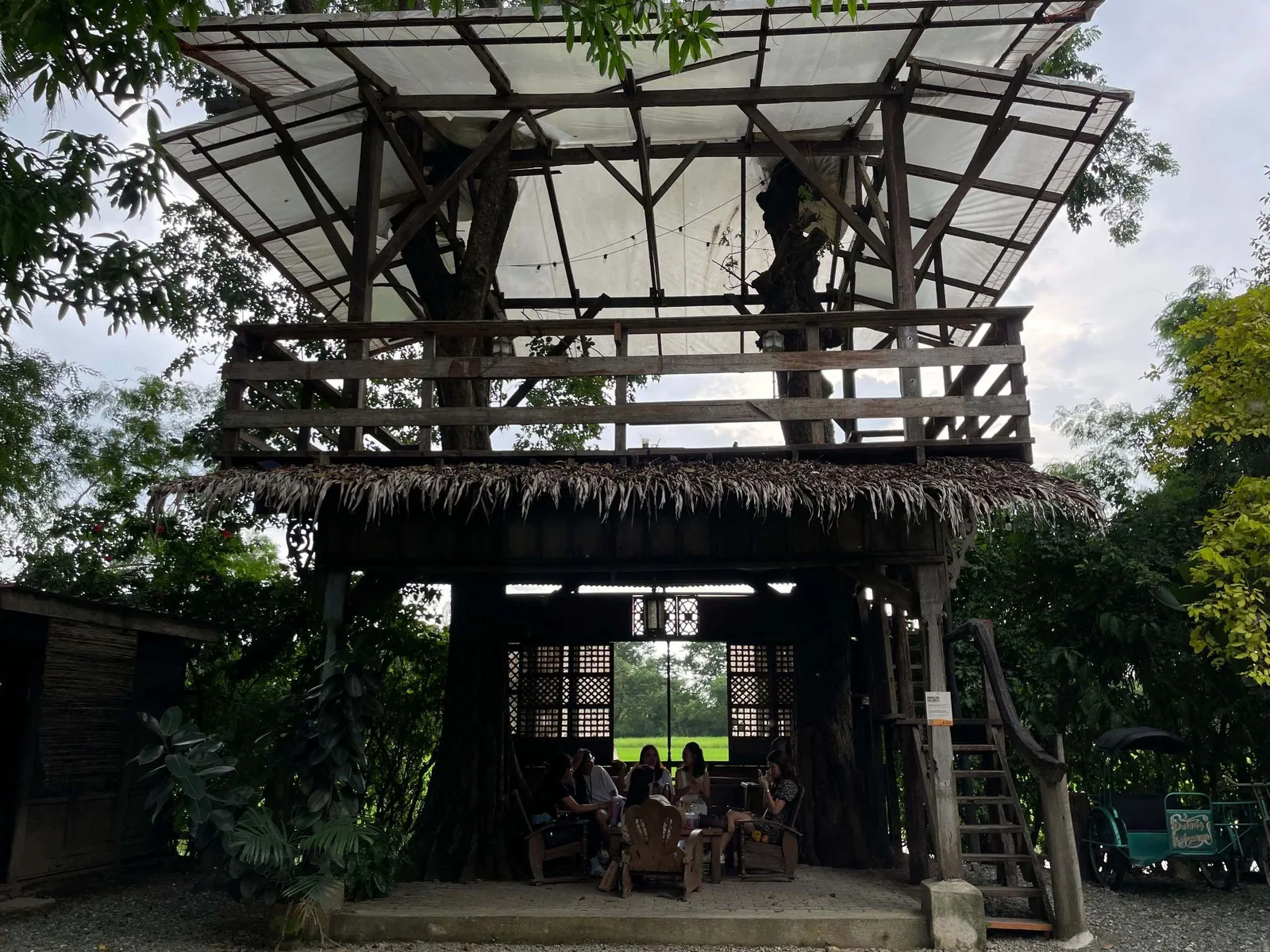
A bicycle and an unexpected reminder
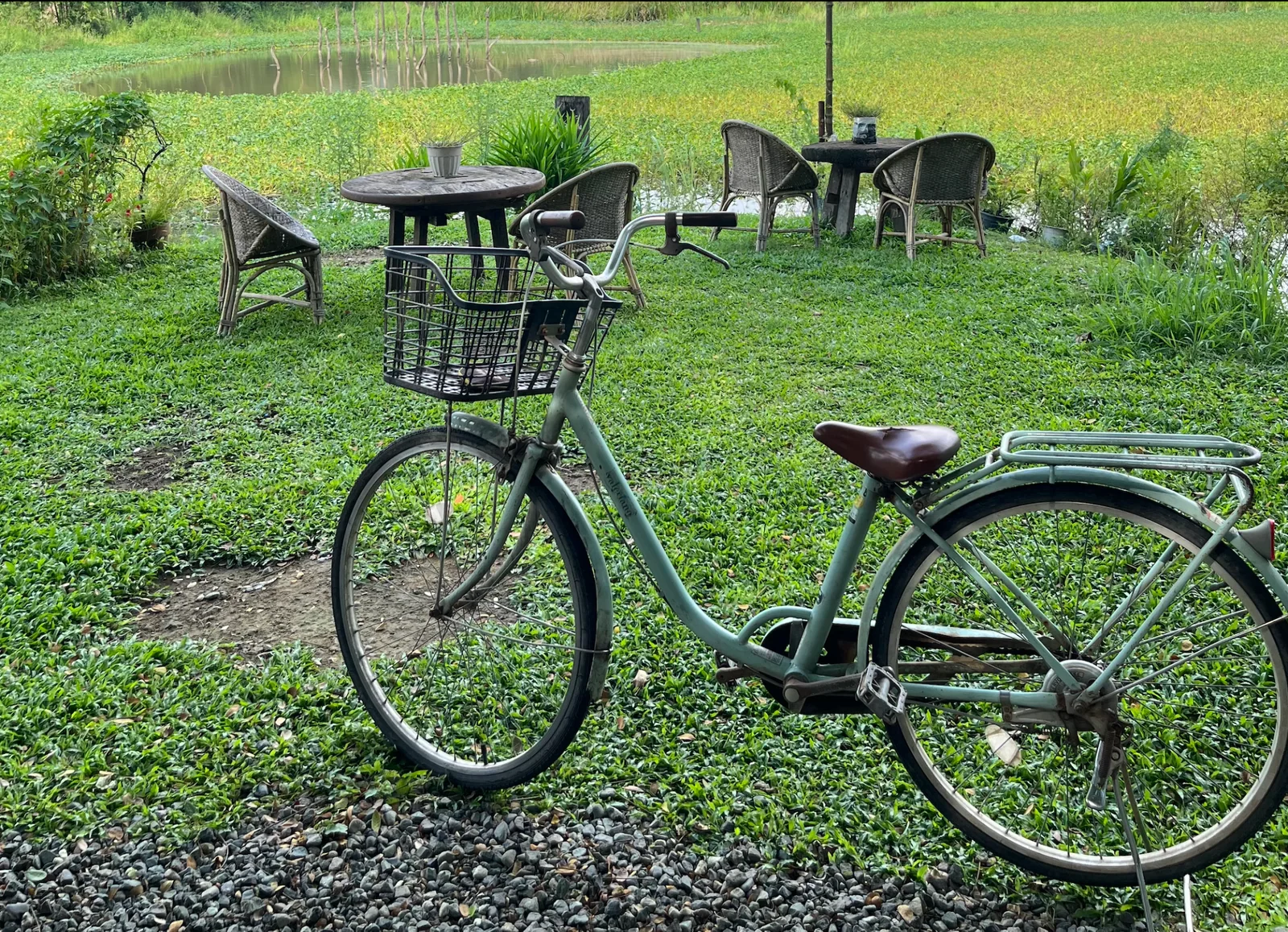
Among the details we remember most is a vintage-style bicycle set near outdoor seating. Riding a bicycle during our visit became a small metaphor for growing up: to move forward, you keep pedaling, sometimes slowing down when the road gets rough. It was an ordinary activity, yet it made us think about the people we used to be and the people we are becoming.
Pulong Kabyawan did not make school deadlines disappear or take us literally back to childhood. It gave us a few hours to remember that a break can be simple: an open field, a conversation over food, a look at objects from another generation, or a bike ride without any need to rush.
Planning a visit to Pulong Kabyawan
- Where: Pulong Kabyawan Agricultural Farm, Barangay Inaon, Pulilan, Bulacan. The municipal business directory identifies it as a farm-tour destination. [4]
- When: Friday–Sunday, 8:00 a.m.–6:00 p.m., according to the students’ October 2026 correspondence; the same schedule appears in Waze and earlier published coverage. Confirm before travelling, especially on holidays. [5]
- Getting there: Our group booked an inDrive car from Malolos. For drivers and motorcyclists, search “Pulong Kabyawan, Pulilan” in Google Maps or Waze. Public-transport passengers should confirm a practical local connection from Pulilan town proper rather than assuming a direct drop-off.
- What to expect: Rice-field scenery, rustic seating areas, displays linked to agricultural heritage and a café. Museum and farm-activity access can vary; check what is operating on your visit. [2]
- Budget: Plan for transport and any food or activity charges. We have not independently confirmed an entrance fee or whether all activities are included, so ask the venue before setting your budget.
- Contact: The Pulilan municipal directory lists 0969 231 1864 for Pulong Kabyawan. [4]
What we carried home
When it was time to leave, we took our photographs and the kind of memories that are easy to overlook when life gets busy. We had come for a café visit, but we left thinking about farmers, familiar landscapes, and the small pleasures that shaped our childhoods. Maybe that is Pulong Kabyawan’s quiet gift: not turning back the clock, but reminding us what is worth carrying forward.
Authors and photography
Irish Jillian D. L. Carpio · Jamielyn D. C. Delos Santos · Andria B. Manalo · Athea Trinity T. Galicto · Elijah Marie B. Perez · Christel Anne S. Tamayo · Jazzaine C. Vega
Bachelor of Science in Tourism Management, Bulacan State University, Malolos. Original visit and seven photographs by the student contributors.
Sources and further reading
- [1] Philippine Information Agency (May 12, 2026), “Tradisyon sa pagpapalayan sa ASEAN, tampok sa Pulilan Mandala Art Festival”.
- [2] Pao Vergara, Cartellino (January 24, 2023), “How farmers and cultural workers teamed up to preserve Bulacan’s agricultural, built, and artistic heritage”.
- [3] Ninja Moves (2026), Pulong Kabyawan café dish examples.
- [4] Municipality of Pulilan business directory, Pulong Kabyawan.
- [5] Waze listing for Pulong Kabyawan.
For another student-researched heritage stop in Bulacan, see Bustos: A Detour in Time.