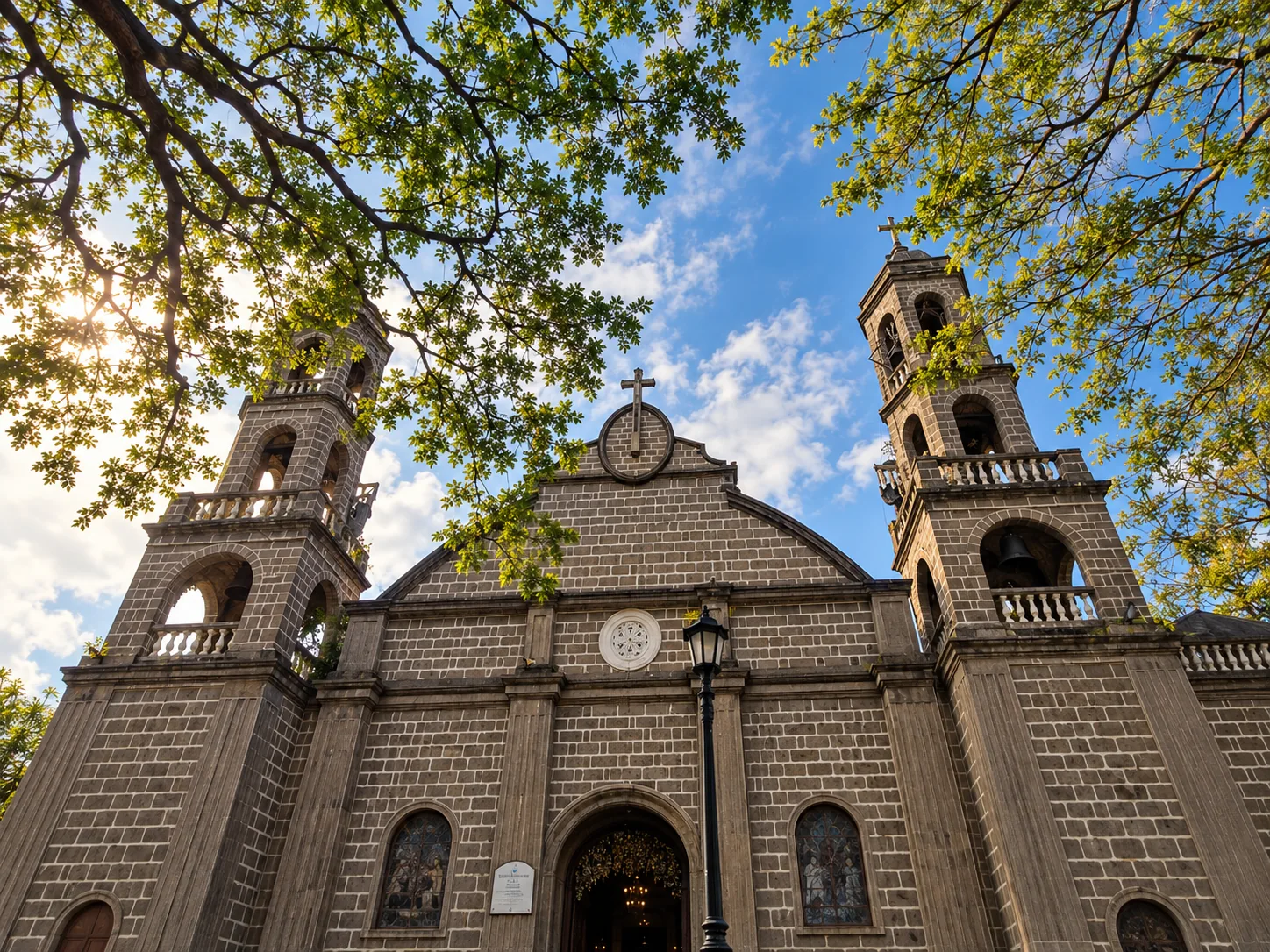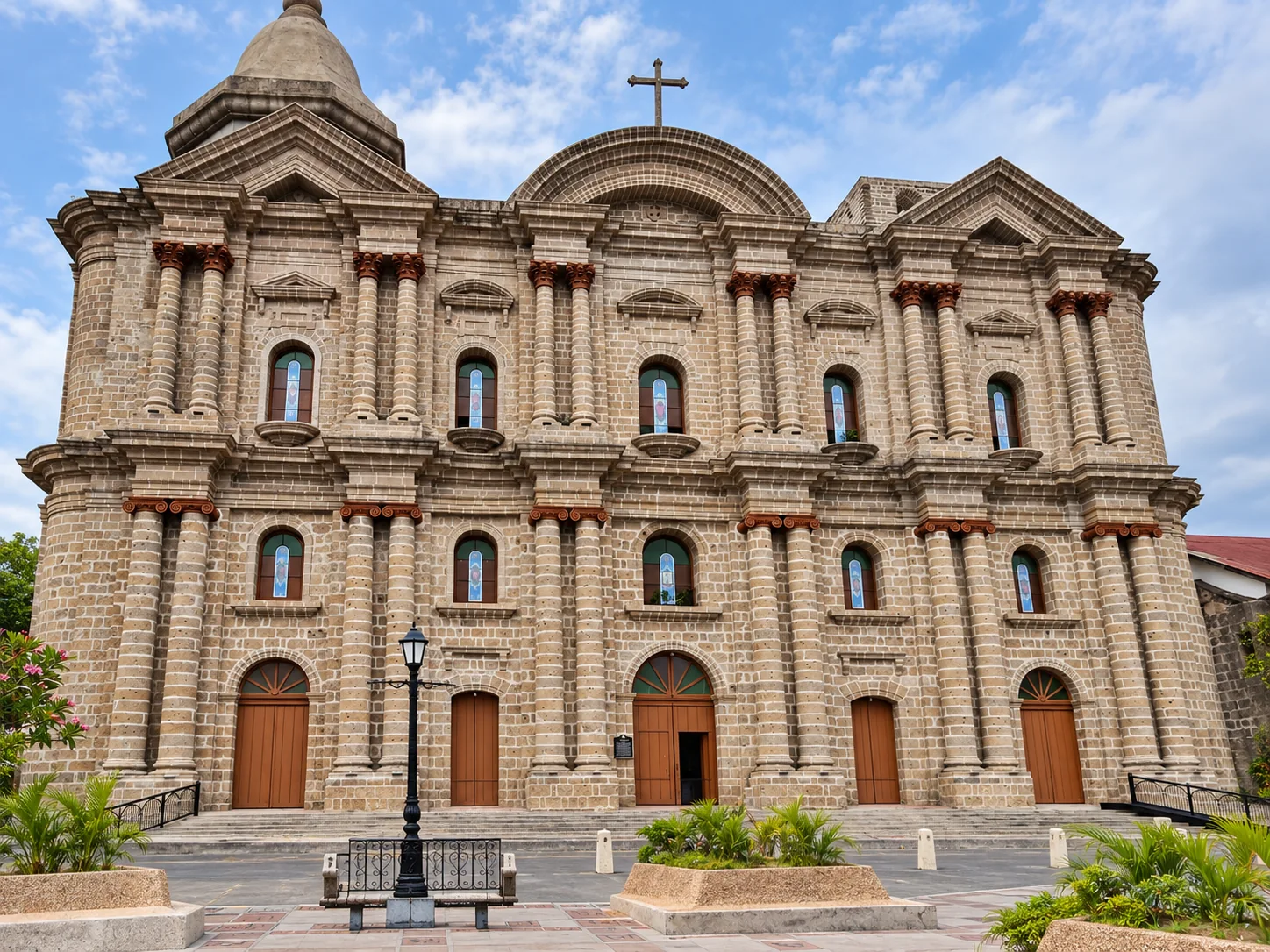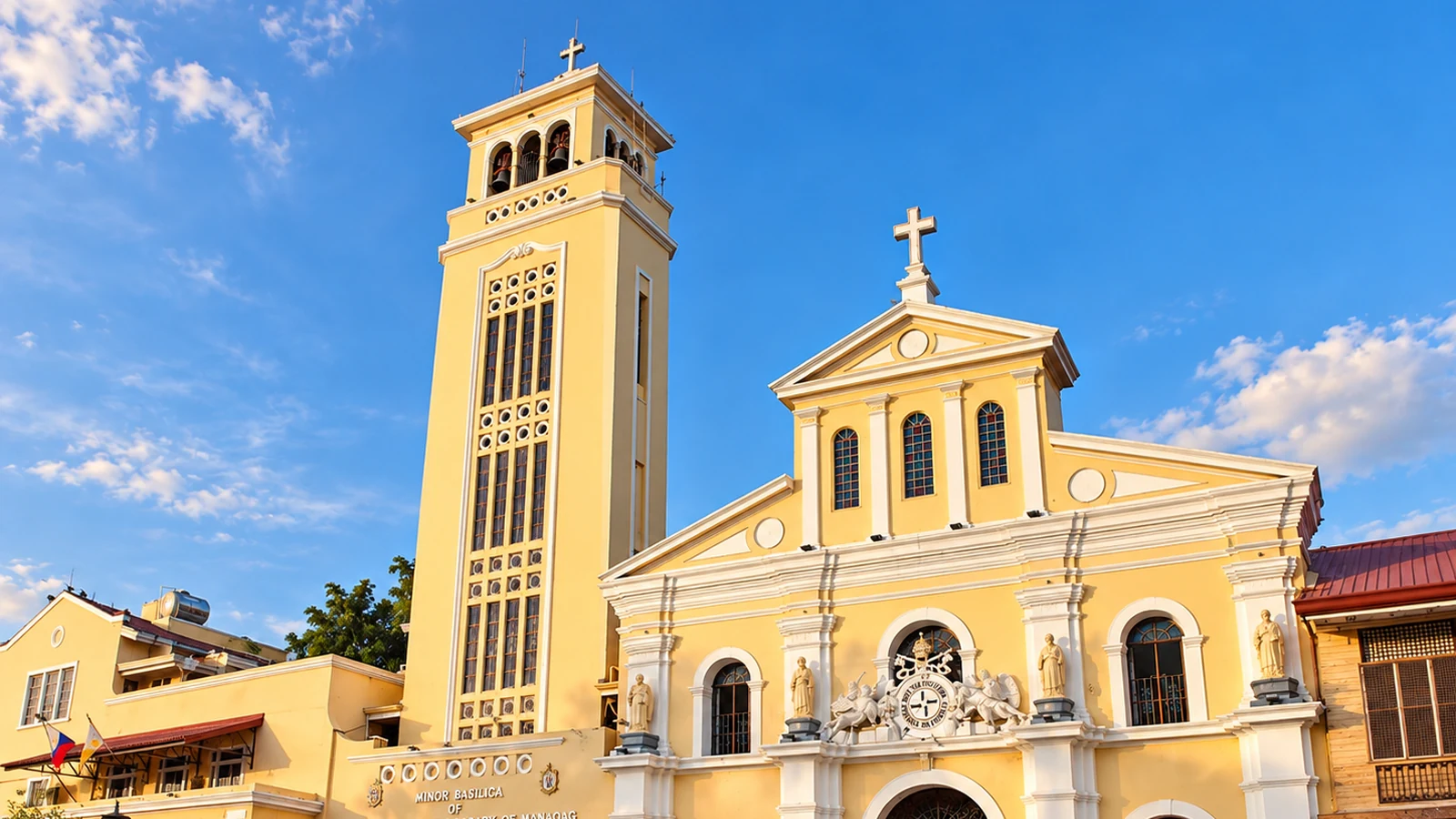
The Minor Basilica of Our Lady of the Rosary of Manaoag in Pangasinan is a working place of Catholic worship, not merely a stop on a road trip. For a worthwhile visit, decide first whether your group is coming for Mass, prayer, a devotional blessing or to learn about the church's heritage. That choice determines arrival time, how much queuing to expect and whether same-day return is sensible.
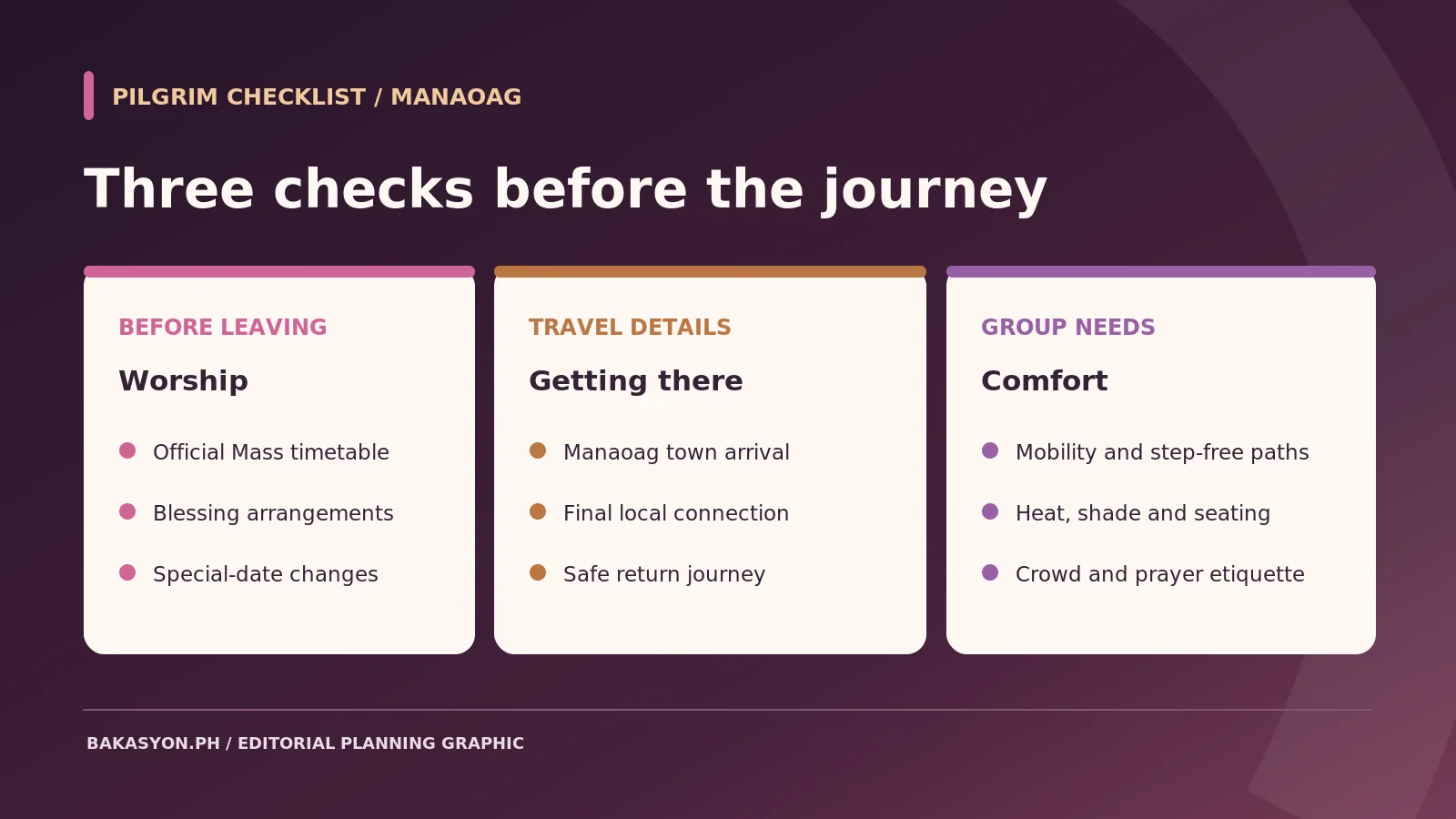
Short answer: Check the basilica's official Mass timetable, plan a route to Manaoag town rather than just to Pangasinan generally, budget a separate final transfer if traveling by bus, and leave room for queues and rest. For other faith-based routes, see our Philippines religious tourism planning hub.
What the shrine means to pilgrims
Devotion centers on the image of Our Lady of the Rosary of Manaoag, locally called Apo Baket. The basilica is administered by the Dominican community. Its own history of the devotion recounts a Marian apparition as folk tradition, not as a modern historical event proved by independent documents. Pilgrims come for Mass, prayer, thanksgiving and Marian devotion. Visitors interested in architecture or cultural history are welcome to approach with the same respect for the worship taking place.
Mass and blessings: start with the church, not a search snippet
The official Manaoag Basilica homepage, reviewed on October 27, 2026, lists regular weekday Masses at 6:00 a.m. (in church and streamed), 7:30 a.m., 9:00 a.m., 10:30 a.m. and 4:30 p.m. Saturday adds 5:00 a.m. and noon services. The Sunday listing includes 5:00 a.m., 6:00 a.m., 7:30 a.m., 9:00 a.m., 10:30 a.m., noon, 3:00 p.m. and 4:30 p.m. Those are the site's published regular schedule, not a guarantee for a particular future day. Parish feasts and special services may change it.
The Dominican community's ministry page describes confession, blessing of religious articles after Mass and vehicle blessings at designated areas. Check the site or contact the parish before traveling specifically for one of those services. Do not assume every devotional line or private chapel is accessible at every hour.
Choose a travel arrangement that fits your group
| Option | Best for | Confirm in advance |
|---|---|---|
| Private car or hired vehicle | Families, elderly travelers, flexible return times | Parking or drop-off arrangements, tolls, local approach traffic and the return driver's rest |
| Direct intercity bus, if operating on your date | Travelers comfortable navigating a terminal | Actual destination sign, operator, departure and return service; whether the stop is walkable or needs a local ride |
| Bus to a nearby transfer point such as Urdaneta, then local transport | Travelers whose route has no suitable direct service | Drop-off point, connecting jeepney/tricycle route and a dependable way back |
Drivers arriving from Metro Manila commonly plan a northbound expressway route via NLEX, SCTEX and TPLEX, but the appropriate exit and travel time depend on origin, traffic and current conditions. Do not commit your group to a fixed travel duration based on a generic map estimate. For fare and transport terminology, use our Philippines transport guide.
Public transport: the return journey is the real test
Before paying for an outbound ticket, ask the operator whether it stops at Manaoag itself, where passengers alight, and how the return bus is boarded. If changing at Urdaneta, confirm the connecting route on the day. A plan dependent on the last service of the evening is less robust than one with an earlier confirmed return option. Traveling with several children or an elder may justify a vehicle with fewer changes even when the ticket costs more.
How much time to allow
Choose your departure based on the desired Mass and a conservative arrival buffer. Add time for parking, finding the proper entrance, devotional queues, restrooms, water and the blessing area if you intend to use it. A short weekday prayer visit may require much less on-site time than a Sunday group pilgrimage with a special devotion. No fixed queue length is guaranteed, especially during Lent, Easter, May and October when the basilica itself identifies heightened pilgrimage activity.
For travelers coming from far away, consider an overnight stay instead of assuming that one long day will suit everyone. The actual decision should be driven by confirmed transport, the chosen liturgy and your group's endurance rather than the number of nearby attractions.
Accessibility, children and older pilgrims
The basilica may be busy, with standing queues and several activity areas. We have not independently verified step-free entry to every devotional space. If someone uses a wheelchair or walker, contact the administration about the easiest drop-off, accessible entrance, seating, toilets and whether queue assistance is available. The official website publishes the administration's contact details. Do not assume a popular shrine meets every mobility requirement.
Agree on a group meeting place outside crowd pinch points; keep children close and avoid blocking entrances. In wet or very hot weather, balance time spent outside with hydration and rest. Photography should not interfere with services or anyone receiving prayer, confession or a blessing.
What to wear and bring
Choose modest, comfortable clothing suited to an active place of worship and warm travel conditions. Carry water for outside breaks, cash for transport and optional purchases, a phone with the parish contact, and an umbrella or raincoat depending on the forecast. If bringing items or a vehicle for blessing, follow staff guidance at the designated place after checking the current procedure.
Be wary of anyone claiming you must purchase candles, pay a private person for access to worship or buy a specific devotional product. The official site is the right source for ministry arrangements; politely decline unsolicited sales.
Budget the pilgrimage honestly
Build a personal budget from round-trip bus fares or fuel/tolls + local connection or parking + meals/water + optional devotional purchases or voluntary offerings + a reserve. Church attendance should not be conflated with tour-operator or merchant fees. Published parking, vendor prices and schedules on third-party sites may be stale or inconsistent, so seek a current quote.
Sample day plans
One-purpose weekday visit
Depart early enough for the Mass you actually confirmed; travel to the basilica, attend worship, allow time for any intended blessing or prayer and return during a dependable transport window. Keep other sightseeing optional.
Weekend family pilgrimage
Expect more visitors; prioritize an arrival buffer and shaded breaks. If the group needs longer rest or extra help moving around, stay in the area overnight rather than squeezing the schedule. Check whether a weekend feast or special service affects ordinary arrangements.
Frequently asked questions
Is the Manaoag Basilica in Dagupan?
No. The basilica is in Manaoag, Pangasinan. A route passing through or toward Dagupan is not necessarily a route that stops at the shrine.
Can I have religious articles or a vehicle blessed?
The basilica lists blessing activities on its official ministry page, including vehicle blessings in a designated area. Confirm the current process and timing before relying on it.
Which times are busiest?
The basilica's own background identifies weekends and major Marian/Lenten seasons as important pilgrimage periods. There is no reliable universal queue time for an individual date.
Is everything wheelchair accessible?
Not independently verified. Contact the basilica for route-specific arrangements before promising accessible access.
Official references checked October 27, 2026
- Manaoag Minor Basilica — official homepage and current regular Mass list
- Manaoag Minor Basilica — sacraments, confession and blessings
- Manaoag Minor Basilica — history and seasons of devotion
- Provincial Government of Pangasinan — Manaoag municipality
Planning another pilgrimage? Compare the seven-church Laguna program, or visit the religious tourism hub.