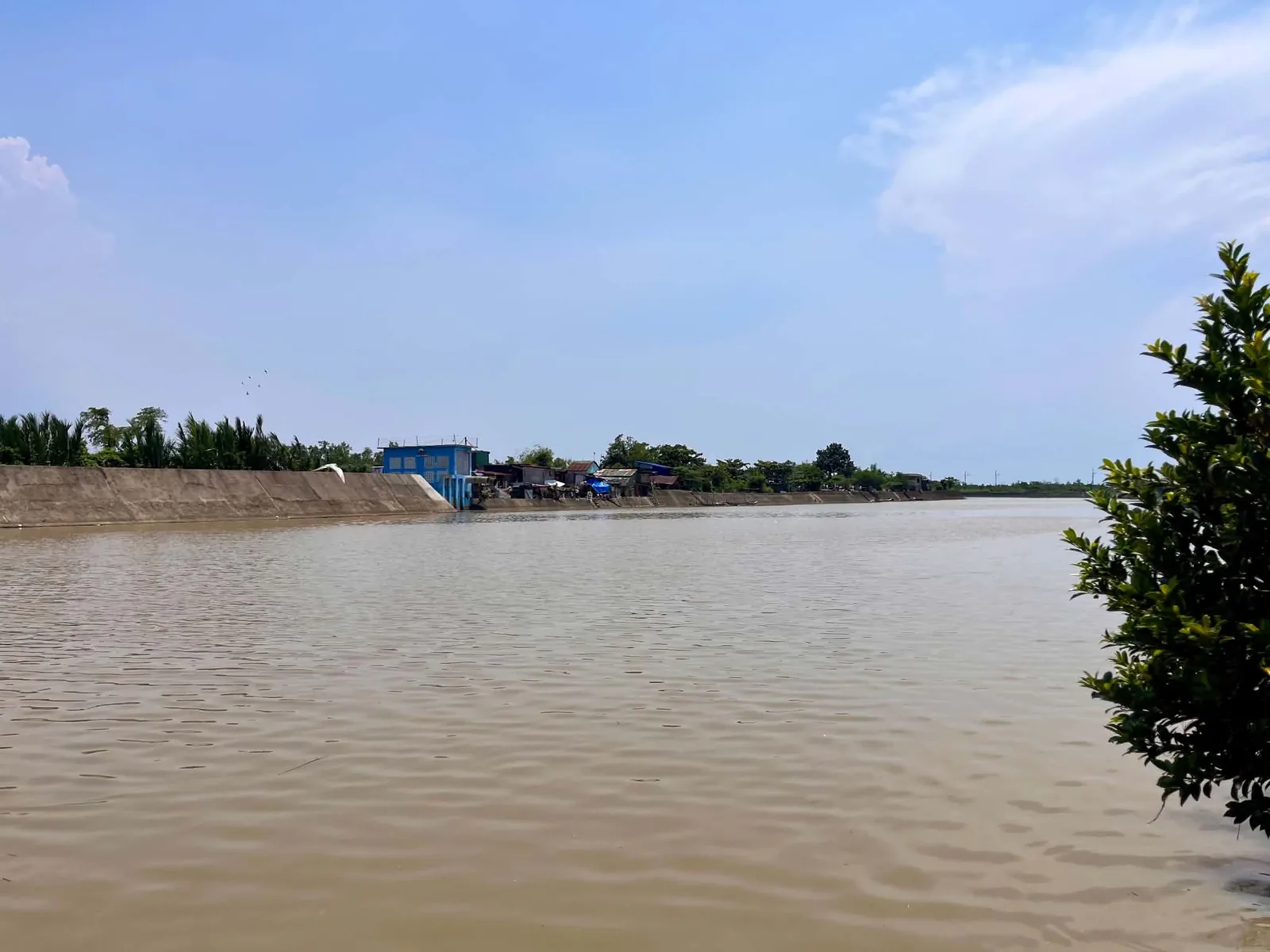
The first thing we noticed about Plaridel was how closely its everyday life sits beside its history. A town plaza, a parish church, a monument and a few familiar streets can look ordinary at first glance. Spend time with them, though, and another story begins to emerge: the old town of Quingua, a battlefield remembered in stone, and a community that still gathers to celebrate its traditions.
During our exploration of Plaridel in Bulacan, we were drawn to this contrast between past and present. We also carried memories of the town during the Christmas season, when the historic center looks and feels very different beneath festive lights. Both experiences helped us understand why a place can be more than the sights on a map.
A name that carries history
Before it was Plaridel, this municipality was known as Quingua. In 1936, Commonwealth Act No. 26 changed the town’s name in honor of Marcelo H. del Pilar, the Bulakeño patriot, writer and journalist who used “Plaridel” as a pen name. The name is not just a label on road signs; it connects the town’s identity with an important voice in the Philippine reform movement.
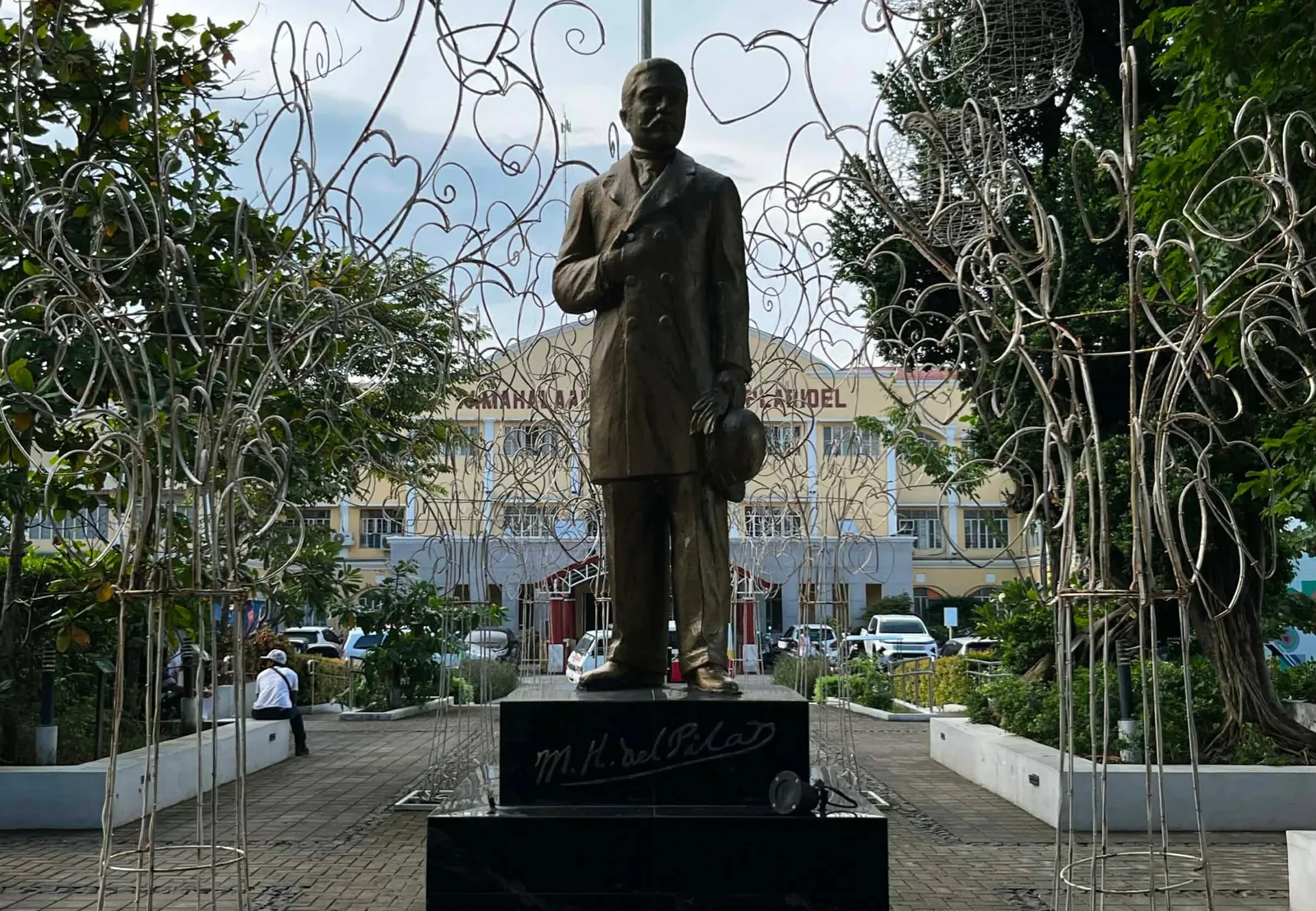
Standing by his statue, we were reminded that history survives through more than textbooks. It lives in the people commemorated in public spaces and in the stories that local residents continue to share. Even a short stop can invite a visitor to ask why a town chose to remember a particular person.
Agnaya and the Battle of Quingua
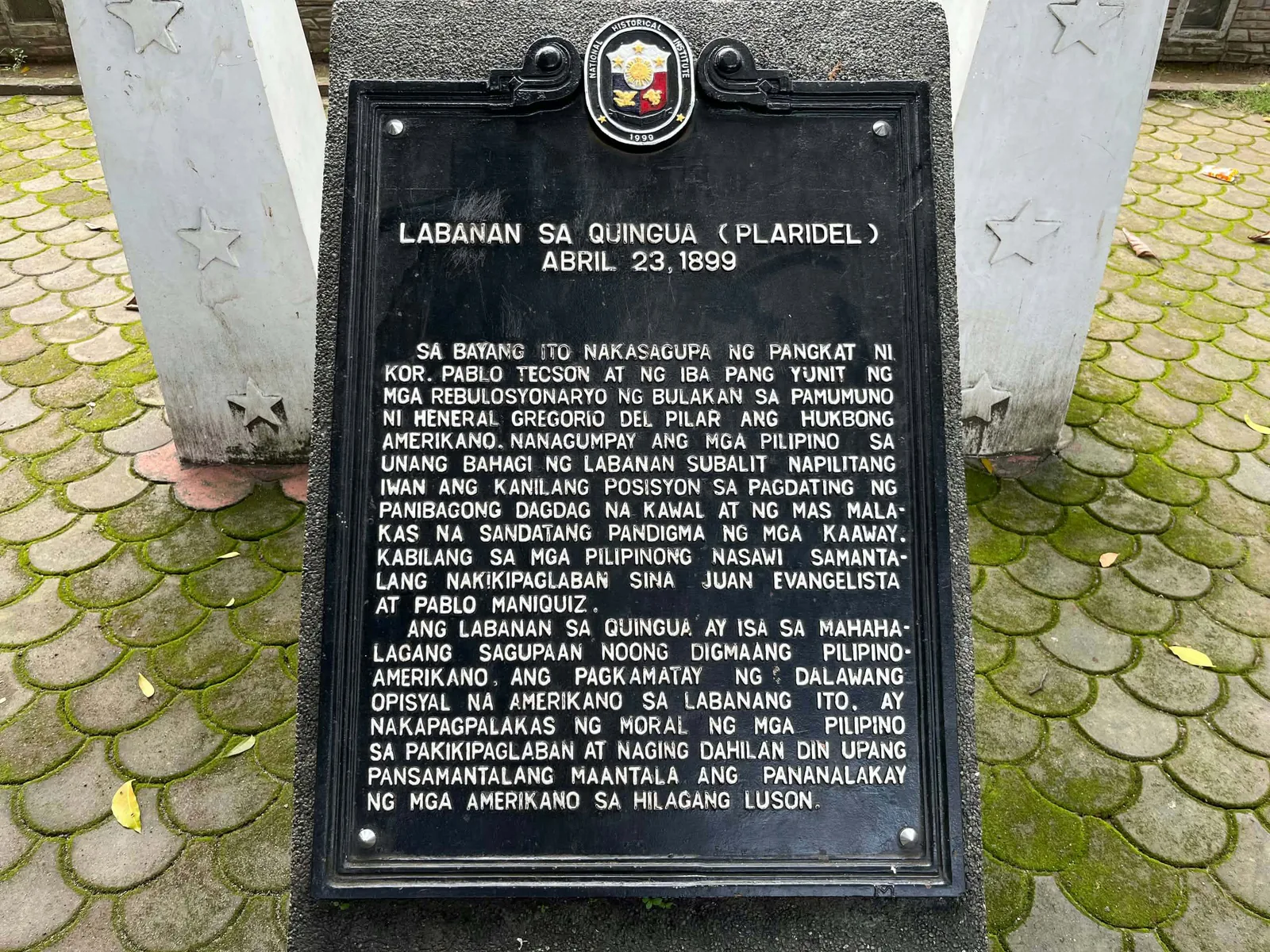
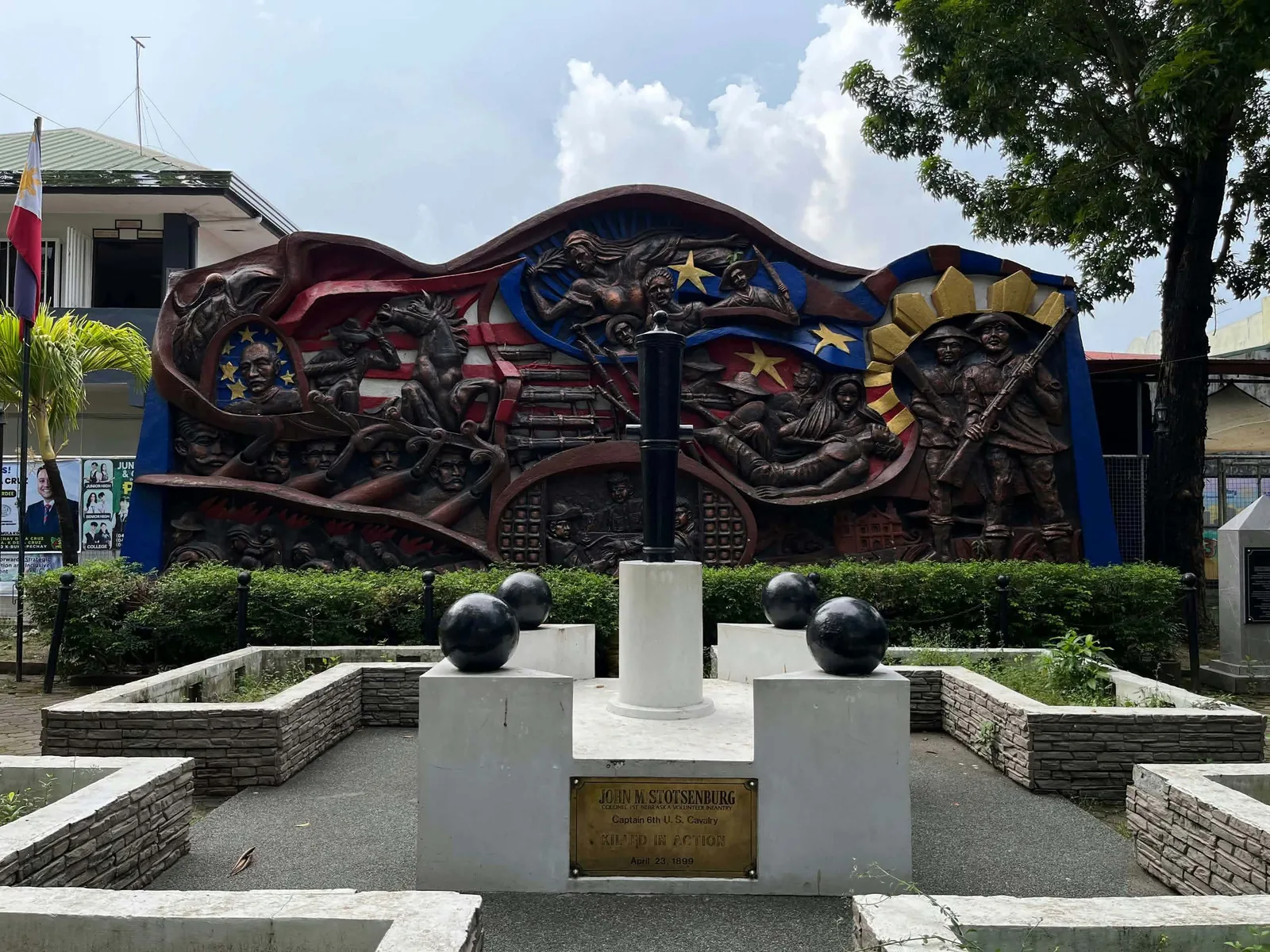
One of Plaridel’s most significant historical sites is the Battle of Quingua memorial in Barangay Agnaya. On April 23, 1899, Filipino forces under General Gregorio del Pilar, including men led by Colonel Pablo Tecson, fought American troops here during the Philippine–American War.
The historical marker describes an important distinction. Filipino forces prevailed in the first phase of the fighting, but later had to leave their position when American reinforcements and heavier weapons arrived. The deaths of two American officers boosted Filipino morale, and the battle temporarily delayed the American advance toward northern Luzon. Remembering only the opening victory would leave out a crucial part of the story.
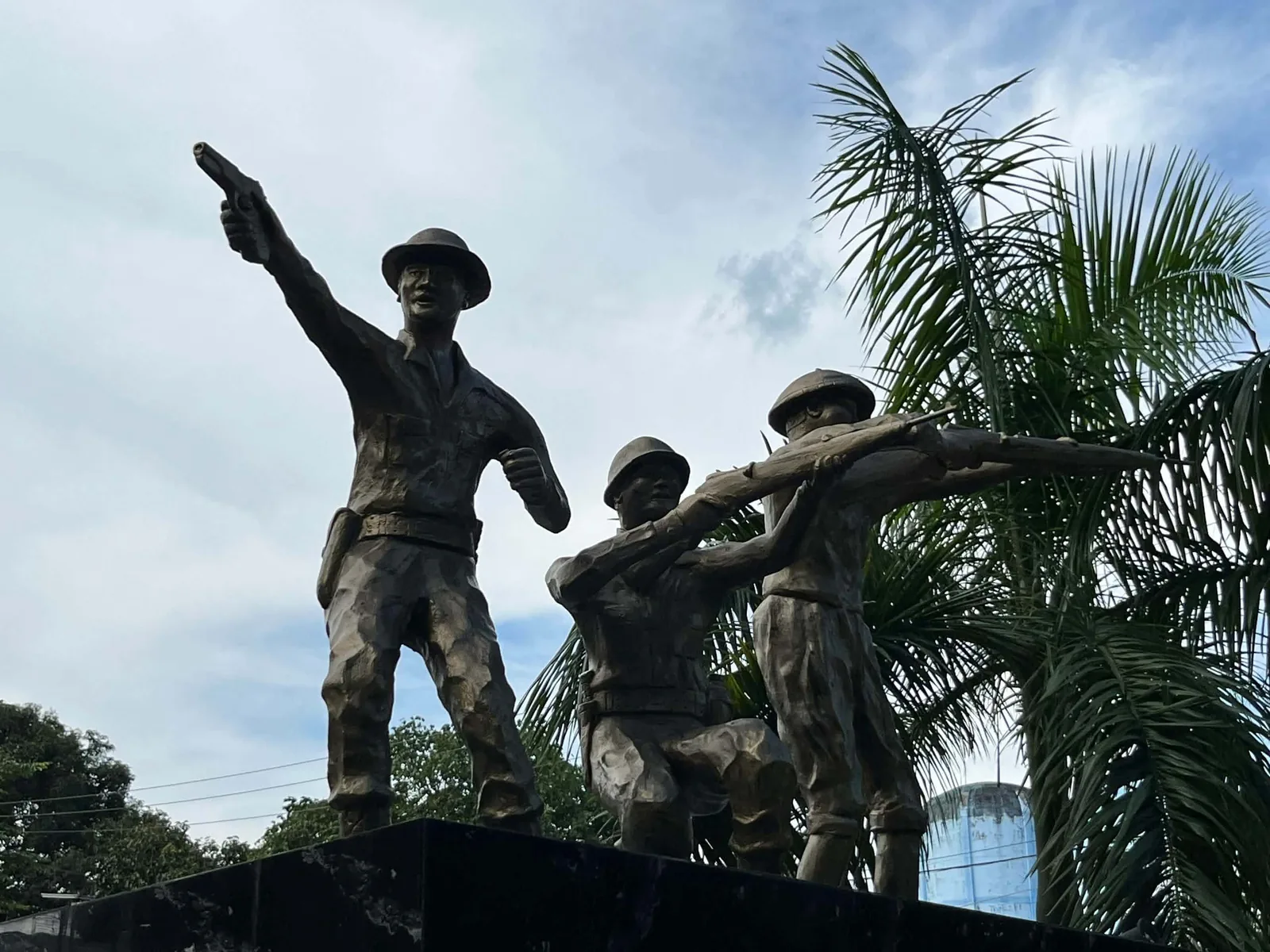
The surroundings we saw were peaceful. That quiet made us imagine, cautiously, how different this place must have been in 1899. The monument does not need to recreate gunfire or smoke to make the past feel close. Its presence asks us to consider the courage and loss behind a place that people now pass in the course of an ordinary day.
St. James the Apostle Parish and the old town center
The St. James the Apostle Parish Church offers a different way of meeting Plaridel’s history. The Diocese of Malolos traces the parish’s founding by Augustinian missionaries to 1602 and describes its architecture as Moorish-influenced. That date refers to the establishment of the parish; it should not be taken to mean every part of the present church building has stood unchanged for more than four centuries.
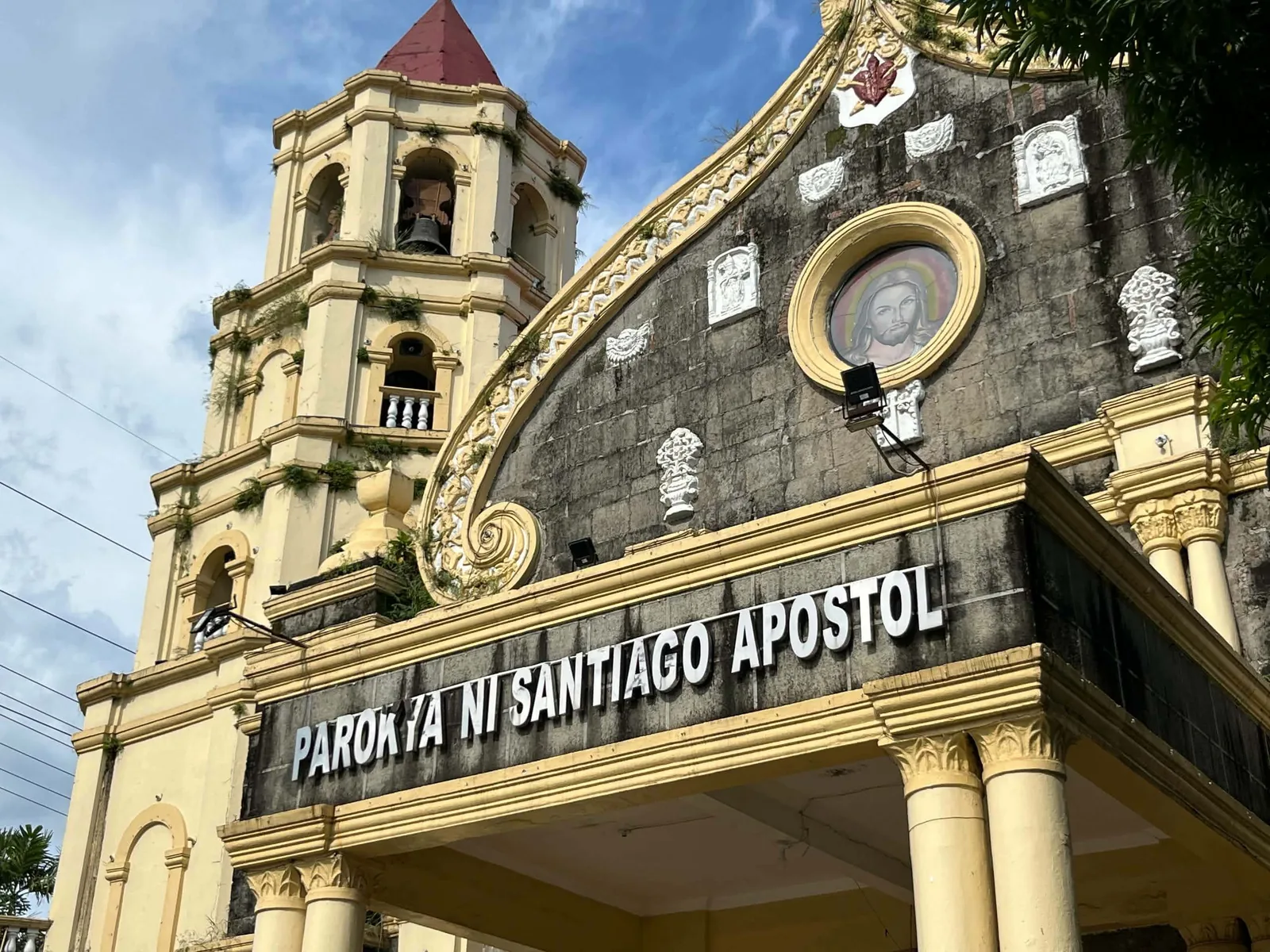
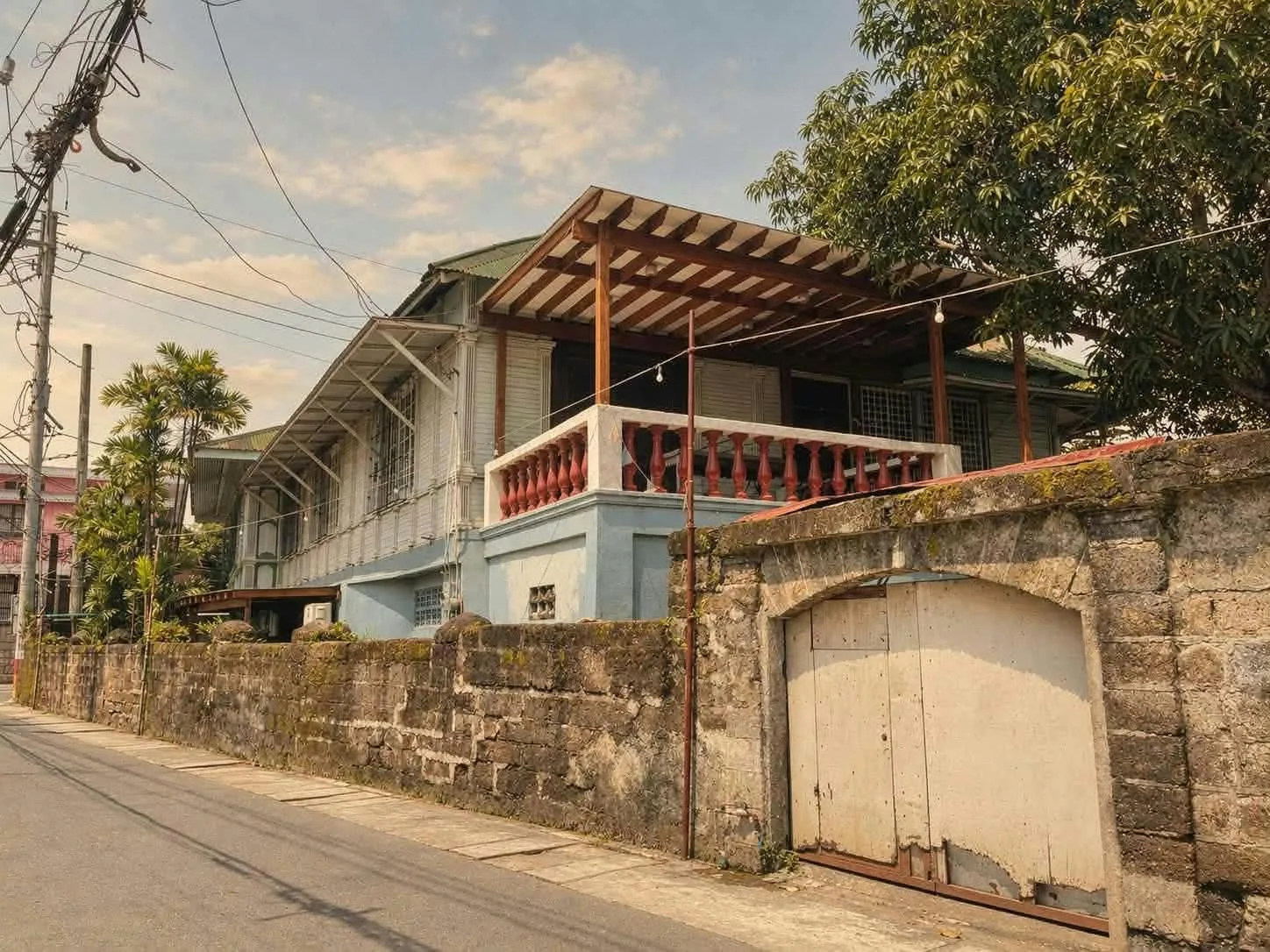
Near the church and municipal center, older buildings and familiar community spaces sit alongside the movement of modern town life. We found ourselves looking more carefully at the details—the church façade, surrounding streets, and places where people meet—rather than treating the landmark as a quick photo stop. For us, the historic center was a reminder that heritage is part of an active community, not a display sealed away from daily life.
Traditions that keep the town moving
Plaridel’s history is not remembered only through monuments. The provincial government lists the Plaridel Horse Festival on December 29 and 30, when decorated horses and traditional carriages, or tiburins, parade through the town in honor of St. James the Apostle. It is a distinctive local expression of faith and community identity.
Beyond the horse parade, community activities can offer other ways to connect with local history. A Quingua Run, for example, was listed for April 26, 2026. Because event programs change, visitors should check current announcements rather than assume that a previous year’s route or schedule will be repeated exactly.
What interests us most is the way such occasions bring generations together. Older customs remain visible, while younger participants and visitors find their own ways to join in and understand what is being celebrated.
When the plaza lights up for Christmas
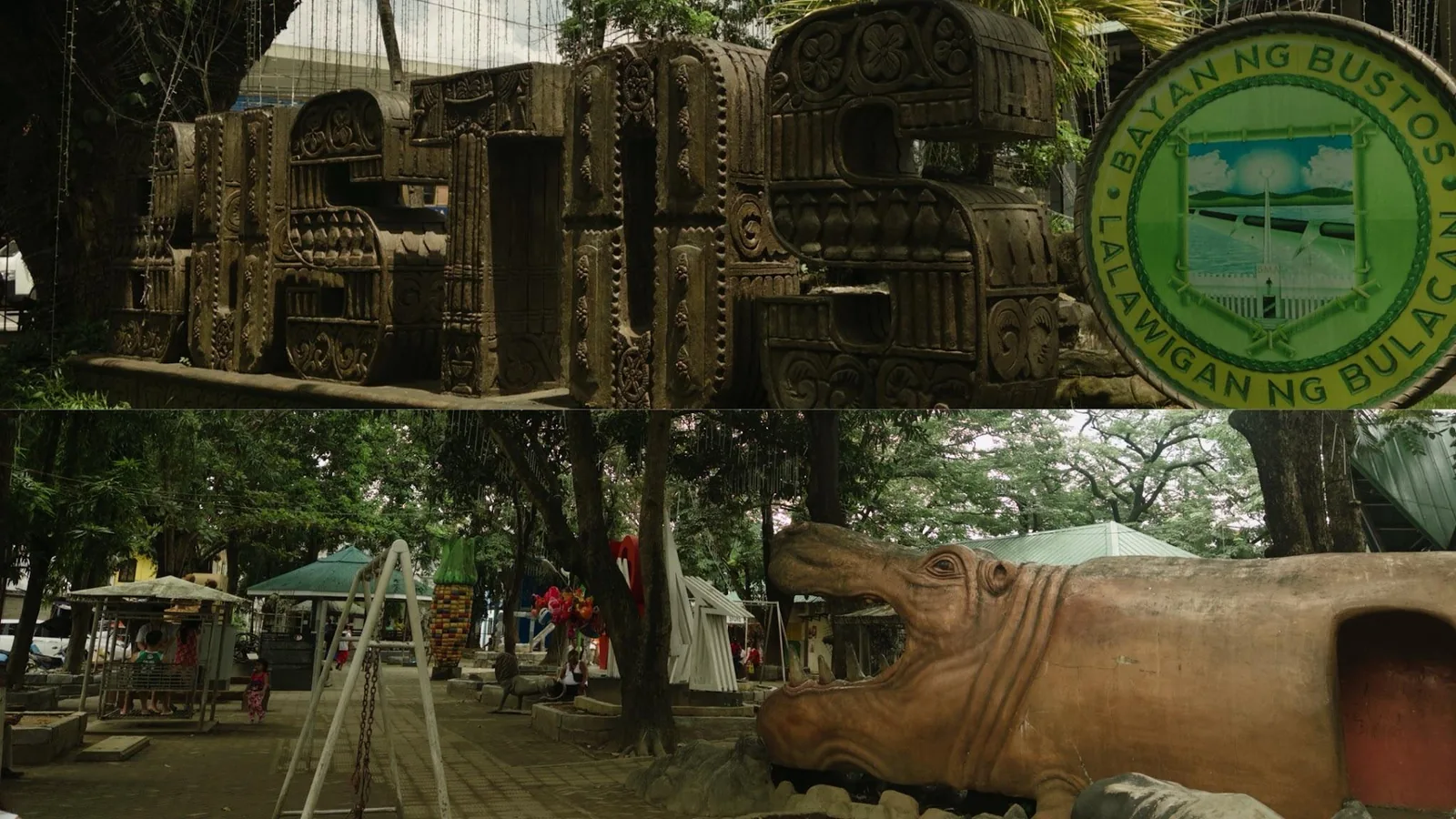
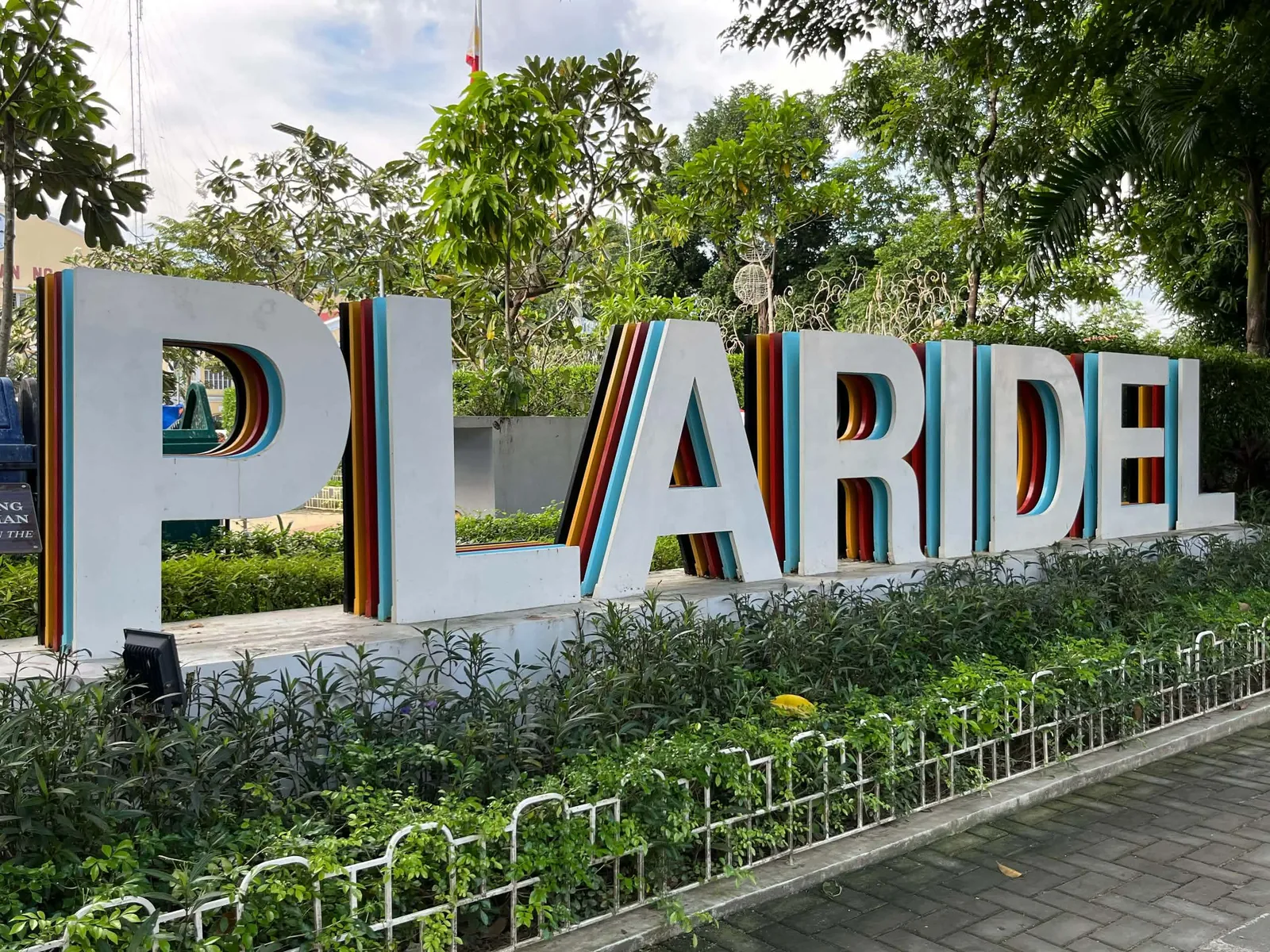
Jose J. Mariano Park is part of Plaridel’s public gathering space, near the municipal center. In the daytime, its trees, monuments and town sign offer a place to pause. Our memories of Plaridel during the Christmas season add another layer: lights around the public spaces, families and friends spending time together, and the familiar holiday atmosphere associated with Filipino town plazas.
We remember the glow of decorations against the evening sky and the inviting thought of seasonal favorites such as puto bumbong and bibingka. Those Christmas memories came back to us as we explored the town’s heritage in daylight. Exact decorations, food stalls and lighting schedules may change from one season to the next.
There is something moving about seeing a place known for its long history become a setting for new family memories. The past remains nearby, but it is not the only story being written.
Planning a respectful heritage walk
Visitors who want to follow a similar heritage-focused outing can begin with the Battle of Quingua memorial in Barangay Agnaya, then continue to the St. James the Apostle Parish area and Jose J. Mariano Park. These are suggested stops, not a verified walking route: check the distance and traffic conditions before deciding whether to walk or arrange a ride between locations.
Allow time to read the marker rather than only photographing the monument. At the parish, remember that it is an active place of worship; dress and behave appropriately and avoid interrupting services. For festivals, Christmas lighting and any local exhibits, check current schedules and public access with the Municipality of Plaridel before setting out. Opening hours, admission arrangements and transport fares can change, so confirm the details before traveling.
The stories we take home
Our visit brought us back to an idea we had while standing before the Battle of Quingua monument: a town is a living manuscript. New chapters are written over familiar streets, but traces of earlier stories remain. At Plaridel, those traces appear in a hero’s name, a battlefield marker, a historic parish and a public park.
We came looking for places worth seeing. We left with a deeper appreciation of the people whose work, sacrifice and traditions helped shape them. Whether Plaridel is quiet under the afternoon sun or bright with Christmas lights, its strongest impression may be the same: history feels less distant when we take time to notice where it happened.
Sources and further reading
- Commonwealth Act No. 26 (1936) — Quingua renamed Plaridel
- NHCP — Battle of Quingua historical marker
- Diocese of Malolos — parish history and establishment in 1602
- Provincial Government of Bulacan — Plaridel Horse Festival
- Provincial Government of Bulacan — Plaridel town history
- RaceHub — 2026 Quingua Run event listing
This article describes the group’s daylight heritage exploration and its separately experienced Christmas memories. For another student-led Bulacan heritage feature, read Bustos: A Detour in Time or Kamestisuhan District in Malolos.