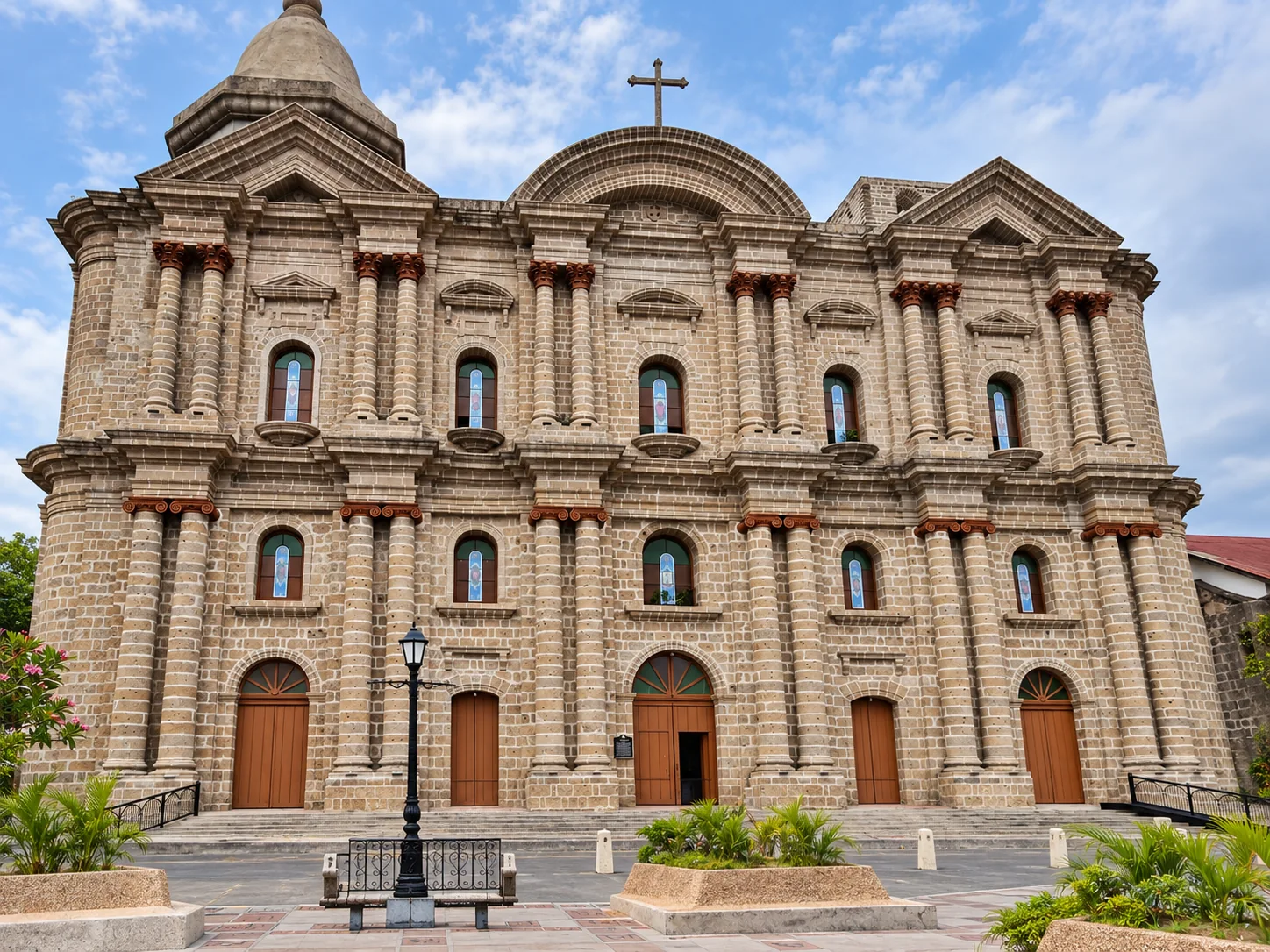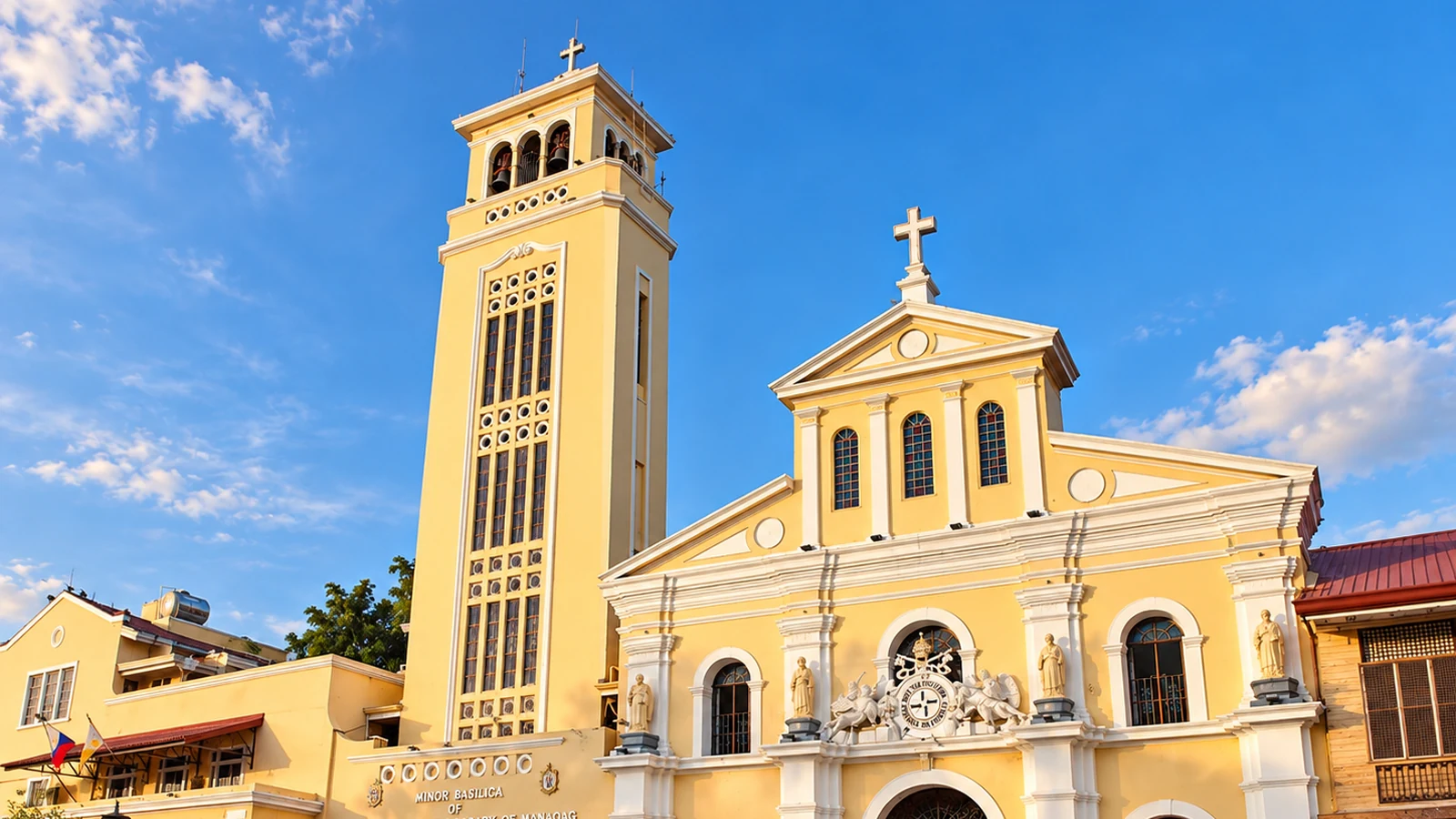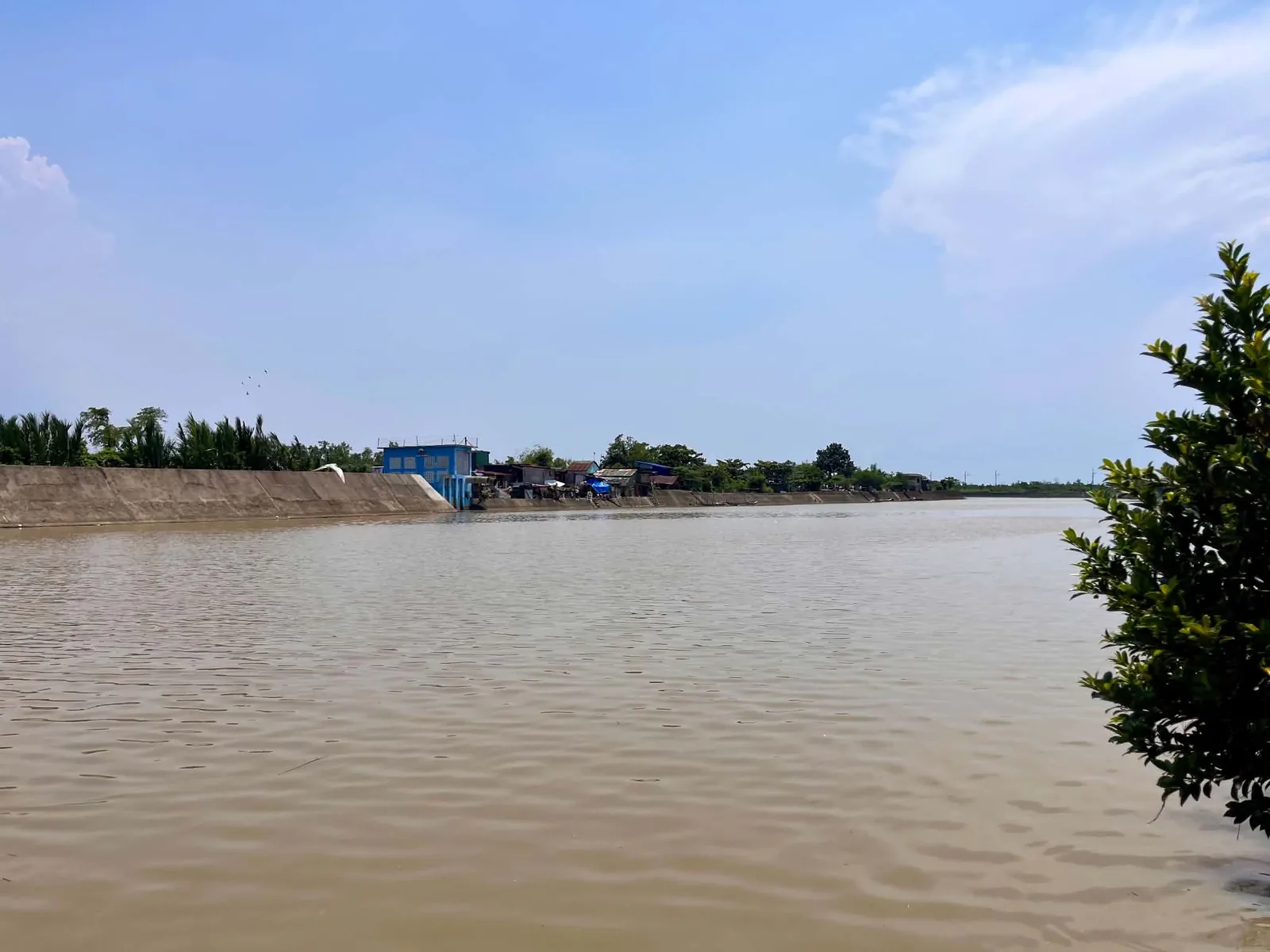
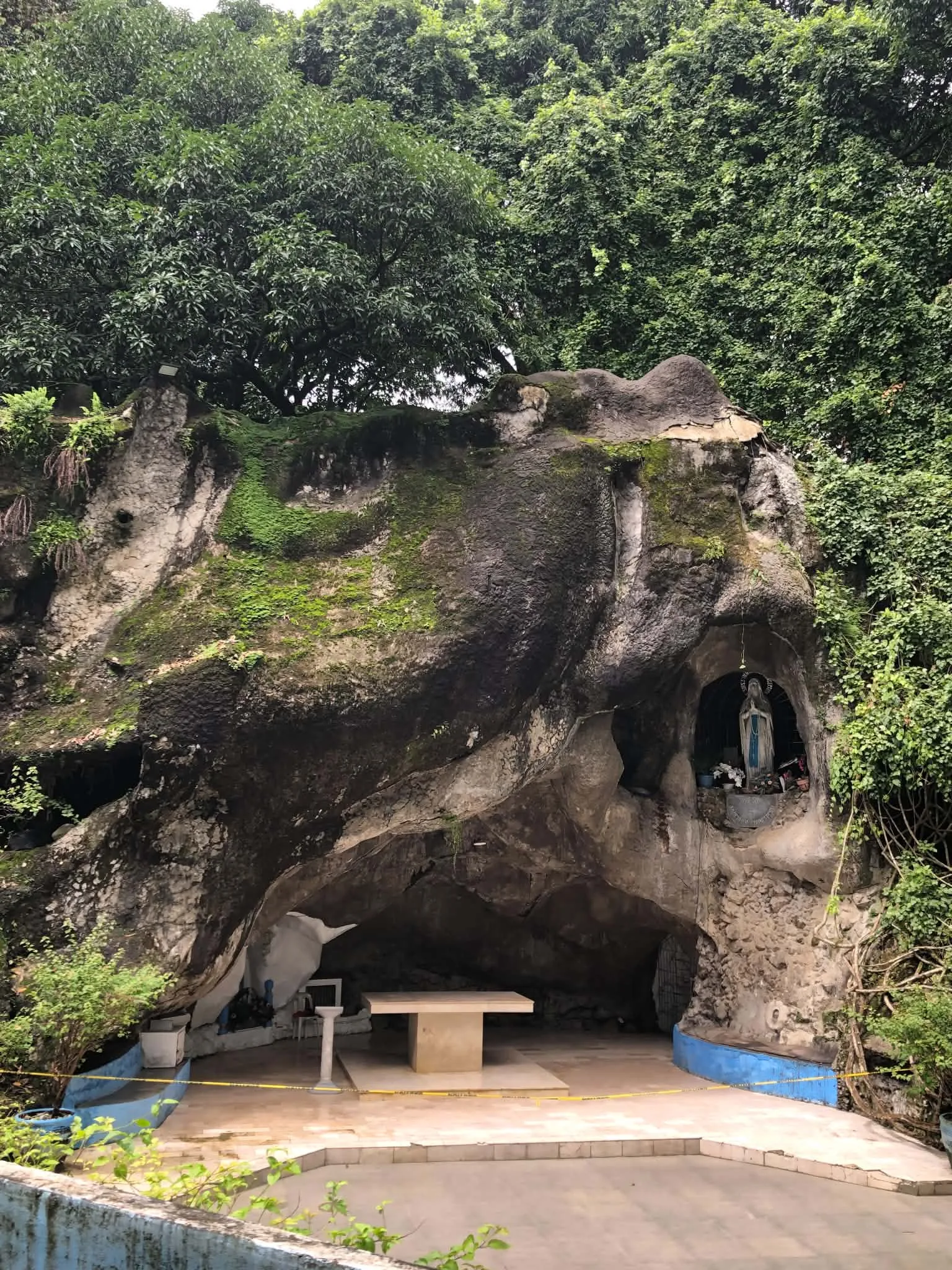
Have you ever felt a sense of purpose, needed a quick rest, a quick jog, or simply a walk while contemplating life—or maybe a faith-strengthening journey? Well, look no further, because we think this place might be just the one! Our Lady of Lourdes Grotto Shrine in San Jose del Monte, Bulacan, gave us the chance to pause and reflect.
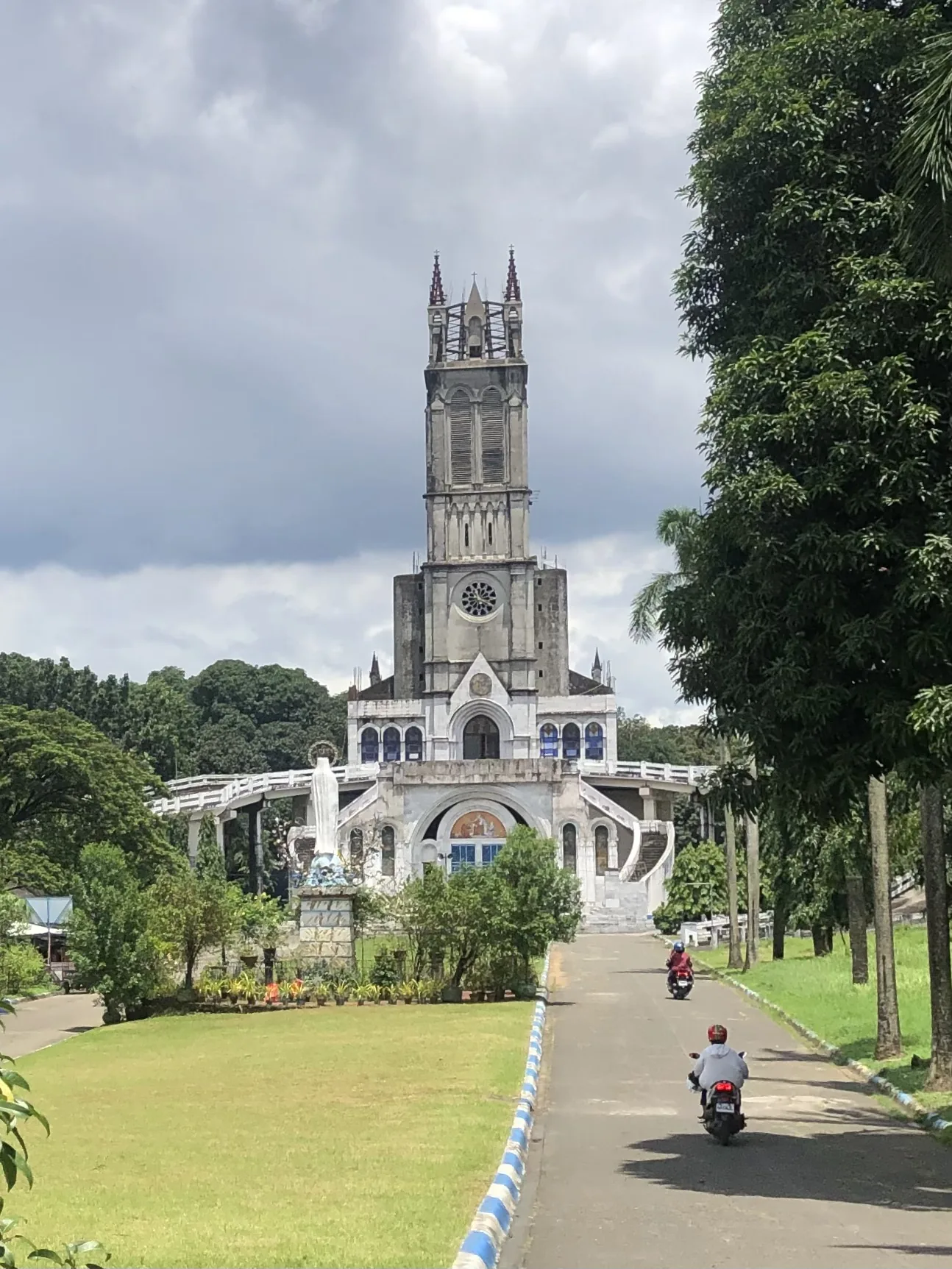
Upon arrival at the gate, we could see the beautiful church standing in the distance, as if it were greeting visitors. A long concrete and asphalt road led toward the parking area beside it. Surrounded by the embrace of trees, it felt as if nature and faith were fused together, making the scene almost ethereal. Seeing the religious imagery of Christ’s crucifixion and resurrection gave us a sense of awe and serenity.
Come along as we revisit the places, conversations and small moments that made our visit meaningful.
The road from Malolos
We traveled from Malolos Crossing in a private car and on a motorcycle, choosing our route and pace as a group. We passed through Malolos and toward Bocaue before taking roads leading to San Jose del Monte. The changing scenery and busy streets made us curious about what we might discover when we arrived.
At around 11:30 in the morning, we reached the grounds, parked our vehicles and began exploring. We paid what was described to us as a parking donation on that visit. We did not record an official fixed fee, so future visitors should not assume that our experience establishes today’s parking charges.
The church stood before us, tall and striking. Its architecture reminded us of the grand churches we had seen in photographs from abroad. What made this visit special, though, was not just the building but the peaceful atmosphere of the surrounding paths and trees.
Walking through Calvary Hill
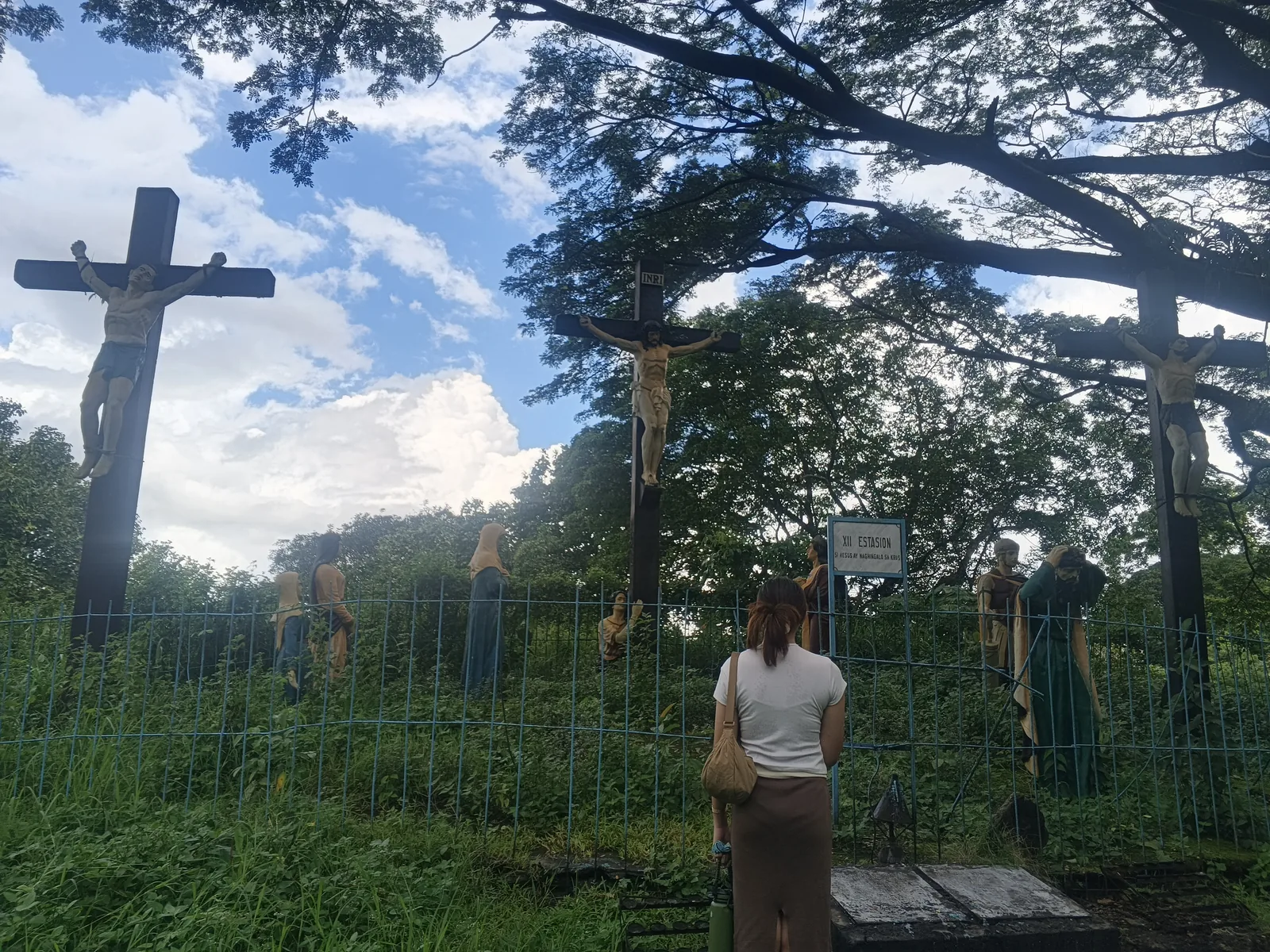
Behind the church, we explored Calvary Hill, where sculptures depict the fourteen Stations of the Cross. With each station, we found another moment to stop, look closely and think about the story being told. We also noticed a small blue structure where visitors could pause for prayer and candles.
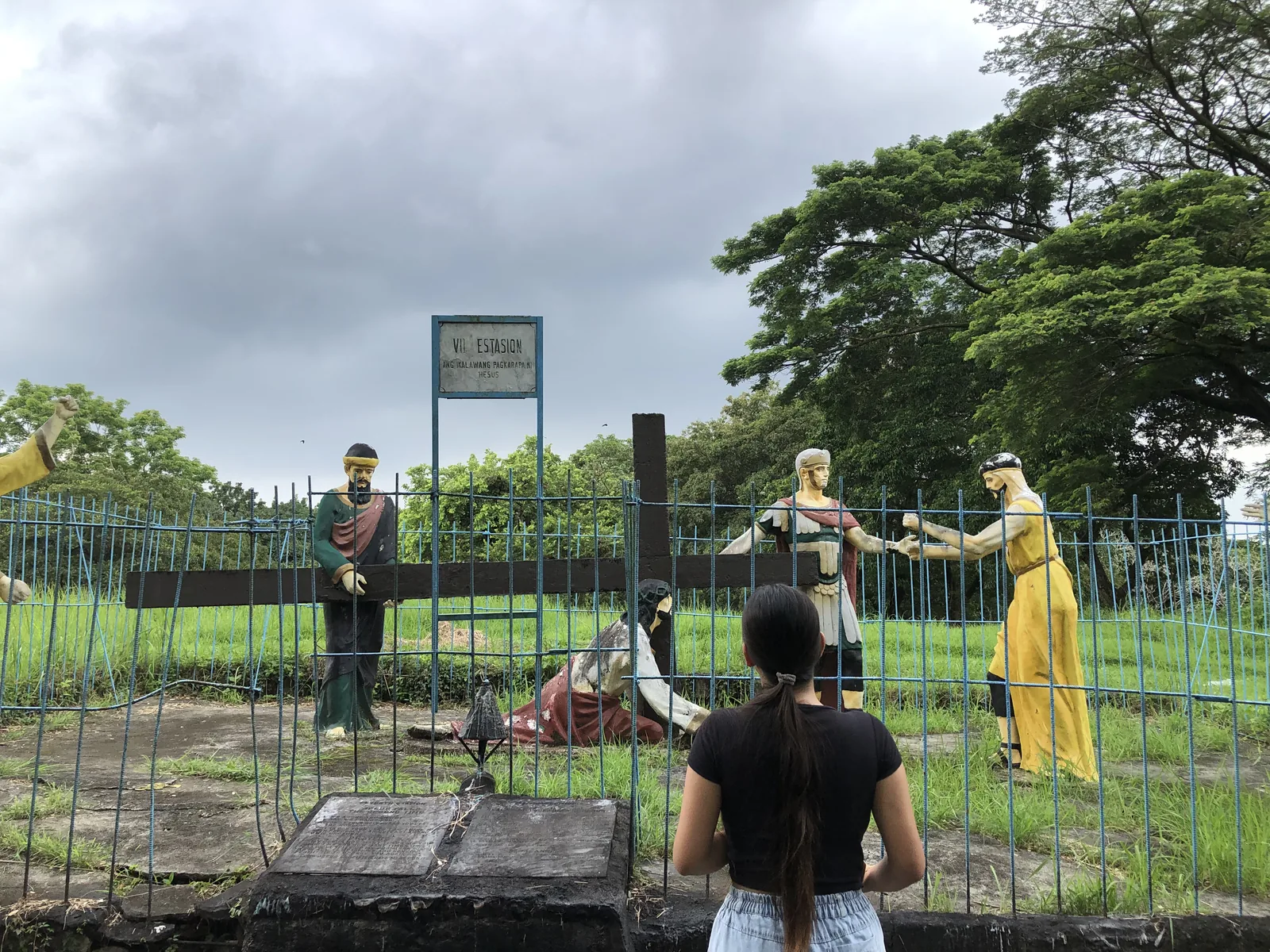
Calvary Hill stretched wide and open. Its spaciousness invited us to slow down and truly walk the journey. The day seemed kind to us, and the trees and plants softened the air around. As we moved from one station to the next, we felt something shift within us—something solemn, something unexplainable, something deep. Like a flower blooming in a field of grass.
The steps and Rosary Hill
We continued toward Rosary Hill, an area known for its large concrete beads arranged like a rosary. The uphill paths and stairs gave us time to take in the surroundings. We saw religious statues and a small resting place that made us curious about the people and family history connected to the shrine.
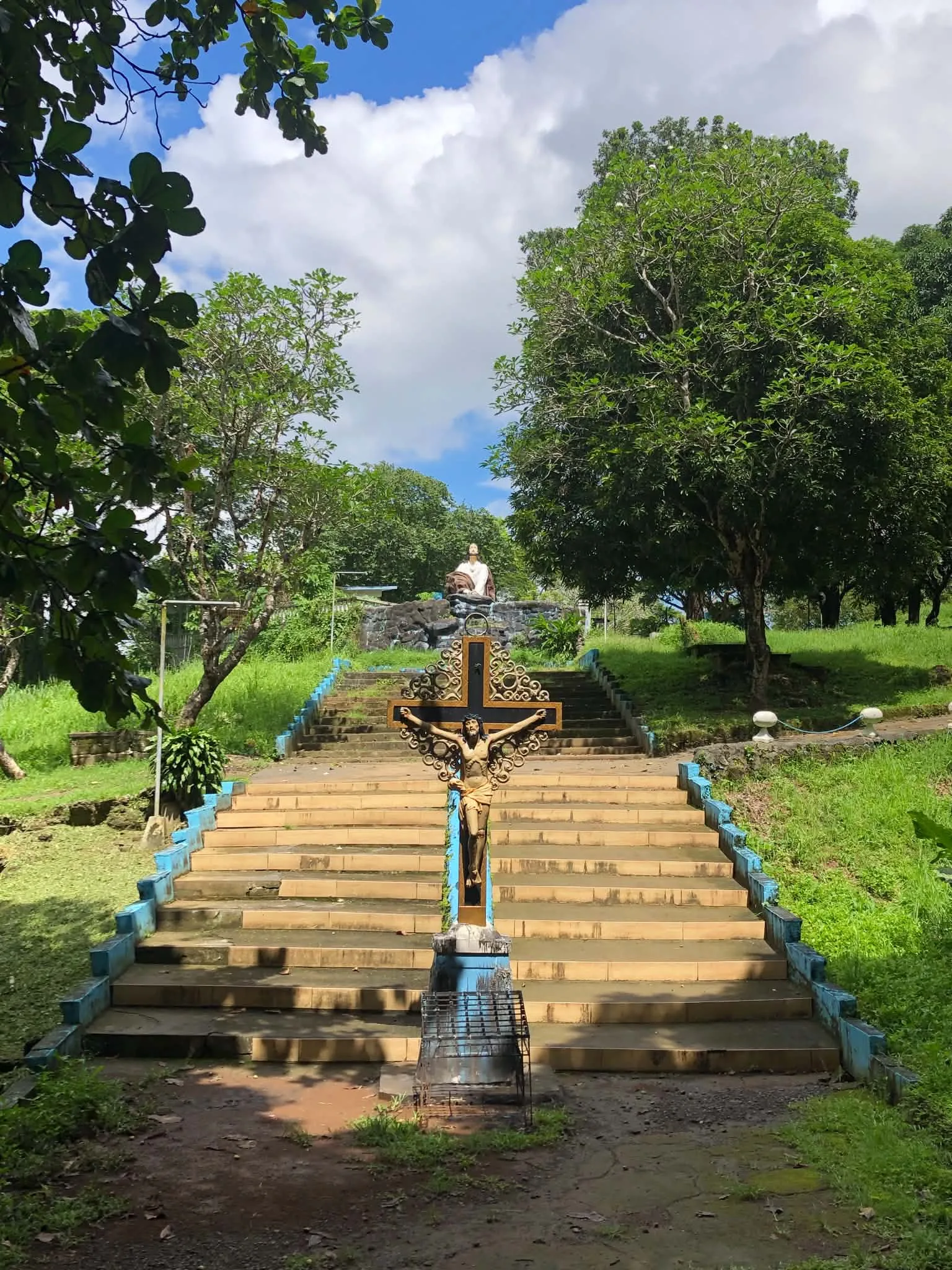
A grave on the grounds also caught our attention. Later, a local person shared a story about the Guanzon family’s resting place. We took that as one person’s recollection rather than proof of exactly who was buried where.
Rain, a holy spring and a quiet church
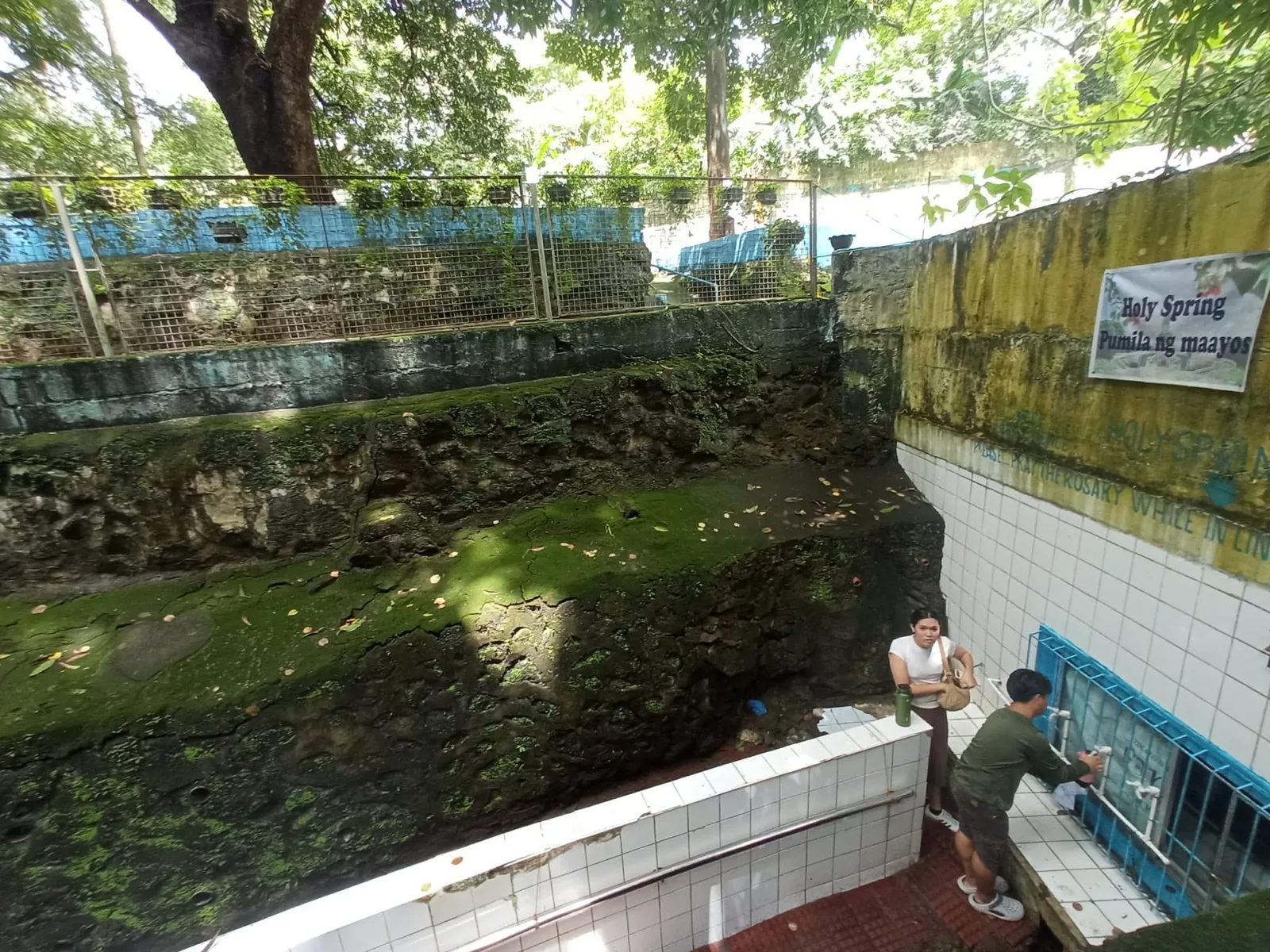
Eventually, our path brought us near the Holy Water Spring. We paused, sprinkled some water and said our own prayers. For us, it was a gesture of personal devotion, not a promise that the water could heal anyone or make a wish come true.
Suddenly, the skies opened. We didn’t see it as a disaster. Instead, the wet weather accompanied us as rain gently poured above our heads while we walked along the trail. We entered the church and took our time to pray.
The interior felt spacious yet gentle. Silence and prayer seemed to linger in its corners. We also saw an upper sanctuary area that was under renovation when we visited, so we could not explore it fully. By the time we stepped outside again, the calmness of the place had stayed with us.
Stories shared while we sheltered from the rain
After roaming around, we found a nearby carinderia, and the owner was kind enough to let us stay for a bit as the rain poured. He told us stories about how the Grotto was built. We appreciated the chance to listen to someone from the community; the conversation became as memorable as the places we had come to see.
The story we heard involved the Guanzon family and their gratitude after Anita Guanzon’s recovery from illness. We later checked published accounts: the shrine was established by Horacio and Anita Guanzon and opened to the public on February 11, 1965. Anita and her family understood her recovery after a pilgrimage to Lourdes, France, as miraculous. That is their family’s account of faith, not a medical conclusion we can independently establish.
We also heard stories about who managed the shrine over time. The history is more complicated than a simple change from one church to another. In July 2024, the Diocese of Malolos formally assumed pastoral care of the grotto under an agreement with the Guanzon heirs. The diocese’s announcement specifies pastoral management; it should not be casually described as proof that property ownership was transferred. [1] [2]
As we listened, one thought stayed with us: faith can be a source of courage when life is frightening or uncertain. That personal reflection was what the conversation meant to us, even as we recognized the importance of getting the historical details right.
Souvenirs and the kindness of local people
As the sun started to show again, we made our way to buy souvenirs from a woman selling handcrafted rosaries and bracelets not far from the Grotto. We admired her energy and the care behind her work. We also shopped for pasalubong nearby and enjoyed a simple meal and good conversation with the locals.
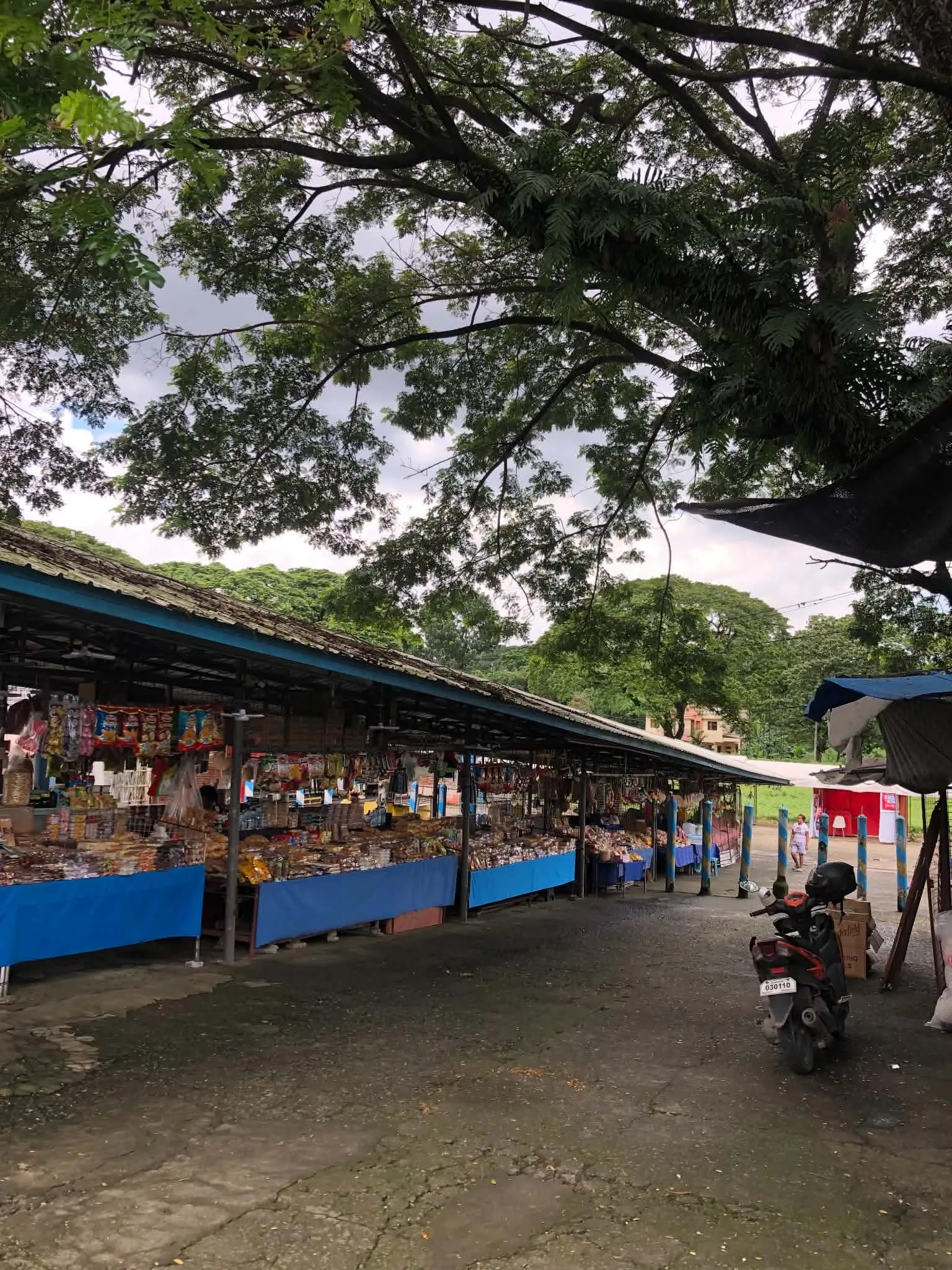
The good conversations stayed with us. We had come to see a church and its grounds, but we also met people whose everyday lives were connected to the place. Before leaving, we took one more quiet walk along the path, carrying home something more meaningful than a souvenir.
More than a building
For us, this sacred place became more than a location we visited. Through our lenses, we captured not only its appearance but also the feeling of faith, gratitude and peace woven through its paths. Every quiet corner and every soft beam of light seemed to hold a meaning shaped by the devotion of those who came before us.
We may arrive to see a grotto, a church or a family’s resting place. We may leave carrying a question about ourselves: Am I truly living my faith, or simply carrying its name? We shouldn’t leave God when we get what we want, nor turn to Him only when we need help. Sometimes visiting this place is not simply about finding somewhere to pray. It is about remembering where our faith calls us home. Go find Him more; seek Him, for God is always waiting for you to come back.
Practical visitor notes: Planning a visit to Lourdes Grotto
These notes are separate from our personal travel journal. Conditions and services can change, so please confirm important details before traveling.
- Where it is: Our Lady of Lourdes Grotto Shrine, Barangay Graceville, City of San Jose del Monte, Bulacan. This is not the Lourdes Grotto in Baguio City. [3]
- Getting there: We traveled from Malolos Crossing using a private car and motorcycle, passing through the Malolos–Bocaue area and onward to San Jose del Monte. We did not test public-transport routes, travel times or fares, so we cannot recommend a verified jeepney or bus connection from this visit.
- What to see: The church and grotto, Calvary Hill’s Stations of the Cross, Rosary Hill and the Holy Water Spring are well-documented features of the complex. Paths and steps are part of the experience; choose a route that suits your mobility and comfort. [4]
- What to bring: Comfortable walking shoes, water to drink, sun protection, and rain protection, especially when showers are possible. Outdoor steps may be slippery in wet weather.
- Parking, admission and donations: We made a parking donation during our September 18 visit, but we did not establish a current official price list. Do not treat this account as confirmation of admission or parking fees.
- Hours, Mass and access: We could not verify a current official schedule for all shrine areas or Mass times. Check announcements from the Diocese of Malolos or shrine administrators before traveling, especially for Holy Week and other major observances. [1]
- Respectful visiting: The shrine is an active place of devotion. Keep noise low in prayer areas, dress considerately, follow posted signs and ask permission before photographing people.
Sources and factual notes
- [1] Diocese of Malolos, Pastoral Management of Lourdes Grotto in CSJDM Given to the Diocese of Malolos, July 2024
- [2] GMA News, Malolos diocese takes over pastoral care of Lourdes Grotto, July 23, 2024
- [3] City of San Jose del Monte, Religious attractions
- [4] Philippine News Agency, Our Lady of Lourdes grotto in Bulacan revisited, April 21, 2019