Visited Friday, May 15, 2026 · Visitor information checked November 17, 2026.
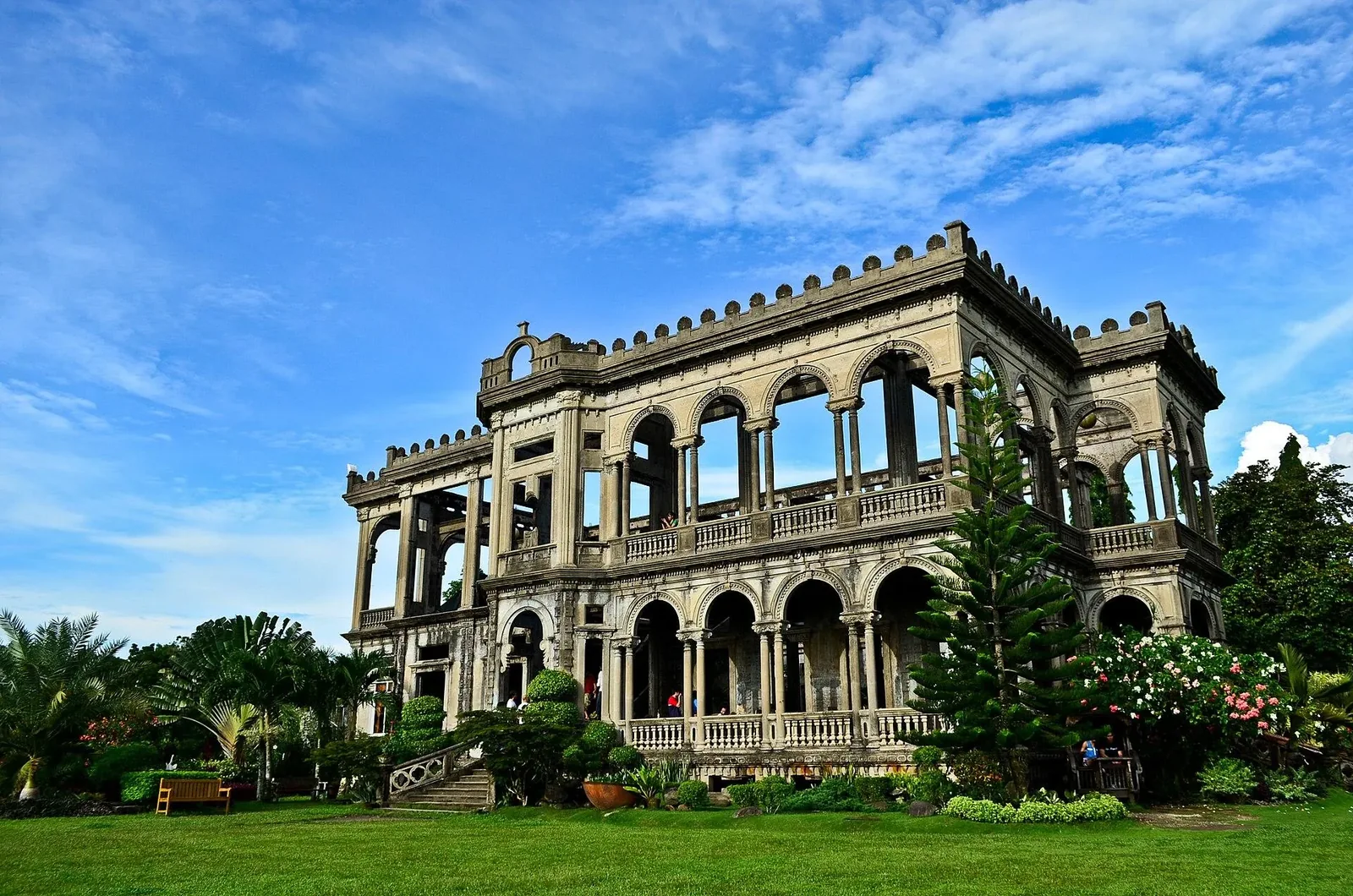
Of everything we saw at The Ruins, I keep coming back to how much of the mansion survived the fire. The roof and wooden floors were gone, yet there were the arches, columns and balustrades, still giving the house its shape. Standing beside it, I found the surviving structure remarkable.
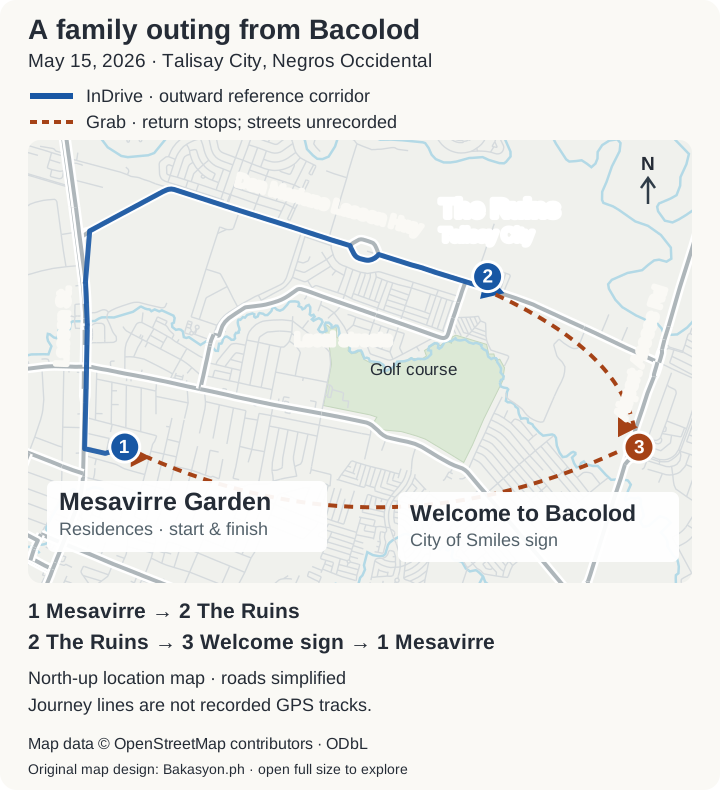
The Lacson mansion is in Talisay City, Negros Occidental, just outside Bacolod. We visited as a family while in Bacolod for our daughter’s archery competition at the 2026 National Private Schools Athletic Association (National PRISAA) Games, held May 9–16. We had flown from Manila and were staying at Mesavirre Garden Residences. On Friday, May 15, we made time to see the mansion and its gardens.
From Mesavirre to the entrance
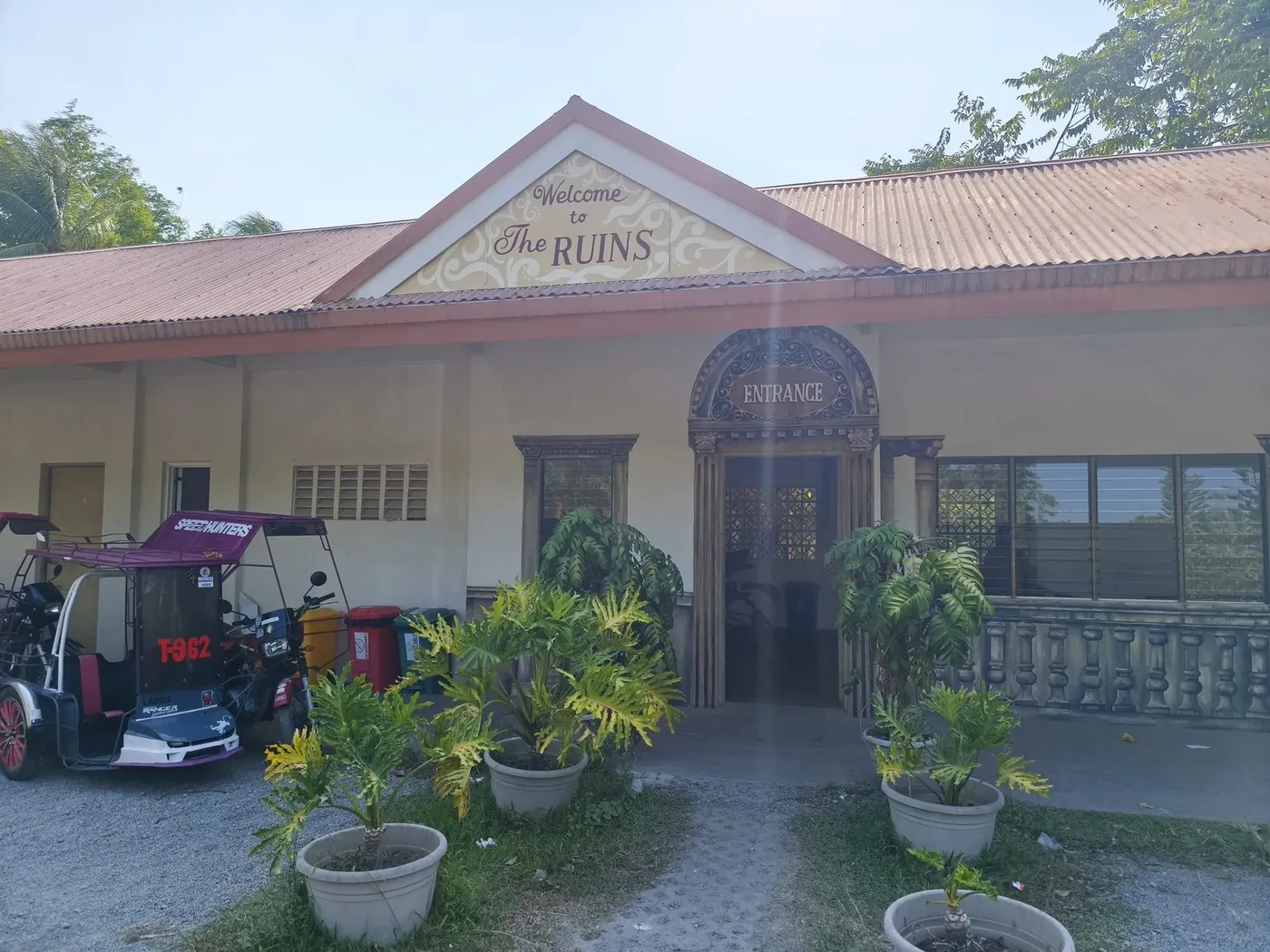
We booked InDrive, which was often cheaper for us around Bacolod. The ride from Mesavirre took about seven or eight minutes and cost approximately ₱120. Our driver dropped us in the parking area right outside the visitor entrance.
Tour buses, taxis, tricycles and private vehicles were already there. It felt busy before we had even reached the house. We photographed the admission sign at the entrance, a useful record of the prices and rules on the day.
Taking the garden route
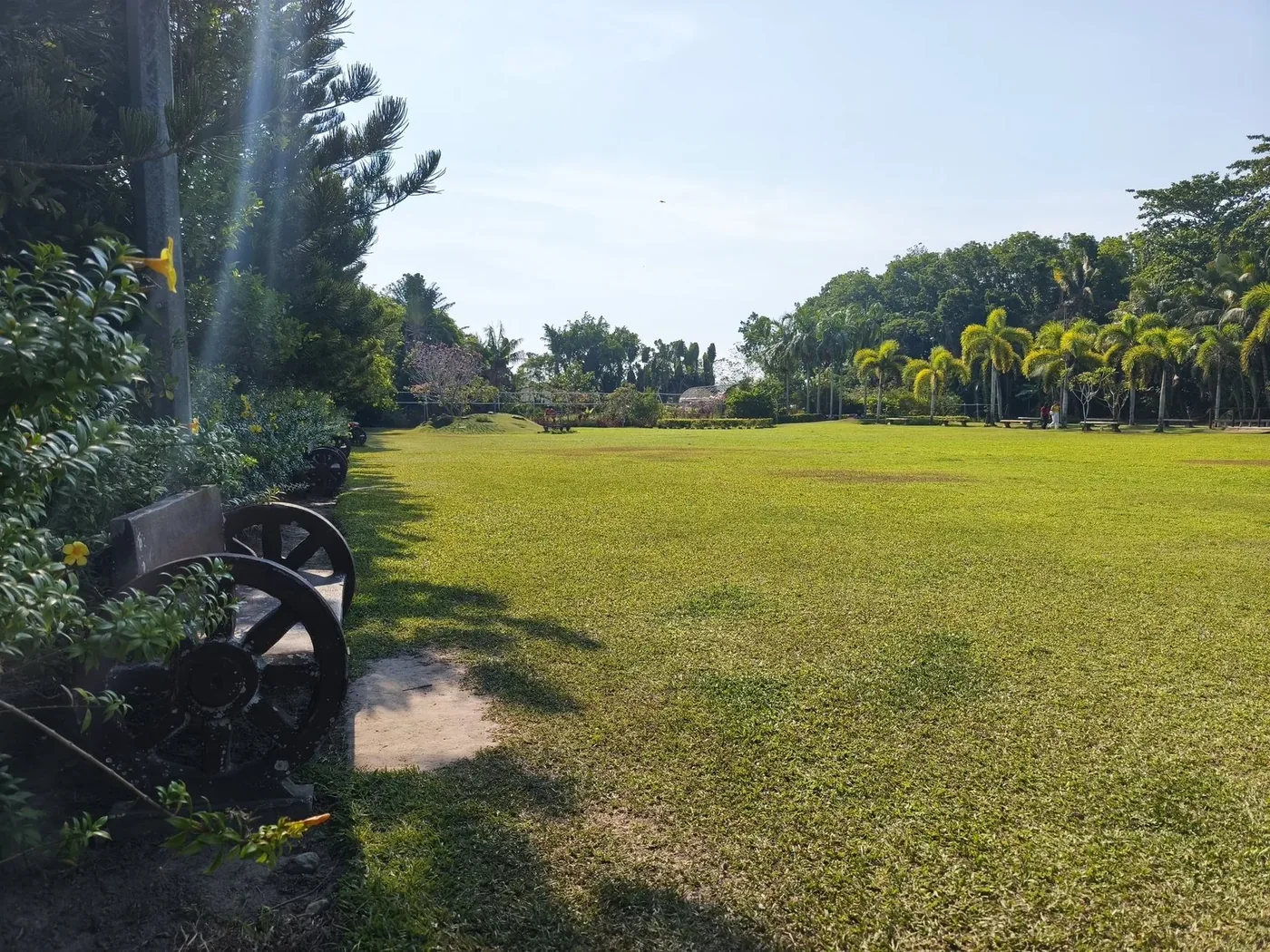
Many visitors headed toward the mansion. We began with the sprawling lawn to the side: a broad green field with benches, tropical plantings and flowers. The gardens gave us plenty to explore before going inside.
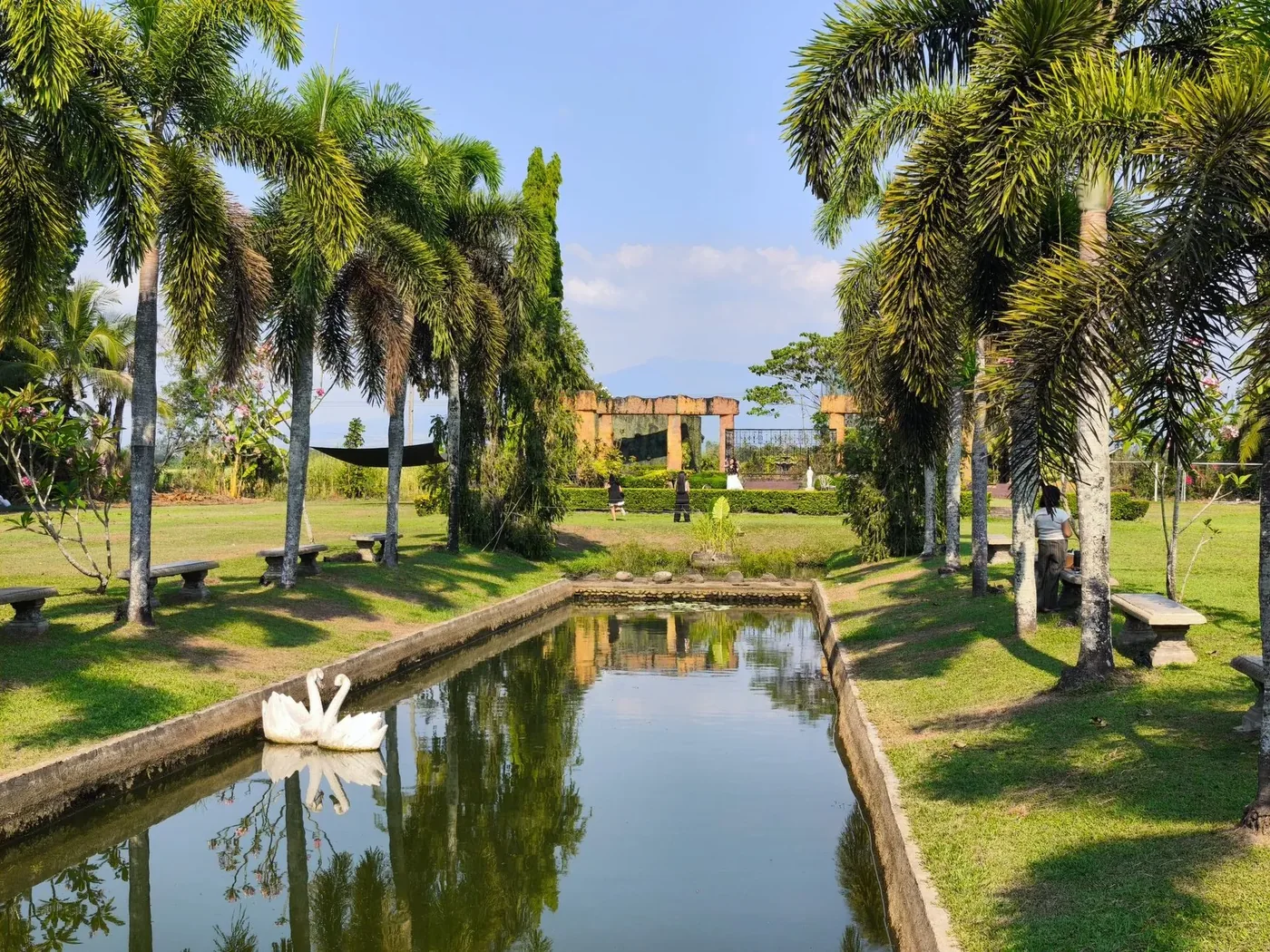
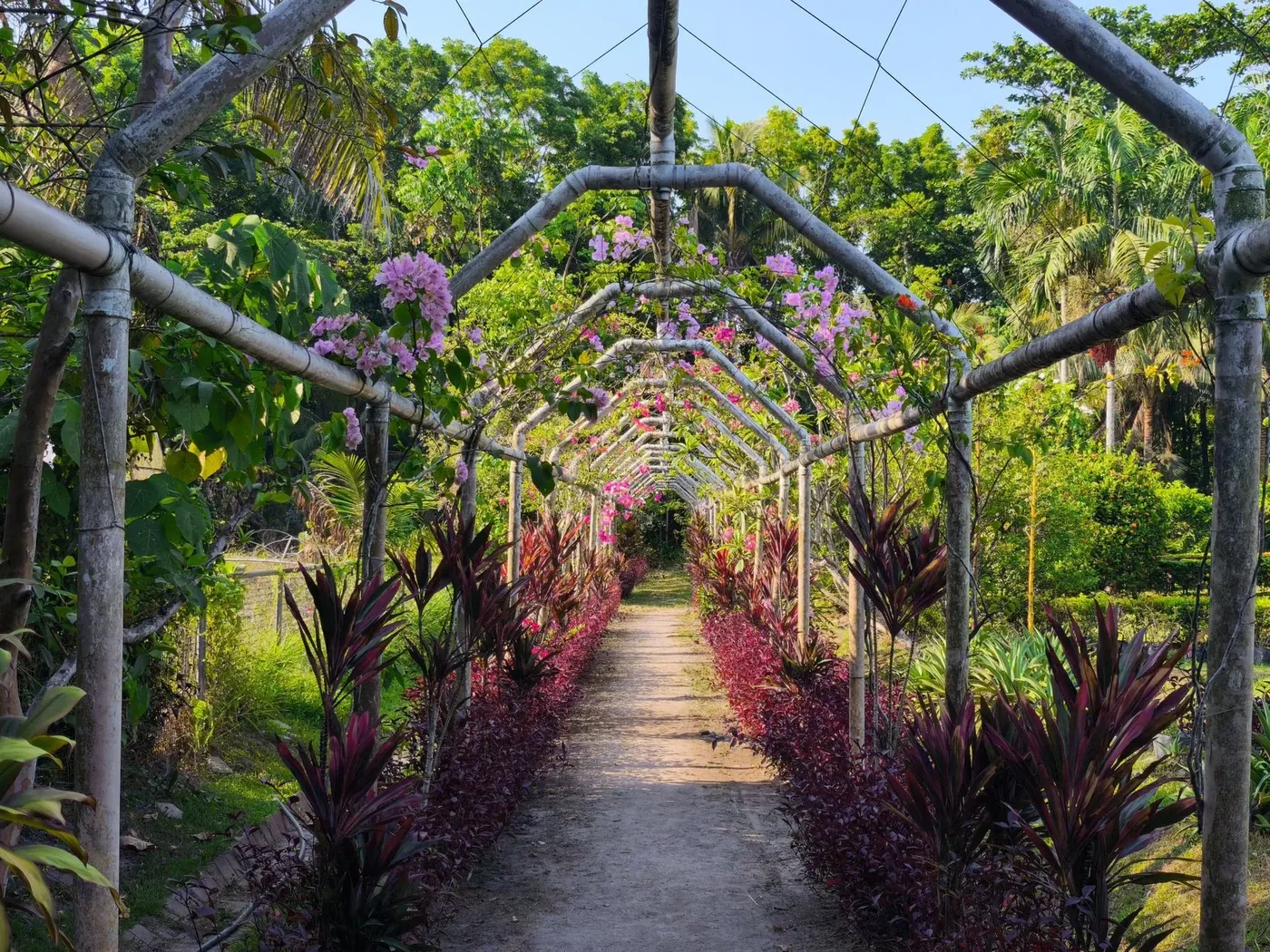
At the ornamental pond, decorative white swans sat among the palms. From there, we passed through a flower-covered walkway toward the main grounds.
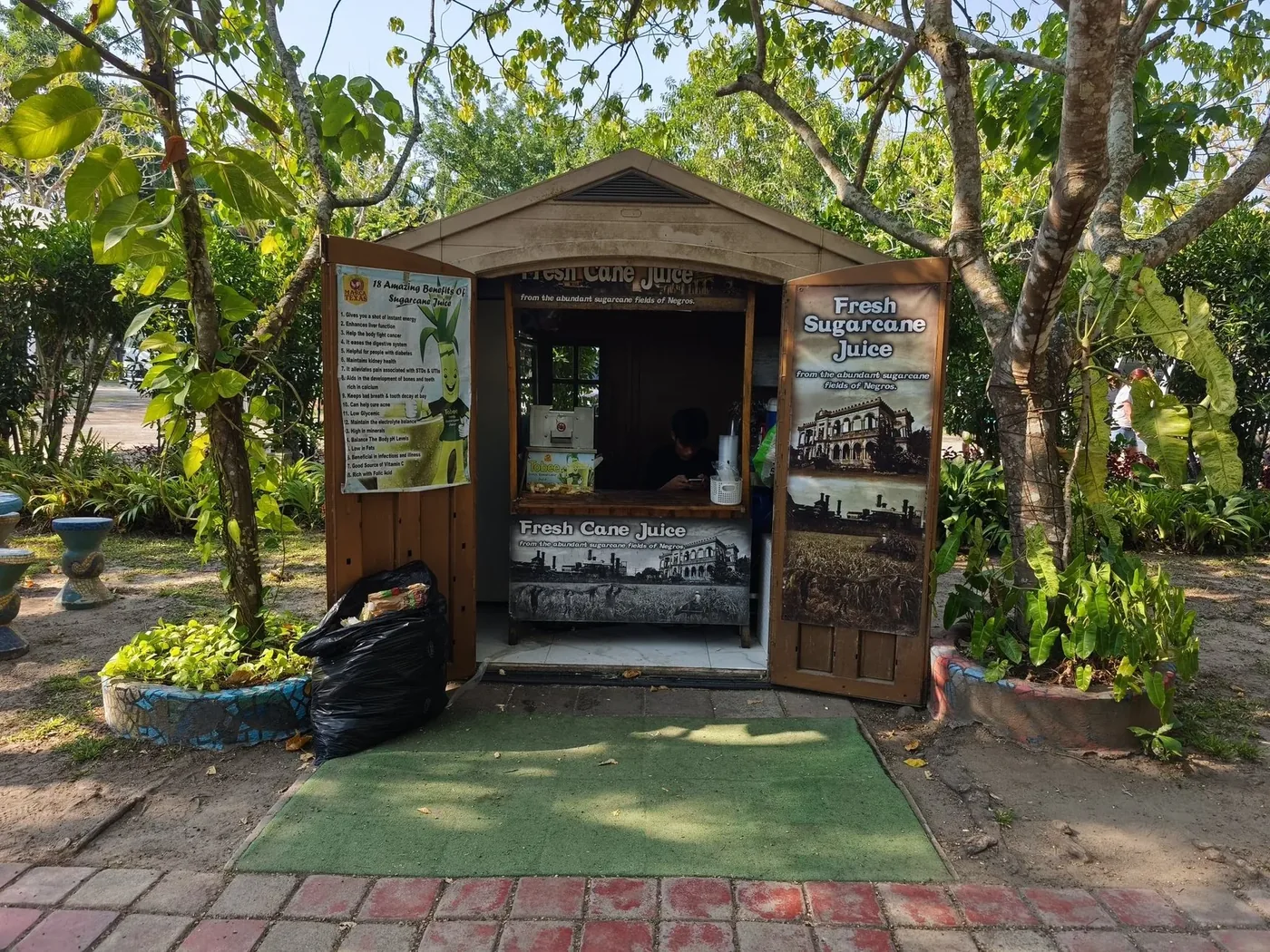
Near the mansion was a little stall selling fresh sugarcane juice, an apt sight on a former sugar estate.
A house still standing after the fire
Closer to the mansion, the staircase, rows of arches and weathered concrete drew my attention. Visitors were moving around and through the building, stopping for photographs. Even with so much lost, the surviving walls and columns still conveyed the scale of the house.
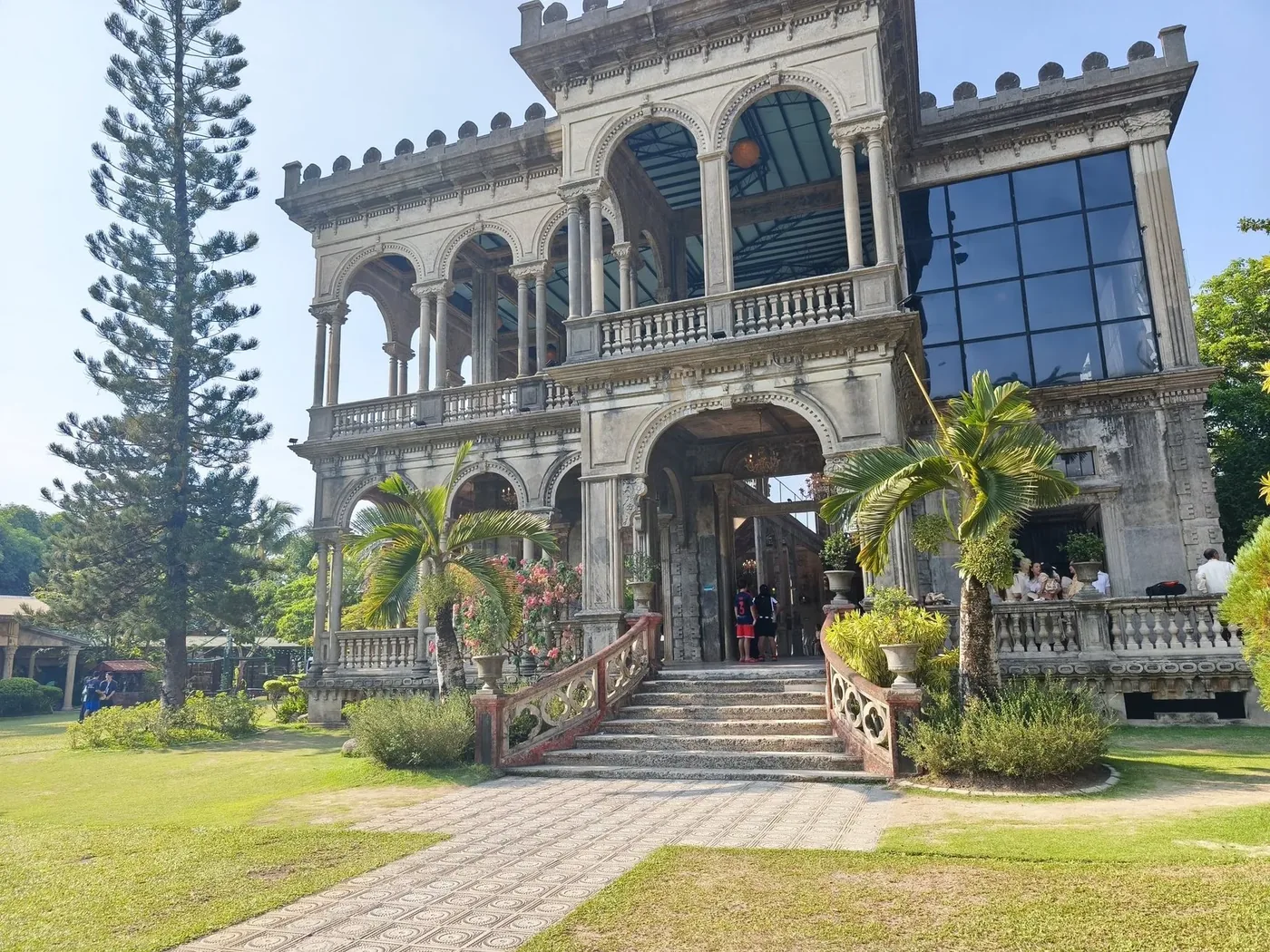
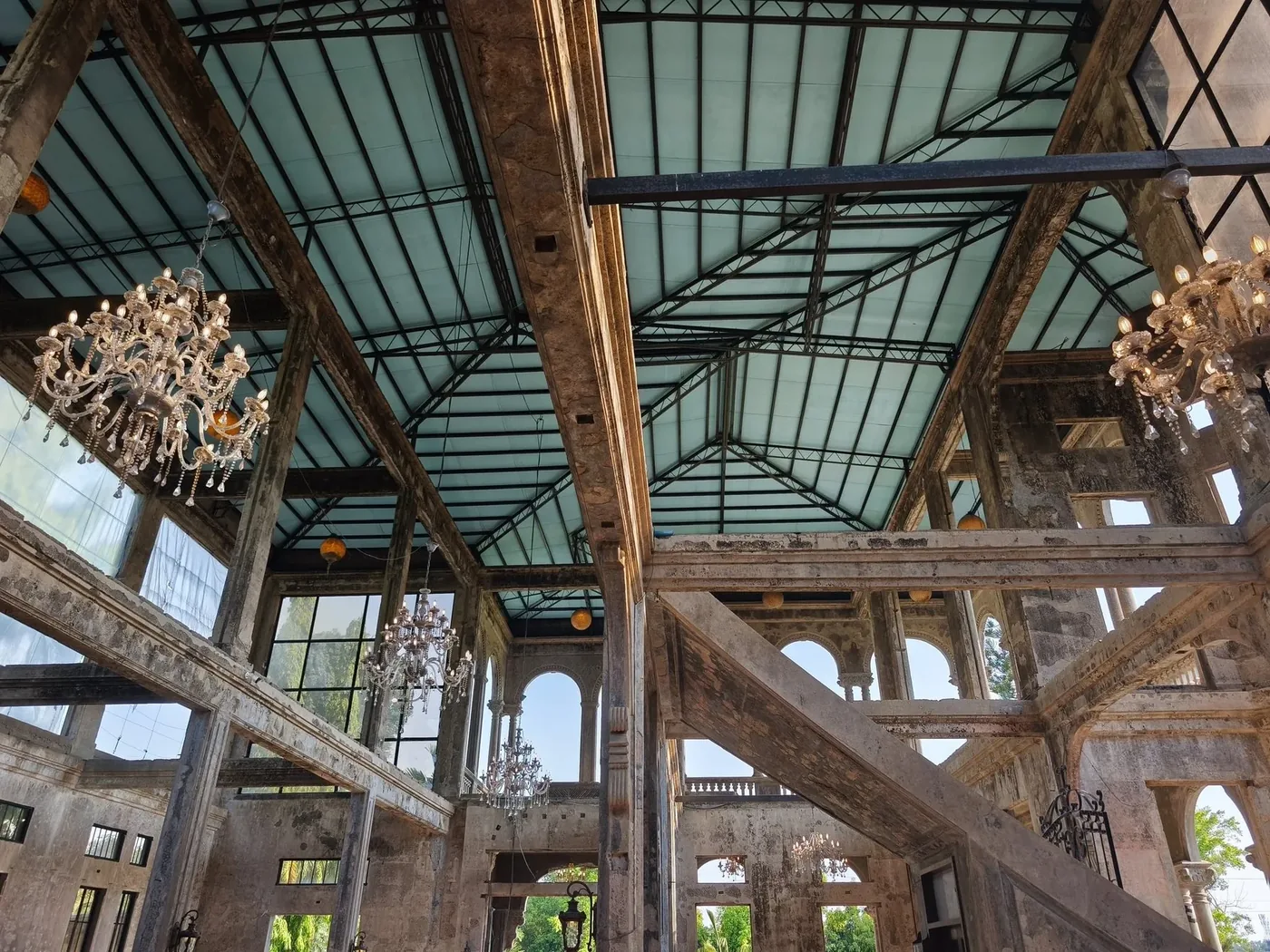
Inside, chandeliers hung beneath a modern roof sheltering the remains. You can see the old structure clearly; this is no fully restored period interior. For me, that made the survival of the frame all the more striking.
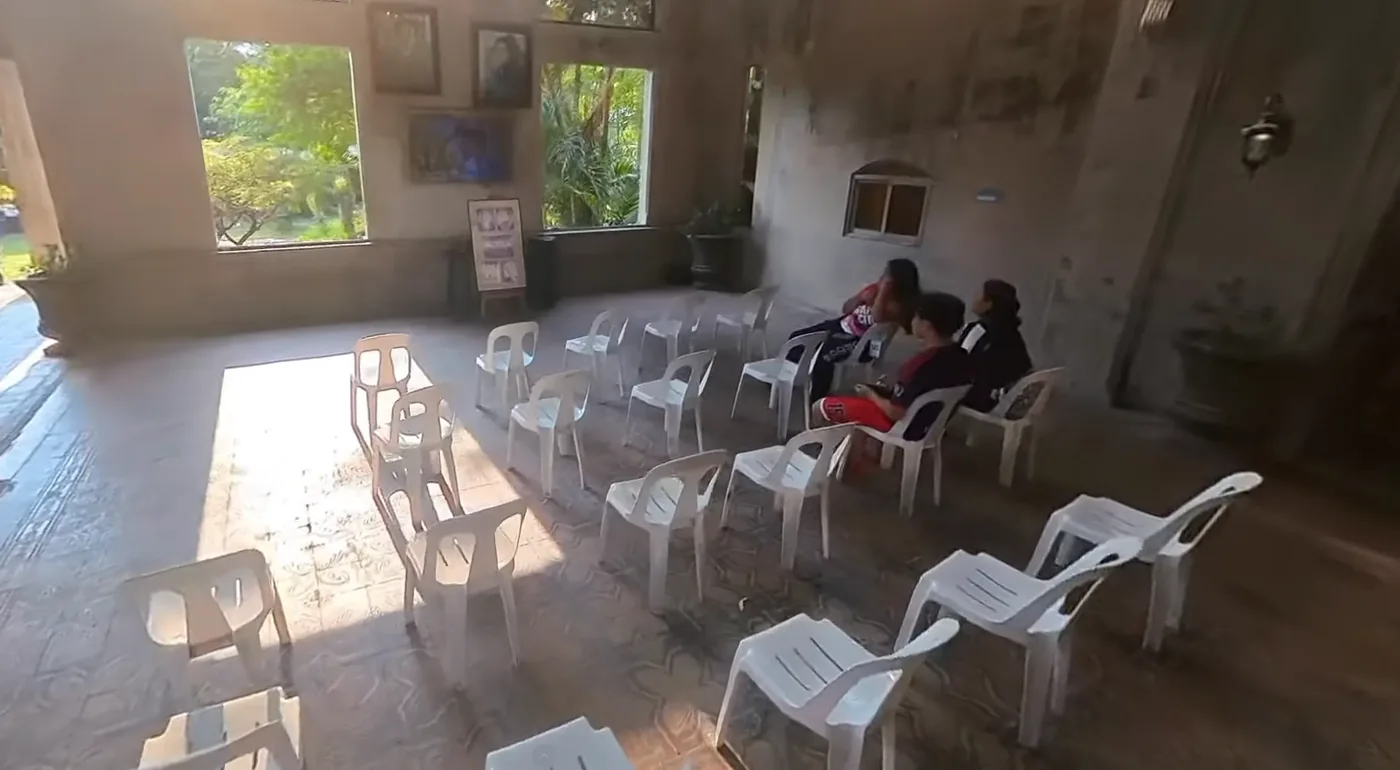
We found family busts and portraits, historic photographs, newspaper and magazine displays, and informative wall plaques. Then we sat on the chairs and watched a video about the estate and family. A guide also explained the history. The presentation put the family behind the mansion into focus, giving us more to take away than photographs of a beautiful building.
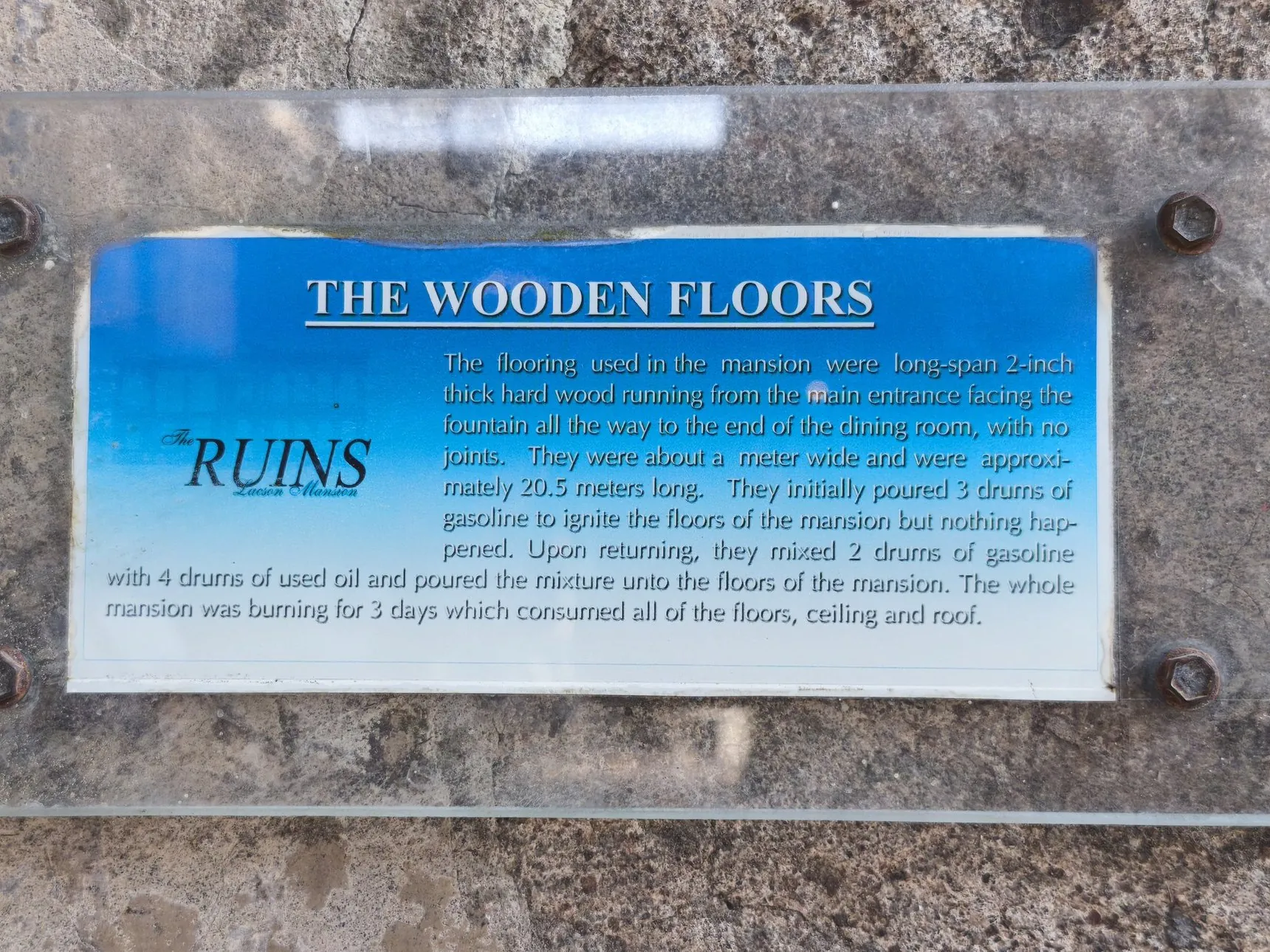
That family history helps explain the mansion we had just walked through. According to the venue’s Lacson family account, sugar planter Mariano Ledesma Lacson built the Italianate mansion on the family’s sugar estate in memory of his wife, Maria Braga. During World War II, the house was deliberately burned to prevent Japanese forces from using it. The wooden floors and roof were lost, while the masonry frame remained.
Interaksyon’s 2025 visit report also recounts the memorial and wartime burning, dating construction to the 1920s. Other accounts place it earlier in the century; the precise construction year remains uncertain.
The plaques brought that history down to details of the house: decorative floor tiles near the former kitchen, a small arched pass-through to the dining area, and the long hardwood floors destroyed in the fire. The venue also credits a son, Felipe, with overseeing the concrete work. These are the on-site explanations we encountered, and the wooden-floors plaque is pictured below.
Walk through The Ruins with us
Loading the player connects to YouTube. You can also watch our horizontal walking tour on YouTube or explore the original 360° tour on @360tour.
Around the side and back
Outside, a small decorative steam-locomotive-shaped display stood beside signs pointing to the Souvenir Shop, Gazebo, Grotto, Marapara Garden and Piazza. Around another side of the mansion were large bowl-shaped planters and more garden space. A tree carrying several large jackfruits, or langka, was another detail we noticed as we walked around.
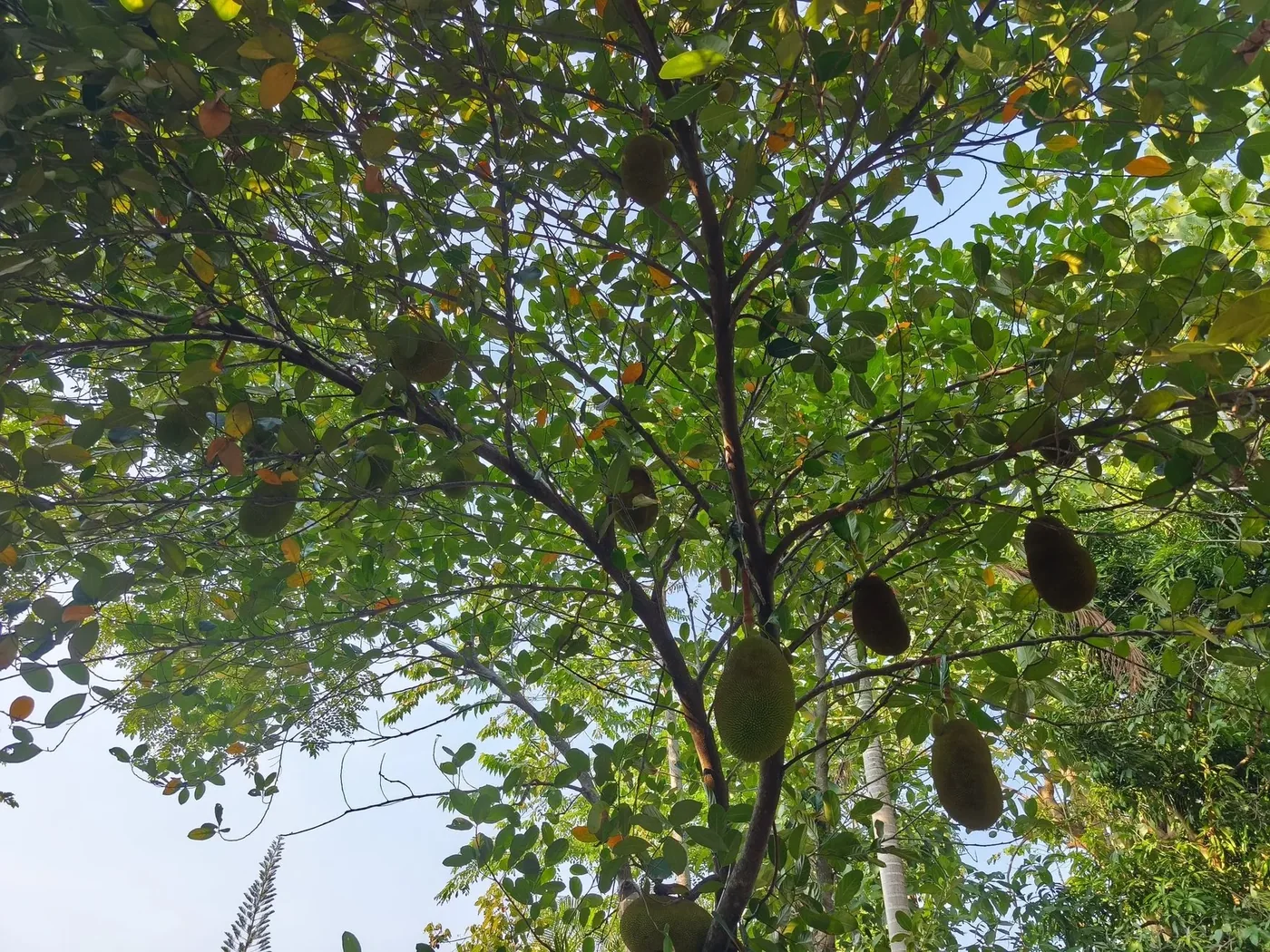
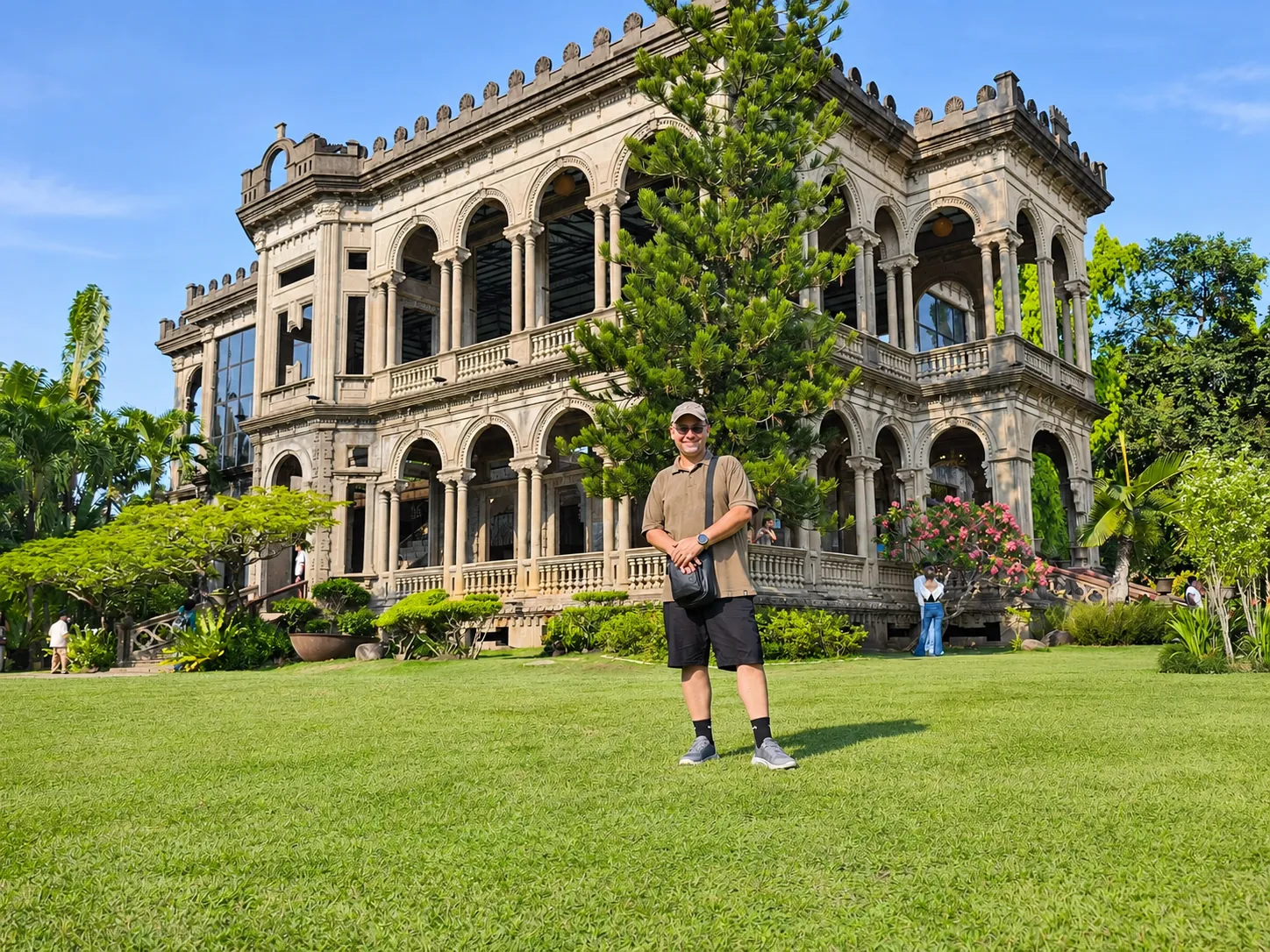
Google Maps Timeline puts our stay at approximately one hour and fifteen minutes. That felt sufficient for our family to explore the gardens, look around the mansion and sit through the presentation. It was very hot and fairly crowded, which made walking around less comfortable than it might have been on a cooler day.
A photo stop on the way back
We took Grab back, stopping at the colorful Welcome to Bacolod / City of Smiles sign for family photographs before continuing to Mesavirre. The return journey, including that stop, cost approximately ₱90.
At The Ruins, someone had quoted us ₱150 for a tricycle to the welcome sign alone. We would still have needed another ride to our accommodation, so the Grab journey suited our plans. These fares and the outbound InDrive amount are our May 15 experience; app prices and availability vary.
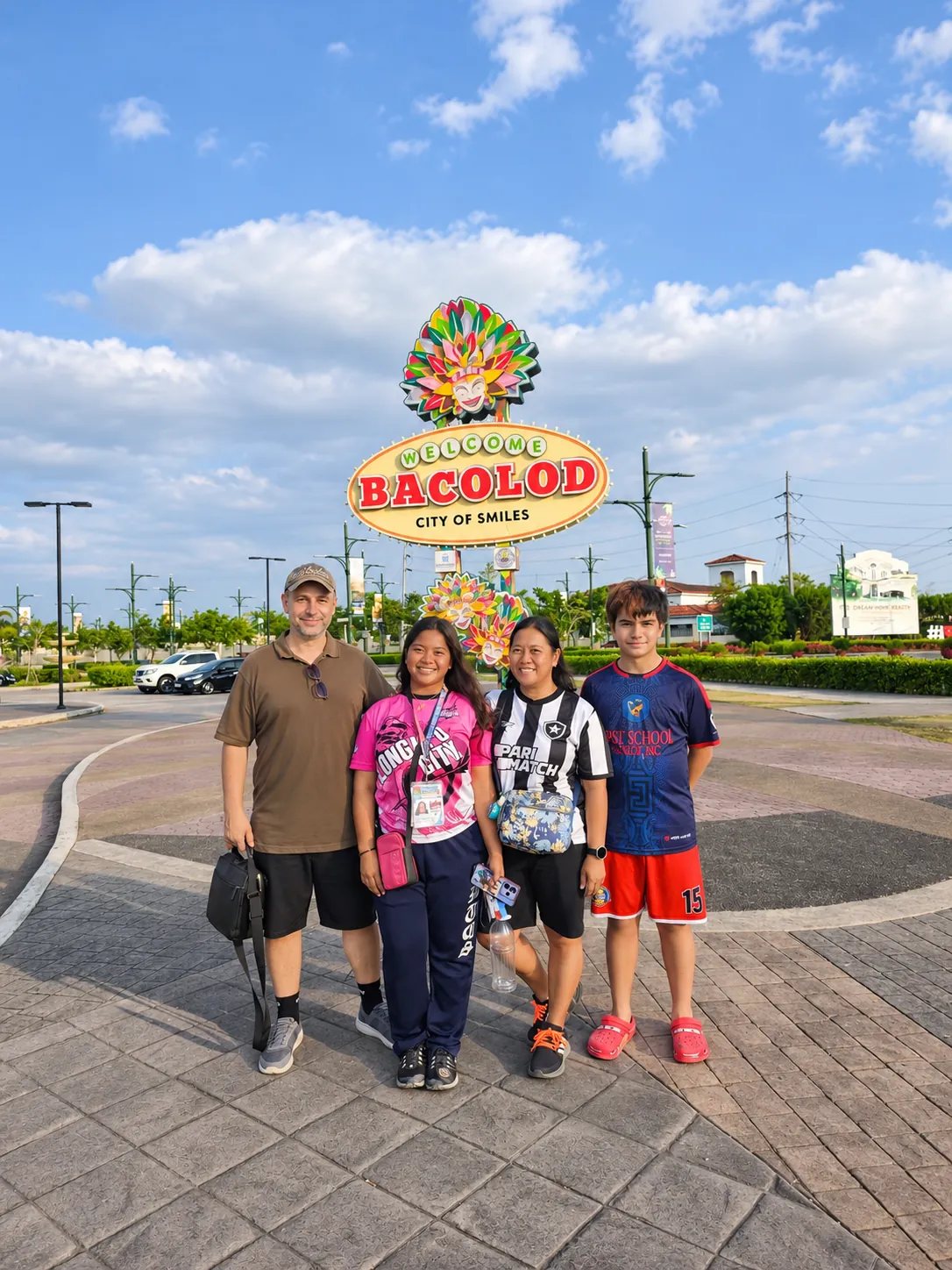
I would recommend The Ruins. The gardens and history presentation made it a fuller family outing, but the mansion itself is what I remember most: a house burned during the war, with so much of its structure still standing. Seeing those remains up close was the highlight of our visit.
I would go prepared for the less appealing parts, too. I found admission, food and souvenirs relatively expensive, and the heat and crowds are worth planning around. I would eat before or after the outing. Next time, I would consider arriving after 5 p.m. to miss some of the daytime heat, though we did not try that ourselves; weather and fading daylight will affect both the visit and photographs.
Planning your visit: entrance fees and hours
Allow around 60–90 minutes, or longer if you want more time for photographs and exhibits. Our 75-minute stay is a useful starting point, rather than a limit.
The official venue website, checked November 17, 2026, lists the admission prices below. They match the basic rates we photographed in May. Normal published hours are 9 a.m.–8 p.m. daily, also shown on our May roadside photograph. Check with the venue before travelling, especially for private-event closures or changed arrangements.
| Category | Published amount |
|---|---|
| Adult | ₱150 |
| Senior citizen / PWD | ₱100 |
| Student | ₱80 |
| Child below eight | Free when accompanied by an adult |
The May sign requires applicable IDs for discounted entry. It also advertised ₱400 consumable, valid only in the venue restaurants, which could not be combined with government-mandated discounts, and ₱1,000 for a five-person photoshoot. Ask whether the consumable option is still available. The website’s November listing specifies ₱1,000 for the first five photoshoot participants, including crew; additional people pay their corresponding entrance fees.
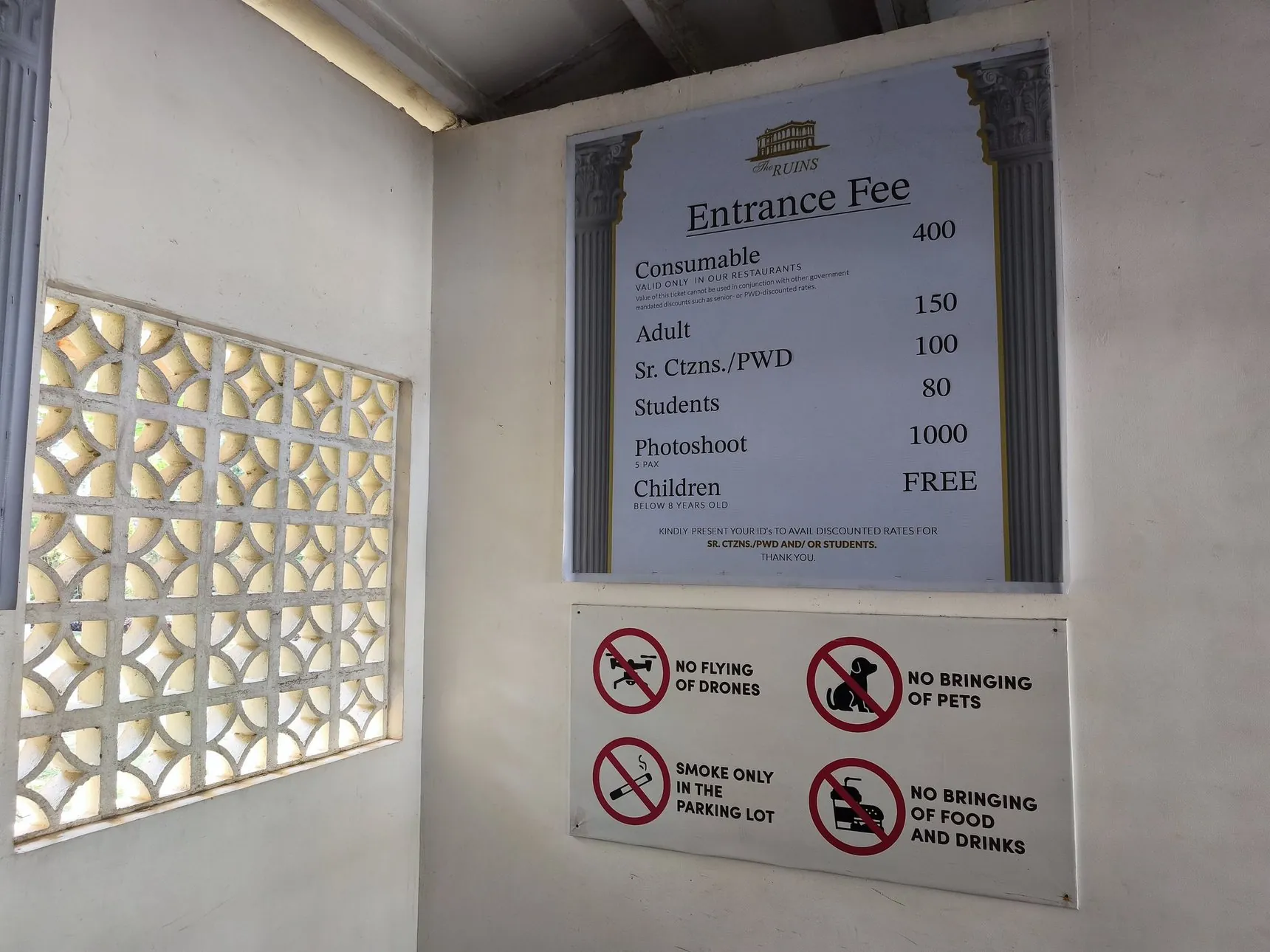
- Food, pets and other restrictions: our May sign prohibited outside food and drinks, drones and pets. Smoking was limited to the parking lot. Check the latest rules when planning.
Getting to The Ruins from Bacolod or the airport
For a booked ride, select The Ruins in Talisay City and confirm the visitor entrance with your driver. The venue’s official directions take drivers north from downtown Bacolod along Lacson Street, then toward the property on Don Mariano L. Lacson Highway. From Bacolod–Silay Airport, they describe following the airport access road south toward Bacolod and turning onto the same highway.
For public transport, the venue describes a connection via Bata, an Acropolis Gardens/Rose Lawn drop-off and a tricycle toward Octagon Village. We used app rides, so check the current public route, pickup, fares, service frequency and final walking conditions locally. A direct ride may be easier for a group that wants to avoid transfers. Our Bacolod transport guide helps compare the choices.
For the rest of your stay, see our Bacolod food and heritage guide and seven-day Bacolod itinerary.
Photography and video: Kris Tarr, from our May 15, 2026 visit.
About the author: Kris Tarr documents firsthand travel experiences in the Philippines through original photographs, videos and practical visitor observations. Contact Bakasyon.ph.