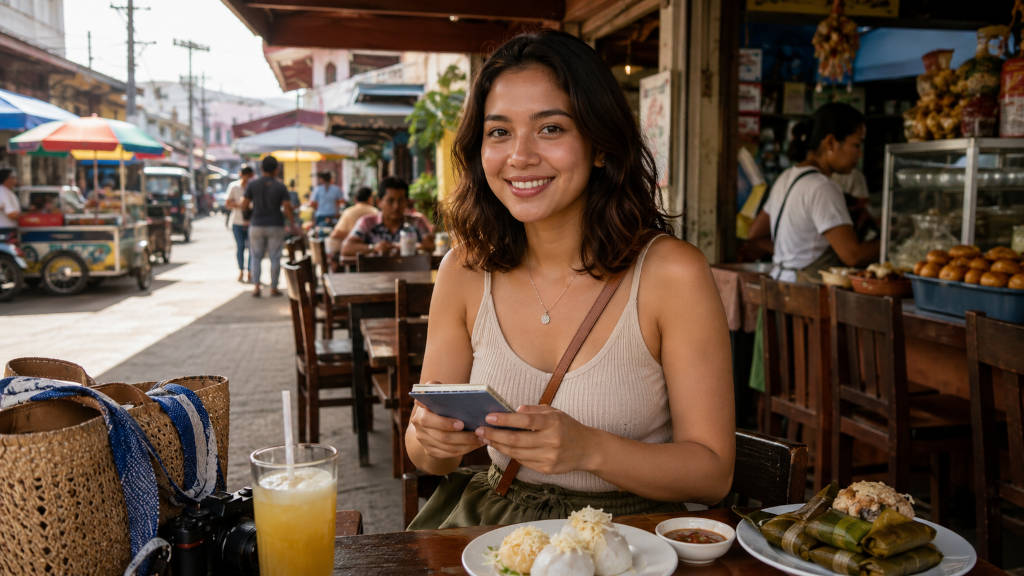
Hiligaynon travel phrases are useful for travelers visiting Iloilo and Bacolod because Hiligaynon is widely spoken in both places and is often casually called Ilonggo. This guide is not a fluency lesson. It is a small, respectful starter kit for saying hello, asking prices, ordering food, riding transport, and handling everyday moments with warmth.
In many situations, English is understood, especially in cafés, hotels, restaurants, terminals, and city centers. But a simple “salamat” said with a smile can soften a busy market exchange or make a food counter order feel more personal.
Quick Answer: Hiligaynon, often called Ilonggo in daily conversation, is commonly used in Iloilo and Bacolod. Travelers can start with polite basics like “salamat” for thank you, “palihog” for please, “tagpila?” for how much, and “diin?” for where.
At-a-Glance for Hiligaynon Travel Phrases
The best time to practice Hiligaynon travel phrases is during simple, low-pressure moments: buying snacks, asking for a table, checking a fare, or greeting a shopkeeper. Realistic travel time between Iloilo and Bacolod usually depends on ferry schedules and terminal transfers, so keep your phrase list handy but leave room for English when plans get specific.
Budget-wise, these phrases help most in everyday spending: jeepney rides, pasalubong, coffee, batchoy, inasal, and market fruit.
Reality Check: Markets can be noisy, jeepneys move quickly, and ferry terminals can feel rushed. Use local words for courtesy, then switch to clear English when timing, prices, or directions need to be exact.
| Traveler Moment | Useful Phrase | Meaning |
|---|---|---|
| Greeting someone | Maayong aga | Good morning |
| Asking a price | Tagpila? | How much? |
| Saying thank you | Salamat | Thank you |
| Asking where | Diin? | Where? |
Quick Note Before Using Hiligaynon Travel Phrases
Hiligaynon, Ilonggo, Iloilo, and Bacolod in Simple Terms
Hiligaynon is a major language in Western Visayas and is widely used in Iloilo and Bacolod. In everyday travel conversation, many people also use the word Ilonggo, especially when referring to the people, culture, or speech associated with Iloilo and nearby areas.
For a traveler, the practical answer is simple: basic Hiligaynon phrases for tourists in Iloilo will also be helpful in Bacolod, though tone, slang, and word choices may vary by person and place.
For a broader local background, you can pair this guide with the Iloilo destination category and the Bacolod travel guide. For language background, the Hiligaynon language background page gives a more formal overview, while the official Iloilo province background gives context on the province.
Reality Check: Hiligaynon vs Ilonggo can be a sensitive or nuanced topic if discussed academically. As a traveler, you do not need to debate labels; you only need to use simple words kindly and listen to how locals speak around you.
Use Phrases as Courtesy, Not Performance
The best use of local Hiligaynon phrases is light and humble. Say the word, smile, and do not expect applause. A vendor, driver, or server may answer in Hiligaynon, English, Filipino, or a mix. That is normal.
The point is not to pretend fluency; it is to show that you are paying attention.
Hiligaynon vs Tagalog travel phrases is also worth noting. Tagalog is useful in many parts of the Philippines, but it is not the main local language in Iloilo and Bacolod. Using simple Ilonggo words for Bacolod travelers or Iloilo local words at a market can feel more place-specific than defaulting to Tagalog every time.
Polite Basics Every Traveler Can Start With
Greetings for Morning, Afternoon, and Evening
 Start with Hiligaynon greetings that are easy to remember. “Maayong aga” means good morning. “Maayong hapon” means good afternoon. “Maayong gab-i” means good evening.
You can use these when entering a small shop, approaching a guesthouse desk, or greeting a food stall vendor before ordering.
For a warm but safe beginner approach, say the greeting once, then continue in English. For example: “Maayong aga. May I ask what time you open?” This keeps the interaction friendly without making the other person guess your language level.
Reality Check: In busy counters, people may skip formal greetings and go straight to the transaction. Do not take it personally. A quick smile and a short greeting are enough.
Please, Thank You, Yes, No, and Excuse Me
For Hiligaynon please, use “palihog.” For Hiligaynon thank you, say “salamat.” If you are wondering how to say thank you in Hiligaynon, “salamat” is the safe and easy answer. “Huo” means yes, while “indi” means no.
For excuse me or a polite way to pass through, you may use “excuse” as many locals also understand it, or say “palihog” softly when asking for space.
A practical order might sound like: “Isa ka kape, palihog. Salamat.” That means “One coffee, please. Thank you.” Even if your pronunciation is not perfect, the effort usually reads as polite when your tone is gentle.
What to Say When You Are Not Sure
When you do not understand, say “Sorry, I do not understand Hiligaynon well.” You can also say, “English na lang, please?” which means you are asking to switch to English. This is one of the most useful polite Hiligaynon habits: admit your limit early.
The comparison snippet is simple: Hiligaynon is best for warm local courtesy, watch for fast replies you may not fully understand, and choose this if your goal is respectful connection rather than showing off.
Food Phrases for Iloilo and Bacolod
Ordering Food Politely
 Hiligaynon food phrases are especially helpful in Iloilo and Bacolod, where travel often revolves around batchoy, inasal, pastries, coffee, seafood, and snacks eaten between slow walks and terminal transfers. For Hiligaynon phrases for ordering food, begin with “May ara kamo sang…?” which means “Do you have…?”
You can point to the menu and say the item name after it.
Useful lines include “Isa ka order, palihog” for one order, please, and “Tubig, palihog” for water, please. At a food counter, you can say, “May ara kamo sang batchoy?” in Iloilo or “May ara kamo sang inasal?” in Bacolod.
Keep your voice relaxed, especially when the lunch crowd is lining up behind you.
Reality Check: Food counters can be quick and practical. If the staff answers in English, follow their lead. The goal is getting your meal clearly, not forcing the whole exchange into Hiligaynon.
Asking About Recommendations, Portions, and Availability
To ask for a recommendation, say “Ano ang nami?” which means “What is good?” or “What is nice?” It is one of those Ilonggo travel phrases that feels useful in bakeries, carinderias, cafés, and pasalubong shops.
You can also ask, “Available pa?” which means “Is it still available?” This is handy for popular items that sell out before closing.
For portions, you can use English with local politeness: “Good for one?” or “Good for sharing?” Many menus and servers will handle English easily, especially in well-known restaurants. For food travelers, the sweet spot is mixing local words with clear questions.
Asking for the Bill or Saying Thank You After Eating
To ask for the bill, you can say “Bill, palihog.” To thank the server after eating, say “Salamat gid.” “Gid” adds emphasis, so it feels like “thank you very much.”
Use it after a good meal, a careful recommendation, or a patient explanation of what is in a dish.
For more food-focused planning, the Iloilo market and food guide can help you connect these Hiligaynon travel phrases with actual eating stops and market moments.
Market and Pasalubong Phrases
Asking the Price
 For how to ask how much in Hiligaynon, say “Tagpila?” This is one of the most useful Hiligaynon market phrases for wet markets, fruit stands, snack counters, and pasalubong shops. You can point gently and ask, “Tagpila ini?” meaning “How much is this?”
In markets, tone matters. A warm “Maayong aga” before “Tagpila?” can make the exchange feel less abrupt. You do not need a full sentence every time. Pointing, smiling, and saying the phrase clearly often works.
Reality Check: Wet markets are sensory and fast: fish being arranged on ice, plastic bags rustling, vendors calling prices, tricycles humming nearby. Ask clearly, but step aside if you need time to calculate or compare.
Asking for One, Two, or a Small Amount
For quantities, “isa” means one and “duwa” means two. You can say “Isa lang, palihog” for just one, please. “Diutay lang” means just a little or a small amount.
This helps when you want to taste local snacks without buying too much.
For pasalubong, you can combine English and Hiligaynon: “Isa ka box, palihog” or “Duwa ka pack, palihog.” This is especially useful when choosing biscocho, piaya, barquillos, napoleones, or other treats you plan to bring home.
Buying Gently Without Sounding Too Aggressive
Bargaining is not the same everywhere, and not every shop or stall expects it. If you want to ask gently, try “May discount?” with a smile. Avoid pushing hard, especially for small food items, handmade goods, or already low prices.
Polite Hiligaynon words work best when paired with fair buying behavior.
A good traveler rhythm is ask, listen, decide, and thank. “Tagpila?” “Isa lang, palihog.” “Salamat.” That is enough for many quick transactions.
Transport Phrases for Getting Around
Jeepney, Tricycle, Taxi, and Ride-Hailing Basics
 Hiligaynon transport phrases help most when you are confirming stops, fares, and destinations. Say “Sa diin ini?” to ask “Where is this going?” or “Maagi ini sa…?” to ask “Does this pass by…?”
You can add the place name after the phrase, such as a market, plaza, terminal, mall, or hotel area.
For getting off, many travelers use “Para” around the Philippines, and it is commonly understood in public transport. You can add “palihog” to soften it: “Para, palihog.” In a taxi or ride-hailing car, English is usually fine for addresses, but a local greeting still helps the ride begin pleasantly.
Reality Check: Jeepney routes can be confusing even for visitors who speak Filipino. When in doubt, ask two people, check your map, and use English for exact street names or hotel addresses.
Asking Where to Get Off or Where Something Is
To ask where, use “Diin?” For “Where do I get off?” you can say, “Diin ko manaog?” This is useful for solo travelers who are watching landmarks and trying not to miss a stop. You can also ask, “Lapitan na?” meaning “Is it near already?”
When asking for a place, keep the structure simple: “Diin ang terminal?” means “Where is the terminal?” “Diin ang merkado?” means “Where is the market?” “Diin ang CR?” means “Where is the restroom?” These basic Hiligaynon phrases cover many everyday travel needs.
Ferry and Terminal Phrases for Iloilo to Bacolod Movement
For Iloilo to Bacolod movement, ferry terminals can be the moment when clarity matters more than charm. Use Hiligaynon travel phrases for greetings and simple questions, then switch to English for schedules, pier assignments, baggage rules, and ticket details.
A useful line is “Diin ang ticket counter?” or “Where is the ticket counter?”
You can also ask, “Ano oras ang byahe?” for “What time is the trip?” This can help, but always confirm times on posted schedules or with staff. Terminals are not the place to pretend you understood when you did not.
Direction and Help Phrases
Asking Where the Restroom, Market, Terminal, or Restaurant Is
Direction phrases are some of the best local words to keep in your phone notes. “Diin ang CR?” asks where the restroom is. “Diin ang merkado?” asks where the market is. “Diin ang terminal?” asks where the terminal is.
“Diin ang kalan-an?” asks where the eatery or restaurant is.
In Iloilo, these may help around market areas, heritage streets, food districts, and transport stops. In Bacolod, they can help around plazas, inasal areas, cafés, pasalubong shops, and terminals. For first-time planning across the country, the Philippines first trip planning guide can support the bigger route decisions.
Reality Check: Directions may be given through landmarks instead of street names. Expect answers like “near the plaza,” “beside the church,” or “after the corner,” then verify with your map.
Asking Someone to Repeat or Speak Slowly
To ask someone to repeat, say “Pwede liwat?” meaning “Can you repeat?” To ask them to speak slowly, say “Hinay-hinay lang, palihog.” This is helpful when a driver, vendor, or staff member answers kindly but too quickly for your beginner ear.
Another respectful sentence is: “Gamayan lang akon Hiligaynon,” meaning “My Hiligaynon is only little.” Even if the grammar is simple, the message is clear: you are trying, but you still need patience.
What Not to Do When Using Local Phrases
Do Not Pretend Fluency
The easiest mistake is learning ten words and then acting like you can handle a complex conversation. Keep these phrases in their proper lane: greetings, prices, food, transport, and simple directions.
When the topic becomes medical, legal, financial, or schedule-sensitive, use English and confirm details carefully.
Reality Check: A little local language can open a door, but it cannot replace clear communication. Being honest about your level is more respectful than guessing.
Do Not Overcorrect Locals or Debate Word Choices
Language shifts from place to place and family to family. Iloilo local words and Bacolod local words may not always sound exactly the same, and people may mix Hiligaynon, English, Filipino, Cebuano, or other languages depending on context.
Do not correct someone because an app, phrase card, or online list taught you another version.
If someone teaches you a local word, receive it like pasalubong: with thanks. “Ah, salamat gid” is usually better than turning the moment into a language lecture.
Switch to English When the Interaction Needs Clarity
It is okay to use English in Iloilo and Bacolod. In fact, it is often the clearest option in hotels, restaurants, ferry terminals, museums, cafés, and many urban settings. Use local words for warmth, then English for precision.
That balance is the most practical traveler approach.
For Hiligaynon vs Tagalog travel phrases, remember this: Tagalog may still be understood by many people, but Hiligaynon is the local doorway in much of Iloilo and Bacolod. English remains the safety net when details matter.
Quick Phrase Card for Travelers
Polite Words
Keep these polite basics saved before you go: “Maayong aga” for good morning, “Maayong hapon” for good afternoon, “Maayong gab-i” for good evening, “Palihog” for please, “Salamat” for thank you, “Salamat gid” for thank you very much, “Huo” for yes, and “Indi” for no.
Food and Market Words
For food and market moments, remember “Tagpila?” for how much, “Tagpila ini?” for how much is this, “Isa lang, palihog” for just one, please, “Duwa” for two, “Diutay lang” for a little only, “May ara kamo sang…?” for do you have, “Ano ang nami?” for what is good, and “Bill, palihog” for the bill, please.
Transport and Direction Words
For movement, save “Diin?” for where, “Diin ang terminal?” for where is the terminal, “Diin ang CR?” for where is the restroom, “Diin ko manaog?” for where do I get off, “Maagi ini sa…?” for does this pass by, “Para, palihog” for please stop, and “Pwede liwat?” for can you repeat.
FAQs About Hiligaynon Travel Phrases
Is Hiligaynon the same as Ilonggo?
Hiligaynon is the language name, while Ilonggo is often used in everyday speech to refer to the people, culture, or way of speaking linked with Iloilo and nearby areas. Travelers will hear both terms, so it is best to stay flexible and respectful.
How do you say thank you in Hiligaynon?
Say “salamat” for thank you in Hiligaynon. To make it warmer, say “salamat gid,” which means thank you very much. It is useful after eating, asking directions, buying pasalubong, or receiving help.
How do you ask how much in Hiligaynon?
Say “tagpila?” to ask how much in Hiligaynon. For “How much is this?” say “tagpila ini?” This is one of the most practical basic Hiligaynon phrases for markets, snack stalls, and souvenir shops.
What phrases are useful in Iloilo markets?
Useful phrases in Iloilo markets include “maayong aga” for good morning, “tagpila ini?” for how much is this, “isa lang, palihog” for just one, please, and “salamat gid” for thank you very much. Use them gently, especially in busy wet market areas.
What phrases are useful in Bacolod restaurants?
Useful phrases in Bacolod restaurants include “may ara kamo sang…?” for do you have, “isa ka order, palihog” for one order, please, “tubig, palihog” for water, please, and “bill, palihog” for the bill, please.
Is it okay to use English in Iloilo and Bacolod?
Yes, it is okay to use English in Iloilo and Bacolod, especially when asking about hotel details, ferry schedules, restaurant menus, transport routes, or prices. A few Hiligaynon travel phrases add warmth, while English keeps important details clear.
Final Reminder for Respectful Local Interaction
The best Hiligaynon travel phrases are the ones you can use naturally without making the moment heavy. Say “maayong aga” when you enter a small shop. Say “tagpila?” when asking about mangoes, pastries, or pasalubong.
Say “salamat gid” when someone points you toward the right terminal, recommends a bowl of batchoy, or helps you find the right inasal counter.
Travel in Iloilo and Bacolod feels richer when you notice the small exchanges: the soft clink of coffee cups, the market vendor tying a plastic bag, the jeepney passenger making room, the café staff explaining what is still available.
You do not need to sound fluent to be respectful. A few basic Hiligaynon phrases, a smile, and the humility to switch back to English when needed are more than enough for a kinder, smoother trip.