Philippines domestic flights are easier to manage when travel day is built around three calm habits: choose the right baggage setup before you pack, aim for a realistic airport arrival time, and save key details offline before the signal gets patchy. This guide is for travelers flying within the Philippines who want fewer surprises at check-in, less panic during delays, and smoother onward plans after landing. Rules and procedures can change by airline, airport, fare type, and date, so use this as a decision guide and always confirm your airline’s current instructions before travel.
Quick Answer: For most Philippines domestic flights, decide baggage first, be inside the terminal around two hours before departure on normal hand-carry days, add more buffer for checked bags or busy airports, and screenshot your booking, boarding pass, baggage allowance, terminal, hotel, transfer, ferry, or tour details before leaving home.
At a glance: low-stress domestic flight habits
The smoothest airport days usually come from removing small problems before they stack up. Think of your flight day as a chain: home or hotel, airport road, terminal entry, baggage, security, boarding, landing, and onward transfer. A weak link in any part can affect the rest of the trip.
| Travel-day decision | Calm default | Add more buffer when |
|---|---|---|
| Baggage | Carry-on only for short, simple trips | You have pasalubong, kids, gear, or bulky items |
| Airport timing | Be inside the terminal around two hours before departure | You have checked bags, rain, peak crowds, or NAIA traffic risk |
| Offline backups | Screenshot booking, boarding, baggage, terminal, and onward plans | Your next step is a hotel, van, ferry, tour, or late-night transfer |
| Delay response | Save proof, confirm timing, message onward bookings | The delay threatens a closing time, last ferry, or prepaid pickup |
Reality Check: A domestic flight can still be delayed, moved, or crowded even when you prepare well. The goal is not to control everything; it is to keep enough information, battery, and time to respond without spiraling.
Why Philippines domestic flights feel stressful before takeoff
The pressure around Philippines domestic flights is rarely just about the flight itself. It is usually the mix of airport traffic, baggage limits, app check-in, terminal details, weather, and whatever booking comes after the plane lands.
A one-hour flight can still feel like a whole-day event if you are unsure which terminal to use, whether your bag will pass, or whether a van, ferry, or hotel check-in can wait. This is especially true for island routes, long weekends, early morning departures, Sunday returns, rainy days, and trips that start or end in Metro Manila.
The three choices that change the whole day
The three biggest choices are baggage, timing, and offline backups. Decide first whether carry-on only is realistic or whether checked baggage will make the day calmer. Then work backward from the time you want to be inside the terminal, not from the time your flight departs. Finally, save the details you may need when mobile data is weak or your phone battery is low.
Reality Check: Many airport problems are ordinary inconveniences arriving at the same time. A heavy bag, a late ride, and a missing booking reference each feel small alone, but together they can turn a normal travel day into a rush.
Baggage basics that actually matter
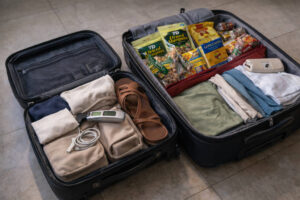
For Philippines domestic flights, baggage is not just about weight. It affects cost, airport timing, security friction, boarding comfort, and how quickly you can move after landing.
The best baggage choice is the one that fits the actual trip. A short city break with one hotel base may be perfect for hand-carry only. A family beach trip, a work trip with equipment, or a return flight full of pasalubong may be calmer with checked baggage bought in advance. Airline size and weight limits can vary by carrier, fare type, and route, so check your current booking before packing.
What hand-carry only usually looks like
Hand-carry only usually works best as one compact cabin bag plus one small personal item that can fit under the seat. It is most useful when you can lift the bag easily, move through queues without bumping people, and reach your essentials without unpacking half your luggage.
Carry-on only often saves time because you can skip bag drop and baggage claim. It also helps when your arrival plan is tight, such as heading straight to a hotel transfer, taxi queue, public transport stop, or family pickup. Keep IDs, medicines, chargers, power bank, valuables, gadgets, and one light layer in your personal item, not buried deep in the cabin bag.
When checked baggage is worth the extra cost
Checked baggage is worth considering when it removes more stress than it adds. It can be the better choice for beach trips with sandals and wet bags, longer stays, families sharing supplies, travelers carrying work gear, or return flights where pasalubong is almost guaranteed.
It can also be the more honest choice if your cabin bag is already close to the limit before you leave home. Buying baggage allowance in advance is often calmer than hoping the counter will be flexible. Just remember that checked baggage usually means more time before departure and more patience after landing.
Common baggage mistakes that trigger stress
- Packing to the limit at home, then adding food, gifts, or extra clothes later.
- Assuming a personal item can be as large as a second cabin bag.
- Forgetting to check current airline rules for batteries, liquids, sharp items, sports gear, or unusual items.
- Putting essential medicines, chargers, IDs, or valuables in a bag that may need to be checked.
- Buying the cheapest fare without checking what baggage is actually included.
Best for: carry-on only is best for short, simple trips with one base. Checked baggage is best for longer, bulkier, family, island, or pasalubong-heavy trips. Watch for: changing airline rules and weight limits. Choose this if: the setup still feels easy when there is a queue, a gate change, or a tired arrival.
Reality Check: There is no prize for forcing everything into a cabin bag if it makes the whole day tense. A paid checked bag can be a smart comfort upgrade when it protects your energy and onward schedule.
How early to arrive for Philippines domestic flights
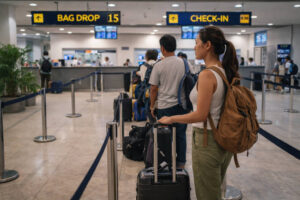
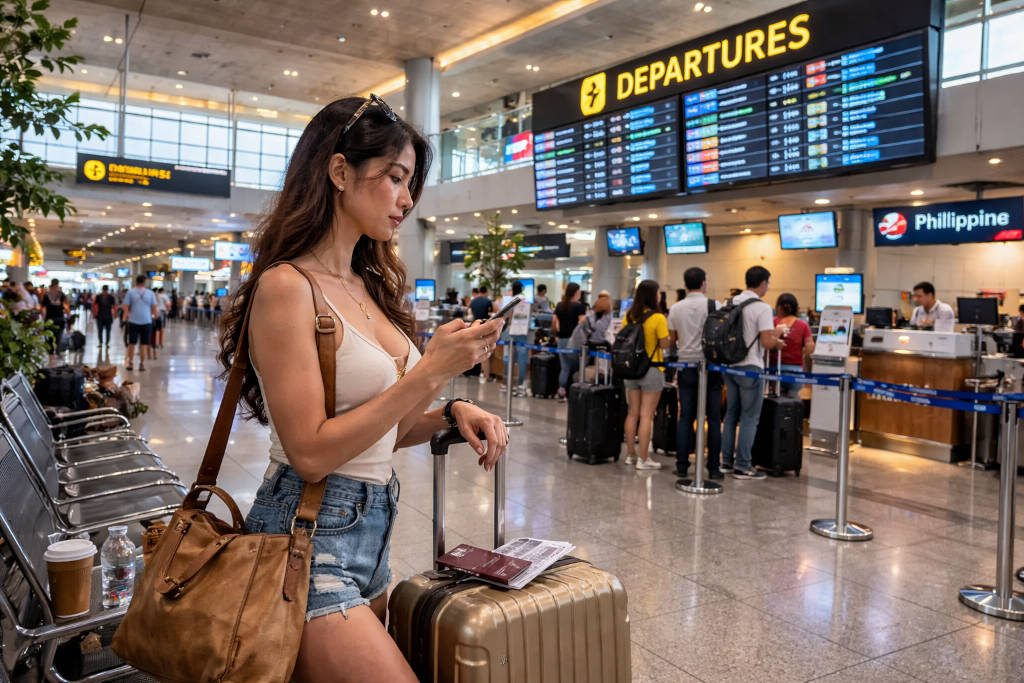
For many Philippines domestic flights on a normal day, a practical target is to be inside the terminal around two hours before departure if you already checked in online, have your boarding pass available, carry only hand-carry, and know your terminal. That gives you time for security, a comfort break, gate checking, and a moderate queue without treating the airport like an all-day tambayan.
Do not confuse this with your leave-home time. In many Philippine cities, the road to the airport is the unpredictable part. Build your plan backward from the moment you want to be standing inside the correct terminal.
When two hours is usually enough
A two-hour inside-the-terminal target is usually more realistic when your flight is straightforward. That means online check-in is complete, you are not dropping a bag, your valid ID is ready, your phone is charged, your terminal is confirmed, and you are not traveling during a known crowd surge.
This is the kind of day where the airport plan is simple: enter, pass security, check the displays, buy water or a snack if needed, and stay close enough to hear or see boarding updates.
When to add more airport buffer
Add more time when the airport road is unpredictable, rain is heavy, you are flying from a congestion-prone terminal, you need counter assistance, or you are checking baggage. Also add buffer for children, older relatives, first-time flyers, group bookings, early morning departures, Friday afternoon flights, Sunday returns, holidays, school breaks, and long weekends.
If your flight connects to something with a fixed departure, like a ferry, van seat, tour, or another non-flexible transfer, treat the flight as only one part of the day. A longer airport buffer may feel boring, but it can protect the booking that comes after.
Reality Check: Arriving early can feel dull. Arriving just a little late can make every queue feel personal. A quiet coffee, charged phone, and unhurried security line are often worth more than shaving thirty minutes off the waiting time.
What to screenshot and keep offline before you leave home
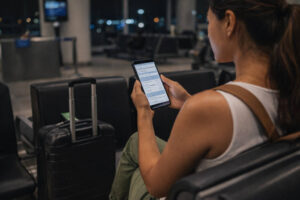
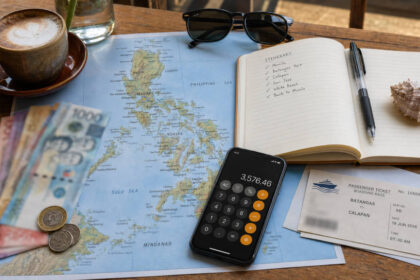
Offline backups are one of the simplest upgrades for Philippines domestic flights. They matter most when the airport signal weakens, an app logs you out, your email search fails, or a staff member asks for a reference number while the line is moving.
Think of screenshots as your travel-day proof kit. They do not replace official documents or current airline updates, but they help you move faster when your phone is under pressure.
The must-save screenshot set
- Flight booking reference and full itinerary.
- Passenger names exactly as booked.
- Online check-in confirmation and boarding pass, if available.
- Baggage allowance and any paid baggage receipt.
- Seat selection, payment proof, and airline messages about schedule changes.
- Airport terminal details and the airline’s current reminder, if provided.
- Valid ID copy in a secure folder, plus emergency contacts.
- Hotel booking, address, check-in instructions, and contact number.
- Transfer, van, ferry, tour, or driver confirmation after landing.
A simple phone folder setup
Create one album or folder named with the travel date and destination. Save items in the order you are likely to use them: flight booking, boarding pass, baggage proof, ID copy, terminal information, hotel booking, transfer details, onward ferry or tour, and return flight.
Pin or favorite the folder so it is easy to open with one hand. For group travel, one person should keep the master screenshot folder while each traveler keeps their own ID, boarding pass, and emergency contact details. A printed itinerary can still help families or older relatives who do not want to rely on one phone.
Reality Check: The best screenshot folder feels unnecessary on a perfect day. That is exactly why it works. You build it for the moment when signal is weak, battery is low, and someone needs the details now.
What to do when a domestic flight is delayed or moved
The first few minutes after a delay notice are not the time to panic-refresh every app. Start by saving proof of the update. Then confirm what actually changed: departure time, flight number, boarding gate, terminal, or aircraft status. Compare your airline app, airport display, SMS, and email when available, because not every source updates at the same speed.
If the delay is small and your onward plans are still safe, conserve energy. Charge your phone, stay near reliable updates, and avoid wandering too far from the gate. If the delay threatens the next part of your itinerary, move early while options are still wider.
The first 10 minutes after you get a delay notice
- Minute 1 to 2: Screenshot the delay notice, airport display, or airline message.
- Minute 3 to 4: Confirm the new timing through the airline app, airport screen, or official staff channel when possible.
- Minute 5 to 6: Check what the delay affects after landing: hotel, driver, ferry, van, tour, meeting, or family pickup.
- Minute 7 to 8: Message the people or services waiting for you with a clear updated ETA.
- Minute 9 to 10: Decide whether to wait calmly, ask for help, or start protecting onward bookings.
This is also a useful time to reopen Bakasyon’s holiday flight advisory and peak-season delay context, booking basics and fare fine print guide, Tips & Inspiration planning archive, Philippines first-trip planning guide, public transport guide for buses, jeepneys, and ferries, Philippines weather travel guide, and travel safety guide for the Philippines if you need broader trip-planning context.
When to ask for help
Ask for help when the delay changes something meaningful, such as the last ferry, a prepaid van, a hotel front desk closing time, a tour departure, or a same-day event that cannot slide. Go to the counter or official digital channel with your booking reference, new schedule, and one clear request.
A clear request may sound like: “This delay may make me miss my onward ferry. What are my rebooking or next-flight options?” Or: “Can you confirm what support is available if this delay extends?” Airline support, refund options, meals, and rebooking conditions can depend on the situation, cause of disruption, fare rules, and current policy, so avoid assuming one fixed entitlement applies to every case.
It is worth reviewing the official summary of the rights of air passengers and the passenger FAQ on complaints and next steps before flying, especially if you are building a trip around tight connections or prepaid transfers.
Reality Check: A calm, specific question usually gets farther than a long emotional explanation. Staff can often respond faster when your booking reference is ready and your next problem is clear.
How to protect hotels, vans, ferries, and tours after a delay
Once a domestic flight moves, protect the bookings after it. Message your hotel with the updated ETA and ask for the latest acceptable check-in time. Contact your driver, van operator, ferry company, or tour provider and ask what can be shifted, revalidated, or held.
Send one useful screenshot if it helps explain the delay, but do not assume “flight delayed” automatically saves a seat, room, or tour slot. Some providers can adjust easily; others follow fixed cutoff times or supplier rules. The earlier you message, the more choices you usually keep.
A simple onward-plan script
Use short, complete messages. For a hotel: “Hi, our domestic flight is delayed and our new estimated arrival is around 8:30 PM. Can you please note late check-in under this booking name?” For a van or driver: “Hi, our flight arrival moved. Can pickup be adjusted to the new landing time? I will update again after we land.” For a ferry or tour: “Our flight delay may affect our arrival. What are our options for revalidation, later departure, or rescheduling?”
For family or barkada trips, divide tasks. One person watches airline updates. One person messages the hotel and transfers. One person keeps documents and IDs ready. This keeps the group from turning the delay into a noisy, confusing group chat spiral.
Reality Check: Onward bookings are often more fragile than the flight itself. A plane delay is frustrating, but the real trip saver is early communication with the people waiting after landing.
Carry-on vs checked bag by trip style
The better baggage choice for Philippines domestic flights depends on your trip shape. Avoid choosing based only on pride, aesthetics, or the cheapest fare. Choose based on how much walking, waiting, transferring, and repacking the day will require.
Short city breaks and one-base trips
Carry-on only is usually best for short city breaks, overnight events, quick work trips, and one-base vacations where you can repeat outfits, buy small toiletries, and keep everything compact. It makes arrival cleaner because you can leave the terminal faster and skip the baggage carousel.
Island hops, family trips, and pasalubong-heavy returns
Checked baggage often makes more sense for island trips, multi-stop itineraries, family travel, or return flights with food, gifts, or extra clothes. It also helps when your personal item already needs to carry shared medicines, snacks, chargers, wipes, and documents.
Reality Check: The cheapest baggage setup is not always the cheapest travel-day setup. Surprise fees, stressful repacking, and missed onward transport can cost more than buying the right allowance earlier.
Low-stress airport habits that help more than hype
Good airport habits are small and practical. Wear clothes you can sit in comfortably for hours, plus shoes that make security and walking easy. Bring a light layer because the curb can be humid and hot while the terminal can feel aggressively cold.
Your personal item should carry the things that would make the day harder if separated from you: ID, phone, wallet, boarding details, medicines, power bank, charging cable, earphones, tissues, wipes, pen, and one snack that will not melt. For longer travel chains, add a toothbrush, face towel, and clean shirt.
Charging, snacks, water, medicine, and gate changes
Charge fully before leaving home and top up whenever an outlet is available. Keep your power bank accessible, not packed deep in a bag. Eat something light before the airport or bring a simple snack, especially if you take medicine with food.
After security, check the gate and boarding time again. Keep checking the displays even after you sit down, because gate changes can happen. Avoid going too far for coffee or food when boarding time is near.
Reality Check: Discomfort makes delays feel longer. A charged phone, water, medicine, a snack, and a light layer can change the entire mood of a waiting day.
A calmer landing plan after baggage claim

Landing is not the end of the logistics. After Philippines domestic flights, pause before joining the next queue. Confirm your pickup point, hotel address, transport option, and whether you need cash, water, a restroom stop, or a quick message home before leaving the terminal.
If you checked a bag, inspect it before walking away. Take a photo if there is visible damage or if you need to document anything for the airline. If you are heading to public transport, know the next step before stepping into the hottest, loudest part of the arrival area.
How to reset after landing
Use a simple order: collect bag, check phone battery, confirm transport, message arrival, hydrate, and move. For a hotel transfer, verify the plate number, driver name, or meeting point before walking off with anyone. For public transport, protect your battery for navigation and updates, not just photos.
Reality Check: The calmest arrivals treat the last mile as part of the flight day. A few minutes of checking details inside the terminal can prevent a messy transfer outside.
FAQs about Philippines domestic flights
How early should I arrive for a domestic flight in the Philippines?
For many normal travel days, aim to be inside the terminal around two hours before departure if you checked in online, have only hand-carry, and know your terminal. Add more time for checked baggage, rain, peak travel dates, unfamiliar airports, group travel, or NAIA road congestion.
Is carry-on only better than checked baggage?
Carry-on only is usually better for short, simple trips where you want a faster exit after landing. Checked baggage is often better for longer stays, island trips, family travel, bulky gear, or pasalubong-heavy returns. The better choice is the one that reduces stress for your actual route.
What should I screenshot before a domestic flight?
Screenshot your booking reference, itinerary, boarding pass, baggage allowance, payment proof, terminal details, airline messages, hotel booking, transfer contact, and any ferry, van, or tour confirmation. Save them in one easy-to-open folder before leaving home.
What should I do first if my flight is delayed?
Screenshot the delay notice, confirm the new time through official channels when possible, check whether the delay affects your onward plans, then message your hotel, driver, ferry, van, or tour provider. Ask airline staff for help early if the delay threatens a fixed booking.
Can I rely on passenger rights rules for compensation or meals?
Use passenger-rights references as a guide, but do not assume every delay creates the same support, refund, or compensation outcome. Entitlements and next steps can depend on cause, duration, fare conditions, and current regulations, so check official CAB and airline guidance before travel.
How do I make landing less stressful?
After landing, pause before leaving the terminal. Confirm your pickup point, hotel address, phone battery, cash needs, and next route. If you checked baggage, inspect it before walking away. Treat the airport transfer as part of the travel day, not an afterthought.
Philippines domestic flights do not have to feel like a guessing game. Choose baggage with the whole day in mind, arrive with enough buffer for your route, keep your proof kit offline, and respond early when delays affect the next booking. A calmer airport day leaves more energy for the soft landing that matters most: finally arriving ready to enjoy the trip.