
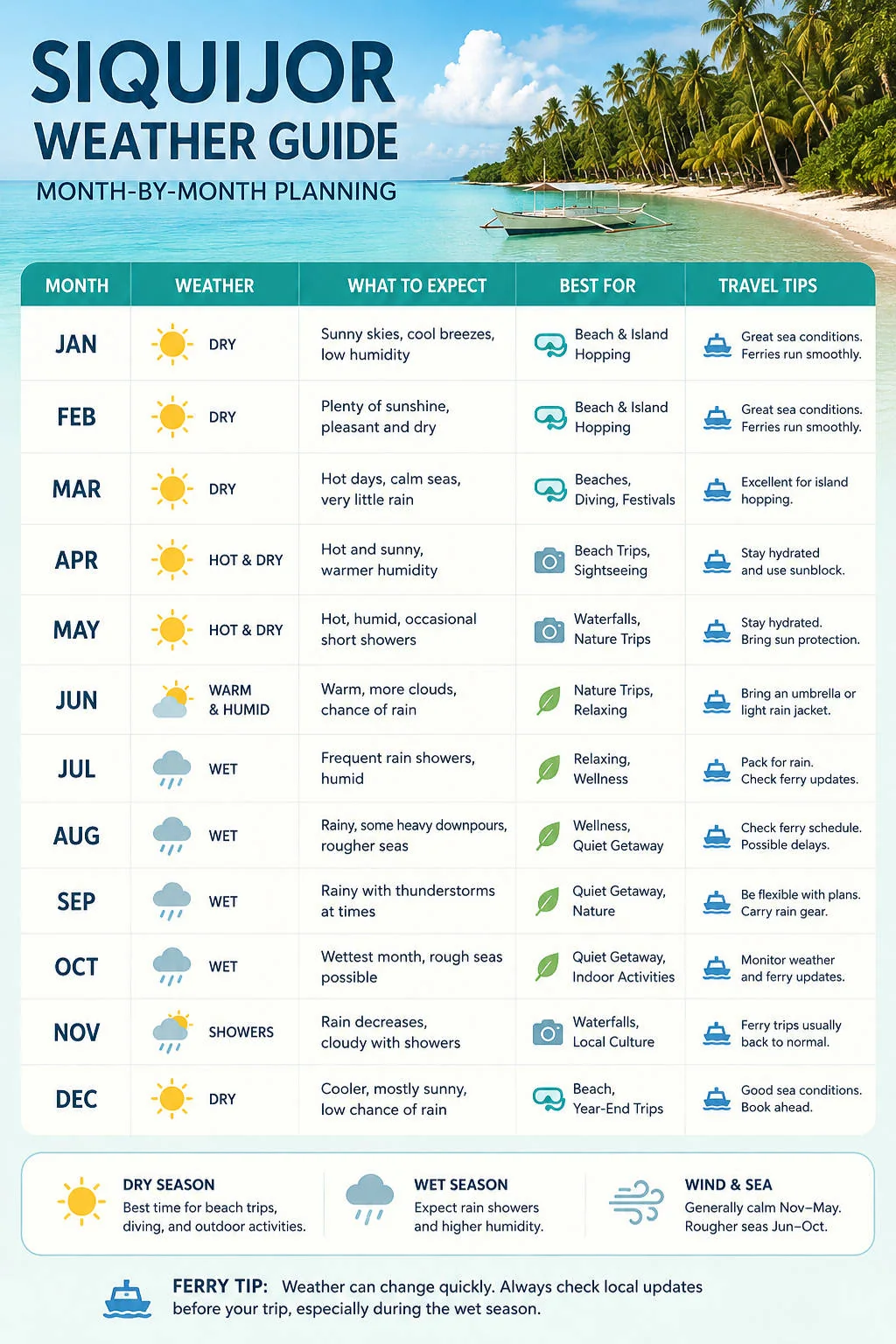
For most travelers, the best time to visit Siquijor is from February to May, when beach plans are easier, skies are often brighter, and ferry schedules usually feel less stressful than during stormier months. January to March tends to feel a little cooler, while April to May brings hotter, stickier days that can still be wonderful for swimming if you pace yourself.
In general, December to May is the drier travel window in the Philippines, while June to November carries more rain, wind, and weather disruption risk. The right month depends on your comfort with heat, crowds, and flexible ferry planning.
What Is The Best Time To Visit Siquijor?
Best Overall Months
The best overall months for many travelers are February, March, April, and May. This window gives you the strongest chance of clearer beach days, easier scooter or tricycle movement, and fewer rain-related changes. February and March are especially comfortable because they sit close to the cooler side of the dry season, with less punishing midday heat than late summer.
Reality Check: Even in the best time to visit Siquijor, the island is still tropical. Expect humidity, bright sun, and the occasional short shower, especially inland or late in the day.
Best Months For Fewer Planning Problems
For first-time visitors, families, and anyone connecting flights with ferries, February and March are the least stressful choices. These months are not a guarantee of perfect seas, but they usually offer a better planning margin than the wetter monsoon period. They also make it easier to enjoy beaches, inland roads, cafés, sunset spots, and relaxed island loops without constantly checking the sky.
A broader Siquijor itinerary can help once your dates are set, especially if you want to connect your timing with beach stops and inland sights. For that, the Siquijor slow loop guide is a useful next read after choosing your travel month.
Months To Approach With More Flexibility
June to November can still work, especially for budget travelers and slow travelers, but these months need a softer schedule. The Siquijor rainy season may bring sudden downpours, rougher sea conditions, slippery paths near waterfalls, and possible ferry cancellations when wind and waves become unsafe. If your dates are fixed and your onward flight is important, avoid booking a ferry and a flight on the same day during wet or windy periods.
Reality Check: Rainy season does not mean nonstop rain every day. It means you should plan for interruptions, keep dry bags ready, and leave room to shift beach days around.
Siquijor Seasons At A Glance
| Season | Typical Months | Best For | Watch For |
|---|---|---|---|
| Cool dry season | January to March | First trips, milder heat, easier ferry planning | Holiday spillover, occasional windy days |
| Hot dry season | April to May | Beach days, swimming, sunny photos | Heat, Holy Week crowds, higher demand |
| Wet season and monsoon months | June to November | Flexible, budget, and slow travel | Rain, rough seas, possible schedule changes |
| Holiday transition | December | Festive trips and early dry-season travel | Peak holiday demand and mixed weather |
Cool Dry Season
 Explore nearby Bohol travel deals → January to March is the sweet spot for travelers who want less intense heat. Days can still feel warm and salty, but mornings are often more comfortable for moving around. This is also a good answer to the question, “What month is least stressful for a first Siquijor trip?” For many, it is February or March.
Reality Check: Cooler does not mean cold. Bring breathable clothes, sunscreen, and a cap because open coastal roads and port areas can still feel very bright.
Hot Dry Season
April and May are still part of the practical dry window, but they require heat awareness. Is April too hot in Siquijor? It can be, especially around noon, when paved roads, beach sand, and waiting areas feel heavy with heat. Start earlier, rest in shade, and save longer beach lounging for morning or late afternoon.
This season is best for sun-seekers, but you should watch for dehydration. Choose it if your main goal is swimming, warm beach photos, and a lively island mood.
Wet Season And Monsoon Months
 Explore nearby Bohol travel deals → June to November is shaped by the Habagat season and wider tropical weather patterns. The PAGASA climate of the Philippines explains the country’s dry and wet seasonal rhythm, which is helpful when thinking about island travel. In Siquijor, rain may arrive as short bursts or longer gray stretches, while wind can affect boat comfort and safety.
Reality Check: The wet season is not automatically a bad time to go. It is simply better for travelers who can wait out rain, move plans around, and avoid tight ferry-to-flight connections.
Month-By-Month Overview
January To February
 Explore nearby Bohol travel deals → January and February are good months for travelers who want gentler heat and clearer planning. The sea may still have windy days, but overall, these months are among the more comfortable for exploring beaches, waterfalls, and quiet roads. February often feels like one of the strongest candidates for the best month to visit Siquijor because it balances weather, comfort, and fewer extreme heat issues.
Reality Check: January can still carry holiday-season demand in some travel periods. Book rooms and ferry tickets early if your dates touch weekends or long breaks.
March To May
March to May is the classic dry-season stretch. March is usually easier on the body than April and May, while April and May can feel more intense but rewarding for beach lovers. For the best time to visit Siquijor for calm seas, this period is often a practical choice, though wind can still surprise travelers. Calm seas are never guaranteed, so check ferry advisories close to departure.
For February versus April in Siquijor, February is best for milder comfort, while April is best for travelers who can handle heat and want stronger summer energy. Choose April only if your group is ready for early starts, shade breaks, and plenty of water.
June To August
June to August sits deeper in the Siquijor rainy season. Waterfalls and inland greenery may look lush, and budget travelers may find better room flexibility, but sudden rain can change the mood of a day quickly. This period can be good for slow travelers who enjoy café pauses, quiet beaches after showers, and unhurried plans.
Reality Check: Paths near waterfalls and inland roads can get slippery after rain. Sandals with grip and a small towel are more useful than pretty-but-slippery footwear.
September To November
September to November needs the most caution for fixed itineraries because wider weather systems can disrupt sea travel. If you are asking, “Can I visit Siquijor during rainy season?” the answer is yes, but only with realistic expectations. Keep buffer days, avoid same-day onward flights, and be ready to swap a beach plan for a rest day.
Reality Check: Ferry cancellations are usually about safety, not inconvenience. When seas are rough or advisories are issued, patience is part of island travel.
December
December can be a lovely transition month, with a festive Filipino holiday mood and improving weather as the dry season begins. It can also be expensive and busy because of Christmas, New Year, school breaks, and family travel. This is a good month if you plan early and accept that popular routes, rooms, and ferry times may fill up faster.
The Official Province of Siquijor tourism website is worth checking for destination updates and local tourism information before traveling.
Crowds And Price Patterns
Weekends, Holidays, And Holy Week
Siquijor crowd peak months often follow Philippine travel behavior: weekends, long holidays, summer breaks, Christmas, New Year, and Holy Week. April can be busy not only because of beach weather, but also because many Filipino families and barkadas are on summer mode. Ferries, accommodations, and popular island routes can feel tighter during these windows.
Reality Check: A weekday arrival can feel calmer than a weekend arrival, even in the same month. If you want a softer landing, avoid Friday evening and Saturday morning ferry rush whenever possible.
Shoulder Months And Quieter Periods
Shoulder periods around early June, parts of November, or non-holiday weekdays can feel quieter and sometimes kinder on the budget. These are not always the best time to visit Siquijor for perfect weather, but they can be practical if your priority is slower travel and lower pressure. Budget travelers who can adjust plans may find these windows appealing.
Why Flexibility Can Save Stress And Money
Peak season versus off-season Siquijor planning is really a trade-off. Peak months usually give you more predictable beach weather but higher demand. Off-season months can offer quieter days but more weather risk. A flexible itinerary lets you book less tightly, shift a ferry, or stay an extra night instead of forcing a stressful connection.
For wider country planning, the Philippines first-trip planning guide can help you connect Siquijor with other islands without making your schedule too cramped.
Sea Conditions And Ferry Cancellation Basics
Why Wind Matters As Much As Rain
 Explore nearby Bohol travel deals → When thinking about Siquijor sea conditions, do not look only at rain. Wind can matter just as much, especially for small-island ferry comfort and safety. Amihan, the northeast monsoon, can bring breezier conditions in parts of the cooler season, while Habagat can bring wetter, windier patterns during the southwest monsoon months.
Reality Check: A sunny sky does not always mean a smooth crossing. Always check sea conditions and ferry updates close to departure day.
When Ferries And Tours May Be Disrupted
When do ferries to Siquijor get cancelled? Usually when operators, port authorities, or weather advisories consider sea travel unsafe because of rough seas, strong winds, storms, or low-pressure systems. Island-hopping tours, snorkeling trips, and some coastal activities may also be paused when the sea is choppy.
How To Plan Around Weather Without Panic
The simplest rule is to avoid same-day ferry-to-flight connections, especially from June to November or during any forecasted bad weather. Keep at least one buffer day before major flights when possible. Families and first-time travelers should be even more conservative because moving tired children, luggage, and wet bags through a crowded port can drain the joy from an otherwise beautiful trip.
For more island ideas after your dates are safe, browse the Siquijor destination category for planning support that pairs well with this seasonal guide.
What To Pack For Each Season
Dry-Season Packing
For the Siquijor dry season, pack light clothes, swimwear, sunscreen, a brimmed cap, sunglasses, a refillable water bottle, and sandals that can handle sand and short walks. A thin cover-up or airy polo is useful when the sun is sharp but you still want to feel presentable in cafés or ferry areas.
Reality Check: Dry season can still bring humidity. Choose fabrics that dry quickly instead of heavy outfits that stay damp all day.
Hot-Month Packing
For April and May, add cooling items: a small towel, electrolyte sachets, extra sun protection, and a loose long-sleeve layer for scooter or tricycle rides. Heat-sensitive travelers should plan shade breaks and avoid packing schedules too tightly. The best time to visit Siquijor is not only about the calendar; it is also about matching the trip to your body’s comfort.
Rainy-Season Packing
For June to November, bring a compact umbrella, light rain jacket, dry bag, waterproof pouch, extra plastic-free wet bag for clothes, and footwear with grip. Quick-dry pieces matter because laundry can take longer when air is damp. A small power bank is helpful if delays leave you waiting longer than planned.
Ferry-Day Comfort Items
On ferry days, keep medicine, snacks, water, tissue, a jacket, chargers, and important documents in your hand-carry bag. Waiting areas can be hot, crowded, or breezy depending on the port and weather. Do not bury essentials deep inside luggage that may be checked or stacked away.
Best Time To Visit Siquijor By Travel Style
For First-Timers
 Explore nearby Bohol travel deals → First-timers should choose February or March when possible. These months are practical, comfortable, and less intimidating for travelers still learning how Philippine island transfers work. Add a buffer day before flights and keep your first afternoon light instead of overplanning right after arrival.
For Families
Families should prioritize calmer months, shorter waiting times, and less aggressive heat. January to March is a smart choice, with February often feeling especially balanced. Avoid very tight ferry schedules, because kids, bags, snacks, and changing weather need breathing room.
For Budget Travelers
Budget travelers can consider shoulder or wet months, especially if accommodation flexibility matters more than perfect beach weather. The trade-off is that you may lose time to rain or ferry adjustments. This is best for flexible budgets, watch for weather gaps, and choose this if you can extend or rearrange your stay.
For Slow Travelers
Slow travelers can visit outside the busiest windows and simply let the island breathe. A rainy morning can become a café morning. A windy ferry day can become an extra night. This style works beautifully when your schedule is measured in days, not rushed transfers.
For Heat-Sensitive Travelers
Heat-sensitive travelers should be careful with April and May. January to March is more comfortable, though still warm. Plan activities early, rest at midday, and keep expectations gentle. The best time to visit Siquijor for heat-sensitive travelers is usually before the summer peak fully settles in.
Simple Rule If Your Dates Are Flexible
If your dates are flexible, choose February or March first, then consider April or May if you are comfortable with heat. If you want quieter prices and do not mind weather risk, look at shoulder weekdays outside holidays. If you are traveling from June to November, protect your plan with buffer days and avoid same-day ferry-to-flight connections.
Reality Check: Flexible itinerary versus fixed ferry and flight connections can completely change your stress level. The more fixed your flights, the more conservative your ferry planning should be.
FAQs About Best Time To Visit Siquijor
When Should I Go To Siquijor If I Want Calm Seas?
For calmer sea planning, February to May is often the most practical window, with February and March feeling especially comfortable. Still, sea conditions can change because of wind, advisories, and local weather, so always check ferry updates close to travel day.
Can I Visit Siquijor During Rainy Season?
Yes, you can visit during rainy season if you are flexible. June to November can bring lush scenery and quieter periods, but also rain, rougher seas, and possible ferry changes. It is better for slow travelers than for tightly scheduled first-timers.
What Month Is Least Stressful For A First Siquijor Trip?
February or March is usually the least stressful choice for a first trip. These months offer a practical balance of dry-season weather, milder heat, and easier planning compared with the hotter summer peak or wetter monsoon months.
What Should I Pack For Siquijor?
Pack light clothes, swimwear, sunscreen, a cap, sandals with grip, a refillable bottle, and a small towel. For rainy months, add a dry bag, umbrella, quick-dry layers, and a waterproof pouch for ferry days and sudden showers.
How Many Buffer Days Do I Need For Ferries?
At minimum, avoid booking a ferry and an important flight on the same day. During rainy or windy periods, one buffer day is much safer. Families, first-timers, and travelers with international flights should plan even more conservatively.
Is April Too Hot In Siquijor?
April can be very hot, but it is still a good beach month if you plan wisely. Start early, avoid long midday exposure, hydrate often, and choose shaded breaks. Heat-sensitive travelers may prefer February or March.
Final Planning Notes
The best time to visit Siquijor is not only a weather answer. It is a planning style answer. February to May gives most travelers the easiest beach window, January to March suits those who want milder heat, and June to November works best for people who can bend with the weather.
Keep an eye on sea conditions, respect ferry cancellations, pack for sun and sudden rain, and give yourself the gift of buffer time. Siquijor rewards travelers who do not rush it: soft coastal light, green inland roads, salty air, and the calm feeling of knowing your schedule has room to breathe.
For more practical island planning ideas, the Tips and Inspiration category is a helpful place to continue building a smoother, more confident Philippine trip.