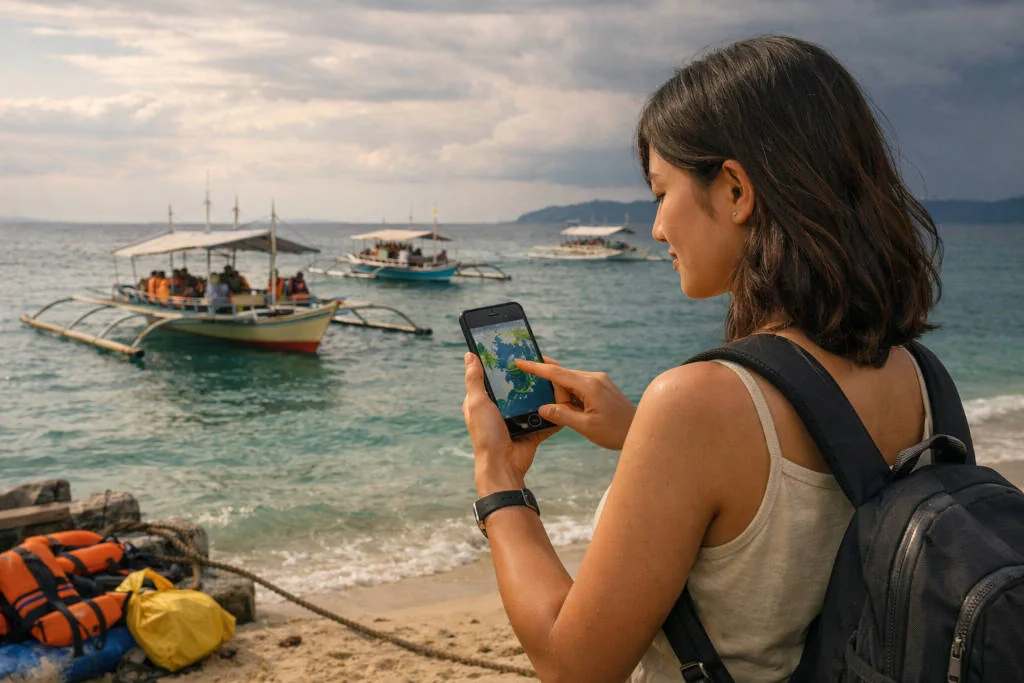
Philippines weather apps can be helpful on a Philippine boat day, but they can also be confusing. The sky can look soft and bright from shore while the water outside the cove is already slapping hard against a small bangka. A simple rain icon might make travelers cancel too early, while a cheerful sunny icon can hide a rough, gusty ride that leaves everyone soaked, delayed, or quietly miserable before the first snorkeling stop.
This guide is not a roundup of the best apps. It is a practical explainer for travelers trying to answer a narrower question: will this island-hopping day, snorkeling transfer, sandbar trip, or small-boat ride likely feel manageable, rough, delayed, or cancelled? The goal is to use Philippines weather apps as probability tools for timing, comfort, and flexibility, while still respecting crew judgment, operator rules, and official advisories.
At a Glance
For most leisure boat trips, the most useful weather window is often early morning through late morning, when wind and sea texture can still be kinder than they are later in the day. A realistic planning rhythm is to check conditions three days out for trend awareness, again the night before for timing and backup plans, and one more time two to three hours before departure for a same-day cross-check.
Budget-wise, weather flexibility can cost a little more because rebooking, private transfers, or last-minute land alternatives sometimes come with a higher price tag than sticking to a fixed group tour.
Crowd and traffic risk matter too. A manageable weather window can still turn stressful if the jump-off point is packed on a weekend or holiday and boarding runs late. A good heat or rain backup is a land-based plan you would genuinely enjoy, such as a museum stop, café morning, beginner hike, or sheltered beach instead of forcing a full-day open-water route. Reality check: even the clearest forecast cannot promise how a specific cove, pier, or exposed channel will feel once local wind and boat traffic enter the picture.
Why Boat-Day Weather Feels Confusing in the Philippines
Philippine trips often combine road transfers, ports, shifting island microclimates, and small vessels that feel weather changes more than larger ferries do. One bay can look glassy while the next stretch of open water is lumpy and spray-heavy. Add humid afternoons, quick-moving showers, and local route exposure, and it becomes obvious why island hopping weather is not something a single icon can fully summarize. Reality check: the farther your tour moves from a sheltered harbor into exposed water, the more comfort can change even when the forecast still looks broadly fine.
Why a Rainy Icon in Philippines Weather Apps Does Not Always Mean a Bad Boat Day
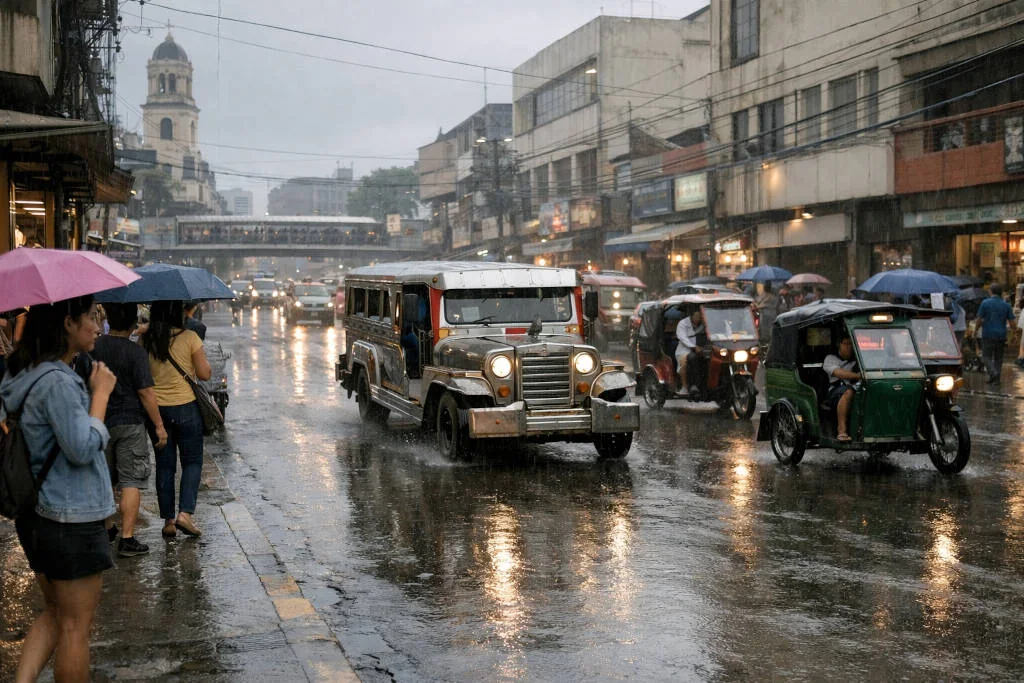
A rainy icon often reflects the chance of rain in a wider area and time block, not a guaranteed washout for your exact route. A brief morning shower may pass before departure. A cloudy day with light rain can still be calm enough for a short island-hopping run if winds stay modest and the route remains sheltered. For many travelers, light rain is more of a comfort issue than a safety issue, especially if the water is relatively smooth, boarding is simple, and the operator has a shorter route.
What that icon does tell you is that you should think ahead. Pack a dry bag, protect electronics, bring a light layer, and ask whether the order of stops can change around a passing shower. It also helps to remember that overcast weather sometimes makes midday boat rides feel less punishing than a blazing, windless noon under full sun.
Why a Sunny Icon Does Not Guarantee a Smooth Ride
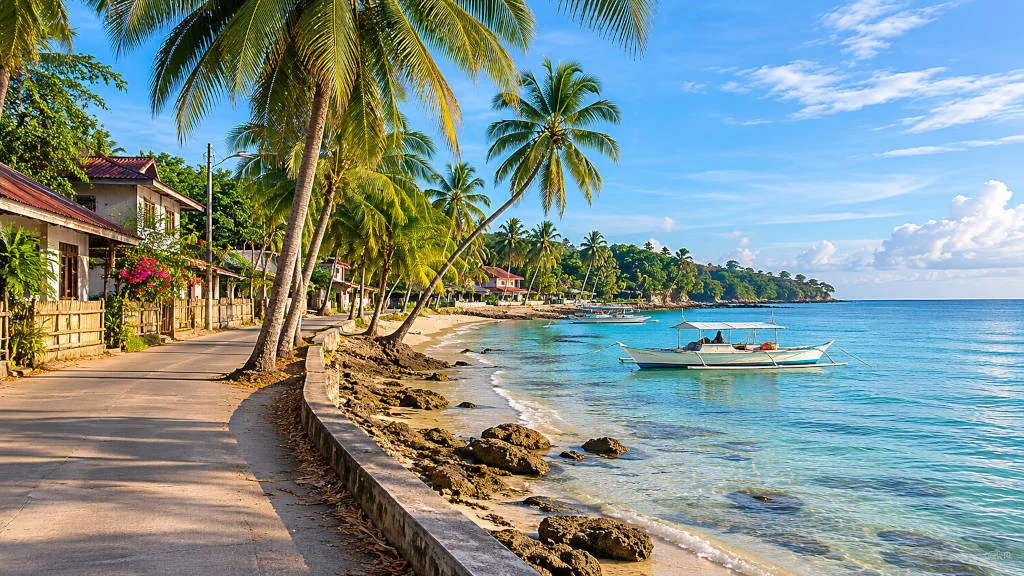
For boats, blue-sky visuals can be misleading. Sunshine does not cancel out strong wind, gusts, or exposed channels. Many uncomfortable boat days are bright, photogenic, and rough. That is especially true for small craft where side chop, spray, and repeated bouncing matter more than what the cloud icon suggests. A calm-looking beach can also hide the fact that the next leg of the route points straight into wind or swell.
This is why travelers should train themselves to read beyond color and icons. When Philippines weather apps show a fair day, the next questions should be about wind speed, gusts, route direction, and whether the operator expects the crossing to feel smooth or bumpy. That shift in thinking is often the difference between a relaxed morning and a trip that technically runs but feels exhausting.
What Forecasts Can and Cannot Tell You
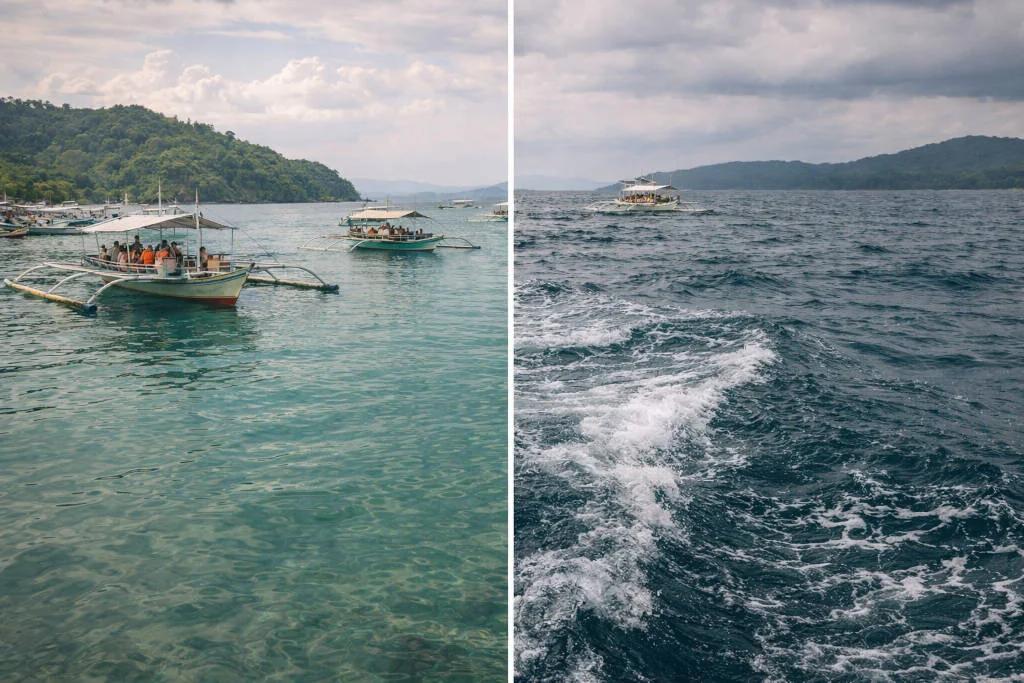 Forecasts are best used to reduce uncertainty, not erase it. They help you choose windows, compare options, and avoid surprises, but they do not turn a boat day into a guarantee. Travelers who use them well usually make better timing decisions and better backup decisions. Reality check: the closer you get to small-island routes, cliff-lined coves, and beach landings, the more local texture matters.
What a Forecast Can Help You Plan
A forecast can help you decide whether to book that day at all, whether to aim for an early departure, whether to keep the route short, and whether to prioritize a more sheltered tour. It can also tell you if transport buffers should be wider because a late port departure can affect the rest of your itinerary.
That wider planning mindset matters as much as the boat ride itself, especially when your onward movement depends on shared vans, ferries, or timed hotel check-ins. For bigger-picture timing, Bakasyon’s Philippines weather travel guide by month gives useful seasonal context before you even narrow down a specific boat day.
Forecasts also help you pack smarter. If the pattern suggests gusty afternoons, you may want sun protection that stays put, secure footwear for wet boarding, and fewer loose items. If showers look likely, a waterproof pouch and dry clothes for the ride back become more valuable than an umbrella.
What It Cannot Guarantee at Beach, Cove, or Island Level
No app can fully tell you how the water will feel at one exact boarding beach, sandbar edge, or coral stop at one exact hour. Local geography changes everything. A headland can block wind on one side and funnel it on the other. A cove may look calm while the approach outside it is messy.
A forecast also cannot tell you an operator’s comfort threshold, the loading conditions at the pier, or how many extra minutes of waiting you will spend exposed on a floating dock. That is why it helps to connect weather reading with the rest of trip planning, not treat it as a separate puzzle. A first-time traveler usually benefits from building more margin into the day, the same way you would when reading Bakasyon’s first-trip planning basics or checking practical transfer expectations in the Philippines public transport guide.
Which Weather Tools to Check Before a Boat Day
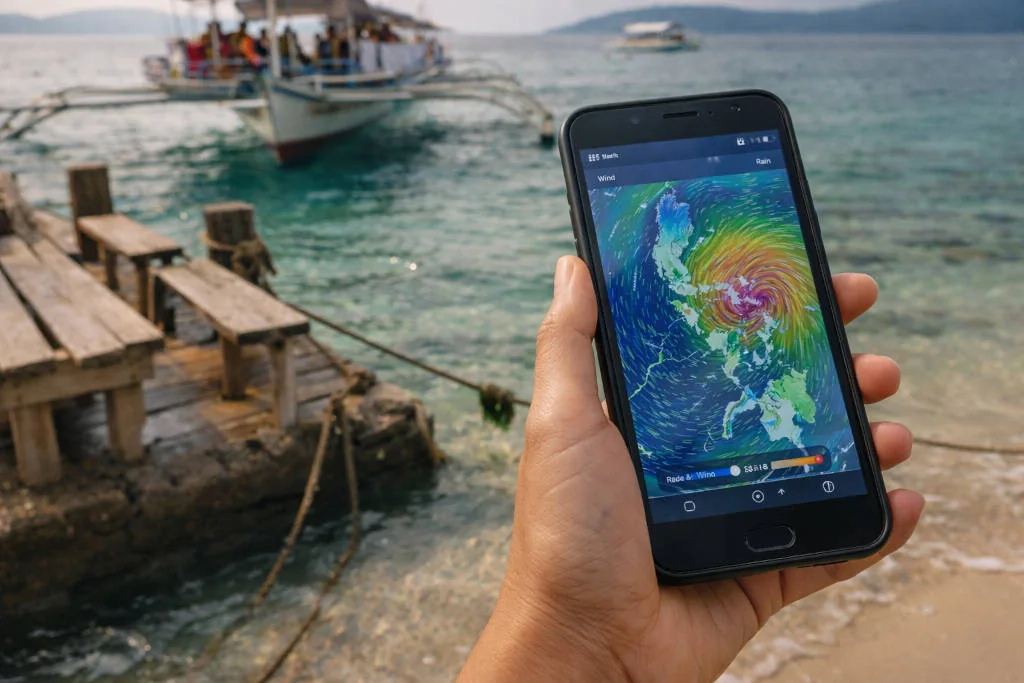 The best approach is layered. Start with the official forecast, then use visual tools to understand timing and texture, then do one same-day cross-check before leaving your room. Philippines weather apps work best when they are compared, not obeyed blindly. Reality check: two tools can look different and still both be useful because one may be better for official advisories while another is better for hourly visuals.
Official Forecast First
Before looking at polished maps, check the official daily forecast and coastal water conditions from PAGASA. This gives you the most grounded public-weather context, especially when you need to know whether rough sea conditions are being flagged more broadly. If your route is coastal or open-water and weather looks unsettled, also scan the official gale warning and marine alert page.
Even if your exact destination is not under a dramatic warning, this habit teaches you to respect official marine language before you get attached to a tour plan. PAGASA matters because it frames the day in public-safety terms, not just convenience terms. That is a better starting point than jumping straight to pretty graphics.
Visual App Second
After the official view, use a visual weather app to read timing. Look at hourly wind, gusts, rain movement, and map layers that show where stronger weather sits relative to your route. The value is not the brand. The value is seeing whether the morning looks calmer than the afternoon, whether a shower band is brief or lingering, and whether wind arrows suggest your route is exposed or partly sheltered.
This is the moment to use trip tech lightly and practically, not obsessively. Bakasyon’s broader travel tech guide for the Philippines can support the rest of your planning, but for boat days the important question is always the same: what does this tool say about timing, exposure, and comfort?
Same-Day Cross-Check Before Leaving
On the morning itself, cross-check again before you head to the port or beach. If the overnight picture shifted, you still have time to adjust breakfast, departure timing, or whether you should carry extra cash for a backup plan. This is also a good moment to review broader safety habits through Bakasyon’s general travel safety guide, because weather decisions are easier when the rest of the day is organized.
What you want is a calm last look, not panic-scrolling. Compare the official advisory, your visual app, and the operator’s latest message. If all three point in the same direction, your decision gets much easier.
Wind, Waves, and Rain: What Matters Most for Boats
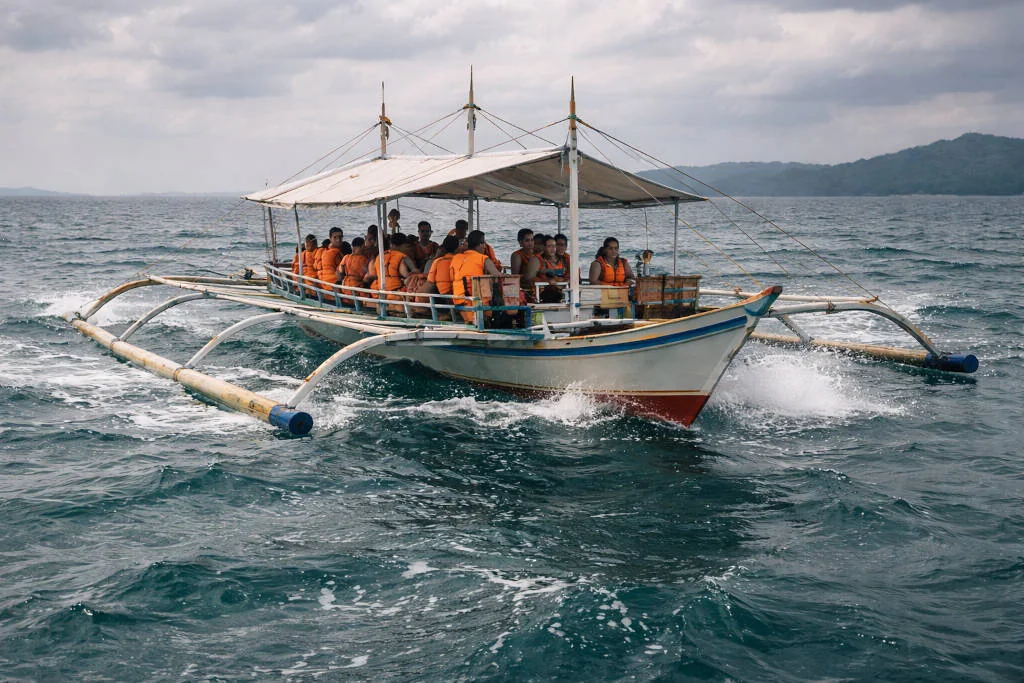 For many leisure boat trips, wind and water texture tell you more about comfort than a rain symbol does. Small boats react quickly to gusts, exposed routes, and short choppy waves. Rain can be annoying. Wind-driven roughness can change the entire feel of the trip. Reality check: there is no single magic number that guarantees comfort because boat size, load, route, and operator judgment all matter.
Wind Speed and Gusts in Simple Language
Think of average wind as the background feel and gusts as the sudden surprises. A moderate average with sharper gusts can still make boarding awkward, spray-heavy, and tiring. For travelers, that usually shows up as rocking while waiting offshore, more splashing, louder engine effort, and a ride that feels longer than it is. If the gusts are much higher than the average wind, pay attention. That gap often means the day may feel less steady than the headline number suggests.
On a small bangka, those bursts matter because they affect balance and comfort even when the trip still operates. If anyone in your group is nervous around water, prone to motion sickness, or traveling with children or older relatives, gusts deserve extra weight in the decision.
Wind Direction and Exposed Routes
Wind direction sounds technical until you turn it into a travel question: is the route moving with protection from land, or straight into open water? A beach can be sheltered from one direction and fully exposed from another. That means the same destination may feel easy on one day and harsh on the next even with similar temperatures and cloud cover.
This is where operator knowledge becomes more useful than trying to decode every map alone. Ask whether the route is exposed to the current wind direction, whether the first crossing is usually the roughest, and whether any stops are skipped when water gets lively. Those answers translate the forecast into the route you will actually ride.
Coastal Water Conditions, Wave Height, and Roughness
Coastal water conditions are the bridge between weather data and real travel feel. Wave height gives you one clue, but roughness depends on more than one number. Short, messy chop can feel more unpleasant on a small boat than a smoother rolling swell.
Swell period, local wind waves, and reflected chop near rocky shores can all change how the ride feels. Travelers do not need to become marine experts. They just need to understand that “sea conditions” is the practical language behind whether a trip feels smooth, wet, bouncy, slow, or cancelled.
When official wording points to rough coastal waters, take it seriously even if the rain chance looks modest. That is often the stronger signal for boat comfort and route changes.
When Rain Matters and When It Is Only Part of the Picture
Rain matters more when it comes with thunderstorms, poor visibility, slippery boarding, long exposed waits, or a route that depends on beach landings. It also matters if your day includes cameras, cold children after snorkeling, or a return ride late in the afternoon. But rain alone does not always make a boat day impossible. A brief shower on a mostly calm morning can be easier than a dry but windy afternoon crossing.
That is the mindset shift that makes Philippines weather apps more useful. Do not ask only, “Will it rain?” Ask, “Will this route feel stable enough, visible enough, and flexible enough for the kind of boat day we planned?”
How to Plan Tour Windows Instead of Treating the Whole Day as Lost
 One of the best planning upgrades is to stop thinking in full-day blocks. A day can contain a good boat window and a bad boat window. Travelers who plan around windows often save trips that looked doomed at first glance. Reality check: a shorter successful route is usually better than forcing a longer route just because you already imagined the photos.
Three Days Out
Three days out, look for trends rather than certainty. Is the pattern getting windier or calmer? Does the route day look like the weakest option in your schedule? This is the stage for moving flexible activities around, not for obsessing over each hourly change. If the signal looks shaky, keep a land-based alternative ready, such as one of Bakasyon’s beginner hikes with weather flexibility or a softer outdoor plan.
The Night Before
The night before is when you make practical decisions. Confirm pickup time, ask whether an earlier departure helps, prepare dry storage, and decide what would trigger a change in plan. This is also a useful moment to think like a camper and pack for uncertainty, borrowing simple habits from Bakasyon’s beginner guide to camping in the Philippines. A dry bag, a light layer, and a non-fussy change of clothes solve more problems than many travelers expect.
The Morning of the Trip
The morning check is about action, not theory. Are winds or gusts up from last night? Has the operator changed the route or delayed the launch? Is the sea at the jump-off point already showing chop, spray, or awkward boarding?
If the answer is yes, switch from ideal plan to workable plan. That may mean taking a shorter island-hopping loop, moving the trip, or replacing it with a sheltered activity from Bakasyon’s Tips and Inspiration hub.
When travelers accept that a weather window may only last half a day, they usually feel less disappointed and make clearer calls.
How to Talk to Operators Without Sounding Vague
Operators can help most when your questions are specific. “Is the weather okay?” is too broad. Better questions connect the forecast to the actual route, boat type, and backup options. Reality check: a responsible operator may sound cautious, and that is usually a good sign, not poor service.
Smart Questions to Ask Before Paying
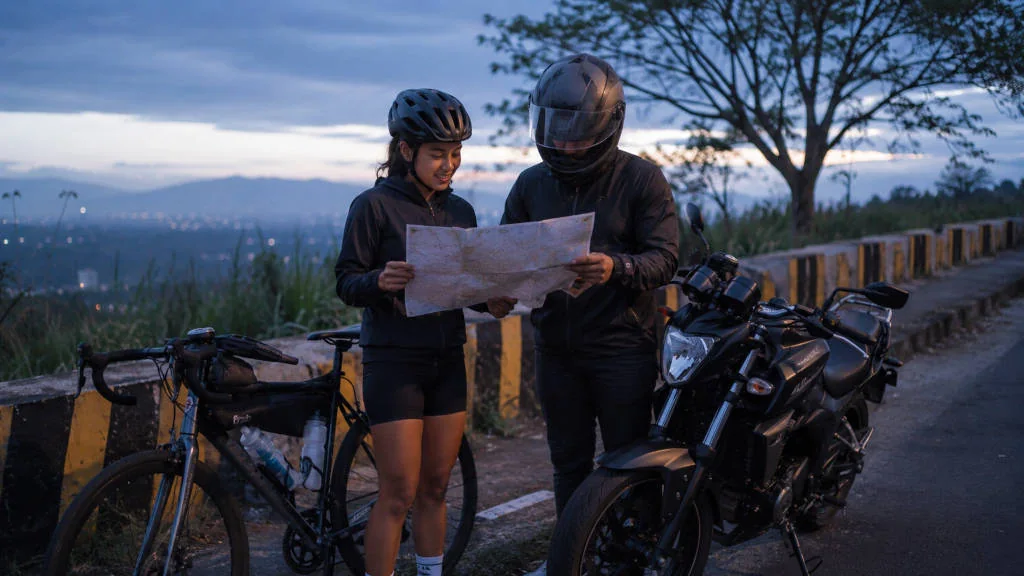
Ask whether the route is exposed to the current wind direction, whether the boat is small or more stable for choppy conditions, whether the morning is usually calmer than the afternoon, and which stops are most likely to be cut if sea conditions worsen. If you are new to active trips, it also helps to read Bakasyon’s adventure travel safety basics so you can ask sharper questions without overcomplicating them.
Smart Questions to Ask on the Morning Itself
On the day, ask whether departure is on time, whether the first crossing is rough, whether they expect delays returning, and whether boarding is simple at the current tide and wave state. These details matter more than generic reassurance. A calm answer with specifics is more useful than a cheerful “No problem” that does not address route exposure.
Rebooking, Refund, and Backup-Plan Questions
Before committing, ask what happens if only part of the route runs, whether there is a rebooking option for the next calmer window, whether a weather cancellation means full or partial refund, and what land-based alternative they recommend nearby. These questions keep you practical, not pessimistic. They also protect the rest of your itinerary from knock-on stress.
Simple Go or No-Go Checklist for Boat Days
A useful go or no-go checklist is not dramatic. It is just a simple way to combine forecast reading, operator information, and your own comfort level. Reality check: the right call for your group may be more conservative than the right call for younger, more experienced, or less motion-sensitive travelers.
Good to Proceed
Proceed when the official forecast is quiet, no serious marine warning is relevant to your area, your visual app shows a decent morning weather window, the operator sounds confident about the route, and the day still works even if one stop changes. This is the sweet spot where Philippines weather apps help you go forward with open eyes rather than blind optimism.
Proceed Only with Caution or Flexibility
Be cautious when the forecast looks mixed, gusts are rising, the route has exposed sections, or the operator suggests a shortened version. In this zone, a shorter run, earlier departure, extra seasickness prep, and emotional flexibility matter. You are not chasing perfection. You are deciding whether the likely ride still fits your group’s comfort.
Better to Move the Trip
Move the trip when official warnings are active, coastal water conditions are clearly rough, the operator is hesitant, visibility is poor, or your group already feels uneasy before boarding. A moved boat day is not a failed vacation day. It is often the smartest travel call you can make, especially when a land-based backup keeps the trip enjoyable and safe.
A Calmer Way to Use Weather Apps on Philippine Trips
The most helpful way to use Philippines weather apps is to treat them as quiet planning companions. They can show trend, timing, and risk. They can help you protect comfort, avoid wasted transfers, and choose a better weather window. What they cannot do is replace local judgment, official advisories, or the lived reality of a small boat on open water.
That calmer mindset suits Philippine travel well. A little flexibility, a little humility, and a willingness to swap plans can save the mood of the whole trip. When you read forecasts this way, you are not trying to control the sea. You are simply giving yourself the best chance at a boat day that feels manageable, safe, and worth remembering.