The best time to visit Puerto Princesa is not really one magical month. It is a timing choice between heat you can tolerate, rain you can work around, crowd levels you can afford, and sea conditions that can still shift a boat day at the last minute. In this part of Palawan, good planning is usually about better odds, not guarantees.
For most travelers, the easiest dates usually fall from late January to early April. That window often brings drier weather, calmer planning conditions, and a better chance that boat-based tours feel straightforward instead of stressful.
But that does not mean other months are wrong. A lower-crowd June trip or a late November escape can still work beautifully if you build in one backup plan and pack for wet gear, wind, and sharp midday sun. If this is part of a bigger first-time Philippines itinerary, this Philippines travel planning guide for a first trip helps you see how timing affects the rest of the route too.
At a Glance
Best Window: Late January to early April.
Best Lower-Crowd Value Window: June and late November.
Realistic Travel Time: Road transfers to Sabang can take around 1.5 to 2.5 hours depending on pickups and traffic, so early starts matter.
Budget Band: Usually manageable mid-range, then noticeably higher around Christmas, New Year, Holy Week, and summer school break.
Crowd Risk: Peak domestic travel periods bring longer waits and tighter room availability.
Rain or Heat Backup: Keep one land-based city block or flexible afternoon instead of stacking two weather-sensitive outings back to back.
Reality Check: Even on a bright day, Puerto Princesa can feel hot, humid, and slow-moving. A good trip here is often less about squeezing in more and more about leaving enough breathing room for transport, weather, and same-day tour calls.
Best Time to Visit Puerto Princesa: Quick Answer
Best all-around window
If you want the easiest answer, the best time to visit Puerto Princesa is usually late January to early April. This is the most reliable all-around stretch for travelers who want cleaner weather odds, steadier sea conditions, and fewer timing headaches. February and March are especially comfortable picks for people who care about smooth logistics as much as sunny photos.
This matters even more on a short trip. If you are only coming for a quick weekend, there is very little room for a delayed boat call or a washed-out afternoon. That is why this timing pairs well with a lean Puerto Princesa weekend trip 2D1N plan, where every hour has to work harder.
Best lower-crowd value window
 If lower prices and lighter crowds matter more than textbook-perfect weather, June and late November are often the most interesting compromises. These periods can feel calmer on the wallet and on the ground. Hotels may have more breathing room, city traffic feels softer, and there is less of that holiday squeeze around transfers and boarding areas.
The trade-off is simple: the sea becomes more variable, rain becomes less predictable, and you need to be emotionally okay with a changed plan. For flexible travelers, that can still be a very smart deal.
Reality Check: Even in the best window, sea comfort is never guaranteed. And in the value window, the savings only feel worth it if one changed schedule does not ruin the whole mood of the trip.
Puerto Princesa Weather in Simple Terms
Dry season versus wetter season
Puerto Princesa weather is easier to understand when you stop expecting a perfect split between dry season and rainy season. In broad terms, the drier stretch usually runs from around December or January into April.
Wetter patterns become more noticeable from June to October. May and November sit in that tempting middle ground where you may get a great run of days or a more mixed week.
For a wider planning lens, this Philippines weather travel guide gives helpful country context. For local long-term averages, the PAGASA Puerto Princesa climatological normals are useful too. Just remember that averages are a planning baseline, not a promise for your exact boat day.
Heat, humidity, wind, and why rain is not the only factor
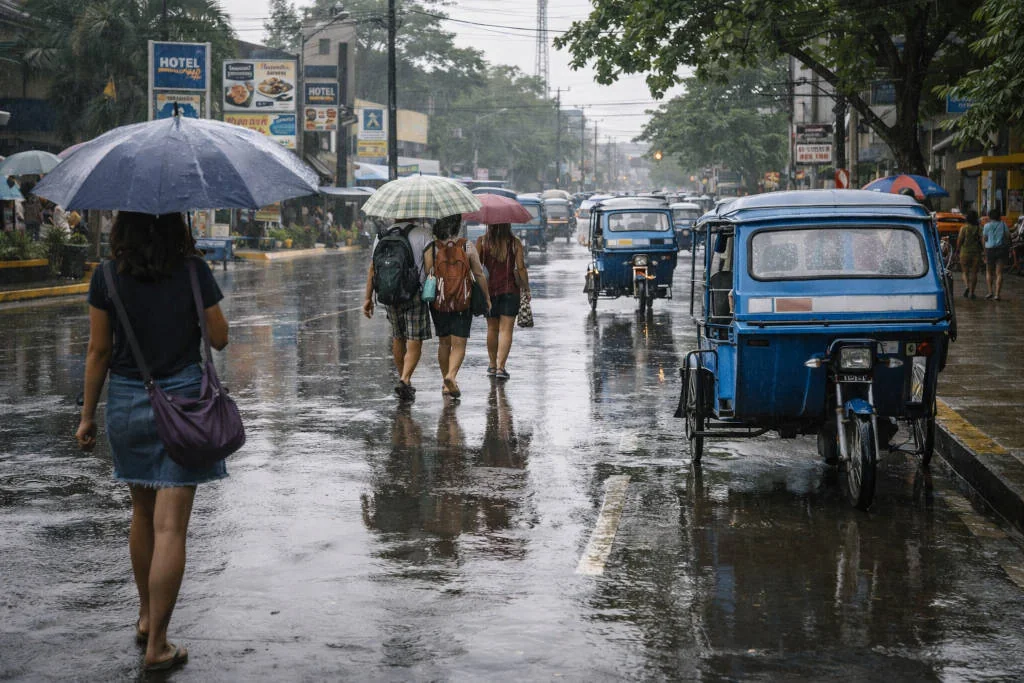 Rain gets most of the attention, but heat, humidity, and wind shape comfort just as much. March to May often looks attractive because it can be drier, yet these are also the months when the sun can feel most punishing. A bright day can still be a draining day if you are waiting in line, transferring by van, or spending hours under direct midday light.
During wetter months, you may still get long dry breaks and perfectly usable mornings. The problem is that wave chop, fast-moving showers, and wind exposure can make a boat trip feel tiring or uncertain even when the forecast does not look dramatic.
That is why the best time to visit Puerto Princesa depends on comfort as much as sunshine.
Reality Check: Travelers often check only rain icons and stop there. In Puerto Princesa, the real difference between a smooth day and a frustrating one is often wind, waiting time, damp bags, or how much heat you can handle after lunch.
Puerto Princesa Month by Month
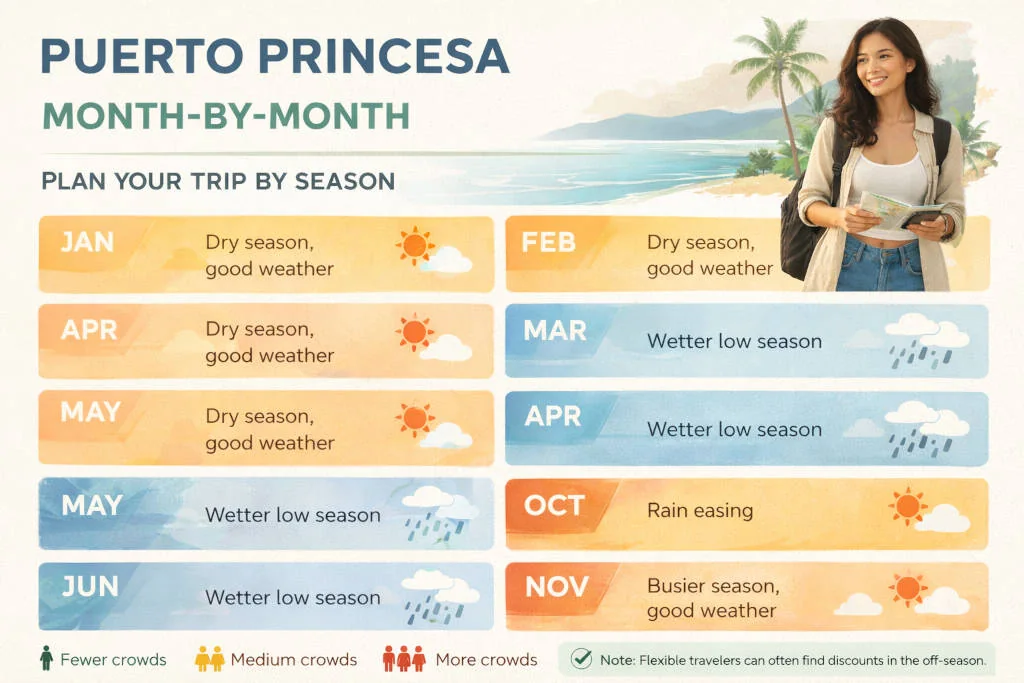 The month-by-month picture below is the most useful way to choose your dates. Think of it as a practical feel guide for weather, crowd levels, price patterns, and sea comfort rather than a hard rulebook.
January
Usually one of the easier months overall. The weather often feels drier, crowd levels are high in the first holiday week then settle, prices soften after New Year, and sea conditions are often fairly decent, especially compared with wetter months.
February
Often one of the safest picks for the best time to visit Puerto Princesa. Weather is commonly dry, crowds are moderate, prices feel fair to slightly elevated on weekends, and boat days are more likely to be comfortable, especially in the morning.
March
A strong all-around month with dry weather odds and good short-trip reliability. Crowds begin to build as summer plans start, room rates can creep upward, and sea conditions are often manageable, though the sun feels stronger and the heat lingers longer.
April
Often among the driest months, but also one of the hottest. Crowd levels can spike around Holy Week and school break, prices rise quickly in busy periods, and boat days may still run smoothly, though exposure to heat becomes part of the challenge.
May
Still hot, still bright in many weeks, but more changeable than March or April. Crowds usually ease after major domestic breaks, prices begin to relax, and sea conditions can be mixed, with some good mornings and more unsettled afternoons.
June
This is one of the better shoulder-season value months. Weather can swing between usable and wet, crowd levels are often lower, hotel prices may feel friendlier, and sea conditions become more variable, so a backup plan starts to matter a lot.
July
Usually wetter and cloudier, though not always a total washout. Crowds stay relatively light, prices can be attractive, and boat comfort becomes less predictable. You may still get a good tour day, but the odds of adjustments are higher.
August
Often one of the trickier months for flexible sea-based planning. Weather can feel wet and unsettled, crowds are generally low, prices may be appealing, and rougher water is more likely, which raises the chance of delays, route changes, or cancellations.
September
Another lower-demand month with mixed rewards. It can be humid, rainy, and unpredictable, but budget-conscious travelers may find softer rates. Sea conditions are still hit or miss, and this is not the month to build a rigid minute-by-minute itinerary.
October
October can look better than August or September, but it is still a transition month. Crowds remain manageable, prices are usually reasonable, and sea conditions may improve in some stretches, though confidence levels are still not as strong as early-year travel.
November
One of the most interesting compromise months. Early November can still be mixed, while late November may feel calmer and more usable. Crowds are usually moderate, prices are fair before the holiday rush, and sea conditions can improve, though not with certainty.
December
Early December can feel pleasantly manageable, but late December changes fast. Crowds rise sharply toward Christmas and New Year, prices jump, and booking pressure increases. Weather may still offer nice days, but sea comfort and queues can feel more holiday-driven than restful.
Reality Check: The best time to visit Puerto Princesa month by month is really about deciding what inconvenience you dislike least. Some travelers would rather face heat than rain. Others are happy with clouds if it means quieter hotels and better rates.
Crowds, Prices, and Booking Pressure
Christmas and New Year
Late December into early January is one of the most expensive and crowded times to go. Flights, hotels, and family-friendly room types can tighten fast. Even if the weather looks decent, the overall feel is busier, with more waiting, more competition for good timings, and less room for last-minute changes.
Holy Week and summer break
Holy Week and the broader Philippine summer travel period often push Puerto Princesa into a hotter, busier, pricier mode. This usually lands somewhere in March or April depending on the calendar. It is not a bad time to travel, but it is a time when booking early matters more and patience needs to be packed along with sunscreen.
If your Puerto Princesa stop connects to buses, ferries, or other land-and-sea transfers elsewhere in the country, this Philippines public transport guide is useful for building more realistic buffers around high-demand dates.
Lower-demand months and what you gain or risk
June through October often gives you the biggest value upside. Hotel rates can soften, rooms may be easier to choose from, and some parts of the trip feel calmer simply because fewer people are moving at the same time. The risk is not just rain. It is also the possibility that sea-based plans feel rough, uncertain, or not worth forcing.
Reality Check: Cheap dates are not automatically good value if one canceled boat day wipes out the main reason you came. Value in Puerto Princesa is best measured by total trip comfort, not just the room rate.
Sea Conditions and When Tours Change
Underground River and Sabang boat realities
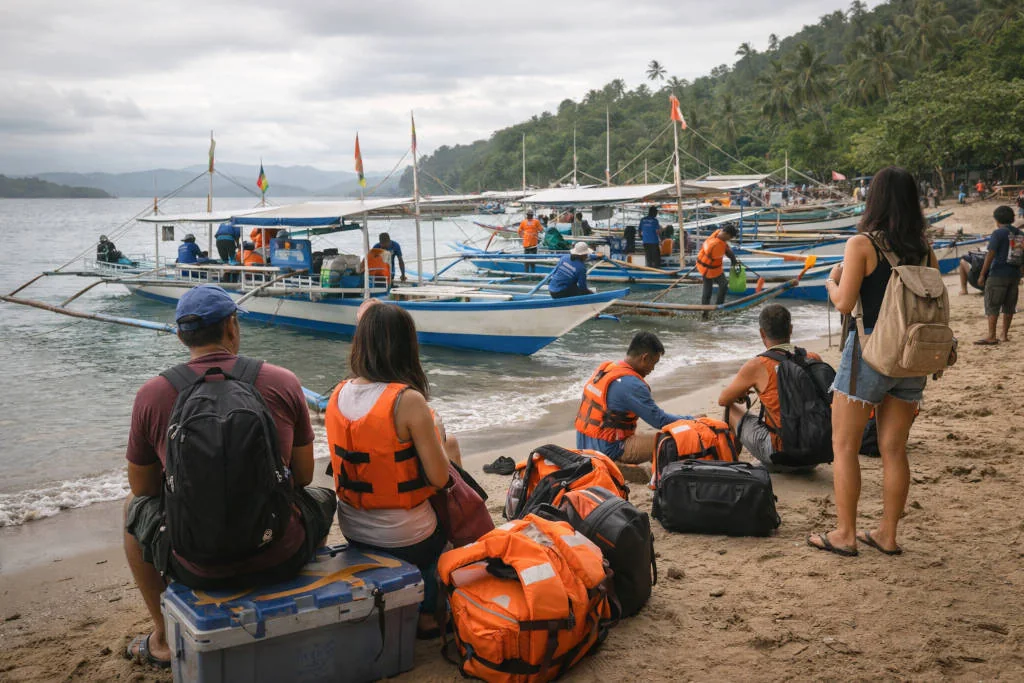 The Underground River plan involves more moving parts than many travelers expect. There is the road transfer to Sabang, the waiting time, the boat boarding sequence, and the final decision-making around sea and safety conditions.
Even when the city feels calm, the coast near boarding areas can feel very different. That is why the best time to visit Puerto Princesa for this kind of day trip usually leans toward the drier, steadier early-year months.
The Puerto Princesa Underground River official site is a good place to check basic permit and visitor information, but same-day realities can still depend on the sea, not just the booking confirmation.
Honda Bay and same-day safety calls
Honda Bay can look simple on paper, but it is still vulnerable to wind, chop, and morning safety calls. Some days are not fully canceled, but the comfort level drops enough that island-hopping feels less fun than expected. In shoulder and wetter months, the difference between a pleasant ride and a tiring one can come down to conditions on that exact morning.
This is why flexible travelers often win here. If your boat day is movable by even one day, you have much better odds than someone locked into a single non-negotiable slot.
How to build one backup plan
The smartest low-stress move is to protect one backup block in your schedule. Keep one afternoon open. Put your most weather-sensitive outing early in the trip if possible.
Do not stack two boat-based days back to back if the whole trip is only a weekend. A calm backup plan can be as simple as a city meal crawl, hotel downtime, shopping, or a loose errand day rather than another fixed-ticket commitment.
That mindset pairs well with this Travel Safety Philippines guide, especially if you prefer fewer surprises and want to make safer, less rushed decisions on the ground.
Reality Check: Weather-related changes are not always dramatic enough to make the news or your forecast app look scary. Sometimes the trip still runs, but the waiting is longer, the boarding is rougher, and the day just feels more tiring than expected.
What to Pack by Season
Dry-season packing
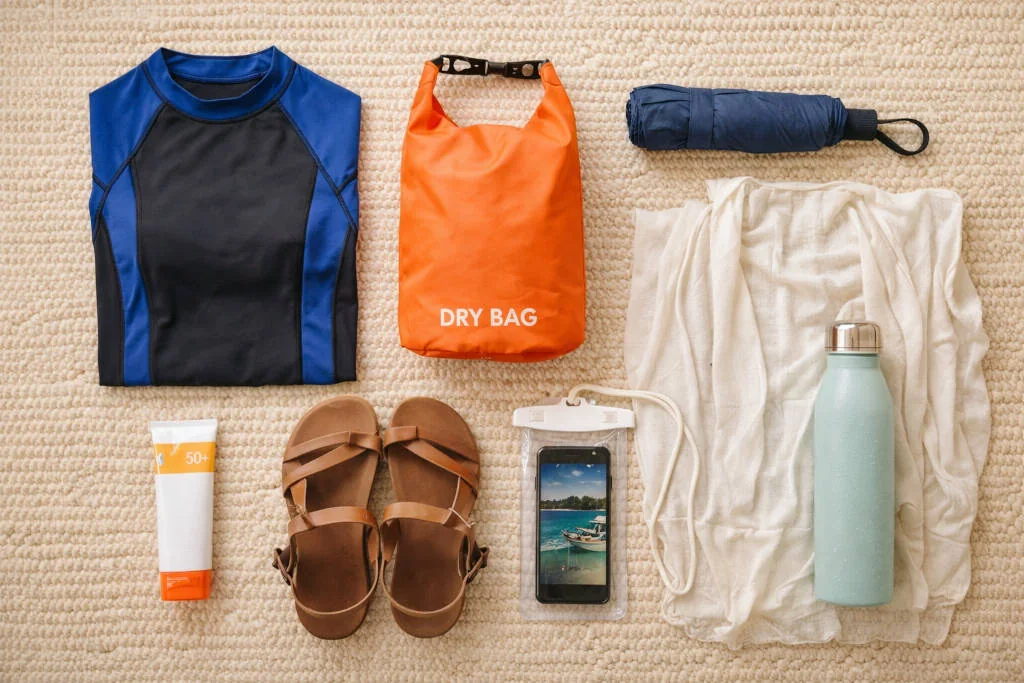 For the drier months, think heat first. Pack light, breathable clothes, a cap or hat, sunglasses, reef-safe sun protection, a thin cover-up, sandals that can handle wet boarding areas, and a refillable water bottle.
A rash guard is still useful even when rain is not the issue, simply because long sun exposure on a boat can be more exhausting than travelers expect. A small dry bag also makes sense year-round. Even in the most comfortable months, a splashy boat ride or a damp dock is normal travel texture here.
Wetter-season packing
For wetter or more mixed months, keep the quick-dry mindset. Bring a compact umbrella, a light rain layer, an extra shirt for humid afternoons, zip pouches for electronics, a waterproof phone case, and footwear with grip on wet surfaces.
This is also the season when a spare tote for damp clothes can save your whole day. Do not overpack heavy outerwear. Puerto Princesa stays warm. A light layer is usually enough for strong air-conditioning or breezier boat mornings. What matters more is staying comfortable when things get sticky, wet, or delayed.
Reality Check: Packing for Puerto Princesa is less about fashion changes and more about comfort insurance. One dry bag, one extra shirt, and one pair of reliable sandals can matter more than a full outfit change.
A Simple Rule If You Are Flexible
If you want the calmest decision rule, choose late January to early April for the easiest overall odds. That is still the best time to visit Puerto Princesa for most travelers because it balances weather, sea conditions, and short-trip reliability better than the rest of the year.
Choose June or late November instead only if lower crowds matter to you and you are willing to protect one backup plan.
That is really the heart of good timing here: pick the season that matches your tolerance for heat, rain, waiting, and price pressure. Once you do that, Puerto Princesa becomes much easier to enjoy.
You are no longer chasing a perfect forecast. You are simply choosing dates that fit your comfort level, your budget, and your margin for surprises. For broader low-stress planning after you lock in dates, the Puerto Princesa travel guide hub and Bakasyon’s Tips and Inspiration category are useful next reads.