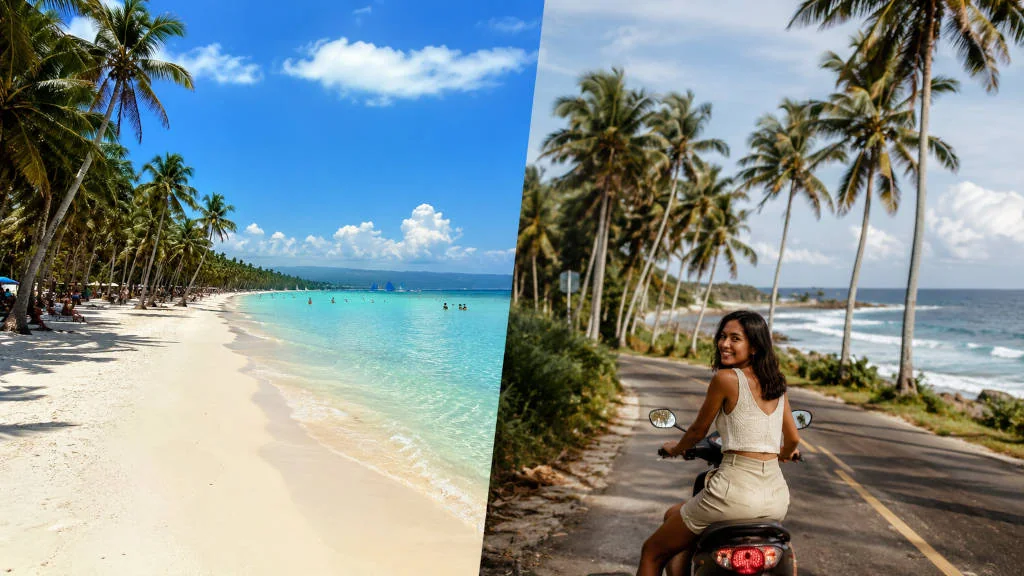
Figuring out how to get around Boracay is usually easier than first-timers expect, but it still helps to know what feels normal before you land. The island is small enough for many short walks, especially around White Beach, but hot weather, luggage, road distance, and late-night arrivals can change the smartest choice fast.
That is why the best approach is not memorizing one fare table. It is knowing when a short walk beats a ride, when an e-trike is worth it, and when a hotel pickup or shuttle saves energy you will be glad to keep.
This guide stays focused on how to get around Boracay once you arrive. For a broader arrival-to-departure overview, read our Boracay planning guide for first-timers, then browse the Boracay destination hub for more island-specific ideas.
Here, we are keeping it practical: short hops, luggage decisions, transfer flow, late-night behavior, and the small surprise costs that tend to appear when travelers are tired, sun-exposed, or in a rush.
Quick Answer: How to Get Around Boracay Without Stress
 For most first-timers, how to get around Boracay comes down to a simple rule. Walk when the route is short, flat, and near White Beach. Ride when the heat is strong, your bags are heavy, your hotel is set back from the beach path, or your destination is farther than it looks on a map.
Around Station 1, Station 2, Station 3, and D’Mall, walking often wins on convenience. For road-based trips, e-trikes are the default local option. For port transfers, bigger luggage, family groups, kids, or seniors, vans, shuttles, and multicabs can be the calmer choice.
- Walk short routes around White Beach, D’Mall, and your station when the weather is manageable.
- Use an e-trike for road-based trips that are farther than they look on the map.
- Ask whether you are being offered a regular ride or a special trip before loading bags.
- Choose vans, shuttles, or multicabs for bigger luggage, kids, seniors, or group transfers.
- Save your hotel pin, station number, landmark, and contact details offline.
- Keep your Boracay iPass QR, transfer confirmation, and receipts in one phone album.
- Verify current totals instead of relying on old fare screenshots.
- Ask the hotel for pickup help when arriving late, during bad weather, or with bulky bags.
- After dark, stay in lit areas and confirm the destination and total before boarding.
Reality Check: Boracay is compact, but moving through it is not always as quick as the distance suggests. Midday heat, crowds near D’Mall, and stop-and-go road flow can make a “quick” transfer feel longer than planned.
Best Choice for Short Hops
If you are just moving between beachfront restaurants, your hotel, and familiar areas near White Beach, a short walk is often better than paying for a ride you do not need. This is especially true when you are in slippers, carrying only a phone, wallet, and water, and staying within one station or moving one station over.
The beach path can feel more direct than waiting by the main road, hailing an e-trike, explaining your stop, and unloading again a few minutes later.
That said, how to get around Boracay comfortably also means reading the moment. If the sand is hot, the sky is blazing, or a sudden downpour is building, the cheapest option may stop feeling like the best one very quickly.
Best Choice for Luggage, Kids, or Senior Travelers
Once luggage enters the picture, comfort matters more. A hotel transfer, shuttle, van, or a clearly agreed special trip is often worth the extra cost when you have multiple bags, a stroller, sleepy children, or older relatives who would rather avoid repeated handoffs.
These options also make more sense if your accommodation is inland, uphill, or tucked away from the easiest beachfront access points.
If you are booking for a mixed group, treat energy like part of the budget. Saving a little on transport is not always a win if everyone arrives sweaty, scattered, and irritated before check-in.
The Boracay Transport Options That Actually Matter
When travelers ask how to get around Boracay, they do not need a long list of every possible vehicle. They need the few options that actually come up in real life: walking, e-trikes or tricycles on the main road, and larger transfer vehicles for specific cases.
Reality Check: Locals and hotel staff may say tricycle out of habit, but what many visitors actually ride on Boracay today is an e-trike. The practical question is less about the label and more about whether the ride is regular or special, shared or private, and suitable for your bags.
Walking Between Stations 1, 2, and 3
 Walking is the most underrated answer to how to get around Boracay. Between Station 1, Station 2, and Station 3, a lot of first-time movement is easier on foot than it appears on a booking map.
If your route keeps you close to White Beach, you can often walk to breakfast, cafes, sunset spots, and many hotels without needing to negotiate a ride. D’Mall is also central enough that many travelers naturally pass through it on foot.
This works best when you travel light and know your nearest landmark. A beachfront hotel may feel “close” in spirit but still require a short inner-lane walk, so save your exact hotel pin rather than trusting the hotel name alone.
E-Trikes and Tricycles on the Main Road
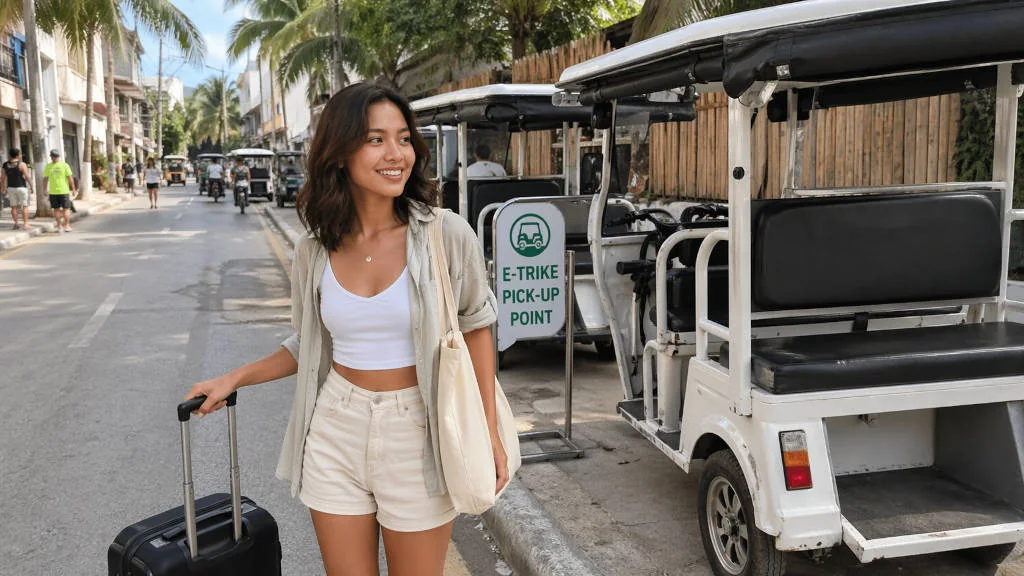
E-trikes are the everyday workhorse for how to get around Boracay once you leave the easiest walking zone. They are useful for short road hops, rainy weather, or any trip where the beach path is not the practical route.
They also help when your destination is on the main road side, not directly on White Beach.
The big distinction is regular ride versus special trip. A regular ride is the budget-friendlier option because you are not claiming the whole vehicle just for your group.
A special trip is essentially a private run, usually faster and more direct, but priced higher because the driver is taking you specifically where you want to go without waiting to fill seats or follow a more shared pattern. Ask which one you are being offered before you load bags.
Vans, Shuttles, Multicabs, and When They Make Sense
Vans, shuttles, and multicabs matter most when the trip is not just a short island hop. They make sense for hotel-to-port transfers, airport-to-jetty arrangements bundled by a hotel or agency, group travel with larger luggage, and farther rides where comfort and cargo space matter more than squeezing into the nearest small vehicle.
They are also useful when your family would rather stay together than split across multiple e-trikes.
For accommodation strategy, your transport choices may shift depending on your base. Before booking, compare areas using where to stay in Boracay for first-timers so your daily movement matches your pace, budget, and tolerance for walking.
Best Mode by Distance and Trip Type
The easiest way to decide how to get around Boracay is to match the ride to the distance, not to what sounds official or familiar.
Reality Check: The shortest-looking option on a map is not always the easiest on the ground. Heat, crowds, narrow access lanes, and luggage can turn a short route into a tiring one.
Short Rides Around White Beach and D’Mall
For very short hops near White Beach and D’Mall, walking is often still the winner. Choose a ride only when the weather is rough, your sandals are giving up, or you are moving with groceries, beach gear, or a tired companion.
Many first-timers overcommit to road transport for trips that would have taken ten relaxed minutes on foot.
A good rule is this: if you can already explain the route as “just past D’Mall” or “a little farther from Station 2,” pause before boarding. You may not need the ride at all.
Hotel to Port and Port to Hotel Transfers
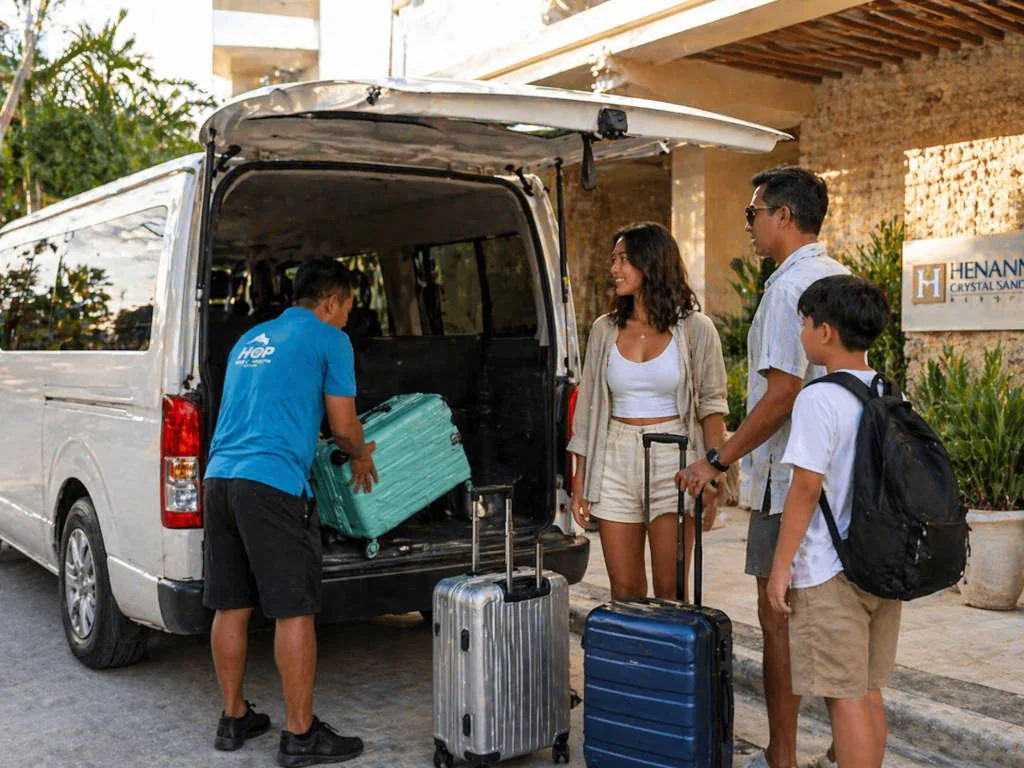 This is where how to get around Boracay becomes less about island charm and more about transfer friction. Port runs are the moments when bundled services help most because there can be several steps in one chain: check, queue, handoff, boat or port movement, then land transfer again on the hotel side.
A pre-arranged hotel pickup can reduce decision fatigue, especially when you arrive tired, with luggage, or after dark.
It is normal for staff in a transfer chain to guide you from one stage to another if you booked a package. It is also normal for transport totals to include fees and segments that are separate from the last road ride itself.
What matters is that the breakdown is explained clearly enough that you know what is prepaid and what is not.
Farther Rides Such as Puka Beach, Newcoast, or a Simple Land Tour Loop
For farther trips like Puka Beach, Newcoast, or a casual land-tour-style loop, larger vehicles or a clearly arranged private ride usually make more sense than improvising one short e-trike after another. You want enough space for bags, towels, and the possibility that someone in your group wants to linger while someone else is already sun-tired.
This is also the point where splitting by convenience can cost more than staying together. One larger vehicle can be simpler than multiple short negotiations, especially if you plan several stops.
Typical Costs and How to Avoid Surprises
Anyone serious about how to get around Boracay should expect variable costs, not a forever fare chart. Transport totals can change by route, time, season, waiting, luggage, and whether the ride is regular or special.
Reality Check: The surprise is usually not one dramatic overcharge. It is the stack of small extras: private ride instead of regular, extra luggage handling, hotel distance from the main road, or paying for a ride you could have skipped.
Regular Ride Versus Special Trip
This is the most important price distinction to understand. A regular ride is the lower-cost choice because you are riding in a more standard, shared, or non-exclusive way.
A special trip means the vehicle is being used specifically for your group and destination, so you are paying for directness, control, and convenience.
Neither option is automatically wrong. The mistake is agreeing to a special trip when all you needed was a normal short transfer. Ask the question early: “Regular or special?” Then confirm the total before the bags go in.
Group Splitting, Luggage, and Late-Night Cost Pressure
Costs often climb when a group has too many bags for one small vehicle, when everyone wants to leave immediately, or when arrival is late enough that patience drops and bargaining power disappears. If you land late in Caticlan or come in from Kalibo already drained, the most expensive choices can start sounding “easier” simply because nobody wants to think anymore.
This is why larger vehicles can be more economical in real life. Not always cheaper on paper, but better value once you count fewer transfers, less waiting, and less chance of paying again because the first ride could not handle your luggage.
Why Readers Should Verify Current Totals Instead of Memorizing One Fixed Fare Table
Think of Boracay transport in price bands, not fixed promises. A short walk costs nothing. A regular e-trike ride usually sits in the low-stress, low-to-moderate spend zone. A special trip is a step up.
A hotel-arranged shuttle or van may cost more but can include smoother handling. A farther custom ride or land loop lands higher because you are paying for distance, waiting, and convenience.
Before traveling, check the latest official process through the Boracay iPass QR, fee, and transport workflow and the Aklan tourist guide for Boracay process overview. Those are better references than any frozen screenshot of “standard fares” passed around in old posts.
Booking Tips and What to Screenshot
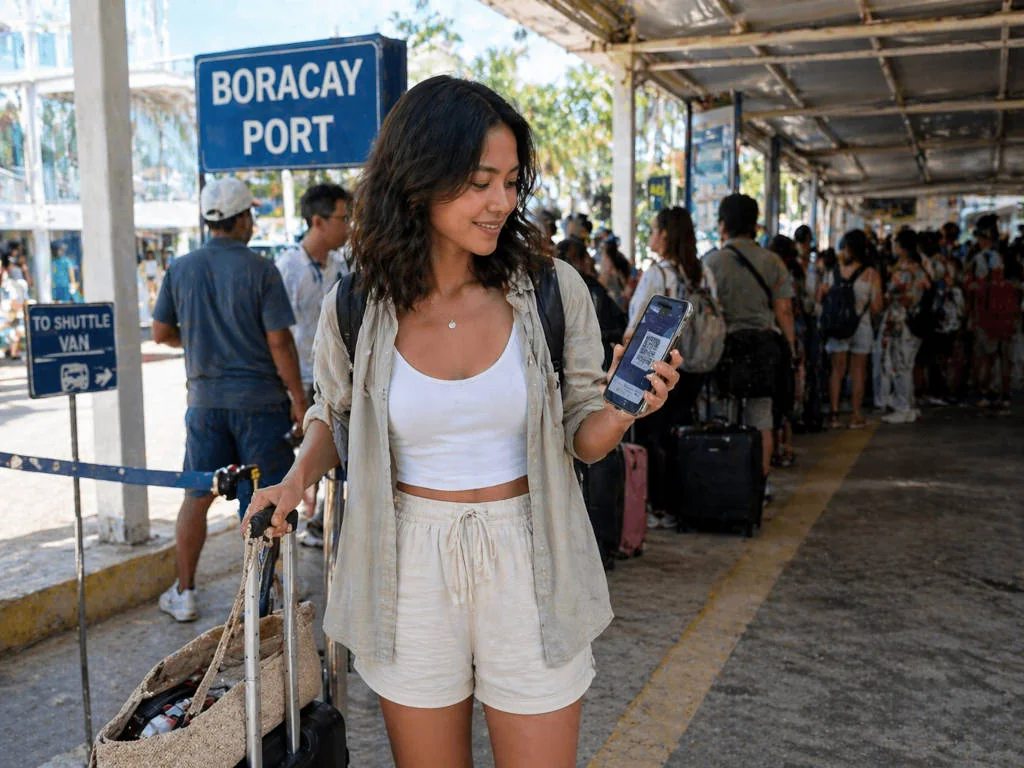 One of the most practical parts of how to get around Boracay has nothing to do with riding. It is what you save on your phone before the trip. Weak signal, low battery, airport fatigue, and the blur of handoffs can make even simple transfers feel confusing if your details live only in your inbox.
Reality Check: Travelers rarely regret having too many screenshots. They do regret needing one specific file while standing in heat, noise, and patchy signal with bags in both hands.
Hotel Pin, Station, Nearest Landmark, and Contact Number
Save your hotel pin, exact station, nearest landmark, and working contact number offline. Do not rely only on the property name. Some hotels are reached from inner roads, side lanes, or pickup points that look obvious to staff but not to new arrivals.
A driver may know the brand name, but the fastest handoff usually happens when you can also say “near D’Mall,” “Station 3 main road side,” or another clear landmark.
A simple screenshot checklist helps:
- Hotel booking confirmation
- Map pin of the property entrance
- Station number and nearest landmark
- Hotel phone number or messaging contact
- Return transfer notes, if any
Boracay iPass QR, Transfer Confirmation, Receipts, and Return Details
Also save your Boracay iPass QR, transfer confirmation, payment receipts, and return trip details. Keep these in one album so you are not digging through screenshots while a line moves.
This matters even more for late arrivals, when tired travelers are more likely to agree to something vague because they cannot quickly verify what was already arranged.
For extra planning help before or after the beach, bookmark free things to do in Boracay for rest days and browse the Tips and Inspiration hub for practical ideas that do not force another expensive transfer.
Luggage and Late-Night Safety Notes
How to get around Boracay changes the moment you add big suitcases or a late arrival. What feels easy at 10:00 a.m. with a backpack can feel messy at 9:30 p.m. with rolling luggage, sleepy kids, and a phone on 12 percent.
Reality Check: Most transport issues after dark are not dramatic. They are small judgment errors caused by fatigue: unclear totals, rushed loading, walking to a pickup point that feels too dim, or accepting a vehicle that is not the best fit for your bags.
When to Ask the Hotel for Pickup Help
Ask the hotel for pickup help when you have large luggage, mobility concerns, children, a very late arrival, or an accommodation that is not easy to explain. This is also smart if you are arriving during bad weather or peak crowd flow.
A hotel-arranged transfer does not guarantee perfection, but it usually reduces the number of decisions you need to make while tired.
If the hotel cannot arrange pickup, at least ask for the exact drop-off point, landmark, and best vehicle type for your baggage. That small message can save unnecessary backtracking.
Safer Pickup, Payment, and Waiting Behavior After Dark
After dark, wait in a lit, active area and keep your bags close until the ride type and total are clear. Confirm the destination before loading anything.
Keep small cash ready if you plan to pay directly, and avoid flashing a thick wallet while sorting receipts. If a transfer is pre-booked, compare the booking details with the actual vehicle or handler before moving off.
The goal is not paranoia. It is calm, boring clarity. The safest late-night transport behavior usually looks ordinary: stay visible, stay together, confirm details once, and do not let anyone rush you into a ride you do not understand.
Normal Versus Not Normal Checklist
First-timers often ask how to get around Boracay because they are worried about doing something “wrong.” In practice, the smartest filter is whether the process feels standard and explained, or pressured and vague.
Reality Check: Busy does not automatically mean suspicious. Boracay transport can look chaotic during peak arrivals, but a noisy process is still fine if the steps, price, and destination are clear.
What Usually Feels Standard
- Being asked whether you need a regular ride or a special trip
- Seeing several travelers move through similar transfer steps at the port or airport side
- Paying different amounts depending on luggage, privacy, or vehicle size
- Waiting a bit longer for the cheaper option
- Using a landmark like D’Mall, Station 2, or your hotel frontage to guide the last drop-off
That is normal Boracay movement: simple, practical, and a little improvised, but still understandable.
Red Flags Worth Slowing Down For
- You are pressured to board before the total is explained
- The driver or handler refuses to confirm whether the ride is regular or special
- You are told to walk far into a dim area away from other travelers without a clear reason
- A new fee appears with no explanation of what changed
- You feel pushed into a large vehicle when a short walk or simpler ride would obviously do
None of these mean disaster, but they are good reasons to pause, ask one more question, or message your hotel before continuing.
Simple Takeaway for First-Timers
If you remember only one thing about how to get around Boracay, let it be this: do not default to a ride just because one is available. Walk when the route is short and easy. Use an e-trike when the road trip is real, the weather is rough, or the heat is stealing your energy.
Book a larger transfer when luggage, kids, seniors, or a late arrival make comfort more valuable than shaving off a small amount.
In the end, how to get around Boracay well is less about chasing the absolute cheapest option and more about choosing the right level of effort for the moment. Save the important screenshots, confirm whether the ride is regular or special, and stay flexible enough to walk when walking is the better answer.
That is usually the smoothest way to move through the island without stress.