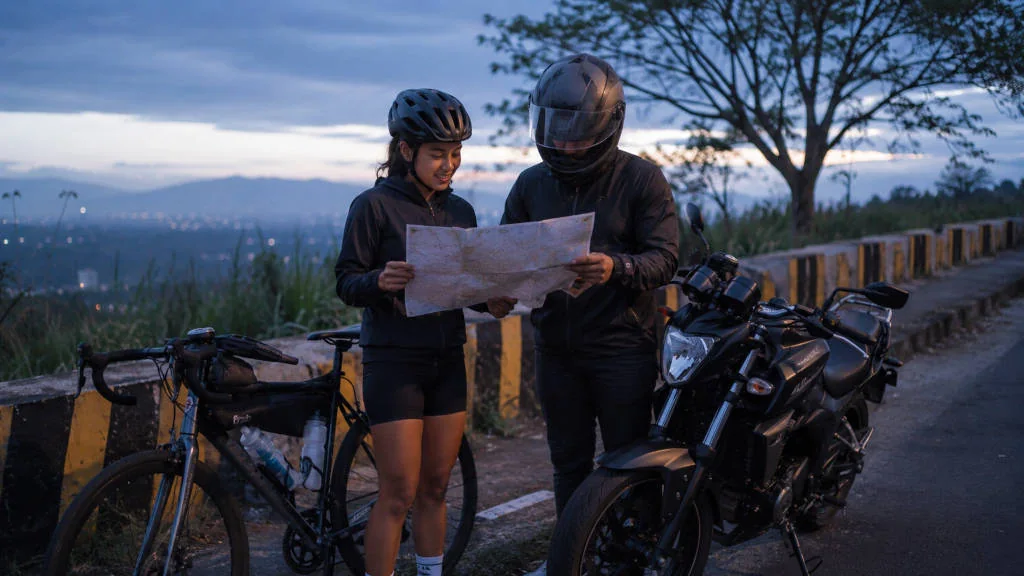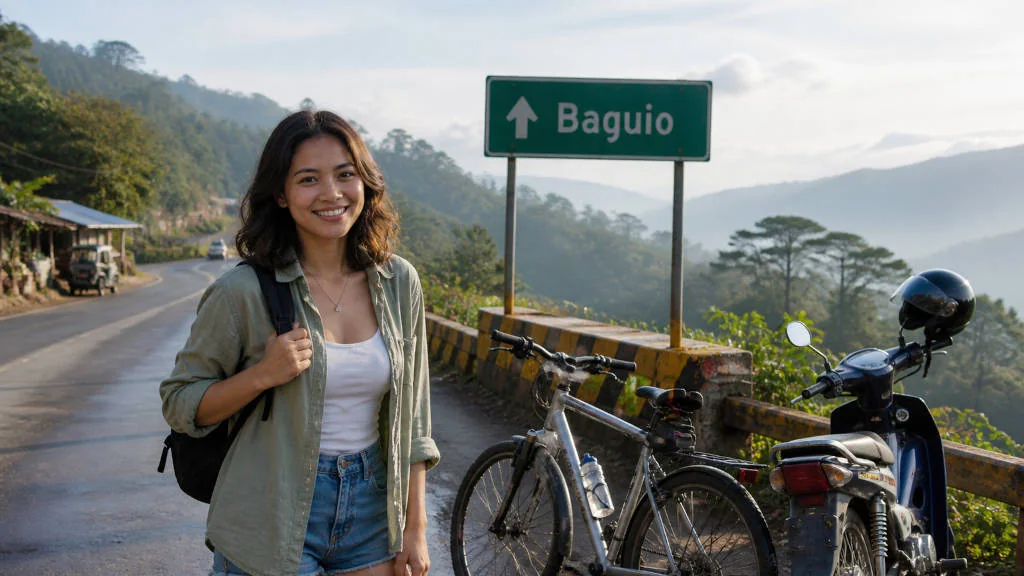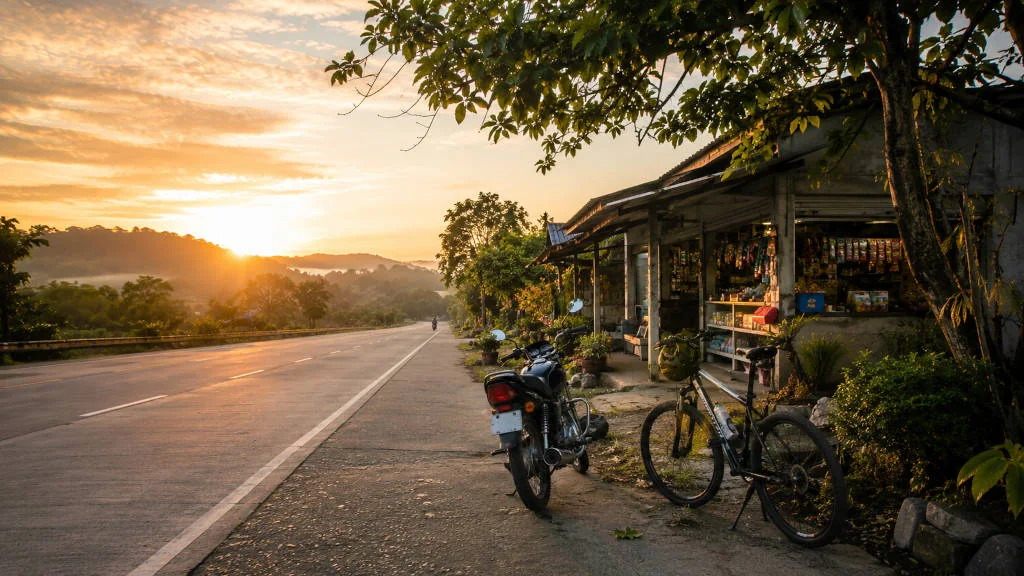
Planning a Manila to La Union no expressway route feels very different from plotting a regular beach trip. For cyclists and sub-400cc motorcycle riders, the journey is not just about getting to San Juan or San Fernando. It is about choosing roads that are legal, realistic, well-lit where possible, and forgiving enough when heat, rain, traffic, or fatigue starts to build.
This is not a general La Union itinerary. For surf towns, where to stay, and destination planning, you can start with the La Union travel guides on Bakasyon.ph. For broader first-trip concerns, check the Philippines first-trip planning guide, the Philippines travel safety guide, and the Philippines weather and best months guide.
This guide stays focused on the road: route decision-making, fatigue stops, arrival logistics, and backup transport when conditions stop feeling safe.
Think early morning Metro Manila streets, gasoline station lights still glowing before sunrise, taho vendors setting up, tricycles easing into town centers, and the long northbound rhythm of concrete, heat shimmer, and roadside carinderias. A Manila to La Union no expressway route can be done with patience and discipline, but it should never be treated like a dare.
What “No Expressway” Means For This Trip
Why Sub-400cc Riders Need A Different Plan
In the Philippines, limited-access expressways have motorcycle restrictions that affect small motorcycles. The legal and regulatory background is best checked through official references such as the Philippine legal reference on motorcycle rules for limited access facilities. In practical terms, many sub-400cc motorcycle riders need to plan around expressways and use national roads, town corridors, and provincial highways instead.
That changes everything. Instead of fast expressway cruising, a small motorcycle rider must think about stoplights, crossings, market traffic, buses, trucks, road works, animals, jeepneys, and pedestrians. A Manila to La Union no expressway route is slower and more exposed to local conditions.
It also needs more decision points because pushing through tiredness on ordinary roads is risky.
Reality Check: No-expressway travel is not automatically more scenic or more relaxed. Some stretches can feel beautiful and open, while others can feel hot, busy, and mentally draining.
What Changes For Cyclists
For cyclists, this route becomes a serious endurance and logistics plan. Even strong riders need to think carefully about daylight, hydration, shoulder quality, bike lights, heat, road spray after rain, group spacing, and where to stop before fatigue becomes dangerous. The question is not only whether your legs can handle the distance.
It is whether your attention, visibility, and decision-making can stay sharp across long hours of mixed traffic.
A cyclist planning a Manila to La Union no expressway route should be conservative. Splitting the trip overnight may be the wiser choice, especially for riders not used to long provincial road exposure. Town centers are useful for food and water, but they also mean more side traffic, parked vehicles, and unpredictable movement.
Reality Check: This is realistic only for prepared cyclists with proper lights, repair kits, hydration habits, and route discipline. Beginners should not treat Manila to La Union as a first long-distance ride.
Time, Comfort, And Fatigue Expectations
Compared with expressway travel by car or bigger motorcycle, a Manila to La Union no expressway route will feel much longer. The difference is not just distance. It is the stop-start rhythm, town traffic, heat, surface changes, and the mental work of scanning every intersection.
Riders should expect the day to feel heavy, even when the map looks simple.
Plan your pace around comfort, not bragging rights. It is better to arrive late but clear-headed than to rush through wet pavement, fading light, and tired reflexes. If the ride starts to feel like a survival task, the plan needs to change.
Reality Check: Exact travel times are unreliable because road works, rain, town traffic, and fatigue can shift the day quickly. Build your plan around safe windows, not fixed promises.
Manila to La Union No Expressway Route: Quick Planning Snapshot
Best Departure Window
For most riders, the safest departure window is very early morning, ideally before Metro Manila traffic thickens. Leaving while the air is still cooler helps manage heat stress and gives you more daylight up north. The first hours should feel calm, not rushed: light breakfast, checked tire pressure, charged phone, packed rain gear, and a route already saved offline.
A Manila to La Union no expressway route should not begin with a late, messy start. If you leave Manila already stressed, under-slept, or overheated, the northern sections can feel much harder than expected.
Reality Check: Early departure helps, but it does not erase traffic. Expect slow movement through some urban and town sections, especially near markets, schools, road works, and fuel stations.
Conservative Arrival Target
A sensible target is to reach your chosen La Union base before dark. San Fernando is more practical for services, transport, and errands. San Juan and Urbiztondo are better for surf-town stays and beach access, but they can be busier and more accommodation-dependent when it comes to secure parking or bike storage.
For cyclists and small motorcycle riders, the relief of reaching La Union before dark is more than emotional. It means easier navigation, clearer accommodation check-in, safer unloading, and more time to dry wet gear if rain catches you along the way.
Reality Check: Late arrival can be uncomfortable if your accommodation has limited reception hours, tight parking, or no clear place for bicycles and riding gear.
When Not To Push Through
Do not push through if visibility drops, rain becomes steady, your lights are weak, your phone battery is low, or your body feels dull and slow to react. The same rule applies if you start making small mistakes: missing turns, braking late, forgetting to drink, or feeling impatient around trucks and buses.
A good Manila to La Union no expressway route includes permission to stop. The safest riders are not the ones who force the plan. They are the ones who know when to eat, rest, stay overnight, or switch to backup transport.
Reality Check: Pride is a poor travel companion on long provincial roads. If conditions become unsafe, stopping is not failure; it is planning doing its job.
Route Option 1: Direct MacArthur Highway / Manila North Road Corridor
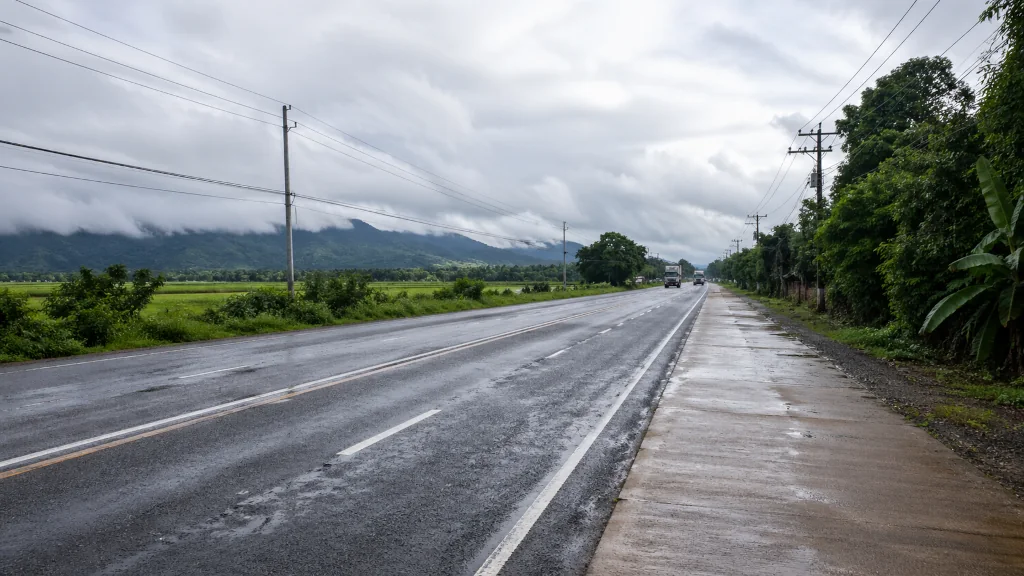 The simplest mental map follows the direct northbound corridor using major highways and towns only: Metro Manila, Valenzuela, Bulacan, Pampanga, Tarlac, Pangasinan, Rosario, Agoo, Bauang, San Fernando, and San Juan. This is the most straightforward Manila to La Union no expressway route for riders who want fewer navigation surprises and a clearer sense of progression.
The advantage is mental simplicity. You are generally following the old northbound spine, with towns and services appearing regularly. For small motorcycle riders, that means more fuel options, vulcanizing shops, food stops, and familiar national-road movement.
For cyclists, it means more places to refill water and reassess the day.
The challenge is fatigue. MacArthur Highway and Manila North Road can include traffic, town centers, trucks, road works, heat, and long straight sections that make attention drift. The road may feel easy in short pieces but demanding as a whole.
A rider can start strong in Bulacan, feel heavy through Pampanga, then become mentally tired by Tarlac or Pangasinan.
Use the major towns as checkpoints rather than just names on the map. Valenzuela and Bulacan tell you whether the Manila exit is already draining you. Pampanga is a good region to check heat, hydration, and traffic mood.
Tarlac is a serious decision point because the ride still has a long way to go. Pangasinan can feel open, but long straight sections require patience. Rosario and Agoo signal that La Union is nearer, but they are not permission to rush.
Reality Check: This direct corridor is easier to understand but not always easier to ride. The most tiring parts may be the repetitive, ordinary stretches where nothing dramatic happens but your focus slowly fades.
Route Option 2: Pampanga–Tarlac Bypass Style Corridor Using Major Towns Only
The second option is a variation for riders who want to reduce some busier urban sections where practical. Instead of promising tiny shortcuts, think of it as a Pampanga–Tarlac bypass style corridor using major decision areas only: Pampanga, Magalang or Arayat-side decision areas, Concepcion or Capas, Tarlac, then reconnecting toward the northbound corridor to Pangasinan and La Union.
This kind of Manila to La Union no expressway route may appeal to riders who dislike dense town-center traffic and want a more flexible approach through Central Luzon. However, it requires more judgment. Roads that look tempting on a map may be less ideal in real life because of lighting, surface quality, local traffic patterns, construction, or unfamiliar intersections.
Use this option only after checking live road conditions, weather, daylight, and your comfort level. Avoid unlit unfamiliar roads at night. A quieter road is not automatically safer if it has poor lighting, fewer services, rough edges, or confusing turns.
Cyclists should be especially careful with shoulder quality and visibility, while small motorcycle riders should think about fuel, tire condition, and where to stop if rain begins.
The best use of this option is as a daytime variation, not a late-night experiment. If the sky is darkening or your energy is dropping, the simpler corridor may be the wiser choice because services and navigation are easier to manage.
Reality Check: Bypass-style planning can reduce some stress but add other risks. Do not trade busy but service-rich roads for quiet roads that become confusing, dark, or isolated.
Stop Planning And Fatigue Rules
Stop Before You Feel Tired
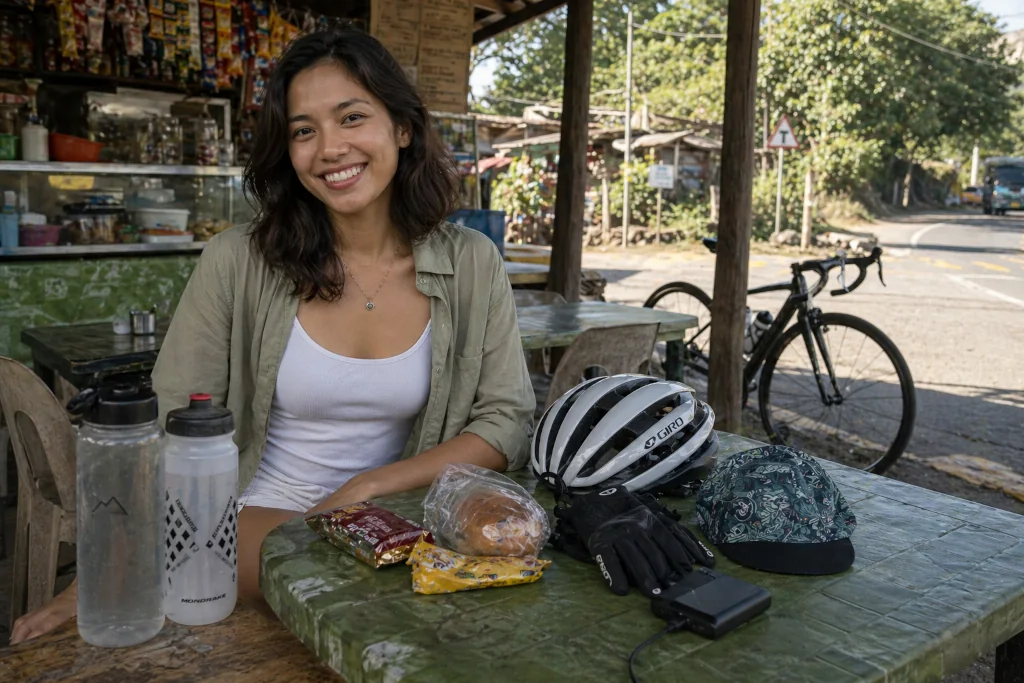 The best fatigue stop is the one you take before you feel desperate. On a long Manila to La Union no expressway route, waiting until you are already exhausted can lead to poor decisions: skipping meals, riding too fast, tailgating buses, or ignoring dark clouds because you want to be done.
Plan short, regular stops at gasoline stations, town centers, convenience stores, or carinderias with shade. Use them to drink water, stretch your hands and back, check your phone battery, and look honestly at the next section. A simple meal of rice, sabaw, egg, or grilled food can feel grounding when the day becomes too hot or too noisy.
Reality Check: Rest stops add time, but they reduce mistakes. The goal is not the fastest ride; it is a safe arrival with enough energy to check in properly.
Use Town Centers As Decision Points
Town centers are not just places to pass through. They are decision points. Ask yourself: Is the weather improving or getting worse?
Is traffic manageable? Are you still alert? Do you have enough water, fuel, cash, and phone battery?
Is the next section realistic before dark?
For cyclists, town centers can be good places to regroup, refill bottles, repair small issues, and decide whether the pace is still safe. For sub-400cc motorcycle riders, they are useful for fuel, tire checks, restrooms, and quick food. Keep stops efficient but not rushed.
Reality Check: Town centers can also be chaotic. Watch for parked vehicles, tricycles, pedestrians, dogs, sudden jeepney stops, and vehicles entering from side streets.
Hydration, Food, Fuel, And Phone Battery
Heat is one of the quietest risks on a Manila to La Union no expressway route. You may not notice how much energy you are losing until your head feels heavy and your reactions slow down. Drink before you feel thirsty.
Eat before you feel shaky. For motorcycle riders, fuel up earlier than necessary rather than gambling on the next station. For cyclists, refill water whenever a safe, obvious opportunity appears.
Keep a power bank accessible, not buried deep inside your bag. Your phone is your map, weather checker, accommodation contact, emergency tool, and backup transport lifeline. Bring cash because not every roadside stop will be convenient for cards or apps.
Reality Check: A low phone battery can turn a small delay into a stressful problem. Charge during meals and longer rest stops whenever possible.
Long Straight Sections And Attention Drift
Long straight provincial sections can feel easy at first, then strangely hypnotic. Trucks in the distance, heat rising from pavement, and repeated roadside scenery can make the mind wander. This is dangerous for both cyclists and small motorcycle riders because traffic conditions can change suddenly.
Break the ride mentally into short segments. Focus on the next town, the next hydration stop, or the next weather check. If your attention starts to float, stop.
Do not wait for a near-miss to prove you are tired.
Reality Check: Attention drift is not weakness. It is a normal fatigue signal, especially on roads that are repetitive, hot, or noisy.
Safety Notes For Cyclists
Shoulder Quality And Visibility
 Cyclists should treat shoulder quality as a changing condition, not a fixed feature. Some sections may have usable shoulders, while others may narrow near bridges, town centers, road works, parked vehicles, or drainage edges. Bright clothing, front and rear lights, reflective details, and predictable line choices matter.
On a Manila to La Union no expressway route, visibility is your first layer of safety. Avoid sudden swerves around potholes or debris. Signal clearly within your group.
Give yourself enough space to react when vehicles stop or merge.
Reality Check: Not every stretch will feel cyclist-friendly. Be ready to slow down, single out, or stop when the shoulder disappears or traffic becomes too tight.
Heat, Rain, And Road Spray
Heat can drain you slowly, while rain can change the road instantly. Wet pavement, road spray, reduced visibility, and slippery painted markings make riding more demanding. Keep rain protection accessible, but remember that rain gear can also trap heat when the weather turns humid again.
After rain, assume drivers may have reduced visibility too. Cyclists should avoid riding too close to vehicle spray and should keep lights on even in daytime gloom. If rainfall becomes heavy, find a covered, safe place to wait.
Reality Check: Rainy season riding is not only about getting wet. It affects braking distance, visibility, body temperature, and the patience of everyone on the road.
Group Spacing And Night Riding
Group rides need discipline. Keep spacing predictable, communicate hazards, and avoid bunching up in narrow sections. Stronger riders should not pull the group into a pace that weaker or newer members cannot safely sustain.
Night riding should be avoided unless your group is experienced, well-lit, and fully prepared. Even then, ordinary provincial roads can feel very different after dark. Shadows, glare, road works, and tired drivers can make the final kilometers feel longer and riskier.
Reality Check: A group is only as safe as its most tired rider. Plan around the person who needs the most rest, not the one who wants the fastest arrival.
Safety Notes For Sub-400cc Motorcycles
Trucks, Buses, And Crosswinds
Sub-400cc motorcycle riders will share long stretches with buses, trucks, vans, jeepneys, and private cars. Give heavy vehicles space. Their size affects visibility, wind movement, braking distance, and your escape options.
Do not linger beside trucks or buses, especially near curves, bridges, and narrow sections.
A Manila to La Union no expressway route may include open provincial areas where crosswinds and vehicle wake can surprise riders. Keep both hands steady, avoid abrupt inputs, and slow down when conditions feel unstable.
Reality Check: A small motorcycle can cover the distance, but it should not be ridden like a bigger expressway machine. Comfort speed matters more than ego speed.
Passing Discipline And Speed Comfort
Passing should be patient and obvious. Do not overtake just because the vehicle ahead is slow. Check sightlines, oncoming traffic, road surface, and side movements.
If you cannot complete the pass cleanly, wait. Provincial roads often hide small surprises: tricycles edging out, pedestrians crossing, dogs, gravel, or vehicles turning without much warning.
Your best pace is the one that lets you brake, scan, and adjust without panic. If other riders are pushing faster than your comfort zone, let them go. A safe solo pace is better than joining risky group momentum.
Reality Check: The pressure to keep up can be subtle. Decide before leaving Manila that you will not chase anyone through traffic, rain, or poor visibility.
Rain Gear, Tire Condition, And Lights
Before departure, check tire tread, tire pressure, brakes, chain condition, mirrors, horn, and all lights. Pack rain gear where you can reach it quickly. A wet highway shoulder is not the place to unpack your whole bag just to find a jacket.
Use lights early when skies turn gray. Keep your visor clean. Bring basic tools and know your realistic limits for roadside fixes.
Mechanical trouble is not the moment to discover you have no cash, no signal plan, or no contact number for your accommodation.
Reality Check: Small maintenance issues can become big delays on a long no-expressway day. A careful pre-ride check is part of the trip, not an optional chore.
Arrival Planning In La Union
San Fernando Versus San Juan
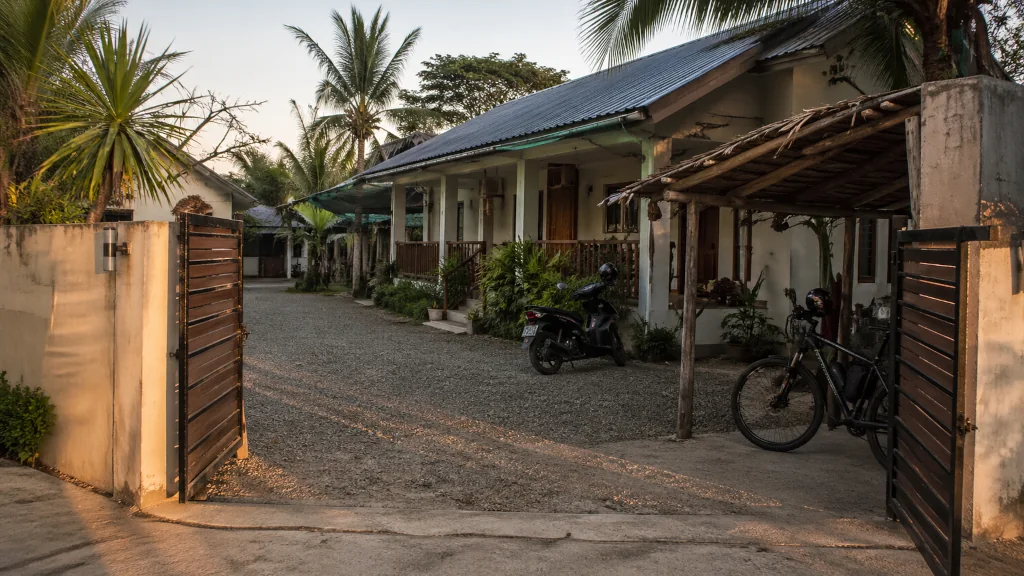 San Fernando is usually the more practical arrival point for services, errands, transport connections, and a less beach-party-centered landing. San Juan, especially Urbiztondo, is where many travelers aim for surf, food, cafés, and beach stays. For destination context, the official La Union page for San Juan can help orient first-time visitors.
For a Manila to La Union no expressway route, choose your final stop based on your condition at the end of the day. If you are exhausted, wet, or arriving late, a practical stay with easy parking may be better than a more atmospheric place that is harder to access.
Reality Check: The last short stretch can feel longer than expected when you are tired. Do not underestimate arrival traffic, check-in instructions, and finding the exact entrance in the dark.
Secure Parking And Bike Storage Questions
Before booking, ask your accommodation direct questions. Is there gated parking? Is it covered?
Can a bicycle be stored inside or in a locked area? Is there space for a small motorcycle away from the street? Is parking first-come, first-served?
Can wet gear be hung somewhere appropriate?
La Union secure parking matters because your ride is part of your trip security. Cyclists should bring a reliable lock even when indoor storage is promised. Motorcycle riders should ask whether helmets and gear can be kept safely in the room or reception area.
Reality Check: Not every beach stay is designed for riders with bikes, helmets, wet jackets, and luggage. Confirm before arrival so you are not negotiating while tired.
Early Check-In And Late Arrival Handling
Ask about early check-in, bag drop, and late arrival procedures before leaving Manila. A rider arriving hot, hungry, or soaked from rain needs clear instructions, not guesswork. Save the accommodation number offline and message them if delays build during the day.
For cyclists, ask whether you can bring the bicycle into the room or a storage area before check-in. For sub-400cc motorcycle riders, ask where to park if you arrive after reception hours. Clear arrival logistics make the final hour calmer.
Reality Check: A beautiful stay can still be stressful if check-in is unclear. Communication is part of safety when the ride may stretch longer than expected.
Wet Gear, Helmets, Locks, And Charging
Pack with arrival in mind. Wet shoes, gloves, jerseys, rain jackets, helmets, and bags need space to dry. Bring small plastic bags for separating wet items, but avoid sealing damp gear for too long.
Charge your phone, lights, action camera if used, and power bank as soon as you settle in.
Keep locks, keys, and important documents in a consistent pocket or pouch. Long-ride tiredness makes it easy to misplace small things. Before sleeping, confirm that your bicycle or motorcycle is locked, parked, and protected from rain as much as possible.
Reality Check: Arrival is not finished when you reach the accommodation gate. The ride ends only when your gear, vehicle, phone, and body are safe for the night.
Backup Plan: Bus Or Van Transfer Points
When To Abandon The Ride Plan
A strong backup plan makes a Manila to La Union no expressway route safer. Abandon the ride plan if heavy rain continues, visibility drops, a rider becomes dizzy or unusually irritable, mechanical issues appear, lights fail, or the group is unlikely to reach La Union before dark safely. The earlier you decide, the more options you usually have.
This is especially important for cyclists. A bus backup plan can turn a risky remaining distance into a manageable transfer, depending on space, operator rules, and timing. Motorcycle riders may not be able to load the motorcycle easily, but they can stop overnight, send gear ahead, or use transport options for the rider if the bike requires service.
Reality Check: Backup transport is not guaranteed on demand. Space, rules, schedules, and willingness to load bicycles or bulky gear can vary.
Practical Transfer Towns
Use major towns as practical transfer or reset points rather than waiting until you are stranded on a dark roadside. Bulacan, Pampanga, Tarlac, Pangasinan towns, Rosario, Agoo, Bauang, San Fernando, and San Juan can all function as decision areas depending on where you are, what services are nearby, and what time it is.
For cyclists, bigger towns generally offer better chances of bus or van options, bike repair help, food, water, and safe waiting areas. For small motorcycle riders, town centers and gasoline stations are useful for assessing mechanical issues, calling assistance, or deciding to stay overnight.
Reality Check: Do not wait until your phone is nearly dead or rain is already heavy before looking for options. Backup planning works best while you still have choices.
What To Ask Before Loading A Bicycle Or Motorcycle Gear
Before committing to a bus or van, ask whether bicycles are allowed, whether wheels must be removed, whether boxed or bagged bikes are required, what fees apply, and where the bike will be placed. Ask about helmets, panniers, wet bags, and fragile items. Keep valuables with you.
For motorcycle riders carrying bulky gear, ask what can be loaded safely and what must stay with you. If the motorcycle itself has a problem, focus on reaching a safe town, finding a mechanic, and contacting your accommodation early. Do not leave gear unattended while negotiating transport.
Reality Check: Rules can differ by operator, terminal, space, and staff on duty. Stay polite, flexible, and ready with cash.
Final No-Expressway Checklist Before Leaving Manila
Before starting your Manila to La Union no expressway route, check the weather, road conditions, saved offline maps, and your chosen corridor. Review your rest points and decision towns. Confirm your La Union accommodation, including early check-in, late arrival, secure parking, bicycle storage, and wet gear handling.
Save emergency contacts and accommodation numbers offline.
Pack cash, IDs, lights, rain gear, basic tools, repair kit, water, snacks, power bank, charging cables, first-aid basics, and a lock. For cyclists, check tires, brakes, chain, lights, reflectors, and bottle capacity. For sub-400cc motorcycle riders, check tire condition, fuel range, brakes, lights, mirrors, horn, rain gear, and helmet comfort.
Share your route plan with someone who is not riding.
Most importantly, decide your stopping rules before the road tests you. Know when you will rest, when you will eat, when you will stop overnight, and when you will switch to a bus backup plan or other transport option. A Manila to La Union no expressway route is safest when it is flexible, honest, and built around real human energy.
The best arrival in La Union is not the most dramatic one. It is the quiet, relieved kind: bike locked, helmet set down, wet gear drying, phone charging, and the sea air finally replacing the warm exhaust and highway dust of the long ride north.