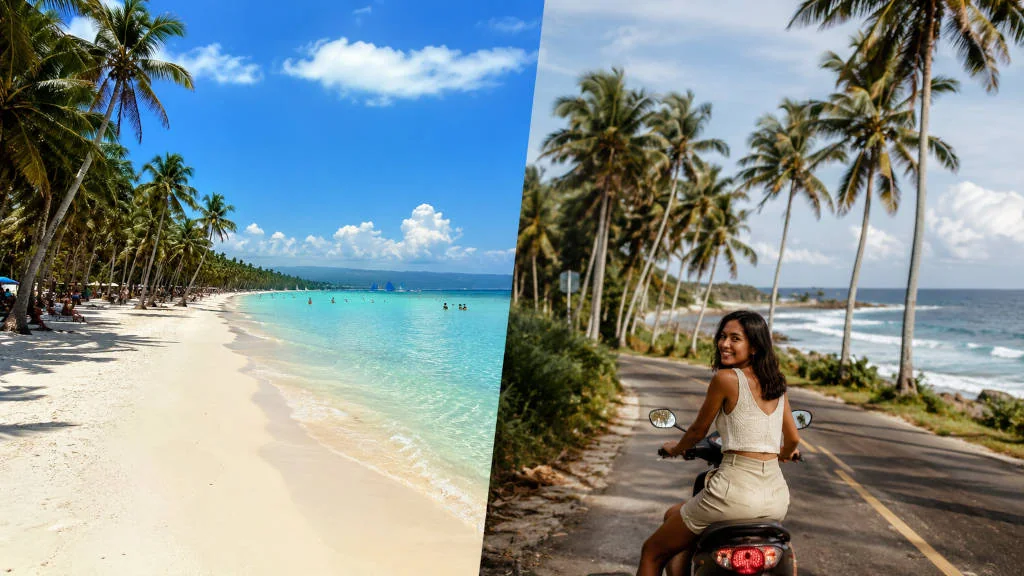
Choosing the best time to visit Boracay is really about choosing your tradeoff. Some travelers want the highest chance of blue skies and calm beach days. Others want fewer people on the sand, softer room rates, or a flexible slow trip where a rainy afternoon is not a dealbreaker.
Boracay is beautiful in many moods, but the timing of your trip can affect almost everything: how hot the midday walk feels, how busy White Beach gets, how much hotels cost, and whether sea activities can push through.
This is not a full Boracay travel guide. Think of it as a practical date-planning guide for travelers comparing Boracay weather, crowd levels, prices, and sea conditions before booking flights and leave days.
For most visitors, the best time to visit Boracay is during the dry season, especially from December to April. But the most comfortable month for you depends on your budget, heat tolerance, flexibility, and plans for island hopping or water activities.
At-a-Glance: Best Time to Visit Boracay
The safest general window for the best time to visit Boracay is usually December to April, when dry-season conditions are more likely and beach plans have better odds of pushing through.
Travel time from Manila to Boracay is commonly treated as a half-day journey once you include airport time, land transfers, boat transfers, and hotel check-in. Budget-wise, expect higher costs around Christmas, New Year, Holy Week, summer breaks, and long weekends, while rainy-season dates can be more affordable.
Crowd and traffic risk rise sharply during peak holidays, especially when flights, transfers, restaurants, and tours are all moving at full volume. Rain or heat backup matters in every season: during hot months, plan your most exposed walks early or late in the day; during rainy or transitional months, keep one flexible activity that still works with light rain.
For deeper backup planning, the dedicated Boracay rainy-season travel backup plans guide is the better next read.
Reality Check: Even in a good month, Boracay is still in the Philippines, where weather can shift quickly. A smooth trip comes from choosing smart dates, then building enough breathing room into the itinerary.
Best Time to Visit Boracay: The Simple Answer
The best time to visit Boracay for most travelers is from December to April. These months usually offer the most reliable dry-season beach conditions, brighter mornings, and a better chance of calm water for swimming, paraw sailing, snorkeling trips, and island hopping.
January and February often feel more comfortable than the hotter summer months, while March and April bring strong beach energy but also stronger sun and heavier local travel demand.
There is no perfect month for everyone. December can be lovely but expensive near the holidays. March and April can be sunny but hot and crowded.
May can still give beautiful beach days, but it starts to feel transitional. June to October can bring lower prices and quieter shorelines, but also more rain, rougher seas, and tour-cancellation risk. November can be a useful shoulder month as weather begins to improve, but it still requires a flexible mindset.
Reality Check: The best time to visit Boracay is not always the cheapest time. The months with the best weather odds often come with higher rates, fuller flights, and more competition for convenient hotel locations.
Boracay Seasons Explained: Dry Season, Rainy Season, Amihan, and Habagat
Boracay weather is shaped by the broader Philippine climate, especially the shift between drier and wetter seasons. Travelers often hear two local seasonal terms: Amihan and Habagat. These winds influence the feel of the island, the direction of waves, and the chance that sea-based activities may need adjustment.
For a bigger climate overview, the PAGASA guide to Philippine climate seasons is a helpful reference before planning.
Dry Season and Amihan
Amihan is generally associated with the cooler, drier northeast monsoon season. In Boracay planning, this often lines up with the more popular beach months from around late year into early summer.
Days can feel bright and breezy, with soft morning light, warm sand under slippers, and better odds for long beach time. This is one reason many travelers consider December to April the best time to visit Boracay overall.
Dry season is also when many visitors expect smoother outdoor plans. Boat tours, water sports, beach walks, sunset watching, and casual café-hopping are easier when the rain risk is lower. Still, “dry” does not mean rain-free.
A brief shower, windy day, or choppy sea can still happen, so it is wise to avoid overpacking the schedule.
Rainy Season and Habagat
Habagat, or the southwest monsoon, is linked with wetter months and a higher chance of rain, humidity, wind, and rougher sea conditions. In Boracay, this usually matters most from June to October.
These months can appeal to budget travelers because hotels may offer friendlier rates, and some areas may feel less crowded. But the tradeoff is real: sea conditions can change quickly, and weather-sensitive plans are more vulnerable.
Rainy season does not mean it rains all day, every day. Some travelers still get sunny breaks, dramatic skies, and peaceful mornings. The issue is planning certainty.
A three-day trip with island hopping as the highlight has less room for weather disruption than a six-day stay with slow mornings, flexible tours, and rest-day ideas from free things to do in Boracay on rest days.
Why Weather Can Still Change Even in a Good Month
Philippine weather is seasonal, not guaranteed. A date can fall inside dry season and still bring a cloudy afternoon. A rainy-season week can still have pockets of sunshine.
This is why the best time to visit Boracay should be understood as a probability, not a promise. Weather apps help, but local advisories and same-day tour guidance matter more once you are already on the island.
Reality Check: Weather can affect comfort even when plans are not canceled. Humid afternoons, intense sun, sudden rain, and windy shorelines can all change how much energy you have for tours, walking, and transfers.
Month-By-Month Boracay Weather Overview
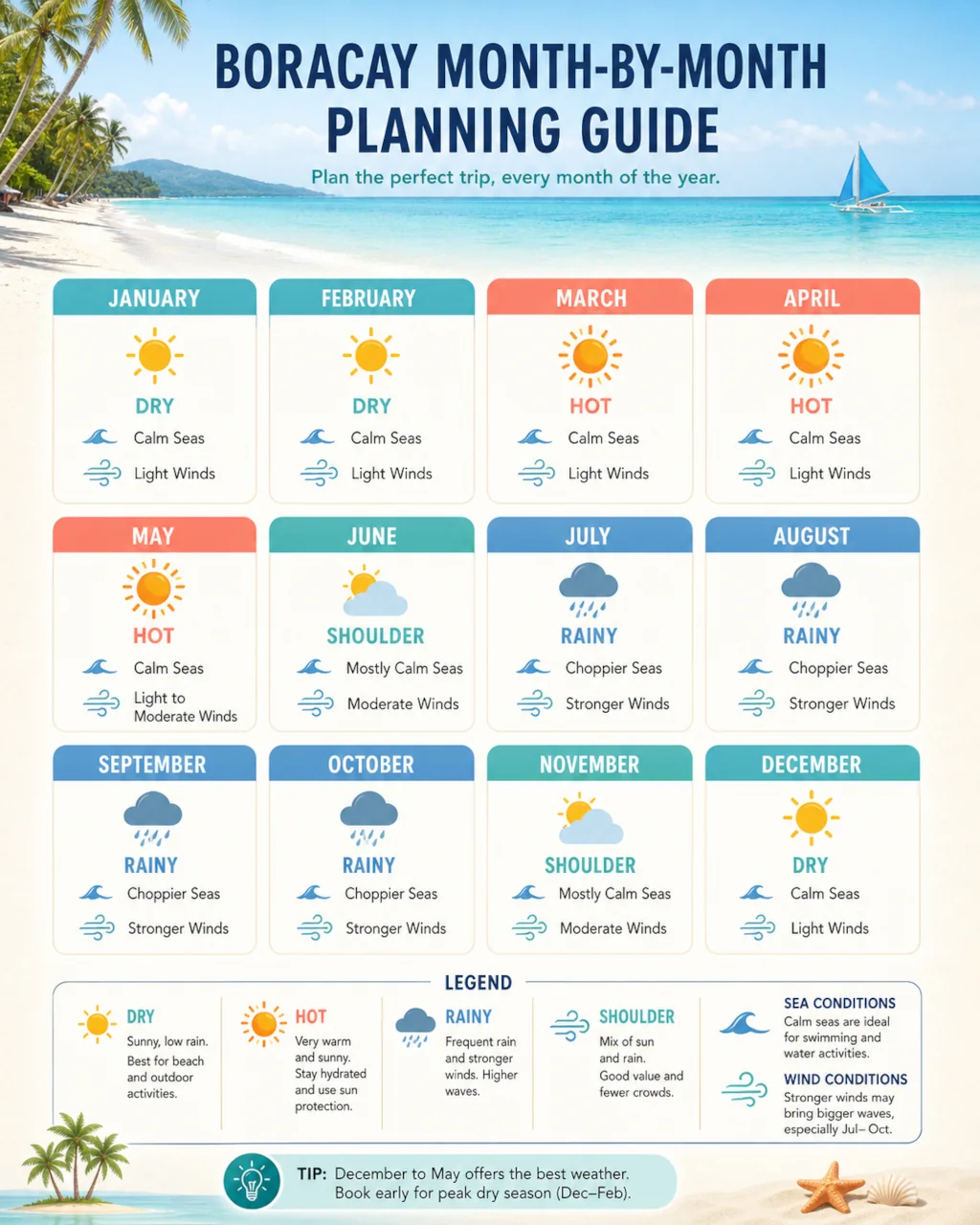 A month-by-month view helps travelers compare the best time to visit Boracay based on comfort and risk. Use this as a planning guide, not a guarantee, because each year can behave differently.
January to February
January and February are among the most comfortable months for many travelers. The air can feel less punishing than peak summer, and the dry-season pattern gives better odds for classic beach days. This is a strong period for first-timers who want a simple Boracay experience: swim, stroll, eat, rest, and keep one or two sea activities on the schedule.
The catch is that holiday spillover can affect early January, while February can still feel busy around travel peaks, events, or long weekends. Book rooms and transfers early if your dates are fixed. The best time to visit Boracay for comfort may be around these months, but they are not automatically quiet.
March to April
March to April brings strong beach appeal: sunny days, bright water, and the full summer feeling many Filipinos imagine when planning Boracay. These months are popular for school breaks, family trips, barkada getaways, and Holy Week travel. For travelers who want sun and do not mind heat, this can still be the best time to visit Boracay.
Expect stronger midday sun, warmer rooms if air-conditioning is weak, and more pressure on restaurants, transfers, and tours. Plan beach time in the morning or late afternoon, then take shade seriously at noon. A rash guard, hat, sunglasses, and refillable water bottle become practical essentials, not just nice extras.
May
May is hot and transitional. It can still deliver excellent beach days, but humidity builds and weather may begin to feel less predictable. For travelers asking when is Boracay less crowded while still wanting some dry-season feeling, May can be worth considering, especially outside holiday weekends and major local travel peaks.
The main planning rule for May is to stay flexible. Choose a hotel location that makes it easy to rest during the hottest hours, and avoid placing all water activities on one non-movable day. May can be a good compromise, but it is not as weather-secure as January to April.
June to October
June to October is the rainier Habagat period. These months can bring fewer crowds, lower room prices, and a slower island mood, but they also carry higher risk for rough seas, heavier rain, and tour cancellations.
Travelers focused on the best time to visit Boracay for calm seas usually avoid making these months their first choice, especially for short trips.
This period works better for flexible travelers than for visitors with a tight itinerary. A relaxed five- or six-day stay has more room to move island hopping, diving, or paraw sailing to a better weather window. A quick weekend trip has less room to recover if the sea is rough or an advisory changes the plan.
November to December
November is often treated as a shoulder month as weather begins to shift back toward better beach conditions. It can be a smart option for travelers who want a balance of decent weather odds and lighter crowds, though early November can still feel transitional.
By December, Boracay becomes more appealing for dry-season travel but also busier and pricier as Christmas and New Year approach.
For many travelers, early December can be one of the better windows when comparing the best time to visit Boracay before the holiday rush fully builds. Late December, however, is peak-season territory.
Book early, expect higher rates, and avoid assuming that tours, restaurants, and transfers will be easy to arrange at the last minute.
Reality Check: Month-by-month guides are useful, but your exact dates matter. A holiday weekend in a shoulder month can feel busier than an ordinary weekday in a peak season.
Crowd and Price Patterns to Expect
 Boracay crowd levels are tied not only to weather, but also to school calendars, Philippine holidays, long weekends, airline pricing, and major family travel periods. The best time to visit Boracay may feel very different depending on whether you arrive on a quiet weekday or during a national holiday.
Peak Crowd Periods
The busiest periods usually include Christmas, New Year, Holy Week, Philippine summer breaks, long weekends, and major holidays. During these times, the island can feel lively and festive, but logistics may take more patience.
Flights and hotels are often more expensive, popular beachfront areas get busier, and same-day decisions can become harder.
Travelers who want smoother movement should book flights, hotels, transfers, and key tours ahead. It also helps to choose your base carefully. The guide to where to stay in Boracay for first-timers can help you compare convenience, quiet, and access before committing to a hotel area.
Quieter Periods
Quieter periods are more likely during rainy-season months and some shoulder windows such as parts of May, November, and early December. These dates can offer better room rates and a calmer beach rhythm.
If your main goal is to rest, read, eat well, and enjoy short beach walks between showers, these months can be appealing.
The tradeoff is weather risk. Cheaper months can become more expensive emotionally if your must-do tour gets canceled or if the sea is too rough for the activity you planned around. Lower cost is most valuable when your itinerary has enough flexibility to absorb changes.
Booking Comfort Rule
A simple booking comfort rule: the less flexible your dates are, the earlier you should reserve the essentials. This is especially true for peak dates, family trips, groups, and travelers who need specific room types.
Do not assume a same-day island hopping tour, dinner slot, or transfer arrangement will work smoothly during busy periods.
Reality Check: Saving money on travel dates is helpful, but convenience also has value. A slightly higher room rate in a better location can reduce heat, walking fatigue, and transfer stress.
Sea Conditions and Tour Cancellations
 Sea conditions are one of the biggest reasons the best time to visit Boracay is not only about sunshine. A day can look bright from the shore, but wind and waves may still affect boat routes, island hopping, water sports, or snorkeling visibility.
Sea safety decisions can change daily, and sometimes quickly.
Why Island Hopping and Water Activities Can Change Daily
Island hopping and water activities depend on wind, waves, rain, tropical cyclone activity, and official advisories. Tour operators may adjust routes, timing, jump-off points, or activity availability based on safety. This can be frustrating when you have limited leave days, but it is part of responsible island travel.
For official travel rules and visitor reminders, check the Aklan official Boracay tourist guide before departure. Once on the island, pay attention to hotel updates, tour operator instructions, and local advisories. Safety calls are not negotiable, even when the sky looks partly clear.
Activities Most Affected by Rough Conditions
Activities most affected by rough conditions include island hopping, paraw sailing, parasailing, diving, snorkeling trips, and some boat transfers where conditions become difficult. Even when an activity still operates, comfort may change.
A choppy ride can be tiring, especially for families, seniors, kids, or travelers prone to motion sickness.
If your dream activity depends on calm water, the best time to visit Boracay for calm seas is usually within the dry-season window, especially when no active weather system is affecting the area. Still, always treat this as better odds, not a guarantee.
How to Plan Around Sea-Condition Risk
Book weather-sensitive activities early in the trip, not on your final full day. This gives you at least one chance to move the activity if conditions are not safe. Keep one backup day for island hopping or diving if those are priorities.
For a short stay, decide in advance which activity matters most so you do not overbook your limited beach time.
Travelers with fixed leave dates should add buffer days when traveling in rainy or transitional months. A four-night trip is more forgiving than a two-night trip if your main plan depends on the sea.
Also avoid tight same-day assumptions, such as landing, transferring, checking in, and immediately doing a major water activity.
Reality Check: The sea does not follow itineraries. A flexible plan protects your mood better than a packed schedule that depends on perfect daily conditions.
What to Pack by Season
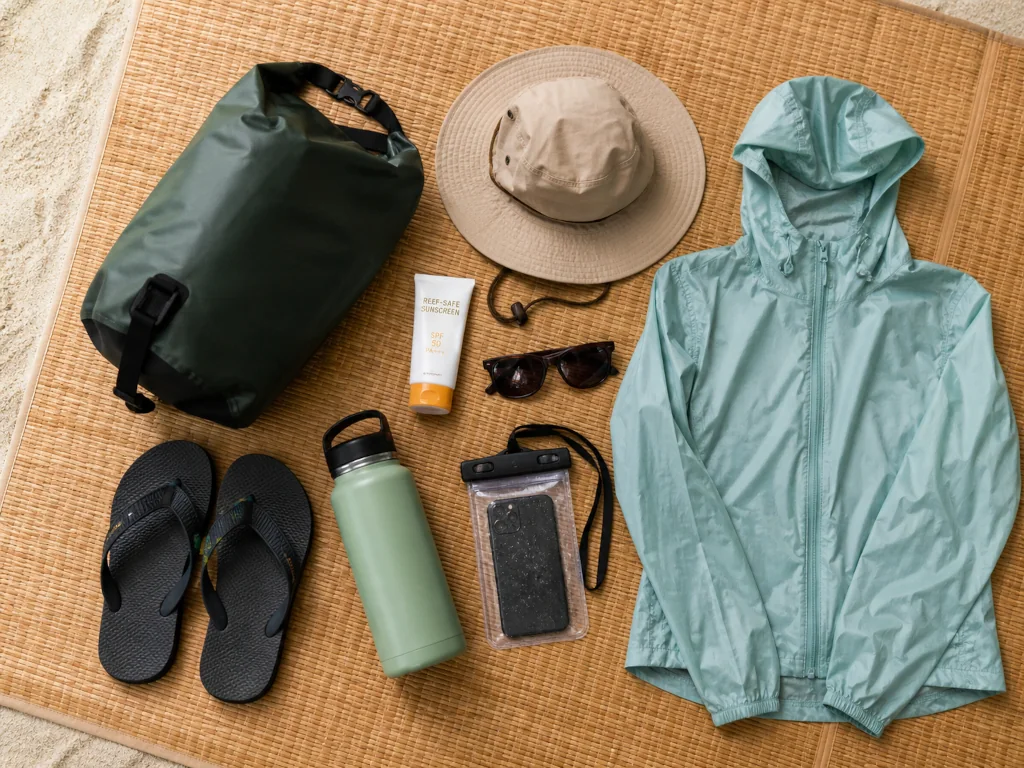 Packing well makes Boracay easier in any month. The right items help you handle heat, rain, wet clothes, sandy slippers, boat rides, and small transfer delays without turning every inconvenience into a problem.
Dry and Hot Months
For dry and hot months, pack light breathable clothes, swimwear, a rash guard, hat or cap, sunglasses, sunscreen, a refillable water bottle, after-sun care, and comfortable sandals. A light cover-up is useful for walking between the beach, restaurants, and your room without feeling too exposed to the sun.
March to May can feel especially hot, so plan outfits that dry quickly and do not trap heat. A small towel or scarf can help during boat rides or transfers. The best time to visit Boracay for sunny beach photos can also be the time when sun protection matters most.
Rainy or Transitional Months
For rainy or transitional months, pack quick-dry clothes, a light rain jacket or poncho, dry bag, waterproof phone pouch, extra plastic or reusable wet bag, sandals with grip, and basic medicine.
If you are researching what to pack for Boracay rainy season, prioritize items that keep valuables dry and help you move safely on wet paths.
A dry bag is especially useful for boat trips, sudden rain, and wet swimwear. Do not rely only on hotel umbrellas or small fashion sandals. Practical footwear matters when paths are slippery, puddles appear, or you need to walk during a quick shower.
All-Season Comfort Items
All year, bring a power bank, small towel, eco-friendly toiletries, reusable bag, light cover-up, copies of bookings, and cash for small expenses. Cards are useful, but small cash can make tricycle rides, tips, snacks, and quick purchases easier.
It also helps to save important documents and booking confirmations offline. Transfers involve several steps, and phone signal or battery life may not always cooperate exactly when you need a voucher, hotel address, or contact number.
Reality Check: Overpacking can make transfers more tiring, especially with boats, vans, and sandy paths. Pack light, but do not remove the items that protect you from sun, rain, and wet conditions.
If You Are Flexible, Use This Simple Planning Rule
If you are flexible, choose December to April for the safest weather odds. This is the simplest answer for travelers who want the best time to visit Boracay with fewer weather worries. It is especially useful for first-timers, families, honeymooners, and anyone planning water activities as a major part of the trip.
Choose November, early December, or May if you want a balance of decent weather and lighter crowds. These shoulder periods can work well for travelers who do not need perfect conditions every day and prefer a little more breathing room.
Early December can be attractive before the holiday rush, while May can be useful for those who can handle heat and some weather uncertainty.
Choose June to October only if lower cost matters more and you can accept rain, tour cancellations, and buffer days. This does not mean avoiding Boracay completely during these months.
It means being honest about your trip style. A rainy-season stay can still be relaxing if your goal is slow travel, food, rest, and flexible beach time.
Whatever month you choose, avoid planning the most important activity on the final full day. Put island hopping, diving, or special water activities earlier in the trip. Leave the final day for beach time, food, pasalubong, gentle walks, or a flexible backup plan.
Reality Check: Flexible travelers get more value from imperfect months. Fixed-date travelers should pay more attention to season, buffer time, and cancellation risk.
Best Time to Visit Boracay by Traveler Type
Different travelers need different answers. The best time to visit Boracay for a family with kids is not always the same as the best month for a solo budget traveler or a slow traveler who can stay longer.
First-Timers
First-timers should usually choose December to April, with January to March offering a strong mix of dry-season odds and classic beach appeal. Keep the pace comfortable. A first Boracay trip does not need to include every activity.
Good weather, a convenient hotel area, and enough rest time can matter more than a crowded checklist.
For first-timers, the main goal is reducing friction. Choose dates with better weather odds, book a practical base, and leave room for simple pleasures: a slow breakfast, a shaded midday break, and an unhurried sunset walk along White Beach.
Budget Travelers
Budget travelers can look at shoulder or rainy-season dates, especially parts of May, June to October, November, and early December. These months may offer more approachable hotel rates and fewer crowds.
But savings work best when you are not depending on one expensive, weather-sensitive activity to make the trip feel successful.
If you choose the low season, build in cancellation awareness. Compare flexible booking terms, avoid nonrefundable tours when possible, and keep a list of rainy-day food, café, spa, or rest-day options.
You can also browse more planning ideas through the Bakasyon.ph Tips & Inspiration section.
Families
Families usually benefit from less risky months, more rest time, and heat-aware schedules. January, February, and early March can be easier than very hot peak summer dates, though availability and pricing still need early planning.
Choose accommodations that reduce long walks, especially for kids, seniors, or anyone sensitive to heat.
Plan beach time early in the morning or late in the afternoon. Keep lunch, naps, and shade in the middle of the day. A family trip feels smoother when the schedule respects energy levels instead of forcing everyone through the brightest, hottest hours.
Flexible Slow Travelers
Flexible slow travelers can make the most of shoulder months and even some rainy-season dates. If you can stay longer, the best time to visit Boracay may be less about perfect weather and more about having enough days to wait for a good window.
A slower trip lets you enjoy both sunny breaks and quiet indoor pauses without feeling rushed.
This style works well for travelers who like reading by the window, café time, gentle beach walks, and spontaneous planning. Add buffer days, keep the itinerary loose, and book water activities only when conditions look reasonable.
Reality Check: Your traveler type matters as much as the month. The right dates are the ones that match your comfort level for heat, crowds, price, and uncertainty.
Final Takeaway
The best time to visit Boracay is usually December to April if your priority is safer weather odds, brighter beach days, and a better chance of calm seas. January and February are often comfortable choices, while March and April bring a hotter, busier summer feel.
May, November, and early December can work for travelers who want a middle ground, while June to October suits those who care more about lower costs and can accept rain, rough seas, and flexible planning.
The smartest Boracay plan is not the one that chases a perfect month. It is the one that matches your real priorities. Choose dry season if you want fewer weather worries.
Choose shoulder months if you want balance. Choose rainy season only with patience, backup plans, and buffer days.
When you plan with honest expectations, the best time to visit Boracay becomes less about luck and more about giving yourself room to enjoy the island, whether the day brings bright sun, a breezy shoreline, or a quiet pause between passing showers.