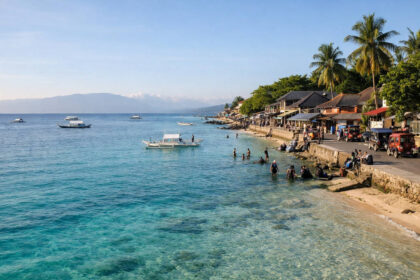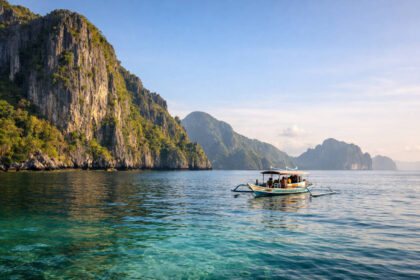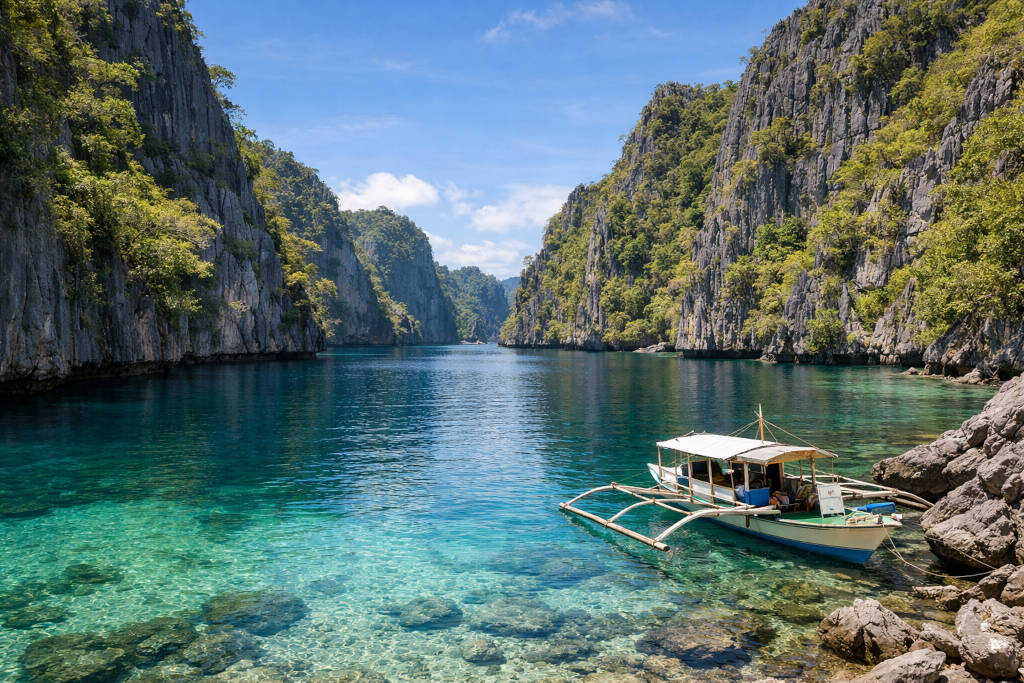
Twin Lagoon is one of the best-known stops in Coron, Palawan, and most people add it for one simple reason: it feels very different from an ordinary beach stop. You arrive by boat, face tall limestone walls, and move into calm blue-green water that feels sheltered and quiet once you are inside. Still, Twin Lagoon is not a walk-in attraction. Your day will depend on boat routing, tide timing, weather, crowd levels, and how comfortable you are with wet steps, ladders, or short swims. This guide keeps the focus on those plan-changing details so you know what the stop is really like before you book.
Quick Overview Of Twin Lagoon
At a glance: Twin Lagoon is a boat-access stop on Coron Island, usually visited as part of Coron island-hopping. Most travelers base in Coron Town Proper, then join a shared boat tour or hire a private boat for the day. A realistic visit usually means around 45 minutes to 1.5 hours at the site, depending on traffic, queueing, tide, and whether you rent a kayak. Budget-wise, many travelers should expect a shared tour day to cost in the low-to-mid thousands of pesos once boat fees, site fees, lunch, and extras are considered, while private boats cost much more but offer better control over timing. Dry season months often bring calmer seas, but even then, wind and boat congestion can affect your stop.
For comfort, plan around heat, wet gear, and limited facilities. Bring water, sun protection, a dry bag, and small cash. If you are sensitive to crowds, the biggest decision is not just which day you go, but whether your operator reaches Twin Lagoon early or after several other boats. Reality Check: Twin Lagoon can look peaceful in photos, but the flow at the site may include waiting for ladders, sharing space with kayaks, and listening closely to crew instructions.
What Twin Lagoon Is And Why People Go
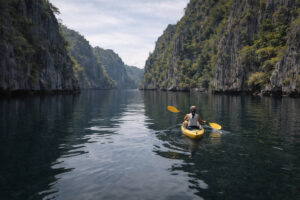 Twin Lagoon is made up of two seawater lagoons separated by a limestone wall. The first lagoon is where boats usually stop and where people begin entering the area. The second lagoon sits behind the rock wall and tends to feel more enclosed, with steep karst cliffs, deep clear water, and a calmer atmosphere once you are inside. The combination of dark limestone, bright tropical light, and cool water is what makes the place stand out.
People also go because the stop offers a different mood from nearby Coron highlights. Kayangan Lake is famous for its viewpoint and lake setting, while Barracuda Lake is known for its diving and unusual thermocline. Twin Lagoon feels more about the transition into the space itself: the passage, the cliffs, the echo of voices off rock, and the sense that the lagoon opens up slowly rather than all at once. It suits travelers who like scenery with a bit of movement and a bit of planning, not just a quick beach photo stop.
Reality Check: The “special” part of Twin Lagoon is not usually a long checklist of activities. It is the setting and the water. If you expect a large beach, lots of shade, or many facilities, this stop may feel simpler than the photos suggest.
Where Twin Lagoon Is In Coron And Why You Need A Boat Tour
Twin Lagoon is on Coron Island, off the coast of Busuanga in Northern Palawan. It is not something you reach by car or tricycle. You need a boat, and in practice that means joining a Coron island-hopping route or arranging a private boat day from Coron Town Proper. For a general destination overview, the Official Coron tourism overview is useful, and for geographic context, this Coron Island background helps explain why the island’s limestone geography shapes the whole experience.
This matters because your experience at Twin Lagoon depends less on “opening hours” in the city-attraction sense and more on sea conditions, crew routing, local rules, and how your operator sequences the day. Some tours reach the site before lunch, others after. Some combine it with classic Coron Island Hopping highlights, while others shape the day around fewer stops and more time in the water. Reality Check: Since Twin Lagoon is water-access only, there is no casual last-minute walk-in option from town if you change your mind that morning without already having boat arrangements.
How To Get To Twin Lagoon
The simplest way to reach Twin Lagoon is to plan the trip in two layers: first get to Coron, then book the island-hopping day. If you are still building a wider route, a Philippines travel planning guide helps place Coron within a bigger Palawan or first-time Philippines itinerary. Once you are in town, Twin Lagoon becomes a boat logistics question rather than a land transport question.
Best Base: Coron Town Proper
Coron Town Proper is the easiest base for most travelers. This is where you will find the widest choice of accommodations, tour operators, restaurants, pharmacies, ATMs, and early-morning tour meetups. Staying here also makes it easier to confirm your pickup point, pay remaining balances, buy water and snacks the night before, and handle small changes if the weather shifts. If you want to compare other stops and pacing ideas before choosing your day trip, this Coron travel guide is a helpful next read.
Reality Check: Coron Town Proper is convenient, but early departures still start early. Expect a practical, moving-parts kind of morning rather than a slow resort-style start.
Getting To Coron: Flights To Busuanga Airport Plus Land Transfer To Town
Most travelers reach Coron by flying into Busuanga Airport, also called Francisco B. Reyes Airport, then taking a shared van or arranged hotel transfer into Coron Town Proper. The land trip is commonly around 30 to 45 minutes, depending on stops and traffic. This is the most straightforward route if your priority is time and easier planning. Flights can be the best choice for short trips because they reduce uncertainty and give you a cleaner schedule for booking tours the next day.
Try to avoid landing too late if Twin Lagoon is your priority for the following morning. It is easier to sleep in town, sort cash, repack your dry bag, and confirm your boat details the evening before. Reality Check: Even after you land, there is still airport-to-town transfer time, check-in time, and occasional delays, so same-day rush planning can feel tighter than it looks on a booking screen.
Other Routes: Ferries As An Option
Ferries can also be part of the trip, especially for travelers moving around Palawan or linking destinations overland and by sea. Routes and operators can change, and schedules are not something to treat as fixed far in advance, so check current departures directly before you build a tight connection around them. For general inter-island and land transport planning, the Philippines public transport guide is useful.
Ferry travel can make sense if you are prioritizing route flow over speed, but it usually brings more schedule risk than flying. Reality Check: Do not over-pack a one-day Twin Lagoon plan right after a ferry arrival unless you are comfortable with delays and last-minute adjustments.
Tour Options That Usually Include Twin Lagoon
Twin Lagoon is usually included in standard island-hopping packages rather than sold as a stand-alone short boat transfer. The exact lineup changes by operator, but you will often see it attached to routes that also cover other Coron Island highlights. Ask for the stop list, the order of stops, whether lunch is included, whether site fees are bundled, and how many passengers are on the boat. Those answers affect your day more than fancy tour names.
Group Tour Versus Private Boat: What Changes In Timing And Crowd Avoidance
A shared group tour is the lower-cost option and works well if your budget matters more than controlling the pace. It is the common choice for first-time visitors, but it also means you follow the operator’s schedule. If several boats leave around the same time, popular stops can feel busy at similar hours.
A private boat costs more, but it can improve the day if your priorities are earlier arrival, slower pacing, a different lunch stop, or more freedom to stay longer where you enjoy the water most. This option is especially useful for families, cautious swimmers, photographers, or travelers who want a better shot at avoiding the heaviest crowd windows. Reality Check: A private boat helps with timing, but it does not remove weather limits, local rules, or site congestion completely.
Common Route Names Travelers Will Hear
Twin Lagoon is most commonly associated with Tour B, though route names vary by operator. You may also hear about Super Ultimate Tour packages that combine favorites from multiple standard routes, sometimes pairing Twin Lagoon with stops like Kayangan Lake, Barracuda Lake, beaches, reefs, or snorkeling areas. The main thing to remember is that route branding is not fully standardized. One operator’s Super Ultimate Tour may not match another operator’s exact stop order or inclusions.
Before paying, ask a very simple question: “Is Twin Lagoon guaranteed on this route, and what are the other stops?” That one line can prevent a mismatch between the tour name and the day you think you booked. Reality Check: In Coron, the practical details behind the name matter more than the name itself.
Best Time To Visit Twin Lagoon
Best Months For Calmer Seas And Clearer Days
 For many travelers, the safer planning window for Twin Lagoon is the drier part of the year, when seas are often calmer and day-trip conditions are more reliable. In broad Philippines terms, that usually means late December to May, with many visitors aiming for January to April for clearer skies and smoother island-hopping days. For a wider seasonal view, see this guide to Philippines weather and best months.
That said, Coron does not follow a perfect calendar. Wind, sudden rain, or route changes can still happen in generally “good” months, and the hottest periods can feel tiring if your boat day has little shade. Reality Check: Dry season improves your odds, but it does not guarantee glassy water or empty lagoons.
Best Time Of Day For Fewer Boats
The best time of day for fewer boats is often whenever your operator reaches the site ahead of the main wave or after it has moved on. On shared tours, you usually cannot control that much. On private tours, ask whether the crew can build the route around an earlier Twin Lagoon stop or a later visit once the first batch has rotated out. The difference can be noticeable not only for photos, but also for ladder queues and the overall noise level in the water.
If your main goal is a smoother experience rather than a packed checklist, choose fewer stops or a route with more flexibility. Reality Check: In peak travel periods, even a well-timed arrival may still mean several boats nearby.
Tide Timing Explained Simply: What Changes And What To Do If You Do Not Want To Swim Through
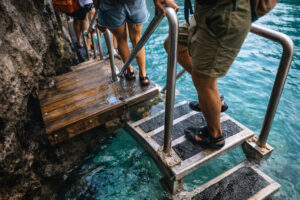
Tide Timing matters because the connection between the two lagoons can feel very different depending on water level and local conditions. Some days, travelers may move through the opening in the rock if conditions allow and they are comfortable in the water. Other times, the ladder and steps route is the practical choice, and for many cautious visitors it is the preferred one anyway. Exact access guidance can shift with local setup and tide, so always follow the crew’s instruction on the day.
If you do not want to swim through any narrow opening, say that clearly before you enter the site. Ask whether the ladder route is the expected access point and whether a kayak makes more sense for your comfort level. Reality Check: Never force the more adventurous option just because other people are doing it. Twin Lagoon is better enjoyed calmly than competitively.
How Long To Spend And What A Realistic Stop Feels Like
A realistic stop at Twin Lagoon is usually somewhere between 45 minutes and 1.5 hours. The shorter end happens when your route has many stops, there is a queue at the entrance area, or the weather pushes the crew to keep moving. The longer end is more common on flexible itineraries, private trips, or tours that give time for kayaking and a slower swim inside.
In practical terms, the stop often follows a pattern: boat approaches and moors, guests put on or adjust life vests, people enter one by one, some rent a kayak, some swim, and others stay near the entry zone before heading back to the boat. If your tour also includes Kayangan Lake or Barracuda Lake, remember that energy adds up. Twin Lagoon may not be physically hard for everyone, but it still involves boarding, disembarking, wet footing, and time in the sun. Reality Check: The stop can feel shorter than expected if your group spends too much time getting organized at the beginning.
Fees, Rentals, And Cash Checklist
What Fees Typically Exist And Why Amounts Can Change
Costs around Twin Lagoon usually fall into a few buckets: your boat tour price, site entrance fees, environmental or eco-tourism style fees, and optional extras like Kayak Rental. Some operators bundle certain charges into the package, while others collect them separately. Private boat pricing usually excludes more items unless the quotation clearly says otherwise.
Because local fees and inclusions can change, the best approach is to ask for an itemized breakdown the day before. Confirm what is included in the package, what is paid at the meeting point, what is paid on the boat, and whether snorkeling gear, lunch, or drinking water are included. Reality Check: “All in” language can still hide small extras, so one clarification message before the trip is worth it.
Cash Tips: Small Bills, Where To Pay, What To Confirm With Your Boat Crew
Bring cash and bring small bills. This helps with terminal fees, site payments, optional rentals, tips, or quick food purchases before boarding. Do not rely on card acceptance for island-hopping logistics. Even if you already paid online, there may still be a balance, a fee not bundled into the listing, or a separate kayak payment at the site.
Ask your crew or organizer these exact practical questions: Are Twin Lagoon fees included? Is Kayak Rental cash only? Is there a corkage rule for bringing your own drinks? Where will lunch happen? Are there any extra payments for masks or fins? Those answers matter more than a vague headline price. Reality Check: The simplest money strategy in Coron is still cash-first, with enough small notes to avoid change problems.
Practical Tips For Comfort
What To Bring
Bring a dry bag for your phone, wallet, and towel; secure water shoes or aqua shoes for wet surfaces; your own snorkel mask if you prefer familiar gear; drinking water; and sun protection you can manage without making the boat messy. A light cover-up, rash guard, or quick-dry shirt also helps if you burn easily. Pack only what you can carry comfortably while stepping in and out of a boat.
It also helps to separate wet and dry items. A simple zip pouch for cash, a plastic sleeve for your booking details, and a second bag for soaked clothes can make the ride back much easier. Reality Check: Flip-flops are easy for town, but they are usually not the best choice for slick ladders or wet boarding points.
Facilities Reality Check
Toilets and food options around Twin Lagoon itself are limited, so plan before boarding. Use the restroom in town or at the jump-off area if available, and do not assume there will be a clean, easy stop exactly when you need it later. Most tours handle lunch on the boat or at another designated stop, not inside Twin Lagoon itself.
Drink enough water, but pace it with the reality of limited facilities. Keep snacks simple, sealed, and easy to manage on a boat. Reality Check: Comfort on a Coron boat day is usually decided before departure, not after you are already in the middle of the route.
Safety And Etiquette
Non-Swimmer Friendly Tips And Life Vest Guidance
 Twin Lagoon can still work for non-swimmers or hesitant swimmers, but only if you are honest about your comfort level. Wear the life vest properly, tighten it before entering the water, and stay near the access area or use a kayak if that feels more secure. Many tours expect guests to wear life vests at water stops, and even strong swimmers benefit from the extra float when boats, walls, and groups are sharing a confined space.
If safety is one of your biggest concerns, this broader guide to travel safety in the Philippines adds useful context for boat days and common-sense precautions. Reality Check: The safest Twin Lagoon experience often comes from choosing the calmer option, not the most impressive-looking one.
Ladder And Slippery Surfaces: Slow, One At A Time, Follow Crew Instructions
The ladder, steps, and rocky edges deserve real attention. Wet limestone, algae, boat movement, and hurried guests can turn a simple crossing into the most accident-prone part of the stop. Use both hands when needed, give the person in front of you space, and avoid trying to pass people on narrow footing. Move slowly and listen when the crew tells guests to wait.
Boat traffic awareness also matters. Watch where your tour boat is positioned, do not drift carelessly into approach paths, and reboard only when the crew signals. Reality Check: Most of the actual risk at Twin Lagoon is routine slipping, bumping, or rushing, not dramatic open-water danger.
Leave No Trace And Respect Local Rules
 Do not touch corals, scrape fins or shoes across sensitive surfaces, or leave wrappers behind in the boat or water. Pack out all trash, secure lightweight items that can blow off the boat, and apply sunscreen thoughtfully so it does not become another layer of waste in the water. Respect quiet zones, staff instructions, and any temporary restrictions related to conservation, capacity, or weather.
Coron’s landscapes are the reason people come, and they also need the most protection. Reality Check: Good etiquette at Twin Lagoon is not extra effort. It is the basic standard that keeps the place visitable.
Easy Pairings With Nearby Stops
Best Pairings For First-Timers
For many first-timers, the most satisfying pairing is Twin Lagoon with Kayangan Lake and sometimes Barracuda Lake, usually through a more packed multi-stop route such as a Super Ultimate Tour. This works if you want Coron’s signature visuals in one day and do not mind a fuller schedule. The trade-off is pace: you get more landmarks, but less flexibility at each stop.
Best Pairings If You Want More Snorkeling
If your priority is more time in the water, pair Twin Lagoon with reef or wreck stops rather than stacking too many land-and-ladder sites. Depending on operator routing, that could mean Coral Garden, Skeleton Wreck, or another snorkel-heavy stop. This kind of day feels better if you are comfortable changing in and out of the water and want more than scenery alone. Reality Check: Mixed routes can be fun, but every additional stop reduces your margin for a relaxed Twin Lagoon visit.
Best Pairings If You Prefer Less Swimming And More Viewpoints
If you prefer less swimming and more viewpoints, prioritize scenic stops such as Kayangan Lake for the famous overlook, then keep the rest of the day simple. Another practical idea is to avoid overloading your Coron itinerary and save your next day for a slower town-based plan. This guide to free things to do in Coron is useful if you want a lower-cost rest day after a full boat trip.
Reality Check: The best pairing is not always the one with the longest stop list. It is the one that matches your energy, swimming confidence, and tolerance for a busy boat day.
FAQ
Is Twin Lagoon included in Tour B or Super Ultimate Tour?
Twin Lagoon is most commonly associated with Tour B, but some operators also include it in Super Ultimate Tour packages. Because route names vary, do not rely on the label alone. Ask for the exact stop list and whether Twin Lagoon is confirmed on your chosen date.
Do you need to know how to swim to enjoy Twin Lagoon?
No, but you do need to be realistic about your comfort level. A properly fitted life vest, crew guidance, and an option such as a kayak can make the stop manageable for many non-swimmers. Tell your crew early if you want the easiest access method and do not feel pressured to take the more adventurous route.
Can you visit Twin Lagoon without swimming through the opening?
Often, yes, depending on tide and the local access setup on the day. Many travelers use the ladder and steps route, which is usually the more straightforward choice for cautious visitors. Always follow the current instructions from the local crew rather than assuming yesterday’s setup is still the same.
What is the best time of day to visit Twin Lagoon?
The best time is usually when fewer boats are around, which depends on your operator’s routing. Earlier or better-sequenced arrivals often feel calmer, especially on a private boat. On shared tours, ask about stop order before booking because that affects crowd levels more than the clock alone.
How much time should you budget for Twin Lagoon?
Plan around 45 minutes to 1.5 hours for the stop itself, then add the full island-hopping day around it. If you want a slower pace, kayaking time, or fewer queues, choose a route with fewer total stops or book a private boat if it fits your budget.
Are there toilets, food stalls, or easy cash options at Twin Lagoon?
Facilities are limited, so use the restroom before boarding, carry your own water, and bring enough cash in small bills. Do not assume card payment, easy change, or convenient snack options once you are already on the route.
What should you bring for a smoother Twin Lagoon stop?
Bring a dry bag, secure water shoes, drinking water, a towel, sun protection, and your own mask if you prefer familiar snorkel gear. Keep valuables minimal and easy to secure, especially during boat transfers and ladder access.
Is Twin Lagoon worth pairing with other Coron highlights in one day?
Yes, if you choose the route based on your pace and priorities. First-timers often like pairing Twin Lagoon with Kayangan Lake or Barracuda Lake, while swimmers may prefer adding a reef or wreck stop. The key is not to overload the day so much that every stop feels rushed.
Twin Lagoon is easiest to enjoy when your plan stays simple: sleep in Coron Town Proper, confirm what your boat includes, bring small cash and practical gear, and choose a route that matches your pace. For more island-planning ideas beyond this stop, explore more Travel Guides and build a Coron trip that feels steady rather than overstuffed.