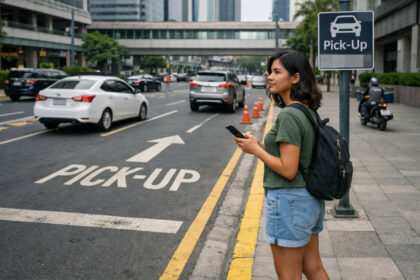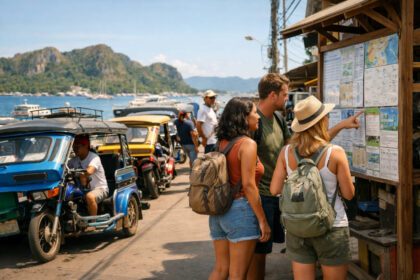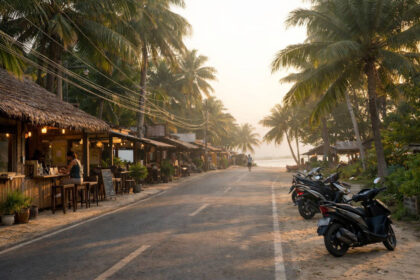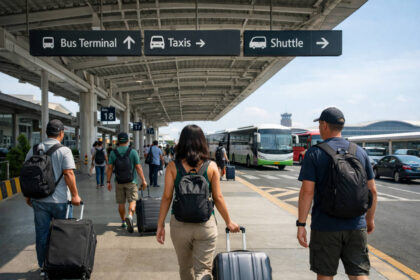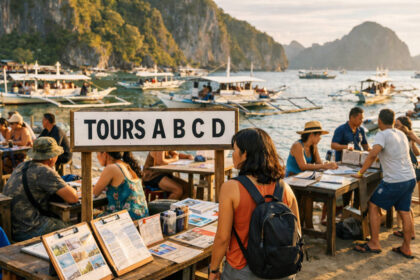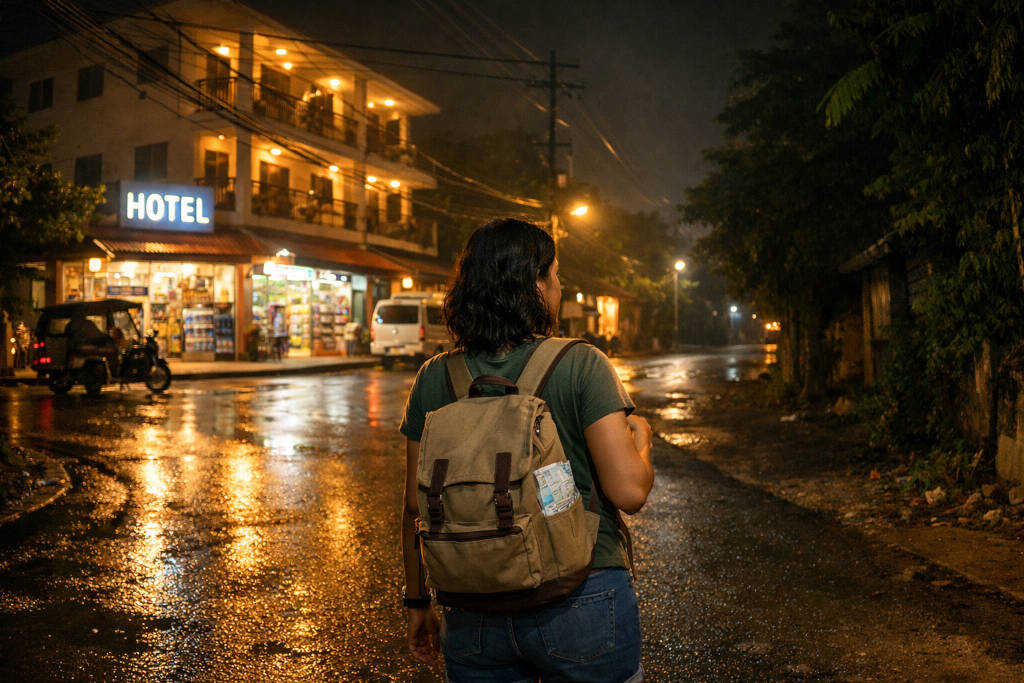
Philippines safety at night is usually not about acting scared or treating the whole country as one risk level. It is more about making simple decisions that keep you in control after dark: choosing well-lit areas, knowing when to stop walking, using the right kind of late-night transport, carrying only the cash you need, and having a familiar route back to your hotel.
In many tourist areas, evenings can feel lively rather than alarming, with bright convenience stores, hotel lobbies, security guards, and transport pickup points giving you plenty of places to pause and reset.
Still, risk rises faster at night when you add fatigue, rain, alcohol, confusing transfers, or pressure from a person who wants you to change your plan.
This guide stays tightly focused on those night-only decisions. It is not a broad verdict on the country.
It is a practical companion to the Travel Safety Philippines Guide, built for first-timers, solo travelers, couples, and small groups who want less stress after dark and more confidence in their own routines.
Philippines Safety at Night at a Glance
Reality Check: Most evening problems for tourists start with small frictions, not dramatic danger. A route that looked easy on the map can feel very different in humid air, sudden rain, terminal noise, and patchy lighting.
Best time window for simple, low-stress outings is usually early evening through the part of the night when your route is still familiar, open, and busy enough to feel normal.
Realistic travel time after dark should include an extra buffer for rain, heavier pickups, wrong-side-of-the-road drop-offs, or waiting under shelter instead of walking straight through.
Budget-wise, the smart move is not carrying your full trip cash. Carry enough for your planned evening, one ride out, one ride back, a snack or water, and a small backup.
Crowd and traffic risk tends to rise around nightlife strips, transport hubs, festival zones, and weekend dining districts, especially when people spill from one bright block into a darker one.
Your rain or heat backup is simple: wait in a staffed, well-lit place such as a hotel lobby, convenience store, chain cafe, mall entrance, or transport help desk instead of forcing a walk just because it looked short earlier.
What “safe at night” usually means in the Philippines
Reality Check: A place can be busy and still ask more from your judgment after dark. “Safe” at night usually means manageable when you keep your decisions simple, not risk-free in every direction.
The goal is control, not fear
For tourists, a good night plan is one where you know how you are getting there, how you are getting back, and where you can stop if something changes. That is the heart of Philippines safety at night.
You do not need to overreact to every unfamiliar sound or stare. You do need situational awareness: knowing where the light is better, where the sidewalk disappears, where an official pickup area is, and how quickly you can return to a controlled space.
That mindset is especially useful for first-timers. Streets can shift quickly from bright and ordinary to quiet and awkward in one turn.
A route that is fine at 6:30 p.m. may feel much less comfortable after 9:30 p.m., during a downpour, or once the shops close. Tourists who do well at night usually avoid stacking too many variables at once. They keep the route short, the bag zipped, the ride clear, and the return easy.
Where risk usually goes up after dark
Risk usually rises less because of the city name and more because of the exact setting. Dark side streets, long unbroken walks, confusing terminal edges, roadside waiting spots with no staff nearby, and gaps between transport legs all deserve more caution.
So do places where people are tired, distracted, or looking for a ride at the same time.
Busy areas are not automatically unsafe, either. In fact, a bright convenience store strip, a hotel zone, or a staffed terminal entrance can be more comfortable than an empty shortcut.
After dark, choose the route with more eyes, more lighting, and more exit options, even if it is a little less direct. The small relief of getting back to a familiar hotel route is often worth a slightly higher fare or a few extra minutes indoors.
Situations that raise risk more than the destination itself
Reality Check: Many travelers feel fine in a destination and then make their weakest decisions at the exact moment they are most tired. Night safety often breaks down around condition, not character.
Isolation, fatigue, alcohol, dead phone, and unclear transport
A tourist walking one kilometer in daylight with a full battery, clear directions, and no bags is in a very different situation from a tourist walking the same distance at night after a long flight, in the rain, with a dying phone and no confirmed ride.
Isolation is obvious, but fatigue is just as important. Tired people accept bad offers, miss warning signs, and push through discomfort because they want the day to end.
Alcohol also changes the equation quickly. This guide does not need to moralize about nightlife to say something practical: the moment your judgment feels slower than usual, your walking radius should shrink and your ride threshold should get lower.
The same goes for a dead phone, unclear transport plans, or not knowing your accommodation name by memory. Philippines safety at night becomes much harder the moment you lose your easiest tool for checking routes and contacting help.
Why late arrivals and transfer gaps matter
Late arrivals create exactly the kind of pressure that leads to poor decisions. Airports, bus terminals, and ferry ports can feel straightforward on paper, then noisy and fragmented at night.
Some areas are bright and controlled; others get thin, damp, and confusing once you move past the main flow of people. That is why first-night transfers matter so much.
The goal is not to prove you can improvise. The goal is to remove unnecessary choices while you are carrying bags and processing a new place.
Transfer gaps are another weak point. A short wait can turn into a search for a different pickup point, then into bargaining, then into walking farther than planned.
When that chain starts, it is usually smarter to stop, recheck your hotel route, and choose the more controlled option rather than drifting from one uncertain decision to the next.
How to move around at night with less stress
 Reality Check: The cheapest or fastest-looking option is not always the least stressful after dark. A little extra structure often buys a lot more comfort.
When walking still makes sense
Walking can still make sense at night when the route is short, continuous, familiar, and clearly lit. If you can see active storefronts, hotel entrances, convenience stores, or security-posted corners along the way, and you are not depending on constant phone navigation, a simple walk may be the easiest option.
This is especially true for short dinner runs or returns within a known block or two of your accommodation.
Stop walking and get a ride when the route gets longer than you want to think about, when sidewalks break up, when rain reduces visibility, when you are carrying luggage, when the road edge feels exposed, or when you notice yourself checking over your shoulder instead of enjoying the walk.
A ride is also the better choice when the route requires passing through a quiet stretch to reach a busy one. At night, the “last five minutes” often matter more than the rest of the map.
When to switch to Grab, taxi, hotel car, or pre-arranged transfer
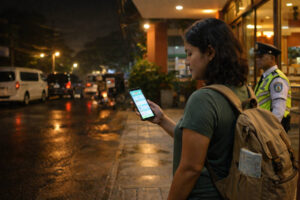
For many city situations, Grab is the easiest balance of convenience and accountability because the pickup, drop-off, and ride details are recorded in the app.
A metered taxi can still be fine, especially from airports, malls, hotels, or other official pickup points where there is a visible queue and staff around. A hotel car or pre-arranged transfer usually makes the most sense for late arrivals, first nights, luggage-heavy transfers, or times when you simply do not want your first decision in a new place to happen at a curb.
Public transport can be practical during the day or on routes you already understand, but for many first-time visitors it becomes less attractive at night when transfer points get less clear, last-trip timing becomes a factor, or you would need to stand around unsure of where the next leg begins.
For a fuller daytime and route-planning context, the Philippines Public Transport Guide helps explain where official queues, route shifts, and transfer logic matter.
What to do if a driver refuses the meter or the route feels wrong
If a taxi driver refuses the meter before the ride starts, the cleanest move is usually the best one: do not argue for long, step away, and take another car from a controlled area.
Long curbside negotiations create pressure, attention, and confusion you do not need. With app rides, verify the plate, driver, and car before entering. With any ride, keep the destination visible on your phone and sit where you can exit comfortably.
If the route feels wrong once you are moving, stay calm and get specific. Ask simple questions.
“Please follow the main road.” “Please drop me at the hotel entrance.” “Please stop at the convenience store ahead.”
You are not trying to win a debate. You are steering the ride back toward a public, well-lit stop.
If the pressure continues, get out in a bright, populated place rather than allowing the conversation to drag deeper into an unfamiliar area.
Cash, phone, and bag habits that actually help
 Reality Check: Most useful night habits look almost boring. That is exactly why they work.
How much cash to carry at night
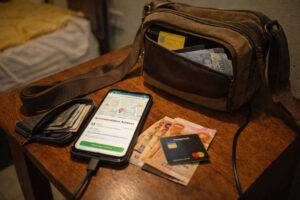
The right amount of cash at night is enough for your plan plus a buffer, not enough to ruin the rest of your trip if you lose it. Think in layers: your expected spend, one extra ride, one small food or water purchase, and a backup amount for a change of plan.
Tourists often feel safer carrying more, but a lighter wallet can actually make decisions simpler. You are less tempted to flash bills while paying, and you are not carrying tomorrow’s money into tonight’s routine.
Keep a small spending amount separate from your main cash. That way you are not opening the full stash every time you buy something at a bright corner store or terminal snack stall.
Valuables do not need to be theatrical. They just need to be less visible and less convenient for someone else than they are for you.
Where to keep your phone and backup payment
Your phone should live in a front pocket or a zipped bag that stays close to your body, not in a loose hand during a long roadside wait and not on a table edge while you are half-distracted.
At night, your phone is not just for photos. It is your map, ride tool, translation backup, hotel address, and contact line. Treat it like a planning device first and a camera second.
A backup card or small backup cash amount should sit somewhere separate from your main wallet. If your wallet stays in your day bag, the backup can go in a hidden pouch, inner pocket, or another zipped compartment.
Save your accommodation address in more than one way: app pin, screenshot, and written note. Add emergency contacts before you go out, especially on transfer nights.
Those small redundancies matter more than carrying expensive anti-theft gear you never really use properly.
Why small visible habits matter more than expensive gear
People notice behavior. A traveler who pauses under good lighting, checks the route before leaving the doorway, zips the bag before stepping into the street, and stands near a staffed entrance looks harder to pressure than someone wandering with a dead look, open tote, and unlocked phone.
That does not mean acting tough. It means looking settled.
Simple signals also help couples and small groups. Decide who books the ride, who confirms the hotel route, and who keeps an eye on bags before you step outside.
The more clearly your group moves, the less room there is for confusion when a driver, tout, or random helper tries to hurry you into a different plan.
Normal vs not normal after dark
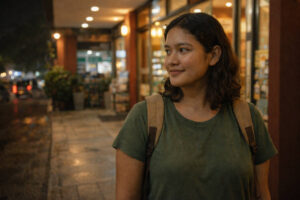 Reality Check: Not every approach is a threat, and not every friendly exchange needs suspicion. The useful skill is knowing when attention shifts from ordinary to pushy.
What is usually normal in busy Philippine streets and terminals
Busy Philippine evenings often come with a lot of sound and movement. Security checks at mall or hotel entrances are normal. Drivers calling out destinations near pickup areas can be normal.
Staff pointing you toward a queue, families eating late, terminal announcements, tricycle and taxi pickup chatter, and bright convenience stores acting like mini reset stations are also normal. Some curiosity from locals can be normal too, especially in places where visitors are noticeable.
Normal attention tends to fade once you say no or keep moving. It does not usually require you to keep explaining yourself.
A question, a glance, or a casual offer is one thing. Persistent pressure is another.
What is not normal and should trigger a clean exit
Not normal is attention that continues after you disengage. Not normal is someone trying to move you from a bright area to a darker one, asking you to come to a different pickup point, telling you your booked ride is cancelled and only their option will work, or pushing for your hotel details after you have already declined conversation.
Not normal is unwanted touching, crowding your space, blocking your path, or trying to separate one person from the rest of your group.
That is the moment for a clean exit, not a polite debate. You do not need a perfect line.
“No, thank you.” “I already have a ride.” “I am waiting here.”
Then move toward staff, lighting, and witnesses. Philippines safety at night improves the moment you stop trying to be endlessly accommodating to pressure.
What to do if you feel followed, pressured, or cornered
Reality Check: The best response is usually simple and physical, not clever. Change the setting before you try to explain the whole situation.
The fastest way to get back to a controlled space
If someone follows you or applies pressure, head toward the nearest controlled indoor or semi-indoor space: a hotel lobby, convenience store, chain restaurant, mall entrance, terminal help desk, pharmacy, or any place with staff and bright lighting.
Do not keep walking just to avoid looking awkward. A reset point is exactly what you need.
If you were on your way to your accommodation, it can even be smarter to stop at the entrance desk or security post before heading deeper inside, especially if you do not want a stranger observing your room area or exact routine.
If you are in a vehicle and the interaction is the problem, direct the stop to a public place you can name clearly. If you are on foot, do not let yourself get talked into “just over there.”
Distance and privacy usually benefit the other person, not you.
Who to approach for help and what to say simply
Approach people who have a role and a location: security guards, hotel reception staff, counter staff, transport desk personnel, or uniformed personnel in a well-lit area.
Keep your words plain. “Can I wait here for my ride?” “This person keeps following me.” “Please help me get a taxi from the official queue.” “Can you call my hotel?”
Clear, ordinary sentences are easier under stress than long explanations.
If you are traveling with someone, say the plan out loud so both of you move together. If you are solo, message your accommodation or a trusted contact as soon as you are back in a controlled space.
The goal is not to retell every detail immediately. The goal is to re-establish your own control first.
Solo traveler and first-night habits
Reality Check: The first night is when confidence is usually lowest and decision fatigue is highest. Make that night easier than the rest of the trip.
Late airport arrivals, bus terminals, ferry ports, and check-ins
For solo travelers especially, the best first-night habit is reducing uncertainty before arrival. Book accommodation with a clear entrance, know the official pickup spot, and have the property name, address, and contact saved offline.
A first-night hotel near the arrival point, or in a straightforward district with reliable late-night transport, is often worth the extra cost. Comfort is part of safety. So is not having to negotiate every step with luggage in hand.
This is where the Philippines Travel Planning Guide for First Trip becomes useful. Pairing your flight or terminal timing with a realistic first-night transfer plan can remove the exact conditions that make late arrivals feel chaotic.
Before you leave the arrival hall or terminal gate, confirm where your ride will stop, where you will wait, and what your backup is if the first option falls through.
Why your first night should be the easiest night
Your first night does not need to prove anything. It should be your easiest night: short route, easy meal, low-decision evening, and a simple return to the hotel.
This is not the night to test a complicated public transport chain, chase a bargain across several pickup points, or add one more stop because it looked close on the map.
Once you have slept, learned your area, and seen your hotel route in daylight, your later evening choices get much easier.
That same planning-first logic helps with active itineraries too. If your trip includes side adventures, keep the safer-habits mindset going with the Adventure Travel Philippines Beginner Safe Guide, the Beginner Hikes Philippines Beautiful Trails, and the Camping in the Philippines Beginners Guide, where early starts and tired returns can also change your night choices.
Bad-weather nights, holiday crowds, and when plans should change
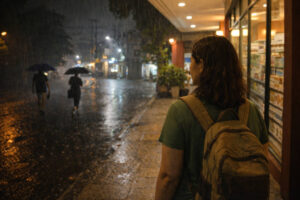 Reality Check: Rain, weekend energy, and local celebrations can turn a normal route into a worse one very quickly. The smart adjustment is often to simplify, not to push through.
Rain, low visibility, surge pricing, and crowded exits
Sudden rain can make a route feel longer, darker, and more chaotic within minutes. Motorbikes, cars, puddles, umbrellas, and dimmer visibility all compete for your attention.
In those moments, a short uncovered walk may be less sensible than waiting under bright cover near a hotel lobby, convenience store, or staffed entrance. Surge pricing can be annoying, but it should not push you into a dark shortcut or an unclear ride offer just to save money.
Weekend crowds and fiesta nights can also blur the line between lively and hard to manage. The plaza may be bright and festive, but exits, side streets, and pickup zones can still get messy.
Build more time into the return, pick a meeting point before you split up, and avoid assuming your usual route will feel the same when everyone is leaving at once.
Seasonal timing matters too, so it helps to read the Philippines Weather Travel Guide before travel dates that may bring heavier rain or heat.
When the safest move is to stop and reset
Sometimes the safest move is not bravery. It is stopping.
Stop when your phone battery drops lower than you are comfortable with, when the route starts feeling improvised, when an argument with a driver is dragging on, when rain changes the street faster than expected, or when your group is getting snappy from fatigue.
Ten quiet minutes in a lobby, under an awning with staff nearby, or at a terminal help desk can save you from the kind of rushed decision that creates a much bigger problem.
Resetting also protects budget and mood. After-dark comfort tradeoffs are real.
A slightly more expensive ride, a closer hotel dinner, or a slower return via a bright main road can be the better value when the alternative is stress, confusion, or pressure.
A simple night safety checklist tourists can remember
Reality Check: You do not need a long system to improve Philippines safety at night. You need a short one you will actually use every time.
Before you leave
Know your hotel route back. Charge the phone. Save the accommodation name, address, and contact.
Carry only your evening cash, one backup payment, and the essentials you are willing to manage easily. Decide now whether the return will be a walk or a ride, and what would make you switch.
Check official planning basics on the Official DOT Planning Portal, and when relevant, verify providers through the Official DOT Accreditation Portal.
While you are out
Stay in well-lit areas. Keep the phone secure when not actively using it. Do not flash your main cash.
Use Grab, a metered taxi from a controlled pickup point, a hotel car, or a pre-arranged transfer when walking stops feeling simple.
If you are with others, keep the plan shared. If you are solo, keep your next stop clear and your bag closed before you step away from the light.
If something starts to feel off
Trust the change in feeling, but answer it with action rather than panic. Move to staff, light, and witnesses. Use short sentences.
Refuse pressure cleanly. Do not go to a second location just because someone keeps insisting.
Get back to a controlled space, recheck your route, and start again from somewhere calmer.
For most tourists, Philippines safety at night becomes much easier once these habits are routine.
The country does not need to be flattened into one judgment for you to travel well after dark. You just need a planning-first mindset, a realistic sense of when night changes the rules, and the confidence to choose the simple option.
That often means one bright corner, one booked ride, one familiar hotel route, and the quiet relief of ending the evening on your own terms.