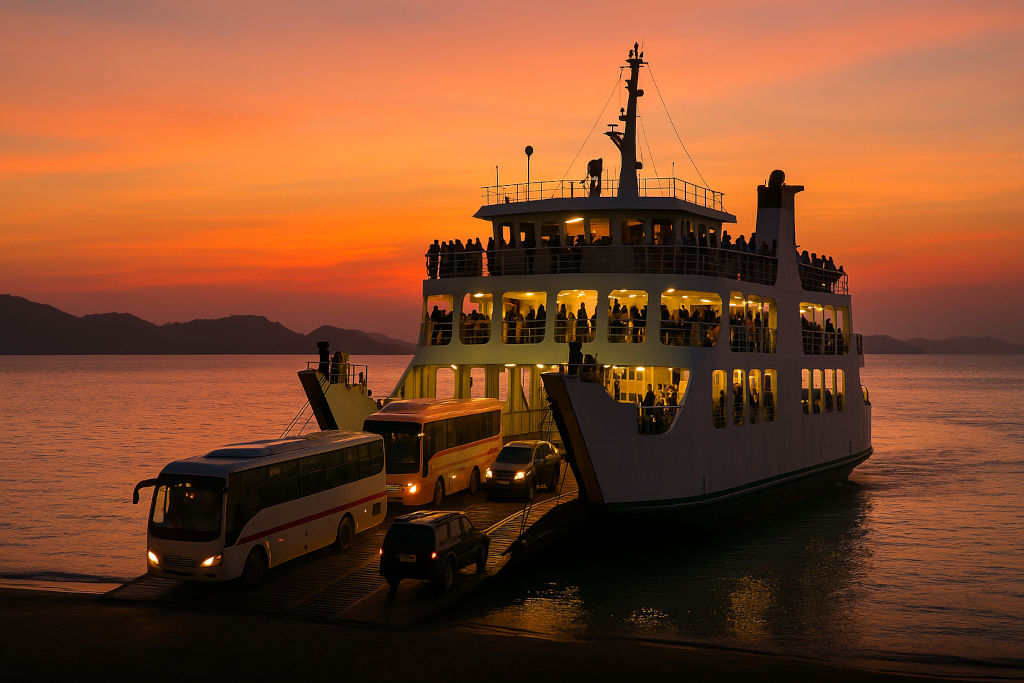
Why Ferries Matter in a Country of Islands
It’s almost midnight at a provincial port. The air smells like diesel, instant noodles, and the sea. Families line up at the gangway with cardboard balikbayan boxes, big blue water containers, and plastic bags of fried chicken. A barkada – close group of friends – drags backpacks and giggles sleepily as the loudspeaker crackles to life, calling for boarding. You step onto the steel ramp, feel it vibrate with the hum of the engine, and suddenly you’re part of the flow.
In a country of more than seven thousand islands, ferries are not just a backdrop; they’re the veins and arteries of everyday life. RoRo ships carry buses and trucks across the Philippine Nautical Highway. Bangkas (traditional wooden outrigger boats) hop between small islands. Big overnight liners sail from Luzon down toward Visayas and Mindanao, full of people going home, heading to work, or starting long backpacking loops.
This Philippines ferry travel guide is where you stop treating ferries as a scary unknown and start seeing them as part of the adventure. Instead of guessing, think of this as your well-traveled pinsan (cousin) talking you through how routes connect, how RoRo buses work, what overnight ships really feel like, and how to plan overland-and-sea journeys without losing your mind. You can pair this with more Philippines travel guides to build a route that makes sense for your time, budget, and energy.
Ferry Types and RoRo Basics in this Philippines Ferry Travel Guide
Bangkas, RoRos, fastcrafts, and big passenger liners
On any long trip across the islands you’ll meet four main characters, and this Philippines ferry travel guide breaks them down in simple traveler language:
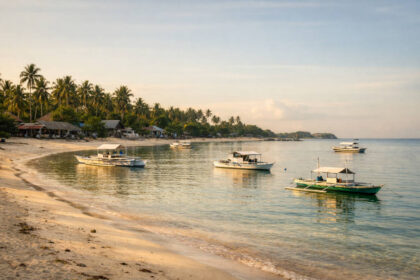
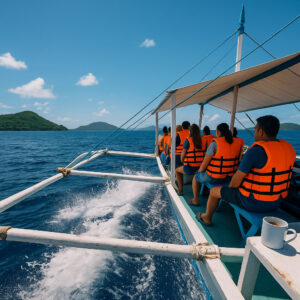 Bangkas are smaller wooden or fiberglass boats with bamboo outriggers, used for short island hops—like hopping from Cebu to a nearby sandbar or from a town pier to a little barangay (village) across the channel. They feel close to the water: you smell the spray, hear every slap of the waves against the hull, and sometimes get a faceful of sea breeze and salt.
RoRo ferries (roll-on/roll-off) are the workhorses of the Philippine Nautical Highway System. They carry vehicles on a lower deck and passengers on upper decks. These can be simple, utilitarian ships for short crossings or larger vessels running longer legs between islands.
Fastcrafts are sleek, usually enclosed passenger ferries that prioritize speed over cargo. Think Cebu–Bohol, Cebu–Ormoc, or other busy routes where people want to get from A to B quickly. They often have assigned seating, blasting aircon, and fewer open decks.
Big passenger liners handle longer overnight routes like Manila to Cebu, Cagayan de Oro, or Iloilo. They may have multiple decks, cabins, restaurants or snack bars, and wide open areas where you can feel the wind and watch city lights disappear behind you.
What “RoRo” actually means
 RoRo stands for “roll-on/roll-off.” Instead of cranes lifting cargo, buses, cars, and trucks simply drive onto the ship via a ramp and park on the vehicle deck. After the crossing, they roll off on the other side. As a passenger, you can ride a RoRo with or without a vehicle. If you’re on a long-distance bus, your Philippines RoRo bus will drive right onto the ship; you follow the conductor (kuya konduktor) instructions on whether you stay onboard or go up to the passenger deck during the crossing.
The Nautical Highway idea is simple: connect islands with RoRo routes so people and goods move more smoothly across the archipelago. Officially, you’ll see this described in resources like the Philippine Nautical Highway System overview and technical route matrices from MARINA such as their Nautical Highway Matrix. In real life, it looks like buses, trucks, and vans shuttling on and off ferries from Luzon all the way down to Mindanao.
Classes and seating
On bigger ferries, you’ll usually choose from a few classes:
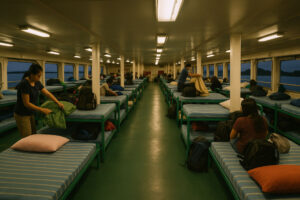
Economy or open-air bunk – Rows of double-deck bunks or benches, sometimes open to the sea breeze, sometimes semi-enclosed. It can be louder and less private, but it’s social and budget-friendly. Bring a light jacket or sarong; the wind at night can surprise you.
Tourist class – Often air-conditioned seating or bunks in a quieter section. The aircon can be cold, so a hoodie or blanket is your best friend. This level usually offers a bit more order and comfort than the pure economy crowd.
Cabins – Small private or semi-private rooms for 2–6 people with bunks, sometimes with an ensuite CR (bathroom), sometimes shared. Great if you’re doing a long overnight ferry Philippines crossing and want to sleep properly, but much pricier.
Reclining seats – Think bus-style seats in an indoor lounge. Fine for shorter overnights, but less comfortable than lying flat. On some routes, this is the mid-tier between economy bunks and full cabins.
Philippines Ferry Travel Guide: The Philippine Nautical Highway in Traveler Language
The official maps show three main “backbones” of the highway system: western, central, and eastern. You don’t need to memorize every port; what helps is understanding the general direction of each corridor and how it links your overland adventures together. This Philippines ferry travel guide translates that technical map into real-world routes you can actually ride.
Western route – Luzon to Mindoro, Panay, and Negros
The western Nautical Highway is your friend if you’re coming from Manila or Batangas and want to travel overland down the west side of the country. Picture this flow:
Luzon to Mindoro – Ferries like Batangas–Calapan connect Luzon to Mindoro. This is a short RoRo hop where buses and private cars roll on and off, letting you continue by road toward Roxas in southern Mindoro.
Mindoro to Panay – From ports like Roxas (Mindoro), ferries cross to Caticlan or other Panay ports. That’s your gateway to Aklan, Capiz, Iloilo, and yes, Boracay.
Panay to Negros and onward – From Panay, shorter ferries connect to Negros Occidental, and from there you can continue to Cebu and other islands. For backpackers, this corridor makes it possible to move slowly down the archipelago without flying.
Central route – through Masbate, Cebu, Bohol, and Negros
The central Nautical Highway weaves through islands like Masbate, Cebu, Bohol, and Negros. Some routes link Luzon to Masbate by RoRo, then onward to Cebu. From Cebu, ferries radiate outward to Bohol, Negros Oriental, Leyte, and Mindanao. This is where the “Philippines island hopping by ferry” dream becomes very real: you can stitch together multiple shorter crossings to build your own sea-road trip.
For example, you might travel south from Luzon, cross to Masbate, continue to Cebu, then hop to Bohol and Negros before circling back. The idea isn’t to memorize everything, but to know that this central web lets you pivot between major island clusters without always returning to Manila.
Eastern route – Luzon to Samar, Leyte, and Surigao
The eastern corridor starts down in south Luzon, around Sorsogon, and links to Samar, then Leyte, and onward to northeastern Mindanao near Surigao. This is how many RoRo buses move between Luzon and Mindanao, bringing goods, families, and travelers across long distances.
If you’re adventurous and have time, you can ride this path by bus-and-ferry combo: Luzon, Samar, Leyte, then down toward Surigao, where you can connect to ferries toward Siargao or further down Mindanao. It’s not the fastest way, but it’s a memorable one.
Philippines Ferry Travel Guide: Major Ferry Corridors for Travelers
From Manila and Batangas to nearby islands
For many travelers, Manila and Batangas are the main jump-off points to islands. In this Philippines ferry travel guide, they’re your classic starting hubs. Manila’s port handles some big overnight liners heading to Cebu, Iloilo, Cagayan de Oro, and more. Batangas is your gateway to closer spots like Mindoro, Romblon, and Panay, as well as some Palawan routes.
Common examples include the Batangas to Calapan ferry (for Mindoro), Batangas to Caticlan (for Panay and Boracay), and Batangas to Romblon or Odiongan (for Romblon Province). From Batangas you can also reach certain northern Palawan ports on longer routes, then continue your journey with a Palawan island-hopping travel guide in hand.
Cebu as a central ferry hub
Cebu City is like the beating heart of central Philippine ferry travel. From Cebu, you can hop to Bohol, Negros, Leyte, Siquijor, and even Mindanao. Routes like Cebu–Tagbilaran or Cebu–Tubigon (Bohol), Cebu–Dumaguete (Negros Oriental), and Cebu–Ormoc (Leyte) are classic corridors.
This makes Cebu a perfect “reset” hub: you can fly in, explore the city and waterfalls with a Cebu travel guide, then plan your next sea leg from there. If the weather shifts or your plans change, Cebu’s ferry network gives you options—head south, swing east, or circle back north.
Mindanao and surf or dive islands
In northern Mindanao, Surigao is a key port, especially for surfers chasing Siargao’s waves. The Surigao–Siargao ferry is the classic link, with smaller boats and fastcrafts shuttling between mainland and island. Elsewhere, ferries connect Mindanao to Bohol and Cebu, making it possible to loop from Davao or Cagayan de Oro up toward Visayas and back via sea.
These routes are particularly beloved by slow-travelers and divers who want to string together multiple dive spots and surf breaks without constantly flying. Just remember: in habagat (southwest monsoon) season and during bagyo, waves can be rough and schedules change quickly.
RoRo Buses and Overland-and-Sea Journeys
How RoRo buses work
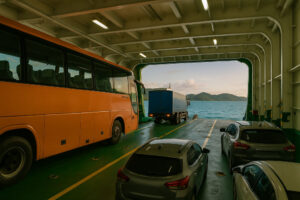 A RoRo bus is exactly what it sounds like: a long-distance bus that literally rolls onto a RoRo ferry, crosses the sea with you onboard, then rolls off and keeps driving on the next island. You usually board at a city terminal—say, Cubao or Pasay in Metro Manila—and stay in the same bus most of the way, even across multiple ferry legs. RoRo buses are one of the most important pieces in this Philippines ferry travel guide, because they turn sea crossings into continuous overland trips.
Onboard, the kuya konduktor (bus conductor) will tell passengers when to get off during a crossing. On some short hops, you can stay inside the bus; on longer routes, everyone is asked to go up to the passenger deck while the bus is parked on the vehicle level. You bring a small daypack with valuables and leave bigger bags locked inside the bus’s luggage compartment or overhead racks.
Example loops and long-haul routes
One classic idea is a western loop: start in Luzon, bus down to Batangas, ferry to Mindoro, then onward to Panay, Negros, and Cebu before looping back by air or another ferry. This suits travelers who want to see how islands connect in everyday Filipino life, not just hop between airports.
Another is the eastern path: Luzon to Sorsogon, then by ferry to Samar, onwards to Leyte, and finally to Surigao and northern Mindanao. From there, you can ferry to Siargao, Davao, or circle back through Cebu and Bohol. These routes are slower and sometimes tiring, but they’re rich in the textures this Philippines RoRo travel guide is all about—kids sleeping across two seats, nanays guarding plastic containers of adobo, and strangers sharing snacks on deck.
Pros and cons vs domestic flights
Compared to flying, RoRo-and-bus travel can be cheaper, especially if you’re flexible with time and stick to economy classes. It’s also lower-carbon and lets you see more of the in-between places: roadside carinderia stops, provincial towns, and port cities that flights would simply skip.
The trade-offs: longer travel days, possible delays, basic toilets, and less predictable schedules—especially in bad weather. Flights are faster and often more comfortable in the short term, but they compress the journey. Ferries and buses stretch it out, turning travel days into part of the story instead of just a transition.
How to Book Ferry Tickets in the Philippines
Booking at ports and city ticket offices
 The traditional way described in this Philippines ferry travel guide is still very common: buy tickets in person at city ticket offices or port terminals. You’ll give your name and details so the crew can include you in the passenger manifest. Bring a valid ID; sometimes they’ll check it against your ticket when boarding.
Arrive early, especially if you haven’t booked yet. Terminals can be busy on weekends, holidays, and around paydays. Expect basic security checks: bag scans, metal detectors, and sometimes manual inspections. Lines can be long, but the process is straightforward once you’re used to it.
Online booking and apps
Many bigger operators now offer online booking via their websites or third-party apps. You can choose routes, departure times, and seat or bunk classes, then get a QR code or e-ticket. Some still require you to exchange the e-confirmation for a physical boarding pass at the terminal, so always read the fine print.
Watch out for extra fees (like service charges) and double-check rebooking or refund policies—especially in typhoon season. Screenshots and printed copies help in case of poor signal at ports.
When to book ahead vs walk-up
For big overnight ferries, holiday periods (Christmas, Holy Week, long weekends), and popular tourist routes, book ahead if you can—especially if you want a specific class like a cabin or tourist bunk. For everyday daytime routes and short hops, walk-up tickets on the same day are still normal practice, as long as you’re early and not hitting a peak travel rush.
Overnight Ferries – What It Actually Feels Like
Boarding and settling in
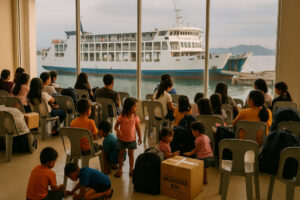
 Boarding an overnight ferry feels like controlled chaos. After checking in, you wait in a terminal with plastic chairs, TV news on loud, kids running around, and vendors selling snacks. When boarding is called, everyone lines up: people with backpacks, aunties balancing boxes, porters pushing carts stacked with goods.
You walk up the gangway, feel the ship’s slight sway, and follow signs or crew directions to your section. If you’re in economy, you might hunt for a good bunk near a window or away from the TV. Tourist class and cabins have assigned spots, but people still move around to find outlets, quieter corners, or groups of friends.
Night on board
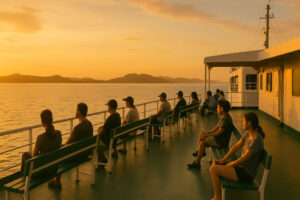
Once you settle in, the ferry becomes a floating barangay. Lights may stay on all night in common areas, TVs play variety shows or movies, and announcements echo through speakers. In non-aircon sections, you feel the warm night air and occasional spray of sea breeze; in aircon rooms, you might end up wearing a jacket and socks to stay warm.
The soundscape is a mix: the deep thrum of the engine, waves slapping the hull, soft conversations, crying babies, and the rustle of snack wrappers. People eat cup noodles and instant coffee from the small canteen, sharing hot water dispensers and tables. Passengers often keep their valuables in a small daypack that doubles as a pillow, while bigger bags sit under bunks or in designated luggage areas.
It’s not a luxury cruise, but there’s a particular coziness: kids sprawled across benches, lolos and lolas chatting, someone strumming a guitar quietly, the occasional smell of Vicks or White Flower as people prepare to sleep.
Morning routines and disembarkation
 Before sunrise, the ship comes alive again. Crew members sweep floors, announcements start reminding people about arrival time, and lines form for the CR and sinks. You’ll see travelers brushing their teeth with tabo and cup in hand, others sipping early-morning kape while staring at island silhouettes appearing in the grey light.
Disembarkation can feel like a rush: everyone grabbing bags from under bunks, calling family members, and gathering by the stairs. Once the ferry docks, you shuffle down the gangway and spill into a new port: tricycle drivers calling out, buses waiting, and the next leg of your journey starting immediately. It’s messy, human, and very Filipino.
Safety, Weather, and Ferry Etiquette
Basic safety checks you should always do
Most crossings are uneventful, but it’s smart to be proactive. Once onboard, locate the life jackets (usually under or near your seat or bunk) and note where the emergency exits and muster points are. Listen to or read any safety briefing materials, even if you’ve heard them before.
Walk carefully on wet decks, especially in flip-flops; one careless step on a slippery metal surface can ruin your trip. If crew members give instructions about where to stay during rough weather or docking, follow them. And if anything feels off, don’t be shy about asking crew for clarification.
Weather holds, habagat/amihan, and typhoons
In habagat season (southwest monsoon, usually mid-year), western routes can get rougher seas and more frequent delays. In amihan months (northeast monsoon, late-year to early-year), some eastern coasts feel the wind more strongly. On top of that, bagyo (typhoons) can roll in any time, especially from around July to October, bringing strong wind and heavy rain.
The Philippine Coast Guard has the final say on whether ferries can sail. Sometimes, they cancel departures at the last minute—even when the sun looks fine onshore—because conditions further out are unsafe. When that happens, arguing won’t help. This is where having buffer days, flexible bookings, and an eye on Philippine ferry travel advisories can save you stress.
Etiquette and comfort for shared spaces
On ferries, you’re sharing a moving home with dozens or hundreds of people. Basic etiquette keeps it livable: queue calmly, keep your belongings from sprawling across other people’s space, and use indoor voices especially at night. Earphones instead of blasting music on your phone, please.
Keep your valuables on you or within reach, not unattended on open shelves. Throw trash in bins or take it with you—crew are already working hard; they don’t need extra plastic cups rolling around the deck. If someone is obviously nervous about the crossing (it might be their first time too), a smile or small conversation can make the journey lighter for both of you.
Costs and Practical Budgeting
Short hops, mid-length RoRo legs, and overnight ferries
Prices vary by operator and route, but you can think in rough tiers. Short bangka or fastcraft hops between nearby islands are usually the cheapest per distance. Mid-length RoRo legs—like Batangas to Calapan—sit in the middle, with separate pricing for passengers and vehicles. Overnight ferries cost more, with big jumps between economy bunks and private cabins.
Sometimes, paying a bit extra for a more comfortable class is absolutely worth it, especially if you have a long travel day waiting on the other side. A decent night’s sleep can mean a whole different mood when you arrive.
Hidden and extra costs
Remember terminal fees: many ports charge a small separate fee on top of your ferry ticket. You might also pay minimal environmental or local fees in certain destinations. Porters can help with heavy bags, but always agree on a price before they lift anything.
Onboard, food is rarely the cheapest option. Cup noodles, instant coffee, soft drinks, and rice meals are available, but prices are higher than in a town carinderia. Bringing your own snacks and water saves money, but still budget a bit for hot food and caffeine when the night feels long.
Sample budgets for common crossings
As a very rough idea: a backpacker doing a short RoRo hop like Batangas–Mindoro in economy might spend enough for the ferry fare, a small terminal fee, and cheap snacks—manageable on a modest daily budget. A mid-range traveler taking an overnight Manila–Cebu ship in tourist class might spend more, factoring in the higher fare and onboard meals. The exact numbers change over time, but the pattern is clear: distance and comfort class are your main cost drivers.
Packing Tips for Ferries and Long Island Hops
Essentials for any ferry
For any route in this Philippines ferry travel guide, pack a small daypack with valuables and in-transit essentials: ID, tickets or e-confirmations, phone, wallet, and a power bank. Add a light jacket or scarf (for cold aircon or breezy decks), basic toiletries (toothbrush, wipes, alcohol), and a small amount of cash for terminal fees and snacks.
Earplugs and an eye mask can make a huge difference on overnight crossings with bright lights and TVs. A simple reusable water bottle helps you stay hydrated and cut down on single-use plastic.
Extra comforts for overnight journeys
For overnight ferry Philippines trips, think “soft and warm.” A light blanket, sarong, or malong can double as a pillow, cover, and privacy curtain. A small travel pillow or inflatable neck pillow fights stiff-neck mornings. Slip-on sandals or tsinelas make it easier to move between bunks, CR, and deck without tying and untying shoes.
Snacks and instant coffee or tea bags are morale boosters. Some people even bring a small tupperware for cheaper take-out meals bought near the port, instead of relying solely on the ferry canteen.
Storing bags and staying secure
Locals typically keep valuables in a small bag they can hug or use as a pillow, while bigger backpacks and suitcases live under bunks, against walls, or in bus luggage compartments (if you’re on a RoRo bus). A simple luggage lock adds peace of mind, though it’s not a force field. Don’t flash expensive gear around, and don’t leave phones or wallets unattended on bunks when you wander the ship.
When in doubt, ask the crew or watch what other families do. Filipino nanays are experts at defending a nest of bags, sleeping kids, and snacks all at once; they’re basically unofficial security systems.
For even more prep ideas beyond ferries, you can check more tips and inspiration for traveling around the Philippines to round out your plans.
Philippines Ferry Travel Guide FAQs
How does the Philippine Nautical Highway actually work for travelers?
In simple terms, the Philippine Nautical Highway links key islands with RoRo ferry routes so vehicles and passengers can roll on and off ships instead of flying. As a traveler, you can ride long-distance buses that board these RoRos, or you can book your own ferry tickets and connect island roads yourself. You don’t have to understand every port; just know that western, central, and eastern corridors exist, and each one can string together multiple islands in one overland-and-sea journey.
What are the safest and most straightforward routes for first timers?
For beginners, sticking to well-known corridors is easiest: Batangas–Calapan or Batangas–Caticlan, Manila–Cebu on big liners, Cebu–Bohol fastcrafts, or Surigao–Siargao ferries. These routes are used daily by locals and tourists, have clear procedures, and usually offer multiple departures. If you’re nervous, start with shorter daytime crossings to get a feel for it before tackling long overnight legs.
Is it safe to travel by ferry in the Philippines if I follow basic guidelines?
Most crossings are routine and uneventful when you use reputable operators and respect weather calls. Safety improves a lot when you do a few simple things: check life jackets and exits, avoid obviously overloaded small boats, obey crew instructions, and don’t pressure operators to sail in bad conditions. For more serious updates and context, you can keep an eye on Philippine ferry travel advisories alongside official weather sources.
How do I combine ferries with buses for longer journeys?
Use major cities as anchors: Manila–Batangas, Cebu City, Davao, Cagayan de Oro, and so on. From those hubs, look for bus routes that explicitly mention RoRo operations, or ask at terminals about buses going “diretso” (direct) via ferry to your next big island. You board the bus, ride onto the RoRo, go up to the passenger deck during the crossing, then rejoin the bus after docking. Over time, these bus-plus-ferry legs link together into a chain that can take you from Luzon deep into Visayas and Mindanao.
What should I expect on an overnight ferry in terms of comfort and safety?
Expect something between a giant moving hostel and a very bright, noisy sleepover. Bunks or seats are basic, lights may stay on, and noise levels vary, but with a jacket, earplugs, and a bit of patience you can usually rest enough. Safety-wise, choose licensed operators, pay attention during briefings, and follow shipboard rules. Most people onboard are regular workers, families, and students doing this all the time, which helps normalize the experience.
Should I worry about typhoons, and how can I plan around them?
Typhoons are part of life here, especially from July to October. You don’t need to panic, but you should respect them. Build buffer days around key crossings, choose flexible tickets if traveling in peak storm months, and be prepared to change your route if authorities cancel sailings. It’s better to spend an unplanned extra night in a port city than to risk a dangerous sailing or get stranded on the wrong side of a crossing with no backup plan.
How far in advance do I need to book ferry tickets?
For everyday short crossings in non-peak periods, same-day or day-before purchases usually work. For big overnight routes, holidays, and popular weekends, book as early as you reasonably can—especially if you want specific classes like cabins or tourist bunks. Keep screenshots or printouts of e-tickets, and arrive at the port early to handle check-in, manifests, and any surprise lines.
However you use this Philippines ferry travel guide—to plan one simple RoRo hop or a full month of overland-and-sea adventure—I hope you get to feel that moment on deck at sunrise: kape in hand, islands coming into view, engine humming, and the quiet pride of knowing you didn’t just teleport by plane. You followed the sea roads, like everyone else on board.