
Palawan looks like a postcard—limestone cliffs, bright shallows, and that classic bangka silhouette—but planning it can feel tricky because boats, sea conditions, and transfers shape your days more than any “must-see” list. This Palawan island hopping guide is built for first-timers who want clear choices without overplanning: pick a base, understand the tour letters, and use buffers so cancellations don’t derail the trip.
The calm approach is simple: choose how many hubs you can handle, choose how many boat days you actually want, and plan around the reality that the sea decides the schedule sometimes. With the right structure, Palawan feels easy—fresh mornings, salty hair, sunscreen on your shoulders, then a slower afternoon back in town. This Palawan island hopping guide is designed so even your “planning” feels light.
At-a-Glance
 Best time window: Drier months generally make island-hopping easier; shoulder season can mean better value with occasional showers.
Boat-day reality: Plan early starts and expect wet landings and sun exposure.
Transfer friction: El Nido and Coron can be combined, but buffers matter.
Budget band: Costs rise quickly with direct flights, better-located stays, and private transfers.
Backup plan: Keep one land-based or town day ready in case tours pause.
Reality Check: Palawan planning feels lighter when you treat boat tours as “weather-permitting highlights” instead of fixed appointments you must force. That mindset is the backbone of this Palawan island hopping guide.
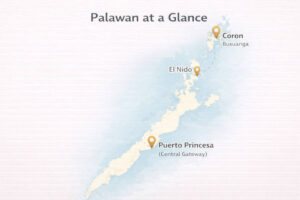
Palawan at a glance: choose your base (El Nido, Coron, and what to expect)
Think of Palawan as a few key travel bases connected by flights, vans, and sea routes. For first-timers, the decision usually comes down to El Nido and Coron, with Puerto Princesa as a common gateway and starting point. The rest of this Palawan island hopping guide is designed to make that choice feel simple, then keep your days flexible once you arrive.
El Nido (Bacuit Bay): lagoons, limestone, classic island-hopping days
El Nido is known for dramatic limestone scenery and island-hopping routes that mix lagoons, beaches, and snorkeling stops. Mornings can be busy in town before boats leave, then the day opens up into bright water and cliff shadows. For a deeper, destination-specific overview you can reference while choosing neighborhoods and tour styles, see El Nido Travel Guide. If your priority is classic “lagoon day” energy, this Palawan island hopping guide leans El Nido by default.
Coron (Busuanga area): lakes, snorkeling, and a different “adventure” rhythm
Coron is often chosen for iconic swim-and-viewpoint days (lakes and lagoons) plus strong snorkeling options. It can feel more “activity-forward” depending on what you pick—short hikes to viewpoints, swim spots, then boat time. For a practical overview to pair with this Palawan island hopping guide, bookmark Coron Travel Guide. If you love “set-piece” swim days, Coron may fit your version of a Palawan island hopping guide best.
Puerto Princesa: gateway and reset button
Puerto Princesa is a frequent entry point with more transport connections and city conveniences. Many travelers use it as a one-night buffer for flight timing, supplies, and resetting before moving north or taking onward transfers. In this Palawan island hopping guide, think of it as a practical step, not a required highlight.
Optional quieter alternative: Port Barton (brief context only)
For travelers who want a slower, quieter coastal feel with simpler days, Port Barton is sometimes considered as a calm base. It’s best treated as a “pace choice” rather than a checklist add-on—adding it can increase transfers, so it’s most useful when you want fewer boat-tour expectations.
Reality Check: Palawan’s magic is strongest when you choose one main base and let your days breathe. Two bases can work beautifully, but it’s not required for a memorable first trip. This Palawan island hopping guide is intentionally “one-base friendly.”
El Nido vs Coron: which one fits your trip (vibe, activities, travel time, cost)
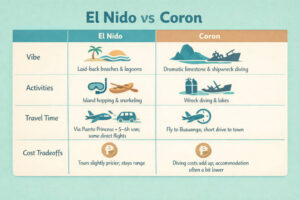 If choosing between El Nido and Coron feels like the big decision, that’s normal—both are beautiful, but they reward different trip styles. This section of the Palawan island hopping guide reduces the choice to practical questions you can answer quickly, then plan around with buffers.
Vibe: social energy vs activity rhythm
- Choose El Nido if you want that “classic limestone-and-lagoons” mood, a lively town base, and straightforward island-hopping days that feel like a highlight reel of Bacuit Bay scenery.
- Choose Coron if you like mixing boat time with a few more “set pieces” (lakes, viewpoints, swim stops) and you’re comfortable with a day feeling more structured around specific sites.
Activities: what your best days will look like
- El Nido often feels like: early boat → lagoons/beaches/snorkeling → return to town for dinner, with lots of sun and water time.
- Coron often feels like: boat or land start → lakes/lagoon swim or snorkel loop → return, with a mix of swims and short climbs depending on the day’s route.
Travel time friction: what eats your hours
Time friction shows up in transfers (airport to town, town to port, van schedules, boat departure times) and in how early tours leave. If the trip is short, minimizing transfers matters more than squeezing in “both.” That’s one of the main themes of this Palawan island hopping guide: fewer moves, better days.
If your plan includes ferry-style travel in the Philippines more broadly, use Philippines Ferry Travel Guide to set expectations about sea routes, schedules, and why buffers matter when waters are rough.
Cost tradeoffs: budget vs comfort
Costs in El Nido and Coron can swing depending on flight routes, where you stay (walkable center vs farther out), and whether you rely on tours or add private transfers. For a broader budgeting lens you can apply to your exact dates and comfort level, see Philippines Travel Budgets.
Reality Check: Many “budget surprises” in Palawan aren’t scams—they’re convenience costs: last-minute rides, extra transfers, and paying more to save time. A good Palawan island hopping guide protects you from that by building slack.
Easy planning rules (how many hubs, how many boat days, where buffers matter)
When Palawan planning gets stressful, it’s usually because the itinerary expects perfect sea conditions. The calm fix is to build around a few rules that keep your Palawan island hopping guide plan flexible and weather-proof.
Rule 1: Pick one hub for short trips; two hubs for 6+ nights
For 3–4 nights, one hub is the simplest and most satisfying. For 5–6 nights, two hubs can work if you accept one transfer day and keep at least one slower afternoon. This is a core decision point in any Palawan island hopping guide.
Rule 2: Don’t schedule boat days back-to-back without a buffer
A boat day is sun, salt, wind, and early starts. Many travelers enjoy Palawan more when they alternate: boat day → flexible land/town day → boat day. That buffer also helps if a tour is canceled and you need to rebook. In this Palawan island hopping guide, buffers are part of the itinerary, not an afterthought.
Rule 3: Protect transfer days like they’re part of the vacation
Transfer days are when delays and fatigue stack up. The calmer move is to plan one “easy win” for transfer days (a good dinner, a sunset viewpoint if safe, a massage, a café crawl) instead of trying to force a full tour. Think of this as the comfort rule of the Palawan island hopping guide.
Rule 4: Use a planning ladder to avoid overbooking
Book flights first, then the first few hotel nights, then choose 1–2 priority boat days. Keep the rest flexible so you can match sea conditions. For broader structure and mindset, the optional companion resource Philippines Travel Planning Guide can help you apply the same calm logic across the whole country.
Reality Check: Palawan days feel long in the sun. A “slower plan” is often the plan that lets you enjoy the water without feeling rushed or depleted. That’s exactly what this Palawan island hopping guide is aiming for.
4D3N itinerary framework (with rest buffers and one swap option)
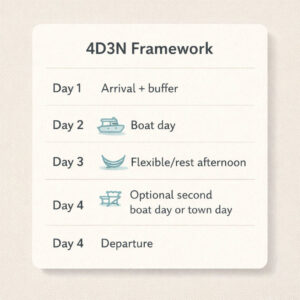 For a first Palawan trip, a 4D3N plan works best when it’s single-hub and simple. This Palawan island hopping guide uses an El Nido-focused default because it’s easy to understand (tour letters) and it’s straightforward to build around one or two boat days. A Coron-focused swap is included right after.
Default 4D3N: El Nido-focused, calm and classic
- Day 1: Arrive + settle. Do a short town walk, set up cash/SIM, and sleep early if a boat day is next. Buffer: treat the afternoon/evening as recovery time.
- Day 2: Island-hopping boat day (choose one tour letter based on what you like: lagoons vs beaches vs snorkel-heavy stops). Buffer: keep dinner simple; plan an easy night.
- Day 3: Flexible day: either a second boat day or a land-based “reset” day (viewpoints if conditions are safe, cafés, a massage, a beachy afternoon near town). Rest buffer: schedule this as the slower afternoon.
- Day 4: Depart. Buffer: avoid stacking a tour on departure day unless your flight is late and you’re comfortable with timing risk.
Swap note: make it Coron-focused instead
If Coron fits better, use the same structure: arrive and settle → one “lakes/lagoon swim” style day → one snorkel or mixed day or a land-based rest day → depart. The key is the same: one tour anchor, one flexible day, and no pressure to force a boat day if seas are rough. That flexibility is the “calm core” of this Palawan island hopping guide.
Reality Check: In 4D3N, chasing both El Nido and Coron often turns into a transfer-heavy trip. One base is the calmer choice.
6D5N itinerary framework (two hubs with transfer buffer and a slower day)
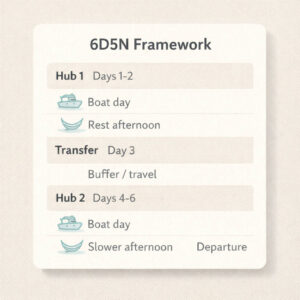 Six days is enough to do El Nido + Coron if you treat the transfer as a full travel block and keep one slower afternoon. This Palawan island hopping guide framework stays intentionally flexible—no minute-by-minute schedule, just a structure that holds up even when the sea changes plans.
Two-hub structure: 3 nights + 2 nights (or 3 + 3 if flights align)
- Day 1: Arrive Hub 1 (either El Nido or Coron). Settle, get oriented, early night.
- Day 2: Boat day (pick one signature route). Keep the evening light.
- Day 3: Slower day with optional add-ons. This is your “rest afternoon” day—great for town food, low-effort viewpoints, cafés, or a short beach break close to town.
- Day 4: Transfer day to Hub 2. Transfer buffer: avoid booking a major tour the same day; aim for an easy dinner and sleep.
- Day 5: Boat day in Hub 2 (choose based on your energy and sea conditions).
- Day 6: Depart (or, if you have a late flight, keep it as a flexible half-day only).
Optional swaps (keep it simple)
- If seas look rough: convert Day 2 or Day 5 into a land/town day and rebook the boat day into the calmest forecast window.
- If you prefer fewer early mornings: do only one boat day per hub and keep the other day for slow exploring.
- If you want one “extra wow” day: keep it as a flexible upgrade depending on conditions rather than pre-booking everything.
Reality Check: The transfer between hubs is the make-or-break piece. Planning it with breathing room is what makes two hubs feel fun instead of frantic. Any good Palawan island hopping guide treats that transfer as a real day.
Island hopping tours explained (El Nido Tours A/B/C/D + Coron tour groupings)
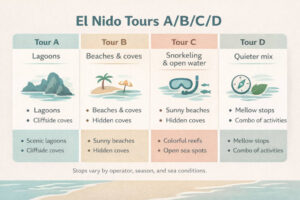 Tour names in Palawan can feel confusing because they’re lettered or grouped, and exact stops can change due to weather, crowd management, or permits. The goal is not to memorize every stop—it’s to understand the general “shape” of the day so you can pick what fits your energy. This part of the Palawan island hopping guide is about choosing a tour theme, not chasing every stop.
El Nido Tours A/B/C/D: what the letters generally mean
El Nido tours are often sold as A, B, C, and D. Think of them as themes rather than fixed itineraries. For more detail (including practical planning notes), reference El Nido Travel Guide.
- Tour A: Often lagoon-forward—calmer waters, iconic limestone-and-lagoon scenery, and swim-and-paddle style stops.
- Tour B: Often beach-and-cove focused, sometimes with cave or sheltered-stop vibes depending on conditions.
- Tour C: Often more snorkeling/coves and open-water feel—bigger scenery, sometimes more wind exposure.
- Tour D: Often positioned as a quieter or less-crowded mix, sometimes leaning into calmer routes depending on the day’s plan.
Reality Check: The same letter can feel different on different days. Ask what the operator’s route looks like this week, and accept that adjustments can happen for safety and comfort.
Coron tour groupings: how to choose without overthinking
 Coron tours are commonly grouped by activity style rather than letters. For a destination-specific companion reference, see Coron Travel Guide.
- Lakes/lagoon photo-and-swim day: A day structured around iconic swim spots and viewpoints, often with short climbs and a lot of swimming.
- Snorkel-focused day: More time in the water, reefs and marine stops (exact sites vary).
- Mixed “ultimate” style day: A bit of everything—swim spots plus snorkeling—often a longer day with more transitions.
Reality Check: Longer “mixed” days can be amazing, but they’re also the most tiring. If this is a short trip, one solid theme day plus a slower day can feel better than squeezing everything into one route.
Where to stay (quiet vs social, families vs couples, budget vs comfort)
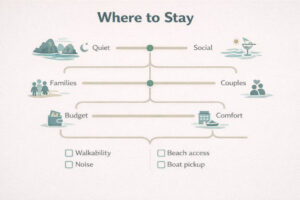 Instead of hunting for the “best” hotel, choose your stay based on how you want mornings and nights to feel. In Palawan, location and noise level can matter more than amenities. A good stay choice makes this Palawan island hopping guide easier to follow because pickup points and walkability shape your mornings. If mornings feel smooth, the whole Palawan island hopping guide plan feels easier.
Quiet vs social
- Choose quieter areas if sleep is a priority, you’re waking early for tours, or you prefer low-key dinners. Look for rooms set back from the main road, with good soundproofing notes and clear quiet hours.
- Choose more central/social areas if you want easy walkability to restaurants and you don’t mind lively evenings. Look for convenience to pickup points and transport.
Families vs couples
- Families: prioritize easy access (minimal stairs), reliable air-conditioning, breakfast options, and proximity to calm swimming areas if applicable. Choose tour styles that don’t demand constant boat-to-boat transfers.
- Couples: prioritize a quieter room, sunset access, and a comfortable “rest afternoon” setup—balcony, good shade, or a lounge area makes downtime feel special.
Budget vs comfort
- Budget-focused: aim for clean basics, good fan/AC, and strong location. Budget plans work best when you limit transfers and keep boat days to what you truly want.
- Comfort-focused: pay for location (walkable), reliable AC, hot water, and a calm room. Consider private transfers when timing is tight or arrivals are late.
Reality Check: If the plan includes early boat mornings, sleep quality matters. Comfort spending that protects rest often improves the whole trip more than adding one extra tour.
Food and dining tips (easy wins, timing, and what to expect)
 Palawan town dining is usually relaxed and satisfying when expectations match the rhythm. The simplest strategy: eat early on tour days, keep snacks ready, and stay hydrated. It’s a small detail, but it makes a Palawan island hopping guide itinerary feel calmer in real life.
Easy wins for low-stress meals
- Time your meals: tours often start early, so plan a light breakfast and a proper meal after you return.
- Peak season mindset: if you want a specific restaurant at a specific time, consider reserving earlier in the day (or arrive early and wait less).
- Cash vs card: carry cash for smaller places and tricycle rides; use cards where accepted but don’t rely on it everywhere.
- Allergies and ordering: keep a simple note on your phone for allergies and preferences; order plainly when you want less confusion.
- Hydration: the heat plus saltwater days can sneak up—water and electrolytes help more than most travelers expect.
Reality Check: After a boat day, it’s normal to be sun-tired and hungry. Having one “default dinner plan” (near your stay, simple and familiar) can save energy.
Rainy season and shoulder season (what changes, swaps, and flexibility mindset)
 Seasonality matters in Palawan because sea conditions affect boats. In rainy-season-style months (often June to November), expect more showers, shifting clouds, and a higher chance of choppy water—especially on exposed routes. Shoulder season can feel like a pleasant middle ground: fewer crowds and better deals, with occasional rain and the need for flexible planning. Any Palawan island hopping guide worth using has a swap plan for when the sea says no.
For a broader, region-by-region weather lens you can apply to your exact travel week, see Philippines Weather Guide. For official Palawan destination context and updates, you can also reference Palawan Tourism.
What changes in rainy-season-style months
- Mornings become more strategic: calmer windows can happen early; afternoons can bring showers.
- Seas can be rougher: comfort drops fast when waters are choppy, even if a tour technically “runs.”
- Plans need slack: a “must-do list” can become stressful if it doesn’t allow rescheduling.
Calm swaps when boats stop (or shouldn’t go)
- Town day: café-hopping, slow lunch, shopping for essentials, a massage, and an early night.
- Viewpoints or short walks: only if conditions are safe and paths aren’t slippery.
- Museums or local context stops: low-effort, weather-friendly options where available.
- Buffer day upgrade: move your boat tour to the next calmer window instead of forcing it.
Reality Check: Rain doesn’t ruin Palawan—rigid plans do. One flexible day can protect the whole itinerary.
Safety and sea conditions (cancellations, refunds, what to do when tours stop)
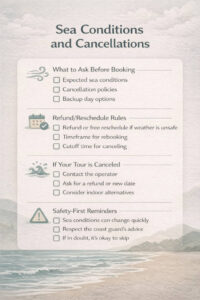 Cancellations happen in Palawan for the most reasonable reason: safety. Sea conditions can shift quickly, and local authorities or operators may suspend tours when winds and waves make routes risky. This Palawan island hopping guide isn’t here to scare—just to normalize the reality so it doesn’t catch you off guard.
Why tours get canceled (and why it’s not personal)
- Rough seas and strong winds: small boats and open routes can become uncomfortable or unsafe.
- Visibility and rain: conditions can reduce safety and enjoyment for snorkeling and lagoon routes.
- Permits and crowd management: some sites have capacity rules; routing can change.
What to ask before booking
- Weather policy: who decides cancellation, and based on what advisory?
- Refund vs reschedule rules: full refund, partial refund, or rebook credit?
- Route flexibility: do they adjust stops to safer areas if needed?
- Pickup and return expectations: where and when, and what happens if timing shifts?
What to do when tours stop
- Use your buffer day: this is exactly why it exists.
- Rebook for the next calmer window: prioritize the tour theme you want most.
- Shift to land-based plans: town meals, short walks, viewpoints if safe, and rest.
- Avoid pressure to “push through” rough seas: if your body is already saying no, listen—comfort and safety matter more than the checklist.
For sea-condition checks, monitor official updates such as PAGASA Marine Gale Warning close to your tour days.
Reality Check: The smartest Palawan itinerary is the one that still works when one boat day moves. Build the buffer, and you’ll feel in control.
Palawan Island Hopping Guide FAQ
Should first-timers pick El Nido or Coron?
Pick El Nido for classic Bacuit Bay island-hopping and a lively base; pick Coron for lake-and-lagoon style days plus snorkel options. If the trip is short, choosing one hub usually feels better than forcing both.
How many boat days are enough?
For a first trip, 1–2 boat days in a 4D3N plan is satisfying. In 6D5N, aim for 2 boat days total (one per hub) with at least one flexible land/town day to absorb weather changes.
What if island-hopping gets canceled?
Assume it can happen and plan a buffer day. Ask about refund/reschedule rules before booking, then rebook into the next calmer forecast window rather than forcing a rough day.
Is rainy season a bad time for Palawan?
Not automatically, but it requires flexibility. Expect more showers and a higher chance of choppy seas; plan morning-first days and keep land-based swaps ready.
Is El Nido or Coron more expensive?
Either can be expensive or affordable depending on flight routes, hotel location, and transfers. Comfort costs rise with direct routes, walkable stays, and private rides; budgets stretch when you slow down and keep hubs minimal.
Where should travelers stay for quiet nights?
Choose accommodations slightly away from the busiest restaurant strips, look for notes about soundproofing and quiet hours, and prioritize easy access to tour pickup points so mornings stay calm.
How far in advance should tours be booked?
In peak season, booking a couple of priority boat days ahead can help. In shoulder seasons, you can often keep more flexibility—just confirm cancellation and reschedule policies so weather changes don’t become expensive.
Can El Nido and Coron be done in one short trip?
Yes in 6D5N if you treat the transfer as a real travel day and keep at least one slower afternoon. In 4D3N, it’s usually better to pick one and do it well.
Palawan feels most peaceful when the plan matches the sea. Choose one base for short trips, two hubs only when you have enough nights, and treat a buffer day as part of the design—not a compromise. This Palawan island hopping guide is meant to keep decisions simple: pick your vibe (El Nido or Coron), pick one or two boat-day themes, and let the rest stay flexible so the trip stays light. If you only follow one part of this Palawan island hopping guide, make it the buffers—they protect the whole trip.