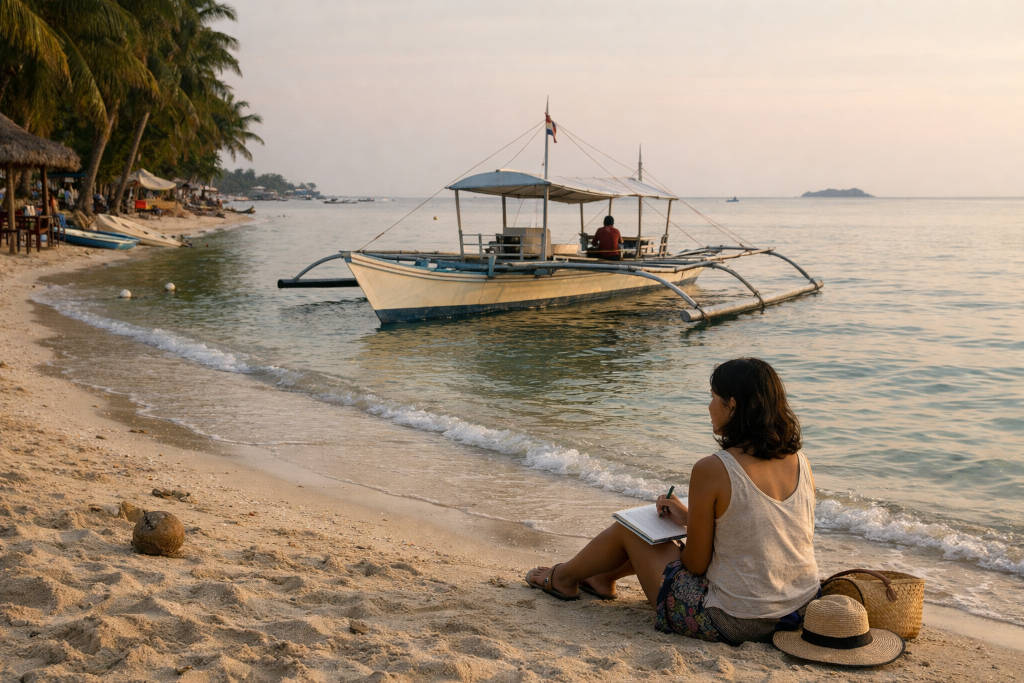
The real question behind how many days in Malapascua is not which number looks good on an itinerary. It is which number still feels relaxed after the long land transfer to Northern Cebu, the boat crossing, possible weather delays, and the usual low-energy arrival day.
Malapascua can be beautiful even on a short trip, but the island often feels shorter on the ground than it does on paper. That is why choosing the right stay length matters.
For most readers, the sweet spot is not the absolute shortest trip and not the longest one either. It depends on whether you are diving, how tightly you are booking onward transport, and whether you want one good beach reset or a fuller island stay with room to breathe.
This guide is here to help you decide between 1, 2, 3, 5, and 7 days without turning the choice into a stressful math problem.
Quick answer: how many days in Malapascua?
At a glance, the best time window is usually the drier stretch when sea travel is more predictable, but island trips in the Philippines always need some flexibility. Realistic travel time from Cebu City to Malapascua can take most of a day once road transfers, waiting time, and the boat ride are counted.
Budget-wise, the island can work for midrange and careful-budget travelers, but very short trips can feel less cost-efficient because transfers take a big share of the total effort. Crowd risk rises on long weekends and peak holiday dates, and a rain or heat backup is simple: keep one low-pressure day for resting, walking around the village, or enjoying a slow beachfront afternoon instead of forcing a packed schedule.
Simple comparison table for 1, 2, 3, 5, and 7 days
| Trip Length | How It Feels | Best For | Main Tradeoff |
|---|---|---|---|
| 1 day | Very rushed | Only travelers already nearby with very limited time | Transfers can outweigh actual island time |
| 2 days / 1 night | Doable but tight | Quick escape, one priority only | No real buffer for weather, fatigue, or delays |
| 3 days / 2 nights | Balanced for many first-timers | Beach time plus one or two main activities | Still limited if transport days run long |
| 5 days / 4 nights | Comfortable | Divers, mixed-interest couples, slow travelers | Higher lodging and meal budget |
| 7 days / 6 nights | Relaxed and flexible | Longer island stays and deeper dive-focused trips | More time than casual beach-only visitors may need |
The short recommendation for most first-timers
If you want the simplest answer to how many days in Malapascua, choose 3 days and 2 nights if your goal is a sensible first trip, and choose 5 days and 4 nights if you want the island to feel comfortably unrushed.
Three days gives enough room to arrive, settle in, enjoy the island, and leave without making every hour feel assigned. Five days gives you breathing space, which matters more than people expect on an island reached by road and boat.
Reality check: one of the biggest mistakes is treating Malapascua like a quick urban side trip. It is an island break with transport friction, so the right answer is often one step longer than your first instinct.
First decide what “days in Malapascua” really means
Total trip days versus nights on the island
 Before choosing a Malapascua trip length, separate total trip days from nights on the island. A plan that says “3 days in Malapascua” can mean very different things. It might mean three calendar days including your transfer from Cebu and your exit day, or it might mean three full island days after arrival.
Those are not the same trip at all.
For planning, nights are usually the clearer measure. Two nights often means one arrival day, one fuller day, and one departure morning. Four nights means you finally start to feel like you have real usable time. When readers ask about Malapascua how many nights they need, this is usually the hidden reason for the confusion.
Reality check: arrival day is rarely a full beach day. Even if you reach the island smoothly, travel effort can make that first afternoon feel softer and shorter than expected.
Why transfer time changes the answer
Transfer time from Cebu or Maya changes everything. Even on a well-planned day, road travel, waiting time, and the boat crossing eat into energy and flexibility. That is why days needed in Malapascua should never be calculated as island time alone.
The journey is part of the experience, and it affects what feels rushed.
This matters even more for travelers coming from farther away or those using public transport. If you are still deciding the wider structure of your trip, the Philippines travel planning guide for first trip and the Philippines public transport guide for bus, jeepney, and ferry can help you set more realistic expectations before locking in times.
Reality check: on paper, Malapascua can look close enough for a quick detour. In real life, tight same-day thinking is what makes the island feel harder than it needs to.
What feels rushed and what feels comfortable
1 day or same-day return
 A one-day visit is the most rushed option and usually the least satisfying unless you are already very near the jump-off point. For most travelers, a same-day return makes how long to stay in Malapascua almost a trick question, because you are spending so much of the day getting there and back that the island itself barely has room to breathe.
If one day is truly all you have, keep the goal extremely simple. Think of it as seeing the island briefly, not fully experiencing it. Pick one easy priority, eat well, take a short walk, and avoid any plan that depends on perfect timing.
Do not try to squeeze in a complete island checklist.
Reality check: a one-day plan can work only when logistics line up unusually well. For most readers, it feels more tiring than rewarding.
2 days and 1 night
Two days and one night is doable, but still tight. This is the shortest version that feels like a real island stay rather than a transit-heavy dash. You arrive, settle in, enjoy one short afternoon or evening, have one main usable block of time, then prepare to leave.
It works best for travelers who already know what they want from the trip. Maybe it is one beach reset, one diving priority, or one peaceful overnight by the water. The problem is that one small disruption can suddenly shrink the whole experience.
A later-than-expected arrival, rougher sea, or simple travel fatigue can make the trip feel half a size smaller.
Reality check: 2 days and 1 night is fine for a quick escape, but it leaves little room for mood, weather, or recovery.
3 days and 2 nights
 For many first-time visitors, 3 days and 2 nights is the best answer to how many days in Malapascua. It is the balanced choice. You can arrive without panic, enjoy one proper full day, and still have a softer departure rhythm.
You are not overcommitting, but you are also not making the island carry too much pressure in too little time.
This trip length is especially good for readers who want a practical first look at Malapascua. You can choose one or two real priorities and still leave space for small pleasures that make island stays feel human: a slow breakfast, a short walk through the village, a calm shoreline afternoon, or simply doing less.
Reality check: even at 3 days and 2 nights, you still need discipline. Overloading the middle day is what makes this otherwise smart trip length feel strangely rushed.
5 days and 4 nights
Five days and four nights is where Malapascua starts to feel comfortable. This is often the strongest answer for travelers who do not want to rush, for divers who want more than one key session, and for couples with mixed interests where one person may want activity and the other may want slower beach time.
A 5-day stay also gives you something very valuable in Philippine island planning: emotional and logistical margin. You have room for a low-energy arrival, a weather shift, or a lazy half day without feeling that the whole trip is slipping away.
This is why a slightly longer Malapascua trip length often feels better value, even when the budget is higher.
Reality check: five days is comfortable, not excessive. It only becomes too long if you personally want a very quick touch-and-go beach stop.
7 days and 6 nights
Seven days and six nights is the relaxed option. It suits travelers who want to move slowly, divers building a fuller island-centered trip, or readers who simply do not want every decision to be tightly optimized. It also helps if you like flexible weather planning and hate the feeling of leaving just when a place finally becomes familiar.
That said, 7 days is not automatically necessary for everyone. If you are mainly after one easy island break and not a deeper dive-focused or slow-travel stay, a full week may be more than you need.
For readers considering a longer stay, the right next step is the Malapascua itinerary for 7 days with realistic buffers, which goes deeper into how a longer schedule can flow without becoming too packed.
Reality check: a week is rewarding when you enjoy slower pacing. It can feel long only if you arrive expecting constant high-intensity activity.
What to prioritize if you are short on time
Best use of one full day
If your trip is short, the best use of one full day is to choose one anchor priority and let the rest of the day stay light. That anchor could be a dive plan, a swim-and-rest day, or one simple mix of beach time and easy walking.
The goal is not variety for its own sake. The goal is to protect the feeling of being on an island instead of turning the day into a race.
For first-timers, the best short-trip mindset is quality over quantity. A calm morning, one purposeful activity, and a gentle afternoon often feel better than three smaller plans squeezed together. This is especially true in warm weather when travel, salt, sun, and boat time can quietly drain energy.
Reality check: the shorter the trip, the more you should avoid chasing everything. One memorable full day is better than a blurred checklist.
What to skip first when the schedule is tight
When the schedule is tight, skip anything that depends on stacked timing, long transfers within the day, or zero delay tolerance. Also skip the fantasy that arrival day and departure day are equal to full leisure days.
They are not. In practical terms, that means protecting rest, keeping meals unhurried, and avoiding plans that leave no room for weather or waiting time.
If you are building a broader route, this is also the point to simplify your transport chain. Travelers coming from Mindanao may find the Cagayan de Oro to Malapascua low-stress options useful when deciding whether a short island stay is realistic at all.
When a buffer day is worth it
Weather, boat timing, and recovery time
 A buffer day is not wasted time in Malapascua. It is often the difference between a trip that feels composed and one that feels fragile. Weather and sea conditions can affect boat timing, and fatigue from road travel can linger more than expected.
Adding one extra day gives you a cushion without forcing you to fill every hour.
For current seasonal planning, it is smart to check the PAGASA Visayas forecast and coastal conditions before your trip, especially during months when rain or wind can shift quickly. For a broader seasonal overview, the Philippines weather travel guide and best months can help you judge whether you should build in more flexibility.
Reality check: buffer days feel unnecessary only when everything goes perfectly. In actual island travel, that extra room often becomes the reason the trip stays enjoyable.
Good low-pressure ways to use an extra day
The easiest way to use an extra day well is not to overdesign it. Let it be the day for a later breakfast, a village stroll, a second chance at your main priority, or a slow beachfront afternoon.
Couples and slow travelers usually appreciate this most because it gives both people room to enjoy the island at their own pace.
An extra day also helps nervous planners relax. You stop measuring every hour against the transfer effort. Instead, the island begins to feel like a real stay.
That is one reason the answer to days needed in Malapascua often shifts upward once people understand the travel rhythm.
Common planning mistakes
Treating arrival day like a full beach day
This is one of the most common mistakes behind disappointment. Arrival day usually includes waiting, coordination, and energy loss. Even if you technically arrive with some daylight left, it may not feel like a full leisure block.
Plan something soft, not ambitious.
Booking tight onward transport
Another common mistake is booking onward buses, flights, or ferries too tightly. This is where island travel stress suddenly spikes. A careful gap helps protect your mood and your budget.
Readers building a wider trip may also want the Travel Safety Guide for the Philippines for practical reminders on pacing, timing, and safer movement decisions.
Ignoring holiday crowding and accommodation limits
Long weekends, holiday periods, and popular travel windows can make Malapascua feel busier and less flexible. That affects room choice, prices, and how smoothly short trips run. If your dates are fixed, plan earlier and assume less wiggle room.
For accommodation decisions, the Where to stay in Malapascua for first-timers guide can help you choose an area that matches your trip length and comfort level.
Reality check: short trips suffer more from crowding because they leave you fewer ways to adjust when the island is busy.
Best trip length by traveler type
First-timers
For most first-timers, 3 days and 2 nights is the most balanced starting point. It gives you enough space to understand the island’s pace without committing too much time.
Divers
Divers usually benefit from 5 days and 4 nights or longer. Their priorities often depend on schedule windows, recovery time, and not feeling rushed between major parts of the trip. If diving is a main reason for coming, a longer stay usually makes more sense than a shorter one.
For broader inspiration, the Department of Tourism dive and marine travel inspiration page gives useful context on why marine travel in the Philippines often rewards slower planning.
Non-divers or mixed-interest couples
Non-divers can be very happy with 3 days and 2 nights, while mixed-interest couples often do best with 5 days and 4 nights. That extra room lowers pressure and makes it easier for different energy levels to coexist without anyone feeling dragged along.
Budget travelers using public transport
Budget travelers using public transport should think carefully about effort versus stay length. Because the journey itself takes time and attention, 3 days and 2 nights is often the minimum that feels worthwhile, while 5 days and 4 nights improves value if your budget can handle the extra nights.
The Tips and Inspiration section is also useful if you are comparing Malapascua with other Philippine island stays and trying to avoid overpacked routing.
Final recommendation
The most balanced choice for most readers
 If you are still unsure about how many days in Malapascua, choose 3 days and 2 nights for a smart first trip, and choose 5 days and 4 nights if you want a more comfortable island rhythm. One day is usually too rushed. Two days and one night is possible but tight.
Seven days is rewarding for divers and slower travelers, but it is not the default answer for everyone.
The best number is the one that matches your real energy, transport effort, and tolerance for uncertainty. In Philippine island travel, a plan that looks slightly generous often ends up feeling just right.
That is especially true in Malapascua, where the road-and-boat journey naturally asks for a little more patience than a city break would.
Which Bakasyon guide to read next
If your answer is 7 days, read the Malapascua itinerary for 7 days with realistic buffers next. If you are still comparing comfort, location, and pacing, read Where to stay in Malapascua for first-timers.
Either way, the goal is the same: choose a stay length that feels calm, workable, and kind to your actual travel energy, not just your ideal version of the trip.