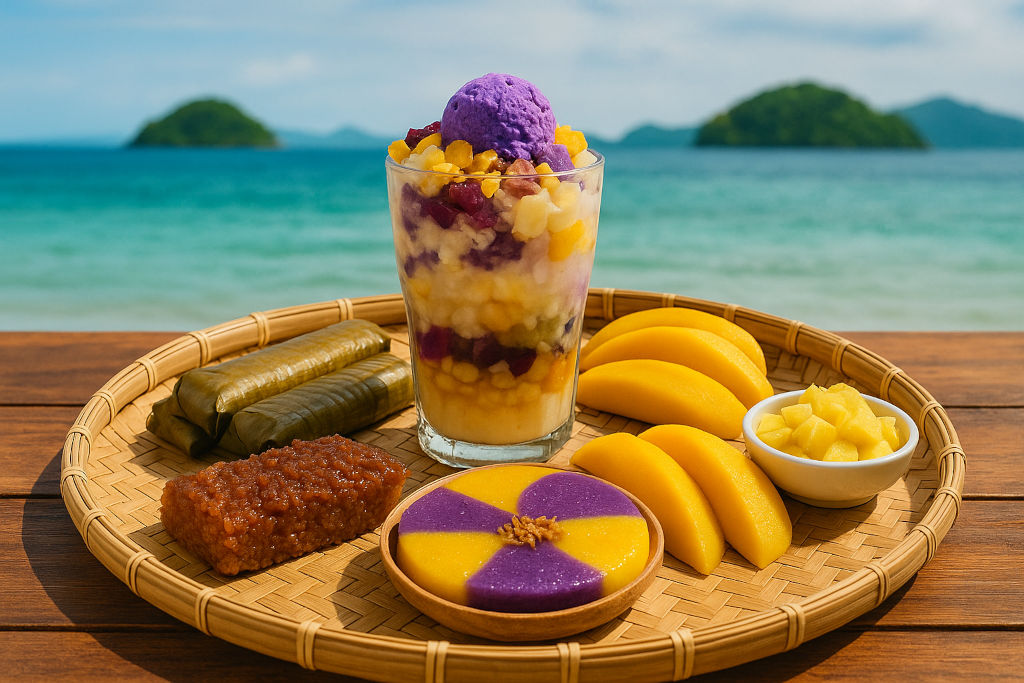
The glass is already sweating before the first spoonful. Crushed ice, purple ube ice cream, golden leche flan, strips of sweetened langka, a constellation of beans and jellies—your halo-halo sits in front of you as Manila traffic growls outside. You tap your spoon against the tall glass, hear the familiar clink, and stir until the layers blur into one cold, pastel swirl. In that moment, your trip stops being about landmarks or itineraries. It becomes about the quiet miracle of Filipino desserts and the tiny, sweet pauses they create in the middle of everyday chaos.
That’s how many Filipino dessert journeys begin: not with a grand plan, but with a craving. A halo-halo to survive the dry season, a slice of buko pie on the bus to Laguna, or a piece of kakanin offered by a tita you just met on a ferry. As you move through the islands, you realize these treats are more than just sugar. They’re maps of memory, faith, migration, and resilience—served in banana leaves, glass bowls, and plastic cups.
Compared to other Asian sweets, Filipino desserts lean heavily on rice and coconut, sticky textures, and the comforting richness of condensed milk and evaporated milk. Ube halaya, with its earthy purple hue, shares a table with Spanish-style leche flan. Halo-halo carries Japanese-style shaved ice, American ice cream, and local fruits in one glass. Chinese-inspired hopia sits beside native delicacies like sapin-sapin and kutsinta in a corner bakery. Philippine desserts are a whole collage of influences, fully claimed and made our own.
This article is an invitation to explore Filipino dessert travel as its own kind of itinerary—using sweets as your compass. We’ll wander through Filipino desserts in Luzon, Visayas, and Mindanao, trace how kakanin shapes rituals and fiestas, and share practical tips for where to find authentic Filipino desserts without being stuck in malls the whole time.
What Makes Filipino Desserts Different
Ask a Filipino abroad what they miss, and you’ll often hear answers like “suman,” “biko,” or “halo-halo,” said with a soft sigh. Filipino dessert culture is deeply emotional. It’s not just about a sugar rush; it’s about what dessert means after a long day of work, a Sunday mass, or a reunion with cousins you haven’t seen in years.
Rice, Coconut, and Everyday Comfort
Many traditional Filipino sweets start with the same trio: rice, coconut, and sugar. Glutinous rice becomes biko—dark, sticky, and glossy with latik—or suman, tight parcels of coconut-scented rice wrapped in banana leaves. Grated coconut turns into toppings for palitaw and sapin-sapin, or thick coconut milk for kakanin and some Mindanao desserts. This reliance on rice and coconut sets Philippine desserts apart from, say, the bean jellies of Vietnam or the airy, fruit-forward sweets in Japan.
Because rice is life here, Filipino rice cakes feel like an extension of the main meal. They’re familiar, filling, and often gentle in flavor—perfect for merienda, that mid-morning or mid-afternoon snack break that quietly structures the Filipino day.
Layers of Influence in Filipino Dessert Culture
Filipino desserts by region also tell a story of trade and colonization. Chinese traders brought techniques that led to hopia, tikoy, and some early forms of steamed cakes. Spanish colonization introduced egg yolk-heavy sweets—think leche flan, yema, and brazo de Mercedes—and the idea of fiesta food served during big religious celebrations. American influence added ice cream, canned fruits, and the culture of sodas and sundaes; halo-halo itself was shaped by Japanese-style shaved ice desserts during the early 20th century.
Put that together and you get Philippine dessert journeys where halo-halo, ube halaya, and leche flan share the same table as native delicacies and street food desserts. It’s messy, abundant, and very Filipino.
Why Filipino Dessert Journeys Feel Like Storybooks
When you focus on Filipino dessert journeys instead of just ticking off tourist sights, you start to travel slower. Desserts force you to sit down: at a plastic table in a carinderia, on a low stool by a church plaza, or on a ferry deck with the wind whipping at your paper plate of kakanin. Each stop becomes a mini-chapter—a halo-halo in Quiapo while chatting with the tindera, strawberry taho in Baguio’s cold fog, or durian ice cream in Davao with friends daring each other to take a bigger bite.
Kakanin and the Sweet Heart of Filipino Rice Culture
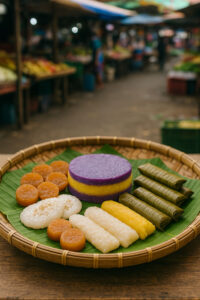 If Filipino desserts had a beating heart, it would be kakanin. The word comes from “kain” (to eat) and “kanin” (cooked rice), and it usually refers to Filipino rice cakes made from regular or glutinous rice. Think suman, biko, sapin-sapin, kutsinta, and palitaw lined up in a woven bilao in the palengke. Kakanin is humble, but it shows up at life’s biggest moments—baptisms, birthdays, wakes, town fiestas, and Christmas dawn masses.
In many communities, kakanin is still cooked over wood fire, stirred by hand in enormous kawali, and wrapped in banana or palm leaves. The Tagalog entry on kakanin in local encyclopedias and references shows how deeply the word is woven into language and ritual, not just recipes. If you’ve ever wondered what kakanin means in Filipino culture, the answer is simple: it means togetherness, patience, and the labor of many hands.
Kakanin Trays at the Morning Palengke
Picture this: it’s just after sunrise in a provincial town. The air smells like fish, wet concrete, and freshly boiled coconut milk. In one corner of the palengke is a low table with a bilao of kakanin—orange-brown kutsinta trembling like little moons, tricolor sapin-sapin dusted with grated coconut, palitaw glistening with sugar and sesame. Each slice is around 10–20 pesos, a small coin for a sweet bite that will carry you through your errands.
For travelers, these kakanin trays are perfect entry points into Filipino food culture. Buy a small slice, ask “Ano pong tawag dito?” (What do you call this?), and you might end up in a conversation about family recipes or the upcoming fiesta.
From Household Altars to Fiesta Tables
Many Luzon desserts, Visayas desserts, and Mindanao desserts involving rice cakes show up first on altars before they ever reach your plate. Offerings of suman or biko might be placed near religious images or brought to church as part of community celebrations. During fiestas and town festivals, you’ll see desserts served during fiestas and town festivals lined along long wooden tables: rows of suman, trays of puto, plates of sweetened bananas, and pastel-colored gulaman.
If you’re curious about how these rituals connect with larger traditions, look for a deeper dive in guides that explore Philippine festivals and food traditions. They’ll help you understand why sweets are part of thanksgiving, not just dessert.
Gentle Treats and Sugar Bombs
Not all traditional Filipino sweets are intensely sweet. Steamed puto, some types of suman, and plain palitaw are relatively mild, especially if you avoid extra sugar on top. On the other end of the spectrum, you have sugar bombs like yema, some versions of biko loaded with brown sugar and latik, and halo-halo crowned with ice cream, leche flan, and sweet beans.
If you’re sensitive to sugar, focus your Filipino dessert journeys around kakanin that lean more on coconut milk and rice flavor—suman sa lihiya, sapin-sapin, or plain kutsinta—then occasionally treat yourself to richer halo-halo or creamy leche flan.
Dessert Journeys Across Luzon
Luzon is often where visitors start their Philippine dessert journeys, simply because flights land in Manila. But beyond the capital’s malls, you’ll find street food desserts, church-front stalls, and small bakeries that reveal the many layers of Luzon desserts.
Halo-Halo in Manila’s Humid Afternoon
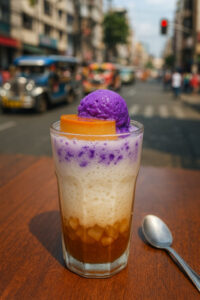 In Manila, halo-halo is survival gear. You’ll see it everywhere—from fast-food chains to humble carinderias tucked inside side streets. For a more local feel, follow small signs in residential neighborhoods that say “HALO-HALO 60” or “ICE SCRAMBLE.” A generous glass usually costs about 60–120 pesos, depending on the toppings and where you are.
If you’re wandering through areas like Quiapo, Divisoria, or the old walls of Intramuros, halo-halo breaks can turn sightseeing into genuine Filipino dessert travel. Ask the vendor what they like best in their mix; you might get an extra scoop of ube halaya or a story about how summers used to be before air-conditioning.
Bibingka and Puto Bumbong After Simbang Gabi
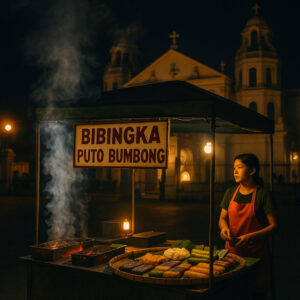 Christmas in Luzon smells like charcoal and butter. After Simbang Gabi—the series of dawn masses leading up to Christmas—church plazas fill with smoke from grills. Vendors fan coals under clay pots where bibingka, a soft rice cake baked in banana leaves, puffs up and browns. Nearby, tubes of puto bumbong (sticky purple rice steamed in bamboo) are pulled hot from their molds, spread with margarine or butter, sprinkled with sugar and coconut.
A serving of bibingka or puto bumbong usually costs 50–100 pesos. Eating them on a cold December morning, surrounded by people clutching candles and jackets, is one of the most powerful Filipino dessert journeys you can have—one rooted in faith, anticipation, and the simple joy of something warm and sweet after prayer.
Pampanga’s Leche Flan and Tibok-Tibok
Head north to Pampanga, often called the food capital of the Philippines, and desserts turn silky. Kapampangan cooks are famous for leche flan so rich it almost melts when you look at it. Another regional treasure is tibok-tibok, a coconut milk pudding thickened traditionally with carabao’s milk, topped with golden latik. Slices are creamy, delicate, and not as aggressively sweet as some city versions.
If you’re already planning a Pampanga food trip, keep an eye out for small home-based sellers. Many still deliver trays of native delicacies during town fiestas and family celebrations.
Baguio’s Strawberry Taho and Cool-Weather Sweets
Ride the bus up to Baguio and the dessert mood changes with the temperature. Vendors weave through Burnham Park and Session Road calling “Tahooo!” but instead of the usual caramel arnibal, you’ll see bright red strawberry syrup spooned over warm silken tofu. It’s light but comforting, perfect in the mountain chill.
Cold-weather cafes in Baguio also play with ube and local Benguet beans, creating cakes and pastries that blend traditional Filipino desserts with cafe culture. If you’re curious about how mountain markets and farms influence what’s on your plate, you can look for stories that explore Baguio food culture from market to table.
Dessert Journeys Across the Visayas
The Visayas feel like a long string of islands connected by ferries, each port with its own snack vendors and kakanin trays. As you sail or bus-hop through Cebu, Bacolod, Iloilo, and beyond, Filipino desserts become built-in rest stops.
Cebu’s Buko Pie, Otap, and Street Food Desserts
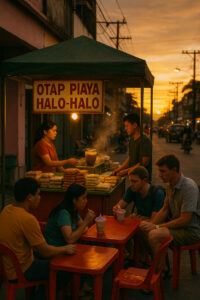 In Cebu City, bakeries fill shelves with otap—flaky, sugar-dusted biscuits that shatter with each bite—and masareal, dense peanut bars wrapped simply in paper. While technically snacks, they sit comfortably in the world of traditional Filipino sweets. Around the city, street food vendors also sell banana cue, camote cue, and halo-halo in plastic cups, especially in busy intersections and near schools.
If you’re exploring beyond the city to beaches or waterfalls, you’ll find buko pie and other roadside Philippine desserts sold near bus stops. They’re ideal for turning a long, tiring ride into one more chapter in your Philippine dessert journeys.
Piaya, Napoleones, and Kakanin in Bacolod and Iloilo
Bacolod is known for sugar, and its sweets are unapologetically indulgent. Piaya—flat, flaky pastry filled with muscovado sugar—and napoleones—layered puff pastry with cream and glaze—are must-tries. Prices range from 20–60 pesos per piece, higher in touristy bakeries but cheaper in neighborhood spots.
Cross over to Iloilo and you’ll find kakanin stalls in public markets selling suman, biko, and sapin-sapin alongside local specialties. Look out for bilao displays near the entrance of palengkes; they’re some of the best places for travelers asking where to find authentic Filipino desserts without relying on mall chains.
Ferry Rides and Sweet Island Hops
One of my favorite memories is eating suman on the deck of a slow ferry between small Visayan islands. A vendor walked around with a basket, the banana leaves still warm. For 10–15 pesos, you get a small, sticky bar of rice and coconut, just enough to keep you company as the sea turns gold at sunset.
Moments like that are why many travelers fall in love with Filipino dessert journeys. The sweets themselves might be simple, but the setting—salt air, tired feet, strangers sharing food—turns them into memories you’ll carry home.
Dessert Journeys Across Mindanao
Mindanao desserts are diverse, reflecting Indigenous, Muslim, and Christian communities, each with their own native delicacies. Here, coconut and rice are still important, but you’ll also encounter fruits like durian and local techniques you won’t see elsewhere.
Davao’s Durian Desserts and Ice Cream
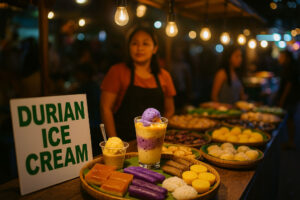 In Davao City, durian is king—spiky, fragrant, and famously divisive. If you’re not ready to dive into fresh durian, start with durian ice cream, candies, or pastillas. They’re sweet, creamy, and only mildly funky, a gentler way into this iconic fruit. You’ll find them in night markets, small dessert shops, and roadside stalls near tourist spots.
Pair your dessert wanderings with a stroll through local markets and street stalls; they’re a great complement to any Filipino street food diaries you might already have planned for Davao.
Rice Cakes and Native Delicacies in Northern Mindanao
Around Cagayan de Oro and Bukidnon, kakanin often appears at both everyday merienda and big gatherings. Suman wrapped in palm leaves, local versions of biko, and other Filipino rice cakes are sold near bus terminals and town centers. After a long van ride through mountains and pineapple fields, unwrapping warm suman with your hands feels like a blessing.
Mindanao desserts are sometimes less sweet, letting coconut and rice flavors shine through—a good choice if you’re craving something gentle after a long day in the sun.
Southern Mindanao and Muslim Filipino Desserts
In predominantly Muslim areas of Mindanao, you’ll find unique native delicacies—often deep-fried or cooked in coconut oil, sometimes served during Eid or special gatherings. These traditional Filipino sweets might look simple, but they are rich with meaning and often reserved for important occasions.
If you’re invited to try these in someone’s home, remember they may have been prepared over several days. Taste with gratitude, ask questions respectfully, and offer to help with clean-up or contribute something small in return.
Fiesta Tables, Church Plazas, and Family Merienda
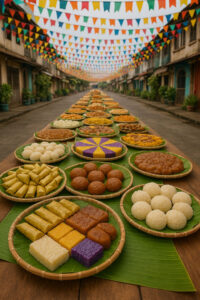 Travel long enough in the Philippines and you’ll eventually land in the middle of a fiesta. Streets are strung with banderitas, bands are playing, and tables groan under dishes of pancit, adobo, and every dessert imaginable. This is Filipino dessert culture in its most generous form.
Desserts Served During Fiestas and Town Festivals
Fiesta food usually includes big trays of suman, biko, sapin-sapin, and sometimes halo-halo stands set up in front of homes. Children run around with plastic cups of gulaman and sago, while aunties refill plates whether you’re ready or not. If you want to understand how dessert ties into celebration, look for guides that explore Philippine festivals and food traditions—they’ll help you see how each town has its own signature sweets.
Church Plazas and Street Corners
Outside churches on Sundays and feast days, vendors line up with everything from puto and kutsinta to turon and banana cue. Prices are friendly, usually 10–30 pesos apiece, and buying something small is a nice way to support locals. These spots are some of the best answers to where to find authentic Filipino desserts that are woven into real community life.
Home Merienda and Sari-Sari Store Treats
Inside Filipino homes, dessert often blurs into merienda. Pan de sal with cheese, leftover biko from a neighbor, or instant coffee with a small slice of ube halaya are everyday luxuries. Kids grow up buying small treats from the corner sari-sari store—ice candy, local chocolates, or plastic-wrapped kakanin from a supplier in the next barangay.
Sharing these simple sweets is central to Filipino food culture. If you’re staying with hosts or joining a community-based activity, you might get to experience these slow, sweet afternoons yourself. Experiences that involve cooking with locals are especially meaningful; stirring a pot of kakanin together tells you more about the place than any museum tour.
How to Plan Your Own Filipino Dessert Journey
You don’t need a rigid itinerary to enjoy Filipino dessert journeys, but a loose plan can help you taste more and support local makers along the way.
Choosing Your Route Across the Islands
A simple framework is to pick one base in each major region:
In Luzon, start in Manila for halo-halo, bibingka, and puto bumbong, then add a side trip to Baguio or Pampanga for cooler weather desserts and rich leche flan. In the Visayas, Cebu and Iloilo are great hubs for kakanin and bakery-style Philippine desserts. In Mindanao, Davao combines city comforts with access to durian-based sweets and nearby coastal towns.
If you want a deeper background on how all these treats fit into daily life, explore long-form Filipino food culture stories that weave history, family, and travel together.
Where to Find Authentic Filipino Desserts
Outside of malls, look for:
- Palengkes and wet markets in the morning, where kakanin trays sell out quickly.
- Church-front stalls after mass, especially on Sundays and during Christmas.
- Night markets, where halo-halo, banana cue, and other street food desserts mix with savory skewers.
- Bus terminals and ferry ports, where suman, buko pie, and other native delicacies fuel long journeys.
- Small bakeries in residential neighborhoods rather than just big commercial chains.
For city-specific ideas in Manila, Cebu, and Davao, look for narrative guides or diaries focused on Filipino street food in these cities; they’ll often mention dessert stops alongside savory favorites.
Budget, Etiquette, and Supporting Local Makers
Most Filipino desserts in markets and bakeries cost between 10–30 pesos for simple kakanin and 60–150 pesos for bigger servings like halo-halo or buko pie slices. In fancier cafes or tourist areas, expect higher prices, but still generally affordable compared to many countries.
When offered dessert in a Filipino home, it’s polite to accept at least a small taste. You can say, “Sige po, titikman ko,” or, if you’re really full, “Kaunti lang po, busog na ako” (Just a little, I’m already full). The gesture of sharing matters more than finishing the plate. If you want to give back, buy from neighbors selling kakanin, bring small fruits, or offer to wash dishes.
To support local makers, prioritize home-based sellers, market vendors, and small bakeries over large chains when you can. Joining cooking with locals cultural experiences is another way to make sure your pesos go directly to communities while you learn hands-on how halo-halo, suman, or biko are made.
Filipino Dessert Journeys FAQs
What makes Filipino desserts different from other Asian sweets?
Filipino desserts stand out for their heavy use of rice, coconut, and condensed milk, plus the mix of indigenous, Chinese, Spanish, American, and Japanese influences. Instead of delicate, minimalist sweets, we often go for something hearty: kakanin made from glutinous rice, halo-halo packed with toppings, or leche flan dense with egg yolks. Many desserts are tied to merienda and fiestas, not just the end of a formal meal.
What does “kakanin” mean and how did it become part of daily life?
Kakanin loosely means “rice-based things to eat,” often referring to Filipino rice cakes like suman, biko, sapin-sapin, kutsinta, and palitaw. Historically, rice has been central to survival and celebration, so rice-based sweets naturally entered rituals, offerings, and everyday snacks. Today you’ll find kakanin in markets, church plazas, and bus stops, as well as on altars and fiesta tables.
How do Filipino desserts change from island to island?
Luzon desserts highlight dishes like bibingka, puto bumbong, strawberry taho, and rich leche flan. Visayas desserts lean into bakery-style treats like otap, piaya, napoleones, and abundant kakanin in markets. Mindanao desserts often feature coconut-heavy rice cakes and fruity sweets, especially durian-based creations in Davao. Exploring Filipino desserts in Luzon, Visayas, and Mindanao shows how one ingredient—rice—can turn into countless variations.
Which desserts are most connected to fiestas and church celebrations?
Bibingka and puto bumbong are strongly linked with Simbang Gabi and Christmas. Suman, biko, sapin-sapin, and other kakanin are common during fiestas, town anniversaries, and family gatherings. Leche flan often appears at birthdays and holiday parties. These desserts served during fiestas and town festivals are less about presentation and more about abundance and sharing.
Where can I find authentic Filipino desserts in Manila, Cebu, and Davao?
Skip the malls occasionally and head to public markets, church-front stalls, neighborhood bakeries, and night markets. In Manila, explore old districts and busy plazas. In Cebu, visit downtown markets and waterfront areas. In Davao, try night markets and small shops near popular parks. Look for guides focused on Filipino street food in these cities; they often point to dessert vendors locals actually visit.
What island or region is best if I want to focus on kakanin and native delicacies?
You can find kakanin everywhere, but Central Luzon (including Pampanga and nearby provinces), many parts of the Visayas, and Northern Mindanao all have rich traditions. For the widest variety in a single trip, combine Manila, a Visayan hub like Cebu or Iloilo, and a Mindanao city like Davao or Cagayan de Oro, tasting different native delicacies in each stop.
Which Filipino desserts are lighter and which are very sweet?
Lighter options include plain puto, suman with little added sugar, palitaw without extra syrup, and some coconut-based Mindanao desserts. Very sweet choices include yema, some versions of biko, napoleones, durian candies, and halo-halo piled with toppings. When in doubt, ask vendors if something is “sobrang tamis” (very sweet) or “medyo banayad lang” (on the mild side).
How much do Filipino desserts usually cost, and how can I support local makers?
Simple market kakanin and street food desserts are often 10–30 pesos each. Halo-halo, specialty cakes, and buko pie slices run around 60–150 pesos, more in upscale cafes. To support local makers, buy directly from palengke stalls, home-based sellers, and neighborhood bakeries. When you find a dessert you love, consider bringing pasalubong (take-home treats) from that same vendor instead of from big souvenir shops.
In the end, Filipino dessert journeys are really about connection. Each halo-halo glass, suman bundle, or slice of buko pie is a tiny passport—stamped not by immigration officers, but by grandmothers in aprons, vendors in church plazas, and families who insist you take “one more piece.” As you map your own sweet route across the Philippines, may you taste with curiosity, pay fairly, and remember that behind every kakanin tray is a story worth listening to.