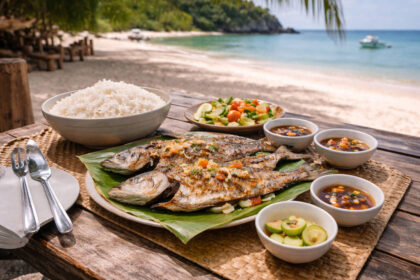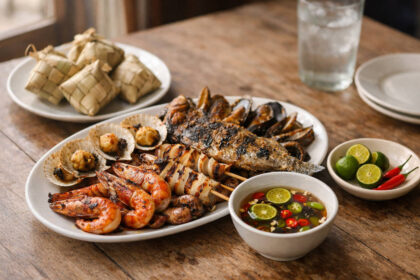
Zamboanga City is the kind of place where you don’t need a “perfect” plan to eat well. You just need a gentle pace and a little curiosity. The best Zamboanga food trip rhythm is almost always the same: satti in the early morning when the city is still soft, snacks and small bites when the heat rises, then seafood and grills by the water as the sun goes down. Add a sweet ending (hello, knickerbocker), and you’ve got a day that feels satisfying without being exhausting.
This Zamboanga food guide is built for travelers: calm, doable food crawls, neighborhood starting points, beginner-friendly ordering tips (yes, with a simple Chavacano cheat sheet), and realistic budget ranges. You don’t have to eat everything. You just have to eat what matters—slowly, happily, and with the sea breeze on your face.
How to Eat Your Way Through Zamboanga Without Rushing
The gentle pacing rule: 1 anchor, 2 snacks, 1 night feast
 When you try to cram every famous dish into one day, you end up full but not fulfilled. A calmer Zamboanga City food guide plan looks like this: one anchor meal (usually satti breakfast or a paluto seafood dinner), two small snacks (market bites or merienda), and one sunset-to-night food stroll. This pacing makes the Zamboanga food guide feel like a treat, not a challenge.
Time-of-day matters here more than “top 10 lists”
Zamboanga City street food has a different personality depending on the hour. Satti houses wake up very early. Afternoon snacks are about shade, iced drinks, and quick bites. Night stalls come alive near the bayfront when the air finally cools. If you follow the clock, your Zamboanga food guide becomes effortless.
Two realistic “food modes” to choose from
Mode A: Comfort-first. Satti + one night market + one seafood dinner. Mode B: Curious-first. Satti + pastel or pastil stop + street market at night + paluto seafood. Either mode works—your appetite and energy decide.
A Quick Primer on Chavacano Flavors: Why Zamboanga Tastes Unique
Chavacano as culture you can taste
Zamboanga’s food story is tied to its language and history. Chavacano is a Spanish-based creole language, and the city’s flavor profile often carries that same “blended” feeling—familiar yet distinct. If you want background for context, you can read about it here: Chavacano.
What your palate can expect
Expect bold sauces, garlic, sweet-salty balances, and seafood cooked in ways that feel both homestyle and celebratory. You’ll also find Mindanao comfort flavors, plus snacks that show Tausug influence in textures and sweets. Think: chewy, crisp, honeyed, coconutty—perfect with coffee or something cold.
How to order if you’re spice-sensitive
Not everything is spicy, but some sauces can surprise you. The easiest move (especially on your first day) is to ask for sauces on the side or request “less spicy” in simple terms. You’ll find a handy line in the Chavacano cheat sheet later in this Zamboanga food guide.
Neighborhood Map for Food: Where to Roam for Maximum Eats With Minimal Stress
Evening bayfront: Paseo del Mar and R.T. Lim Boulevard
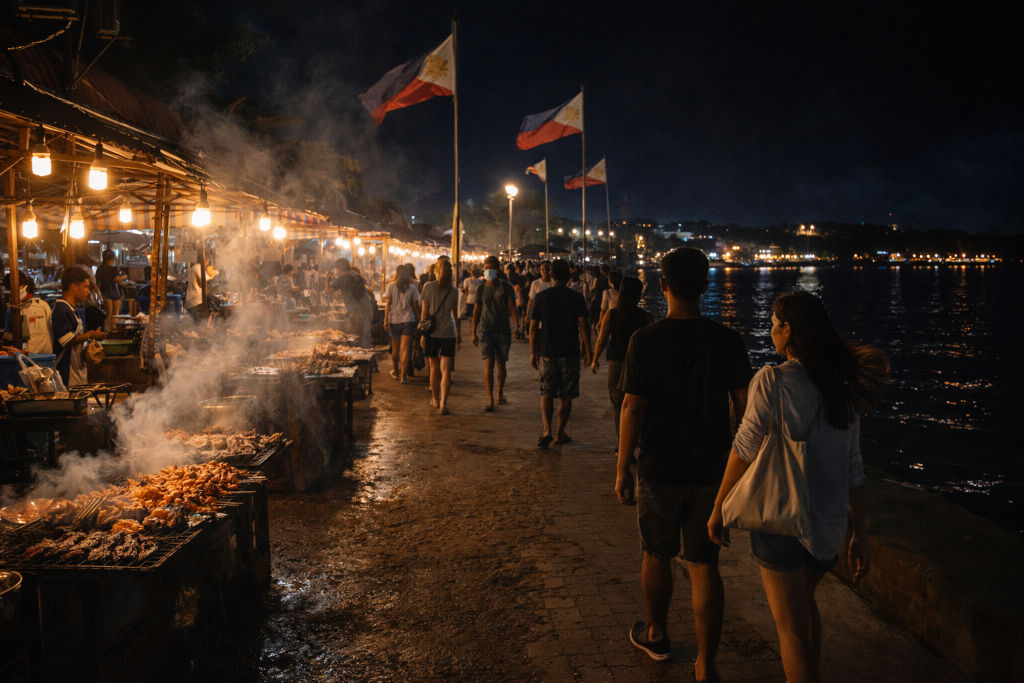
If you want an easy, low-stress start, begin at the bayfront. Paseo del Mar is a classic evening hangout where stalls and casual vendors cluster, and it pairs naturally with a breezy walk along R.T. Lim Boulevard. This is where to eat in Zamboanga City when you want options without hopping all over town.
Night-market style: Pettit Barracks Night Market and WMSU Road Street Market
For a more “local night out” energy, travelers often look for pop-up night market zones like Pettit Barracks Night Market and the WMSU Road Street Market. Treat these as flexible stops: go with a snack budget, buy a few items, and leave space for a sweet ending.
Satti zone: early-morning satti houses (Pilar street as a directional clue)
Satti is a morning ritual in Zamboanga, and older guides often associate satti houses around Pilar street. Use it as a directional tip rather than a strict rule: ask your hotel, your tricycle driver, or a local where the nearest good satti spot is. The best satti is usually the one that’s busy before you’ve fully woken up.
Quick planning tip: keep your base simple
For a first visit, choose accommodations that make it easy to reach the bayfront for evening food and easy transport to early breakfast. Then build your Zamboanga food guide days around two “food zones” only. Less zigzagging = more enjoyment.
If you want broader city context beyond this Zamboanga food guide, this is a useful companion: Zamboanga City colors travel guide. And if you’re collecting Mindanao eats for later, browse: Zamboanga destination guides.
Seafood and Paluto Culture: What to Order and How Not to Over-Order
Paluto basics (the calm version)
Paluto-style eating means you choose seafood, then have it cooked to your preference for a fee. It’s exciting—and also where many travelers overdo it. For a beginner-friendly Zamboanga City food guide approach, do this:
- Choose 2–3 seafood items max (shellfish + fish/squid + one “star” like crab or prawns).
- Pick 2 cooking styles (grilled + butter/garlic is a safe, happy combo).
- Don’t forget rice and one veggie dish if available—balance helps.
Curacha + Alavar-style sauce: the benchmark experience
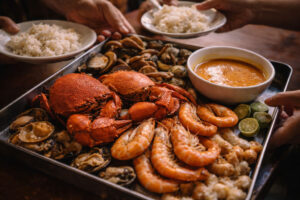 Many visitors come looking for curacha (spanner crab) served with Alavar-style sauce—creamy, flavorful, and iconic enough that it’s become a recognizable benchmark for a Zamboanga food trip. Even if you don’t do curacha, you’ll see how sauces and seafood go hand-in-hand in this Zamboanga food guide.
How to choose seafood like a non-expert
Look for what’s fresh and popular that day. If you’re unsure, ask the vendor what’s best “today” (not what’s best in general). Fresh seafood should look lively and clean, not dull. Don’t be shy about buying less—Zamboanga City street food later tonight will tempt you anyway.
How to keep paluto from becoming stressful
Set a seafood budget before you point at anything. Decide if your “splurge” is curacha, prawns, or a mixed grilled platter—then keep the rest simple. Paluto is most enjoyable when you’re relaxed, not calculating after every order.
Satti Mornings: The City’s Early-Hours Ritual
What is satti?
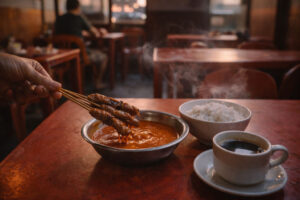
Satti is skewered meat (often beef or chicken) served with a rich, spiced sauce and rice—comforting, filling, and deeply Zamboanga. It’s a morning food culture thing, which means it happens early, when the city is still quiet and the day hasn’t started shouting yet.
What time to go (yes, it’s early)
Go very early—think “before your usual breakfast” early. Many satti houses are busiest in the morning hours, and some sell out. If you show up late morning, you might miss the best moment entirely. In a practical Zamboanga food guide, satti isn’t optional—it’s the anchor breakfast.
How to order satti without overthinking
Start small: 1 serving with a few sticks, then add more if you’re still hungry. If you’re spice-sensitive, ask for sauce on the side or “less spicy.” Pair it with coffee or something warm if that’s available—satti mornings are about comfort, not speed.
What to pair with it for a gentle morning
After satti, don’t rush to the next place. Walk a little (if it’s still cool), then plan an “aircon break” or a slow café sit. This is how a Zamboanga City food guide stays calm—one strong breakfast, then recovery.
Snacks and “Pastel or Pastil” Bites: Naming, What It Is Locally, and Easy Take-Home Options
Important clarification: pastil/pastel here is not Camiguin pastel buns
In Zamboanga and nearby Mindanao contexts, travelers often encounter “pastil” (sometimes spelled pastil/patil) and terms like “pastel” in local usage that can refer to rice-and-viand bundles or noodle variations depending on the vendor. You may also see “pastel bihon,” which points to a bihon (rice noodle) preparation—very different from the sweet pastel buns of Camiguin (Pastel de Camiguin). When in doubt, ask what it is before you buy, and look at the display: is it a rice wrap, a noodle tray, or a pastry?
What to look for when buying
If it’s a rice bundle, it’s usually designed to be simple, portable, and filling—great for travelers. If it’s “pastel bihon,” it’s more of a savory noodle snack or light meal. Either way, it’s a practical stop in this Zamboanga food guide because it travels well for short distances and makes an easy merienda.
Other snack stars to add gently
Make room for local snacks like lokot-lokot (a crisp, spiral snack) and other Tausug pastries you might spot in stalls and small shops. These are the kind of bites that pair beautifully with coffee or iced drinks—perfect for an afternoon break when you don’t want a heavy meal.
Pasalubong that won’t stress you
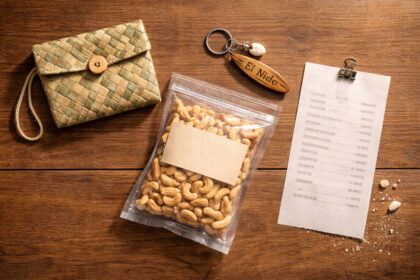
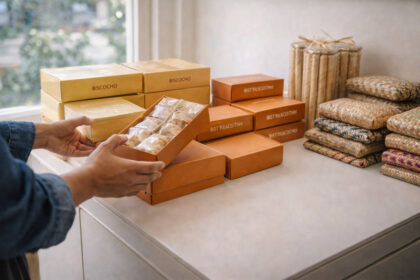
For take-home, choose items that can survive heat and travel time: packaged snacks, dried treats, and non-perishable sweets. Ask vendors what “ok lang magbiyahe” for a few hours—most will happily guide you.
Night Eats: Stalls, Grills, and Sweet Endings by the Bay
Paseo del Mar: the easiest “first night” food stroll
Paseo del Mar is a classic evening hangout for a reason: sea breeze, casual stalls, and the freedom to graze without committing to a formal restaurant meal. You’ll often see grilled seafood, skewers, and familiar street snacks. Some stalls may also offer satti-style plates later in the day—think of it as a bonus, not a replacement for the morning ritual. This is where the Zamboanga food guide feels most relaxed.
R.T. Lim Boulevard: walk, snack, repeat
After you eat, walk along R.T. Lim Boulevard. Let the breeze do its work. If you’re traveling with friends, this is also the best zone for splitting up and regrouping—someone can queue for drinks while someone else scouts dessert.
Pettit Barracks Night Market: go with a snack budget
Night markets can overwhelm first-timers because everything smells good. Set a snack budget, choose two items, then pause. The best Zamboanga City street food nights are unhurried: eat, walk, decide again.
WMSU Road Street Market: casual, local, and best in short bursts
WMSU Road Street Market is often mentioned as a lively stall area. Treat it as a “drop-in” stop: arrive hungry but not starving, buy a few small bites, and leave before you get food fatigue.
Sweet ending: knickerbocker, then quiet
Knickerbocker is a beloved Zamboanga dessert—colorful, cold, and exactly what you want after salty grilled food. End your night with something sweet and a slow walk. A Zamboanga food trip doesn’t need a late bedtime to feel complete.
If you want more street food context from other cities (for comparison and confidence), this is a fun read: Filipino street food diaries.
Sample Budgets: What You’ll Likely Spend (Ranges Only)
Quick ranges per person (prices change)
Budgets vary by season, seafood availability, and how “splurgey” you go. Use these as planning ranges, not exact promises:
- Budget street-eats night: roughly PHP 150–400
- Satti breakfast: roughly PHP 80–200
- Seafood paluto dinner: roughly PHP 400–1,200 (higher if you go heavy on crab/prawns)
One-day and two-day food trip ranges (budget vs midrange)
- 1-day Zamboanga food trip (budget): roughly PHP 500–1,200
- 1-day Zamboanga food trip (midrange): roughly PHP 1,200–2,500
- 2-day Zamboanga food trip (budget): roughly PHP 1,200–2,500
- 2-day Zamboanga food trip (midrange): roughly PHP 2,500–5,000
Where costs usually jump
Seafood paluto is the biggest swing factor—especially curacha, prawns, and “by weight” choices. The calm move is to pick one seafood splurge dinner, then keep the rest of your Zamboanga City food guide meals simple and snackable.
Chavacano Ordering Cheat Sheet: Simple Lines You Can Actually Use
Friendly phrases (with English meaning)
- Cuanto este? — How much is this? (Use at stalls/markets.)
- Puede yo man order? — Can I order? (When you’re ready at a counter.)
- Quiere era yo man order, favor. — I’d like to order, please. (Polite and easy.)
- Ayuda ba yo puede prueba? — Can I taste? (If sampling is allowed.)
- Jendeh yo ta entende. — I don’t understand. (Say it with a smile—people will help.)
- Come ya / Cumi ya. — Enjoy your meal. (A warm, friendly sign-off.)
Spice and adjustment lines (keep it simple)
- Menos picante, favor. — Less spicy, please.
- Salsa aparte, favor. — Sauce on the side, please.
Don’t worry if your accent feels awkward. Many locals also understand Filipino and English. In this Zamboanga food guide, the goal isn’t perfect Chavacano—it’s confidence and courtesy.
Two Relaxed Food-Crawl Itineraries: 1 Day and 2 Days
1-day Zamboanga food guide crawl (calm but satisfying)
Early morning: satti breakfast (start small, add if needed). Late morning: shade break—coffee, water, slow walk. Afternoon: pastel or pastil stop + lokot-lokot or Tausug pastries as merienda. Sunset to night: Paseo del Mar + R.T. Lim Boulevard stroll, then a sweet knickerbocker ending.
2-day Zamboanga food trip (with seafood paluto)
Day 1: Bayfront night eats first—Paseo del Mar stalls, light grilled bites, dessert. Keep it gentle; you’ll wake up early tomorrow. Day 2: satti sunrise meal, then a calm afternoon snack crawl (pastil/pastel bihon check + pastries), then your main seafood paluto dinner—curacha with Alavar-style sauce if it’s available and within budget. End with a slow walk, not another stop.
If you want to keep exploring food and culture across Bakasyon.ph, you can browse here: Food and Culture category. For a calmer market mindset that works beautifully in Zamboanga too, this is helpful: Filipino market mornings travel guide.
Comfort and Safety Notes: Keep It Easy on Your Body
Heat, hydration, and peak hours
Zamboanga can be hot and bright. Plan your longest walks early or after sunset. Keep water with you, and schedule sit-down breaks like they’re part of the itinerary—because they are. A calm Zamboanga food guide is shade-first.
Seafood tummy safety and cash basics
Choose busy stalls, eat seafood freshly cooked and served hot, and avoid over-ordering when you’re already full. Bring cash and small bills for markets and stalls. The more smoothly you pay, the more relaxed your Zamboanga City street food night feels.
If you want one simple planning resource while you’re in town—events, dining info, and local pointers—this can be a helpful starting reference: Destino Zamboanga. Then let your actual appetite lead you. That’s the secret of a good Zamboanga food guide: you plan just enough, then you slow down and enjoy.