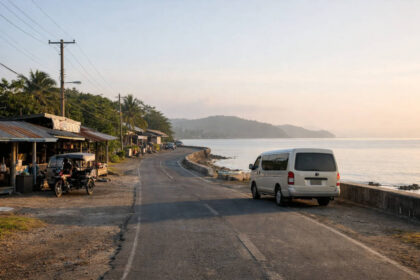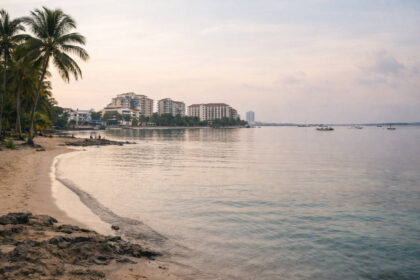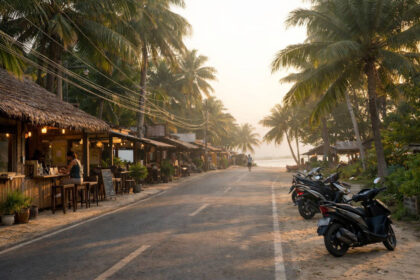
Malapascua Island is small, but where a room is located can change the whole feel of a first trip. Some areas make boat timing and early dive calls easier. Others give quieter nights, but add friction for meals, supplies, and transport, especially when rain turns paths muddy or when power and water are unstable.
This guide focuses on choosing an area first, not listing specific hotels. Many pages rank properties, but first-timers usually benefit more from a “base decision” that fits sleep needs, walkability, beach access, Wi-Fi reliability, and arrival and departure timing. If you’re deciding where to stay in Malapascua for the first time, this area-first approach is usually the easiest way to avoid small daily hassles. For a quick background on the island’s setting and basics, see Malapascua.
Quick Decision Summary For First-Timers (Where To Stay In Malapascua, In 30 Seconds)
If boat timing and easy logistics matter most: Choose Logon / Logon Beach area near the village, market area, and common transport points. It is usually the most forgiving base when arriving with bags, catching early departures, or adjusting plans.
If beachfront dining and a social strip matter most: Choose Bounty Beach area for convenience to restaurants, dive shops, and sunset views, then reduce noise risk by choosing a room set back from bars and main footpaths.
If sleep and quiet matter most: Choose the Langub Beach side (or other calmer pockets) and plan for short rides or planned meals, since shops and food options can be limited depending on the exact property location.
If a secluded reset matters most: Consider more secluded stays toward quieter ends of the island, but treat it as a “commit to the property” choice: fewer backup options, more dependence on generator hours, and more planning needed for food and transport.
Reality check: On an island, “near” can still mean walking on sand paths in heat or darkness. The easiest stay is often the one with the least friction when plans change.
At-a-Glance Planning Notes (The Stuff That Changes Decisions)
- Best time window: Drier months are usually easier for crossings and walking paths, but weather shifts quickly; use a season overview like this Philippines weather guide to plan buffers.
- Travel time reality: Expect multiple steps (land travel + boat), and timing can change with sea conditions.
- Budget band: Malapascua can work for budget to mid-range travelers, but island pricing can rise during peak dates; compare spending styles using these Philippines travel budget examples.
- Crowd and noise risk: Bounty Beach is often busiest; Logon can be active with local life; Langub and secluded pockets tend to be quieter.
- Heat or rain backup: A base near food and services helps when weather limits movement. For overall trip planning habits (buffers, backups, and confirmation steps), keep this first-trip planning guide as a reference.
Map-Style Area Breakdown (The Core)
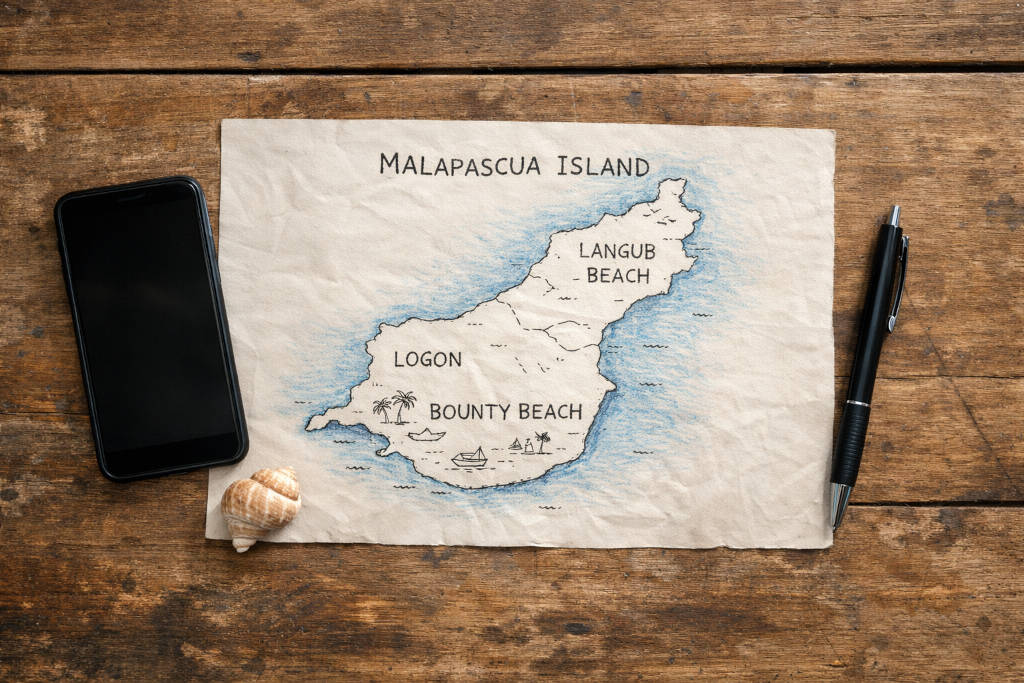
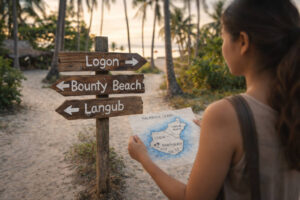 Think of Malapascua Island as a few practical zones, not long distances. The main village is Logon, where the market area and many everyday services are. Bounty Beach is the busier tourist-facing strip with many dive shops and restaurants. Langub Beach is a quieter side where stays can feel more private, but less plug-and-play for meals and errands. Then there are more secluded resort pockets where planning matters more than spontaneity. If you’re comparing where to stay in Malapascua, this zone-based view is usually more useful than chasing a single “best hotel.”
Reality check: Exact “pros and cons” can change block to block. A room 30 seconds from a beach bar can feel very different from a room 5 minutes away, even within the same named area.
Logon / Logon Beach Area (Near The Main Village And Market Zone)
What it’s like: This is the most “local-life” base. Expect the market area, sari-sari stores, simple eateries, everyday foot traffic, and practical access to supplies. Many arrivals and departures naturally pass through this zone, so it often feels straightforward for first-timers.
Best for: Travelers who want easy access to basics, flexible meal options, and less stress around boat timing and coordination. Also helpful for people doing early dives who want quick access to meet-ups.
Not great for: Very light sleepers, travelers expecting a quiet beachfront mood all day, or anyone who wants “resort-only” calm without village sounds.
Noise at night: Noise can include karaoke, motorbikes, roosters, and occasional late-night voices—especially closer to the market area or a main path. Some places are quiet if set back, but it is not guaranteed.
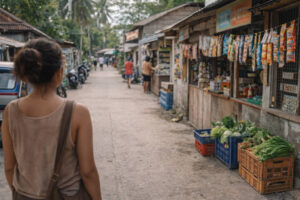 Walkability to food and shops: High. This is usually the easiest base for grabbing breakfast early, buying small needs, or changing plans without booking rides.
Beach access and swimming reality: Logon Beach can be convenient but not always the “postcard beach” people imagine. Water conditions can change with tide, boats, and seaweed. It can still be useful for quick sunrise walks and easy access, but plan swimming around conditions rather than assuming all-day clear water.
Transport notes (boat landing proximity and early departures): This is often the most practical choice for early movement. If the boat landing or pier/boat landing point shifts due to conditions, being near the village can still reduce last-minute stress. It also helps if arriving late and needing clear directions.
What to ask before booking in this area:
- Is the room facing the road, a restaurant, or a karaoke spot? Can they offer a quieter room location?
- How often are brownouts, and what are the backup generator hours (evening only, or also daytime)?
- How steady is the water supply and water pressure during peak hours?
- Wi-Fi reliability: typical speed range, and whether it drops during brownouts. Which mobile network has the best signal in the room?
- Path and stairs: is the route sandy, dark at night, or uneven with luggage?
- Late arrival handling: do they provide clear arrival instructions and a contact person who answers at night?
Bounty Beach Area (Busier Tourist Strip With Dive Shops)
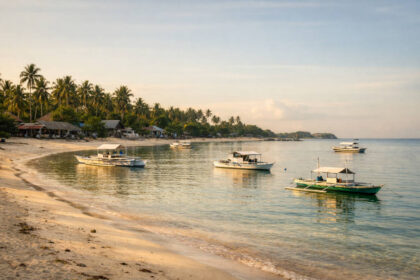
What it’s like: Bounty Beach is the easiest place to “step out and choose.” Many restaurants, beachfront seating, and dive shops cluster here. It often feels like the island’s social center, especially during dive season.
Best for: First-timers who want convenience, lots of meal choices, easy coordination with dive shops, and a beachfront vibe without needing to plan every meal.
Not great for: Travelers who need early, quiet sleep; people sensitive to bass music; remote workers who need predictable silence; and anyone who prefers minimal foot traffic.
Noise at night: The main tradeoff. Some sections are calm, while others can be loud when bars are active. Noise can also come from beachfront gatherings and occasional events. Room placement matters more here than the area name.
Walkability to food and shops: Very high for tourist-facing options (restaurants, cafés, dive shops). For market errands, it depends on your exact spot but is usually manageable with a walk or a quick ride.
 Beach access and swimming reality: Easy access for beach time and sunset walks. Swimming conditions vary: boats, tide shifts, and seaweed can affect the “swim-anytime” expectation. If the goal is relaxed shore time, ask the property how the beach looks during low tide and where boats typically pass.
Transport notes (boat landing proximity and early departures): You can usually reach the boat landing quickly, but allow buffer time if carrying luggage or if paths are wet. If joining very early dive departures, confirm whether the dive shop meets at the beach, at the shop, or at another pick-up point.
What to ask before booking in this area:
- How close is the room to bars, beachfront speakers, or the main path? Can they confirm “quiet room” placement?
- Are there construction projects nearby (renovation, new builds) that may create daytime noise?
- Generator coverage: does it power fans or air-conditioning, and for how many hours?
- Water pressure and hot shower reliability (especially after diving hours when many guests shower at once).
- Wi-Fi reliability in the actual room, not just at reception.
- Is the property reachable by a clear path during rain, and is there lighting at night?
Langub Beach Side (Quieter, More “Off The Strip”)
What it’s like: The Langub Beach side generally feels calmer, with fewer passing crowds. Stays can feel more tucked away, and nights often feel quieter than the Bounty Beach strip.
Best for: Couples and families prioritizing sleep, travelers who like a slower pace, and anyone who prefers fewer late-night sounds.
Not great for: Travelers who want many food choices within a few minutes, solo travelers who want an easy social scene, and remote workers who need guaranteed strong Wi-Fi without checking first.
Noise at night: Often quieter, but not silent. Generator sounds, occasional group noise, and natural sounds can still happen. Quiet can also depend on whether the property hosts groups or day tours.
Walkability to food and shops: Variable. Some properties are walkable to central areas; others are easier with short motorbike rides, especially at night or in heavy rain. For first-timers, it helps to treat this as a “plan meals” zone unless the property is near a cluster of eateries.
 Beach access and swimming reality: The calmer feel can be great for beach time, but swimming still depends on tide, rocks/coral patches, and seasonal seaweed. Aqua shoes can be helpful. Ask where guests typically swim safely and whether there are areas with boat traffic.
Transport notes (boat landing proximity and early departures): Being farther from the main village can add friction when arriving with luggage or leaving early. If you are diving, confirm whether the dive shop offers pick-up or whether you must meet at Bounty Beach or Logon. Build in time for a ride rather than assuming everything is walkable in the dark.
What to ask before booking in this area:
- What are the nearest meal options at night? Does the property have an on-site kitchen, and what are the hours?
- Do they assist with rides (motorbike/tricycle) when it rains or after dinner?
- Is the path to the room flat or does it involve stairs or uneven sand?
- How stable is the water supply and hot shower during peak use?
- Wi-Fi reliability and mobile signal in the room (request which network works best).
More Secluded Stays (Quieter Resort Pockets Toward The Ends Of The Island)
What it’s like: These are the “less surrounded by everything” options—often calmer and more private-feeling, with fewer neighbors and less foot traffic. Some are near viewpoints or quieter shoreline sections; some are simply farther from the busiest dining strip.
Best for: Travelers who are comfortable staying mostly on-property, planning meals ahead, and accepting that convenience is traded for quiet. Also useful for couples who want low-noise evenings and don’t mind arranging rides.
Not great for: First nights on the island when everything is unfamiliar, travelers arriving late, people who need flexible food choices, and remote workers who cannot risk weak Wi-Fi or limited generator hours.
Noise at night: Often low in “party noise,” but there may be generator hum, waves, and occasional group activity if the property hosts events.
Walkability to food and shops: Usually low. Walking can be doable in daylight for confident walkers, but it can be uncomfortable in heat or difficult at night if paths are dark.
Beach access and swimming reality: Depends heavily on the exact shoreline: some areas are sandy, others have rocks or coral. Ask for photos of the shoreline at low tide and a clear answer on where guests usually swim.
Transport notes (boat landing proximity and early departures): Plan transfers. Confirm if the property helps coordinate rides to the pier/boat landing or dive meet-up points, and whether drivers are available early morning.
What to ask before booking in this area:
- Meal plan: is breakfast included, and are lunch/dinner available on-site every day?
- Generator hours: are there daytime hours (important for charging devices and working)?
- Water system: how often do water interruptions happen in dry months?
- Exact location pin and the most reliable arrival route for first-timers.
- Emergency and support: who to call on-site if arriving late or if there is a water/power issue?
Best Area By Traveler Type (Clear Picks Plus Tradeoffs)
These picks assume a first-timer priority: reduce friction, protect sleep, and keep plans flexible when conditions change. If the goal is a smooth first Malapascua trip, the “right” base is usually the one that prevents small problems from turning into stressful ones. If you’re still unsure where to stay in Malapascua, start with your routine (sleep, meals, walkability, early starts) and work backward from there.
Reality check: A quiet area can still have a loud neighbor, and a busy area can still have peaceful rooms. Use the booking questions later in this guide to reduce risk.
Families (Sleep, Safe Room Setup, Easy Meals, Low Stress)
Usually easiest: A quieter part of Logon (set back from the loudest lanes) or the Langub Beach side if meals are simple to arrange. Families often benefit from being close to food choices and pharmacies/basic supplies, which usually points to Logon.
Why: Kids’ routines and early nights are easier when noise is controlled and when food is available without long planning. Logon can reduce “we need to buy something” stress. Langub can protect sleep, especially for light sleepers.
Tradeoffs: Bounty Beach can be convenient for meals, but noise risk is higher. Secluded stays can feel restful, but can be harder when a child needs quick options (extra water, snacks, quick medical items).
Booking tip for families: Ask for ground-floor or safer stair setups, where possible; confirm whether the path is stroller-friendly or requires carrying. Also confirm how they handle water interruptions (extra stored water, quick repair response).
Couples (Quiet Nights Vs Beachfront Vibe)
For quieter nights: Langub Beach side or more secluded stays can make evenings calmer, especially for couples who treat the room as part of the trip experience.
For beachfront vibe and easy dining: Bounty Beach area can work well if the room is positioned away from the busiest strip and if the property can confirm a quieter location.
Tradeoffs: Quiet areas can mean fewer dinner choices within a short walk. Busy areas can mean sound carries farther than expected. A good compromise is often: stay near the action, but choose a room that is not beachfront-fronting speakers.
Solo Travelers (Safety, Convenience, Social Factor, Late-Night Walkability)
Usually easiest: Logon or Bounty Beach area. These areas often feel more predictable for first-timers: more people around, more open businesses, and easier transport coordination.
Why: Solo travelers often benefit from a base where dinner options are simple, where it’s easy to meet dive shops, and where a short walk back feels normal. For a deeper safety-focused checklist for the Cebu–Maya–Malapascua route, use this solo travel Malapascua safety guide.
Tradeoffs: The social strip can be louder. A practical approach is choosing Bounty Beach for convenience but prioritizing a quiet room placement, or choosing Logon for logistics but avoiding the noisiest lanes.
Digital Nomads / Remote Workers (Wi-Fi Checks, Power Backups, Workspace Reality)
Usually easiest: A well-reviewed stay in Logon or Bounty Beach area where mobile signal is stronger and there are more backup spots to sit and work. Even then, treat the island as “work possible, but needs planning.”
What matters most: Generator coverage, mobile signal stability in the room, and where the router is located. Some properties have decent Wi-Fi at reception but weak signal in rooms.
Tradeoffs: Quieter areas can have weaker signal and fewer backup work spots. Busier areas have more noise risk. If calls matter, prioritize a room away from bars and ask about daytime generator hours.
Extra planning help: If the trip includes complex land-and-boat transfers and you want the low-stress route, consider guidance like these low-stress options to reach Malapascua (useful even if coming from elsewhere, because it shows the planning style and buffers).
Noise, Walkability, Beach Access, And Transport Notes (Plain-Language Reality Check)
This section is here because most first-timer disappointments come from assumptions: that “beachfront” means quiet, that “walkable” means paved sidewalks, or that boat schedules will match a fixed timetable. On Malapascua Island, reality is more flexible.
What “Walkable” Usually Means On A Small Island
Walkable often means “possible in slippers,” not “comfortable at all times.” Paths can be sandy, uneven, and dark at night. Heat can make a short walk feel longer, and rain can turn certain lanes muddy. A short motorbike ride (often called a habal-habal ride) can be the difference between an easy dinner and skipping a plan.
Reality check: If traveling with older family members, kids, or heavy dive gear, choose a base that reduces the number of “small walks” needed every day.
Noise Patterns: Bars, Karaoke, Generators, And “Island Morning Sounds”
Noise on Malapascua typically comes in layers: beachfront bars (Bounty Beach), village activity (Logon), and generator hum (anywhere during brownouts). Early morning sounds can include roosters and the “start of day” activity near kitchens and boats.
Practical tip: When deciding where to stay in Malapascua, room placement matters as much as area choice. A room behind the main strip can be calmer than a beachfront room beside speakers.
Beach Access And Swimming Reality: Tide, Boats, And Sea Conditions
Beach access is not always the same as easy swimming. Some stretches are better for walking and sunsets than for long swims. Tide shifts can expose rocks or sea grass, and boats may pass close to shore in some areas.
Practical tip: If swimming is a main goal, ask properties for recent photos at both low tide and higher tide, and ask where guests typically swim safely. Consider bringing aqua shoes.
Why Boat Schedules And Early Dive Calls Should Influence Your Base Choice
Most travelers reach Malapascua via the Maya port area and then take a boat crossing. Boat departures can change with demand and sea conditions, and early dive schedules depend on the operator and the day’s plan. Staying closer to common meeting points (often around Logon and Bounty Beach) can reduce morning stress.
If you need a refresher on how ferries, buses, and other public transport usually work in the Philippines, keep this public transport guide handy for planning buffers and expectations.
Reality check: Avoid booking a tight same-day return connection without buffer time. A calm trip plan usually assumes some variability in sea and road conditions.
What To Ask Before Booking (Message Checklist)
Copy and paste this checklist into a booking message, then adjust based on the area you’re choosing. Clear questions reduce surprise costs, stress, and last-minute room changes.
Power, Generator, And Charging
- How often do brownouts happen in your area?
- Do you have a backup generator, and what are the generator hours (daytime and nighttime)?
- During generator use, does power cover fans or air-conditioning (if any), outlets, and Wi-Fi routers?
- Is there a surcharge for generator use or air-conditioning hours?
Water Supply, Water Pressure, And Hot Shower Reliability
- Is water available 24/7? Do you experience water interruptions in dry months?
- How is water pressure during peak shower times (often after beach or dive hours)?
- Is hot water reliable, and is it limited to certain hours?
- If water supply drops, do you have stored water or a backup system?
Wi-Fi Reliability, Mobile Signal, And Work Setup
- How reliable is Wi-Fi in the room (not only at reception)?
- Can you share the typical speed range and whether Wi-Fi drops during brownouts?
- Which mobile network signal works best inside the room?
- Is there a table or desk space suitable for laptop use?
Room Location, Noise Risk, And Nearby Construction
- Where is the room located relative to bars, the road, the restaurant area, or the beach path?
- Can you request a quieter room (set back from speakers or main foot traffic)?
- Is there any construction nearby (renovations or new buildings) that could affect noise?
Paths, Stairs, And Getting Around With Luggage
- Are there stairs, steep paths, or uneven sand to reach the room?
- Is the path lit at night?
- Is the location reachable by tricycle/motorbike, or is it walking-only from the main lane?
Payment Terms, Cancellation Policy, Check-In Cutoffs, And Late Arrivals
- What are the payment terms (deposit, full payment, cash on arrival, accepted payment methods)?
- What is your cancellation policy, and what happens if boats are delayed by weather?
- Is there a latest check-in cutoff time?
- How do you handle late arrivals? Is there a contact person who can meet guests after hours?
- Can you send the exact location pin and the best arrival instructions from the pier/boat landing?
Reality check: A fast, clear reply is often a good signal. If answers are vague on generator hours, water pressure, and exact location pin, treat that as a planning risk and consider alternatives.
Safe Booking Tips (Short, Practical List)
- Pay on-platform when possible, especially for first-timers, to keep a documented record.
- Request written confirmation of generator hours, check-in cutoffs, and any extra fees.
- Screenshot the cancellation policy, payment rules, and the room type details.
- Confirm the exact location pin and ask for step-by-step arrival instructions from the pier/boat landing.
- Save the property contact number and a backup contact (front desk or caretaker) before travel day.
- Keep backup cash for island expenses and contingencies (signal and payment systems can be inconsistent).
- If arriving late or during uncertain weather, consider spending the first night in a more central area (often Logon) to reduce friction.
- Check for local announcements if needed via Daanbantayan municipal updates, especially around storms or community advisories.
For more island and Philippines planning reads, browse Bakasyon.ph Travel Guides and build a trip plan that includes buffers, backups, and clear confirmation steps.
When deciding where to stay in Malapascua, aim for a base that protects sleep, reduces transport stress, and keeps daily needs simple. A calm first trip usually comes from choosing the area that matches your real routines, early mornings, work calls, kids’ schedules, or quiet nights, then booking with clear questions that reduce surprises.