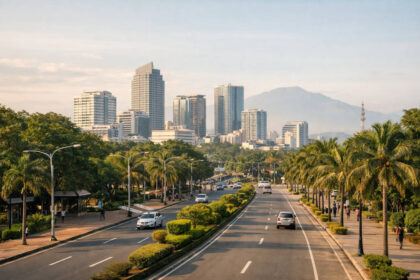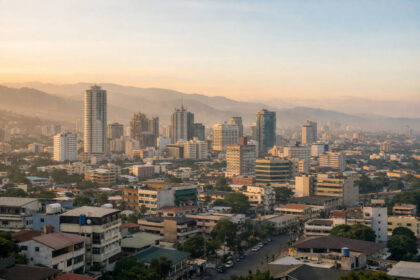
If you’re deciding where to stay in Cebu City for the first time, think less about “the perfect neighborhood” and more about your daily routine: pickups, meals, walking comfort, and how much traffic you can tolerate between plans. Cebu City rewards practical positioning—especially if you’ll be using Grab, meeting tours early, or keeping evenings simple.
This guide is planning-first and tradeoff-forward. For broader prep (money, SIMs, IDs, basic expectations), skim Philippines Travel Planning Guide for First Trip before you lock in a hotel. Then come back here to compare areas and choose the base that fits your itinerary and energy.
Context note: Cebu City is a highly urban, fast-moving core within Metro Cebu. If you want a quick refresher on what “Cebu City” covers versus the wider metro, see Cebu City Overview.
Cebu City Areas at a Glance (Best Area by Traveler Type)
 Reality Check: Cebu City traffic can swing your travel time a lot, even for short distances. A “nearby” plan can feel easy at 10:00 AM and tiring at 6:00 PM, so your base matters most for mornings and evenings.
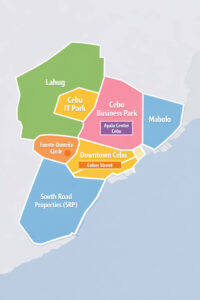
If you’re still narrowing where to stay in Cebu City, start with the lowest-friction clusters for first-timers: Cebu Business Park near Ayala Center Cebu, Cebu IT Park in Lahug, and the Mabolo to North Reclamation zone near SM City Cebu. These areas typically make pickups simpler and evenings less complicated.
Best time to visit and booking prices: Expect higher demand during peak domestic travel months and around major holidays. If you plan around weather windows, use Philippines Weather Travel Guide: Best Months to choose dates that match your heat-and-rain tolerance.
Families: safest-feeling convenience base (near malls, easy Grab pickup, quieter streets when possible)
Best pick: Cebu Business Park and the Ayala Center Cebu area for reliable essentials (groceries, pharmacies, kid-friendly dining) and easier pickup points. Runner-up: Mabolo (select pockets) for quick mall access near SM City Cebu.
Reality Check: Even in “quiet” areas, you may hear road noise or building activity. Families usually do better in higher floors and rooms facing away from main roads.
Couples: easier evenings and dining access, lower friction transport
Best pick: Cebu Business Park for date-night restaurants and a calmer, more polished feel. Runner-up: IT Park for late dining and quick rides—just choose a room buffered from nightlife-facing streets.
Reality Check: Cebu’s “short ride” can become a long ride after work hours. If dinner plans matter, staying close to your preferred dining cluster is usually worth it.
Solo Travelers: walkable basics + simple transport + well-lit main roads
Best pick: Fuente Osmeña Circle and Capitol Site for central positioning and straightforward routes to malls, dining, and key city spots. Runner-up: IT Park for predictable transport and active streets.
Reality Check: Walkability varies block to block. You can have a “walkable” base, then hit uneven sidewalks or missing shade two streets away—plan walks in daylight and use Grab when you’re tired.
Digital Nomads: reliable Wi-Fi checks + work-friendly surroundings + backup power questions
Best pick: Cebu IT Park and Lahug for cafés, cowork-friendly surroundings, and a workday rhythm. Runner-up: Cebu Business Park for calmer downtime, with good cafés nearby.
Reality Check: Do not assume “fast Wi-Fi” means stable Wi-Fi at night. Ask for speed range, outage patterns, and whether the property has a generator that supports routers and outlets.
How location affects daily costs: Staying near a mall cluster often reduces transport spending (and stress), but hotels there can be pricier. For realistic budget ranges, compare your base choice with Philippines Travel Budget Examples.
How to read area-by-area guides: If you like seeing neighborhoods compared by “vibe,” pace, and practical tradeoffs, check this Neighborhood-Style Guide Example (different city, same idea).
where to stay in Cebu City: Quick Map-Style Guide to Cebu City Areas
Reality Check: Cebu City is not a beach base. If you stay in the city, “beach access” usually means a traffic-dependent day trip or a planned transfer day to Mactan.
Cebu Business Park and Ayala Center Cebu area
 Best for: First-timers who want the easiest “plug-and-play” base with dining, malls, and predictable pickups.
Pros: Strong mall ecosystem (Ayala Center Cebu), lots of dining, generally cleaner-feeling streets, easy Grab pickup zones, good mix of hotels and serviced apartments.
Cons: Higher room rates; some blocks feel businesslike rather than “local neighborhood”; traffic builds up at peak hours.
Noise at night: Usually moderate; varies by whether your room faces main roads or busy drop-off areas.
Walkability: Better than many parts of the city, especially for errands and meals.
Beach access reality: You’re still looking at a planned ride to Mactan for beaches; treat it as a day trip or transfer day, not a quick hop.
Transport notes: Reliable Grab supply; taxis are easy to find near the mall. Peak-hour delays are the main issue, not availability.
Who should avoid it: Travelers on strict budgets who would rather spend on tours than lodging.
Booking tip: If you’re comparing where to stay in Cebu City for quieter sleep, request a high-floor room away from the main road and ask about generator coverage for outlets and Wi-Fi.
Cebu IT Park and Lahug
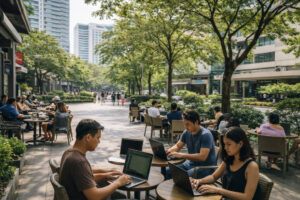 Best for: Digital nomads, solo travelers, and anyone who wants late dining options and steady transport access.
Pros: Active area with cafés, food choices, and consistent Grab activity; convenient if you’ll be meeting people or working from cafés.
Cons: Can feel busy; some streets stay active late; certain buildings have frequent drop-offs and honking near entrances.
Noise at night: Often higher than Cebu Business Park, especially near nightlife-facing strips and loading areas.
Walkability: Decent within the IT Park cluster; outside it, sidewalks can get inconsistent.
Beach access reality: Similar to other city bases—plan a dedicated beach day to Mactan rather than expecting a casual swim.
Transport notes: Strong Grab availability; good for early meetups, but allow buffer time during rush hours.
Who should avoid it: Light sleepers who are sensitive to late-night street activity.
Booking tip: When narrowing where to stay in Cebu City around IT Park, ask if the unit faces an internal courtyard (quieter) or a main road (noisier), and confirm Wi-Fi stability at night.
Mabolo and North Reclamation (near SM City Cebu feel)
Best for: Travelers who want quick access to SM City Cebu, ferry/port-side convenience (depending on your plans), and a more midrange price spread.
Pros: Convenient for mall errands; often easier to find practical hotels; some pockets offer decent value for space.
Cons: The vibe can feel more utilitarian; some stretches are less pleasant to walk; intersections can get congested.
Noise at night: Mixed—quieter on interior streets, noisier near main roads and transport corridors.
Walkability: Errand-walkable in short bursts, but not consistently comfortable for long walks.
Beach access reality: Still city-based—beaches are not “nearby” in a casual sense.
Transport notes: Grab works well; taxi availability is usually fine near the mall; expect traffic around mall peaks.
Who should avoid it: Travelers prioritizing scenic strolling or a “boutique neighborhood” feel.
Booking tip: If where to stay in Cebu City comes down to Mabolo for convenience, verify the exact map pin—Mabolo can mean different blocks with very different walking comfort.
Fuente Osmeña Circle and Capitol Site
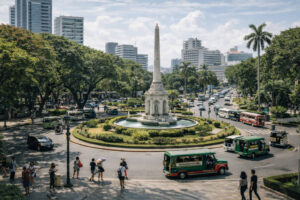 Best for: Central positioning and an “in-between” base—good if you’ll bounce between different parts of the city.
Pros: Central; plenty of food options; easier to reach multiple districts without feeling too far from everything.
Cons: Traffic circles and main roads can be loud; some older buildings vary in maintenance and elevator reliability.
Noise at night: Often moderate to high near main roads; quieter on side streets and higher floors.
Walkability: Moderate—some parts are walkable for meals and basics, but sidewalks can be uneven or narrow.
Beach access reality: Treat beaches as a planned ride, not a quick add-on.
Transport notes: Grab works; taxis pass through frequently; jeepney routes exist but can be confusing for first-timers.
Who should avoid it: Travelers who need a consistently quiet environment or very new buildings only.
Booking tip: For first-timers choosing where to stay in Cebu City around Fuente Osmeña Circle, ask about window glazing or room orientation—small details make a big difference near main roads.
Downtown Cebu and Colon Street (heritage + budget tradeoffs)
Best for: Budget travelers and heritage-focused itineraries who want to be close to older city sights and markets.
Pros: Often cheaper; close to heritage spots and downtown energy; good if you want a more local, older-core feel.
Cons: Can feel crowded; more noise; older buildings vary widely in room quality; walking can be tiring due to sidewalks and heat.
Noise at night: Often higher, with earlier morning activity too.
Walkability: High in the “you can walk to a lot” sense, but not always comfortable—heat, crowds, and uneven sidewalks matter.
Beach access reality: Not convenient for beaches; day trips start with city traffic first.
Transport notes: Plenty of jeeps and taxis; Grab may still work but pickups can be slower on crowded streets.
Who should avoid it: Families wanting quiet nights, and travelers who prefer modern building standards.
Booking tip: If you’re debating where to stay in Cebu City for the lowest price downtown, prioritize properties with recent reviews that mention clean bathrooms, consistent water pressure, and secure entry.
South Road Properties and SRP (newer builds, car/Grab dependence)
Best for: Travelers who like newer developments and don’t mind relying on rides for almost everything.
Pros: Newer-feeling areas and some modern builds; often more space; good if your plans are specific and you’ll mostly move by car/Grab.
Cons: Not walkable for day-to-day needs; fewer casual “pop out for dinner” options; you’ll feel the dependence on traffic conditions.
Noise at night: Often quieter than dense cores, but can vary near major roads.
Walkability: Low—plan to ride out for meals and errands.
Beach access reality: Still not a beach base; expect a proper ride to Mactan.
Transport notes: Grab dependence is real here; add buffer time and budget for rides.
Who should avoid it: First-timers who want to walk to food, malls, and basics without planning.
Booking tip: When considering where to stay in Cebu City in SRP, confirm a safe, sheltered pickup/drop-off point—this matters more in car-dependent zones.
Cebu City vs Mactan: Which Should First-Timers Choose?
Reality Check: The biggest mistake is expecting Cebu City to feel like a beach town. Cebu City is a city base; Mactan is where most first-timers get the “resort beach” convenience.
If your priority is city sights, food variety, malls, and being central for meetings or errands, Cebu City is usually the better base. If your priority is beach time and airport convenience (especially short stays), Mactan can be the simpler choice.
For many itineraries, the sweet spot is: stay in Cebu City first for city days and day trips, then transfer to Mactan for a beach-and-fly-out finish. When weighing where to stay in Cebu City versus Mactan, treat “beach access” as traffic-dependent logistics: a Cebu City hotel can still work if you plan a dedicated Mactan beach day and leave early.
How to Choose Your Base by Your Itinerary
Reality Check: Cebu itineraries look simple on a map, but your comfort depends on timing—early starts feel smooth; late returns feel heavy. Choose a base that makes your most frequent trip (morning pickup or evening return) easier.
If you have an early flight at Mactan-Cebu International Airport
If your flight is very early, consider a last-night switch to Mactan to reduce morning stress. If you prefer staying put, pick a Cebu City base with easy, predictable pickups (Cebu Business Park, IT Park, or near major malls) and plan to leave earlier than you think you need to. For first-timers asking where to stay in Cebu City with an early flight, the main goal is a simple, reliable departure plan—not a “perfect” neighborhood.
If you’re doing day trips (Moalboal, Oslob, waterfalls) and want fewer stressful mornings
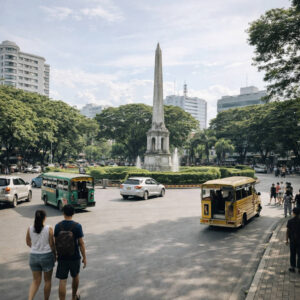 Many day trips start very early. Staying in areas with consistent Grab supply and straightforward pickup points (Cebu Business Park, IT Park, or Fuente Osmeña Circle in a well-reviewed building) can reduce morning friction. If Cebu City is your base for day trips, skim Cebu Travel Guide: City, Waterfalls, Whale Sharks and choose a hotel that can handle early check-outs and quick departures.
If you’re pairing Cebu with Bohol, a base that makes transfers simpler may matter more than nightlife. Use Cebu and Bohol Itinerary Loop to think through ferry timing and which side of the city reduces your backtracking.
If your priority is malls, food, and simple evenings
This is where Cebu Business Park (Ayala Center Cebu) shines for first-timers, with IT Park as a lively alternative. “Near a mall” sounds generic, but in Cebu it often means easier meals, clearer landmarks for drivers, and fewer late-night logistics. If you’re choosing where to stay in Cebu City mainly for easy evenings, prioritize the cluster that matches your pace: calmer (Cebu Business Park) or more active (IT Park).
Noise, Walkability, and Transport: What’s Realistic in Cebu City
Reality Check: Cebu City walkability is not uniform. A hotel can be “close” to something on a map while the actual walk feels hot, uneven, or stressful due to crossings and narrow sidewalks.
Traffic variability: Build buffer time into everything—especially airport runs and dinner meetups. Try to schedule long rides outside rush hours when you can.
Grab vs taxi vs jeepney: Grab is often the simplest for first-timers because pricing and pickup details are recorded. Metered taxis can work fine too, but it helps to confirm the meter is used and to keep small bills. Jeepneys are part of daily life, but routes take time to learn; they’re better once you feel oriented. For a broader primer, see Philippines Public Transport Guide.
Getting around Cebu City: If you want a deeper, Cebu-specific breakdown of routes, terminals, and common transport decisions, use How to Get Around Cebu City. It’s especially helpful when you’re deciding between staying near a mall cluster versus a more central circle area.
Why “near a mall” reduces friction: Malls create clear landmarks, steady transport supply, and a predictable place to eat when plans change. For first-timers deciding where to stay in Cebu City, that predictability can be more valuable than being “close” to a long list of scattered sights.
What to Ask Before You Book (Philippine Reality Checklist)
Reality Check: Even good properties can have occasional interruptions—power work, water pressure dips, or Wi-Fi slowdowns. Asking upfront is not being picky; it’s basic trip protection.
Before you confirm where to stay in Cebu City, message the property with these practical questions:
- Is there a backup generator and what powers it supports (Wi-Fi, aircon, outlets)?
- Is water pressure consistent and is there a water tank/backup?
- What is the Wi-Fi speed range and is it stable at night?
- Are there scheduled maintenance hours for power or water?
- Is the room facing a main road or nightlife strip (can I request a quiet side/high floor)?
- Is there an elevator, and does it run on generator during outages?
- What are check-in rules for IDs, deposits, and late arrival?
- Is there secure parking and a safe pickup/drop-off point for Grab?
Simple Safe Booking Tips (Short List)
Reality Check: Most bookings go smoothly, but small verification steps prevent the most common headaches: wrong location pins, surprise fees, and mismatch between photos and reality.
Use these checks when choosing where to stay in Cebu City:
- Only book via trusted platforms or direct official property channels.
- Verify the exact location pin on a map (not just the area name).
- Read recent reviews for noise, Wi-Fi reliability, and water pressure mentions.
- Check total price breakdown (taxes, service fees, deposits).
- Screenshot policies (check-in time, cancellation, security deposit).
- Use in-app messaging and payment methods with records.
FAQ
What is the best area to stay in Cebu City for first-timers?
For most first-timers, Cebu Business Park near Ayala Center Cebu is the easiest answer because it reduces daily friction (meals, errands, pickups). If you want a more active, work-friendly environment, Cebu IT Park in Lahug is a strong alternative. If you’re still undecided on where to stay in Cebu City, choose the area that best matches your evenings—calmer (Cebu Business Park) or livelier (IT Park).
Is it better to stay in Cebu City or Mactan?
Cebu City is better for city sights, food variety, and being central for day trips; Mactan is better for beaches and airport convenience. If your trip is short and beach-focused, stay in Mactan. If you’re doing tours and city exploring, decide where to stay in Cebu City first, then consider a final-night switch to Mactan for an easier flight day.
Which Cebu City area is most walkable?
Cebu Business Park generally feels the most walkable for first-timers (errands, dining, mall access), with parts of IT Park also comfortable within the main cluster. Fuente Osmeña Circle and Capitol Site can be walkable for basics, but sidewalks vary more block to block.
Which areas are noisier at night?
IT Park and some Fuente Osmeña Circle main-road pockets can be noisier due to active streets and traffic flow. Downtown Cebu and Colon Street can also be loud, with earlier morning activity. In any area, room orientation (quiet side, higher floor) often matters as much as neighborhood choice.
What should I ask before booking about power, water, and Wi-Fi?
Ask about generator coverage (does it power outlets, Wi-Fi routers, and aircon?), water pressure consistency (and whether there’s a tank/backup), and Wi-Fi speed range plus evening stability. Also ask about scheduled maintenance and elevator operation during outages.
Which area is best for families, couples, solo travelers, and digital nomads?
Families often do best in Cebu Business Park (malls, calmer streets, easy pickups). Couples usually like Cebu Business Park for dining access, with IT Park as a lively option. Solo travelers often find Fuente Osmeña Circle and Capitol Site central and practical. Digital nomads commonly prefer IT Park and Lahug, as long as the property confirms stable Wi-Fi and backup power details.
Official local info: For city-run updates and references, you can check the Cebu City Tourism Commission.
If you want to keep planning after you pick your base, browse Cebu Travel Guides for destination ideas and Travel Guides for more logistics-focused reads.
Final reminder: choosing where to stay in Cebu City is mostly about reducing daily friction. Prioritize a location that makes your mornings and evenings easy, ask the right building questions, and let the city’s food and day trips do the rest.