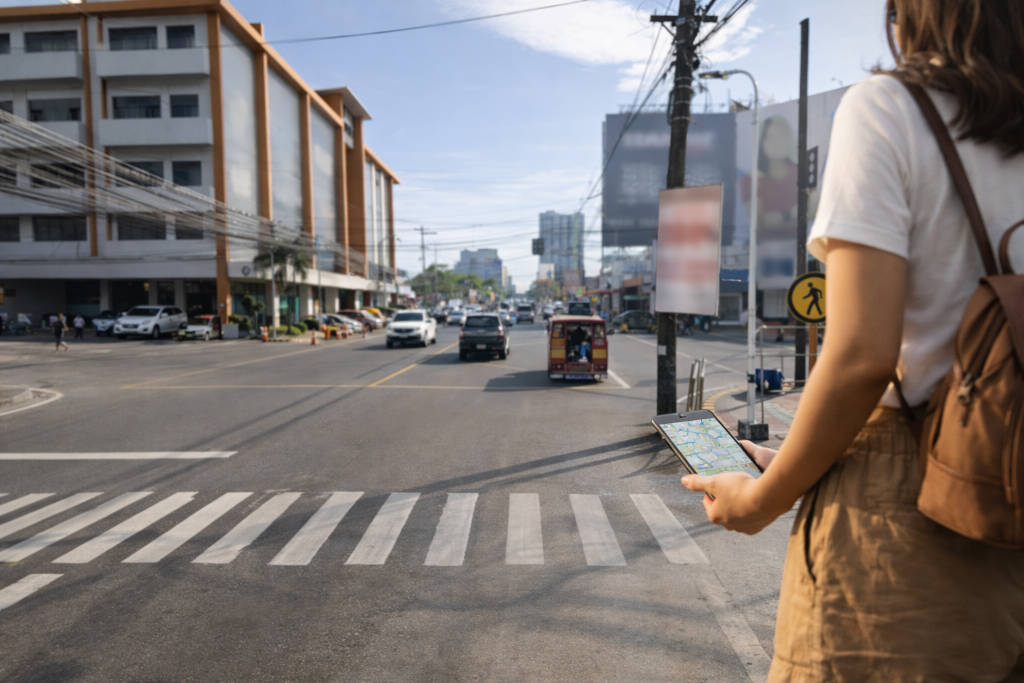
Bacolod is a city that works best when your base matches your daily rhythm: how often you want to eat out at night, how much you plan to walk, and whether you’re doing day trips or ferry moves. If you’re deciding Where to Stay in Bacolod for the first time, focus on plan-changing logistics—pickup friction, traffic pinch points, room noise, and the practical realities of power, water, and Wi-Fi—more than “what looks near on a map.”
For quick city context (and a simple refresher on where Bacolod sits in Negros Occidental), you can skim Bacolod before locking your dates and transfers.
Quick Answer: Where to Stay in Bacolod for Most First-Timers
Default recommendation (most first-timers): Stay along the Lacson Street corridor or just off it. It’s one of the easiest areas for evening food access, predictable short rides, and a “you won’t feel stranded” baseline—especially if you’re balancing city days with a couple of day trips.
Alternative if you want quieter nights: Choose the Capitol area (near Negros Occidental Provincial Capitol and Capitol Park and Lagoon) or a calmer pocket of Mandalagan. You’ll still be close to dining, but sleep can feel steadier if your room is not facing a main road.
Alternative if you expect frequent port use: Consider the SM City Bacolod and port side area for simpler access to BREDCO Port and Banago Port, especially if you’re doing an Iloilo side trip and want fewer pre-departure rides.
Alternative for remote work priorities: Look at The Upper East (newer builds) or a reliable midrange property near big malls, where backup power and stable Wi-Fi planning can be easier to verify.
Reality Check: “Near everything” usually means “near traffic.” A good Bacolod base is less about being central on paper and more about reducing late-night friction and keeping your daily start smooth.
If you’re also planning slower afternoons and food-forward city days, pair this with Bacolod Travel Guide for Slow Afternoons, Food, and Heritage to help you cluster stops without overbooking your week.
How to Choose Your Base in 3 Calm Decisions
Before you compare properties, decide what you want your evenings to look like, how many day trips you’re realistically doing, and how sensitive you are to noise and power or water interruptions. If you want a general framework for making these choices (buffers, timing, and transport reality), keep Philippines Travel Planning Guide for First Trips as your baseline.
Decision 1: Are Your Nights Food Nights or Early Nights?
If dinner is a highlight, prioritize Lacson Street and nearby dining clusters so you’re not negotiating rides late. If sleep and quiet are the priority, choose pockets near the Capitol area or a residential-feel corridor and request inner-street rooms.
Decision 2: Will You Use Ports or Ferries?
If you’re doing an Iloilo side trip or expect seaport transfers, staying closer to SM City Bacolod and the port side can reduce pre-departure stress. It doesn’t eliminate queues or schedule variability, but it can reduce the “one more ride” problem.
Decision 3: Is Reliable Wi-Fi and Backup Power Non-Negotiable?
If you’re working online, your real “location” is not the neighborhood—it’s the building’s Wi-Fi setup, signal strength in rooms, and whether they have a generator or backup internet. Choose properties that answer these questions clearly before you pay.
Reality Check: In any Philippine city, the most accurate “comfort predictor” is not star rating. It’s clear policies, honest communication, and recent reviews focused on Wi-Fi, water pressure, and noise.
Map-Style Breakdown of Bacolod Areas
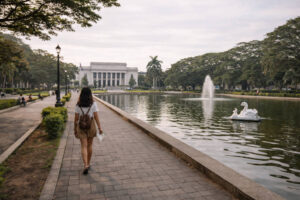 This is a practical, first-timer-friendly breakdown. Think of each area as a “base personality” with tradeoffs. Use it to decide where you’ll feel calm at night and efficient in the morning.
Lacson Street Corridor and Nearby Dining Clusters
Best for: First-timers who want easy food access and simple transport, plus a predictable “home base” feel.
Pros: Strong dinner and dessert options; easy to keep evenings close to your hotel; generally straightforward pickup for short rides if you use clear landmarks.
Cons: Can be lively on weekends; rooms facing the main road may pick up traffic noise and late-night activity.
Noise and sleep notes: Ask for an inner-facing room or higher floor if you’re sensitive to road noise. Weekends can bring more spillover activity.
Walkability notes: Walkable for short loops and nearby dining, but midday heat and sudden rain can turn walking into a “maybe.”
Transport notes: Ride availability is often better around main roads. Friction points: waiting time during rain, and “where exactly is the pickup?” moments outside busy restaurants.
Who should stay here: Couples who want easy dinners, solo travelers who value convenience, first-timers doing a few day trips but not port-heavy plans.
Reality Check: Lacson Street feels easiest at night, but it can also be the noisiest if your room faces the street. The room orientation matters as much as the area.
Capitol Area and Near Negros Occidental Provincial Capitol
Best for: A calmer, central-feeling base with softer walking options near Capitol Park and Lagoon.
Pros: Good “reset” vibe for mornings and late afternoons; central for many city errands; easier to build a slow day without constant rides.
Cons: Dining options can be a bit more spread out depending on your exact pocket; some properties will still sit on busy roads.
Noise and sleep notes: Generally calmer than the busiest stretches of Lacson Street, but main-road rooms can still be loud. Ask about window sealing and inner rooms.
Walkability notes: One of the more comfortable areas for short walks—especially early morning and late afternoon.
Transport notes: Usually simple to get short rides because landmarks are clear (Capitol, lagoon area). Friction points: traffic can thicken at commute hours.
Who should stay here: Families wanting quieter nights, couples who like an easy park loop, first-timers who want a balanced base.
Reality Check: “Central” doesn’t mean “fast.” Add time buffers for pickup and traffic if you’re heading to far day trips.
Downtown Bacolod City Proper (Public Plaza, Cathedral Side)
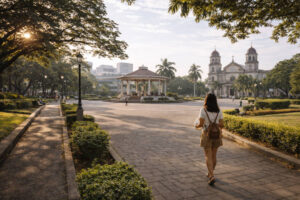 Best for: Travelers who want heritage cues, a more local downtown feel, and access to markets and older streets.
Pros: Convenient for short heritage loops (Bacolod Public Plaza and San Sebastian Cathedral area); practical for errands; often easier to do small walking circuits.
Cons: Can feel busier in the day; street noise and early-morning activity can be higher; some streets may feel less “resort calm” than first-timers expect.
Noise and sleep notes: Expect more day activity noise. If sleep is a priority, request inner rooms and check if windows face active roads.
Walkability notes: Walkable for short, daytime circuits. Heat and rain are the real limits, not distance.
Transport notes: You’ll find many transport options nearby, but friction can include slower traffic, one-way streets, and slightly longer “last mile” time in dense blocks.
Who should stay here: Travelers who like city texture, budget planners who prefer practical access, repeat visitors who don’t mind downtown energy.
Reality Check: Downtown Bacolod City Proper is efficient for heritage and errands, but it can be noisier and less “easy-mode” at night compared to Lacson Street.
SM City Bacolod and Port Side (BREDCO Port and Banago Port Access Convenience)
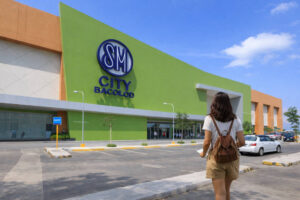 Best for: Port users, Iloilo side trips, and travelers who want mall convenience for errands and easy landmarks for pickups.
Pros: Practical for transfers; clear landmarks for drivers; easy access to groceries, pharmacies, and casual dining.
Cons: Less of a heritage-walk vibe; the area can feel more functional than charming; some pockets may be busy on weekends and sale days.
Noise and sleep notes: Check if your room faces busy access roads or loading areas. Mall-adjacent zones can stay active.
Walkability notes: Walkable for errands and mall needs, less so for “pretty walking.” Plan short loops and use rides for farther city sights.
Transport notes: Usually easier to get rides because pickup points are clear. Friction points: seaport queues and schedule variability if you’re ferrying; add extra time.
Who should stay here: Travelers doing Iloilo side trips, families who want predictable amenities, solo travelers who value easy pickups.
Reality Check: Staying near ports reduces one layer of friction, but it doesn’t remove early departures, queueing, or weather-related ferry delays.
Mandalagan and Nearby Residential Corridors
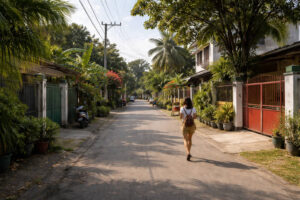 Best for: Quieter nights, residential-feel stays, and travelers who want to come home to calmer streets.
Pros: Often calmer than the busiest dining corridors; can feel more “settled” for families; good if you’re sensitive to late-night noise.
Cons: Dining clusters may require short rides; ride availability can be less predictable in smaller inner streets.
Noise and sleep notes: Generally quieter, but confirm if there are nearby bars, event venues, or main-road exposure.
Walkability notes: Good for short neighborhood walks, but it’s not a “tourist walk strip.” Plan walks as exercise, not sightseeing.
Transport notes: Pickup friction can include drivers missing inner-street entrances. Use clear meeting points (a main road corner, a known shop, or a gate landmark).
Who should stay here: Families prioritizing rest, couples who want calmer evenings, digital nomads who prefer steady quiet hours.
Reality Check: Mandalagan can feel calm, but “calm” sometimes means “one more ride.” If you hate short rides, stay closer to Lacson Street or the Capitol area.
Villamonte and Nearby Mixed-Use Corridors
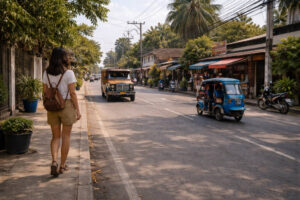 Best for: Practical stays with mixed-use streets, often a balance between affordability and accessibility.
Pros: You may find value-focused options; often workable for quick rides to multiple directions; good if your plan is flexible.
Cons: The vibe varies by block; some streets can be busy; not always the most walk-friendly for leisure.
Noise and sleep notes: Ask about road-facing rooms and any nearby construction or transport terminals.
Walkability notes: Walkability is functional (errands, short meals), not always comfortable for long strolls—heat and traffic matter.
Transport notes: Usually workable, but the common friction is “stop-and-go” traffic and waiting time during peak hours.
Who should stay here: Solo travelers and budget-to-midrange planners who want flexibility without being deep downtown.
Reality Check: Villamonte can be a smart value base, but confirm your exact pin location so you don’t end up far from the landmarks you actually use.
The Upper East Area (Newer Developments, Practical Access Tradeoffs)
Best for: Travelers who prefer newer buildings, and digital nomads who want a higher chance of modern amenities (while still verifying backup power and Wi-Fi).
Pros: Newer development feel; easier to find properties with modern layouts; often more “predictable” interiors.
Cons: Not the most central for heritage walking; may require more rides for classic city loops; some areas can feel businesslike rather than cozy.
Noise and sleep notes: Newer windows can help, but ask about road exposure and ongoing development noise.
Walkability notes: Walkable in pockets, but it’s not a continuous walking district. Expect short rides for many plans.
Transport notes: Pickup can be easy if landmarks are clear. Friction can come from traffic patterns depending on time of day; add buffers for meeting points.
Who should stay here: Digital nomads, couples who like newer hotels, travelers who prefer modern comfort over heritage proximity.
Reality Check: Newer does not automatically mean more reliable power, water, or Wi-Fi. Ask your checklist questions before paying.
Best Area by Traveler Type
This section turns the area map into simple recommendations. If you’re overwhelmed, pick the line that matches your priorities and move on.
Families
Best fit: Capitol area or calmer pockets of Mandalagan.
Why: Families often benefit from quieter nights, easier recovery time, and less pressure to “go out” every evening. These areas can feel steadier for sleep, especially if you request inner-facing rooms.
Noise and transport expectation: You may do a few short rides for dinner, but you’ll usually trade that for calmer nights.
Couples
Best fit: Lacson Street corridor for easy dinner options, or Capitol area for a softer pace.
Why: Couples who like spontaneous dinner plans often enjoy staying near dining clusters. If you prefer quieter evenings, the Capitol area can still keep you close to food without the loudest stretches.
Noise and transport expectation: Lacson Street can be lively; choose room orientation carefully. Capitol stays may need slightly more ride planning for late-night cravings.
Solo Travelers
Best fit: Lacson Street corridor or near big malls (including SM City Bacolod area) for predictable pickups and clear landmarks.
Why: Solo travelers usually benefit from convenience: easy rides, well-lit dinner zones, and straightforward meeting points that reduce negotiation and confusion.
Noise and transport expectation: Convenience areas can be louder, so prioritize a calm room and keep late-night routes simple.
Digital Nomads
Best fit: The Upper East or a reliable property near big malls, with verified Wi-Fi, backup power, and a workable desk setup.
Why: Your day depends on stable internet and power continuity. Newer builds can help, but what matters is confirmed generator policy, router placement, and room signal reliability.
Noise and transport expectation: Choose quiet hours and room placement over “best views.” Plan a café fallback for days when Wi-Fi is weaker than expected.
Noise, Walkability, Beach Access, and Transport Reality
These are the realities that shape your comfort more than a pretty lobby photo. If you’re choosing Where to Stay in Bacolod, use this section as your “what the map won’t tell you.”
Noise: Main-Road Rooms vs Inner-Street Rooms
Main roads (especially near dining corridors and malls) can bring traffic and weekend spillover noise. Inner-street or inner-facing rooms are often the simplest way to upgrade sleep quality without changing neighborhoods.
Common noise triggers: weekend dinner traffic, early morning deliveries, and event seasons. If you’re a light sleeper, ask about window sealing, hallway noise, and whether the room faces a busy road.
Reality Check: Two hotels in the same area can feel completely different depending on room placement. Always ask for a quiet room, not just a “good location.”
Walkability: What Is Realistically Walkable in Bacolod?
Bacolod can be walkable in short loops: plaza walks, Capitol area circuits, and neighborhood dining clusters. What limits walking is usually heat, sudden rain, and the comfort of sidewalks—not distance alone.
Where walking works best: Capitol area and nearby central streets for calmer loops; Lacson Street dining pockets for short evening walks.
When walking becomes “not worth it”: midday humidity, heavy rain, or when you’re carrying bags (like pasalubong or groceries). In these moments, short rides can save energy.
Reality Check: If you’re trying to reduce short rides, stay near the area where you’ll spend most evenings. That’s where repeat rides usually happen.
Beach Access: What “Beach Day Trip” Really Means
Bacolod is a city base, not a beachfront town. Beach time is usually a day trip outside the city, which means your hotel choice won’t magically create “walk to the beach” days. Instead, prioritize easy departures (early starts, clear pickup points) and comfortable returns (a calm room, a simple dinner plan).
Reality Check: If “beach access” is your main goal, you may be happier treating Bacolod as a short city stop and placing beach nights elsewhere—rather than trying to force a beach routine from a city hotel.
Transport Notes: Jeepney, Tricycle, Grab, and When a Driver Helps
Many travelers mix transport modes: short rides for comfort, walking in cooler hours, and occasional public transport for practical routes. At a high level, jeepneys and tricycles are common, but they come with small frictions (fare clarity, waiting time, and route familiarity). For a broader primer you can reuse across cities, keep Philippines Public Transport Guide for Bus, Jeepney, and Ferry Basics.
Grab reality: Grab can be convenient around main roads and malls, but rain and peak hours can increase waiting time.
When to hire a driver: If you’re doing a major day trip, traveling with seniors or kids, or simply want timing control, a private car for one or two days can reduce stress: fewer transfers, clearer return timing, and less “where do we meet?” friction.
Time friction reminders: Waiting time after rain, traffic pinch points at commute hours, and pickup confusion outside busy restaurants are normal. Build buffers so you stay calm even when timing shifts.
Airport Distance and Realistic Buffer Time
Even if airport-to-hotel road time looks short, add buffer for baggage release, restroom stops, and meeting your pickup. For flight days, protect your plan by adding extra time for city traffic variability and check-in lines. The calm approach is: leave earlier than you think you need, especially during weekends and rain.
Reality Check: The most stressful airport transfers are the ones stacked after “one last far stop.” On flight days, keep your schedule tight and local.
What to Ask Before Booking: Philippines-Realistic Checklist
This checklist helps you avoid common “looks fine online, stressful in real life” problems. Use it whether you’re choosing a hotel, serviced apartment, or budget stay.
Power
Ask: How often do brownouts happen in this area, and do you have a backup generator?
Confirm: Does the generator power the air-conditioning, Wi-Fi, and outlets—or only lights?
Practical detail: Ask where outlets are located and whether charging is easy near the bed. Small layout details matter at night.
Water
Ask: Is water pressure consistent, and is hot shower reliability steady?
Confirm: Do they ever have scheduled water interruptions, and how do they handle it?
Practical detail: If you’re sensitive to comfort, ask whether hot water is centralized or heater-by-room, and whether there are time limits.
Wi-Fi
Ask: Where is the router located relative to the room, and do you have recent speed expectations you can share?
Confirm: Do they have backup internet (second line) or a staff workaround when the main line is down?
Practical detail: Ask whether mobile data signal is decent in rooms. Sometimes mobile data is the real backup plan.
Work Setup
Ask: Is there a desk or stable table, and is the chair comfortable for longer sitting?
Confirm: Quiet hours and whether walls are thin. A quiet room can be more valuable than a larger room.
Policies
Ask: Deposit requirements, extra-person rules, and ID requirements.
Confirm: Check-in cutoff times (especially if your flight arrives late), cancellation terms, and any surprise fees (extra towels, service charges, or special holiday rates).
Safe Booking Tips
 These tips keep your booking calm and reduce mismatched expectations—especially for first-timers deciding Where to Stay in Bacolod.
- Prefer refundable or flexible options when your schedule is still moving.
- Check the exact pin location and the nearest landmark you’ll actually use (Lacson Street, Capitol area, SM City Bacolod, BREDCO Port, or Banago Port).
- Read recent reviews focusing on Wi-Fi, water pressure, noise, and cleanliness (not just “good location”).
- Message the property with your top 3 deal-breakers (generator coverage, hot water, room quiet) before paying.
- Avoid deals with unclear fees and unclear address details. If the location description feels vague, treat it as a risk.
For general safety habits you can reuse across Philippine cities (terminals, short rides, and late-night routines), keep Travel Safety Guide for the Philippines as a calm reference.
Accreditation sanity-check: If you want an official reference point when choosing accommodations or operators, you can review the city list of accredited tourism establishments before confirming a booking.
Reality Check: Safety is often about reducing rushed decisions—book clearly, confirm pickup points, and keep late-night routes simple.
Seasonality and Booking Timing
Bacolod demand can spike during festival season and long weekends, which affects both prices and availability. The practical advice is simple: book earlier for peak weeks, confirm policies carefully, and expect tighter room choices close to the date.
For comfort planning (heat, rain risk, and why some months feel more unpredictable), use Philippines Weather Travel Guide and Best Months to Visit as your guide for building buffers.
Reality Check: Rain doesn’t just change your sightseeing—it changes transport waiting time. In peak weeks plus rain, your buffers matter even more.
FAQ: Where to Stay in Bacolod for First-Timers
Which area is best for first-timers who want easy food access and simple transport?
The Lacson Street corridor is often the easiest default: dining is close, landmarks are clear for pickups, and you can keep evenings simple. If you’re sensitive to noise, ask for inner-facing rooms or choose a quieter pocket near the Capitol area.
Lacson Street vs Downtown Bacolod City Proper: which is better for your plan?
Choose Lacson Street if your trip is built around easy dinners and predictable pickups at night. Choose Downtown Bacolod City Proper if you want heritage loops, markets, and a more local downtown rhythm during the day. If you want a balanced middle, the Capitol area often sits between both styles.
What is the best area if you’re using ports often or doing Iloilo side trips?
Staying near SM City Bacolod and the port side can reduce pre-departure friction because your pickup routes are simpler and your landmark reference points are clearer. Still, plan for queueing and schedule variability at BREDCO Port or Banago Port, and avoid stacking tight timing on ferry days.
What is the best area for families who want quieter nights?
Look at the Capitol area or calmer pockets of Mandalagan. Then filter properties by room placement (inner rooms, away from main roads), hot water reliability, and elevator access if you’re traveling with kids or older family members.
What is the best area for couples who want easy dinner options?
Lacson Street is usually the most convenient for spontaneous dinner and dessert nights. If you prefer quieter evenings, the Capitol area can still keep you close to dining with slightly less weekend spillover—depending on the exact property location and room orientation.
What is the best area for solo travelers who want convenience and predictable transport?
Lacson Street or near big malls (including SM City Bacolod) tends to be easier because pickups are clearer and you’re less likely to feel stuck deciding how to get home late. Choose well-lit routes and keep your dinner area close to your base.
What is the best area for digital nomads who need reliable Wi-Fi and backup power?
The Upper East and mall-adjacent areas can be practical starting points, but the real answer is property-specific: ask about generator coverage (does it power Wi-Fi and outlets?), router placement, and whether mobile data signal is stable in rooms. A quiet desk setup and clear policies matter as much as location.
Is Bacolod walkable, and where should you stay to reduce short rides?
Bacolod is walkable in short loops, especially around the Capitol area, plaza zones, and dining corridors. To reduce short rides, stay near the area where you’ll spend most evenings (often Lacson Street or the Capitol area). Heat and rain can quickly change walking plans, so treat walks as “cool-hour activities.”
Does Bacolod have beach access, and what does “beach day trip” mean for your hotel location?
Bacolod is not a beachfront base. Beach time is usually a day trip outside the city, so your hotel location should support early departures and comfortable returns rather than “walking to the beach.” A calm room and easy pickup point can matter more than being “near the water” on a map.
How far is the airport, and how much time buffer should you add for check-in and flights?
Add buffer for the parts travelers often underestimate: baggage release, meeting your pickup, and city traffic variability. On flight days, keep your schedule local, leave earlier than your instinct, and avoid “one last far stop” that can trigger rush stress.
What should you ask before booking about power, water, Wi-Fi, generator, and policies?
Ask how often brownouts happen and whether the generator powers outlets, air-conditioning, and Wi-Fi. Confirm water pressure and hot shower reliability. Ask where the router is and whether they have backup internet. Finally, confirm deposits, check-in cutoffs, and cancellation terms in writing.
What are safe booking tips to avoid mismatched locations and surprise fees?
Use refundable options when possible, verify the exact map pin and nearest landmark, read recent reviews focused on noise and utilities, message the property about your top deal-breakers, and avoid listings with unclear addresses or vague fee policies.
If You’re Continuing the Trip After Bacolod
If Bacolod is one stop in a longer route, planning your next leg with realistic buffers will protect your rest days. This guide can help you compare time and comfort tradeoffs: Bacolod to La Union Options, Time, Cost, and Tips.
Reality Check: Back-to-back transfer days can make any “perfect location” feel tiring. If you can, place a slower city day after a long move.
For more planning-first guides like this, browse More Travel Guides on Bakasyon.ph and build a trip that stays calm even when weather and waiting time change your schedule.