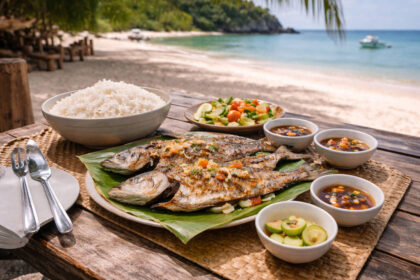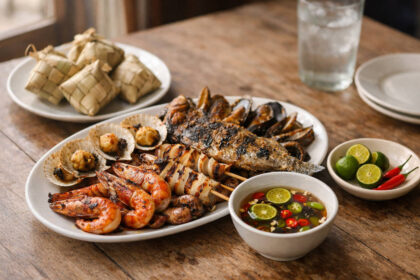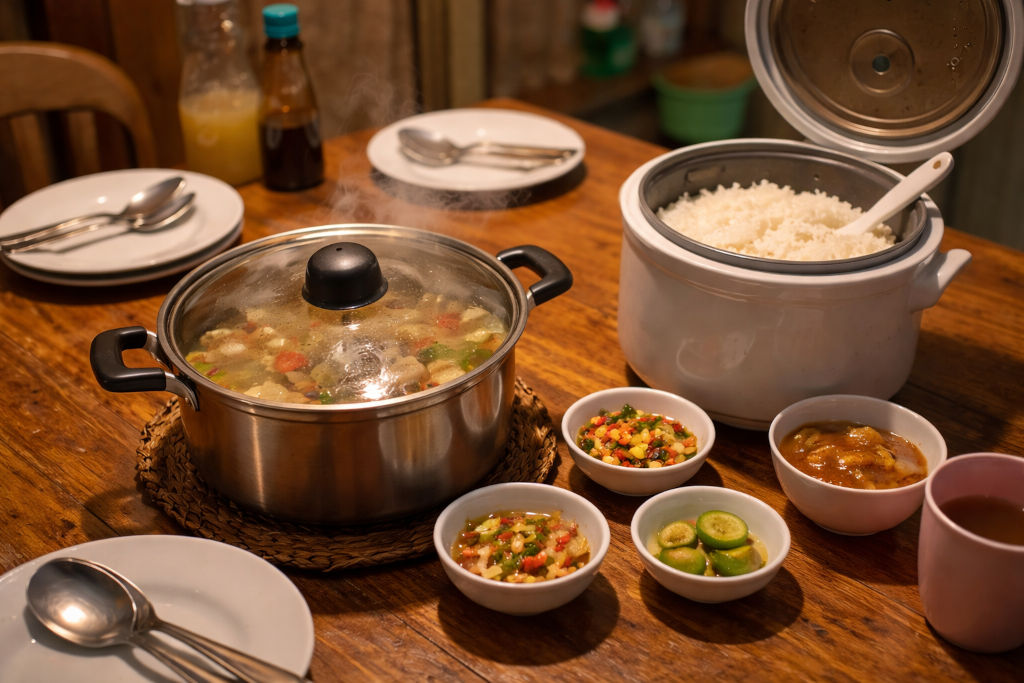
There’s a particular soundtrack to Visayan comfort kitchens: a pot softly ticking at the edge of a simmer, rice steam puffing from the cooker, the sharp perfume of native vinegar when someone lifts the cap, and garlic hitting warm oil like a tiny firecracker. Somewhere in the background, a spoon taps the rim of a bowl—taste check. Someone calls out, “Kahuman na ang kan-on?” and the whole room leans toward the table without even meaning to.
This isn’t a recipe roundup dressed up as nostalgia. This is what it feels like to step into Visayan comfort kitchens—where “comfort food” means may sud-an, yes, but also may sabaw, where rice is non-negotiable, and where families stretch one pot across lunch, merienda, and the next day’s reheated dinner (often better, honestly).
Across Panay, Negros, Cebu/Bohol/Siquijor, and Eastern Visayas, the dishes change, the souring agents shift, and the techniques vary by household. But the instinct is the same: feed people warmly, practically, and without pretending life is always Instagrammable.
The Opening Scene: Sabaw, Suka, and Rice Steam
Why “May Sabaw + Rice” Matters
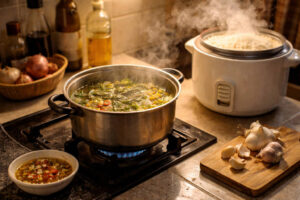 In many Visayan homes, “comfort” is less about indulgence and more about steadiness. Sabaw plus rice is the reset button: it softens a stressful day, stretches a small amount of meat, and makes leftovers feel intentional. In Visayan comfort kitchens, sabaw isn’t just “soup”—it’s a way of building fullness. A ladle over hot rice turns a simple ulam into a complete meal, especially when the budget is tight or the weather is moody.
This is why rainy-day Visayan sabaw hits differently. You’re not chasing complexity; you’re chasing warmth, balance, and a flavor that feels like someone is looking after you.
Sawsawan Is Part of the Meal, Not an Afterthought
On the table, you’ll often see small bowls of sawsawan: native vinegar with crushed garlic and sili, maybe a little soy sauce, sometimes calamansi. In Visayan comfort kitchens, sawsawan lets each person adjust their bite—more asim, more anghang, more kick. It’s also practical: you can keep the main dish gentle for kids or elders, then let adults “wake it up” at the table.
A Pantry Map: Visayan Islands, Distinct Comfort-Kitchen Personalities
Panay: Ilonggo Sourness, Broth Culture, and Quiet Depth
Panay (think Iloilo and Bacolod’s neighbor across the water) leans into Ilonggo cuisine that feels both soft and layered—brothy bowls, gentle aromatics, and souring that’s often fruit-forward. KBL (kadyos, baboy, langka) is a comfort anchor here, and batwan can appear as a signature sour note in certain soups and stews. You’ll also meet La Paz batchoy and chicken molo—dishes that feel “pang-balay” because they’re warm, peppery, and built for sharing.
If you want a deeper sense of how ingredients move from wet market to home pot, this Bakasyon guide fits naturally into the story: Iloilo fresh flavors market-to-plate guide.
Negros: Smoke, Slow Simmer, and Beefy Comfort
Negros can swing from smoky backyard grilling to slow, beefy sabaw—sometimes in the same day. Chicken inasal (yes, it’s iconic, and yes, it can be very “pang-balay” when it’s just a family grill with tanglad in the air) sits alongside broth-based comfort like kansi. In Visayan comfort kitchens here, you’ll feel the love for bones, marrow, and patience—because the reward is a pot that tastes like it’s been cared for.
Cebu, Bohol, Siquijor: Vinegar Confidence and Street-to-Home Comfort
Cebuano cuisine in home form is not only about lechon. Families fall back on pochero (pocherong Bisaya or pochero Cebuano), larang (a sour fish soup often bright with tanglad), and comforting side characters like ngohiong and ginabot that can show up as merienda or “extra ulam” when someone comes home hungry. Bohol and Siquijor bring their own household rhythms—often coastal, often vinegar-friendly, often practical with what’s available.
Eastern Visayas: Waray Seasalt, Coconut Notes, and Everyday Resourcefulness
Waray cuisine carries the sensibility of coasts and everyday improvisation—fish, preserved flavors, coconut where it makes sense, and sourness that feels clean rather than heavy. In Visayan comfort kitchens across Eastern Visayas, dried fish (buwad) and fermented notes can act like pantry shortcuts to satisfaction, especially when fresh ingredients are pricier or weather makes market trips harder.
For broader context on the region itself, this background link is helpful for readers who want the geography in one glance: Visayas.
How Visayan Families Build Flavor (Without Making It Complicated)
Ginisa Choices, Toasted Garlic, and the “Amoy Bahay” Base
Ask five households and you’ll get five versions of “proper” ginisa. Some start with garlic only, toasted until golden and nutty. Others add onions early for sweetness, or skip onion when the dish already leans sweet (like some humba styles). In Visayan comfort kitchens, toasted garlic is a common heartbeat—especially for sabaw meals where aroma matters as much as taste. The goal isn’t fancy: it’s to make the kitchen smell like dinner is real.
Atsuete Oil, Tanglad, and Gentle Aromatics
Atsuete (annatto) oil can be less about “color for show” and more about a familiar warmth—especially in stews and certain soups. Tanglad (lemongrass) shows up as a clean, calming note in broths like larang or in grilled marinades. These aren’t “chef tricks.” They’re household habits: small, repeatable moves that make food taste cared for.
Souring Agents: Batwan, Kamias, and Native Vinegar
This is where islands start to taste like themselves. Batwan brings a particular rounded sourness that feels deeper and more fruit-like than a sharp vinegar hit. Kamias (bilimbi) is bright, green, and direct—great when you want the broth to feel awake. Native vinegar varies wildly: some are sharp and peppery, some are mellow, some carry a faint sweetness or woodiness depending on how they’re made and stored.
What is batwan and substitutes? Outside Panay, batwan can be hard to find. Some cooks swap in kamias, tamarind, or even a restrained mix of tomato plus a little native vinegar. The flavor won’t be identical—and that’s okay. In Visayan comfort kitchens, “honest” substitutions mean you keep the intent: a clean sour backbone that supports the broth, not a sourness that bulldozes everything.
Dried Fish and Fermented Notes: Buwad, Ginamos, and “Just Enough” Funk
Buwad can turn rice into a meal with almost no effort—fried crisp, flaked into sinangag, or eaten with a little vinegar and chili. Ginamos (fermented fish paste) is another pantry cornerstone, but in many Visayan comfort kitchens it’s used gently: a small spoon to deepen a vegetable dish, a hint in a dipping sauce, or a quiet background note in a stew when the pot tastes “kulang” and you don’t want more salt.
Comfort Anchors: Kansi and KBL (and How Families Stretch Them)
Why Kansi Feels Like a Reset Button
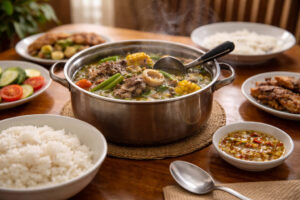 Kansi is often described in the “kansi vs bulalo vs sinigang” conversation, and here’s the home-kitchen truth: kansi feels like the Visayan cousin that leans into both bone-deep beef comfort and a distinctly sour profile—often with batwan (when available) and aromatics that keep it from feeling heavy. Bulalo is rich and straightforward; sinigang is bright and tangy with its own pantry logic. Kansi sits in the middle: hearty, sour, and built for rice.
In Visayan comfort kitchens, kansi is also a budget strategy. Beef shank or bony cuts can be more affordable than “pretty” cuts, and long simmering turns toughness into tenderness. The broth becomes the star, so even if meat portions are modest, everyone still feels fed.
Why KBL Is Pang-Balay Gold
KBL—kadyos (pigeon peas), baboy, langka—doesn’t need to be fancy to be satisfying. The comfort is in the contrast: the earthy kadyos, the soft langka that drinks up broth, and pork that flavors the pot even when you use smaller pieces. Many Visayan home kitchens cook KBL as a “big pot” meal, the kind that tastes better as it sits, because the broth and the ingredients get to know each other.
Stretching KBL is straightforward and very real-life: add more langka when meat is expensive, lean on aromatics and a good ginisa, and serve it with sawsawan on the side so each person can adjust the bite.
Kansi vs Bulalo vs Sinigang, Explained Like a Cousin Would
If you’re deciding what to cook: choose bulalo when you want pure beefy richness, sinigang when you want a bright, sour punch that’s easy to source ingredients for, and kansi when you want that Visayan comfort kitchens feeling—sour and hearty at the same time, with broth that begs for extra rice.
Which Dishes Feel Most Pang-Balay Across the Visayas
Humba, and How It Varies by Family and Island
Humba is one of those dishes that quietly tells you who cooked it. Some families go sweeter, some keep it more savory; some lean on vinegar, others on fermented notes; some add beans, banana blossoms, or whatever the household likes. In Visayan comfort kitchens, humba is rarely about strict measurements. It’s about balance: sweet-salty, tender meat, and a sauce that clings to rice like it belongs there.
Island-to-island differences can show up in the vinegar used, whether garlic is toasted first, and how “dark” the sauce gets. The most honest version is the one that tastes like the person who made it.
La Paz Batchoy and Chicken Molo: Broth That Feels Like Home
Batchoy is comfort you can smell from the doorway—garlic, pepper, and a broth that feels like it’s been working all day. Chicken molo, with its delicate dumplings, is softer comfort: warm, gentle, and deeply satisfying without shouting. These bowls belong to Visayan comfort kitchens because they’re practical for feeding a table: broth stretches, toppings adjust, and everyone can eat at their own pace.
If you’re collecting more stories like this (not just recipes, but culture and context), you can link out naturally here: Filipino food culture stories.
Pocherong Bisaya or Pochero Cebuano: The “Everything Pot”
Pochero in many Cebuano homes is Sunday logic in a pot: meat, vegetables, broth, and the feeling that you planned ahead even if you didn’t. Depending on the household, you might taste tomato sweetness, a gentle sour edge, or a richer base built from bones and aromatics. This is classic Visayan home cooking because it’s flexible—perfect for using up what’s in the fridge without feeling like “leftover food.”
Balbacua: Collagen Comfort and Patient Simmering
Balbacua is for days when the goal is deep comfort: slow-cooked, collagen-rich, and meant to be eaten with rice and maybe a side of something sharp (hello, vinegar). In Visayan comfort kitchens, balbacua is also a social dish—someone checks the pot, someone tastes, someone brings extra bowls. It’s not always “quick,” and that’s the point. It’s food that asks you to slow down.
Cebuano Comfort Classics Beyond Lechon (Yes, Really)
Larang, Ngohiong, and Ginabot as Everyday Comfort
Larang is the kind of sour fish soup that feels bracing in the best way—often bright with tanglad, sometimes supported by kamias or a souring choice that makes sense for the household. It’s coastal comfort: light, hot, and perfect with rice.
And then you have the “side characters” that are secretly main characters: ngohiong and ginabot. These aren’t always plated as a formal meal; they’re often bought or made when someone needs a quick, satisfying bite. In Visayan comfort kitchens, these snacks become comfort because they’re familiar, filling, and tied to everyday life—commutes, errands, late afternoons when lunch was too small.
Kinilaw and the Gentle Funk: Brightness Done Safely
What Ginamos Is, and How Families Use It Gently
 Ginamos is fermented fish paste, and the key word is “gently.” A lot of people’s first experience is too strong because they used it like a sauce, not a seasoning. In Visayan comfort kitchens, ginamos is often treated like an accent—stirred into a dipping bowl with calamansi, balanced with chili, or used in tiny amounts to deepen a vegetable dish. Think “background bass,” not “solo performance.”
How to Keep Kinilaw Safe and Bright at Home
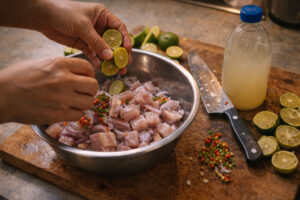
Kinilaw is comfort in a different direction: clean, sharp, and refreshing—especially when the day is hot and the appetite wants something lively. Safety matters. Use the freshest fish you can afford, keep it cold, and prep it quickly. Acid (vinegar, calamansi) brightens flavor, but it does not sterilize old fish. In Visayan comfort kitchens, people trust kinilaw when the fish is truly fresh and the hands cooking it are careful.
Practical home notes: salt lightly first, drain excess liquid, then add vinegar in stages so you don’t “overcook” the texture. Keep aromatics crisp (onions, ginger if you like, sili), and serve right away. If you’re cooking far from the coast, frozen-at-sea fish can be a safer bet than “fresh” that has traveled too long.
Native Vinegar Styles and Sawsawan Rituals
Vinegar isn’t one-note. Some native vinegars are sharp and clean; others feel rounder, almost fragrant. This is why the same dish tastes different across islands and even across barangays. In Visayan comfort kitchens, families usually know their vinegar the way they know their rice brand: which one is best for kinilaw, which one is best for humba, which one is best for a simple sawsawan with garlic and sili.
Cooking Visayan Comfort Kitchens Outside the Visayas
Pantry Staples That Define the Vibe
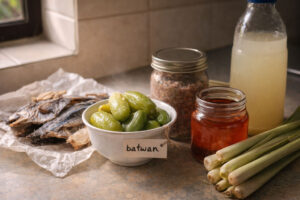 If you’re building a Visayan comfort kitchens pantry outside the region, focus on these practical anchors: native vinegar (or the best substitute you can find), garlic, pepper, tanglad, atsuete (or atsuete oil), dried fish like buwad (when available), and a fermented element like ginamos (used sparingly). Add kamias if you can find it; if not, plan your souring strategy dish by dish.
For more context on how island cooking traditions shape everyday meals, this internal guide fits beautifully here: island cooking traditions in the Philippines guide. And if you want a coastal angle—especially for kinilaw logic and fish handling—you can link readers here: Filipino coastal cooking adventures.
Beginner-Friendly Visayan Ulam (That Won’t Intimidate You)
If you’re new to Visayan home cooking, start with dishes that forgive small mistakes:
- A simple humba-style braise (pork belly or shoulder, vinegar, garlic, a touch of sweetness, patience).
- KBL-inspired sabaw using what you can source (pork plus jackfruit, with your best souring option).
- Batchoy-inspired broth with toasted garlic and pepper (even if your toppings vary).
- Larang-style fish soup using tanglad and a clean sour note (kamias, a little tomato, or a careful splash of vinegar).
- A basic sawsawan habit: vinegar + garlic + sili on the side, so your main dish stays balanced.
These are the kinds of meals that teach you the “feel” of Visayan comfort kitchens: taste, adjust, and trust your senses.
Substitutions for Hard-to-Find Ingredients (Staying Honest)
Batwan: hard outside certain areas. Try kamias if available; if not, use tamarind as a stand-in for sourness, or a restrained combination of tomato and a little vinegar. Expect a different sour profile—don’t force it to be identical.
Kamias: if unavailable, use calamansi for brightness plus a gentler sour base (tomato or tamarind), depending on the dish.
Native vinegar: choose the best real vinegar you can find (not overly sweetened). Different vinegar will change the “snap,” especially in kinilaw and humba, so adjust slowly and taste often.
Ginamos: if you can’t source it, use a tiny amount of fish sauce as a last-resort “fermented note.” It won’t taste the same, but it can help you approximate that savory depth. Go light—Visayan comfort kitchens use funk with restraint more often than people assume.
Non-negotiables if you want the spirit to stay intact: hot rice, a real sawsawan, and broth that tastes like it was given time (even if it’s just an extra 20 minutes of simmering on a weeknight).
FAQ From the Table (Quick, Practical Answers)
What does “comfort food” mean in a Visayan household?
Usually: rice plus sud-an, and ideally may sabaw. Comfort is fullness, warmth, and a taste that feels familiar—not necessarily “special occasion” food.
Which dishes feel most pang-balay across islands?
Humba (many styles), KBL, kansi (where it’s common), batchoy/molo in Panay, pochero in Cebuano homes, and coastal soups like larang—plus buwad-and-rice days that are quietly universal.
How do batwan and kamias change flavor?
Batwan tends to be rounder, fruit-sour and deeper; kamias is brighter and greener. Both can make broth feel “alive,” but they don’t taste interchangeable.
How does humba vary by family?
Sweetness level, vinegar type, whether garlic is toasted first, and whether fermented notes (like a touch of ginamos) appear. Some like it sticky-sweet; others want it sharper and more savory.
Why are kansi and KBL comfort anchors?
They’re sabaw-first dishes that stretch well, reheat well, and make rice feel endless. They also welcome substitutions without collapsing, as long as the broth is balanced.
What are Cebuano comfort classics beyond lechon?
Pochero, larang, ngohiong, ginabot—plus everyday braises and soups that show up when it’s just family eating at home.
What is ginamos, and how do you use it gently?
Fermented fish paste. Use tiny amounts as seasoning or in sawsawan, balanced with calamansi/vinegar and chili. The goal is depth, not a loud fishy blast.
How do you keep kinilaw safe at home?
Start with very fresh (or properly handled frozen-at-sea) fish, keep everything cold, prep quickly, and remember acid brightens but doesn’t “save” old seafood.
In the end, Visayan comfort kitchens aren’t defined by a single “authentic” recipe. They’re defined by habits: the way garlic is toasted, the way vinegar is poured with care, the way sourness is chosen depending on what the pantry can offer, and the way sabaw is treated like a love language. If you cook these dishes outside the islands, don’t chase perfection—chase the feeling. Make it warm, make it balanced, make it generous with rice. That’s the heart of Visayan comfort kitchens, wherever your table happens to be.
For more Filipino food context pieces to pair with this story, you can guide readers to Food Culture. For cultural heritage context beyond food (festivals, regional practices, and the bigger picture), a responsible external reference point is the National Commission for Culture and the Arts (NCCA).