Why Habits Beat Hacks When You Travel
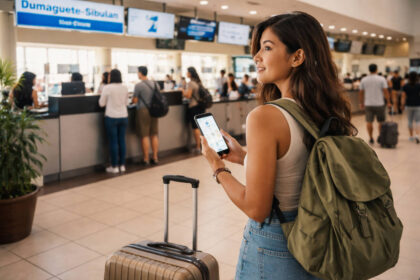
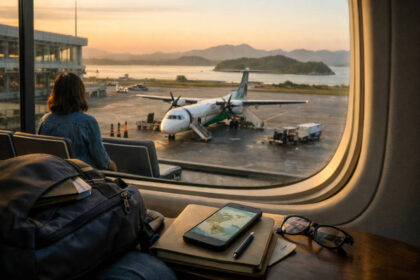
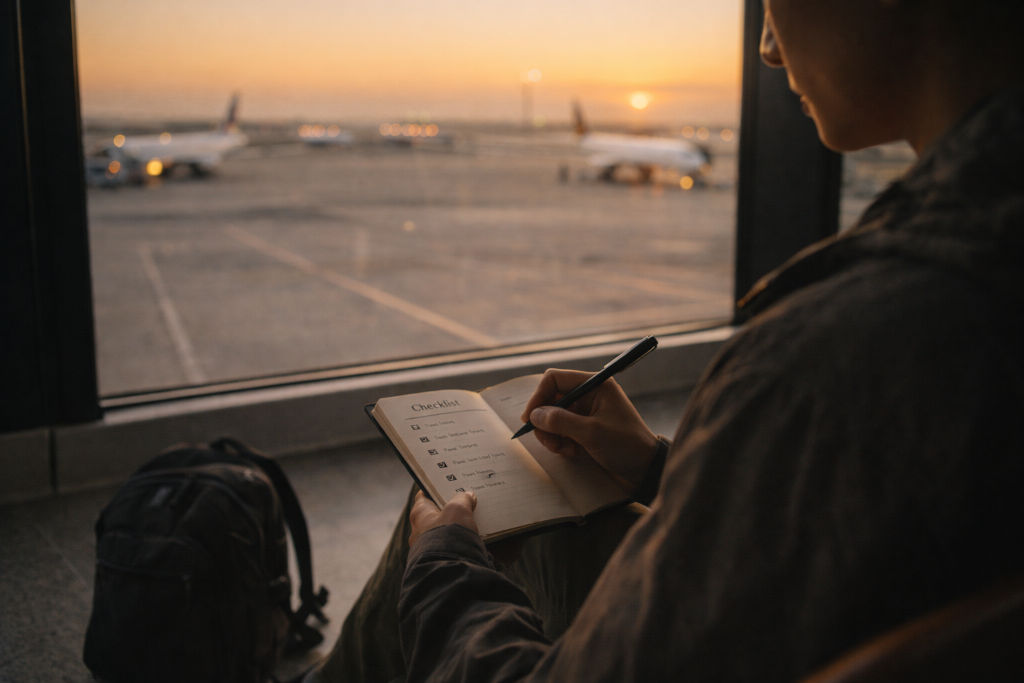
Think about two versions of the same trip. In one, you’re stuffing clothes into your bag while the taxi waits outside, your boarding pass won’t load, and you’re sweating in line at security, wondering if you forgot your charger (you did). In the other, your bag has been ready since last night, you already checked in online, and you’re sipping water at the gate, watching planes taxi while your phone charges from a neatly packed cable.
The difference usually isn’t a magic app or expensive gear, it’s a handful of travel friendly habits. These travel-friendly habits are tiny routines you repeat every time you travel until they feel automatic. They don’t require you to be super organized or “that person” with color-coded spreadsheets. Just small moves: a 10-minute night-before checklist, a “one pocket only” rule for documents, a 3-minute map check in the morning, a quick evening reset when you get back to your room.
In Filipino trips—balikbayan visits, barkada beach weekends, family road trips with tita, lola, kids, and three coolers of baon—these smart travel habits matter even more. They help when the provincial bus terminal is chaotic, when a ferry is delayed, or when your budget airline moves the gate again. Think of this guide as a set of simple travel routines you can mix and match, plus more tips and inspiration for your travels once you’re ready to go deeper.
Before You Leave – Tiny Prep Habits That Calm the Chaos
The day or two before a trip can feel like a whirlwind. These small habits give you a sense of “okay, kaya ko ‘to” rather than “bahala na si Batman.”
The 10-Minute Night-Before Checklist
 Set a timer for 10 minutes the night before you leave. Stand by your bag and walk through the same mini checklist every time:
- Documents: passport or ID, printed or offline boarding passes, tickets, and your accommodation address.
- Wallet: cash, pamasahe (fare) for the first leg, main card, backup card.
- Phone and chargers: phone, cable, and a charged power bank in your personal item.
- Health basics: basic meds, one-day supply of essentials in your hand-carry, tissues, hand sanitizer.
- “Go” pouch: a small pouch or sling where you’ll keep your most important things on travel day.
Doing this calmly at home—rather than in the taxi—saves you from the sweaty, panicky “did I forget something?” spiral. If you want to combine this with smarter packing overall, you can layer it over some smart packing tips that support your habits.
One “Home Reset” Habit
Your future self deserves a soft landing. Before you leave, do a tiny home reset:
- Take out the trash.
- Wash dishes or at least soak them.
- Lay out a clean towel, fresh pambahay (home clothes), and a glass or bottle of water.
It’s like leaving a welcome-home kit for yourself. When you stumble in after a long journey—maybe after a delayed flight, two jeepney rides, and a grab—you’ll be grateful you don’t have to face a sink full of dishes and no clean towel.
Packing Habits That Save Your Sanity
Instead of obsessing over the “perfect” packing list, focus on repeatable packing habits:
- Pack by category: shirts together, toiletries in one pouch, chargers and electronics in another. Your brain remembers “blue pouch = cables” faster than “somewhere in that side pocket.”
- One fixed spot for essentials: choose one pocket for passport/ID and main card, and never put them anywhere else. Same rule whether you’re flying, taking a provincial bus, or boarding a ferry.
- Personal item as your lifeline: on budget airlines or crowded buses, keep your “I’ll survive if my bag gets delayed or buried” items in your personal item—meds, chargers, toothbrush, one change of clothes, important documents.
Once you adopt these good travel habits, packing goes from “I must remember everything” to “I just follow my usual system.”
Travel Day Routines – Airports, Buses, and Ferries
Travel days are where stress likes to show up: long lines, cramped seats, traffic, delays. These simple travel day routines help keep your shoulders down instead of around your ears.
The “One Pocket” Rule for Documents
Pick one small, secure place for your key travel items: passport or ID, main card, and a bit of cash. Maybe an inner zip pocket of your sling or a neck pouch. Every time you take something out, it goes back there immediately. No exceptions.
This one habit reduces the classic panic: patting all your pockets while the boarding line moves. Whether you’re stepping onto a RoRo ferry, lining up at a budget airline gate, or showing your ticket at a provincial bus terminal, your hand already knows where to go.
Move, Stretch, and Sip
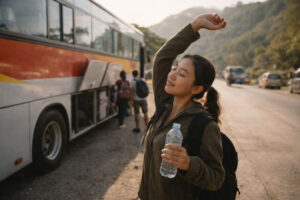 Travel days are basically “sit, wait, sit again.” So create one tiny, repeatable “move and hydrate” habit:
- Every time you’ve been sitting for 60–90 minutes, stand up. Stretch your arms overhead, roll your ankles, and walk a small loop if there’s space.
- Take a few sips of water each time you stand, whether it’s from your bottle or a refill kiosk.
On a Manila–Baguio bus run or a ferry crossing, that might mean stretching at gas station or port stops while other passengers smoke or scroll. You don’t need a full workout; just enough movement to remind your body it’s still yours, not just luggage.
For longer ferry rides where safety and weather matter, it also helps to review ferry travel advisories and safety reminders so your habits include watching the weather and listening to crew instructions, not just stretching your calves.
A Calm Boarding Ritual
Instead of sprinting to the gate at the last minute, try a simple boarding ritual whenever you can:
- Aim to arrive at the airport or terminal with a small buffer, even if it’s just 20–30 minutes.
- Once you’re through security, find a seat. Take 60 seconds to breathe—inhale for four counts, exhale for six. Let your shoulders drop.
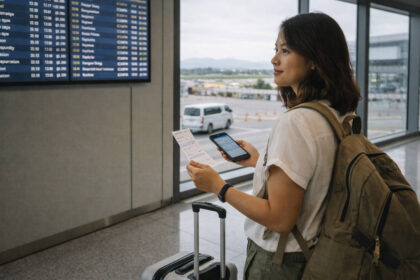
- Do a quick essentials check: phone, documents, wallet, water, meds, earphones. These should all be reachable without unpacking your whole bag.
That short pause can transform boarding from “rush and chaos” to “okay, ready na.” Even in a crowded NAIA terminal or a noisy provincial port, a tiny breathing habit can reset your nervous system.
On the Ground – Daily Habits That Make Trips Easier
Once you arrive, the goal is to keep things smooth, not perfect. Here are simple travel routines you can repeat every day, whether you’re in Manila, Kyoto, or a small beach town in Cebu.
Morning “3-Minute Map” Habit
Each morning, before you rush out, spend three minutes with a map—paper or app:
- Find your accommodation.
- Mark where you plan to go today.
- Glance at how you’ll return: nearest station, jeepney routes, landmark near your hotel.
This quick orientation helps your brain feel grounded. It’s especially useful in hilly cities or places with confusing alleys. Even if you get lost (which happens, and sometimes leads to the best stories), you have a rough mental picture of “home.”
The “Empty Your Pockets” Evening Reset
When you get back to your room, before collapsing face-first onto the bed, do a one-minute reset:
- Choose one surface—bed corner, side table, small tray.
- Empty pockets and day bag: keys, wallet, phone, tickets, receipts, coins, lipstick, everything.
- Check quickly: is anything missing? Did you misplace a card, your room key, or your earphones?
Then repack your day bag for tomorrow: refill your water bottle, tuck in a small snack, fold your rain jacket, add whatever you realized you needed today (maybe painkillers or a pen). It’s like a mini nightly “reset button” so you don’t start the next day with yesterday’s chaos still tangled in your bag.
A Short Reflection Ritual
Before sleep, give yourself five to ten minutes to capture the day:
- Write down three small memories: a sound (jeepney horns, waves, temple bells), a smell (sabaw from a karinderya, pine trees, sea breeze), a conversation.
- Or scroll through your photos and add quick notes in your phone: who you were with, what you felt, what surprised you.
This simple travel-friendly habit turns your trip into a story you’ll actually remember—and helps you notice what stresses you out and what calms you, so you can adjust future plans. Over time, you’ll see patterns: “I’m happier when I don’t overschedule,” or “I feel best when I protect one slow morning per trip.”
Health and Energy – Small Habits for Sleep, Food, and Movement
You don’t need a full wellness routine on the road, just a few anchor habits. General travel health guides like this WHO travel health fact sheet talk about sleep, movement, hydration, and vaccines. Think of these as your everyday version of that advice.
Your “Always Pack” Health Kit
Instead of rebuilding it every time, keep a tiny health kit that always lives in your bag:
- Basic meds (pain relief, allergy tablets, something for an upset stomach).
- A few band-aids/plasters.
- Hand sanitizer and a small pack of tissues.
- Reusable water bottle.
Refill or replace items after every trip, then put the kit straight back in your travel drawer or backpack. Next time, it’s already waiting—less “hala, wala pala akong gamot” at 2 a.m. in a new city.
A Simple Sleep Habit for New Beds
New beds can be noisy, bright, or just weird. Try a mini sleep routine that can fit into any room:
- Turn off your bright screens 20–30 minutes before sleep; or at least switch to dark mode and lower brightness.
- Do a light stretch: neck rolls, shoulder rolls, a few slow squats or toe touches.
- Quick wash or shower to rinse off dust and sweat from bus rides or city walks.
- Use earplugs or a white-noise app if the street outside loves karaoke.
You don’t have to do it perfectly every night. But even a half-version helps your body realize, “Okay, sleeping time na.”
Movement Without a Gym
Travel days and tourist days can both be surprisingly sedentary—hours sitting in vans, then sitting in cafés. Simple movement habits can fit into any schedule:
- Take stairs instead of elevators when it’s just a few floors and you’re not lugging a huge suitcase.
- After long rides, walk around the block or terminal for 5–10 minutes instead of just sitting at the next waiting area.
- Stretch while you wait: shoulder rolls in line, ankle circles while seated, calf stretches against a wall.
These aren’t “workouts,” but they keep your joints from feeling like kalawang (rust) halfway through your trip.
Money, Safety, and Digital Habits
Good money habits and safety routines don’t have to make you paranoid. They’re just quiet guardrails so you can relax more. If you’re also trying to maximize every peso, layering these onto broader advice like budget travel in the Philippines can really help.
Two Money Habits That Keep You Grounded
Habit 1: Separate your money. Keep a main card and some cash in your wallet, and a backup card and emergency cash hidden in your bag or locked at your accommodation. If something happens to one stash, you’re not stranded.
Habit 2: Set a simple daily spend estimate. For example, “Today I’ll try to stay around ₱2,000,” depending on your budget. At night, use your pocket receipts and phone notes to check roughly where you landed. No spreadsheet required—just awareness.
Simple Safety Habits
- When entering a new place—terminal, plaza, jeepney—take two seconds to scan exits and crowd density.
- Keep bags zipped and in front of you in busy areas; don’t hang them off the back of your chair.
- Carry a small note in your pocket or phone case with your accommodation name, address, and a local number. If your phone dies or you get flustered, you can show it to a driver or local.
These good travel habits work quietly in the background, like a safety net you hope you never need, but you’re glad is there.
Digital Backups and Peace of Mind
Digital habits require a tiny setup but save huge stress:
- Email or cloud-save photos of your passport, visa, and key IDs.
- Keep screenshots of booking confirmations and maps in your phone gallery so you can access them offline.
- Use a basic lock or PIN on your phone so a stranger can’t easily access your accounts if it’s lost.
Once these are in place, you don’t need to think about them every day; they just sit in the background, quietly making your trip less fragile.
Mindful and Eco-Friendly Travel Habits
Mindful and eco-friendly habits don’t need to be dramatic. Small, repeatable actions can make you a kinder presence in the places you visit.
The “Hello and Thank You” Habit
Learn at least hello, thank you, and “po” or polite particles where relevant. In the Philippines, a simple “salamat po” (thank you, in respectful form) plus a smile changes how people feel around you.
Make it a habit: every time you buy something from a small stall, ask for help, or get directions, use the local greeting or thanks. It’s a tiny language offering that says, “I’m trying to meet you halfway.”
Small Eco Habits That Add Up
- Carry a tote bag so you can say no to extra plastic when buying snacks or pasalubong.
- Bring a reusable water bottle; refill where it’s safe instead of buying endless small bottles.
- Say no to plastic cutlery if you’re eating in, not taking out.
These mindful travel habits might feel small, but multiplied over many trips and travelers, they matter.
Being a Considerate Guest
Travel-friendly also means people-friendly:
- Respect quiet hours in guesthouses; not everyone is on vacation, some are working or resting.
- Dress appropriately for religious sites or conservative communities.
- Ask before photographing people, especially kids or workers at markets.
Think of it as leaving places just a little better than you found them—less trash, more kindness.
Making Travel-Friendly Habits Stick
Habits are just behaviors on repeat. A simple definition from resources like this explanation of habits is that they’re actions you do automatically because you’ve done them often. The trick is to start small and make them easy.
Start Tiny: One Habit Per Trip
Resist the urge to overhaul your entire travel style at once. For your next trip, pick just one or two habits from this article: maybe the 10-minute night-before checklist and the “empty your pockets” evening reset. Practice them until they feel natural.
On the trip after that, add one more—maybe the 3-minute map check. Slowly, your personal set of smart travel habits will build itself without overwhelm.
Habit Stacking
Habit stacking means attaching a new habit to something you already do. For example:
- “Every time I put my bag down in the hotel room, I immediately do my 1-minute ‘empty pockets’ routine.”
- “Every time I sit down at a gate or terminal, I do a quick essentials check and take three sips of water.”
Because the trigger (putting bag down, sitting) happens anyway, your new habit gets a free ride.
Adjusting for Different Kinds of Trips
These simple travel routines are flexible:
- For weekend trips, focus on quick wins: the night-before checklist and morning map check.
- For longer backpacking loops, emphasize money habits, document backups, and health kits.
- For family or balikbayan trips, build routines around group needs: a set time where everyone does a quick bag check before leaving a hotel, or a nightly “who has what” money and document check with older family members.
If you’re applying habits to specific destinations—a surf week, a city break, a ferry-heavy island loop—match them with more detailed travel guides so your routines support the actual itinerary.
Travel-Friendly Habits FAQs
What are the easiest travel-friendly habits to start with if I’m always busy?
Start with the 10-minute night-before checklist and the “one pocket” rule for documents. They’re simple, don’t require apps or new gear, and immediately reduce last-minute panic. You can add more once these feel automatic.
Which habits matter most for reducing stress on travel days?
Three big ones: arrive with a small time buffer, keep documents in one fixed pocket, and use a calm boarding ritual (breathe, essentials check, then line up). Combined, these smart travel habits turn chaotic mornings at the airport or bus station into something much gentler on your nerves.
How do I keep healthy habits when I’m surrounded by new food and late nights?
Don’t aim for perfection. Focus on hydration, a tiny movement habit when you’ve been sitting too long, and a simple sleep routine whenever possible. Enjoy the new food—lechon, ramen, markets—then rebalance with water, fruit, or a lighter meal the next day.
What money and safety habits make the biggest difference?
Separating cash and cards, setting a loose daily budget you review at night, and keeping bags zipped and in front of you in crowds. Add a small backup card and emergency cash hidden safely, plus digital backups of IDs, and you’ve already covered a lot of risk without living in fear.
How can I adapt these habits if I’m traveling with kids or older family members?
Turn habits into shared rituals: everyone empties pockets and bags onto the bed before sleep, or everyone drinks water and stretches during gas-station or terminal stops. Assign roles—one person keeps screenshots of bookings, another tracks daily budget, someone else does headcounts before leaving each place.
Over time, these travel-friendly habits stop feeling like one more thing to remember and start feeling like muscle memory. They don’t remove every delay or surprise—that’s impossible—but they give you a softer landing when things go sideways, and more headspace to enjoy the good parts: the first sip of coffee in a new city, the sea breeze on a ferry deck, the laughter of your barkada on a road trip. That’s what all these tiny routines are really for.