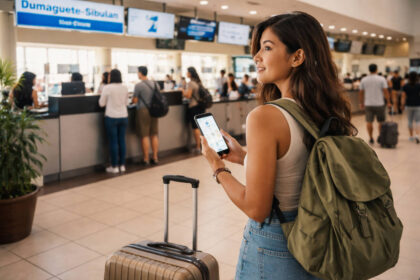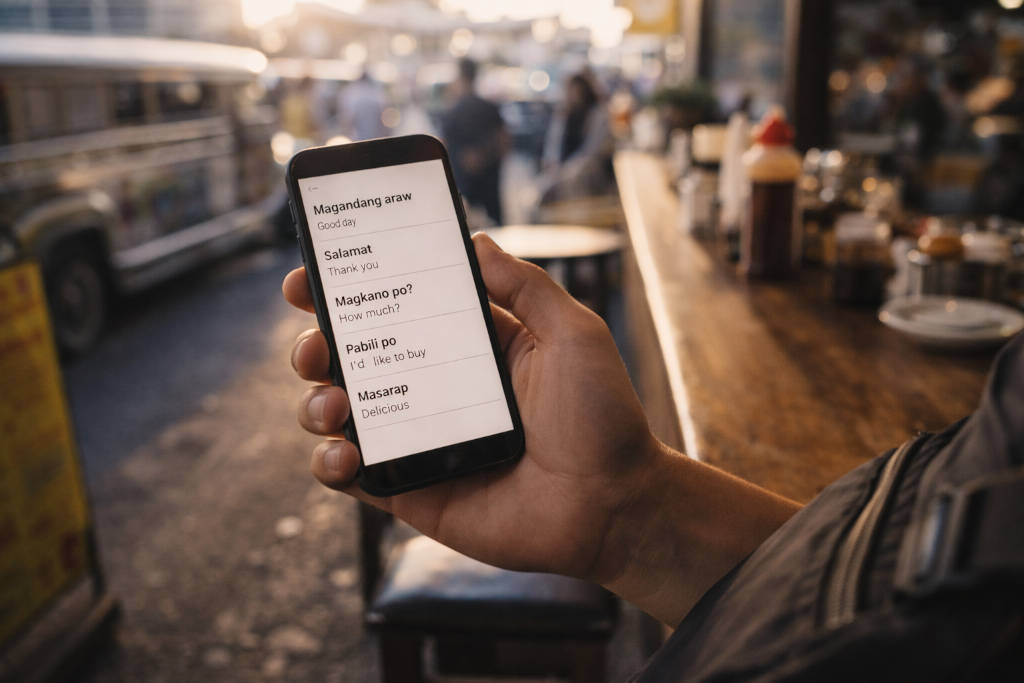
You do not need perfect Tagalog to have a smooth trip in the Philippines. But a few friendly lines go a long way—especially for rides, food orders, quick questions, and the tiny moments that make a trip feel like a real bakasyon. If you like that idea of travel as small joys and meaningful encounters, here is a sweet read on the bakasyon meaning—then come right back for the phrases you will actually use.
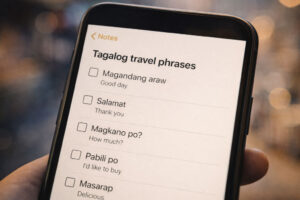 This Tagalog travel phrases for vacation guide is modern, practical, and Taglish-friendly. Copy-paste these lines into your notes app, practice the ones you need, and let the rest be bonus.
Reality check: Many Filipinos understand English, especially in cities, but Tagalog (or Taglish) helps in busy, noisy places where quick clarity matters.
Quick Pronunciation Tips (No IPA, Just the Helpful Stuff)
Keep it light. You do not need to “perform” an accent—just aim for clarity and warmth.
- “ng” sound: Like the end of “sing” or “song.” “Ng” can start a word too: “ngayon” (read it like: “nga-YON”).
- “r” is softer for many speakers: Some roll it lightly, some don’t. Don’t overdo it—just keep it relaxed, not harsh.
- “po” and “opo”: “Po” is a polite softener. “Opo” means “yes, politely.” Use them naturally at the end: “Salamat po.”
- Using “paki-” requests: “Paki-” is like “please do this.” “Paki-abot” (pass it), “Paki-tawag” (call), “Paki-check” (check).
- Stress usually falls near the end: If unsure, keep your voice smooth and slightly emphasize the second-to-last syllable.
- “kayo” for polite “you”: Saying “kayo” (rather than “ikaw”) helps you sound respectful without being stiff.
- Loanwords locals actually use: You will hear “airport,” “Grab,” “receipt” or “resibo,” “signal,” “charger,” and “CR” (restroom). Say them as English—totally normal.
- Polite but not formal: Add “po,” smile, and keep it short. “Pwede po ba…” is a magic opener.
Reality check: In fast conversations, it is okay to mix English nouns with Tagalog structure. Locals do this all the time.
Planning and “Small Talk” Basics
These are your warm-up lines—useful at cafés, hotel lobbies, tours, and casual chats.
- Kumusta? = How are you?
- Hello po! = Hello (polite).
- First time ko sa Pilipinas. = It’s my first time in the Philippines.
- First time ko sa (Cebu/Manila/Boracay). = It’s my first time in (place).
- Ang init ngayon! = It’s hot today!
- Ang ganda dito. = It’s beautiful here.
- Anong magandang gawin dito? = What’s nice to do here?
- May marerecommend kayo? = Can you recommend something? (polite “you”)
- Okay lang ba kung mag-English ako? = Is it okay if I speak English?
- Salamat po! = Thank you (polite).
Reality check: If you forget everything, “Salamat po” plus a smile carries you far.
Booking and Check-In (Hotel, Airbnb, Tours)
Short, practical lines for confirmations, timing, and what you need.
- May reservation ako. = I have a reservation.
- Check-in po ako. = I’m checking in (polite).
- Pwede po bang maagang check-in? = Can I check in early? (polite)
- Pwede po bang late check-out? = Can I do late check-out? (polite)
- Nasaan po ang elevator? = Where is the elevator? (polite)
- Anong oras ang breakfast? = What time is breakfast?
- Kasama ba ang breakfast? = Is breakfast included?
- Pwede pong pa-verify ng booking ko? = Please verify my booking. (when you need confirmation)
- May Wi-Fi po ba? Ano ang password? = Do you have Wi-Fi? What’s the password? (polite)
- Paki-message na lang po ako dito. = Please just message me here. (use for tours/hosts)
Reality check: In busy lobbies, a calm “Paki-verify po” is clearer than a long explanation.
Transport and Directions (Including Grab Pickup Lines)
 This is where Tagalog travel phrases for vacation pays off the most—noise, traffic, and quick decisions.
- Saan yung sakayan papuntang ___? = Where do I catch a ride going to ___?
- Pa-___ po. = To ___, please. (e.g., “Pa-IT Park po.”)
- Dito po ba ang pickup? = Is the pickup here? (polite)
- Nandito na po ako. = I’m here now (polite).
- Sa may entrance po ako. = I’m by the entrance (polite).
- Anong plate number niyo po? = What’s your plate number? (polite)
- Asan na po kayo? = Where are you now? (polite)
- Traffic po ba? = Is it traffic? (polite)
- Paki-stop po dito. = Please stop here (polite).
- Magkano po hanggang ___? = How much to ___? (for taxis/trikes)
- Pwede pong paki-on ang aircon? = Could you turn on the AC? (polite)
- Pwede pong paki-off muna ang music? = Could you turn off the music for a bit? (polite, if needed)
If you are practicing transport lines specifically for Manila, this guide on getting around Manila without a car helps you stay comfortable and safe with common routes and habits.
Reality check: In many places, landmarks work better than exact addresses. Saying “sa may entrance” or “sa tapat ng…” (in front of…) saves time.
Food and Ordering (Ingredients, Spicy Level, Pork, Allergy, Bill)
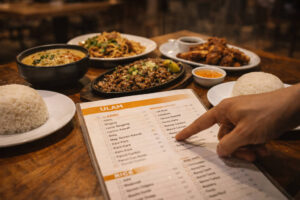 Food is half the joy of traveling here. These Tagalog travel phrases for vacation lines keep ordering simple—even if you are picky or careful.
- Anong masarap dito? = What’s good here?
- Best-seller niyo ano? = What’s your best-seller?
- Hindi maanghang, please. = Not spicy, please.
- Medyo maanghang lang. = Just a little spicy.
- May pork ba ’to? = Does this have pork?
- Walang pork, please. = No pork, please.
- May allergy ako sa ___ . = I’m allergic to ___.
- Pwede bang tanggalin yung ___? = Can you remove the ___?
- Takeout na lang po. = For takeaway, please. (polite)
- Tubig po, please. = Water, please. (polite)
- Paki-bigay po ng resibo. = Please give me the receipt. (polite)
- Paki-bill po. = The bill, please. (polite)
- Cash or GCash? = Cash or GCash? (you’ll hear this; you can say it too)
Reality check: If you are unsure about ingredients, stick to hot, cooked-to-order dishes and ask “May pork ba ’to?” before you commit.
Weather and Plan Changes (Rainy-Day Pivots)
One minute it is sunny, the next minute it is a full rain curtain. Keep a few pivot lines ready—this is prime Tagalog travel phrases for vacation territory.
- Umuulan na. = It’s raining now.
- Ang lakas ng ulan! = The rain is strong!
- Okay lang ba kung mag-reschedule? = Is it okay if we reschedule?
- Pwede bang bukas na lang? = Can we do it tomorrow instead?
- Open pa ba kayo ngayon? = Are you still open right now?
- Sarado na ba? = Is it closed already?
- May indoor option ba? = Is there an indoor option?
- Sa mall na lang tayo. = Let’s just go to the mall. (Taglish, super common)
For an easy indoor route when the weather turns, this Manila rainy-day itinerary is a handy template you can adapt to other cities too.
Reality check: Rain can mean traffic. If your plan is time-sensitive, pivot earlier rather than waiting for it to “maybe stop.”
Safety and Problems (Lost Item, Need Help, Emergency)
You probably will not need these, but having them ready makes you feel calmer. More practical safety reminders live here: travel safety tips in the Philippines.
- Nawawala po yung ___ ko. = My ___ is missing (polite).
- Naiwan ko yata yung ___ ko. = I think I left my ___ behind.
- Pwede po bang tumulong? = Can you help me? (polite)
- Nasaan ang pinakamalapit na police station? = Where is the nearest police station?
- May doctor po ba dito? = Is there a doctor here? (polite)
- Tawag po kayo ng tulong, please. = Please call for help. (use if urgent)
- Hindi ko po alam kung nasaan ako. = I don’t know where I am. (polite)
Reality check: Keep your “essentials” in one secure pocket: phone, a little cash, one card, and your hotel name. It reduces panic if anything goes missing.
Kids and Family Needs (Restroom, Hungry, Tired, Stroller-Friendly)
These Tagalog travel phrases for vacation lines are gold if you are traveling with kids, parents, or anyone who needs frequent breaks.
- Nasaan ang CR? = Where is the restroom?
- May CR po ba dito? = Do you have a restroom here? (polite)
- Pagod na po siya. = He/She is tired (polite).
- Gutom na po siya. = He/She is hungry (polite).
- Pwede po bang umupo muna? = Can we sit for a bit? (polite)
- Stroller-friendly po ba dito? = Is this stroller-friendly? (Taglish)
- May high chair po ba? = Do you have a high chair? (polite)
Reality check: “CR” is the word you will use the most with kids. It is totally normal to say it in English letters.
Polite Exits and Closing Lines (Ending Convos Kindly)
 A warm exit is part of good travel energy. These Tagalog travel phrases for vacation lines keep things friendly and light.
- Sige po, salamat! = Okay, thank you! (polite)
- Salamat po sa tulong. = Thank you for the help (polite).
- Ingat po kayo. = Take care (polite).
- Mauna na po ako. = I’ll go ahead now (polite).
- Balik po ako mamaya. = I’ll come back later (polite).
- Good night po! = Good night (polite).
Reality check: “Ingat po” is sweet and natural—use it with drivers, staff, and anyone who helped you.
Mini-Dialogues You Can Copy
Read these out loud once. Then screenshot the ones you will actually use. This is where Tagalog travel phrases for vacation starts feeling real.
1) Grab Pickup (Confirming Location, Plate, “I’m Here,” Traffic, Polite Po)
Traveler: Hello po! Nandito na po ako. Sa may entrance po ako.
Driver: Opo, ma’am/sir. Anong suot niyo po?
Traveler: White shirt po. Anong plate number niyo po?
Driver: ABC 1234 po. Traffic po, pero malapit na.
Traveler: Sige po, salamat. Dito lang po ako maghihintay.
Driver: Opo, kita ko na po kayo.
After you’ve practiced that, keep this Philippines public transport guide handy too—useful when you switch from Grab to jeepneys, buses, or ferries.
2) Restaurant Ordering (Best Dish, Spicy Level, No Pork, Ask for the Bill)
Traveler: Hello po! Anong masarap dito?
Staff: Best-seller po namin yung adobo at sinigang.
Traveler: Okay! Hindi maanghang, please. At… walang pork, please.
Staff: Sige po. Chicken option po?
Traveler: Yes po. Tubig po, please.
Staff: Noted po.
Traveler: Paki-bill po pag ready na. Salamat po!
3) Museum Visit (Tickets, Hours, Photos Allowed, Restroom)
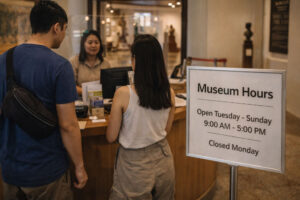 Traveler: Hello po! Open pa ba kayo ngayon?
Staff: Opo, until 5 PM po.
Traveler: Two tickets po, please. Pwede bang mag-picture?
Staff: Pwede po, pero no flash po.
Traveler: Okay po. Nasaan ang CR?
Staff: Sa kanan po, malapit sa exit.
4) Rainy-Day Plan Change (Switch Indoors, Reschedule, Ask If Open)
 Traveler: Umuulan na. Ang lakas ng ulan!
Friend/Staff: Oo nga. Gusto niyo po bang mag-indoor option?
Traveler: Yes po. Sa mall na lang tayo.
Traveler: Okay lang ba kung mag-reschedule tayo bukas?
Staff: Pwede po. Message niyo na lang po kami.
Traveler: Salamat po! Open pa ba kayo bukas?
Staff: Opo, open po.
Small Notes That Make You Sound Natural
- “Pwede bang…” is the easiest friendly opener for requests.
- “Okay lang ba…” is perfect when you are asking permission gently.
- “Saan yung…” is casual and common for directions.
- “Paki-” keeps your requests short and polite.
If you want a quick language context link (not a lesson, just background), here is a simple overview of Tagalog: Tagalog language.
Reality check: Mispronunciations happen. Most people will meet you halfway—especially if your tone is respectful and you try again calmly.
Tagalog Travel Phrases for Vacation FAQ
Will people understand English in the Philippines?
Often, yes—especially in cities, tourist areas, and many service settings. Still, a few Tagalog travel phrases for vacation help when it is noisy, crowded, or you need something fast.
What’s the easiest way to be polite (po/opo)?
Add “po” to requests and thanks: “Pwede po ba…,” “Salamat po.” Use “opo” for a polite yes.
What does “CR” mean?
It means restroom (“comfort room”). Asking “Nasaan ang CR?” is totally normal and widely understood.
Is it okay to speak Taglish?
Yes. Taglish is everyday speech in many places. Mixing English nouns with simple Tagalog structure is common and practical.
How do I say “excuse me” in different situations?
Use “Excuse me po” in most cases. For squeezing past someone, “Makikiraan po” works too (read it like: mah-kee-kee-RAH-an).
What if I mispronounce something?
Smile, slow down, and repeat once. You can also say “Pasensya na po” (sorry) and switch to English if needed.
Do I need to learn Tagalog if I’m only visiting Manila, Cebu, or Boracay?
You do not need to, but it helps. In Cebu, you will also hear Cebuano—still, Tagalog travel phrases for vacation and polite Taglish are widely understood in many tourist settings.