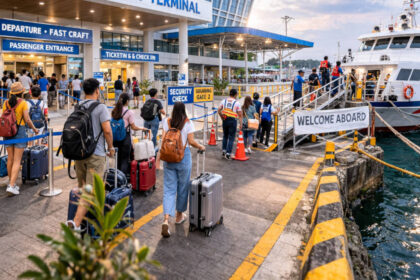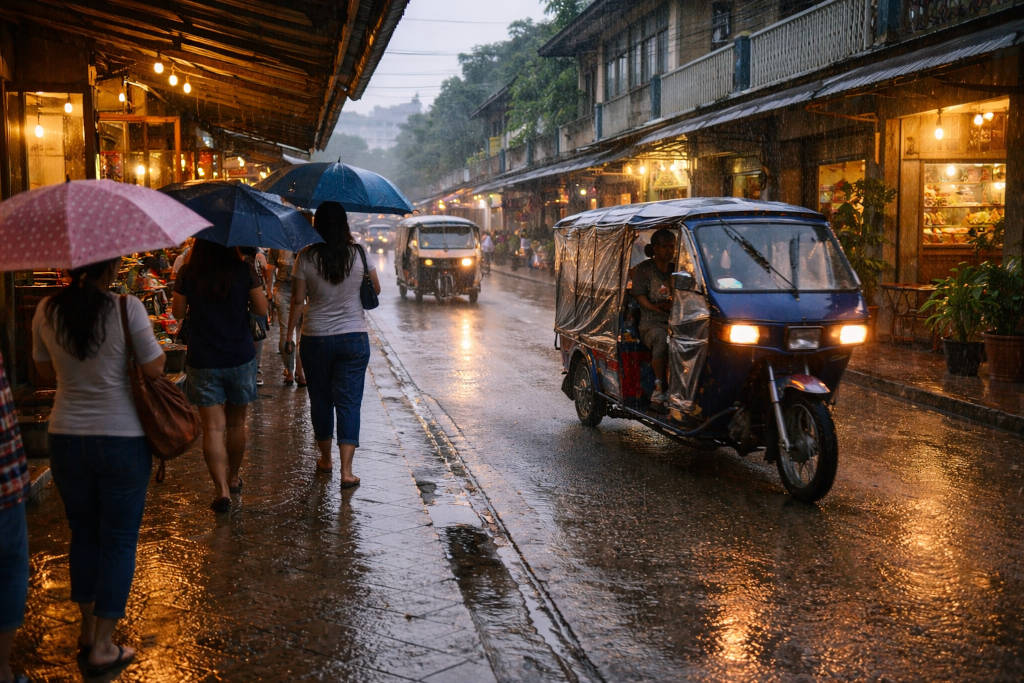
Rain in Sorsogon can be a gentle backdrop or a full plan-changer. If you’re staring at gray skies and wondering what still feels worth doing, the goal is simple: stay dry, keep travel time short, and avoid places where water, waves, or road conditions turn small risks into big hassles. This guide is built for a Sorsogon rainy day when you want indoor-friendly activities, easy food trips, and realistic choices for comfort and safety.
If you’re building a longer itinerary beyond today’s weather pivot, browse Sorsogon Travel Guides for province-wide ideas you can return to when conditions improve.
At-a-Glance: Sorsogon rainy day Reset Plan
Best time window: Light rain and passing showers can be workable year-round, but the wettest stretch is typically mid-year to late-year. Expect the most plan changes when rain comes with strong winds or storm signals.
Realistic travel time: Keep hops to 10–30 minutes between stops. In heavier rain, build a buffer for slow traffic, flooded corners, and loading time under roofs.
Budget band: A Sorsogon rainy day can stay budget-friendly with public transport and simple meals, but comfort often improves fast with short private rides, dry waiting areas, and fewer transfers.
Crowd and closure risk: Malls and covered dining spots get busy when it pours. Some museums, small shops, and even hot spring areas may close early due to weather, staffing, or road conditions.
Backup if it escalates: If winds pick up or advisories change, shift to “one indoor stop + one meal” near your base, then call it early.
Rain Reality Check In Sorsogon: Light Rain Vs Pouring Vs Typhoon Signals
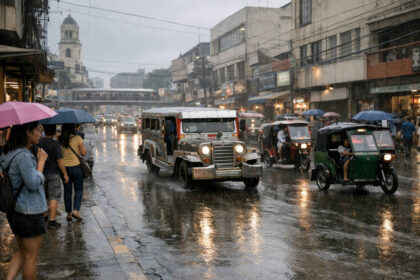
A Sorsogon rainy day feels very different depending on intensity. Light rain usually means short rides and covered stops still work, especially in town centers. Pouring rain often brings visibility issues, slippery steps, and slower travel—this is when shorter distances and fewer transfers matter most. Typhoon signals or strong-wind advisories can trigger boat suspensions, sudden closures, and riskier coastal conditions, even if the rain looks “okay” from your window.
Reality Check: On a Sorsogon rainy day, the “time cost” isn’t just driving—it’s waiting for tricycles under cover, drying off between stops, and re-routing around flooded spots.
For a clearer sense of patterns and what seasonal weather means for planning, cross-check with Philippines Weather Travel Guide, then use today’s advisories to decide what’s actually doable.
A simple decision rule for canceling sea and boat plans
If your plan involves boats (islands, coastal tours, crossings), decide early and decide once. A practical rule: if winds are strong enough to make umbrellas hard to use, or advisories mention rough seas, postpone boat plans. Even without a formal signal, local operators may cancel for safety, and last-minute changes can waste half the day.
On a Sorsogon rainy day, it’s usually better to switch to an indoor loop by mid-morning rather than “waiting it out” until afternoon—because late-day rain often returns heavier, and you’ll still need a dry ride back.
Quick checklist: what to check before you leave (weather, advisories, road conditions)
1) Weather bulletin: Check the latest PAGASA update before committing to long drives: PAGASA Severe Weather Bulletin.
2) Local advisories: Ask your hotel front desk (or your homestay host) about flooded streets, suspended trips, and whether routes to Bulusan or Irosin are still smooth.
3) Road reality: If your route includes mountain roads or shaded curves, assume slower travel and add buffer time. If you’re relying on transfers, double-check the last trip times—rain can shorten operating hours.
4) Plan clarity: If you’re unsure how to triage time, comfort, and risk, keep the framework simple: protect sleep, protect dry clothes, protect your return trip. For a broader planning foundation you can reuse anywhere in the country, see Philippines Travel Planning Guide.
Choose Your Rainy-Day Base: Where You’ll Be Least Stressed
When it’s wet, your base matters as much as the activity. The best rainy-day base is the one that keeps distances short, gives you covered food options, and reduces “transfer friction” (waiting, getting soaked, negotiating fares, or finding shelter).
Reality Check: On a Sorsogon rainy day, the most stressful part is often the in-between—boarding, unloading, and walking from drop-off to the door—so prioritize places where you can step from vehicle to cover quickly.
Sorsogon City as the easiest “indoor + food” base
Sorsogon City is usually the simplest base for a Sorsogon rainy day because indoor stops and food options cluster closer together. It’s practical for quick resets: supplies, dry seating areas, pharmacies, and reliable transport options. If you want minimal walking, it’s also easier to plan “park-close, eat, leave” routes without committing to long drives.
Donsol as a base when tours cancel
Donsol works best when you’re already there and tours get suspended. The key is to accept the pivot early: switch from “must-see today” to “comfort + calm + short hops.” A canceled tour day can still feel complete with a covered meal plan, one indoor stop (or a sheltered local landmark), and a dry downtime block for laundry, charging, and rebooking. If the sea conditions improve later, you’ll be ready without scrambling.
Bulusan and Irosin as cooler backups with caution on road conditions
Bulusan and Irosin can be cooler, relaxing backups—especially if your idea of a Sorsogon rainy day includes warm water and a slower pace. Irosin Hot Springs can be a comforting option in light to moderate rain, but avoid forcing it during heavy downpours if the roads feel sketchy or advisories change. Choose these areas when you can confirm road conditions are passable and you have a low-stress ride back before dark.
Indoor Stops And Covered Places With Minimal Walking
The best indoor stops are the ones that feel meaningful without needing long walks in wet shoes. Think: a short indoor visit, a sheltered photo moment, and then a warm drink or meal nearby.
Reality Check: Smaller attractions sometimes close earlier during bad weather, so keep a second indoor option nearby instead of relying on one “main” stop.
Museum and heritage option
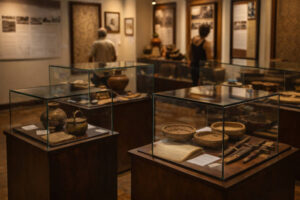
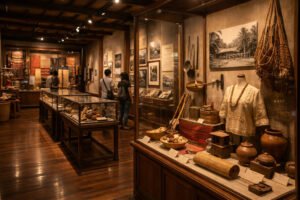 If you want a classic indoor anchor for a Sorsogon rainy day, look for heritage and museum-style stops like Museo Sorsogon. The win here is simple: you get culture, air-conditioned comfort, and a structured visit that doesn’t depend on the sky clearing. Keep expectations practical—plan it as a 30–60 minute stop, then pair it with a nearby merienda or early dinner.
Churches and historic interiors as short stops between meals
 Church interiors are often the easiest “between” stops on a Sorsogon rainy day: sheltered, quiet, and low-effort. Sorsogon Cathedral is a natural option if you’re in the city area, especially for a quick reset between meals. Keep it respectful: modest clothing, lower voices, and shorter visits if there’s a service.
If you’re driving and the weather is manageable, other historic churches in the province can be added as quick indoor pauses—just avoid turning them into long, wet walks from far parking.
Mall time as a practical reset: dry clothes, supplies, easy meals
When rain is nonstop, SM City Sorsogon (or any similar mall stop in your route) is not “boring”—it’s strategic. A mall reset solves the most annoying parts of a Sorsogon rainy day: wet socks, low phone battery, missing rain cover, and the need for a reliable meal without getting drenched. Use it for a clean pivot: buy a poncho or slippers, warm up with a hot drink, then decide if you’ll do one more short stop or end the day early.
Easy Food Trips: Rain-Friendly Routes With Short Hops
Food is the easiest win on a Sorsogon rainy day because it can be planned with short drives and minimal walking. The goal is to string together warm, covered places that feel satisfying without turning into a long commute.
Reality Check: Expect waits at popular covered dining spots when it pours. If you’re hungry now, choose the nearest warm option first, then do a “better” café later.
Route idea 1: Sorsogon City quick loop (coffee merienda dinner)
This is the simplest Sorsogon rainy day loop when you want comfort and predictability:
Coffee start: Choose a café with indoor seating and a sheltered drop-off. Prioritize hot drinks and something filling so you’re not forced into extra stops in the rain.
Merienda stop: Pick a covered bakery or snack shop for quick takeout (kakanin works well because it travels). Minimal walking is the rule—park close, step under cover, and keep moving.
Early dinner: Aim for an earlier dinner window so you’re not navigating heavier night rain. If you’re traveling with family or seniors, this route reduces stress because you can sit, dry off, and reset in one place.
If you’ve been searching “what to do in Sorsogon City on a rainy afternoon,” this loop is often the answer: one indoor stop plus food, repeated in short hops.
Route idea 2: Warm-and-dry comfort food plan (sabaw, lugaw, kakanin, pili snacks)
For many travelers, the best Sorsogon rainy day is the one that leans into warmth. Build your plan around food that’s forgiving in cold, wet weather:
Sabaw first: Choose soups and stews that arrive hot and don’t mind slow eating while you dry off.
Lugaw or arroz caldo as the “reset meal”: This is ideal when rain makes everything feel delayed. It’s fast, comforting, and easy on the stomach.
Kakanin and hot chocolate or coffee: A merienda combo that lets you linger indoors without spending the whole day shopping.
Pili snacks for the room: Keep a small stash so you’re not forced to go out again if the rain worsens at night.
This route works especially well if the forecast looks unstable: you can finish the “best” part of the day early and stay flexible after.
Route idea 3: Market-first morning then early dinner to avoid night rain
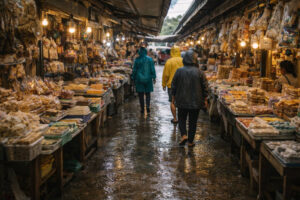 If the rain starts later (or comes in waves), do a market-first morning while roads are clearer. A covered public market aisle is a practical Sorsogon rainy day stop for take-home snacks, fruit, and quick bites—just watch slippery floors and keep your bag zipped. After that, return to your base for a dry break, then go out again only once for an early dinner. This “two exits only” approach is underrated: fewer wet transitions, fewer chances to soak shoes, and fewer transport decisions when visibility drops.
If you’re wondering “where to eat in Sorsogon when it’s raining hard,” the safest answer is usually: closest warm meal now, best-value meal early, then back to your base before dark.
What To Avoid When It’s Pouring
Rain doesn’t automatically cancel everything, but some activities become high-risk or high-stress fast. On a Sorsogon rainy day with strong winds or nonstop downpour, it’s smart to avoid places where waves, water flow, or slippery surfaces do the deciding for you.
Reality Check: The “best viewpoint” is not worth it if you can’t stand still due to wind, or if the road there is already shiny-black and slick.
Coastal viewpoints and wave-exposed areas
Skip wave-exposed coastal viewpoints during heavy rain or strong wind. Even if the sea looks dramatic, conditions can shift quickly, and rogue waves plus wet rocks are a bad mix. If your original plan was coastal, salvage it by choosing a sheltered seaside café (if available) rather than an open viewpoint.
Waterfalls, river edges, and slippery trails
Waterfalls and river spots can rise fast during sustained rain. Trails get muddy, steps turn slick, and rescues are harder in poor visibility. If anyone in your group has sandals with smooth soles, this is an easy “no” day—swap it for indoor culture and food instead.
Volcano-zone areas when advisories or heavy rain increase risk
If your plan includes the Bulusan area, treat advisories as non-negotiable. Heavy rain can also change road feel and visibility around forested routes. Before heading out, check for updates and closures through the official bulletin page: Bulusan Volcano Bulletin. For broader decision-making on risk, crowds, and staying safe while traveling in bad conditions, keep this bookmarked: Travel Safety In The Philippines.
Wet-Weather Transport Tips In Sorsogon
Transport is where a Sorsogon rainy day either stays calm or becomes exhausting. The “safest and least stressful” option depends on your group, your luggage, and how heavy the rain is—but the consistent strategy is to reduce transfers and reduce exposed waiting time.
Reality Check: Even short distances can feel long when you’re waiting roadside for a ride with no roof. Build your plan around shelter, not just kilometers.
How to choose between tricycle, jeepney, van, and private hire in rain
Tricycle: Best for short hops in town when you can go door-to-door. Choose this for minimal walking, but confirm the rain cover is secure and that bags can stay dry.
Jeepney: Can be budget-friendly, but it often means more waiting and more exposure. In heavy rain, comfort drops fast, especially if you’re carrying bags or traveling with kids or seniors.
Van: Often the calmer shared option for longer town-to-town hops, with less wind exposure than open vehicles. Still, queues and schedules may change in bad weather.
Private car or private hire: Usually the least stressful for a Sorsogon rainy day if your priority is staying dry and keeping control of timing. It can cost more, but it can also save a day from dissolving into delays.
If you’re comparing options and want a broader country-wide guide to transfers, terminals, and what to expect, use Philippines Public Transport Guide.
Timing and buffers: leave earlier, shorten distances, avoid late-night returns
 A good rule on a Sorsogon rainy day: start earlier and end earlier. Leave before roads get busier, do one “anchor” stop (museum, church, mall), and keep the afternoon flexible. Avoid late-night returns if you can—visibility, puddles, and fatigue stack up at the same time.
How early should you decide to cancel or push through? If your plan involves boats or long drives, make a first decision the night before using forecasts, then confirm early morning before you leave. If conditions worsen mid-day, pivot quickly: don’t wait until you’re already wet, hungry, and far from base.
Practical riding tips: bags, footwear, rain cover, seat protection, keeping phones dry
Keep one “dry core” bag: phone, power bank, cash, and one clean shirt in a dry bag or double zip pouch.
Footwear matters: choose sandals with grip or shoes you can dry quickly. Avoid smooth soles on wet tiles.
Seat protection: tricycle seats can be damp; a small towel or foldable mat saves comfort.
Phone survival: keep a small umbrella for boarding and a waterproof pouch so you can check maps without panic.
Comfort trick: plan at least one stop where everyone can fully dry off—mall, café, or your room—so the day doesn’t feel like a continuous drizzle.
How To Salvage A Canceled Tour Day
 A canceled tour day doesn’t have to feel wasted. The best salvage plan is calm and modular: one indoor anchor, one food loop, and one rest block that prepares you for tomorrow.
Reality Check: When operators cancel, it’s often because conditions are genuinely unsafe. Treat the cancellation as saved trouble, not lost time.
If Donsol Whale Shark plans cancel: a calm Plan A Plan B Plan C day
Plan A (best balance): Do a short indoor stop (or sheltered local landmark), then a warm meal, then return to your base for a dry reset. Use the afternoon to re-check conditions and rebook for the next viable window.
Plan B (when it’s pouring): Skip long rides, do a single covered café or mall-style reset if accessible, then focus on comfort: laundry, charging, and early dinner.
Plan C (when advisories escalate): Stay close, avoid coastal exposure, and treat the day as recovery. The most useful “activity” is being ready for a clear morning.
For timing notes, season expectations, and what usually causes suspensions, refer to Sorsogon Whale Shark Planning Guide.
If Matnog beach plans cancel: indoor reset + food loop + early night
If the original plan was beaches or crossings, switch your mindset: Matnog-style coastal plans are the first to lose comfort when winds rise. Salvage the day by moving your base focus to covered meals and supplies. Do one indoor stop that requires minimal walking, then build a food loop that ends early. On a Sorsogon rainy day, an early night is not “giving up”—it’s often what protects the next day from becoming sluggish and soggy.
If you only have half a day: “two stops + one meal” micro-itinerary
When time is short, keep it clean:
Stop 1: an indoor culture stop (Museo Sorsogon or a church interior like Sorsogon Cathedral).
Stop 2: a practical reset (SM City Sorsogon for supplies and dry seating).
One meal: choose the warmest, closest comfort food option and eat earlier than usual.
This half-day plan works well for a Sorsogon rainy day because it minimizes exposure while still giving you a “real” travel memory: place, texture, and taste.
Costs And Comfort Notes
Rainy days are when spending patterns change. The smartest approach isn’t “spend more” or “spend less”—it’s to spend where it reduces stress the most: fewer transfers, closer bases, and dry waiting time.
Reality Check: The hidden cost on a Sorsogon rainy day is replacing wet essentials (poncho, slippers, phone cable) and paying extra for rides when you’re already tired. A small buffer in your budget prevents frustration.
Cheap, mid, and comfortable rainy-day spending patterns (no exact prices, only ranges and decision logic)
Cheap pattern: One indoor stop, one simple warm meal, mostly public transport. Best when rain is light and you’re traveling light.
Mid pattern: Two indoor stops, café merienda, and a mix of tricycle plus van rides. Best when you want to stay dry without fully “locking in” a private vehicle.
Comfort pattern: Private rides for door-to-door transfers, indoor meals with dry seating, and a base that reduces walking. Best for families, seniors, or anyone protecting gadgets and luggage.
When paying more is worth it (private rides, closer base, dry waiting areas)
Paying more is usually worth it when it prevents repeated soaking: if your group has kids, seniors, or lots of bags; if your plan requires multiple transfers; or if you’re traveling after dark. Comfort spending also makes sense when you’re choosing a safer option over a risky one—especially when roads feel slick and visibility is low. If you need a related “indoor routes” read for another city, this is a useful comparison piece: Manila Rainy Day Itinerary.
FAQ
What are the easiest indoor stops in Sorsogon when it’s pouring?
Prioritize Museo Sorsogon, a short church interior visit like Sorsogon Cathedral, and a mall reset at SM City Sorsogon for supplies and dry seating.
Which area is best as a rainy-day base: Sorsogon City, Donsol, Bulusan, or Irosin?
Sorsogon City is typically the easiest for indoor stops and food. Donsol is fine if you’re already there and tours cancel. Bulusan and Irosin work as cooler backups when roads are confirmed passable.
What food trips can you do with short drives and minimal walking in the rain?
Do a “coffee–merienda–early dinner” loop near your base, choose comfort food (sabaw or lugaw), and buy pili snacks or kakanin for the room to reduce extra trips.
What should you avoid in Sorsogon during heavy rain or a typhoon signal?
Avoid wave-exposed coastal viewpoints, waterfalls and river edges, and any Bulusan-area plans when advisories change. Treat official bulletins and local suspensions as final.
How do you salvage a canceled tour day in Donsol?
Switch to one indoor anchor, one warm meal, and a dry reset block (laundry, charging, rebooking). If the sea is unstable, don’t keep waiting outdoors for a “maybe.”
What transport is safest and least stressful in wet weather: tricycle, jeepney, van, or private car?
For short hops, tricycle door-to-door helps. For longer hops, vans can be steadier than open rides. Private cars are usually least stressful when rain is heavy and you want full timing control.
How early should you decide to cancel or push through a plan on a rainy day?
Make a first call the night before, confirm early morning, and pivot by mid-morning if conditions don’t improve. For boat-related plans, decide earlier than you think you need to.
What to pack for a Sorsogon rainy day to stay comfortable and dry?
Bring a poncho, small umbrella, dry bag or zip pouches, quick-dry towel, extra shirt, grippy sandals, and a waterproof phone pouch. Keep one set of clothes protected as your “dry reserve.”
How do you check weather and advisories before leaving your hotel?
Check the latest PAGASA bulletin, ask your hotel about local road conditions and suspensions, and avoid committing to long drives if winds and rain are intensifying.
Are hot springs a good backup plan during rainy season in Sorsogon?
Irosin Hot Springs can be a soothing backup in light to moderate rain if roads are safe and you can return before dark. Skip it during heavy downpour or when advisories suggest worsening conditions.
When rain ruins the original plan, a Sorsogon rainy day still works beautifully when it’s built around short hops, warm meals, and realistic buffers. Choose a base that keeps you dry, pick one indoor anchor, and end early enough to protect tomorrow’s energy. For more practical reads like this, browse Tips And Inspiration.