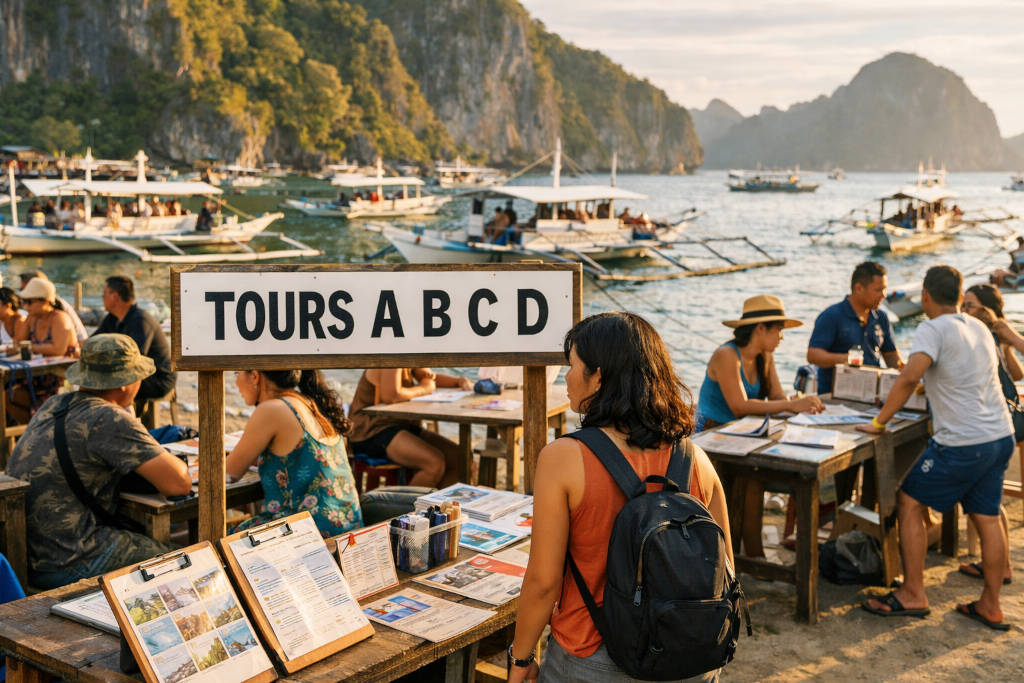
El Nido is one of those places where the view looks unreal, but the logistics are very real: limited transport, weather-driven tour changes, and peak-season crowds. That mix can create confusion around pricing and “agents” offering help. This guide to scams in El Nido is not here to scare you. It is here to help you quickly tell what is normal versus not normal, so you can book tours and transport calmly and keep your trip running on schedule.
Think of this as a planning tool: what to clarify before you pay, what a standard Island Hopping Tours quote should include, how to avoid tricycle overcharging without being rude, and what to do step by step if something feels off. When you know the usual patterns, you can spot the unusual ones fast.
At-a-Glance: Scams In El Nido Normal Vs Not Normal
 Reality Check: El Nido runs on tourism, but it is still a small town with limited vehicles and weather-sensitive seas. Prices can change by season, time of day, and demand. Your goal is not “the cheapest,” it is “clear, complete, and agreed.”
- Best time window: Drier months are usually smoother for boat trips; rainy and amihan or habagat season patterns can trigger cancellations and reroutes.
- Realistic travel time: Transfers (like Puerto Princesa to El Nido) can stretch with traffic, stops, and weather. Plan buffer time before tours and flights.
- Budget band: Expect a premium vs non-tourist towns. Your savings come from avoiding unclear add-ons and last-minute “rush” offers.
- Crowd risk: Peak season and long weekends mean more pressure selling and fewer seats, especially for vans and popular Tour A stops.
- Rain and wind backup: Have a land-based plan for a canceled boat day (cafes, viewpoints, beaches close to town, low-commitment activities).
Quick Reality Check: El Nido Is Tourist-Focused, So Prices Vary
Reality Check: Variation is normal. The not-normal part is when the total changes mid-way, inclusions stay vague, or you are pressured to pay fast without proof.
Normal tourist pricing vs unfair overcharging
Normal: Different operators quoting slightly different prices for the same Tour A, Tour B, Tour C, or Tour D route (especially if one includes extra stops, better lunch, or hotel pickup). “Special trip” pricing for tricycles when you want a private ride instead of sharing. A higher price during peak season when seats and boats are limited.
Not normal: A quote that sounds low, but then becomes expensive through surprise fees (gear, “mandatory” upgrades, strange permits that no one else mentions). A tricycle fare that changes after you arrive. A rental shop refusing to show a written rate list while holding your ID.
The simplest rule: clarify inclusions and total cost before you say yes
Before you hand over cash, ask one calm question: “Total na po ito? Ano po ang kasama?” (Is this the total? What is included?) If the person cannot give a clear total and a clear list, pause. In El Nido, clarity is a safety feature.
Before you arrive: small prep that prevents big hassles
Do a five-minute setup that saves you time in town: keep screenshots of your hotel address, your transfer details, and a simple checklist of what you will ask every seller (total price, inclusions, cancellation rules, and proof). If you are planning your first trip in the country, skim Philippines Travel Planning Guide so you arrive with the right expectations about deposits, receipts, and local transport systems.
Normal Vs Not Normal: The Fast Checklist
Reality Check: Most transactions in El Nido are honest. The quickest wins come from recognizing the “calm and clear” signs and stepping away from “rushed and vague” ones.
Normal signs
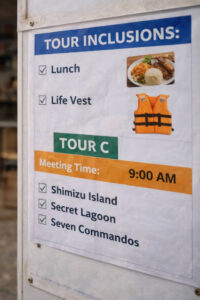
- Clear inclusions (route, stops, lunch, life vest, kayak policy) and a clear total price.
- Posted prices in a shop, a printed inclusions board, or a written booking confirmation message.
- A calm conversation where you are allowed to think, compare, or ask questions.
- Proof of a real office location you can walk into (not only a messenger chat).
- An official receipt (OR) when available, or at least a documented payment record and booking reference.
Not normal red flags
- Pressure tactics: “Last slot,” “Pay now,” “No time to read,” especially if you just arrived.
- Vague inclusions: the route is named, but stops and fees are unclear.
- Changing price mid-way: a new fee appears after you already committed.
- Refusing to put anything in writing: no message confirmation, no printed rate list, no receipt option.
- Asking for sensitive items unnecessarily (like keeping your passport as “deposit”).
Tour Booking Scams In El Nido And How To Avoid Them
 Reality Check: Many legitimate operators use social media. The risk is not “online” itself, it is paying someone you cannot verify.
The “DM agent” problem and fake pages
A common pattern behind scams in El Nido is the “DM agent” offering a deal through a new or copycat page. Some red flags: the account changes names often, photos look copied from other pages, comments feel generic, and there is no clear office address in El Nido town. Another red flag is when the “agent” avoids voice calls and pushes you to pay quickly to a personal account with no business name attached.
How can I tell a legit tour operator from a fake agent or fake account
Use a simple verification stack. You do not need to be perfect; you just need to be confident enough before paying.
- Real business identity: Ask for the exact business name used on receipts and registrations. Legit operators will not get offended by basic questions.
- Office location: Ask for a specific office address you can visit during business hours, not just “near the port.”
- Inclusions list: Request the full inclusions in writing: route label (Tour A, B, C, or D), stops, lunch, life vest, and what fees are excluded.
- Cancellation rules: Ask what happens if the Philippine Coast Guard or LGU cancels boats due to weather. (LGU means Local Government Unit, the municipal office that sets local rules.)
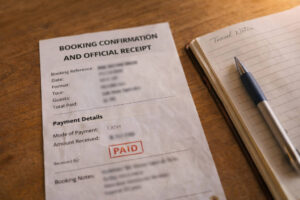
- Payment proof: You should receive a booking confirmation message with your name, date, tour route, and meeting time.
If you want a more complete planning view of tour routes and logistics, keep this bookmarked: El Nido Travel Guide And Tours.
Should I book island hopping tours online or in town
Online can be fine if you can verify the operator clearly and you will receive a detailed written confirmation. It is often helpful for peak dates when you need to lock in a schedule.
In town can be easier for first-time visitors who prefer face-to-face clarity. You can compare inclusions boards, confirm meeting points, and ask about weather contingencies. The tradeoff is that the most popular days can sell out, and you might spend time shopping around.
A balanced approach: shortlist a few verified operators before arrival, then decide in town if the weather forecast and your energy level support a boat day.
Payment tips: partial deposits only when verification is strong, always keep proof
Deposits are common for tours, especially private boats or peak dates, but keep it practical:
- Pay a partial deposit only after you have the business name, office location, inclusions list, and cancellation rules in writing.
- Use payment methods that generate a record (bank transfer with a reference, e-wallet with a screenshot, or card if available).
- Keep screenshots of the offer, the inclusions list, and the payment confirmation in one folder on your phone.
What’s Normal For Island Hopping Tours In El Nido
 Reality Check: The Bacuit Archipelago is weather-dependent. Even with a legitimate operator, routes can change for safety. The key is knowing what changes are reasonable and what changes are not.
Tours are commonly sold by route labels (Tour A, Tour B, Tour C, Tour D) and inclusions should be clear
In El Nido, Island Hopping Tours are commonly sold as Tour A, Tour B, Tour C, and Tour D. The exact stops can vary, but your booking should always state:
- Tour route label (A, B, C, or D) and the meeting time and meeting point
- Whether it is joining (group) or private boat
- Lunch and drinking water policy (what is included, what you should bring)
- Life vest availability (should be included for safety)
- Rules on kayaking and lagoon access (some areas limit kayaks or require rentals)
What should be included in a standard El Nido island hopping tour price
For most joining tours, a standard price commonly covers the boat, crew, the planned stops for that route, lunch, and life vests. Ask specifically about these common items:
- Eco-Tourism Development Fee: Often collected for entry and environmental management. Confirm the amount, validity period, and whether it is already included or paid separately.
- Lagoon or site-specific fees: Some destinations may have additional charges or regulations. A legit operator will disclose these upfront.
- Kayak rental: Often an optional add-on. It is normal to pay extra for this, but not normal for it to appear as a surprise “mandatory” charge if it was not disclosed.
If you are budget-focused, it helps to balance paid tours with simple land-based days. You can plan a calm low-spend day using Free Things To Do In El Nido so you are not pressured into last-minute upsells.
Normal add-ons and fees vs suspicious add-ons
Normal add-ons: Kayak rental, snorkel gear rental, waterproof bag rental, hotel pickup if you are staying farther from the meeting area, and a small fee for special dietary lunch requests (if available).
Suspicious add-ons: A “special permit” that only your agent mentions, unclear “processing fees,” or a large “mandatory tip” added to the total without prior notice. Tips are appreciated, but they should not be forced or disguised as a required fee.
What to do if the itinerary suddenly changes
Route changes can be legitimate when waves, wind, or crowd control rules affect certain lagoons and beaches. If your operator says the plan changed, ask two quick questions:
- “Ano po ang kapalit na stops?” (What stops will replace the original ones?)
- “May additional fee po ba?” (Is there any additional fee?)
Normal: swapping to safer nearby sites with no price change, or offering a reschedule option if the day becomes unsafe.
Not normal: removing key stops without explanation, then charging extra to “upgrade” back into what you already paid for.
What should I do if a tour gets canceled because of weather
Weather cancellations happen in coastal areas, especially when advisories restrict boats for safety. Keep it calm and procedural:
- Ask for the reason: Was it a Coast Guard advisory, an LGU instruction, or sea conditions assessed by the operator?
- Confirm your options in writing: reschedule, refund, or switch to a different route if allowed and safe.
- Do not chase the day: If seas are rough, a “we can still go if you pay extra” offer is a red flag.
- Use a backup plan: slot in a town day and move the boat day to your next clear window.
For timing your trip around calmer conditions, keep Philippines Weather And Best Months handy when you plan your tour dates.
Transport Overcharging: Tricycles, Vans, And Transfers
 Reality Check: El Nido has limited vehicles and high demand at certain hours. Overcharging usually happens when the fare is not agreed clearly before you ride.
Normal for short rides vs “special trip” hires (agree on total price before riding)
Tricycles are a main mode of transport around town and nearby areas. Two common setups:
- Shared ride: you pay per person, and the tricycle may pick up others along the way.
- Special trip: you hire the tricycle for your group only. This is more expensive and is normal when you want privacy or you have luggage.
What matters is agreeing on the total (not just “per head”) and confirming whether it is one-way or round-trip before you get in.
How to ask for the fare politely and confirm if it’s one-way or round-trip
Use a calm, respectful script that works in most Philippine towns:
- “Magkano po lahat hanggang (destination)?” (How much total to (destination)?)
- “Special trip po ba ito o shared?” (Is this a special trip or shared?)
- “One-way lang po ito, tama?” (This is one-way only, correct?)
In some areas, there may be a posted tricycle fare matrix (a fare guide displayed by the barangay or terminal). Barangay is the smallest local community unit, like a neighborhood administration. If you see a fare matrix, take a photo for reference. If you do not see one, ask your hotel what the usual range is for your route.
Safer booking for vans: ticketed desks, confirmed pickup details, written confirmation
For transfers (for example, Puerto Princesa to El Nido), prioritize ticketed desks, known terminals, or hotel-arranged transfers that provide clear pickup details. Ask for:
- Pickup time window and exact pickup point
- Driver name or vehicle plate if available
- Luggage policy and whether stops are included
- What happens if you miss pickup due to delays
If you want broader context on how public transport works locally, read Philippines Public Transport Guide to understand common terminal practices, ticketing, and what “special trip” usually means.
Motorbike And Scooter Rental: Deposit, Damage Claims, And Your ID
Reality Check: Motorbike rentals are common in El Nido, but road conditions, sudden rain, and parking constraints make “before and after” documentation non-negotiable.
Is it normal to pay deposits for motorbike rental, and what deposit is not normal
Yes, deposits are common. A reasonable deposit is usually a cash amount that matches the bike category and local rates, or a copy of an ID. What is not normal is pressure to surrender your passport as a “deposit,” especially if the shop cannot explain how it is secured and returned. If you must leave an ID, prefer a photocopy and keep your original whenever possible.
Before you pay, confirm these basics in writing (even as a message): daily rate, deposit amount, what counts as damage, fuel policy, late return fees, and whether helmets are included.
Photo and video checklist before you ride
Do a fast, systematic walkaround. This prevents many disputes linked to scams in El Nido rentals where “new damage” appears later.
- Video the full unit: front, sides, back, and close-ups of scratches
- Photo the odometer and fuel level
- Check lights, brakes, horn, and tires
- Photo the helmets you receive
- Get a quick confirmation message: “Noted existing scratches, deposit is (amount), return date is (date).”
What to do if a shop claims “new damage”
Stay calm, do not argue loudly, and shift to evidence:
- Show your pre-ride photos and video.
- Ask for a clear explanation of the specific damage and the repair cost basis.
- If it escalates, ask to bring the discussion to a public area and request your hotel to help mediate.
- If you feel pressured, do not hand over more cash on the spot without documentation.
Money, Cards, And Small Purchases
Reality Check: Small mistakes with cash and change happen everywhere, especially when you are tired or it is crowded. Slow down by five seconds and you avoid most issues.
Simple cash handling habits
- Carry small bills for tricycles, small eateries, and tips.
- Count your change before you walk away, especially in busy areas.
- Keep your larger cash separate, so you are not flashing a thick wallet during a quick purchase.
- If you are paying a deposit, ask for a written acknowledgment and keep it with your booking screenshots.
Card and online booking safety basics
- Use trusted payment channels and avoid sending card details by chat.
- Turn on bank alerts, set spending limits, and lock your card when not in use if your bank app supports it.
- For online payments, keep screenshots of the final total and the confirmation screen.
How To Say No Politely In El Nido
Reality Check: A polite “no” is normal in tourist towns. You do not need a long explanation. A short line plus movement (step back, keep walking) works best.
Copy-Paste Polite Lines:
Salamat po, pass muna.
Okay na po kami, thank you.
Hindi po, salamat.
Next time na lang po.
Sorry po, may naka-book na kami.
How to exit: smile, step back, keep walking, avoid long explanations
Keep your tone friendly and your body language final. Smile, step back, and continue walking toward a more public area. If someone follows, repeat one line once, then stop engaging. Long explanations can invite more pushing.
If Something Feels Wrong: What To Do Step By Step
Reality Check: If you feel pressured, your priority is distance and documentation, not winning an argument. Most issues become easier once you are somewhere public and calm.
Leave the situation and go to a well-lit public area
Step away. Move toward the main road, a busier storefront, your hotel lobby, or a municipal area. If you are on the way to a meeting point, do not follow someone to a secluded side street to “fix” a booking problem.
Save evidence
Capture what you can quickly: screenshots of chats, account names, payment confirmations, and any written promises. If there is an official receipt (OR), keep it. An OR is a formal proof of payment that businesses can issue; not every small vendor issues one, but it is reasonable to ask for documentation whenever you pay a deposit or a large amount.
Ask your hotel to help you contact the right office
Your hotel or accommodation front desk is often the fastest helper because they know the local setup, common meeting points, and which operators are reliable. Ask them to call the operator using the number they already have on file, not only the number in a random message thread.
Where to ask for help in El Nido if a problem happens
Start with local, practical help points: your accommodation, the nearest barangay hall, or the municipal tourism office (LGU). For official contact references, use Palawan Tourism Contact List (El Nido) to find the right channel for the area.
If you need escalation guidance beyond the municipality, review DOT Tourist Assistance Call Center Info for official help options and reporting pathways.
For a broader safety framework (what to document, how to phrase reports, and how to keep your plans calm), keep Travel Safety In The Philippines Guide as your reference.
FAQ
What scams are most common in El Nido for first-time visitors?
The most common patterns are fake or copycat tour accounts, unclear tour inclusions that turn into surprise add-ons, tricycle fares that were not agreed before riding, and rental disputes tied to deposits or “damage” claims. These are usually preventable with written confirmations and a clear total price.
What is normal pricing behavior in El Nido tours, tricycles, and rentals?
It is normal to see price ranges rather than one fixed price, especially in peak season. It is not normal for totals to change mid-way without your approval, or for inclusions to remain vague after you ask directly. The line is clarity: if it cannot be explained simply, treat it as a risk.
How can I tell a legit tour operator from a fake agent or fake account?
Confirm the real business name, a physical office location, a written inclusions list, and cancellation rules. Pay only when you have a booking confirmation that includes your date, route label, meeting time, and meeting point. If the seller refuses basic verification, choose another operator.
What should be included in a standard El Nido island hopping tour price?
A standard joining tour price should cover the boat and crew, the planned stops for the route, lunch, and life vests. Fees like the Eco-Tourism Development Fee and site-specific charges should be disclosed clearly as included or separate. Kayak rental is commonly separate and should not appear as a surprise.
How do I avoid tricycle overcharging without being rude?
Ask for the total price first, confirm if it is shared or special trip, and confirm one-way or round-trip. Use polite honorifics (po) and keep your tone calm. If the price feels high, say “Salamat po, magtatanong muna kami” (Thank you, we will ask around first) and step away.
Is it normal to pay deposits for motorbike rental, and what deposit is not normal?
Deposits are normal, especially for higher-value units. What is not normal is being forced to leave a passport, or paying a deposit without a written note of the amount and return conditions. Always document the unit condition before you ride.
What should I do if a tour gets canceled because of weather?
Ask for the reason, confirm your options in writing (reschedule, refund, or route adjustment), and avoid offers that push you to go out in unsafe conditions. Use your backup plan for the day and move the boat schedule to the next safer window.
What should I do if something feels wrong or I think I’m being scammed?
Leave the situation, go to a public area, and save evidence (screenshots, names, receipts). Ask your accommodation to help you contact the right office. If needed, use official contact references and escalation options so your report goes to the correct channel.
For more planning articles that match your itinerary, browse El Nido Travel Guides. The best protection against scams in El Nido is not suspicion, it is clarity: a clear total, clear inclusions, written confirmation, and the confidence to say no and keep walking.