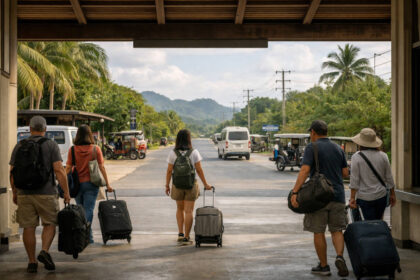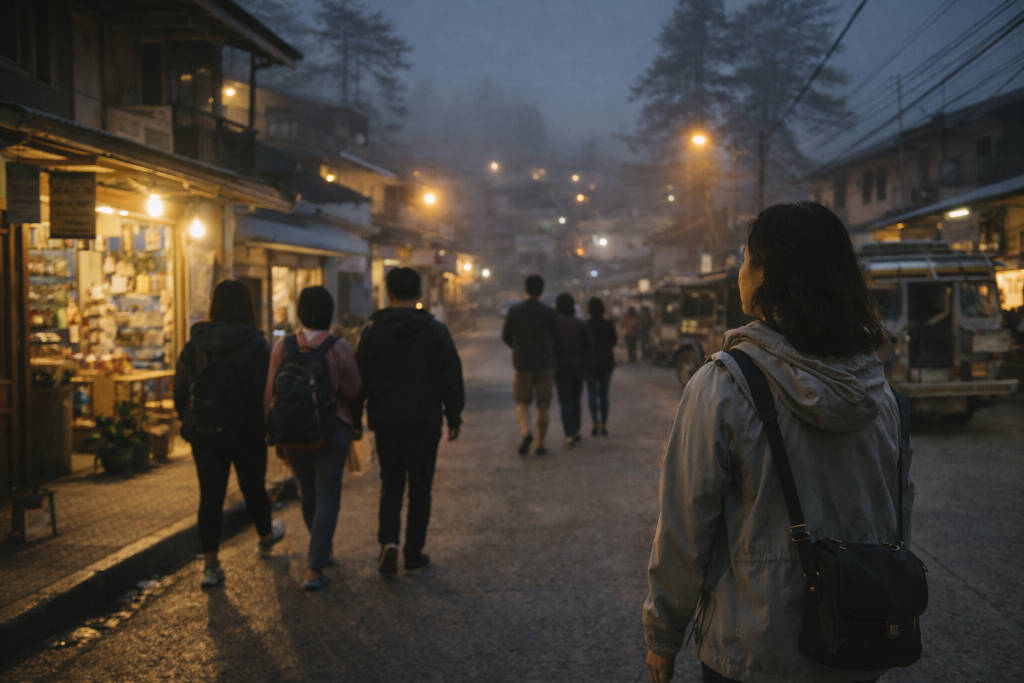
Sagada nightlife feels different from big-city nights. Evenings are typically quiet, cool, and early—more about warm drinks, simple snacks, and short walks than chasing late hours. For first-timers, the safest plan is often a controlled night out: a clear finish time, a familiar route, and a home base you can reach without stress. This guide explains what Sagada nightlife usually looks like, where the evening energy tends to concentrate (by areas, not venues), and how to plan a low-risk night that still feels like a treat.
If you’re browsing this kind of advice for your trip planning mood board, you can also explore Tips & Inspiration for more practical, Philippine-context guides.
Sagada Nightlife Expectations: What “Nightlife” Means Here
Think of Sagada nightlife as “after-dinner time” rather than “party time.” The town’s pace, weather, and layout encourage early nights. Many travelers come for daytime treks and sunrise activities, so evenings naturally wind down sooner.
Quiet town reality and early wind-down times
Sagada evenings can feel calm by default: fewer vehicles, softer street lighting in some stretches, and cooler air that makes people head indoors earlier. Reality check: what feels like “still early” in the city can already feel late in a mountain town, especially on weekdays.
What a good night out looks like for first-timers
A solid first-timer plan is simple: eat somewhere near your lodging cluster, take a short stroll on well-lit main road sections, then go back before you feel tired or chilled. The goal is not to maximize hours—it’s to keep the night warm, easy to navigate, and easy to exit. This approach works whether you call it a Sagada nightlife plan, a “quiet evening,” or just a comfortable after-dinner routine.
Where the Evening Energy Concentrates (Areas Only)
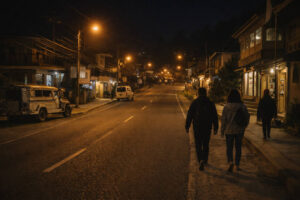 Instead of hunting for a “party strip,” focus on areas where people naturally pass through after dinner. In a small town, safety and comfort often come from being near light, people, and familiar landmarks.
Town proper core and walkable streets near common lodging clusters
The town proper core (near clusters of homestays and small inns) is where you’ll usually find the most foot traffic after dinner. This is also where you’re more likely see other travelers doing the same thing: short walks, quick snacks, and early returns. Reality check: even in the core, some side streets can get dark fast—stick to routes you’ve already walked in daylight.
Market-adjacent area for simple evening snacks and short strolls
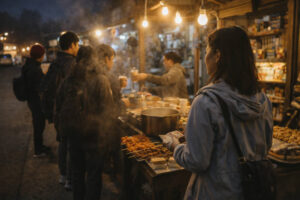 Market-adjacent stretches can feel livelier for quick bites and casual people-watching. The vibe is usually low-key: simple snacks, warm drinks, and small groups. Keep expectations modest—this is not a “late-night food district,” but it can be a pleasant, practical stop on a calm Sagada nightlife loop.
Meeting points that feel safer: well-lit main road sections and near official or community spots
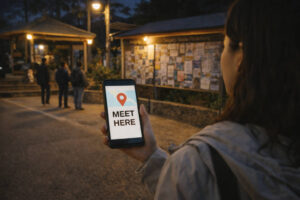 When in doubt, choose meeting points near well-known public landmarks or official or community-adjacent areas where lighting is better and foot traffic is more consistent. If you want official local updates (events, advisories, visitor information), check Sagada Tourism or Mountain Province Tourism Sagada before your trip. Reality check: “familiar and visible” beats “new and interesting” at night.
Your Low-Risk Night Out Plan (Simple Checklist Flow)
This is the practical core of a calm Sagada night out: fewer decisions after dark, fewer chances for confusion, and a clear reset plan if anything feels off.
Before you go out: cash, battery, layers, headlamp, ID, emergency contacts
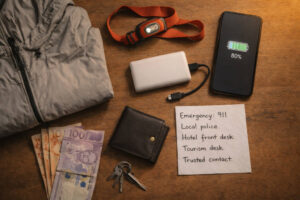 Do a 2-minute prep before leaving your room. This matters in a cool, quiet town where you may not want to “solve problems” outdoors.
Bring: small cash (bills and coins), a charged phone, a power bank, a warm layer (jacket or scarf), and a small headlamp or flashlight for darker stretches. Keep one valid ID and a note of your lodging name and address (screenshot or written). Save emergency contacts and your lodging’s contact number. For general planning habits that prevent avoidable stress, review Philippines travel planning guide for first-timers. Reality check: cold + low battery + no cash is an avoidable combo.
Decide a finish time before the first drink and tell your companion
Pick a realistic finish time while you’re still clear-headed. “One hour after dinner” is a valid plan. Tell your companion: “We’re heading back at ____.” This protects you from a slow drift into “one more round” that turns into a stressful walk home. In a Sagada nightlife context, earlier is often safer and more comfortable because temperature drops and streets get quieter.
Pick a route you can describe in one sentence, avoid unlit shortcuts
Your route should be simple enough to say out loud: “Main road to the town core, quick snack near the market area, then back the same way.” Avoid unlit shortcuts, steep or uneven paths, and unfamiliar side streets. Reality check: a shortcut that saves 5 minutes can cost you confidence—especially if fog or drizzle rolls in.
If solo: buddy system alternative (meet-up inside, leave early, no isolated walks)
If you’re solo, don’t rely on “finding friends” outside. Use a controlled setup: meet people inside a well-lit spot (not on the street), keep your drink count low, and leave early while transport and foot traffic still feel normal. If you can’t arrange that, a quiet night in with a warm drink and an early morning plan can be the smartest version of Sagada nightlife for solo travelers. Reality check: solo safety is mostly about reducing exposure time and avoiding isolated walks.
Budget Expectations for a Calm Night
A calm night out in Sagada is usually not expensive, but it’s smart to budget for small “comfort add-ons” like a short ride home if you decide not to walk.
Low-key spend range: snacks, one or two drinks, small extras
For a simple evening—snacks, a warm drink, maybe one more small order—many travelers can keep spending modest. A practical planning range is around PHP 200–600 per person for a low-key night, and PHP 600–1,200 if you add more food, a second drink, or small extras. Reality check: cool weather can make you order “just one more warm thing,” so plan a small cushion.
Cash-first guidance and how to avoid surprise pricing
Assume cash is king and bring enough for your evening plus a ride-home cushion. Keep bills small so you don’t get stuck waiting for change. If you want broader budgeting context for a whole trip (not just evenings), skim Philippines travel budget examples. Reality check: budgeting is easier when you decide your “max spend tonight” before you sit down.
What to do if prices feel unclear: ask, confirm, walk away calmly
If a menu isn’t clear, ask politely: “How much is this?” Confirm before ordering. If the answer feels vague or keeps changing, the calm move is to thank them and walk away without arguing. In a small town, staying polite and firm keeps things smooth. This is true whether you’re following a CDO itinerary 7 days mindset or a Sagada quiet-night plan: clarity first, always.
Transport and Getting Home Safely
Late transport in small towns is not something to “assume will appear.” Build your plan around the idea that you may need to walk back—or end early enough that options still exist.
What to assume about late transport in a small town
Expect fewer vehicles later at night and longer waits if you try to hail something. If you’re used to city ride-hail reliability, reset expectations: it may not be available or consistent. For broader context on how transport tends to work across the Philippines (and why timing matters), see Philippines public transport guide. Reality check: your best “transport strategy” might simply be choosing a place close enough to walk back.
Walk-back rules: distance, lighting, weather, and when not to walk
Walking back can be okay if the route is short, familiar, and well-lit. Use these rules:
Okay to walk if: you can describe the route clearly, you’ve walked it in daylight, you’ll be on the main road most of the time, and weather is stable.
Do not walk if: fog or drizzle reduces visibility, the route includes unlit shortcuts, you feel dizzy or too cold, or you’re unsure which turn leads home. Sagada nights can get chilly; cold can make small mistakes feel bigger.
Fallback plan if you can’t get transport: safe waiting spots and who to contact
If you can’t get transport, don’t wander. Move to a safer, well-lit area near the town core or a public landmark, and contact your lodging for guidance. Ask if they can advise the safest pickup point or help coordinate a ride. If you’re planning a bigger route through the mountains, it also helps to understand the overall travel flow and timing; this guide can help contextualize logistics: Sagada and Banaue travel journey planning. Reality check: the safest reset is stopping movement and returning to a known point.
Red Flags to Avoid (Sagada-Specific Context, No Fear-Mongering)
This section is not to scare you. It’s to help you notice when a calm plan is turning into a stressful one, so you can exit early and cleanly. For a broader safety framework you can reuse anywhere in the country, keep this handy: Travel safety guide for the Philippines.
Over-isolated detours, pressure to drink more, splitting up, losing track of time
In Sagada nightlife, the common risk is not “wild scenes”—it’s small choices that increase uncertainty. Avoid detours that lead away from the main road, avoid splitting up (even “for five minutes”), and be cautious with anyone who pressures you to drink more than you planned. Reality check: the moment your plan becomes hard to explain is the moment to simplify it.
Unclear pricing, sudden special offers, uncomfortable attention, unsecured bonfires
Watch for pricing that is unclear until after you order, or “special offers” that come with vague conditions. If attention feels uncomfortable or persistent after you’ve politely declined, that’s a cue to leave. If there are bonfire-style hangouts, treat them like any other environment: stay in visible areas, keep belongings secure, and don’t place yourself where leaving would be awkward.
If something feels off: exit lines and reset plan
Have simple lines ready so you don’t freeze. Examples:
“Thank you, we’re heading back.”
“We need to check in early tomorrow.”
“We’ll pass for now.”
Then return to your planned route or your lodging. Reality check: you don’t need to justify your decision—calm and firm is enough.
Normal vs Not Normal Checklist (Use This on the Spot)
Normal: early-closing vibe; quiet streets; small groups; prices are clear on menus or become clear when you ask; people keep respectful distance; you can say no and nothing escalates; see familiar landmarks on your route home.
Not normal: pressure after you decline; unclear or changing prices after ordering; being steered toward isolated places; someone insisting you keep drinking; your route home becomes uncertain; your phone is dying and you have no plan; you feel too cold or too tired to make good decisions.
Reality check: the checklist isn’t about judging a place—it’s about noticing your own level of control. Sagada nightlife works best when you stay in control of time, route, and comfort.
FAQ
Is there real nightlife in Sagada, or is it mostly quiet evenings?
It’s mostly quiet evenings. There can be pockets of after-dinner activity, but Sagada nightlife is generally calm, early, and low-key compared with city nightlife.
Which areas feel most active after dinner without being party spots?
Look around the town proper core and market-adjacent stretches, plus well-lit main road sections near community or official-adjacent landmarks. These areas tend to have the most natural foot traffic.
What time do places usually start winding down, and what’s a realistic latest hour to be outside?
Many places start winding down earlier than city standards. A practical plan is to be back by late evening, especially on weekdays. If you want a “latest hour,” keep it conservative and base it on lighting, weather, and how confident you are about your route home.
Is it okay to walk back to your homestay at night, and what makes a route safe enough?
It can be okay if the route is short, familiar, and mostly along well-lit main road sections. A route is “safe enough” when you’ve walked it in daylight, can describe it simply, and can avoid unlit shortcuts—especially if fog or drizzle appears.
How much should you budget for a calm night out?
A common planning range is PHP 200–600 per person for a simple snack-and-drink night, and PHP 600–1,200 if you add more food or small extras. Add a cushion for a ride home if you decide not to walk.
What’s the safest plan if you have no signal or low battery?
End early and move to a known, well-lit area near the town core. Use your power bank, and contact your lodging for help. This is why the “before you go out” checklist matters: bring a headlamp, power, and a written lodging address.
What are the most common red flags first-timers should avoid?
Pressure to drink more than planned, unclear pricing that changes after ordering, being steered to isolated places, splitting up, and letting your route home become uncertain.
What should solo travelers do differently?
Keep the night shorter, stay in visible and well-lit areas, avoid isolated walks, and use a controlled meet-up plan (meet inside, leave early). If that isn’t available, a quiet night in is a valid and often safest option.
What is normal vs not normal when going out at night in Sagada?
Normal is calm, early, and respectful—small groups, clear prices when asked, and a route home that stays simple. Not normal is anything that removes control: pressure, unclear costs, isolation, uncertainty, and a dead phone with no plan.
Closing: A Calm Way to Enjoy Sagada Nightlife
The best Sagada nightlife plan for first-timers is not about staying out late. It’s about building a warm, predictable evening: a short loop in familiar areas, a finish time decided early, and a route home that stays on well-lit main roads. If you want to plan the rest of your days with the same realistic pacing, pair this with Sagada itinerary with realistic pace and buffers. And if you’re comparing what “nightlife” means in different places, this contrast can help set expectations: Manila nightlife guide. Reality check: a quiet, early night can still be a good night—especially when it helps you wake up ready for Sagada’s mornings.