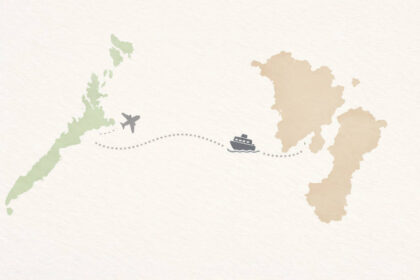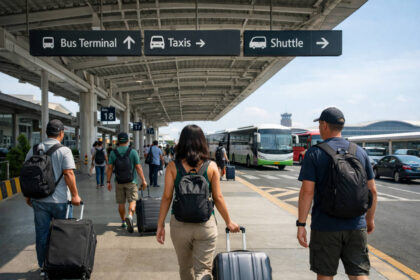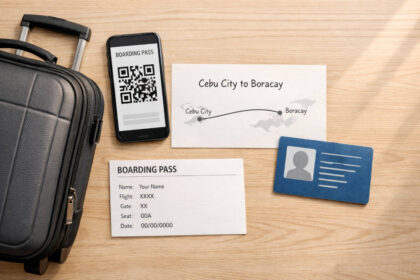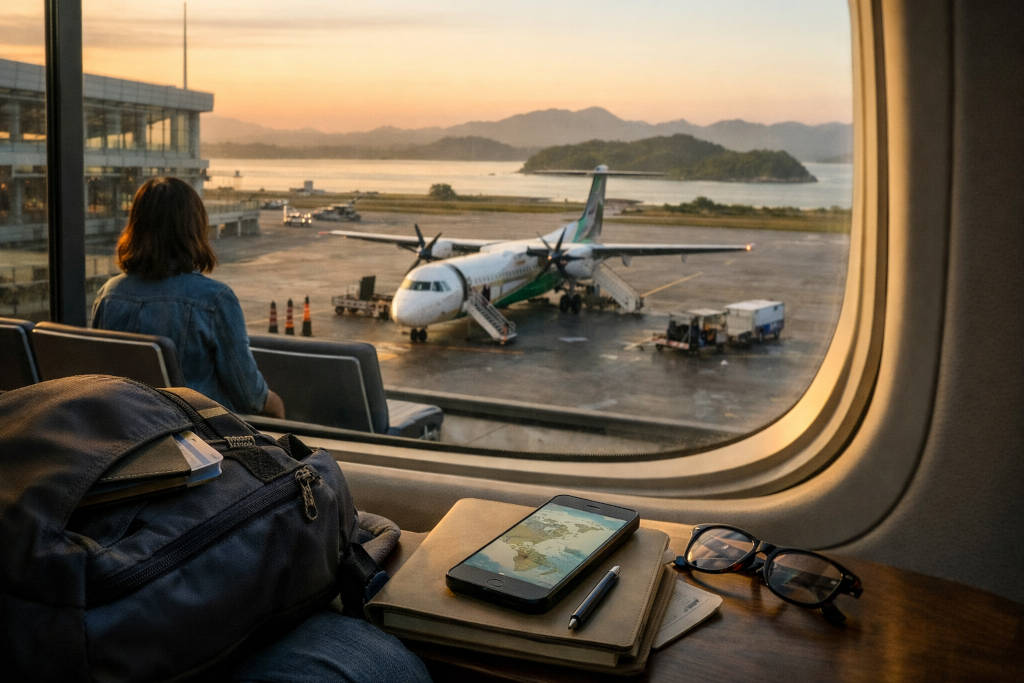
The least-stress way to plan Puerto Princesa to Batanes is to treat it as a connection-based trip to Basco, not a quick hop. For most travelers, the calmest setup is a protected connecting flight, usually through Manila, with a layover that is long enough to absorb ordinary delays and with an overnight buffer if your arrival date truly matters. Do not build this trip around a hoped-for direct flight, a razor-thin self-transfer, or a headline fare that looks cheap until checked baggage, terminal movement, and rebooking risk show up later.
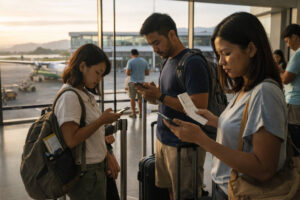 That matters because Puerto Princesa to Batanes is one of those Philippines routes where the lowest sticker price is not always the easiest choice. A self-built connection can work, but once you add bag fees, recheck time, airport transfers, and the chance of a weather delay on the Batanes leg, the savings can disappear fast. If you are still arranging your Palawan side, this Puerto Princesa weekend trip plan can help you decide whether sleeping near the airport before an early departure is the better start.
At-a-Glance
Best time window: Puerto Princesa to Batanes is easiest to book when you can travel with flexibility. March to May often feels simpler for planning, while June to November usually needs more caution because of monsoon rain and tropical systems. December to February can also bring stronger winds in the far north.
Realistic travel time: A smooth same-day trip on a protected connection can still take around 8 to 13 hours door to door. A self-transfer can easily stretch to 11 to 16 hours or more.
Budget band: Plan by decision bucket, not by one lucky fare screenshot. A lean one-way setup may land around the lower all-in band, while a safer connection with checked baggage and airport transfers quickly moves into a higher band.
Crowd and traffic risk: Manila usually gives more connection choices but also more terminal friction and city traffic. Clark often feels calmer on the ground, but it usually gives fewer rescue options if a schedule slips.
Rain or heat backup: Keep one flexible hotel option, save the cancellation window on your phone, and avoid tying your Basco arrival to a same-evening must-do plan.
Reality Check: the shortest published airtime is never the real trip time for Puerto Princesa to Batanes. The connection, waiting, baggage handling, and airport movement are what decide whether the day feels easy or draining.
Best Option for Most Travelers
The least-stress setup
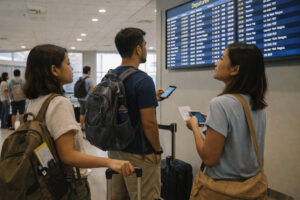 For most readers, the best answer is a protected connecting flight from Puerto Princesa to Basco on one booking, with enough layover time to absorb a normal delay. In plain language, protected means the flights are linked under one itinerary, so if the first leg runs late, you are not simply treated as a no-show on the next leg. That is especially valuable on Puerto Princesa to Batanes because the final flight to Basco is the most disruption-sensitive part of the trip.
There is generally no direct Puerto Princesa to Batanes service that travelers should confidently build around, so plan this as a connecting flight from the start. If a direct service appears in the future, great, but do not anchor your hotel dates, tours, or leave credits around a nonstop that may not be consistently available when you need it.
Reality Check: the low-stress plan is not always the lowest fare on day one. It is the option most likely to get you to Basco without last-minute scrambling.
Should you book one protected ticket or two separate tickets?
If your priority is peace of mind, one protected ticket wins. It usually reduces the risk of missed-connection stress, baggage confusion, and finger-pointing between airlines. It also gives you a cleaner record on one booking reference or PNR, which is easier to show during check-in and easier to track in an airline app.
Two separate tickets are best seen as a budget gamble. They can work if the price gap is meaningful, your schedules are generous, and you are comfortable doing your own self-transfer. But on Puerto Princesa to Batanes, separate tickets usually mean you carry more responsibility: you may have to collect checked baggage, move terminals, line up again, and protect yourself if the first flight arrives late. Paying less now can mean paying more in stress, transfer costs, and change fees later.
Which connection point is simpler for this trip: Manila or Clark?
For most travelers, Manila is simpler overall because it usually gives more domestic connection choices, more backup hotel options, and more ways to recover if the day starts slipping. A Manila layover can be tiring, especially if a terminal change or landside transfer is involved, but the wider choice set often makes it the safer planning hub.
A Clark layover can feel calmer because the airport experience is usually more compact and less chaotic. Still, Clark is only the simpler choice when your schedules line up well and you are comfortable with fewer fallback options. If you miss a narrow Clark connection, the quieter airport can suddenly become the harder airport to recover from.
Compare the Main Route Choices
Puerto Princesa to Basco via Manila
This is the route most readers should check first. Puerto Princesa to Basco via Manila tends to be the most practical when you want a balance of bookability, recovery options, and familiar airport services. It is usually the easier place to build a protected itinerary, and it is also the easier place to find a buffer hotel if you decide not to force the connection on the same day.
The trade-off is friction. Manila can mean longer lines, possible terminal movement, and more traffic if you need to go landside. That is why a realistic Manila layover matters more than the headline airfare. A slightly higher fare with a healthier connection window is often the better buy.
Puerto Princesa to Basco via Clark
Puerto Princesa to Basco via Clark is worth comparing when the timing is clean, the fare is competitive, or your home base makes Clark easier to use before or after the trip. Some travelers also prefer the calmer feel of a Clark layover, especially if they are carrying only light luggage and do not want to deal with heavier Manila airport movement.
The downside is that a Clark plan usually asks for more schedule discipline. If the first flight runs late or the Basco leg changes, you may have fewer same-day workarounds. In other words, Clark can feel lower-stress while everything goes right, but Manila often remains the better safety net.
A ferry-first route is rarely worth it for Puerto Princesa to Batanes unless you are intentionally turning the journey into a slow multi-stop adventure and you are willing to absorb extra nights, transfer friction, and schedule drift. For readers who simply want to reach Batanes with the least stress, the flight-based connection remains the core recommendation.
Reality Check: the best route is the one that leaves you enough margin to handle a small delay without losing the whole trip rhythm.
Puerto Princesa to Batanes Door-to-Door Travel Time
Same-day trip on a protected connection
When people ask how long Puerto Princesa to Batanes takes, the easiest mistake is looking only at airtime. The real door-to-door travel time starts when you leave your hotel in Puerto Princesa and ends when you reach your stay in Basco. That includes road time to the airport, early arrival for check-in, waiting, the first flight, your layover, boarding again, arrival procedures, and the final ride into town.
In a smooth same-day protected connection, a practical planning range is around 8 to 13 hours door to door. Best-case timing can feel shorter, but a comfortable expectation is often closer to 10 to 12 hours once normal airport rhythm is included. That is why an early first leg and a realistic layover usually feel better than chasing the shortest possible published total.
Self-built connection with recheck and transfer time
With separate tickets, Puerto Princesa to Batanes can become a much longer day. If you need to collect checked baggage, recheck, or move between terminals, a self-transfer can push the day into the 11 to 16 hour range, and sometimes longer if the connection only works with a long wait. The official schedule may still look neat on screen, but your real day includes line time, walking, traffic, and uncertainty.
This matters even more if you are bringing multiple bags, traveling with children, or flying during a weather-sensitive period. The more moving parts you add, the more recovery buffers you need.
Reality Check: if the day only works on paper when every segment is on time, it is not a low-stress plan.
Puerto Princesa to Batanes Cost and Booking Basics
How much should you budget, where should you buy, and what should you save?
 For Puerto Princesa to Batanes, budget by sample decision bucket instead of promising yourself one exact fare. A lean one-way plan may sit around a lower all-in band if you catch a sale, travel light, and accept a longer layover. A balanced one-way plan usually costs more because it includes a healthier connection, at least one checked baggage allowance, and airport transfer costs. A comfort-first plan costs more again, especially if you add a buffer hotel near the connection point or pay for change flexibility. Round-trip totals can climb fast, so assume fares change quickly and recheck before paying.
As a working guide, many readers find it useful to think in three one-way buckets per person: lean, roughly PHP 8,000 to PHP 13,000 all in; balanced, roughly PHP 13,000 to PHP 20,000 all in; and comfort-first, PHP 20,000 and up once baggage, safer timings, and a hotel buffer are included. These are planning bands, not fixed fares, and they can move sharply depending on season, booking window, and how much checked baggage you need.
Buy direct with the airline when possible, especially if the Basco leg is the part you most need to protect. Direct booking usually makes changes, notifications, and flight status tracking easier. For an official operator example when checking current Basco flight availability, look at Philippine Airlines before you lock in the rest of your itinerary. If you use an online travel agency because the price gap is significant, read the baggage and change rules very carefully before paying.
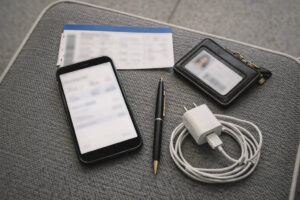
On your phone, save more than just the confirmation email. Keep your booking reference or PNR, the full itinerary, your itinerary receipt, baggage allowance details, payment receipt, government ID copy, hotel confirmation, the flight status page or app access for each segment, and the hotel cancellation window for any buffer night. A simple screenshot folder can save a lot of stress when signal is weak or you are moving between counters.
If you need a broader planning reset before you book, this Philippines travel planning guide is a useful place to review how much buffer to build into a domestic route with multiple moving parts.
Reality Check: the cheapest booking path is rarely the full cost. Bags, terminal movement, food during a long layover, and rebooking risk all belong in the real budget.
Luggage Rules and Airport Friction
Baggage rules that matter most on this route
 The main baggage trap on Puerto Princesa to Batanes is assuming all legs behave the same way. They may not. Hand-carry rules, piece concepts, and checked baggage allowances can differ by airline, fare family, or booking channel. If your trip uses separate tickets, never assume your bag will be checked through automatically to Basco.
In plain language, a low fare can become expensive when you add baggage late. If you know you will need checked baggage, compare the real total before booking. Also remember that the strictest segment often decides your packing strategy, not the most generous segment. Keep medicines, chargers, one change of clothes, and important documents in your hand-carry in case your checked baggage arrives later than you do.
For Puerto Princesa to Batanes, lighter packing reduces more than cost. It reduces queue time, walking strain, and the chance that a tight connection becomes unmanageable.
What airport friction should you expect during a connection?
Expect friction in small pieces, not always one dramatic problem. That can mean a late inbound flight from Puerto Princesa, a long walk to another area, a terminal change in Manila, a line at bag drop, another security check, a boarding gate change, or a bag recheck on separate tickets. None of these alone is unusual, but together they can turn a short layover into a stressful one.
A Manila layover usually asks you to think more about terminal logistics and traffic. A Clark layover usually asks you to think more about what happens if the schedule breaks and there are fewer alternatives. If you need to move across the city side or between terminals, this Philippines public transport guide is a useful refresher on how everyday transfers can add time and friction to a flight day.
Reality Check: airport friction is often the reason a “cheap and fast” itinerary stops feeling cheap or fast in real life.
Weather Risk and Backup Planning
What should you do if the Batanes leg is delayed or cancelled?
 Start with the practical steps. Check the latest flight status in the airline app or on the airline’s official page, then go to the airline desk while keeping your phone charged and your booking details ready. If you are on one protected booking, ask clearly for your rebooking options and note the new PNR or updated itinerary. If you booked separate tickets, act even faster because one disrupted leg can put the next leg at risk as a no-show.
Then protect the rest of your trip. Message your hotel, save the new booking screen, review the cancellation window on any buffer booking, and keep enough cash or card room for an unexpected overnight stay. If arrival will be late, avoid forcing a rushed plan in an unfamiliar place. This is also where a calm late-arrival mindset helps; the Philippines travel safety guide is a helpful reminder that getting in safely matters more than salvaging every hour.
If the Basco flight is cancelled because of conditions outside normal operations, do not spend energy arguing with the weather. Shift into protection mode: secure the next available option, lock in a bed near the airport if needed, and keep all receipts and screenshots organized.
When does weather become a bigger planning issue for Batanes?
Weather becomes a bigger planning issue when your trip falls in periods with stronger monsoon flow, tropical systems, or persistent wind in the far north. In practical terms, June to November usually calls for extra caution because weather delay risk rises during monsoon and typhoon periods. December to February can also be windy enough to affect comfort and operations even when other parts of the country look manageable.
That does not mean you should avoid Puerto Princesa to Batanes outright during those months. It means you should book with more humility. Check the Northern Luzon forecast from PAGASA in the days before travel, and use this Philippines weather travel guide to set realistic expectations. If your Basco arrival is tied to a fixed tour, event, meeting, or a non-refundable stay, that is the clearest sign to add a buffer night before the Batanes leg.
Reality Check: weather risk in Batanes is not about drama. It is about accepting that a far-north island route deserves more buffer than a routine domestic city hop.
For most readers, Puerto Princesa to Batanes becomes much easier once you stop treating it like a simple point-to-point flight and start treating it like a protected connection with real recovery buffers. If your arrival date matters, book the safer layover, keep your screenshots ready, and add a buffer night in Manila or Clark when the cost of being late is higher than the cost of one extra hotel stay. That one calm decision often saves more money and stress than chasing the thinnest connection on the board. For more route ideas and more practical travel tips and inspiration, keep planning with margins instead of perfect-case timing.