Why Weather Matters So Much in the Philippines
You land in Manila in March, step out of the airport, and it’s like walking into a hairdryer. The heat wraps around you, your shirt sticks to your back, and even the air feels thick. A few months later, same airport, different month: you arrive in August to warm rain hammering on the tin roof of the taxi bay, and staff are sweeping away puddles with walis tingting. Welcome to the Philippines—always warm, but never the same story twice.
 Because we’re a tropical archipelago, the question is never “Will it be cold?” but “What kind of warm will it be?” Dry and sparkling? Hot and aggressively sunny? Humid with late-afternoon thunderstorms? Or full-on bagyo (typhoon) week with canceled ferries and endless rain? This Philippines weather travel guide is here to help you match your dates to the right regions, understand what tag-init (hot season) and tag-ulan (rainy season) actually feel like on the ground, and plan in a way that stays flexible and kind to your future self.
I’ll walk you through Luzon, Visayas, Mindanao, and Palawan, talk about Habagat and Amihan in non-science-nerd language, and share how to tweak your route when a storm decides to crash your vacation. Along the way, I’ll sprinkle in more tips and inspiration for planning your trip so you can build an itinerary that works with the weather, not against it.
Philippines Weather Travel Guide: How Philippine Seasons Actually Work
Dry, hot, and rainy – the big picture
Let’s start simple. The Philippines is warm year-round, but we usually talk about two main moods: tag-init (the hot, often dry season) and tag-ulan (the rainy season). Locally, weather experts break things down a bit more into cool-dry, hot-dry, and rainy periods, but for travelers, this is the main pattern:
Cool-dry months (roughly December to February) – Still warm by global standards, but cooler and less humid, especially in the evenings. Great for city walks, mountain trips, and island-hopping without melting.
Hot-dry months (roughly March to May) – Tag-init kicks in. Expect strong sun, hotter nights, and serious UV levels. Seas are often calm and clear, which is perfect for island and diving trips if you don’t mind the heat.
Rainy season (roughly June to October) – Tag-ulan. This doesn’t always mean it rains all day; many places get a mix of sunny mornings and late-afternoon downpours. But it’s also the time when low pressure systems and bagyo pass through more often. According to the official climate info from PAGASA (our national weather agency), the country’s climate types vary, but you’ll often see this broad pattern repeated across the islands (official overview here).
Habagat and Amihan in everyday language
Two words you’ll hear a lot: Habagat and Amihan.
Habagat is the southwest monsoon, usually active around June to September. It brings moist air from the southwest, which means more rain for western-facing coasts like much of Luzon’s west side, parts of Palawan, and some western Visayas islands. Think: moody skies, stronger waves, and wet flip-flops hanging to dry.
Amihan is the northeast monsoon, more active from around November to February. It brings cooler, drier air from the northeast, which gives us those slightly breezy December evenings when Baguio feels extra cozy and Manila becomes just a bit less sticky. Some eastern coasts get more wind and waves during this time, while western islands often enjoy calmer, sunnier days.
If you want to nerd out on the bigger climate picture, there’s a good general overview of the climate of the Philippines, but this guide will keep things grounded in how it feels to actually be here with a backpack and a pair of tsinelas.
Climate change and shifting patterns
Here’s the honest bit: the patterns above are guides, not guarantees. Climate change means seasons can start earlier or later, rains can be more intense, and some months that “used to be dry” can surprise you with more frequent storms. Locals will tell you “Iba na ang panahon ngayon” – the weather isn’t like before.
That’s why this Philippines weather travel guide leans hard on flexibility. We’ll talk about ideal windows, but I’ll also give backup ideas, packing tips, and ways to pivot if your sunny El Nido plan suddenly turns into a rainy-day café crawl. Weather is one of the few things you can’t control on a trip, but you can absolutely plan around it and roll with it.
Luzon Weather and Best Months to Visit
Luzon is where Manila, many international airports, and classic mountain routes sit, so most trips pass through here. In this Philippines weather travel guide, Luzon is your starting point for matching city breaks, highland escapes, and beach days to the right months. For ideas beyond weather, you can browse Luzon destinations, then match them with the months that make the most sense.
Metro Manila and lowland Luzon
 Metro Manila and much of lowland Luzon (think Bulacan, Pampanga, Cavite, Laguna) have a fairly straightforward pattern. December to February are the friendliest months: still warm but slightly cooler at night, less humidity, and fewer heavy rains. It’s the best time for city breaks, food crawls, and long walks through Intramuros without feeling like your face will slide off.
March to May ramp up into proper tag-init. Manila can feel brutal in mid-afternoon: concrete radiating heat, jeepneys acting like moving ovens, and your iced coffee melting fast. These months are great for using Manila as a quick gateway to beaches, but if you plan to stay in the city, aim for shaded itineraries and midday breaks indoors.
June to October bring rainy season to Luzon. It doesn’t always rain all day, but when it pours, streets can flood, traffic slows even more, and the combination of heat and humidity can be exhausting. I wouldn’t avoid Manila entirely in these months, but I’d keep your city days flexible, with indoor backups like museums and malls.
North Luzon highlands (Baguio, Sagada, Cordillera)
 The highlands are Luzon’s natural aircon. Baguio, Sagada, Banaue, and other Cordillera towns sit higher, so temperatures are cooler and nights can be genuinely chilly, especially from December to February. Think hoodies, misty mornings, and coffee steaming in your hands as you look over pine trees or rice terraces.
The best months for mountain trips are usually November to early May, with December to February as the sweet spot for cool weather. March to May are still nice, just warmer and busier with local summer crowds. Heavy rains and bagyo from June to October can make roads more landslide-prone, trails muddier, and views clouded over. If you visit in tag-ulan, build in buffer time and be prepared for last-minute road closures.
Bicol and eastern Luzon
Bicol and eastern Luzon (including areas around Legazpi and Sorsogon) face the Pacific, so they tend to be more exposed to tropical storms and bagyo, especially from around July to November. That said, they also get beautiful, clear days—just with a bit more mood swings.
For volcano views, like Mayon, and coastal trips, many travelers aim for December to May. January and February can feel especially good: warm but not too hot, with clearer skies for both mountains and whale-shark spots like Donsol. In mid-rainy season, you’ll want flexible plans and a backup list of indoor activities if a storm passes through.
Visayas Weather and Best Months to Visit
 The Visayas sit in the middle of the archipelago, and weather can vary a bit between central, western, and more eastern islands. The Visayas section of this Philippines weather travel guide helps you see how central and western islands share a familiar dry-then-rainy pattern, with local twists you will feel on ferries and island-hopping days. In general, you can think of central and western Visayas as classic “dry December–May, wetter June–November” zones—but local microclimates still apply.
Central Visayas (Cebu, Bohol, surrounding islands)
Cebu and Bohol are in many “Philippines best time to visit” lists for good reason. December to May usually give you the sunniest mix for island-hopping, snorkeling, and city exploring in Cebu City. Seas are often calmer, which is kinder if you get seasick on ferries between islands.
June to November brings more rain and the occasional bagyo passing nearby. In practice, that can look like sunny or cloudy mornings followed by intense afternoon or evening thunderstorms. Boats may be canceled for safety, and some waterfalls or canyoneering routes can close temporarily. If you plan a trip in these shoulder months, keep your schedule loose and follow local advice. For inspiration beyond weather, check out Cebu and central Visayas travel ideas and then line them up with your chosen window.
Western Visayas (Boracay and neighbors)
Boracay and nearby islands in Western Visayas also tend to sparkle between December and May. January to April is peak “postcard” season: blue skies, turquoise water, and sunsets that make you forgive the crowded bits. Winds can shift around the island, but in general, this is when Western Visayas feels like a classic tropical beach escape.
In the rainy months, Boracay doesn’t turn into a permanent storm—but expect more cloud cover, short but heavy rains, and occasionally rougher seas. Some days might be grey but still swimmable; other days, strong waves and wind make boats to and from the island more limited. Prices and crowds drop, so if you’re okay with some moody weather, rainy-season Boracay can be lovely in its own way.
Eastern and offbeat spots
Eastern-facing islands in the Visayas, such as parts of Samar or Leyte, can have different rainfall patterns because they catch more of the Pacific weather. Some places might be wetter when the western side is drier, and vice versa. If your heart is set on an offbeat island in this belt, look at a mix of local advice, recent trip reports, and your own flexibility level.
As a general rule, visiting in the cool-dry and early hot-dry season (say, December to March) gives you a better chance at comfortable weather. But these areas are fantastic for travelers who don’t mind a bit of rain in exchange for fewer crowds and very green landscapes.
Palawan and Nearby Islands
 Palawan deserves its own chapter because many travelers build their entire trip around it. Long and skinny, with El Nido and Coron up north and Puerto Princesa mid-way down, it follows a pattern similar to many western-facing islands—but with its own personality. Many people build their entire route around Palawan, so any Philippines weather travel guide has to spend time on its best months and shoulder-season trade offs.
Best months for Palawan classics (El Nido, Coron, Puerto Princesa)
Most guides suggest December to May as the best window for Palawan, with January to April as the sweet spot for clear water, calmer seas, and long sunny days. This is when island-hopping in El Nido and Coron feels like swimming in a screensaver: bright lagoons, dramatic limestone cliffs, and blinding white sandbars.
January and February tend to be a bit cooler and breezier, while March and April slide into true tag-init mode. Expect strong sun that makes the water glow, but also makes you grateful for boat shade and repeat applications of sunscreen. If you’re planning classic Palawan island-hopping routes, it’s worth pairing this section with some Palawan destination guides and choosing dates that spread out your sea days and rest days.
Shoulder months like November and June can also work: you might get a mix of sunny and cloudy days, a few showers, and slightly lower prices—but also a bit more risk of weather-related trip tweaks.
What Palawan is like in rainy season
June to October is Palawan’s wetter side. That doesn’t mean your whole trip will be rained out; many days still offer good windows for tours, especially mornings. But you should be ready for more frequent downpours, the occasional multi-day low-pressure system, and higher chances that Coast Guard or local authorities will cancel island-hopping when waves are too strong.
The trade-offs: fewer people at major sights, lush green hills, and often softer light for photos. You might swap some island days for café time in Puerto Princesa, hot chocolate nights during thunderstorms, and spontaneous karaoke with locals. If you’re flexible and okay with possible changes, rainy-season Palawan can still be very worth it.
Mindanao, Siargao, and Southern Philippines Weather
Mindanao is huge and diverse, but many visitors focus on places like Siargao, Davao, Cagayan de Oro, and Camiguin. The general pattern is still “warm all year, with rainy and less rainy months,” but the details matter—especially if surfing or waterfalls are your main goals. Mindanao, Siargao, and the southern Philippines also play a key role in this Philippines weather travel guide, especially if surfing or chasing waterfalls is part of your plan.
Siargao and surf season
Siargao is known as the surf capital of the Philippines, and its weather is heavily shaped by ocean swells and wind. The main surf season, especially for big breaks like Cloud 9, runs roughly from August to November when Habagat and Pacific swells combine to create stronger waves.
For non-surfers who want calmer seas for island-hopping to Naked, Daku, and Guyam Islands, and trips to Sohoton, many people aim for the drier, sunnier months from about March to May. You still might get showers, but sea conditions can be friendlier to first-time island-hoppers. Whatever month you choose, expect warm air, strong sun, and that classic “I’m always slightly damp but very happy” tropical feeling.
Davao and other southern cities
Davao City and many parts of southern Mindanao often have more even rainfall spread throughout the year. You’ll still see rainy and drier periods, but the contrast between dry and wet seasons can be less dramatic than in other regions. Practically speaking, that means you can visit Davao, its nearby beaches, and mountain areas like Eden or Mt. Apo’s surroundings across much of the year, with a decent chance of workable weather.
Expect warm days, refreshing downpours, and evenings that feel a bit less sticky than Manila’s most humid months. As always, heavy rains can impact river trips, mountain hikes, or coastal excursions, so keep an eye on local forecasts when planning.
Typhoons in the Philippines – What Travelers Need to Know
When is typhoon season and which regions are most exposed?
Bagyo are a reality here, and it’s better to understand them than pretend they don’t exist. While storms can appear any time of year, the Philippines typically sees more tropical cyclones from about July to October, with strong ones sometimes hitting as late as November or even December. Northern Luzon and eastern-facing coasts like Bicol, Samar, and parts of eastern Mindanao often feel the brunt first.
Western islands like Palawan and some central Visayas spots can still be affected by heavy rain and rough seas, even if a storm doesn’t make a direct hit. Flight rerouting, ferry cancellations, and power cuts are part of the typhoon-season story—annoying, yes, but usually manageable with good planning and patience.
How typhoons affect actual travel plans
Here’s what it can look like on the ground: your island-hopping tour gets canceled because waves are too high; your ferry between islands is delayed for a day or two; your bus takes longer because of heavy rain and minor road obstacles. In more intense storms, local authorities might pre-emptively evacuate low-lying or coastal areas, close tourist sites, or implement curfews. Safety comes first, and most tourism operators will follow LGU and Coast Guard calls.
It can be frustrating, especially if you only have a short holiday, but the system is designed to keep people alive. Think of it like this: a canceled boat day is annoying; a risky boat day is not worth it.
Smart planning around typhoon risk
If your dates fall in peak typhoon season Philippines months (say, July to October), a few smart moves go a long way. Build buffer days into key transitions—especially when you need to catch an international flight after inter-island travel. Choose accommodations and airlines with flexible or refundable policies, and avoid overloading your itinerary with long ferry chains and tight connections.
It also helps to have “Plan B regions.” For example, if a storm is targeting northern Luzon and Bicol, you might spend extra time in certain central or southern areas that are less directly affected. This doesn’t guarantee sunshine, but it spreads risk and gives you options when the forecast changes overnight.
Philippines Weather Travel Guide: Best Months by Trip Type
Islands and diving trips
For island-hopping and diving, the classic window across much of the country is December to May, with January to April as a reliable sweet spot. This is when seas are more likely to be calm, visibility underwater is often better, and rain is less likely to cancel your boat day.
Palawan, central Visayas (Cebu, Bohol, nearby islands), and many western-facing beaches shine in these months. Just remember that March to May can be very hot; bring extra hydration and sun protection. Shoulder seasons like November and June can offer a nice balance of price and weather if you’re okay with some showers.
Mountains and highlands
If your dream is Sagada sunrises, Benguet vegetable terraces, or hiking volcanoes, aim for cool-dry months: roughly December to February, stretching into March and April in some places. Trails are drier, skies are often clearer, and temperatures are kinder for long walks.
During heavy rainy-season months, mountain areas can still be beautiful, but riskier: landslides, closed roads, and very muddy trails. If you go then, travel with extra caution, keep in touch with local authorities, and be ready to change plans if guides say conditions are unsafe.
City breaks and festivals
For big city breaks—Manila, Cebu, Davao—cool-dry months are the most comfortable. December and January feel festive and a bit breezier, though you’ll also hit holiday crowds. By March and April, city heat can feel intense; plan midday breaks in air-conditioned spaces and save your long walks for early mornings and evenings.
Many major festivals land in cooler or transitional months: Sinulog in Cebu (January), Ati-Atihan in Kalibo (January), Panagbenga in Baguio (February), and so on. These are amazing experiences, but they also draw big crowds and can sell out accommodations early, so match your weather window with advance planning.
Philippines Weather Travel Guide: Packing Tips for Each Season
Dry-season essentials
For dry-season Philippines trips, think sun and sweat management. Light, breathable clothes (cotton, linen, quick-dry fabrics), a good hat, sunglasses, and high-SPF sunscreen are your best friends. A reusable water bottle is non-negotiable; you’ll refill it constantly. For highlands like Baguio or Sagada, pack at least one warm layer—a hoodie or light jacket—for chilly evenings and early mornings.
Footwear-wise, comfy walking shoes or sandals that can handle both city pavements and occasional dirt paths are ideal. A sarong or malong works as a beach towel, blanket, curtain, or shawl, and takes very little space.
Rainy-season and shoulder-season kit
 For tag-ulan, think “quick-drying and waterproof.” A lightweight rain jacket or packable poncho, a small travel umbrella, and a dry bag for electronics are musts. Quick-dry clothes and a second pair of footwear (sandals or slippers) save your mood when one pair gets soaked.
Mud and puddles are normal, so avoid shoes that fall apart when wet. Insects love warm, damp environments; bring mosquito repellent, especially for evening outdoor hangs and trips near rice fields or forests. A small microfiber towel helps when you get caught in surprise downpours.
Shared must-haves year-round
No matter the month, there are a few staples I’d always bring for any trip in this Philippines weather travel guide: a travel umbrella, reusable water bottle, small towel or handkerchief, power bank, and a simple first-aid kit. Locals cope with heat using fans (handheld or portable USB ones), ice-cold drinks, and the art of strategic shade—feel free to copy us.
If you want a more detailed checklist, we have smart packing tips for traveling around the Philippines that pair nicely with this weather-focused overview.
Flexibility and Backup-Planning Tips
Booking strategies
Especially in rainy and typhoon-prone months, a mix of fixed and flexible bookings helps. Lock in the places you really care about during peak season (like a Palawan island base in February), but keep some legs of your trip adaptable. Choose airlines and accommodations with reasonable change policies, and avoid planning long ferry hops back-to-back when storms are more likely.
On-the-road flexibility moves
Once you’re here, stay alert to local info: ask your hostel staff, boatmen, and drivers about upcoming weather. If the forecast looks stormy for your next island, consider swapping the order of your route, adding extra city days, or retreating to mountain towns when the coast is rough—or vice versa.
Good backups include: city café days, food crawls, museum visits, waterfall trips (often more dramatic in rainy season, but check for safety), and hot springs. Sometimes your best travel stories come from the Plan B you didn’t expect.
Mindset
The most important part of this Philippines weather travel guide isn’t the exact month you pick—it’s the mindset you bring. If you arrive expecting only Instagram-perfect skies, every cloud will feel like a failure. But if you come ready for a living, breathing tropical climate, you’ll find joy in things like rain on a tin roof in the Visayas, misty rice terraces in Luzon, or a surprise clear patch after a storm in Palawan.
Weather is part of the story. The magic is learning how to dance with it instead of trying to control it.
Philippines Weather Travel Guide FAQs
What’s the best time to visit the Philippines overall?
If you want the most weather-friendly window for a first-time trip, aim for December to early May, with January to April as the safest bet for mostly dry days, calmer seas, and comfortable city exploring. This is the peak “Philippines best time to visit” for many travelers—but also high season for prices and crowds.
Where should I go in the Philippines in July or August?
These months sit in the wetter part of the year and closer to peak typhoon season. If you’re traveling then, consider central and some southern areas where conditions may be less extreme than on northern and eastern coasts. Pair islands with cities so you have indoor options, and keep your route flexible. Expect heat, humidity, and some heavy rains, but also plenty of bright breaks between showers.
Should I cancel my trip if a typhoon is forecast?
It depends on timing and intensity. If a strong bagyo is expected to hit right when you’re supposed to fly or ferry, your airline or boat company might decide for you. Check official advisories and talk to your accommodations about options. Sometimes the best move is to delay or reroute; sometimes a storm changes path and your trip only needs minor tweaks. Don’t panic, but don’t ignore serious warnings either.
How should I pack differently for dry vs rainy season?
For dry season, focus on sun protection, light clothes, and hydration. For tag-ulan and shoulder months, add a packable rain layer, dry bags, a travel umbrella, and footwear that won’t die in a puddle. In both cases, quick-dry fabrics, a small towel, and a reusable water bottle are essentials. Layer in warmer pieces if you’re heading to highland areas any time of year.
Is it still worth visiting in rainy season? Who does that suit best?
Yes, absolutely—if you’re the type who can handle some uncertainty. Rainy-season Philippines trips suit travelers who are okay with moody skies, occasional itinerary changes, and less-than-perfect photos in exchange for lower prices, fewer crowds, and ridiculously green landscapes. If you’re planning a once-in-a-lifetime trip with lots of ferries and must-do island days, cool-dry and hot-dry months are easier. If you’re more “let’s see what the day brings,” rainy season can be beautiful.
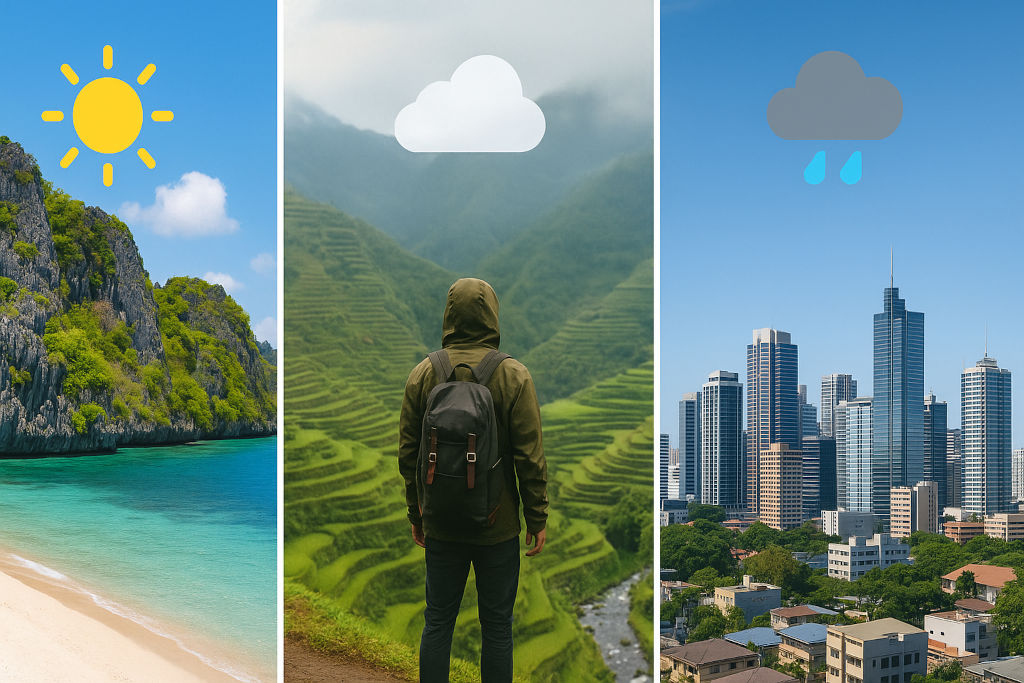
Wherever and whenever you go, I hope this Philippines weather travel guide helps you choose the right months, pack the right layers, and create a trip that feels aligned with the sky above you—whether it’s sharp blue over a Palawan lagoon, cool mist over a Cordillera terrace, or soft grey rain over a Manila café where you’re waiting out the storm with halo-halo and good company.