How to Use These Philippines Travel Budget Examples
You’re daydreaming over turquoise water photos and ₱ signs, trying to guess how far your money will go. Will you be living on fishballs and jeepney rides, or sipping sunset drinks in a beachfront restaurant? This guide is here to take the guesswork out and give you concrete, story-shaped Philippines travel budget examples so you can plan with less stress and fewer “hala, kinapos tayo” moments.
These numbers focus on in-country costs only—once you land in the Philippines. International flights are not included, because those depend so much on where you’re flying from. Think of this as a set of Philippines travel budget examples for your days on the ground: accommodation, food, local transport, tours, and a little extra for souvenirs and surprises.
All amounts are in Philippine pesos first (₱), with rough USD equivalents only as gentle guides—not precise exchange rates. If you want the nerdy details, the Philippine currency is the Philippine peso, and rates move around over time.
Prices change, of course, but patterns stay: internal flights and big tours can eat your budget; carinderia (simple local eatery) meals and slower travel keep it steady. Use these Philippines travel budget examples as frameworks, then adjust up or down depending on your style. For more mindset tips on stretching your money, you can also browse more tips and inspiration for planning your trip and deeper resources on budget travel in the Philippines.
How Much Does a Day in the Philippines Cost?
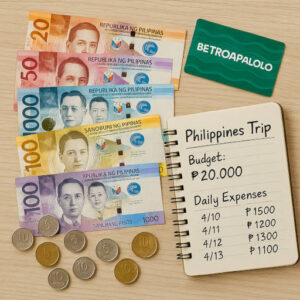 Let’s start with daily ranges. These Philippines travel budget examples break things into clear daily ranges so you can see where you fit. These are “all-in” estimates per person, per day—once you’re in the country. They assume you’re traveling most days, not living in one city long-term.
Shoestring / Backpacker Daily Range
Rough range: about ₱1,700–2,500 per day (very roughly around US$30–45).
This is your classic Philippines backpacking budget. A day might look like: dorm bed or basic fan room, breakfast from pan de sal and instant coffee, jeepney and tricycle rides for pamasahe (fare), lunch at a carinderia for ₱80–₱150, cheap street snacks at night, and maybe one paid activity like a shared island-hopping tour every few days.
You watch your pesos but still say yes to the occasional halo-halo or barbecue by the beach. You’re okay with cold showers, shared CRs, and sometimes a slightly bumpy bus ride to save money. This is the “tipid pero masaya” (frugal but happy) lane, and it is the baseline for many shoestring Philippines travel budget examples.
Midrange Daily Range
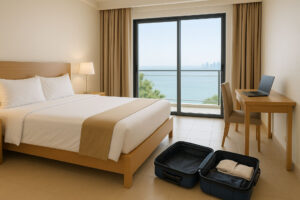 Rough range: about ₱3,000–4,500 per day (roughly US$55–80).
On a midrange Philippines daily travel budget, you’re in private rooms with aircon most nights, often in small hotels or nice guesthouses. You mix carinderia meals with café brunches and beachfront dinners. You take a few internal flights instead of every long bus, and you join more organized tours: island-hopping days in Palawan, a canyoneering day in Cebu, maybe a whale-shark trip.
You’re still conscious of money, but you prioritize comfort after long, humid days. You might pick a cheaper room so you can splurge on a Palawan island-hopping travel guide kind of day tour or a special restaurant meal. This sits in the middle of the Philippines travel budget examples range.
Comfort Daily Range
Rough range: about ₱5,000–8,000+ per day (roughly US$90–150+).
This is not ultra-luxury, but definitely comfy. Think boutique hotels or nice resorts, often with pools; more domestic flights; private or small-group tours; and meals in sit-down restaurants more often than not. You’re paying for time and ease: airport pick-ups, fewer cramped vans, better beds, and maybe the occasional spa afternoon when city heat knocks you out.
You still feel the price of a big tour, but you’re not counting every peso before ordering that extra round of grilled seafood and cocktails while staring at the sunset. In the context of these Philippines travel budget examples, this is the top end of mainstream comfort before true luxury pricing kicks in.
Shoestring Philippines Travel Budget Examples (1, 2, and 4 Weeks)
Here are sample Philippines travel budget examples for shoestring travelers who are careful but still want to enjoy the country. All totals exclude international flights.
1-Week Shoestring Budget – One Island Cluster, Moving Slowly
7-day total: roughly ₱12,000–17,000 per person.
This assumes you pick one base or one island cluster—like Cebu City plus Moalboal, or Puerto Princesa plus one nearby Palawan beach town—and don’t hop all over the map. It is one of the simplest Philippines travel budget examples for slow, low-stress backpacking.
Approximate line-item breakdown for 7 days:
Accommodation (₱4,000–6,000): About ₱600–₱900 per night for a dorm bed or simple fan room in a guesthouse. Shared bathrooms, basic furnishings, maybe a small common kitchen.
Food (₱3,000–4,000): Around ₱400–₱550 per day. Breakfast from bakery runs or hostel coffee, carinderia lunches, simple rice meals for dinner, plus cheap merienda like banana cue or fishballs outside the mall.
Transport (₱2,000–3,000): Local jeepney and tricycle pamasahe, one or two van rides, and a short ferry or boat ride. Airport-to-town transfers if you flew into the region once.
Tours and activities (₱2,000–3,000): One shared island-hopping day or canyoneering/reef-snorkel tour plus a handful of cheap entrance fees to beaches, waterfalls, or view decks.
Extras (₱1,000–1,500): SIM card, sunscreen, laundry, a few beers, random snacks, and small souvenirs.
This works best when you slow down: no internal flights, one or two home bases, and more “free” days where you just swim, walk, and eat cheap instead of booking tours every single day. As far as Philippines travel budget examples go, it’s a very forgiving one for first-time backpackers.
2-Week Shoestring Budget – Two or Three Regions with Careful Choices
14-day total: roughly ₱25,000–34,000 per person.
Here you might do something like: one week in Palawan (two towns) and one week in central Visayas (Cebu plus one island), using a mix of ferries and one or two domestic flights.
Approximate breakdown for 14 days:
Accommodation (₱8,000–12,000): Still mostly budget guesthouses or dorms. Stay longer in each place to get weekly or off-season discounts when possible.
Food (₱6,000–8,000): Around ₱430–₱570 per day. More street food and carinderia, occasional Jollibee or fast food, plus one or two nicer dinners when you really can’t resist the grilled squid by the shore.
Transport (₱6,000–9,000): One or two domestic flights, a couple of ferries, and a few longer bus/van rides between towns. This is where the budget jumps—internal flights in the Philippines are not usually ultra-cheap once you add baggage and fees.
Tours and activities (₱4,000–5,000): Maybe two big days—like a full island-hopping day in El Nido and another in Coron, or canyoneering in Cebu plus a whale-shark or snorkeling trip—plus minor entrance fees.
Extras (₱1,000–2,000): SIM top-ups, laundry, toiletries, occasional café day in the city to escape the heat.
At this level, the trick is balancing travel speed and cost. Each new island cluster means more transport expense. Swapping one flight for an overnight ferry or bus (where safe and realistic) can help, and choosing slightly less-famous islands can lower tour prices while still feeling magical. This two-week scenario is a very typical mid-range shoestring option in many Philippines travel budget examples.
4-Week Shoestring Budget – Slow Backpacking and More Free Days
 28-day total: roughly ₱50,000–70,000 per person.
A month in the Philippines on a shoestring can feel surprisingly rich if you travel slowly. Think three or four main regions: maybe Baguio and north Luzon, then Palawan, then Cebu/Bohol, plus a few days in Manila or another city.
Approximate breakdown for 28 days:
Accommodation (₱16,000–24,000): Budget rooms or dorms, with the occasional upgrade to a nicer guesthouse when promos pop up. Weekly or monthly rates can shave off a chunk of the cost.
Food (₱12,000–16,000): Around ₱430–₱570 per day. Lots of carinderia and palengke (market) meals, cooking sometimes if your hostel allows it, and the occasional restaurant treat when your soul needs it.
Transport (₱10,000–16,000): A mix of buses, ferries, and a few flights. Slow overland connections mean lower daily averages but more travel days. Overnight buses or ferries save you a night of accommodation but aren’t always restful.
Tours and activities (₱8,000–10,000): Maybe four to six big paid days spread over the month—dive days, island-hopping, canyon/waterfall adventures—plus plenty of free days at the beach or in mountain towns.
Extras (₱4,000–6,000): SIM + data, occasional coworking or café days, laundry, replacement flip-flops after yours break in a random tricycle.
Long trips naturally create “rest days” where you spend very little—just food and maybe a scooter rental—which balances out the heavier tour days. This is one of the most flexible shoestring Philippines travel budget examples in the guide.
Midrange Philippines Travel Budget Examples (1, 2, and 4 Weeks)
 Now let’s talk about people who want comfort but still care about value. These Philippines travel budget examples assume private rooms, aircon, and a good mix of tours.
1-Week Midrange Budget – Mix of Tours and Comfort
7-day total: around ₱21,000–31,000 per person.
Imagine a week in one classic region—say, Palawan (Puerto Princesa plus El Nido) or Cebu + Bohol—without trying to do the whole country.
Approximate breakdown:
Accommodation (₱8,000–12,000): ₱1,100–₱1,700 per night for a clean private room with aircon and hot shower in a small hotel or well-reviewed guesthouse.
Food (₱5,000–6,500): ₱700–₱900 per day. You mix carinderia lunches with café breakfasts and beachfront dinners. Sometimes you splurge on fresh seafood or a nicer restaurant with a view.
Transport (₱3,000–5,000): One domestic flight within the Philippines plus vans, local ferries, and airport transfers.
Tours and activities (₱4,000–6,000): Two to three organized tours—like island-hopping, a city tour, or a canyoneering experience—plus smaller entrance fees.
Extras (₱1,000–1,500): Souvenirs, SIM, extra coffee runs, and maybe a short spa treatment or massage.
For many travelers, this is one of the most realistic midrange Philippines travel budget examples if you want a comfortable week without going all-out.
2-Week Midrange Budget – Classic Two-Island Itineraries
14-day total: around ₱42,000–63,000 per person.
This could be a very typical “Philippines best time of your life” route: one week in Palawan plus one week in Cebu/Bohol, or Cebu/Bohol plus Siargao if surf is calling.
Approximate breakdown:
Accommodation (₱16,000–24,000): Similar standard as above, maybe with one or two slightly nicer hotel nights.
Food (₱10,000–14,000): ₱700–₱1,000 per day. Cafés, mall food courts, occasional bar nights, and many “let’s just sit by the water and order what smells good” dinners.
Transport (₱8,000–12,000): Two to three domestic flights, several ferries, and vans/tricycles. This is where costs climb as you connect multiple islands.
Tours and activities (₱7,000–10,000): Several big days: island-hopping in two different regions, maybe a dive or snorkeling day, a canyoneering tour, or a whale-shark experience (where you choose the operator carefully).
Extras (₱1,500–3,000): Laundry, SIM top-ups, cocktails, snacks, and cute tote bags from local markets.
At this level, most midrange travelers choose comfort when it matters—like AC and decent beds—and spend extra on experiences that feel once-in-a-lifetime. Among all the Philippines travel budget examples, this is a classic “two islands, two weeks” template.
4-Week Midrange Budget – Slow but Splashing Out on Activities
28-day total: around ₱85,000–125,000 per person.
A month on a midrange budget might include Luzon highlands, Palawan, Cebu/Bohol, Siargao or a Mindanao city, plus a few days in Manila or another big city for food and arts.
Approximate breakdown:
Accommodation (₱36,000–52,000): Private rooms almost every night, with the occasional upgrade to a boutique stay for special occasions or rest days.
Food (₱20,000–28,000): ₱700–₱1,000 per day. Many café brunches, proper restaurant dinners when you feel like it, and the occasional tita-approved buffet for merienda and dinner combined.
Transport (₱15,000–22,000): Several domestic flights, ferries, and comfortable bus or van rides. You often choose time over the cheapest option.
Tours and activities (₱10,000–18,000): This is where midrange shines: multiple island-hopping days, maybe a multi-dive package, guided hikes, and city tours. Experiences become a bigger share of your spend.
Extras (₱4,000–5,000): Laundry, coworking or coffee days, spa treatments, extra SIM data, plus souvenirs to bring home to family.
If you like a “work hard, travel well” balance, this month-long midrange scenario is one of the more generous Philippines travel budget examples without being truly high-end luxury.
Comfort Philippines Travel Budget Examples (1, 2, and 4 Weeks)
Comfort travelers prioritize energy and ease. You’re not blowing money for the sake of it, but you’d rather spend more than take a 15-hour bus when a 1-hour flight exists. Within these examples of Philippines travel budget, this tier sits at the top end of normal holiday spending.
1-Week Comfort Budget – Short and Sweet
7-day total: roughly ₱35,000–55,000+ per person.
You might base in one or two places—say El Nido and Coron, or Cebu and Bohol—and choose well-reviewed resorts or boutique hotels.
Approximate breakdown:
Accommodation (₱18,000–30,000): Around ₱2,500–₱4,000+ per night for nicer resorts or boutique stays, often with pools and excellent locations.
Food (₱8,000–10,000): ₱1,100–₱1,400 per day. Hotel breakfasts, restaurant lunches and dinners, café snacks, and maybe a few cocktails or wine with sunset.
Transport (₱5,000–8,000): Domestic flights instead of long ferries where possible, private or pre-booked transfers between airport and hotel.
Tours and activities (₱4,000–7,000): Island-hopping tours in small groups, maybe one or two private tours or chartered boats where cost is shared between a couple or small group.
Extras (₱2,000–3,000): Spa treatments, shopping, and a bit more generosity with tipping and spontaneous treats.
For a short but special holiday, this is one of the higher-end yet still grounded examples of Philippines travel budget.
2-Week Comfort Budget – Multiple Islands, Less Stress
14-day total: roughly ₱70,000–110,000+ per person.
You might visit three regions—perhaps Palawan, Cebu/Bohol, and Siargao—using flights and organized transfers to cut down on logistics stress.
Approximate breakdown:
Accommodation (₱36,000–60,000): Mostly nice hotels and resorts, with at least a few stays that feel special (pool villas, beachfront rooms).
Food (₱16,000–22,000): ₱1,100–₱1,600 per day. You rarely eat at carinderia; instead, you choose well-reviewed local restaurants and resort dining, maybe with frequent coffees and desserts.
Transport (₱12,000–18,000): Several flights, booked in advance, plus private transfers instead of DIY jeepney chains when moving between ports and hotels.
Tours and activities (₱10,000–16,000): Multiple tours in each region—including higher-end or small-group options that cost more but feel calmer and less crowded.
Extras (₱4,000–6,000): Souvenirs, spa, snacks, and a thick “just in case” buffer.
If you value time and energy more than squeezing every peso, this two-week comfort route may become your favorite among the Philippines travel budget examples in this guide.
4-Week Comfort Budget – Long, Flexible Island Time
28-day total: roughly ₱140,000–220,000+ per person.
This is a dream “I’m living island life for a month” scenario. You might mix a few extra-nice resort stays with longer periods in solid midrange hotels, moving at a slower pace but staying comfy the whole way.
Approximate breakdown:
Accommodation (₱80,000–130,000+): A mix of high-end nights and long stays in midrange hotels that offer weekly rates or good deals. You pick your splurges carefully—maybe three nights in a premium resort in exchange for two weeks in a simpler but comfy base elsewhere.
Food (₱32,000–45,000): ₱1,100–₱1,600 per day. Restaurant-heavy, sometimes integrating hotel dining and nicer bars.
Transport (₱18,000–25,000+): Multiple flights and private transfers, possibly including last-minute bookings so you can follow good weather or change plans easily.
Tours and activities (₱10,000–18,000+): Many tours, maybe including multi-day dive packages, private boat hires, and guided excursions in several regions.
Extras (₱5,000–7,000): Spa, souvenirs, SIM/data upgrades, and random purchases you won’t strictly “need” but will absolutely enjoy.
This is the most indulgent of the Philippines travel budget examples, but it is still anchored in realistic long-trip costs.
What Actually Changes Your Philippines Travel Budget
Underneath all these Philippines travel budget examples, a few levers really move the numbers.
Accommodation – Dorms vs Guesthouses vs Hotels vs Resorts
Very roughly:
• Budget: ₱500–₱900 per night gets you a dorm bed or basic fan room, often with shared CR and maybe a simple breakfast.
• Midrange: ₱1,500–₱3,000 per night buys a private room in a decent hotel or guesthouse, usually with aircon, private bathroom, and better locations.
• Comfort: ₱4,000+ per night moves you into resort territory, often with pools, nicer design, and more service.
If you’re solo, accommodation is a huge chunk of your budget; if you’re a couple or barkada sharing rooms, your per-person cost drops a lot. Adjusting this lever alone can shift you between different Philippines travel budget examples.
Food – Carinderia Plates vs Restaurant Meals
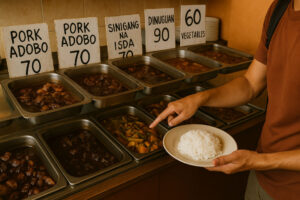 Food is where your daily “feel” changes. A plate of rice and ulam (viand) at a carinderia can cost around ₱80–₱150. A mall food court or café meal might be ₱300–₱500. A sit-down beachfront dinner with drinks in a touristy area can easily hit ₱800–₱1,200+ per person.
If you eat like a local most days and treat restaurant meals as occasional splurges, your budget stays low while still feeling rich in flavor. If you default to tourist restaurants every meal, your “cheap” Philippines travel budget can double quickly, and your real-world costs start to drift away from the more frugal Philippines travel budget examples.
Transport – Buses and Ferries vs Flights and Private Transfers
Local jeepneys and buses are inexpensive but take time. Ferries can be reasonable, especially short hops, but overnight ships add up. Domestic flights cost more, but they save full days of travel—and energy. Private transfers (vans, cars) cost significantly more than DIY routes but reduce hassle, especially with luggage or kids.
In general, each added internal flight per week nudges you from a shoestring toward midrange, and extra private transfers push you toward comfort budgets. Mixing cheap and splurge segments helps you control your overall Philippine peso budget planning and stay close to whichever of these Philippines travel budget examples you’re aiming for.
Tours and Activities – Where the Peso Jumps
Island-hopping, canyoneering, whale-shark trips, diving, and full-day tours can easily become your highest-cost days. For example, a full shared island-hopping day with lunch might be a thousand-plus pesos; dive days and special activities can cost more.
The trick: don’t pack them back-to-back unless your budget allows it. Spreading them out—with “cheap days” in between where you just walk, swim, or rent a scooter—balances your total. A guide like a national tourism overview is nice for ideas, but your wallet will thank you for choosing quality over quantity instead of trying to fit every idea from every Philippines travel budget examples blog into one trip.
Hidden Costs, Exchange Rates, and Money-Saving Tips
Some expenses don’t show up when you’re daydreaming over beaches, but they’re real: ATM fees, SIM cards, sunscreen, baggage fees on flights, and emergency taxis when you’re too tired to figure out jeepney routes. If you ignore these, even the most carefully planned Philippines travel budget examples can get derailed.
ATM fees can stack up, so many travelers withdraw a bigger amount less often (while still being mindful of carrying cash). Getting a local SIM or eSIM helps you use ride-hailing apps and maps, which saves both money and stress. Packing things like reef-safe sunscreen, a reusable water bottle, and a basic medicine kit means you aren’t forced into expensive tourist-shop purchases later. For ideas on what to bring, check out these smart packing tips.
Exchange rates fluctuate, so leave some buffer in your calculations. If your home currency weakens, you’ll be grateful for those extra few thousand pesos set aside for “just in case.”.
Philippines Travel Budget FAQs
 How much money do I really need per day in the Philippines as a backpacker, midrange traveler, or comfort traveler?
A realistic Philippines daily travel budget for a shoestring backpacker is around ₱1,700–2,500 per day. Midrange travelers are usually comfortable at ₱3,000–4,500 per day. Comfort travelers who like nicer hotels, more flights, and frequent tours often spend ₱5,000–8,000+ per day. Use these ranges together with the Philippines travel budget examples above to decide which lane fits you best.
How much should I budget for 1 week, 2 weeks, and 4 weeks in the Philippines, excluding flights?
Very roughly, a shoestring budget might be ₱12,000–17,000 for 1 week, ₱25,000–34,000 for 2 weeks, and ₱50,000–70,000 for 4 weeks. Midrange travelers might aim for ₱21,000–31,000, ₱42,000–63,000, and ₱85,000–125,000, respectively. Comfort travelers can expect ₱35,000–55,000+, ₱70,000–110,000+, and ₱140,000–220,000+ for those same trip lengths. These totals match the core Philippines travel budget examples described in the main sections.
Is the Philippines cheap compared to other Southeast Asian countries?
Many visitors find that the cost of travel in the Philippines is similar to or slightly higher than some neighbors once you factor in more domestic flights and boats between islands. Street food, carinderia meals, and local transport can be very affordable; tours and flights push budgets up. The country isn’t “super cheap” anymore, but it’s still excellent value if you travel mindfully and use realistic Philippines travel budget examples when planning.
What categories usually blow up people’s budgets?
The big culprits are too many internal flights, back-to-back expensive tours, and eating every meal at touristy restaurants. Also, rushing around many islands in too little time—each transfer costs money. Slowing down, choosing a few highlight experiences, and embracing local food keep spending in check and help keep your real costs close to your chosen Philippines travel budget examples.
How can I keep my Philippines travel budget low without feeling deprived?
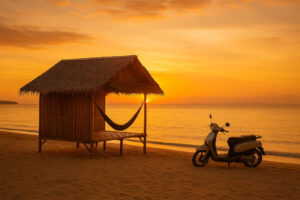 Focus on free or cheap joys: sunsets, public beaches, street food, mountain views, and walking around markets. Eat at carinderia most of the time and save restaurants for a few special nights. Cluster destinations to reduce flights and long transfers. Use guides like budget travel in the Philippines and more Philippines travel guides plus these Philippines travel budget examples to build smart routes instead of zig-zagging.
How should I split my budget between accommodation, food, transport, and activities?
A common pattern for backpackers is roughly 30–35% accommodation, 25–30% food, 20–25% transport, and 15–20% activities. For midrange and comfort travelers, accommodation and activities (tours) take a larger share, while food and local transport stay relatively manageable. Adjust the sliders based on what matters to you: comfort, experiences, or pure exploration, using the Philippines travel budget examples above as a reference.
How should solo travelers think about budget versus couples or friends sharing rooms?
Solo travelers pay full price for rooms, so accommodation is heavier in their budget. Couples and barkada can split rooms, private transfers, and tours, lowering per-person costs significantly. If you’re solo and on a tight budget, consider dorms and shared tours; if you’re a group, look at private rooms and private island-hopping boats where cost is shared. The same Philippines travel budget examples apply, but the per-person math shifts depending on how many people are splitting the bill.
Wherever you fall on the spectrum—from “tipid mode” to “I worked hard for this, I’ll enjoy it”—these Philippines travel budget examples are just starting points. Adjust the numbers, match them with your dream islands, and remember: the goal isn’t to spend the least or the most, but to spend in a way that feels aligned with the kind of trip you’ll still be smiling about years later.