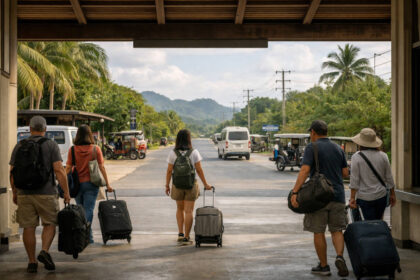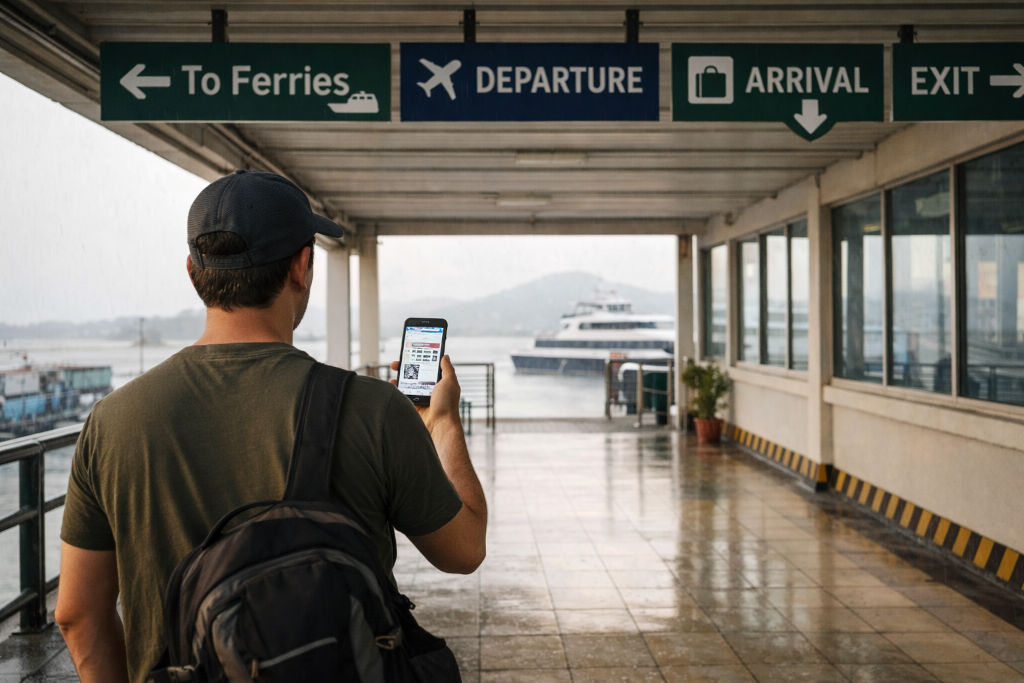
Transport in the Philippines can feel intimidating at first, not because it is impossible, but because there are so many moving parts: terminals, flexible departure windows, weather disruptions, and the little “where do I line up?” moments. This Philippines transport decision tree is a calm shortcut for first-time travelers who want to move between islands and cities using buses, vans, ferries, and (when it truly helps) flights, without rushing and without pretending schedules run like clockwork.
If you want the bigger overview that covers the full landscape (including more context on buses, jeepneys, and ferries), use the main guide here: Philippines public transport guide (bus, jeepney, ferry). It is also our public transport guide for buses, vans, ferries, and jeepneys. This supporting article is intentionally narrower: it is the Philippines transport decision tree you can follow when you are tired, carrying bags, or trying to avoid connection stress.
Philippines Transport Decision Tree: Choose Your Mode Without Overthinking
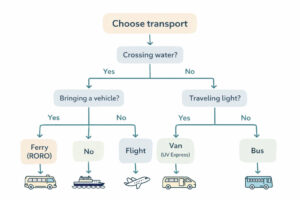 Use this Philippines transport decision tree as your “tired traveler” shortcut. When you are carrying bags, traveling in rain, or worried about missing a connection, the calm choice is often the one with fewer transfers, even if it costs a bit more.
Step 1: Are you crossing water?
If YES (inter-island): choose ferry vs flight.
Choose a ferry if: you are okay with sea conditions, you want to bring more luggage with fewer baggage fees, you prefer a port-to-port route, and you can build a buffer day around the crossing. Ferries can be comfortable, but the schedule is more weather-sensitive.
Choose a flight if: you are on a tight timeline, seas are rough (or it is storm season), you get motion-sick, or you are connecting onward and want to reduce the chance of long port delays. Flights reduce stress when they replace a long chain of vans + boats, but they add stress when you need early airport arrivals and strict baggage rules.
Step 2: If you are staying on one island, are you traveling city-to-city?
If YES (same island): choose bus vs van/UV Express.
Choose a bus if: you want more space, you have a bigger suitcase, you prefer predictable luggage handling, and you do not mind a longer travel time. For most first-timers, the bus is the calmer default in this Philippines transport decision tree.
Choose a van/UV Express if: you are traveling light, you want a faster ride once it departs, and you are okay with tighter seating and “wait until it fills” departures. Vans can be great for short-to-medium hops when you are not carrying a lot.
Step 3: If you are moving within a city, do you want simplest or cheapest?
Simplest (low-stress): Grab/taxi (or point-to-point buses where available). This is best in heavy rain, when you are tired, or when you are carrying bags.
Cheapest (more “local,” more variables): jeepney, consider it optional/advanced for first-timers. It can be fine when you are settled, not in a rush, and comfortable asking questions. If you are overwhelmed, choose the simplest option and save jeepneys for a day you feel confident. If you want a calm intro before you try it, start with jeepney and tricycle basics and short-ride basics.
Reality check: In this Philippines transport decision tree, “best” does not mean cheapest. It means least likely to snowball into delays when something small goes wrong.
The Buffer Rule: The One Habit That Prevents Most Travel-Day Stress
If you remember only one rule from this Philippines transport decision tree, make it this:
Buffer rule: For any transfer (especially involving a ferry), build extra slack. Aim for half a day of cushion when switching modes (bus → ferry, ferry → flight, van → ferry). If a ferry is involved and you have a flight later, the calm plan is to avoid same-day ferry-to-flight connections whenever possible.
Buffers protect you from the most common time-eaters: terminal traffic, late departures, security screening lines, weather slowdowns at sea, and the domino effect of one delay causing three more decisions. The Philippines transport decision tree works best when you treat buffers as part of the itinerary, not “extra time you hope you do not need.”
Transport choices also shape your budget over a whole trip. If you want a clearer cost lens, use Philippines travel budgets (sample costs) to see how fewer transfers can mean fewer “panic expenses” (last-minute rides, rushed meals, surprise overnight stays).
Realistic Expectations by Mode: Buses, Vans, Ferries, and Flights
Here is what to expect in real life, comfort, delays, and the small details that make travel days feel smoother. Think of this section as the “why” behind the Philippines transport decision tree.
Buses: terminals, departure windows, and comfort levels
How departures work: Many provincial buses operate on a schedule, but expect a departure window rather than a precise minute. A bus may leave close to posted time, or leave once it is ready and loaded.
Where Manila (and big cities) eat time: terminal traffic getting in/out, bag checks, and loading. Provincial routes can also be slowed by roadworks, rain, and holiday congestion.
Comfort differences: “Aircon” buses are cooler and typically more comfortable for longer rides. “Ordinary” buses may be warmer with open windows; they can feel slower because of more stops. If you are heat-sensitive or traveling midday, aircon is often worth it.
Rest stops: Longer routes usually include rest stops. Treat them as your bathroom + snack reset and keep small bills handy.
Reality check: In the Philippines transport decision tree, the bus is often the calm default because you have more space for bags and less pressure to “fit in.” The tradeoff is time.
Vans / UV Express: faster hops, tighter seating, limited luggage
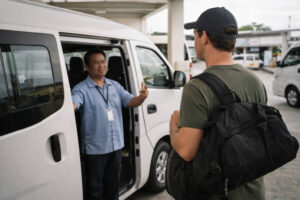 How departures work: Many vans leave when they are full. That can mean quick departures during peak times, and longer waiting during off-peak hours.
Comfort: Seating is tighter, knee room is limited, and the ride can feel bouncy depending on roads. If you are tall, traveling with kids, or prone to motion sickness, a bus may be more comfortable.
Luggage reality: Space is the big constraint. Soft bags are easier than hard cases. If you have a large suitcase, ask about luggage policies before you commit, sometimes you will pay extra or be asked to place it awkwardly.
When it is worth it: Short-to-medium routes when you are traveling light and want fewer stops.
When it is not: When you are exhausted, carrying big luggage, or traveling in heavy rain (loading/unloading becomes messy fast).
Ferries / fastcraft / RORO: check-in windows, sea conditions, and cancellations
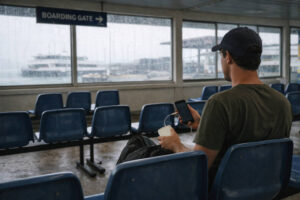 Check-in and security: Expect port security screening and ID checks. Arrive early because lines can build, especially on weekends and holidays. Wet floors, stairs, and longer walks inside terminals are common, wear shoes that can handle puddles.
Sea conditions matter: Fastcraft can be quicker but may feel bumpier in rough seas. RORO (roll-on/roll-off) is often steadier but slower, especially if vehicles are loading.
Seating classes: Depending on the operator, you may see open seating, assigned seats, and different cabin classes. If you are sensitive to motion, choose a seat mid-ship when possible and bring water + light snacks.
Cancellations: Weather can cancel or delay departures. This is why the buffer rule matters. If your itinerary collapses when one ferry is late, it is too tight, and the Philippines transport decision tree would flag that as “increase buffer or change mode.”
For a deeper route-planning companion, use Philippines ferry travel guide when you are mapping inter-island crossings and deciding between fastcraft and RORO. It is also helpful for planning ferry and RoRo routes and smoother island transfers by ferry.
Reality check: Ferry travel can be completely smooth, until it is not. Plan with kindness for your future self: food, water, power bank, and extra time.
Flights: when they reduce stress vs when they add it
The hidden “time cost” of flying: Even short flights require early arrival, security lines, boarding gates, and baggage rules. A flight that is 1 hour in the air can still take half a day door-to-door.
Baggage rules: Airlines can be strict on weight and size. If you are carrying souvenirs or traveling with heavier gear, fees can add up, and repacking at the counter is stressful.
Disruption cascade: A delayed flight can break a chain of hotel check-ins and onward connections, just like ferry delays. The difference is the airport environment can feel more rigid.
When flights reduce stress: When they replace a long, multi-transfer journey (van + boat + bus) or when seas are rough and you want predictability.
When flights add stress: When the airport trip is long, you are traveling with lots of bags, or your schedule is tight and you cannot absorb delays.
If you are flying through Manila, especially as a first-timer, this is a useful calm-planning companion: Manila airport survival guide.
Safety and Scam-Avoidance: “Normal” vs “Not Normal” at Terminals
Most trips are routine. The calm approach is to stick to official channels and treat anything that feels rushed or unclear as a reason to pause. For a broader safety overview, see travel safety in the Philippines. It also helps to build simple safety habits and keep the full travel safety guide in mind when you are tired or juggling bags. This section supports the Philippines transport decision tree by helping you spot when to slow down.
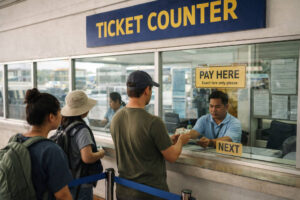 Normal (green flags)
- Official ticket counters with signage and staff.
- Posted routes/fares (when available) and orderly queuing.
- Port security screening and ID checks before boarding ferries.
- Asking guards or terminal staff where to line up, this is normal and often the fastest way to reduce confusion.
- Reasonable waiting for loading, boarding, and departures, especially for vans that fill up.
Not normal (slow down and reassess)
- Pressure to hand over your phone or ID to a random person “to help.” Keep your documents with you unless an official counter requires it.
- Being rushed to an unmarked vehicle away from the terminal flow.
- Price changing after you have loaded bags (“extra fee” revealed late). Confirm price before loading.
- “Fixers” blocking access to official counters or insisting you cannot buy there.
- Requests for large “processing fees” with no receipt or unclear purpose.
- Being separated from your luggage without explanation. It is normal for bags to be placed in compartments, but you should understand where it goes and when you get it back.
If you will use tricycles on this trip, it is worth learning the tricycle fare rules so you can avoid surprise fees, especially in busy tourist areas and terminal zones.
Reality check: You do not need to be suspicious of everyone. Just choose official lines, take your time, and do not let urgency be used against you. That is the calm logic behind the Philippines transport decision tree.
Luggage Logistics: Buses, Vans, Port Transfers, and Packing for Rain
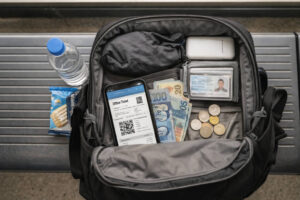 These are the luggage realities that often decide the “right answer” inside the Philippines transport decision tree.
On buses: underbus compartments vs overhead racks
Where bags go: Bigger luggage often goes in the underbus compartment; smaller bags may go overhead. Ask staff if you are unsure.
What stays with you: Keep valuables, passport/ID, meds, chargers, power bank, and a light jacket in a small day bag at your seat. Add snacks and a water bottle, travel days feel calmer when your basic needs are easy to reach.
Van realities: limited space and what to do with a big suitcase
Vans/UV Express can be tight for luggage. If you have a big hard case, you have three calm options:
- Option 1: Choose a bus instead, more space, less negotiation.
- Option 2: Pay for an extra seat if allowed/needed (varies by route/operator).
- Option 3: Use a softer bag that can compress and fit more easily.
Reality check: If you are traveling in heavy rain, loading bags into a van can be stressful and wet. In the Philippines transport decision tree, that is a strong nudge toward buses or a simple door-to-door ride.
Port and terminal transfers: wet floors, stairs, lines
Expect short walks between ticketing, security, waiting areas, and boarding gates. In ports, you may deal with stairs, slippery spots, and crowded corridors. Dress for movement: a breathable top, easy-to-remove layer, and shoes you trust on wet ground.
Waterproofing basics: a small dry bag or zip pouches for documents and electronics, a pack cover (or even a large plastic bag as backup), and a small towel or microfiber cloth for wiping hands and seats.
Packing for rain: poncho vs umbrella
Poncho: better for hands-free movement when you are carrying bags or walking through terminals. It also covers your backpack.
Umbrella: better for quick dashes in the city, but harder when you are juggling luggage and ticket checks.
Shoes: choose something that can handle puddles and dries reasonably fast. Wet socks can ruin a whole day’s mood.
Ticketing Basics: Where to Buy, When to Prebook, What to Screenshot
Ticketing is where calm planning pays off. The safest default: buy from official counters or official websites/apps when available. Use third-party sellers only if they are clearly stated as ticketing partners, and keep proof of payment. This is a core habit in the Philippines transport decision tree because it prevents small confusion from turning into a bigger problem.
Where to buy tickets (practical hierarchy)
Best: official ticket counters at terminals/ports.
Also good: official operator websites/apps (when available).
Sometimes necessary: cash purchases on-site, many places still rely on cash, especially for smaller routes.
When to prebook (so you are not stuck)
Prebook if: you are traveling on weekends, holidays, festival periods, or popular ferry routes with limited daily departures. Prebooking is also smart if you are traveling with a family group or need specific seating.
Usually okay to buy day-of if: you are traveling off-peak, you have buffer time, and you are flexible about exact departure times.
Reality check: If you are anxious about travel days, prebooking can be worth it just for the mental relief, especially for ferries. That is a valid “comfort-first” result in the Philippines transport decision tree.
What to screenshot/save (and why it matters)
Save these offline in your phone (screenshots or a downloaded PDF), because signal can be weak at terminals:
- Booking reference and/or QR code
- Passenger name(s) exactly as booked
- Departure time and terminal/port name (do not assume there is only one)
- Operator customer service contact
- Proof of payment
Day-of checklist (low-stress version)
- Arrive early: buses/vans, at least 30–60 minutes ahead; ferries, often 60–120 minutes depending on route and port (earlier during peak periods).
- Keep ID handy: do not bury it in a suitcase.
- Carry small bills: for terminal fees, snacks, and quick purchases.
- Hydrate and eat lightly: especially before ferries if you are motion-sensitive.
- Have a Plan B: know the next departure option, or be okay with staying an extra night if weather shuts down crossings.
What to Do When Trips Are Canceled (Especially Due to Weather)
Weather disruptions are a real part of Philippine travel. The calm response is to avoid stacking tight connections and to keep one flexible day in your itinerary. This section is the “recovery mode” of the Philippines transport decision tree.
Calm steps when a ferry or flight is canceled
1) Confirm it with an official source. Ask at the official counter, not a random helper.
2) Ask about the next realistic option. “Next available departure” may not be today, get clarity.
3) Decide early: wait it out vs rebook vs stay overnight. Decision fatigue is real; making a choice early helps.
4) Protect essentials: keep valuables and documents with you; do not check your peace of mind into a bag you cannot access.
5) Use buffers as designed: if you planned slack, this becomes an inconvenience, not a crisis.
For policy context around passenger safety and operational rules, you can refer to official memos such as https://www.ppa.com.ph/sites/default/files/issuances_docs/PPA%20MC%2005-2021.pdf and https://marina.gov.ph/wp-content/uploads/2018/07/mc114.pdf. (These are reference documents, not trip-planning guides, always verify day-of instructions with the port/operator.)
Jeepneys for First-Timers: Optional, Learnable, and Okay to Skip
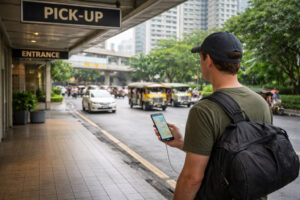 Jeepneys are iconic and practical for many locals, but they can feel confusing at first: routes are not always obvious, stops can be informal, and payment etiquette is different from what many travelers are used to. In this Philippines transport decision tree, jeepneys are “optional/advanced.” You are not failing if you choose Grab or point-to-point options instead.
If you want to try a jeepney, do it on an easy day
- Choose a short route when you are not carrying luggage.
- Ask a local or guard “Dadaan po ba ito sa ___?” (Will this pass by ___?)
- Have small bills/coins ready; keep payment simple.
- Sit near the exit if you are anxious about missing your stop.
- Skip it in heavy rain or when you are rushing, those are high-stress conditions.
Reality check: The easiest jeepney ride is the one you take after you have already rested, cooled down, and know exactly where you are getting off.
Short FAQ: Philippines Transport Decision Tree Answers for Real Travel Days
Is it better to fly or ferry between islands?
Fly if you are short on time, seas may be rough, or you are connecting onward. Ferry if you prefer port-to-port travel, have flexible buffers, and want fewer baggage restrictions. The calm choice depends on weather risk and your tolerance for waiting, which is exactly what the Philippines transport decision tree is designed to balance.
How early should I arrive at a ferry port?
Often 60–120 minutes early, depending on route and season. Arrive earlier on weekends and holidays because security lines and check-in can be slower.
Are vans safe and comfortable?
They are commonly used and can be efficient, but comfort is tighter and luggage space is limited. Choose vans when you are traveling light and not exhausted; choose buses for more space and a calmer ride.
Can I bring a big suitcase on a bus/van/ferry?
Buses and ferries generally handle big luggage more easily. Vans may have limited space and may require extra fees or an extra seat. If you have a hard-case suitcase, a bus is often the lowest-stress choice in the Philippines transport decision tree.
What should I do if my trip is canceled due to weather?
Confirm cancellation at official counters, ask for the next realistic option, and decide early whether to wait, rebook, or stay overnight. This is exactly why buffer days exist, use them.
How do I avoid scams at terminals?
Use official counters, confirm prices before loading bags, avoid unmarked vehicles, do not hand over phone/ID to strangers, and do not pay large “processing fees” without clear receipts and explanation.
Is it okay to ride a jeepney as a first-timer?
Yes, but treat it as optional. Try it on a low-pressure day without luggage, and ask staff or locals about the route. If you feel overwhelmed, choose Grab or point-to-point options instead.
What is the easiest low-stress plan if I get overwhelmed?
Stop trying to optimize. Follow the Philippines transport decision tree: choose one mode with fewer transfers (often bus over van, flight over multi-leg ferry chains), go back to official counters, and build extra buffer. Comfort-first decisions prevent small stress from becoming a full travel-day meltdown.
Philippine travel becomes manageable when you plan like a calm person, not a race: choose fewer transfers, carry essentials in one small bag, buy tickets through official channels, and treat buffers as part of the itinerary. That is the real secret behind a reliable Philippines transport decision tree, not perfection, just habits that keep your day steady.