A first trip to the Philippines gets stressful when the plan tries to do too much. On a map, the islands can look close enough to combine in one neat swing. In real life, a simple-looking route can mean a hotel checkout at dawn, a domestic flight, a long transfer, a ferry queue, and a tired arrival that eats half the day.
That is why this Philippines itinerary for first timers is built around one idea: choose less, move less, and give yourself space to enjoy the part you came for.
This is not a generic guide to every possible trip style. It is the itinerary companion to Bakasyon’s broader first-trip planning guide for the Philippines, with three ready-to-use options for 7, 10, and 14 days.
You will also see how to choose islands by season and flight time, what to book first, why a buffer day matters more than people expect, and which routing mistakes quietly make a first-time Philippines itinerary feel harder than it needs to be.
A Philippines Itinerary for First Timers at a Glance
The easiest first trip usually sits in one island group and keeps hotel moves low. For 7 days, think one island group and two sleeping bases at most. For 10 days, keep the same two bases but slow the pace. For 14 days, three distinct bases can work, but only if the route avoids fragile same-day connections and leaves recovery time between transfers.
Best time depends on the route, not just the calendar. A dry-looking month in one region can still bring rough seas or windy ferry days in another.
Budget also feels different when you prioritize comfort: two well-chosen bases often cost less energy than chasing the cheapest room every night. Crowds and traffic rise around long weekends, school breaks, and holiday periods, so your rain or heat backup should be something easy, such as a slow café morning, a shaded town walk, or a beach stretch that does not require fixed tour timing. For more route ideas after this one, browse the Bakasyon Travel Guides collection.
Reality Check: In the Philippines, a short flight on paper can still become a half-day of movement once airport check-in, road transfers, weather, and hotel timing are included.
Why first-timers should plan fewer islands, not more
The low-stress rule for 7, 10, and 14 days
The low-stress rule is simple. In 7 days, do one island group and no more than two sleeping bases. In 10 days, stay with two bases and use the extra time for slower mornings, recovery, and one flexible nature day. In 14 days, three bases can be realistic, but only when the route is logical and you are not stacking ferries, flights, and major tours back to back.
Many first-timers think the extra island is what makes a trip memorable. More often, what makes it memorable is having enough energy to enjoy your beach afternoon, food stop, or sunrise without feeling like every day starts with a bag on your shoulder.
Why transfer fatigue matters more than map distance
Transfer fatigue is one of the biggest hidden costs in a low stress Philippines itinerary. What looks like one move can actually be several steps: hotel checkout, ride to port or airport, waiting time, boarding, arrival transfer, and check-in at the next base. That is why inter-island travel time matters more than map distance.
A route that uses one airport and one ferry well can feel easier than a route with technically shorter distances but more handoffs. If you are new to local connections, this Philippines public transport guide for buses, jeepneys, and ferries helps make the moving parts easier to picture.
Reality Check: The trip rarely feels hard because the islands are far apart. It feels hard because the route asks too many decisions from you on too many consecutive days.
How to choose your islands based on season and flight time
When Cebu and Bohol are the easier first trip
Cebu and Bohol are often the easiest first choice when you want fewer transfers and plenty of flexibility. Cebu has strong flight access, Mactan is practical for arrivals and departures, and Bohol gives you a relaxed base around Panglao with beaches, countryside stops, and easy day structure.
This pair works well for travelers who want a first trip that balances sea views, comfort, and manageable logistics. It is also kind to mixed-interest groups where one person wants downtime and another wants a day tour.
When Palawan is worth the longer transit
Palawan is worth the longer transit when the scenery itself is your top priority and you are willing to protect the route around it. For a first trip, that usually means choosing one Palawan zone rather than trying to combine multiple Palawan stops with another island pair.
This is the real Palawan versus Cebu and Bohol question: do you want the most iconic limestone-and-lagoon feel, or do you want an easier route with less moving and more recovery room? If your answer is calm pacing, Cebu and Bohol often win. If your answer is dream scenery and you can accept longer transfer days, Palawan can still be the right call.
When Boracay is easier than people expect
Boracay is easier than many first-timers assume because the goal is clear once you arrive: settle into one main beach base and enjoy it. There is still an arrival transfer to handle, but the reward is a trip with very little decision fatigue afterward.
For a short first visit focused on a polished beach stay, Boracay can be simpler than a route that sounds more adventurous but keeps you repacking every two nights. It is a good reminder that the best islands for a first trip are not always the ones with the most stops. They are the ones that match your energy, season, and tolerance for movement.
Why same-day ferry chains and tight domestic connections raise stress
Season should narrow your shortlist, but the final decision should still come down to which route has the fewest fragile connections. Ferry conditions can shift with wind and sea state, and a delayed domestic leg can unravel a same-day chain quickly.
Before you lock anything in, read Bakasyon’s weather guide for the best months to travel in the Philippines, check the official PAGASA climate overview, and use the official Philippines travel site for broad destination planning. Your weather backup plan should be built into the route from the start, not improvised after flights are paid for.
Reality Check: A route is “easy” only when it still works after a delayed arrival, rougher sea conditions, or one low-energy day.
The simplest booking order for a Philippines trip
Book international and key domestic flights first
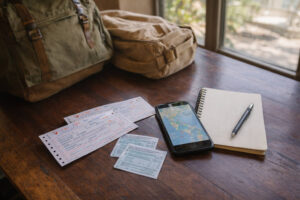 Start with the flights that shape the whole trip. That means your international arrival and departure, then any key domestic flights that determine the route. Once those are set, the rest of the plan becomes much calmer because you know which airports and transfer windows you are actually building around. This is not the stage to chase every possible destination. It is the stage to commit to the cleanest route.
Lock in sleeping bases next
After flights, book your sleeping bases. Not every beautiful accommodation is equally useful on a first trip. Prioritize places that reduce friction: an easy airport hotel for the first or final night, and a well-located island base where cafés, convenience, transport, and beach time are close together. Good bases save energy every single day, which matters more than a dramatic room view that makes everything else harder.
Book essential tours after transport is secure
Only book essential tours after the route itself is secure. This matters because tours are easier to swap than a broken flight chain. If there is one must-do day, place it after you have already settled into the base rather than on your first full day. That extra breathing room lowers the risk of a late arrival ruining a high-cost booking.
Leave flexible activities for later
Leave flexible activities, restaurant plans, and low-stakes outings for later. That is where the trip stays human. You may wake up wanting a soft beach morning instead of a full-day van tour, and that is fine.
For practical precautions before you go, this travel safety guide for the Philippines is a useful companion.
Reality Check: The best booking order is not the most exciting one. It is the one that protects the trip from one delay causing three more problems.
7-day low-stress itinerary for first-timers
Suggested route: Cebu or Mactan plus Bohol and Panglao
 The easiest 7-day version of a Philippines itinerary for first timers is Mactan or Cebu plus Bohol, using Panglao as your restful island base. A practical shape looks like this: arrive in Mactan and sleep near the airport on the first night, move to Panglao for four nights once you are rested, then return to Mactan or Cebu for your final night before the international flight.
That gives you only two distinct sleeping bases while keeping the route forgiving. You get one simple city-airport anchor and one beach base that can carry most of the trip.
Where to place the arrival buffer and the final-night buffer
Place the arrival buffer immediately after landing, not after the trip is already busy. Even one quiet first night can change the mood of the whole week. Use your Panglao days for a beach morning, a countryside day, or one island activity, but do not make every day fixed.
Then protect the final night by returning near your departure airport instead of hoping a last-minute same-day transfer behaves perfectly. This is the most forgiving version because your buffers sit exactly where the route is most fragile.
Who this route suits best
This route suits travelers who want a gentle first look at the Philippines without treating the trip like a race. It works well for couples, families, and friends who care more about a calm daily rhythm than about saying they covered many islands. If your dream is simple beach time, easy logistics, and enough energy to enjoy dinner by the water, this is the strongest 7-day choice.
Reality Check: In one week, every extra move feels bigger than it looks, so the forgiving route usually wins over the impressive one.
10-day low-stress itinerary for first-timers
Suggested route: Cebu plus Bohol with slower pacing and more recovery time
 The 10-day version keeps the same overall pair but improves the feel of the trip. Stay with two bases: Mactan or Cebu, then Panglao or Bohol, with enough nights in each place to settle in.
Instead of adding another island, use the extra days to create a softer rhythm. Think one full day with no bookings, one morning that is only for a long breakfast and a swim, and one transfer day that does not also carry a major tour.
How to add one nature day without adding another hotel move
This is the sweet spot for one nature day that does not require another hotel change. You can choose a countryside loop, a marine activity, or a light outdoor plan, then return to the same bed at night. That keeps the trip fresh without turning it into another logistics exercise.
If you want a gentle active add-on, look at beginner-safe adventure ideas in the Philippines or these beginner-friendly hikes in the Philippines before you start adding another ferry to the map.
Who this route suits best
This route suits first-timers who want a better balance between sightseeing and actual rest. It is especially good for travelers who know they get tired after transfer-heavy days and would rather have a free half-day than one more landmark. Among all the ready-made options here, this may be the best low stress Philippines itinerary for people who want comfort without feeling like they spent the whole holiday hiding from movement.
Reality Check: The extra three days are most useful when they create breathing room, not when they invite another ambitious stop.
14-day low-stress itinerary for first-timers
Suggested route: Cebu plus Bohol plus Siquijor, with three bases maximum
With 14 days, you can stretch to three distinct bases and still keep the trip calm. A sensible structure is Mactan or Cebu on arrival, Panglao or Bohol as your middle base, Siquijor as the final island base, then back to Mactan or Cebu for your departure buffer.
The key is not the exact number of nights so much as the pacing between moves. Each base should earn enough time to feel worth unpacking for.
Where to keep ferry risk manageable
Keep ferry risk manageable by avoiding stacked same-day chains and by not placing your most important tour the morning after a transfer. If Siquijor is part of the plan, give it room. Do not arrive, tour hard, and leave immediately.
Let the island be the reward for moving, not another task on the schedule. If you are tempted to make the trip even more adventurous, save that energy for a future visit; a first trip does not need to prove anything.
Who this route suits best
This route suits travelers who have two weeks, want more variety, and still understand that every extra island should buy a genuinely different feeling. It is also where discipline matters most. If you already know you enjoy slower travel, this can be wonderful. If you are curious about more rugged overnights later on, keep them for another trip and read this beginner’s guide to camping in the Philippines after you have done an easier first route.
Reality Check: Two weeks can still feel rushed when the route keeps taking away recovery time with every new transfer.
Buffer days and why they matter in the Philippines
Weather, sea conditions, and delayed transfers
 Buffer days matter because the Philippines is a place where weather and sea conditions can change the feel of a route quickly. Even when flights operate normally, a windy day, a slower ferry process, or a transfer that runs late can steal the part of the day you thought was free.
A buffer day is not wasted time. It is the thing that protects the rest of your bookings from becoming fragile. It also gives you a graceful weather backup plan, whether that means choosing an indoor café, an easy town stop, or simply enjoying your base without forcing a full itinerary.
Why your final night should usually be near your departure airport
Your final night should usually be near your departure airport because international departure days already carry enough variables. The calmer move is to sleep close to the airport the night before, even if that last evening feels less cinematic than one more island sunset. It is a trade many experienced planners would make every time, because the final day is where a beautiful route can become unnecessarily tense.
Reality Check: Buffer time feels invisible when everything goes right, but it becomes the smartest part of the plan the moment one connection slips.
Common routing mistakes to avoid
Too many islands for the days available
The most common mistake is simply trying to collect too many islands. A first trip does not need to win on quantity. It needs to leave you wanting to return.
Booking a beautiful route that hides a punishing transfer day
Some routes photograph beautifully on an itinerary graphic but hide an exhausting transfer day in the middle. When you see a connection that needs precise timing across road, airport, and sea, assume it deserves more caution than the map suggests.
Using your first full day for a major tour after a late arrival
A late arrival followed by an early tour on the next day is a classic way to start tired. Let the first full day be softer, especially on a first visit when your body and expectations are still catching up.
Ending far from your international departure airport
Ending far from your departure airport is a glamorous mistake until the trip reaches its last 24 hours. Build the route so the final stretch gets easier, not riskier.
Treating every destination as equally easy in wet or windy periods
Not every destination behaves the same in wetter or windier periods, which is why season advice should always be practical, not generic. Some places remain easier because the route has fewer moving parts, while others become stressful because one ferry or domestic connection matters too much. This is where route design beats hype every time.
Reality Check: The calmest first trip usually comes from one unglamorous decision made early: refusing to cram the map.
 The best Philippines itinerary for first timers is rarely the one with the most stops. It is the one that gives you enough time to settle into a base, notice the color of the water in the morning, enjoy a plate of grilled seafood without watching the clock, and leave with good energy instead of relief that the moving is over.
Choose the route that asks the least from your transfers and the most from your actual holiday, and your first trip will already be doing what a good first trip should do: making the return feel easy to imagine.