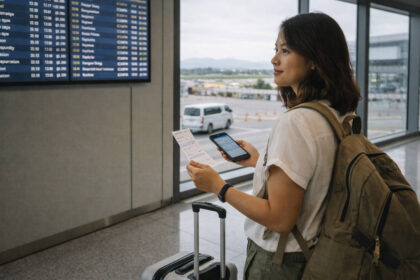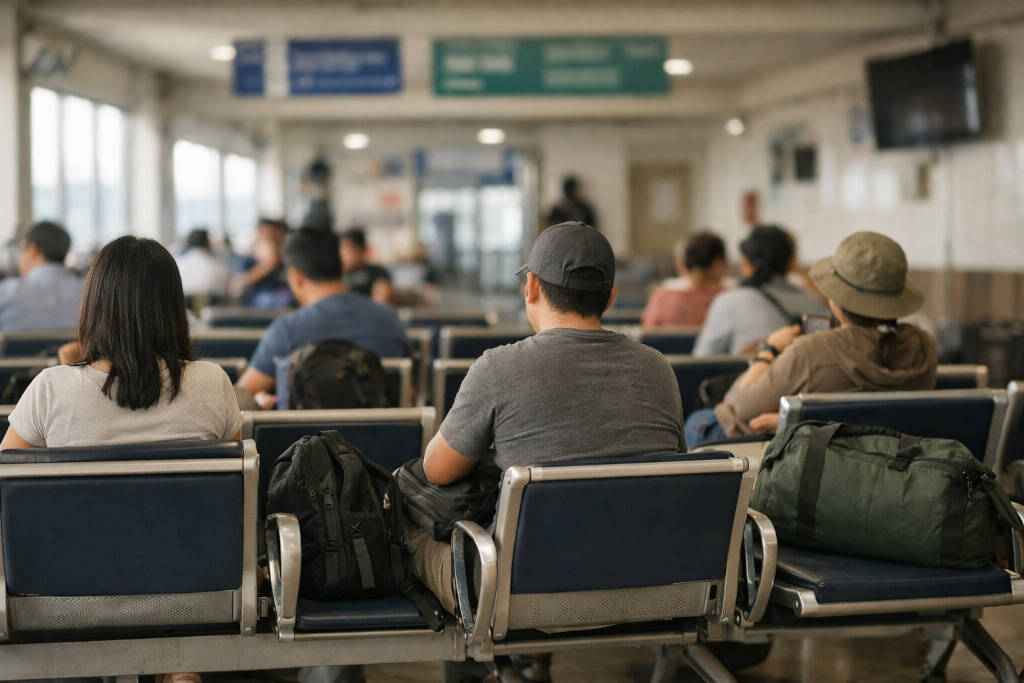
Philippines ferry tickets are often easy to buy—but ferry days get stressful when one small detail is missing: the correct port name, a matching ID, a saved booking reference, or proof of payment. Add weak signal at terminals, sudden schedule changes, and small onsite fees, and it’s easy to feel rushed.
The goal of this guide is simple: a booking and offline-save system that keeps your ferry day smoother even when schedules change. No special hacks—just a calm, repeatable routine that reduces surprises, lines, and last-minute costs.
At-a-Glance: The Low-Stress Booking System
Best time to book ahead: weekends, holidays, long weekends, and popular routes. Best buffer habit: avoid tight same-day connections and arrive early enough to handle check-in lines. Budget reality: plan for small onsite fees (terminal fee and possible baggage fees) and keep receipts until your trip is complete. Signal backup: assume mobile data may be slow inside ports—save everything offline.
Reality check: even with a perfect plan, weather can cancel a voyage. The “low-stress win” is having your proofs saved, your options clear, and a simple pivot plan (rebook, alternate route, or overnight).
Quick Start: Book Safely and Save This Offline in 60 Seconds
The Simplest Way to Book Safely
 For most travelers, the safest approach for Philippines ferry tickets is: book through the operator’s official site or official app when available, choose a sailing with time buffer, and immediately build a small offline “proof kit.” If you prefer buying at the port, arrive early and keep a photo of your ID and your destination port details ready (but still bring the physical ID).
Reality check: the lowest-stress ticket is not always the cheapest—it’s the one that still works when lines are long or the schedule shifts.
The 60-Second “Save This Offline” Checklist
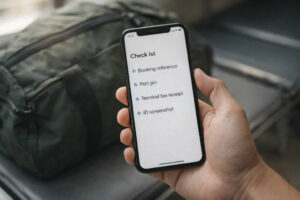
Right after you book, save offline: (1) your booking reference, (2) your e-ticket/voucher page, (3) your selected sailing details, (4) proof of payment, (5) the correct port name and terminal, and (6) the operator contact page. Put them in one phone folder labeled “FERRY.”
Reality check: if your battery dies or signal drops, a screenshot is faster than reloading email in a crowded terminal.
Before You Book: Set Your Route Style and Buffer Rule
Choose Your “Ticketing Style” (Prebook vs Flex)
Before buying Philippines ferry tickets, decide what you value more: certainty (prebook a specific sailing) or flexibility (buy at port and choose based on the day). Certainty is better when you have fixed check-in times, hotel bookings, or tight onward travel. Flexibility can work when you can adjust plans and you’re arriving early with multiple sailings to choose from.
For bigger-picture planning habits (buffers, IDs, and timing), it can help to review the Philippines travel planning guide for first trips. Reality check: “flexible” only feels flexible if you have time—arriving at the port last-minute removes your choices.
Know Your Vessel Type in Plain Terms
Fast craft can be quicker but more sensitive to sea conditions and can have stricter baggage handling. RORO (roll-on/roll-off) may be slower but can feel steadier for some travelers, and it has different boarding flows. Overnight vessels add sleeping arrangements, assigned spaces, and often more check-in steps.
If you want an overview of vessel types and what to expect, the Philippines ferry travel guide and RORO routes can help you match your comfort level to the ride. Reality check: “short crossing” does not always mean “easy day”—ports and check-in steps can take longer than the sailing itself.
Where to Buy Ferry Tickets: Online vs Port vs Agents
Buying Online (Best for Certainty and Peak Dates)
Online booking is usually best for Philippines ferry tickets when you’re traveling on weekends, holidays, long weekends, or popular routes where boats can fill up. It also helps when you want a specific departure time, prefer less queue time at the port, or need a clear proof of purchase for coordination with other bookings.
Reality check: online booking doesn’t always mean “walk straight to boarding.” Some routes still require check-in or voucher conversion.
Buying at the Port (Reasonable When You’re Flexible)
Port purchase can be reasonable when you can arrive early, you have multiple sailings that day, and you’re comfortable choosing based on actual conditions. It can also be useful when weather is uncertain and you’d rather decide in person after checking posted advisories.
Reality check: port lines can be slow at peak hours. If you buy at the port, your “buffer” must include ticketing time, terminal fee payment, and security.
Agents and Marketplaces vs Official Operators (Neutral Comparison)
Some travelers buy Philippines ferry tickets via marketplaces or agents for convenience, bundling, or payment options. The key difference is what changes after purchase: the refund and rebooking process may run through the agent instead of the operator, check-in steps may require an additional voucher validation, and the proof accepted at the port may be slightly different (voucher versus e-ticket).
Low-stress rule: whichever channel you use, make sure you have a clear booking reference recognized by the operator, and a screenshot of the selected sailing details that matches the passenger name on your ID. Reality check: when a schedule changes, fewer middle steps usually means fewer messages and faster answers.
Port Arrival and Local Transfers: Avoid the Wrong Terminal Problem
Why Port Details Matter as Much as the Ticket
 Many “ticket problems” are actually “terminal problems”: arriving at the wrong pier, a similar-sounding port name, or a city terminal that’s different from the island terminal. This is especially common when ports share names or when a city has multiple passenger terminals.
When planning how to reach the port (tricycle, jeepney, taxi, bus/van), it helps to review the Philippines public transport guide (bus, jeepney, ferry) so you can budget time and choose realistic transfers. Reality check: the last kilometer to a port can take longer than expected due to traffic, security checks, or pedestrian-only entrances.
Save a Pin, Not Just a Port Name
For Philippines ferry tickets, “Port of X” is sometimes not specific enough. Save the exact terminal name and a map pin to the passenger entrance you should use. If your booking page shows a terminal name (Passenger Terminal Building, Pier number, or specific wharf), screenshot that too.
Reality check: asking “Saan ang pier?” at the last minute often leads to rushed decisions. A saved pin keeps it simple.
What to Screenshot and Save Offline: Your Ferry-Day Proof Kit
The Proof Kit (What to Save)
 Create one offline folder for Philippines ferry tickets and save these items as screenshots (or PDFs if your phone supports easy offline access): your e-ticket, ticket page, or voucher details; the booking reference; the passenger details page (showing full name); payment confirmation; a photo of a valid ID (and a note to bring the physical ID); the port name and the exact terminal or entry pin; the operator contact page; and a screenshot of the selected sailing details (date, time, route, vessel name if listed).
Reality check: when staff need to verify something, the fastest path is showing a clear booking reference and matching name, without scrolling through email threads.
Why Offline Matters (Signal, Battery, and Lines)
Ports can have slow signal, crowded networks, and limited places to charge. Offline screenshots are the easiest way to keep your place in line while still having your details ready. If your phone is low battery, dim your screen and switch to low power mode early—don’t wait until you’re at 5%.
Reality check: the moment you most need your ticket is often the moment your phone loads the slowest.
What to Bring Physically (Simple and Realistic)
Must-Haves in Plain Terms
Bring a valid physical ID that matches the ticket name, a backup power source (power bank plus cable), small cash for terminal fees and small port costs, water, rain protection, and a dry bag or zip pouch for documents. Add a simple pen—useful for forms, baggage tags, or quick notes.
Reality check: even if you booked online, you may still pay small onsite fees or be asked to write details at check-in.
Fees and Budget Reality: Plan for Small Onsite Costs
Common Fees That Surprise People
For Philippines ferry tickets, the ticket price is not always the full story. Some ports collect terminal fees onsite. Some operators or terminals charge for baggage handling, and porter services (optional) can add small costs. The calm approach is to assume there will be small fees and carry enough small cash.
Keep receipts until you arrive. If you’re building a full trip budget that includes buffers and possible overnight pivots, the Philippines travel budget examples can help you set realistic ranges without guesswork. Reality check: small fees feel bigger when you’re unprepared—planning for them keeps your day calm.
Common Mistakes and How to Avoid Them (Calm Prevention Guide)
Name Mismatch vs ID (Fix It Before Travel Day)
The most common issue with Philippines ferry tickets is a passenger name that doesn’t match the ID—misspellings, missing middle name, or using a nickname. If you notice a mismatch, act early: contact the seller channel (operator or agent) and ask about name correction rules. If the name is clearly wrong, don’t wait for the port to “fix it.”
Reality check: staff can be helpful, but they often follow strict name rules for manifest and security.
Wrong Port or Terminal (Similar Names, City vs Island)
Ports can sound alike, and some cities have more than one passenger terminal. Before travel day, confirm your origin port and destination port and compare them to your accommodation location. Save a map pin for the correct passenger terminal entrance, not just the city name.
Reality check: arriving at the wrong terminal can cost more time than any other single mistake.
Buying for the Wrong Date or Time (AM/PM and Time Windows)
Double-check the date and time before you pay. For Philippines ferry tickets, AM/PM mistakes happen when travelers book late at night or switch time windows quickly. After booking, screenshot the sailing details and read it once slowly: date, time, route, and port names.
Reality check: some routes have multiple sailings close together—make sure yours is the one you intended.
Assuming “Voucher = Boarding Pass”
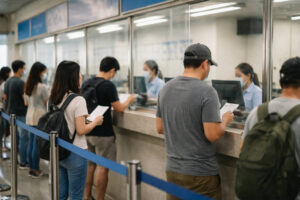 On some routes, your online document is a voucher that must be converted to a boarding pass at check-in. If your confirmation says “voucher,” “for validation,” or “present at ticketing,” plan extra time for that step. The safe habit: arrive early enough that a check-in conversion does not feel like an emergency.
Reality check: even when staff are fast, lines can be slow.
Not Budgeting Time for Check-in Lines and Baggage Checks
For Philippines ferry tickets, “departure time” is not the time you should arrive. Ports may have security screening, baggage checks, and separate queues for terminal fees or ticket validation. A calmer target is arriving 60–90 minutes early for regular days, and earlier during holidays or when you have a voucher conversion step.
Reality check: lines move in waves—arriving early avoids the rush wave.
Forgetting Small Onsite Fees and Not Keeping Receipts
Terminal fees, baggage fees, and optional porterage can be paid onsite. Keep receipts until you reach your destination. Receipts help if there is confusion about payment, and they’re useful if you need to explain costs for revalidation or refunds.
Reality check: a small receipt can save time when staff need to verify what was paid.
Booking Tight Same-Day Connections Without Buffer
A common stress pattern: bus/van/flight delays lead to missing the ferry. For Philippines ferry tickets, avoid planning around the last trip of the day. Build buffers between arrivals and sailings, and consider an overnight near the port if your connection is late afternoon.
For overall personal safety habits during long transfer days, the travel safety guide for the Philippines is a helpful reference. Reality check: the least stressful plan is the one that still works when something runs late.
Not Checking Advisories Close to Departure
Check the operator’s advisories the day before and the morning of travel. Weather, port conditions, or vessel maintenance can change the schedule. If you can, screenshot the latest advisory or schedule update so you can refer to it while in line.
Reality check: a five-minute check can prevent a wasted trip to the wrong line or the wrong time.
Baggage Rules and Fees: Set Expectations Without Overpromising
Rules Vary by Operator and Vessel Type
With Philippines ferry tickets, baggage rules can differ based on the operator, route, and vessel type (fast craft, RORO, overnight). Some routes allow you to keep smaller bags with you; others require larger bags to be tagged or stored. Fees can apply depending on size and weight, and enforcement can be stricter on busy sailings.
Practical habits: pack lighter when possible, keep valuables with you (cash, phone, IDs), label your bag, and ask staff politely if you’re unsure where a bag should go. If you pay a baggage fee, keep the proof of payment until you arrive. Reality check: handling is easier when your main bag is manageable to lift without rushing.
Weather Delays, Cancellations, Refunds, and Revalidation
The Realistic Pattern (Information First, Options Second)
Weather can cancel voyages, especially for smaller fast craft and open-sea crossings. The calm pattern for Philippines ferry tickets is: get official confirmation, understand your options (refund, revalidation/rebook, alternate route, or overnight), then choose the least-transfer pivot that matches your comfort level.
Reality check: when seas are rough, “waiting for the next trip” might mean waiting until tomorrow—plan your decision around safety and rest, not hope.
Calm Action Sequence (Step-by-Step)
Step 1: Get official confirmation using the operator’s official channel or a port announcement. Step 2: Keep your ticket/booking proof and all receipts ready (terminal fee, baggage fees, any rebooking payments). Step 3: Ask clearly for your options and time window: “Can this be revalidated for the next sailing? Is there a rebooking fee? Is a refund available, and through which channel?” Step 4: If you must pivot, choose the least-transfer alternative route, or take an overnight near the port and travel in daylight the next day.
For passenger rights guidance, the authority is MARINA. This page is a useful reference point: MARINA passenger rights reminder for shipping operators. Traveler translation: keep your proof kit, ask for your official options, and don’t surrender your only copy of receipts or booking details.
Reality check: refund and rebooking timelines can depend on where you bought the ticket (operator vs agent). Your proof kit helps either way.
Problem-Solving: If You’re Running Late to the Port
What to Do in the Last 30–60 Minutes
If you’re running late with Philippines ferry tickets, don’t guess. Call or message the operator if possible, and go straight to the correct check-in or ticket validation point when you arrive. Show your booking reference immediately, and ask if you can be revalidated to the next sailing if you miss the cut-off.
Reality check: ports may stop check-in before departure time. Arriving “before departure” is not always enough.
FAQ: Philippines Ferry Tickets (Common Planning Questions)
Is it better to book ferry tickets online or at the port?
For Philippines ferry tickets, online is usually better on weekends, holidays, and popular routes, or when you need a specific time. Port purchase is reasonable when you can arrive early, have multiple sailings, and can adjust your plan if schedules change.
What if my phone has no signal at the terminal?
This is exactly why the offline “proof kit” matters. Screenshots of your booking reference, sailing details, and proof of payment are usually enough to keep your check-in moving even with weak data.
Do I need to print my ticket?
Usually not, but it can reduce stress. For Philippines ferry tickets, a printed copy is helpful if you’re worried about battery life or if multiple check-in steps are required. Even if you don’t print, keep screenshots offline.
What IDs are accepted?
Bring a valid physical ID that matches the ticket name. If you’re unsure, check the operator’s accepted ID list. The safest habit is ensuring the name on your booking matches your primary ID exactly.
How early should you arrive at the port?
A calm target for Philippines ferry tickets is 60–90 minutes early on regular days, earlier on holidays, and earlier if you need voucher conversion or you’re traveling with bulky luggage.
A Ferry-Day Checklist (Copyable in Plain Sentences)
Night Before
Confirm the correct port and terminal. Screenshot the latest schedule/advisory. Charge your phone and power bank. Put your ID, small cash, and dry pouch together. Save your proof kit in one folder.
Morning Of
Recheck advisories. Leave early enough to absorb traffic. Eat something simple and bring water. Turn on low power mode if your battery is not strong.
Arriving at the Port
Go to the correct passenger terminal entrance. Pay terminal fees if required and keep the receipt. Ask staff where check-in or ticket validation happens for your route.
Check-in and Security
Show your booking reference and ID. If your document is a voucher, convert it to a boarding pass if required. Tag or check baggage if instructed and keep any baggage fee proof.
Boarding
Keep valuables with you. Prepare rain protection for ramps and queues. Listen for announcements and confirm the destination port before stepping onto the vessel.
Arrival
Wait for your bag carefully if it was stored. Keep receipts until you’re fully done traveling that day. If you need local transport, move to the designated pickup area and confirm the destination clearly.
Closing: The Calm Habit That Pays Off
With Philippines ferry tickets, the easiest stress reduction is not a shortcut—it’s a system: choose the right buying channel for your travel day, build a small offline proof kit, arrive with buffer time, and expect small onsite fees. When schedules change, your day stays smoother because you have the documents, the receipts, and the next-step options ready.