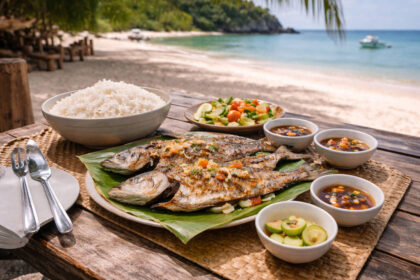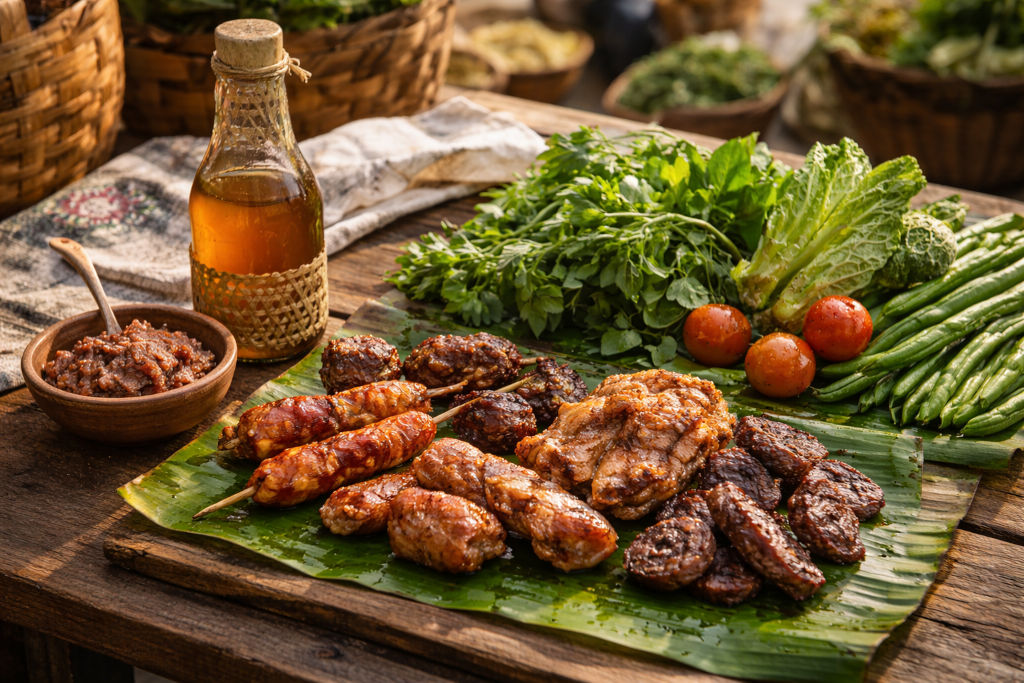
The North announces itself early. Not with a greeting, but with scent.
It’s market morning in Northern Luzon—the kind where the air is still cool and your breath feels a little cleaner. Somewhere nearby, a grill is waking up. You catch the sharp perfume of cane vinegar in a reused bottle, the salty funk of bagoong when a vendor lifts a lid, the sweet smoke of cured meat hanging by a stall, and the green, wet smell of mountain vegetables stacked like bouquets. You buy something hot in a paper bowl, you burn your tongue a little, and you think: this is why people wake up at dawn on road trips.
That’s what I mean when I say northern heritage flavors—not “fancy” food, not novelty food, but food that holds memory. Dishes that survived long drives, lean seasons, fiestas, and family tables. Heirloom recipes aren’t just old; they’re carried. You taste them in vinegar’s bite, in broth that’s meant to be shared, in smoke that clings to meat because refrigeration used to be a wish, not a given.
The Taste of the North: What “Heritage Flavors” Really Means
When travelers talk about Filipino food, the conversation often centers on the familiar: adobo, sinigang, lechon, halo-halo. The North has those comfort languages too—but it speaks with a slightly different accent. Northern heritage flavors lean into preservation (smoke, salt, fermentation), practical freshness (vegetables that thrive in cool hills), and sharp balancing (vinegar, citrus, strong condiments). The result is food that feels bold but purposeful—designed to last, designed to travel, designed to feed many.
What makes northern heritage flavors different from other Filipino regional cuisines isn’t that it’s “more intense.” It’s that the intensity has context. Vinegar isn’t there to shock you; it’s there to brighten and preserve. Smoke isn’t a gimmick; it’s history. And the best way to understand it is to eat slowly enough to notice why each flavor exists.
If you like food stories that travel with you, you’ll enjoy the way Bakasyon.ph collects them too: Filipino food culture stories.
Ilocano Table: Coastal Salt, Cane Vinegar, and Vegetable-Forward Comfort
Ilocano cooking feels like it was built for real life: long coastlines, strong winds, and families who learned to stretch ingredients without losing pride. Here, the table is often salty-sour, cleanly sharp, and surprisingly vegetable-forward. Even meat dishes feel balanced, like they’re meant to be eaten with rice and something green on the side.
Taste Profile
Expect salty from fish and bagoong, sour from cane vinegar and citrus, and a gentle savory depth from fermentation. Ilocano food can taste “simple” at first bite, then suddenly your mouth wants another spoonful because the flavors are so clear.
Where a Traveler Feels It First
You’ll understand Ilocano food best in places where people eat quickly and honestly: markets, carinderias, and roadside stops where the ulam choices are visible behind glass. For a broader travel context—Vigan, Laoag, Pagudpud—this guide helps you frame your food stops within the route: Ilocos travel guide: explore Vigan, Laoag, Pagudpud.
Budget Range and Ordering Style
Ilocano carinderia eating is friendly to budgets. A full meal (rice + ulam + drink) is often affordable, but prices vary by city and season—so think in ranges, not guarantees. What helps is ordering with clarity: “Apo, may sabaw po ba?” (Do you have soup?) and “Konting suka lang po” if you’re still warming up to the sourness.
Ilocano Heirloom Dishes to Know (With Quick Taste Notes and When Locals Eat Them)
Here are heirloom-feeling Ilocano dishes—some celebrated, some everyday—that give you the region’s signature balance. This is not an exhaustive list; it’s a “start here” list for a food trip.
Heirloom Dish Spotlights
Pinakbet – Vegetable stew with bagoong flavor. Taste: savory-salty, earthy, slightly bitter depending on the vegetables. When locals eat it: everyday comfort, especially when the market vegetables look good.
Dinengdeng – Lighter vegetable soup compared to pinakbet. Taste: brothy, clean, gently salty. When: weekday lunch, “pang-tanggal umay” from heavy food.
Bagnet – Crisp pork with a deep, rich bite. Taste: crunchy, fatty, intensely savory. When: special meals, but also a carinderia classic—best paired with something sour or brothy.
Igado – Pork (and sometimes liver) in a savory sauce. Taste: savory, slightly tangy, hearty. When: fiestas, family gatherings, and also common in home kitchens.
Poqui-poqui – Eggplant with egg and aromatics. Taste: soft, smoky-vegetal, comforting. When: breakfast or simple lunch—especially when you want something gentle.
Where to Try It: Market and City Cues
Markets in Ilocos are best early—when vegetables are crisp and fried items are still hot. If you’re in Vigan, Laoag, or nearby towns, look for carinderias that display multiple vegetable dishes; that’s usually a good sign the cooking is not just meat-heavy.
Comfort Notes: Sourness, Richness, Portion Sizes
Ilocano vinegar can be bold. If you’re sensitive, start with small dips, then build confidence. If bagnet feels too rich, balance it with dinengdeng or fresh tomatoes and onions. Portions can be generous—sharing ulam is normal, and honestly, it makes the meal better.
Cordillera Table: Smoke, Rice Wine, Wild Greens, and Mountain Warmth
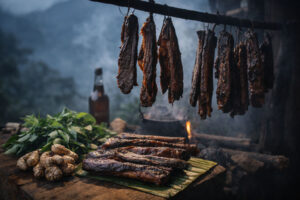 The Cordilleras taste like cool air and woodsmoke. There’s a grounded warmth here—food that feels designed for altitude, early mornings, and long stories told over hot bowls. The ingredients shift: more wild greens, more preserved meats, more ginger and aromatics that make your body feel taken care of.
Taste Profile
Expect smoky and salty notes from cured meats, brothy warmth in soups, and a pleasant sharpness from ginger and mountain herbs. The flavors can be strong, but they’re often clean rather than oily.
Where Travelers Usually Start (And Why It Works)
Baguio is a natural gateway for many travelers—easy to reach, full of markets, and packed with places that serve both everyday and heritage-leaning dishes. If you want a market-to-table way to explore without guessing, this is a helpful companion: Baguio food culture: from market to table.
Budget Range and Ordering Style
In the Cordillera, a filling bowl-based meal can be a good value, but specialty meats can cost more depending on sourcing and preparation. If you’re unsure, ask gently: “Ano po yung mild?” (Which is mild?) and “Pwede po ba half order?” if you want to taste without overcommitting.
Cordilleran Heirloom Dishes and Ingredients (Etag, Kiniing, Pinuneg, Pinikpikan) With Respectful Context
This is the part where I want to slow down and be careful. Some Cordilleran foods carry ritual, community, and history. Some have modern controversy. A responsible food trip is curious, yes—but also respectful, and willing to choose alternatives when needed.
Respect and Context (Read This Before You Order)
In the Cordillera, food can be tied to community gatherings, traditions, and identity. Some dishes are associated with rituals or older practices that travelers may not fully understand. Avoid sensationalizing. Don’t treat food as a dare. When in doubt, choose modern interpretations served in reputable eateries, ask questions respectfully, and accept “no” without pushing.
What Is Etag and How Is It Used?
Etag is a traditional Cordilleran cured pork—salted and often smoked—used more like a flavor backbone than a big, standalone meat portion. Think of it as a deep smoky-salty “seasoning” that can transform vegetables or soup. A little goes a long way, which is part of the brilliance: it stretches flavor across many bowls.
Etag: How It Tastes and How to Try It Comfortably
Taste: smoky, salty, meaty—sometimes intensely so. If you’re sensitive to salt, try it in soup or mixed with vegetables rather than as a heavy meat plate. Ask: “May gulay po ba na may etag?” (Do you have vegetables with etag?) so you get the flavor in a softer way.
Kiniing: The Smoky Cousin Vibe
Kiniing is another preserved meat style you may encounter, often described as cured and smoked. Taste: firm, smoky, savory—great when sliced thin and paired with rice and something fresh. If you see it served with greens or in a light broth, that’s a balanced entry point.
Pinuneg: A Hearty, Traditional Dish
Pinuneg is a traditional blood sausage associated with certain Cordilleran communities. Taste: rich, deeply savory. Comfort note: it can feel heavy if you’re not used to it—consider sharing a small portion or choosing another dish if blood-based foods aren’t for you. There is no shame in knowing your comfort level.
Pinikpikan: What It Is, Why It’s Controversial, and Respectful Alternatives
Pinikpikan is a traditional chicken dish associated with the Cordilleras. The controversy comes from the traditional preparation method that involves animal welfare concerns, and many travelers feel uneasy about it—and that’s valid.
If you want the spirit of the dish (warm broth, ginger comfort) without participating in practices you’re not comfortable with, choose alternatives: order a ginger-forward chicken tinola-style soup, or ask for a mountain chicken soup that uses modern, ethical sourcing. You can say: “May chicken soup po ba na parang pinikpikan pero regular preparation?” Many places now serve interpretations that focus on flavor and warmth without leaning into the controversial aspect.
Where to Try It: Gateway and Mountain Cues
If you’re heading beyond Baguio toward Sagada or Banaue, food becomes part of the mountain journey—brothier, smokier, slower. This travel guide helps you picture that route’s rhythm: Sagada and Banaue travel: mountain journey.
Pangasinan Table: Market Bowls, Beefy Comfort, and Kakanin for the Road
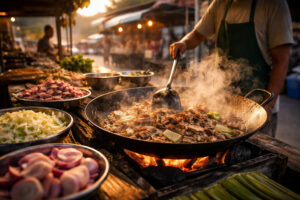 Pangasinan tastes like a good stopover that turns into a meal you still talk about later. The flavors lean comforting and direct: hot bowls after a drive, sizzling plates that make you suddenly ravenous, and kakanin that’s built for travel—wrapped, grilled, and happy in your bag.
Taste Profile
Expect beefy richness in popular comfort foods, savory-salty profiles that pair perfectly with rice, and sweet-smoky notes in kakanin cooked in banana leaves.
Where Travelers Feel It Most
Pangasinan shines in markets and no-frills eateries—places where the menu is short because people already know what they came for. If you’re pairing food with a coastal detour, the province also connects nicely to island-ish moods nearby—this can inspire your side trip planning: Hundred Islands escapes: hidden islands guide.
Budget Range and Ordering Style
Budget can be pleasantly manageable here, especially if you share sizzling plates and add soup bowls strategically. Useful phrasing: “Isang pigar-pigar, good for sharing po” or “May maliit na bowl?” if you want to taste without getting too full before your next stop.
Pangasinan Must-Tries (Pigar-pigar, Kaleskes, Tupig, Patupat) With Where-to-Try Cues
If Ilocos teaches you vinegar balance and the Cordillera teaches you smoke and warmth, Pangasinan teaches you how comfort can be immediate. Here are the classics many locals proudly point you to.
Heirloom Dish Spotlights
Pigar-pigar – Sizzling beef with onions. Taste: savory, slightly sweet from onions, very “rice needs this.” Where to try: city eateries and stalls known for sizzling plates—best eaten hot, right away.
Kaleskes – Beefy soup comfort. Taste: rich, warming, intensely savory. Where: market-side bowl places and early lunch spots—especially good after a long drive.
Tupig – Grilled rice cake in banana leaves. Taste: smoky-sweet, chewy, comforting. Where: roadside stalls—watch for the grill smoke and stacks of leaf-wrapped parcels.
Patupat – Rice cake wrapped in woven leaves. Taste: mild, starchy comfort—good with savory dishes or as a travel snack. Where: markets and pasalubong areas.
Comfort Notes: Richness and Portions
Pigar-pigar can feel heavy if you order it as a solo main plus another meat dish—consider sharing and adding something lighter (vegetables or soup). Kaleskes is deeply comforting but rich; if you’re sensitive, go for a smaller bowl first.
Where to Taste Them Like a Local (Markets, Small Eateries, Ordering Tips)
This is the part that makes a food trip feel real: not just what you eat, but how you show up.
Markets: Go Early, Bring Small Bills
Markets reward early risers. You get first pick of hot food, better vegetable quality, and fewer crowds. Bring small cash, and don’t be shy to ask, “Anong bestseller niyo?” (What’s your bestseller?)—it’s the easiest way to get the dish locals trust.
Carinderias: Point, Ask, and Balance
Carinderia culture is visual. Point at what looks good, then ask for balancing sides: “May gulay po?” and “May sabaw?” A little soup can make a strong-flavored meal feel gentler.
When to Go: Timing the North for Comfort
Heat is real in lowland towns, and mountain evenings can get chilly. Plan heavy walking or market visits in the morning, then rest midday. Food tastes better when you’re not exhausted.
Food Safety and Comfort Basics
Choose stalls with steady turnover (freshly cooked, regularly replenished). If you have a sensitive stomach, start with brothy dishes and grilled items before exploring richer or more adventurous plates. Hydrate. And yes—carry tissue and hand sanitizer. Always.
Pasalubong and Pantry Souvenirs That Carry the Story Home
The best souvenirs from a Northern trip are the ones that make your kitchen smell like your drive: vinegar, dried items, wrapped kakanin, and small jars that turn plain rice into a memory.
What Keeps Well for Travel Home?
For longer travel, choose items that handle time and warmth: sealed vinegar, packaged or well-wrapped kakanin meant for pasalubong, and dry snacks. Tupig is best eaten fresh, but some versions keep a bit longer if wrapped well—still, plan to eat it same day when possible.
What to Pack So It Doesn’t Leak
Wrap bottles in clothes, place them in plastic, and keep them upright. For kakanin, use a container if you’re carrying it in a bag that will get tossed around on buses and vans.
Heirloom Recipes as Reading Souvenirs
If you want a deeper dive into heirloom recipe documentation (beyond what you can taste on a trip), you can browse this heirloom recipe book resource: Heirloom Recipe Book (PDF).
Quick Northern Luzon Food Loop + Budget and Comfort Tips
You can taste Ilocos, the Cordilleras, and Pangasinan in one loop without turning it into a punishing drive. Keep it high-level: choose a coastal chapter, a mountain chapter, and a market comfort chapter—then leave space for rest.
A High-Level Loop That Makes Sense
Ilocos chapter: Start with Ilocano vegetable-forward comfort and vinegar-bright dishes. Let your palate adjust here—this is your “balance training.”
Cordillera gateway chapter: Move toward Baguio (and possibly Sagada/Banaue) for smoke, broth, and mountain warmth. Choose respectful, modern interpretations when needed.
Pangasinan chapter: On the way back (or as a dedicated stop), reward yourself with pigar-pigar, kaleskes, and road-friendly kakanin like tupig or patupat.
Budget Reality Check: How Much Per Day for a Food-Focused Northern Trip?
Budgets vary wildly depending on transport (bus vs private car), lodging (hostel vs hotel), and how often you “treat yourself.” For food alone, a realistic approach is to budget for three meals plus snacks, with extra for a couple of specialty dishes. If you’re eating mostly in markets and carinderias, you can keep costs modest; if you’re doing curated restaurants and specialty meats, expect higher spending. My tip: set a daily food ceiling, then choose one “splurge dish” per day—so you enjoy without stressing your wallet.
Comfort Tips for Long Drives and Strong Flavors
Start days early to avoid heat and traffic. Keep ginger candy or peppermint if you get motion sickness. Drink water between salty meals. And pace your palate: sour and smoky flavors are exciting, but they can fatigue you if you don’t balance with broth and vegetables.
FAQ: Northern Heritage Flavors
What makes “Northern heritage flavors” different from other Filipino regional cuisines?
They lean into preservation (salt, smoke, fermentation), bright balancing (vinegar), and practical freshness (vegetables and broths) shaped by coastal and mountain realities.
Which Ilocano dishes are heirloom and what do they taste like?
Pinakbet and dinengdeng are vegetable-forward and savory-salty; bagnet is crisp and rich; igado is hearty and savory; poqui-poqui is soft, smoky-vegetal comfort.
What is etag and how is it used?
Etag is salt-cured (often smoked) pork used to flavor soups and vegetables—more seasoning backbone than big meat portion.
What is pinikpikan, why is it controversial, and what are respectful alternatives?
It’s a traditional Cordilleran chicken dish associated with preparation methods that raise animal welfare concerns. Respectful alternatives include ginger-forward chicken soups or modern interpretations using regular preparation and ethical sourcing.
What are Pangasinan’s iconic comfort foods and where do locals eat them?
Pigar-pigar and kaleskes are common in city eateries and market-side bowl places; tupig and patupat are often found in markets and roadside stalls.
What kakanin/pasalubong keeps well for travel home?
Sealed vinegar, packaged kakanin meant for pasalubong, and dry snacks travel best. Tupig is best fresh—plan to eat it same day when possible.
How much should you budget per day for a food-focused Northern trip?
Plan for three meals plus snacks with one daily splurge dish. Market and carinderia days are more budget-friendly; specialty meats and curated restaurants raise costs.
Northern Luzon food isn’t asking you to “collect” dishes. It’s inviting you to listen—through vinegar bite, smoke warmth, and market broth—until the flavors start to feel like stories you can carry. Eat with context, travel with respect, and let the North feed you the way it has always fed its own.