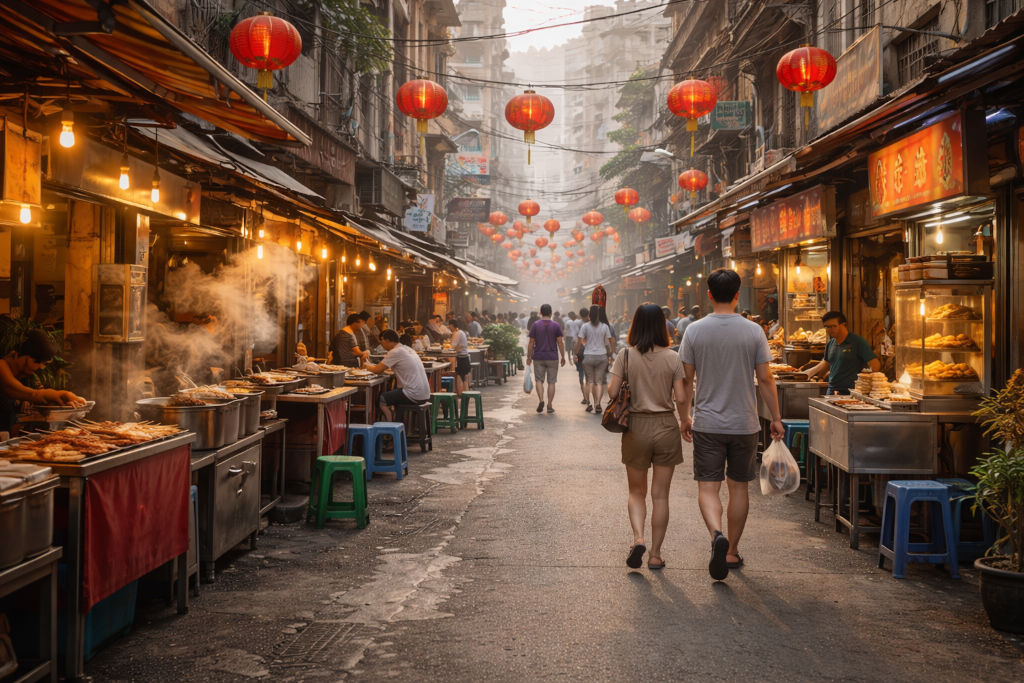
Eating well in Manila gets easier when you stop thinking in “must-try dishes” and start thinking in areas. This guide to manila food neighborhoods is built for travelers who want satisfying meals without overplanning, long waits that derail the day, or crisscrossing the city just to chase one famous bite.
Here’s how to use it: pick one or two neighborhoods per day, expect queues at well-known stops, and pace your day as “street eats + one sit-down” so you stay comfortable. Manila traffic is real—so instead of hopping across districts for a single dish, build a small loop within one neighborhood and eat what’s good there. If you want a movement-first framework to pair with this (walking pockets, Grab rules, and simple connectors), Manila Without a Car: How to Get Around Safely and Easily helps you plan food days with fewer stressful transfers.
The Neighborhood Approach (Low-Stress, High-Reward)
Think of this as a manila food guide by neighborhood. Each area has its own rhythm—markets and morning snacks, old-school eateries with shared seating, or modern dining clusters with predictable aircon comfort. When you pick a neighborhood first, you also get better timing: you’re not arriving at the busiest spot at the busiest hour.
- Pick one or two areas per day: More than that usually means too much time in traffic and not enough time eating.
- Expect queues at famous places: Have a backup plan, and don’t tie your whole day to one line.
- Use “street eats + one sit-down” pacing: A few shared bites, then a seated meal with water and a real break.
- Don’t crisscross Manila just for one dish: If it’s far, save it for a day you’re already nearby.
A calm planning tip: If rain is in the forecast, build your food plan around indoor anchors (malls, covered dining clusters, seated cafés) and treat outdoor street-eats as short bursts only. This Manila rainy-day itinerary shows indoor-first routing logic you can reuse for food days.
Binondo
What it’s best for: Classic Chinatown flavors, quick bites that reward curiosity, and a satisfying “crawl” style of eating. Binondo is often treated as a food playground, but it’s at its best when you keep your route compact and paced. (If you want quick context on the district itself, see Binondo on Wikipedia.)
Best time to go: Late morning to early afternoon is the classic window, especially on weekdays when sidewalks feel a bit less congested. Weekends can be lively but also line-heavy—go earlier if you can, and keep expectations flexible.
What kind of places to expect: Street eats and takeaway counters, older sit-down dining rooms, bakeries, tea houses, and small shops where queues can spill into the street. Seating can be tight at peak hours, and shared tables are common.
Practical ordering tips:
- Cash vs card: Many small counters and older spots are cash-first. Have small bills for quick orders.
- Queues: Lines are normal at popular choices. Go early, pick 1–2 “popular picks,” and keep a backup in mind so you’re not stuck waiting hungry. If a line feels too long, it’s okay to pivot—Binondo has plenty of options within a short walk.
- Shared seating: In busy spots, you may be asked to share a table. Keep bags compact, order efficiently, and treat it as part of the neighborhood’s fast-paced dining culture.
- Food safety basics: Choose stalls with high turnover. Start with cooked/hot items, pace oily or spicy bites, and keep water handy—especially if you’re sampling multiple stops.
If you want deeper planning help for a crawl-style day, you can also skim this Binondo food tour guide or this Binondo food trip overview for extra context and route ideas.
Short Binondo First-Timer Route (2–3 Hours, 4–6 Stops Max)
This route is intentionally paced so you don’t overorder early and end up too full for the later stops. Plan to share items, order smaller portions when available, and treat lines as a signal to simplify. If a stop is packed, choose a nearby alternative—Binondo rewards flexibility.
- Stop 1: Dim sum or siopao counter (start light): Begin with one or two small, shareable items—think steamed buns or dim sum-style bites. Don’t order a full set yet; you’re just opening your appetite.
- Stop 2: Noodle soup or mami-style bowl (warm and grounding): Share one bowl if possible. A warm broth stop is a good “reset” between snacks and heavier dishes.
- Stop 3: Roast or meat-and-rice plate (the hearty middle): Pick one common pick—roast meats, braised options, or a classic rice plate. Consider ordering one plate to share rather than one per person.
- Stop 4: Bakery or dessert bite (sweet break): Choose a small pastry or dessert you can carry easily. This is also a good moment to slow down, step aside, and regroup.
- Stop 5 (optional): Tea house or coffee reset (sit, hydrate): If you want a true break, do a short seated drink stop. If coffee is your comfort ritual, you can borrow ideas from this coffee culture guide and choose a spot based on proximity and seating.
Pacing notes: Expect at least one line. Decide in advance: “We’ll wait for one popular choice, and everything else is flexible.” That single rule keeps the whole route calm.
Quiapo
 What it’s best for: Market energy, familiar Filipino comfort food, and street eats that feel woven into everyday life. Quiapo can be busy and sensory—rewarding when you go with a simple plan and a steady pace. For a quick neighborhood overview, see Quiapo on Wikipedia.
Best time to go: Morning is usually the easiest time for browsing and eating—cooler, more daylight, and better for market-style wandering. Weekdays tend to feel more manageable than weekends, when foot traffic increases.
What kind of places to expect: Market corridors, street eats, small counters with quick turnover, and simple eateries where you order fast and eat fast. Seating may be limited; some stops are takeaway by design.
Practical ordering tips:
- Cash vs card: Expect cash-only for many stalls and market counters. Keep small bills and coins.
- Queues: If a famous spot has a long line, treat it as optional. Choose one popular choice, then fill the rest of your crawl with shorter-wait options.
- Shared seating: If seating exists, it may be communal or limited. Order efficiently and be ready to take food to-go if it feels crowded.
- Food safety basics: Pick high-turnover stalls and prioritize cooked-to-order or freshly hot items. Pace rich or greasy foods, especially in warm weather, and keep hydration steady.
If you want a broader feel for Filipino street eats across cities, this street food diaries guide can help you set expectations and pacing.
Ermita/Malate
What it’s best for: A mix of old Manila atmosphere and practical dining options—good for travelers who want variety without committing to an all-day food crawl. Ermita/Malate can work as a “balanced” food area: a few casual bites, then a comfortable seated meal.
Best time to go: Late afternoon into evening tends to be a natural fit, especially if you want a slower pace after sightseeing. Weekdays often feel calmer; weekends can be more social and crowded depending on the exact pocket.
What kind of places to expect: Casual restaurants, cafés, and mixed dining strips with a range of budgets. You’ll find both street eats and sit-down spots, plus convenience stores for quick water/snack resets.
Practical ordering tips:
- Cash vs card: Many sit-down places accept cards, but smaller counters may still prefer cash. Carry both to stay flexible.
- Queues: If a dining room looks full, don’t force it—choose a nearby alternative. In this neighborhood, flexibility often beats chasing one specific place.
- Shared seating: Less common than in Binondo’s busiest spots, but small eateries can still be tight during dinner hours.
- Food safety basics: Prioritize hot dishes and clean-looking prep areas. If you’re sampling multiple snacks, keep portions small and give your stomach breaks with rice, soup, or plain bread.
If your day also includes culture stops, you can pair food with quick nearby sights from my Manila things-to-do post and keep everything in one zone. For a calmer “how to move between zones” baseline (especially if you are planning without a car), this getting-around guide helps you choose the simplest connectors.
Makati
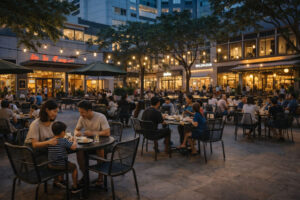 What it’s best for: Modern convenience, reliable aircon, and dining options that are easy to navigate when you want comfort over complexity. Makati is a strong choice if you want predictable seating, cafés for resets, and a wide menu range without walking far.
Best time to go: Afternoon to evening is often the easiest, especially if you’re using Makati as your “sit-down meal” neighborhood. Weekday evenings can be busy around office hours; consider earlier dinner to avoid peak crowds.
What kind of places to expect: Malls and mixed-use complexes, café clusters, sit-down restaurants, and dessert stops. Compared to older districts, you’ll generally find more clear signage, more card-friendly counters, and more straightforward comfort.
Practical ordering tips:
- Cash vs card: Cards are widely accepted in many Makati dining clusters, but it’s still wise to keep cash for small purchases or quick snacks.
- Queues: Popular choices can still line up on weekends. Handle it by eating earlier, choosing one “line-worthy” stop, and keeping a backup restaurant in the same building or nearby complex.
- Shared seating: Less common; seating is usually more structured, though peak hours can still mean waits.
- Food safety basics: The basics still apply: pace rich foods, hydrate, and don’t stack too many heavy meals in one day—especially if you’re also walking a lot.
For travelers planning without a private car, it helps to think in short ride loops and avoid unnecessary transfers; this getting-around guide can help you set expectations for ride-hailing and practical movement.
BGC
What it’s best for: Clean, modern dining clusters and an easy “choose what looks good” style of eating. BGC is often a comfort pick when you want aircon, predictable seating, and a straightforward dining environment—useful after a morning in older, busier neighborhoods.
Best time to go: Late afternoon to evening for a relaxed meal-and-café flow. Weekends can be busy in prime dining areas; go earlier if you want less waiting.
What kind of places to expect: Restaurants grouped in walkable pockets, cafés and dessert chains, and mall-based dining where restrooms and seating are easy to find. It’s generally simpler for groups, families, or anyone who wants fewer surprises.
Practical ordering tips:
- Cash vs card: Card payments are common, but keep some cash for small purchases, tips, or quick snacks.
- Queues: Expect waits at popular choices during peak dinner hours. If the line is long, don’t hover—walk a block, pick a backup, and keep the mood calm.
- Shared seating: Usually not the norm, though food halls or busy dessert spots may have tighter seating.
- Food safety basics: You’ll still feel better if you pace heavy meals, hydrate, and avoid stacking too many rich dishes back-to-back—especially if you’re mixing street eats earlier in the day.
If you’re traveling as a family, you can also adapt ideas from this low-stress Manila with kids guide—the same “one area + indoor anchors” logic works perfectly for food days too.
Want to Swap Based on Interests?
One of the best parts of planning around where to eat in manila by area is how easy it is to swap without breaking your day. Use simple logic:
- More heritage with your food: Pair Binondo with nearby historic streets or quick sights from the Manila pillar guide. Keep it walkable, then add one seated meal to reset.
- More modern comfort: Shift your main meals to Makati or BGC for aircon, easier seating, and predictable options—especially if you’re traveling with elders, kids, or anyone who needs frequent breaks.
- Want a simple “one-day” structure: Use this Manila itinerary 24 hours guide as a pacing template, then plug in one food neighborhood for lunch and another for dinner.
If rain is part of your forecast, you can also lean more heavily on mall-based dining and covered walks using this rainy-day indoor routes guide as a planning mindset. And if you are planning a calmer pace overall (fewer decisions, fewer transitions, more “sit and reset”), you can borrow the “anchors, buffers, recovery” logic from Gentle Adventures: Calm Travel for Quiet Souls and apply it directly to food days.
FAQ: Manila Food Neighborhoods (Quick, Practical Answers)
1) What’s the best time for Binondo?
Late morning to early afternoon is a common sweet spot. On weekends, going earlier helps you avoid the longest lines and the tightest sidewalks.
2) How much cash should I bring?
Enough for multiple small purchases, especially in Binondo and Quiapo where cash-only is common. Bring smaller bills so you can order quickly without needing change delays.
3) How do I avoid queues?
Go earlier, eat on weekdays when possible, and choose only one “line-worthy” popular stop. For everything else, pick places with shorter waits and keep moving.
4) What are the basics of street food safety?
Choose high-turnover stalls, start with cooked/hot items, keep portions small, and hydrate. Pace spicy or greasy foods—especially if you’re doing multiple stops in one afternoon.
5) Where should I go for aircon and easy seating?
Makati and BGC are usually the easiest for predictable comfort. Mall dining in these areas gives you restrooms, seating, and menu flexibility when you need a reset.
6) How do I pace a food crawl without feeling sick?
Share items, don’t overorder early, and add one proper sit-down meal with water. Think “small bites + one real break,” not nonstop snacking for hours.
7) What should I do if it rains?
Reduce transfers, keep your day in one neighborhood, and pivot toward indoor corridors, malls, and seated meals. Rainy days are when “comfort wins” planning matters most—use this rainy-day route guide as your template.
8) Can I combine two neighborhoods in one day?
Yes—ideally one for daytime street eats (like Binondo or Quiapo) and one for a comfortable dinner reset (like Makati or BGC). Just avoid long cross-city transfers at peak hours.
With a neighborhood-first plan, best food areas in manila stops feeling like a stressful scavenger hunt and more like a choose-your-own-pace day. Pick your area, keep one backup, hydrate often, and let the city feed you without forcing a perfect checklist.