Why Luzon Beach Camping Hooks You
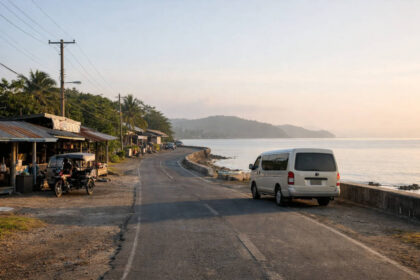
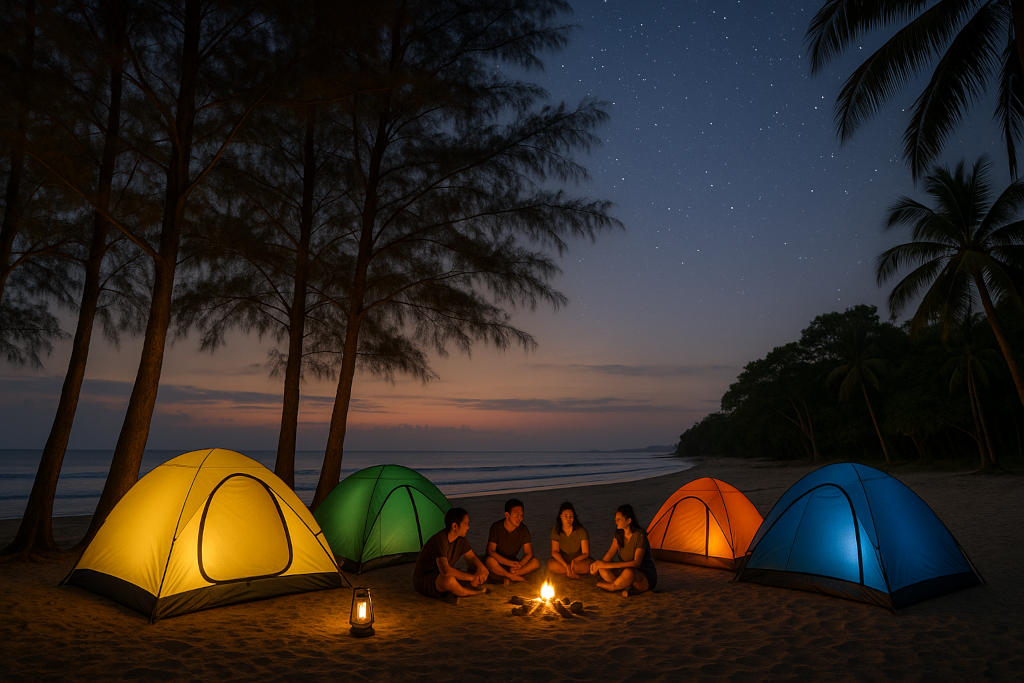
You clock out on a Friday already pagod, scrolling Waze screenshots in the group chat. By 9 p.m., your barkada – that close Filipino friend group that’s basically family – is crammed into a car or bus, backpacks and folded tents stacked on laps. Manila’s lights blur past, then disappear. Hours later, you’re stepping onto a quiet stretch of sand in Zambales or Batangas, the sky black except for a spray of stars and a few gas lamps flickering under trees.
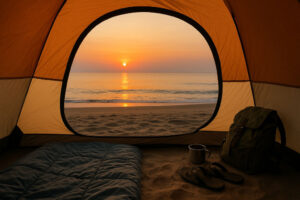 Someone points out where the high tide line reaches. You pitch your tent a little above it, hands sticky from humidity and old rope. The ground feels uneven under your sleeping pad, fine sand hiding random stones and driftwood.
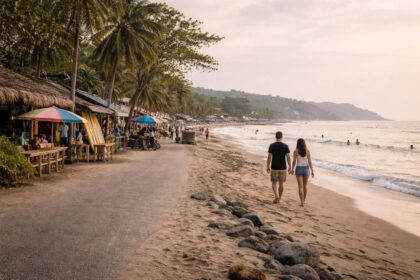
A nearby group grills liempo and hotdogs, that familiar ihaw-ihaw (street-style grilling) smell drifting across your camp. The waves whoosh in the dark, louder than the city you left behind. This is the real heart of Luzon beach camping: a little romantic, sometimes rough around the edges, but full of small moments you’ll talk about for months.
This guide is here to help you turn that fantasy into a realistic weekend plan. We’ll talk about which coves and camps are actually manageable from Manila, what it costs, how safe it is, and what it really feels like to wake up in a tent by the sea – sticky, sandy, tired, and surprisingly happy. If you’re a first-timer, you can also dive into some beginner camping tips in the Philippines to help you prep before your first overnighter.
Luzon Beach Camping Quick Plan (Weekend Version)
- Best for: barkada weekends, first-timers who want a simple escape, travelers who can handle sand and basic CRs.
- Go-to picks: Zambales coves (boat ride + darker nights) or Batangas camps (drive-up + more facilities).
- Ideal length: 2D1N (tight but doable) or 3D2N (most comfortable).
- Departure window: Friday 8–10 p.m. (best) or Saturday 4–5 a.m. (still workable).
- Biggest friction points: transfers when commuting, boat waiting time, midday heat, and weekend crowds.
- Comfort rule: set up shade early, swim early/late, treat noon as rest time.
How Far You Can Really Go on a Weekend from Manila
Commute vs private car from Manila
For weekend beach camping near Manila, distance doesn’t just mean kilometers – it’s about how many transfers your sleepy self can handle. With a private car, Zambales coves and Batangas beach camping spots usually fall in the 3–5 hour range, depending on traffic and how often you stop for gas and snacks. You can drive straight to jump-off points like Pundaquit (for Zambales coves) or Calatagan, Lian, and Batangas coastal barangays.
By commute, it’s still doable but more layered: bus from Cubao or Pasay, then jeepney or tricycle to the barangay, then boat or habal-habal (motorbike taxi) to the beach. Those extra transfers matter when you’re carrying a tent, cooler, and a bag of chips the size of your torso. It’s commute-friendly camping: still manageable, but you’ll want to travel light and accept that you’ll arrive a little more pagod than friends who drove.
Travel times and best departure windows
For a 2D1N weekend, leaving Manila Friday night is your best bet. Depart around 8–10 p.m., arrive at your jump-off close to midnight or early dawn, then pitch camp and nap on the beach or chill until sunrise. For Zambales beach camping in coves like Anawangin or Nagsasa, you’ll still need a morning boat ride from Pundaquit, so factor that extra hour or so in.
If you’re leaving Saturday dawn instead (4–5 a.m.), expect to reach Batangas around mid-morning and Zambales closer to late morning. That’s still fine, but you’ll feel the squeeze on a 2D1N trip. For 3D2N weekends, you can be more relaxed: leave Saturday morning, head straight to camp, then pack up on Monday dawn and drive or commute back in time for work.
When “near Manila” stops feeling near
On paper, a cove might say “4–5 hours from Manila,” but factor in EDSA traffic, bus waiting time, stopovers, and the wait for your boat at the jump-off. A “near Manila” trip can easily stretch into 7–8 hours door to shore, especially on long weekends. My rule: if you’re spending more time in transit than on the beach, save that destination for a longer break.
For beach camping near Manila that actually feels near, stick to Zambales coves accessible by short boat rides from Pundaquit, and Batangas beach camping spots like Calatagan, Manuel Uy, Masasa, Bituin Cove, and Lian/Matabungkay. These all fall into the “doable in a weekend” category if you pace yourself right.
Zambales Coves and Coastal Camps
Zambales is beach-camping central for Luzon. Imagine dark volcanic sand, lines of agoho (casuarina) trees, and coves that go mostly dark at night once the generators shut off. It’s famous for Anawangin, Nagsasa, Talisayen, and Silanguin Coves, plus surf towns like Liwliwa and camps like Kwentong Dagat. For a wider sense of the province beyond camping, you can explore Zambales destinations or even check an official overview of Zambales as a beach province.
Anawangin Cove – classic but busier
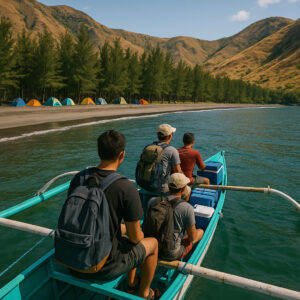 Anawangin is the “starter pack” Zambales beach camping cove. From Pundaquit, you ride an outrigger boat for about 30–45 minutes, passing rocky cliffs and other coves. When you land, you see a long curve of volcanic sand backed by agoho trees that look like pine trees at first glance. It’s beautiful, especially on quieter days, but definitely not secret.
Facilities are basic: expect shared CRs (comfort rooms), simple showers, and designated areas for tents. Some campsites offer kubo (nipa huts) for rent if your tent plans change. Entrance fees, tent pitching fees, and environmental fees are usually paid per head or per tent. Bonfire rules have become stricter in recent years; some areas fully ban them to protect trees and reduce forest fire risk, while others only allow bonfires in designated fire pits. Always ask your host or caretaker before lighting anything.
Nights here can be a mix of magic and noise. On one side, you might have a quiet family group; on the other, barkada videoke or Bluetooth speakers. If your dream of weekend Luzon beach camping includes complete silence, bring earplugs and aim for weekdays or low season.
Nagsasa and other quieter coves (Talisayen, Silanguin)
Further from Pundaquit, Nagsasa Cove is like Anawangin’s calmer cousin. The beach is wider, the backdrop of hills feels more remote, and there’s usually more space between camps. Boat rides cost a little more because of distance, but you also get fewer day-trip crowds. Talisayen and Silanguin Coves are even farther and often quieter, with simpler camps and wider sky views for stargazing.
Boat-sharing is common: you and another group might split a banca to keep costs down, especially if you’re only a few people. Overnight stays mean your tent becomes your home – you’ll cook, dry your towels, and hang your swimsuits all in one little sandy rectangle. Nights can be surprisingly chilly with sea breeze, while days are hot and bright. This is where weekend beach camping in Luzon starts to feel truly away from it all.
If you fall hard for these hidden spots, you can also look into more Zambales coastal adventures to extend your trip beyond the usual coves.
Surf towns and structured beach camps (San Felipe, Liwliwa, Kwentong Dagat)
If you like the idea of a tent but want a bit more comfort, head for surf towns like San Felipe and Liwliwa. Here, you’ll find surf hostels and eco-camps where you can pitch a tent on designated grounds, with access to proper CRs, showers, small cafés, and sometimes even Wi-Fi. Places like Kwentong Dagat lean into plant-based menus and artsy, eco-conscious vibes, drawing a mix of creatives, digital nomads, and weekend warriors.
The vibe is different from the isolated coves: more food options (silog plates, pasta, vegan bowls), more surfboards than fishing boats, and more chances to meet fellow campers over bonfire circles and board games. For first-timers nervous about totally raw Zambales beach camping, surf towns offer a good balance between tent life and creature comforts.
Batangas Beach Camping for Low-Lift Weekends
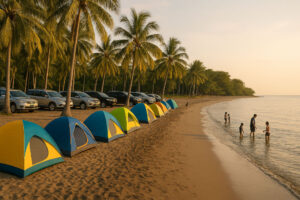 Batangas is the classic “hala, tara na” beach province for Manila folks. Shorter drives, more developed barangays, and easier access to supplies mean Batangas beach camping often feels more like camping-with-resort-support than wild camping. For a wider look at the province, you can glance at resources like Batangas as a classic beach province, but we’ll stay focused on tent life by the shore.
Calatagan and Manuel Uy-style beach camps
Calatagan has become a favorite for car-based beach camping near Manila. Spots like Manuel Uy Beach operate as open beachfront camps: you pay entrance and tent pitching fees, park nearby, and set up on the sand or grassy areas. The water here is often shallow with sandbars at low tide, which is fun for wading and photos, but less for deep swimming.
Facilities tend to be better than in remote coves: more CRs, showers, sari-sari stores, and snack stalls. You’ll see families, barkada groups, and sometimes company outings. Generators or nearby resorts provide some light at night, so it’s rarely pitch black. If you decide camping really isn’t for you after a night on the ground, it’s easy to pivot next time and book more comfort from a list of best beach resorts on Luzon instead.
Masasa, Bituin Cove, Lian/Matabungkay, and village shorelines
Other Batangas beach camping favorites include Masasa Beach (Tingloy Island) and Bituin Cove (Nasugbu side), plus coastal villages in Lian and Matabungkay. Masasa usually involves a boat ride from Anilao or nearby jump-offs, then a mix of homestays and tent pitching. It’s a hybrid: sleep in a simple room, then set up a tent on the beach to hang out, nap, or store your things while you swim. Bituin Cove operates more like a pocket camp, with tents by the tree line and boats anchoring offshore.
In areas like Lian and Matabungkay, you’re camping near more developed communities. You can buy ice, uling (charcoal), snacks, and even emergency slippers from sari-sari stores. The trade-off: more noise from karaoke, roosters, motorbikes, and boats. If you’re nervous about being too far from a barangay hall, this kind of Batangas beach camping gives both sea and safety-in-numbers.
What Luzon Beach Camping Actually Feels Like
Daytime heat, salt, and sand in everything
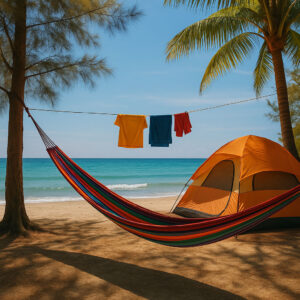 Daytime at camp is sticky, bright, and strangely freeing. You wake up to sunlight bleeding through your tent fly, the air already warm. Sand crunches under your sleeping pad every time you move; no matter how many times you shake it out, it finds a way back in. You step outside and your feet are instantly dusty-sandy-salty, but you stop caring after the first swim.
Setting up shade becomes a morning ritual. You string up a tarp between trees, shifting chairs and hammocks to chase the shadow. Sunscreen, sweat, and sea spray mix on your skin. You cook on a portable stove or ihawan (grill) – hotdogs, liempo, bangus – with the wind sometimes blowing charcoal smoke into your face. It’s messy and slow, and that’s part of why weekend beach camping in Luzon feels like such a reset from air-conditioned life.
Night sounds, wind, and walking to the CR with a flashlight
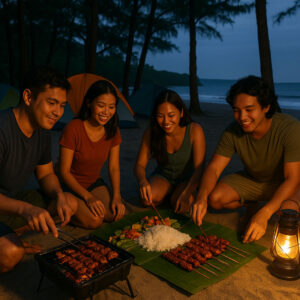 Night falls fast by the sea. In Zambales coves without much electricity, the sky goes ink-dark once generators shut off. Your world shrinks to the circle of light from your headlamp or lantern. The waves, which sounded gentle in the afternoon, become louder – a constant whoosh and crash that can be both soothing and intimidating.
Inside the tent, wind rattles the fly and makes the fabric slap softly. Sometimes a dog barks in the distance, or a baby cries in a nearby tent, or your friends’ laughter drifts over from the cooking area. Walking to the CR at midnight is its own mini-adventure: dodging guy wires, avoiding random puddles, and trying not to step on a sleeping dog or someone’s slippers. In more resort-style Batangas camps, you’ll see more lights and hear more videoke; in remote Zambales coves, it’s mostly ocean and starlight.
Mornings by the sea
Morning is when Luzon beach camping really wins. The air is cooler, the shoreline quiet before day-trippers arrive. Someone boils water on a camp stove, and the smell of 3-in-1 coffee or barako in a metal mug mixes with salt air. In some spots, a taho vendor might appear like magic, balancing aluminum containers and calling out softly, “Tahooo!”
You wander down to the water in shorts and a big t-shirt, bed hair and all, and take a quick dip while the sun is still low. There’s often a feeling of, “I slept badly, I’m a bit sticky, but wow, I’m really happy I’m here.” That’s the trade-off of Luzon beach camping: less comfort, more sky, and mornings that feel like you pressed a reset button on your city-stressed brain.
Costs and Sample Weekend Budgets
Entrance, camping, and tent fees
Most camps charge per head entrance plus either a per-tent pitching fee or per-head overnight camping fee. Ballpark figures (which can change, so always check ahead): entrance might fall around ₱100–₱300 per person; camping or tent pitching fees can add another ₱150–₱500 per tent or per head per night, depending on how developed the site is. In some Zambales coves, environmental fees are separate.
If you don’t own a tent, rentals are often available on-site or through Manila-based gear rentals. Expect roughly ₱400–₱800 per tent per night depending on size and quality. Factor in things like tables, chairs, or extra tarps if the campsite rents them – or coordinate shared gear in the group chat. That “camping gear checklist” your tita friend insists on might actually save you from forgetting basics like a ground sheet or malong.
Transport costs (commute vs car, boat hire)
By commute, buses from Manila to Zambales or Batangas hover in the mid-hundreds each way, depending on the company and exact route. Add jeepney or van transfers from the main highway to the barangay (₱20–₱100 each), plus tricycles (₱20–₱200 per ride depending on distance and whether it’s special hire).
Boat transfers from Pundaquit to Anawangin, Nagsasa, or other coves are usually quoted per boat, often for 4–6 people or more. Sharing a banca with another group can drop your per-person cost a lot. In Batangas, small pump boats from Calatagan or Anilao to off-shore camps or Masasa/Bituin coves work the same way: the more you share, the cheaper it becomes per head – as long as the boat isn’t overloaded. Fuel and tolls for private cars vary, but expect a decent chunk of your budget to go into the drive if you’re covering long SLEX and NLEX stretches in one weekend.
Food, water, and shared expenses
Food is where Luzon beach camping can either be super budget or “Uy, nagastos pala tayo.” Packed baon (home-cooked adobo, boiled eggs, rice) plus palengke runs at the nearest public market keep costs low. Buying fresh fish or squid from local fishers and grilling on-site is often cheaper and yummier than pre-packed supermarket meat, especially in Zambales coastal barangays.
If you’re too tired to cook, some camps have small kitchens or nearby carinderia (local eateries) where you can order silog breakfasts, ihaw platters, or pancit. Just remember: cooked food usually costs more than DIY, and you might need to reserve meals in advance. Don’t forget drinking water – many sites sell gallons or refills, but it’s cheaper to bring your own jugs and refill in town. As with any barkada outing, putting everything in a shared spreadsheet or envelope helps avoid “Sino pa ‘di nagbabayad?” drama later.
Sample Weekend Luzon Beach Camping Itineraries
2D1N Zambales cove weekend (Anawangin or Nagsasa)
Friday night: Leave Manila around 8–10 p.m., drive or commute toward San Antonio, Zambales. If commuting, you might stop in Olongapo before transferring to a San Antonio-bound bus or van. Crash for a few hours at a simple inn near Pundaquit or nap in the car.
Saturday: Take an early boat from Pundaquit to Anawangin Cove or Nagsasa Cove. Arrive mid-morning, set up camp under agoho trees, swim, nap, and explore. Sunset is for photos and early dinner; night is for card games, stargazing, and low-volume kwentuhan (story-sharing) by the shore. Sleep when the wind and waves drown out your last chika.
Sunday: Wake for sunrise, swim early before the sun bites, and slowly break camp. Boat back to Pundaquit late morning, rinse off, then start the trip home. With decent traffic, you can be back in Manila by evening, tired but satisfied.
2D1N Batangas beach camping (Calatagan or Lian)
 Saturday dawn: Leave Manila around 4–5 a.m., drive or bus to Calatagan or Lian. Buy ice, water, and extra ulam (viands) in town, then head to the beach camp. Check in, choose a spot for your tent, and set up before the midday heat peaks.
Spend the day wading in shallow water, chilling under your tarp, maybe renting a kayak or paddleboard if available. At night, cook dinner, enjoy lantern light and low music, and fall asleep to waves mixed with far-off videoke.
Sunday: Try a quiet sunrise walk, pack up after breakfast, and head back to Manila after lunch or mid-afternoon. This route is perfect if your idea of Luzon beach camping is low-lift and you want to be back in your own bed by Sunday night.
Gear, Packing, and Food Planning
Non-negotiables: shade, sleep, safety
For any weekend of Luzon beach camping, your basics are: a decent tent, a ground sheet or tarp, and something soft enough to sleep on (inflatable pad, foam, or thick blanket). Sleeping directly on the tent floor means you’ll feel every shell and rock. Shade is critical: bring a flysheet or additional tarp plus ropes and stakes, especially on treeless or crowded beaches.
Headlamps beat phone flashlights every time; they keep your hands free while cooking, peeing, or fixing guy lines. A power bank (or two) keeps your phone alive for navigation and emergencies. Dry bags or double-layered plastic protect clothes, gadgets, and matches from sudden squalls or rogue waves. A basic first-aid kit with band-aids, painkillers, betadine, and antihistamines is a must.
Cooking, water, and protecting your food
Portable stoves are lifesavers, especially in places where open fires are limited. If ihawan grills are allowed or available, bring uling and fire starters, but always ask the caretaker about bonfire and grill rules. For water, assume you’ll need at least 3–4 liters per person per day for drinking and basic washing. Many sites sell refills, but don’t rely on last-minute supplies if you’re heading to remote coves.
Store food in sealed containers; ants, cats, and dogs are creative and patient. Hang plastic bags or dry bags from tree branches or stash them in the tent’s vestibule. Separate raw and cooked food, and don’t leave leftover rice or meat outside overnight unless you want a surprise visit from the barangay’s bravest askal (stray dog).
Safety, Weather, and Leave No Trace
Boats, weather, bonfires, and respect for the shore
Philippine beaches live under two big wind patterns: amihan (cool northeast monsoon, usually calmer seas on some coasts) and habagat (southwest monsoon, wetter and windier). Before any Zambales or Batangas beach camping trip, check weather forecasts and listen to your kuya bangkero (boatman) and local LGU advisories. If the Coast Guard says no sailing, believe them. No cove is worth a scary boat ride in rough surf.
Bonfires sound dreamy, and they’re right there in our Luzon Beach Camping Weekends title, but they’re not always allowed. Some Zambales coves now ban them due to forest fire risks and damage from people collecting driftwood. Where small fires are allowed, keep them in existing fire pits or raised grills, never directly under trees, and drench them fully before sleeping. If there’s a ban, switch the vibe to lantern circles, fairy lights, and a shared cooking area instead.
Leave No Trace is simple but powerful: pack out all trash (including bottle caps, cigarette butts, and plastic utensils), use CRs properly, and never bury food scraps in the sand where dogs and waves will dig them up. Keep noise to reasonable levels, especially late at night – remember that many of these shores are part of real communities, not just your weekend playground. If you love this side of travel, you can also browse more camping stories and guides to inspire your next responsible escape.
FAQs
Which Luzon beach camping spots are realistic for a weekend from Manila?
For a classic cove feel, Anawangin, Nagsasa, Talisayen, and Silanguin in Zambales work well if you time your travel and boats from Pundaquit. For easier access and more facilities, look at San Felipe/Liwliwa surf camps and Kwentong Dagat. In Batangas, Calatagan and Lian/Matabungkay work for drive-up camping, while Manuel Uy, Masasa Beach, and Bituin Cove are great if you’re okay with short boat rides or extra transfers.
How do Zambales coves compare with Batangas in access, vibe, and facilities?
Zambales coves feel more remote: you get boat rides, fewer buildings, more agoho trees, and darker nights. Facilities tend to be more basic, with simpler CRs and limited electricity. Batangas beach camping is generally easier to access by road, closer to barangay centers, and more likely to come with resort-style CRs, sari-sari stores, and more food stalls. Zambales wins for that “end of the world” vibe; Batangas wins for low-lift weekends and quick comfort.
Can I do Luzon beach camping by commute only?
Yes, but choose commute-friendly camping spots and travel light. Zambales beach camping by bus plus tricycle plus boat is common, especially for Anawangin and Nagsasa. Batangas beach camping by bus or van, then jeepney and tricycle, also works for Calatagan, Lian, and some Nasugbu jump-offs. Just budget more time for transfers and avoid very late-night arrivals if you still need to negotiate boat rides in the dark.
How much should I budget for a typical 2D1N weekend?
Very roughly, a backpacker-style 2D1N weekend might land around ₱1,500–₱3,000 per person, depending on whether you’re commuting or driving, sharing boats, renting gear, and cooking your own food. Add more if you want aircon rooms as backup, resort meals, or private boat hire with fewer people. Think in categories: transport, campsite fees, boat fees, gear, food, and a small emergency buffer.
What does it really feel like to sleep in a tent by the sea?
Expect a mix of magic and mild discomfort. The ground is never as flat as your bed; waves can be loud; neighbors might sing until midnight; and you’ll wake up with sand in your hair and salt on your skin. But you also get stars, sunrise swims, and the feeling of opening your tent door directly onto the sea. That’s the trade-off at the center of Luzon beach camping: less control, more connection.
Is beach camping safe in the Philippines if I follow basic guidelines?
For most established sites in Zambales and Batangas, yes, as long as you’re mindful. Choose legal camps or known coves, follow local weather and boat safety calls, don’t swim in obviously strong currents, and keep valuables minimal. Respect local rules, use the CRs properly, and be friendly with caretakers – they’re your best source of real-time info. If you ever feel that tents aren’t your thing after trying, you can always shift to the comfort of the best beach resorts on Luzon for your next escape.
However you do it – bare-bones in a quiet Zambales cove or semi-glamping in a Batangas surf camp – the point is the same: a simple weekend where your biggest decisions are where to pitch your tent, when to swim, and whether you’ll open that extra pack of pancit canton at midnight. That’s the quiet promise of true Luzon beach camping weekends: less rush, more tide, and just enough sand in your shoes to remind you that you left the city behind.