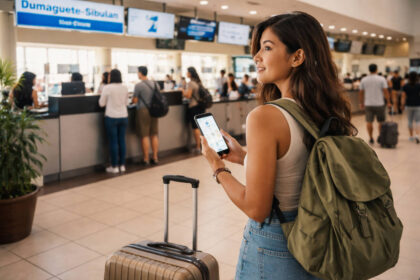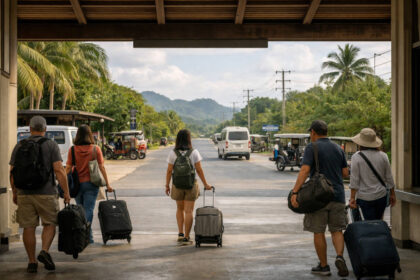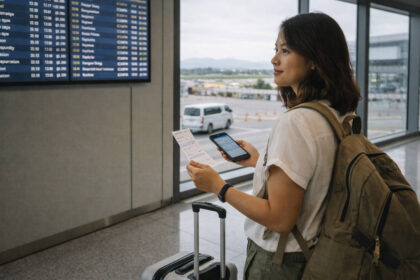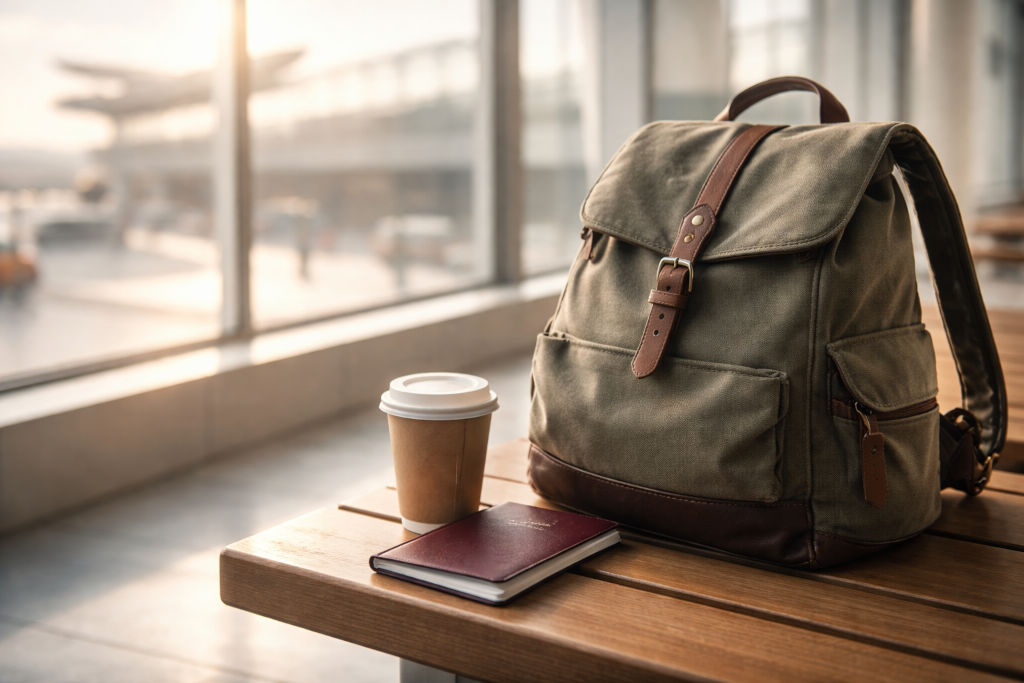
Picture this: you arrive at a terminal with one small backpack. No wheels clacking behind you, no hand cramping from dragging a suitcase over uneven tiles. If the escalator line looks long, you take the stairs without debate. If your gate changes, you simply walk. That calm feeling is the real point of lightweight travel habits: not strict minimalism, but practical freedom and fewer “stuff problems” while you move.
This isn’t a gear-buying article. You don’t need a new bag, a new wardrobe, or a whole new personality. Traveling light becomes easier when you build small systems: an outfit formula you trust, a laundry plan that removes panic, limits that protect your space, and a mindset shift that says comfort matters more than perfection. If you like practical travel routines like this, you’ll also enjoy Tips and Inspiration on Bakasyon.ph—the kind of advice that works even when travel gets messy.
Quick Start: A 60-Second “Travel Light” Plan
- Choose your bag boundary: pick the bag first, then pack to it.
- Use a repeat outfit formula: pack mix-and-match, not “one outfit per day.”
- Lock in laundry: sink-wash small items + one laundry stop if needed.
- Go digital: screenshot bookings, pins, and IDs so weak signal doesn’t stress you.
- Cap toiletries: one pouch only, travel-size or decanted.
- Leave space: empty space is your buffer for snacks, pasalubong, and repacking.
If you want a broader “what to pack” reference that still stays practical, see Philippines Packing List Guide: Trip Types.
What Traveling Light Really Means (It’s Comfort, Not Deprivation)
Let’s name the goal clearly: traveling light is not a contest. It’s not “who can pack the fewest items” or “who can look the most minimalist on Instagram.” For real trips—especially in the Philippines, where humidity can turn a shirt into a towel and sudden rain is common—traveling light means you can move with less stress and fewer points of failure.
When people say “minimalism,” they often mean a lifestyle. If you’re curious about the broader idea, here’s a simple reference: https://en.wikipedia.org/wiki/Minimalism. But for travel, it’s more practical than philosophical. Lightweight travel habits are tiny decisions that reduce friction: fewer choices in the morning, fewer things to misplace, fewer “where did I put that” moments.
And if your trip includes local transfers (jeepneys, tricycles, buses, ferries), traveling lighter often makes every step calmer. For transport basics and what to expect, you can cross-check Philippines Public Transport Guide.
The Lightweight Travel Habit Framework: 8 Habits That Do Most of the Work
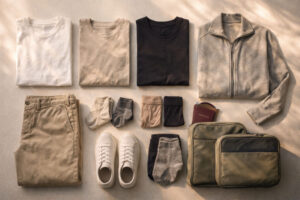
If you’re a beginner, start here. These are the most effective lightweight travel habits because they create boundaries you can actually follow—without shame, without overthinking, and without pretending you’ll become a different person overnight.
1) Choose a smaller bag on purpose (capacity is a boundary)
Your bag size is your first habit. A smaller bag doesn’t just carry less—it stops you from packing “maybe” items. When space is limited, you naturally choose essentials. This is why carry-on travelers often feel calmer: the boundary makes decisions for you. (If you want a quick definition of carry-on rules as a concept, see: https://en.wikipedia.org/wiki/Carry-on_baggage.)
- Practical tip: If your trip includes flights, assume size/weight rules vary by airline and ticket type. Pack as if they will be checked on busy days.
2) Pack for a repeat outfit formula, not individual days
The overpacking trap is packing for “Day 1 outfit, Day 2 outfit, Day 3 outfit…” when real life is: you’ll repeat, you’ll sweat, you’ll change plans. Instead, use an outfit formula you can repeat with small variations.
- Simple formula: 2 bottoms + 3–4 tops + 1 layering piece
- Decision rule: every top should match every bottom without “special” styling.
3) Commit to a laundry plan (and define what that means for you)
Laundry plan sounds intense, but it can be simple. It can mean washing underwear and one shirt in the sink at night. It can mean one laundry drop-off on Day 3. It can mean choosing quick-dry fabrics so you can rinse and rewear. A laundry plan replaces fear with a system. Once you trust it, you stop packing “extras for safety.”
4) Go digital where possible (less paper, less clutter, less panic)
Tickets, bookings, maps, reading materials—go digital when you can. Save confirmations offline, screenshot QR codes, and keep copies of IDs in a secure folder. This habit doesn’t just save space; it saves time when the line is long and your signal is weak.
- Helpful add-on: keep a backup connection plan (SIM/eSIM) and an offline map habit for transfers.
Related guides: Philippines SIM Card Guide (Airport, City, eSIM) and Travel Tech Philippines: Essential Guide.
5) One-in-one-out for “just in case” items
“Just in case” is the loudest voice in your packing brain. Give it a rule: for every extra item you add “just in case,” remove one other item. This forces you to choose what matters most. It’s gentle but firm—like setting a budget for your suitcase.
6) Decant toiletries and set limits (one hero product, not a full shelf)
Toiletries are where bags get heavy fast. Decant into small containers. Set limits: one pouch for all toiletries. This stops the “I’ll bring the whole bottle just in case” spiral.
- Comfort-first tip: pick one “hero” product you truly won’t skip, then keep the rest simple.
- Reality check: if you can buy basics at your destination, you don’t need backups “for peace of mind.”
7) Wear the bulkiest items on travel day (only if you truly need them)
If you’re bringing a jacket or chunky shoes for a cooler place, wear them during transit. But don’t force this habit if it makes you miserable in hot terminals. The goal is comfort and freedom, not suffering with a hoodie in Manila humidity.
8) Always leave empty space (room to breathe, room for small buys)
Leave space on purpose. Empty space is not wasted space—it’s your stress buffer. It gives you room for pasalubong, a book you end up buying, snacks for the bus ride, or a light jacket you didn’t expect to need. It also helps you repack quickly without sitting on your bag like a wrestling match.
The 10-Minute Packing Workflow (Use This Before Every Trip)
- List your trip “friction points”: humidity, rain, long walks, transfers, weak signal, early mornings.
- Pick your outfit formula: choose the bottoms first, then add tops that match all of them.
- Choose your laundry plan: sink-wash or laundry stop (or both).
- Build your “always kit”: documents, chargers, small hygiene items, and one comfort item.
- Stop early: leave empty space on purpose.
If you’re planning a first trip and want a calm order of operations (tickets, buffers, and what to verify), see Philippines Travel Planning Guide (First Trip).
Practical Examples: How These Habits Look in Real Trips

Here’s the part most packing articles skip: what this looks like in actual trip shapes. No brand lists. Just real-life packing logic—outfit formula, laundry assumption, and the “freedom of movement” benefit for each trip.
Example A: 3-day city weekend in a small backpack
Outfit formula: 1 versatile bottom you can rewear + 1 alternate bottom (shorts or a lighter option) + 3 tops that mix well + 1 light layer (for cold cafes/AC buses) + 1 comfortable walking shoe.
Laundry assumption: you can rewear a bottom twice. Wash underwear nightly if needed. One top can be reworn if it’s breathable and you keep it reasonably clean.
Freedom benefit: you can take stairs easily, move through crowded areas faster, and handle last-minute changes without needing “luggage management.”
Example B: 5-day beach or island trip (humidity + sudden rain)
Outfit formula: 2 swim sets (so one can dry) + 2–3 quick-dry tops + 1 lightweight cover-up or oversized shirt + 1 pair of shorts + 1 comfy dress or “nicer” outfit + sandals you can rinse + a thin rain layer.
Laundry assumption: sink rinse in the evening: swimwear and salty items. Quick-dry pieces become your repeat outfit system.
Freedom benefit: you handle rain, boat schedule shifts, and short walks without guarding a heavy suitcase.
Example C: 7-day mixed-weather trip where layering matters
Outfit formula: 2 bottoms + 4 tops (mix of short and long sleeves) + 1 warm mid-layer + 1 rain/wind shell + socks that dry well + one pair of versatile shoes.
Laundry assumption: one mid-trip laundry (or two sink-wash nights) keeps tops rotating.
Freedom benefit: layering handles cool mornings and warm afternoons without packing duplicates.
A Simple “Copy This” Packing Template (Counts, Not Brands)
| Trip length | Bottoms | Tops | Layer | Shoes | Swim (if needed) | Notes |
|---|---|---|---|---|---|---|
| 3 days | 1–2 | 3 | 1 light layer | 1 | 0–1 set | Assume rewear + quick sink wash |
| 5 days | 2 | 3–4 | 1 light layer | 1 | 1–2 sets | Plan one laundry moment (or nightly rinse) |
| 7 days | 2 | 4 | 1 mid + 1 shell | 1 | 1–2 sets | Plan one laundry stop and keep buffers |
Common Overpacking Fears (and the Habits That Replace Them)
Most overpacking isn’t about greed; it’s about anxiety. Here’s how to answer the usual “what if” questions with habits instead of extra kilos.
“What if it rains?”
Habit solution: one reliable rain layer + quick-dry mindset. Bring a lightweight rain jacket or compact poncho, and choose at least one quick-dry top. Your job is to stay warm enough and dry essentials—not to stay perfectly dry all day.
“What if I need a different outfit?”
Habit solution: one “nicer” outfit rule. Pack one outfit that can handle a slightly dressier dinner or an event—something that doesn’t wrinkle easily and still feels like you. Then stop.
“What if I run out of clothes?”
Habit solution: laundry plan + underwear buffer. Bring enough underwear to feel sane (many people choose 4–6 pairs even on longer trips), then rely on laundry for everything else.
“What if I forget something important?”
Habit solution: a mini emergency kit with boundaries. Build a tiny kit that matches your real needs. If you carry personal essentials (for example, any medications you use), keep them in a small pouch and keep the pouch small on purpose.
“What if I can’t buy what I need?”
Habit solution: buy-when-needed rule (with exceptions). In most places, you can buy soap, sunscreen, slippers, and snacks. Exceptions include critical personal items you can’t easily replace. Pack those. For the rest, trust your destination a little.
Toiletries and Skincare: How to Stay Light Without Feeling Neglected
How do you handle toiletries while traveling light? Treat them like a capsule wardrobe: a few essentials that do the job.
Decant and set a ceiling
Use small containers and give yourself a hard limit: one pouch for all toiletries. This stops the “I’ll bring the whole bottle just in case” spiral.
Pick one hero product
Choose one “hero” item you truly won’t skip (maybe a gentle cleanser or sunscreen). Everything else becomes optional.
Build a simple refill plan
If you’re gone longer, plan to refill basics at your destination. Less weight means less stress, and sometimes fewer baggage fees too. If you’re also watching expenses, you can pair these habits with budget travel saving tips so your wallet feels as light as your bag.
Pack Light for Mixed Weather: Layers, Not Duplicates
Mixed weather is where lightweight travel habits feel the most powerful. Instead of packing multiple “versions” of the same outfit (hot outfit, cold outfit, rainy outfit), build layers that stack.
The three-layer logic
Base: something comfortable you can wear all day. Mid: warmth when needed. Shell: wind/rain protection. This system is lighter than packing multiple thick items.
Choose pieces that forgive sweat and wrinkles
Look for tops and bottoms that don’t show sweat easily and can be reworn. This is less about fashion and more about keeping your morning decisions simple.
Plan around your itinerary, not your fantasy self
If your trip is mostly cafés and walking, pack for walking comfort. If it includes boat rides, pack for spray and sudden rain. A good lightweight plan is honest about what you’ll actually do.
How to Keep Traveling Light on the Way Home (Pasalubong Without Panic)
The hardest part of traveling light is often the return trip—because you suddenly have pasalubong, snacks, and little purchases that didn’t exist on Day 1.
Start with empty space (future-you will thank you)
This is why “leave empty space” is a core habit. It turns souvenirs into a pleasant bonus, not a packing crisis.
Choose small, meaningful pasalubong
Instead of bulky items, choose lighter keepsakes: local snacks, small crafts, postcards, or something wearable. If you’re buying liquids or fragile items, wrap them in clothes and place them in the center of your bag where they’re protected.
Use the “one bulky thing” rule
If you really want something big (a thick blanket, a large souvenir), make it the one bulky thing—and accept you’ll simplify elsewhere. Lightweight travel habits are about trade-offs, not denial.
A Simple Post-Trip Review Ritual (10 Minutes, Max)
This is the habit that makes every future trip easier. When you get home, don’t just unpack—review.
Three quick questions
- What went unused? If you didn’t touch it, consider removing it next time.
- What did you wish you had? Add it only if it truly improves comfort or safety.
- What can be swapped for multi-use? Replace single-purpose items with pieces that do double duty.
If you want another practical checklist style to compare with your own habits, you can revisit these smart packing tips and pick only what fits your travel personality.
FAQ: Lightweight Travel Habits
What are the most effective lightweight travel habits for beginners?
Start with a smaller bag boundary, a repeat outfit formula, and a laundry plan. Those three remove the biggest overpacking triggers.
How do you stop overpacking without feeling unprepared?
Replace fear with systems: one nicer outfit, a tiny emergency kit with boundaries, and a buy-when-needed rule for non-critical items.
What capsule wardrobe rule works best for real trips?
A repeatable mix-and-match formula (like 2 bottoms + 3–4 tops + 1 layer) beats packing “one outfit per day.”
How do you plan laundry so you can pack fewer clothes?
Decide in advance: sink wash nightly for small items, and one laundry stop for longer trips. When you commit, you stop packing extras “just in case.”
How do you pack light for mixed weather?
Use layers, not duplicates: base + mid + shell. Choose quick-dry pieces and keep one rain solution.
Traveling light won’t make your trip perfect—nothing does. But it makes your trip easier to live. You move faster, you worry less, you change plans without drama. That’s the real art of lightweight travel habits: not carrying less for the sake of less, but carrying only what helps you travel with more ease.
Before you book your next trip, it also helps to plan smarter beyond packing—like double-checking schedules, policies, and timing. These guides can keep your logistics calm: what to check when booking flights and hotels and Philippines travel advisory basics. For practical safety habits that reduce avoidable stress, see Travel Safety Philippines Guide.