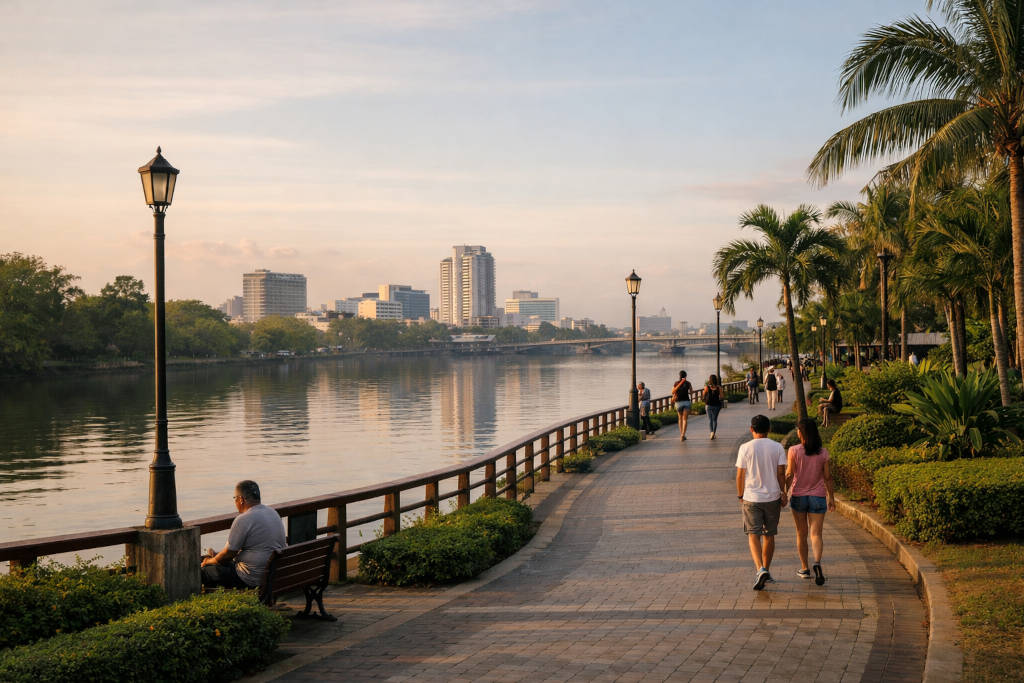
If you are still deciding whether this city belongs in your trip, this Iloilo City travel guide is meant to make that choice easier. Iloilo City works best for travelers who want heritage, good food, manageable city energy, and a base that feels more breathable than frantic. It is a place where churches, old districts, river walks, malls, local eateries, and easy side trips can sit in the same plan without every hour feeling packed.
This is not a race-through attractions list. Think of it as a planning-first guide for couples, solo travelers, friends, and family groups who want low-stress decisions about where to stay, how many days to give the city, and how to move around without wasting energy. For a wider look at the destination cluster, you can browse the Iloilo destination hub. If you are still comparing destinations in general, the Travel Guides category is also a useful next stop before you lock anything in.
At A Glance: Is Iloilo City Right For Your Trip?
At a Glance: The most comfortable planning window is usually during the drier months, when outdoor walks and transfers feel easier, though warm afternoons still matter. A realistic city break starts at 3D2N, while 5D4N gives breathing room for food, heritage, and one optional add-on. Budget can stay moderate if you choose your hotel area well. Traffic is usually more manageable than in bigger Philippine cities, but airport transfer time, holiday crowds, and sudden rain can still shape the day. For month-by-month timing help, see this Philippines weather travel guide.
Reality Check: Iloilo City is calm by city-break standards, not silent and not resort-like. You still need to plan around heat, transfer time, and opening hours if you want the trip to feel smooth.
Best For Heritage, Food, And A Calmer Urban Base
Iloilo City suits travelers who like old churches, heritage streets, classic Filipino city texture, and a strong food identity without the pressure of doing everything at once. If your ideal day includes a slow breakfast, a church or heritage stop, a riverfront walk, a batchoy lunch, and an easy dinner near your hotel, the city makes a lot of sense. It also works well for travelers who want urban convenience without choosing a giant, high-friction metro.
Another reason this Iloilo City travel guide tends to appeal to first-timers is balance. You can stay in a more polished district like Mandurriao, spend time in older zones like Jaro, Molo, La Paz, and City Proper, then return to a comfortable hotel without turning every move into a major commute. For overseas visitors or anyone planning a first Philippines trip, this broader first-trip Philippines planning guide can help with the bigger-picture decisions around pacing, money, and expectations.
Less Ideal If You Want A Beach-First Trip With Minimal Transfers
If your top priority is waking up beside the beach every day and doing almost no transfers, Iloilo City may not be your easiest match. The city is better as an urban base with culture, food, and optional side trips than as a pure coast-first holiday. Yes, you can add a beach or nature day, but the easiest version of Iloilo is usually a city-centered trip with one carefully chosen extra, not a packed province-wide chase.
Travelers who mainly want sandals-on-sand simplicity may prefer a setup elsewhere in Western Visayas where the shore is the main event. Iloilo City shines when you want comfort, heritage, and flexibility more than a resort mood.
How Many Days To Spend In Iloilo City
Reality Check: Many first-timers underestimate how much easier the city feels when they leave buffer time between meals, museums, church visits, and transfers. The goal is not to maximize stops. It is to protect your energy.
When 3D2N Is Enough
Three days and two nights work well if you want a compact city break focused on Iloilo City itself. This is enough for one arrival day with a gentle start, one fuller day for heritage and food, and one departure day with a final walk or meal. A 3D2N pace suits travelers flying in for a weekend, people combining Iloilo with another destination, or anyone who knows they enjoy seeing fewer places more calmly.
With 3D2N, the smartest move is to choose one core zone for your hotel and avoid overcommitting to side trips. You can still cover the Iloilo River Esplanade, a few heritage areas, local specialties, and a comfortable evening scene. What you should not do is squeeze in too many far-apart stops and then blame the city for feeling tiring.
When 5D4N Makes More Sense
Five days and four nights are better if you want a slower rhythm, better meals, and at least one day that can bend for weather, rest, or an easy add-on. This length suits travelers who enjoy browsing markets, cafes, malls, riverfront spaces, and heritage corners at a natural pace instead of treating them as boxes to tick. It also helps families and mixed-interest groups, where not everyone wants the same tempo.
In practice, 5D4N makes Iloilo City feel less like a stopover and more like a base. You can keep one day light after arrival, give a full day to culture and food, reserve another for a nearby add-on, and still have room for a flexible final afternoon. That extra space is where low-stress planning pays off.
Iloilo City Travel Guide: Best Areas To Stay
 Reality Check: There is no single perfect district for everyone. The best area depends on whether you value quiet nights, older-city character, easier mall access, or the lowest nightly rate that still does not create daily friction.
Mandurriao For Comfort, Newer Hotels, And Easier Mall-And-Dining Access
For many first-time visitors, Mandurriao is the easiest answer. It tends to feel more modern, more polished, and more forgiving if comfort matters. You will usually have better access to newer hotels, air-conditioned dining options, familiar conveniences, and easier recovery time after a long flight or a humid afternoon out. This area works especially well for couples, families, business-leisure travelers, and anyone who wants their hotel to feel like a reset button.
Mandurriao is also a practical choice if you want a calmer evening routine. After sightseeing in older districts, it can be nice to return to a part of the city where dinner is simple and your next-day logistics feel easy. Spending more here often improves sleep quality, dining convenience, and transfer smoothness more than it improves bragging rights.
City Proper And Nearby Heritage Zones For Central Character And Older City Access
 If atmosphere matters more than polished convenience, City Proper and nearby heritage areas such as Molo, Jaro, and La Paz can be rewarding. This side of the city gives you more immediate access to churches, plazas, classic streetscapes, and the older urban texture that makes Iloilo feel distinct. It suits travelers who like stepping into local character early in the day instead of riding in from a newer district.
The tradeoff is that some properties may feel older, room standards can vary more, and the neighborhood experience depends heavily on the exact street. Central does not always mean restful. Choose this area if you want proximity to heritage and local rhythm, and if you are comfortable checking hotel details more carefully before booking.
Budget-Friendly Tradeoffs And What “Cheap But Convenient” Really Means Here
Budget stays can work in Iloilo City, but the real question is whether the lower nightly rate creates hidden costs in time, transport, and comfort. A cheap room that leaves you far from your daily anchor points may cost more once you add repeated rides, inconvenient meal options, and energy loss. In this city, “budget but convenient” usually means staying in a reasonably connected area with reliable food nearby, not simply choosing the lowest price on the map.
If you are trying to save, it is often smarter to choose a clean, modest property in a useful location than a very cheap stay that looks fine online but makes airport transfer, late dinners, or rainy-day movement awkward. This Iloilo City travel guide leans toward comfort-aware savings: spend less on room size if needed, but not at the expense of your daily flow.
Best Things To Do In Iloilo City By Travel Style
Reality Check: The city is at its best when you group activities by mood and geography. Trying to jump between unrelated stops just because they are famous usually creates the rushed feeling most travelers want to avoid.
Culture And Heritage
 If you enjoy architecture, churches, plazas, and the feeling of an older Filipino city still carrying its own rhythm, start with the heritage side of Iloilo. Jaro, Molo, La Paz, and City Proper reward travelers who enjoy looking closely instead of speeding through. You do not need ten landmarks in one day. A few well-chosen church visits, a slow walk through a character-filled district, and time to notice details often create a better memory than an overloaded route.
These areas also help answer the deeper question of whether Iloilo City fits your travel personality. The appeal is less about giant headline attractions and more about texture: facades, civic spaces, local routines, and that layered blend of religion, food, and history that makes a city feel lived-in rather than staged.
Food And Local Specialties
 Food is one of the strongest reasons to choose Iloilo City. A good plan here is not a single grand restaurant booking. It is a day built around comforting local flavors, casual stops, and enough time to eat without rushing to the next sight. Batchoy is the obvious name people look for, but the wider pleasure is in how meals fit into the city day: merienda breaks, familiar Filipino comfort dishes, seafood options, and the sense that good eating does not always need dressing up.
This is the kind of destination where a food trip can stay practical. You can combine lunch with a heritage district, dinner with a mall-area stay, and a coffee or snack stop near a shaded walk. That flexibility is part of why this Iloilo City travel guide works well for planners who care as much about daily ease as they do about what is on the table.
Nature, Riverfront, And Light Outdoor Options
Iloilo is not a nature-heavy city in the dramatic sense, but it gives you softer outdoor moments that support a calmer trip. The Iloilo River Esplanade is one of the clearest examples. It is useful not because it is flashy, but because it gives the city breathing space. Morning or late afternoon walks here can break up a heritage-heavy day and make the trip feel less boxed indoors.
Light outdoor time also works well for families, older travelers, and anyone who wants movement without turning the day into a workout. Just keep expectations realistic: midday heat can be tiring, and rain can change the mood quickly. This is a stroll-and-reset kind of outdoor city, not a hardcore adventure base.
Easy Add-Ons For A Beach Or Nearby Side Trip
If you want one extra beyond the city, keep it simple. The best add-ons are the ones that complement Iloilo City rather than compete with it. A nearby coastal or nature-leaning day can work if you treat it as your one bigger movement day, not as another checklist to squeeze beside heritage stops. The idea is to add contrast, not exhaustion.
For broader regional context, official planning pages from the Province of Iloilo Tourism Office can help you decide whether an extra day outside the city is worth it. But if your main goal is a smooth first visit, there is nothing wrong with keeping the trip city-centered and enjoying the slower rhythm that makes Iloilo distinctive.
Getting To Iloilo City
 Reality Check: Arrival day is where many good trips go wrong. A late flight, warm weather, luggage, and the urge to “start sightseeing immediately” can make the first few hours feel harder than they need to be.
Airport Arrival Strategy
If you are flying in, the least stressful approach is to match your first hotel area to your actual energy level, not to your most ambitious plan. After a flight, a straightforward airport transfer to a comfortable hotel often beats dropping bags and rushing straight into old-city sightseeing. Taxis or app-based rides usually make the first transfer easier, especially if you arrive with family, at night, or during rain. If you booked a higher-end hotel, checking whether they offer an airport transfer can be worth it for peace of mind.
On arrival day, aim for a light first block only: perhaps dinner, a short walk, or an early night. The city opens up much better when you start fresh the next morning.
Port And Ferry Arrival Strategy
If you are arriving by ferry port, your best move depends on what comes next. Travelers continuing into the older city may prefer staying somewhere with easier access to City Proper or nearby districts for that first night. Those who value a smoother hotel experience may still find it worth transferring to Mandurriao, especially if the rest of the trip is centered on comfort and dining convenience.
The key is not to overcomplicate the handoff between port arrival and hotel check-in. Keep your first transfer simple, avoid stacking too many commitments on the same afternoon, and remember that ferry travel can already take energy out of the day.
Getting Around With The Least Stress
Reality Check: Iloilo City is manageable, but manageable does not mean friction-free. Distances between districts can look small on a map while still feeling hot, busy, or inconvenient on the ground.
When To Use Taxis Or App-Based Rides
For most first-timers, taxis or app-based rides are the easiest default for airport arrival, evening returns, rainy weather, and trips between districts that are not pleasant to walk. They are also useful when you are traveling with older relatives, shopping bags, or a tighter meal reservation window. In many cases, paying a little more here saves energy more effectively than upgrading another part of the trip.
When Local Public Transport Is Worth It
Local public transport is worth considering when you are traveling light, moving in daytime, and open to a more local rhythm. It can help cut costs and give a better sense of how the city works, but it is not always the easiest choice for a first arrival, a rushed schedule, or a bad-weather day. For route mechanics and specifics, this Iloilo City local transport guide goes deeper. If you are also comparing transit styles elsewhere in the country, this Philippines public transport guide adds useful context.
When Walking Works And When It Does Not
Walking works best when you stay realistic. It is great for shorter stretches in heritage zones, around selected commercial areas, and along the riverfront in cooler parts of the day. It works much less well when you try to bridge multiple districts under strong sun, or when sidewalks and crossing points make the distance feel longer than expected.
A good rule is to save your walking energy for places that reward slowness, then ride between bigger zones. That keeps the city enjoyable instead of sweaty in the wrong way.
Budget Vs Comfort Tradeoffs
Reality Check: The cheapest plan on paper is not always the least expensive trip in practice. Time, transfer hassle, and weather recovery all have value.
Hotel Location Versus Nightly Rate
Paying a bit more for a better-located hotel often improves the trip more than paying for a larger room. In Iloilo City, location affects dinner options, how easy it is to return for a rest, and whether a rainy afternoon becomes a small detour or a major annoyance. Travelers who want an easy first visit usually feel the benefit of a better base every single day.
Transfer Costs Versus “Cheap” Stays
A lower room rate can stop looking cheap once you add repeated transport costs. This matters even more if your group keeps splitting rides, your schedule includes evening returns, or you need extra flexibility for weather. Saving on accommodation only makes sense when the property still supports a smooth daily pattern.
Day Trips Versus Slower City Pacing
One of the biggest planning mistakes is assuming that more movement automatically means more value. Sometimes the best use of your money is not another day trip but a slower day in the city with better meals, gentler timing, and fewer transfers. If you do want a more expanded plan after reading this Iloilo City travel guide, this 4-day Iloilo City itinerary with buffers is a natural next read.
Sample 3D2N Iloilo City Itinerary With Buffer Time
Reality Check: A good short itinerary protects arrival energy and does not pretend every meal and landmark can fit into one seamless line.
Day 1 Arrival And Light City Start
Arrive, transfer to your hotel, and keep the first half-day intentionally gentle. If you are staying in Mandurriao, settle in, eat somewhere nearby, and leave room for a short evening outing only if energy is still good. If you are staying nearer the older city, a plaza or church-area walk can work well before dinner. The point is to land softly.
Day 2 Core Sights And Food Focus
Use your full day for the city’s strongest combination: heritage and food. Start in one historic district, continue to one or two more if distances stay reasonable, then build your meals around local specialties rather than around the fastest route. Leave a late-afternoon pause for the Iloilo River Esplanade or a cafe break so the day does not become one long stretch of movement.
Day 3 Flexible Finish And Departure Buffer
Keep the final morning light and practical. This is the time for a last meal, a short riverside walk, or a quick shop, not a far-flung detour. Give yourself departure buffer for weather, traffic, and check-out. Ending with space instead of panic is one of the simplest low-stress planning wins in Iloilo City.
Sample 5D4N Iloilo City Itinerary With Buffer Time
 Reality Check: The value of 5D4N is not constant activity. It is the freedom to rest, re-route, and enjoy the city at a pace that still feels human by Day 4.
A Slower City Rhythm
Use Day 1 for arrival and a soft evening. Give Day 2 to heritage and local food. Keep Day 3 more open, with a riverfront walk, cafe time, shopping, or one district you want to explore without clock pressure. This is where Iloilo City often becomes more memorable: not in the busiest hour, but in the quieter gaps between plans.
One Optional Add-On Day Without Rushing
Day 4 can hold your one bigger add-on, whether that means a nearby coastal mood, a province-side detour, or simply a change of scenery. But keep it singular. One add-on day is usually enough to add variety without turning the trip into a transfer-heavy loop.
Recovery Windows And Weather Backup Choices
Day 5 should be flexible and forgiving. If weather behaved badly earlier, use this time for anything you skipped. If the trip has gone smoothly, enjoy a final easy meal and a calm send-off. This pacing is especially good for travelers who prefer comfort-aware planning over “sulit” in the most exhausting sense.
Common Pitfalls, Closures, Crowds, And Safety Reminders
Reality Check: Most first-timer problems in Iloilo City come from timing mistakes, not from the city being difficult. A little foresight goes a long way.
Festival And Peak-Period Crowd Expectations
During major festival periods and long weekends, room prices can rise, road movement can slow, and favorite food spots can feel more crowded than expected. Dinagyang season, in particular, can reshape the city experience. If you want the energy, book early and accept the crowds. If you want calm, avoid locking a supposedly low-stress trip into the busiest dates.
Church, Museum, Or Holiday Timing Issues
Religious sites, museums, and civic spaces can have changing schedules, reduced holiday hours, or moments when access is more limited than expected. It helps to keep a backup plan for each sightseeing block. For official local announcements, closures, and public updates, check the Iloilo City Government page before you go.
Low-Stress Nighttime And Transport Habits
At night, use the same common-sense habits you would use in any city: keep valuables simple, avoid unnecessary late wandering in unfamiliar areas, and choose your ride home before you are tired enough to make random decisions. If you want a broader refresher on basic planning habits, weather prep, and practical awareness, this Philippines travel safety guide is worth reading.
The best version of an Iloilo City travel guide is not one that pushes you to do more. It is one that helps you choose well. Pick a stay area that matches your comfort level, give the city enough time to breathe, group your days by mood, and leave room for weather and appetite to shape the plan. That is usually when Iloilo City feels most rewarding: warm, flavorful, heritage-rich, and easy to enjoy without forcing the pace.