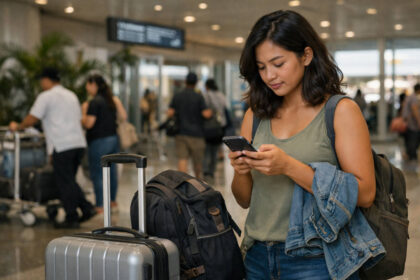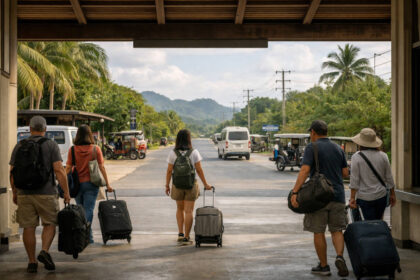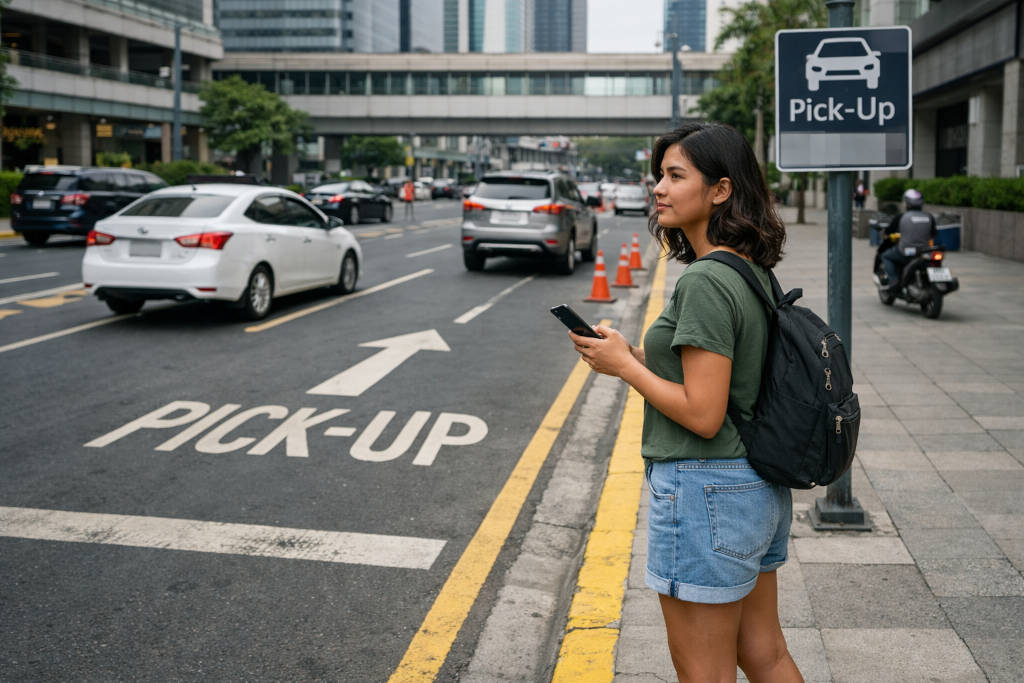
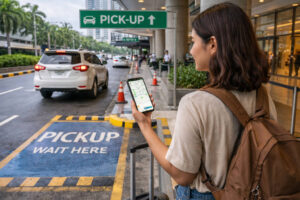
Traveler waiting at a marked pickup area while using Grab in the PhilippinesKnowing How to Use Grab in the Philippines can make travel days much smoother, but only when expectations are realistic. This is not a transport tool that works the same way in every city, at every airport, or on every roadside. In some places, GrabCar or GrabTaxi feels simple and reliable. In others, matching is slow, pickup rules are strict, and location-pin confusion creates stress fast.
That is why this guide focuses on Philippine-use friction rather than app hype. The goal is to help readers plan better before they are standing in heat, rain, traffic, or a crowded curb with bags in hand.
This article is especially useful if you are mixing airports, hotels, malls, stations, and city stops on one trip. For wider first-trip context, this first-time Philippines planning guide helps explain how transport choices fit into a bigger travel plan, and the Tips and Inspiration hub is a good place to build confidence before moving around unfamiliar cities.
At-a-Glance
Best use case: city rides, airport-to-hotel transfers in places with established coverage, and point-to-point trips where you want a tracked booking instead of roadside guesswork. Where it gets tricky: weaker service areas, peak traffic hours, controlled pickup zones, rain, and any trip that depends on perfect timing. Budget band: often practical, but surge pricing can quickly change the value. Crowd and traffic risk: high at airports, malls, and major roads, especially at rush hour and during bad weather.
Rain and heat backup: keep a second plan such as public transport, a hotel-arranged ride, or a prebooked transfer for time-sensitive trips. Reality check: How to Use Grab in the Philippines is less about tapping a button and more about choosing the right pickup spot, the right time, and the right backup.
Who this guide is for
Best for first-time visitors, occasional users, and travelers moving between airports, hotels, and city stops
This guide is for travelers who may not use Grab every day but want it to work when it counts. That includes first-time visitors, balikbayans doing unfamiliar routes, locals traveling in a different city, and anyone moving between airports, malls, hotels, and transport hubs.
It is also useful for travelers heading to trail jump-off points or outdoor meetups where timing matters, especially if they are already planning activities through the beginner hiking guide in the Philippines, the camping guide for beginners, or the adventure travel safety guide.
What this guide will and will not promise
This guide will help you avoid common booking mistakes, understand pickup friction, and know when to switch plans early. It will not promise that Grab is always available, always cheaper, or always faster than other transport. Reality check: the biggest mistake is treating Grab as a guaranteed nationwide solution. In the Philippines, usefulness depends heavily on city coverage, time of day, traffic, weather, and how clearly you set the pickup point.
Where Grab works well in the Philippines
Cities and situations where it is usually easiest to use
 Using Grab becomes easiest in larger urban areas where many riders and drivers already understand the usual pickup patterns. In these settings, city-center hotel pickups, mall entrances with clear loading zones, and straightforward point-to-point rides tend to be the least stressful. It can also be useful when you want less haggling than a street ride and a clearer record of the booking inside the app. The official Grab service types and operating areas page is worth checking before a trip because service availability and ride types are not identical everywhere.
Where coverage gets weaker or less predictable
Coverage usually gets less dependable once you move farther from the biggest city cores, into smaller cities, toward more rural areas, or into places where road access is awkward and demand is thin. Even when service technically exists, matching can be slow enough to make it impractical for a tight schedule. Airport-to-province transfers and long intercity rides are the most common places where people assume too much. Reality check: never build an entire travel day around the idea that a Grab ride will definitely appear in a lower-demand area. If the trip is time-sensitive, line up a backup before you need it.
How to Use Grab in the Philippines Before You Book
Account setup and what to prepare before travel day
You do not need a long app-install tutorial, but a few quiet setup steps make a big difference. Update the app before travel day, confirm your phone can receive messages and data on the move, save a payment method if you want that option, and make sure your name and contact details are easy for a driver to recognize.
It also helps to save your hotel name exactly as the property lists it, not just a nickname you use with friends. If you are traveling during wet months or typhoon-prone periods, this weather timing guide for the Philippines is useful because rain can sharply affect availability, curbside crowding, and surge pricing.
When to rely on Grab and when to keep a backup option
Grab is strongest when the trip is local, the pickup point is legal and easy to identify, and your schedule has some flexibility. Keep a backup when you are landing late, traveling early in the morning, heading to a port or bus terminal, moving between cities, or trying to make a fixed departure.
In those situations, this public transport basics guide can help you understand alternatives before you are forced to improvise. Reality check: the smart way to think about How to Use Grab in the Philippines is not “Will it work?” but “What happens if it does not match in time?”
How pickup points work in real life
Airports, malls, hotels, and transport hubs
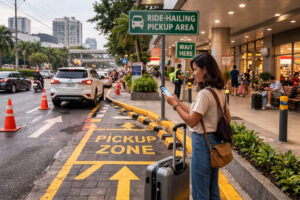
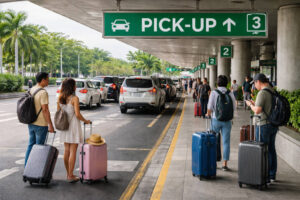 Pickup points are where many smooth bookings fall apart. At airports, the map may show your location correctly, but the legal pickup zone may still be in a separate lane or a marked waiting area. At malls, one entrance may be convenient for you but terrible for the driver because of barriers, one-way roads, or loading rules. At hotels, a driveway is usually better than the main road because it gives both sides a clearer meeting point.
At stations and transport hubs, look for signs, designated bays, or the side with less crossing traffic. Airport pickup zones are especially important because the wrong curb can trigger waiting, missed calls, or cancellation even when the driver is physically nearby.
How to share a better location pin when the map is not enough
The best pin is accurate, but the best booking usually adds human context. Share the pin, then send one short message with a readable landmark, the exact entrance name, the side of the road, and a clue about what you are wearing or holding if the area is crowded. “North entrance beside the pharmacy, hotel driveway, white luggage” is more useful than “I am here.” If the map drifts, move to a safer and more visible legal loading point rather than insisting on a confusing roadside spot. Reality check: in the Philippines, drivers often know landmarks better than formal addresses, but landmarks alone are still not enough if the road layout or pickup rule is wrong.
Payment options in the Philippines
Cash versus card expectations
Cash payment can still feel simplest for many riders because it avoids card errors and can be easier for occasional users. But cash only works well if you carry practical denominations and avoid handing over bills that are difficult to break during peak hours.
Card payment is more convenient for travelers who want less cash handling, easier receipts, and smoother arrival at busy places. GrabPay can also help some users keep payment inside the platform.
The important point is not to assume one option is perfect. Cash can create change issues, and card payment can fail at the worst time if the method needs reauthorization or if your bank flags the transaction.
What to do if your card fails or you want a simpler fallback
If a card fails, do not panic and keep rebooking without checking the problem. First confirm whether the card is still active in the app, whether your bank has blocked the transaction, and whether switching to cash for that ride will solve the immediate issue. For a very important trip, the simpler fallback is often better than troubleshooting on the curb. Reality check: payment friction usually feels worse when you are already tired, late, or wet from the rain. Keep at least one backup method ready so the ride decision stays simple.
Common Grab issues and practical fixes
Driver cancellations
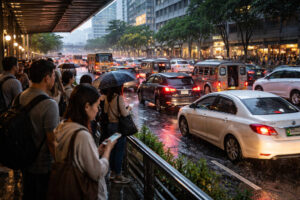 Cancellations happen for many reasons: a driver is too far away, the pickup point looks inconvenient, traffic suddenly worsens, or the route is less attractive than expected. Before rebooking, pause and check whether your location pin makes sense from a driver’s side of the road, whether you are in a restricted loading zone, and whether a nearby hotel entrance or marked bay would work better. Rebooking from the exact same bad spot often repeats the problem.
Surge pricing and whether to wait or book
Surge pricing is common during rain, rush hour, event dispersal, and airport peaks. Sometimes waiting a little helps, but not always. If many people are trying to leave the same area and the weather is getting worse, waiting may only mean longer delays and the same or higher price later.
For a flexible trip, compare the fare against public transport, walking to a better pickup zone, or delaying the ride by one meal or one coffee. For a critical trip, paying the higher fare may be the calmer choice. Reality check: the cheapest option is not always the least stressful option, especially when timing matters more than the price difference.
Slow matching, wrong pickup assumptions, and busy-road confusion
Slow matching often means supply is thin for that time and area, not that your app is broken. Wrong pickup assumptions happen when the rider stands on the opposite side of a divider, at a non-loading corner, or inside a crowded curb where the vehicle cannot stop safely. Busy-road confusion is common near malls, flyovers, terminals, and wide intersections. The easiest fix is often to move deliberately to a calmer legal pickup point with better visibility. Send a short landmark note, then watch the vehicle approach on the map instead of pacing between several possible corners.
These problems matter even more for travelers already doing long bus, ferry, or outdoor days. The broader travel safety basics guide is useful here because the safest transport choice is not always the fastest-looking one, especially when fatigue and weather are part of the day.
Safety and verification checklist
What to check before getting in
 Keep the safety check short enough to do every single ride. Match the plate number first. Then confirm the vehicle model and color, and make sure the driver details in the app align with the person picking you up. Check that you are entering the correct car before placing bags inside.
Share trip status with a trusted contact when appropriate, especially at night or on unfamiliar routes. The official Grab Trust and Safety page outlines core features and reporting tools, but the rider still needs to do the basic visual check every time.
When to cancel and report instead of proceeding
Cancel and report if the plate number does not match, if another person pressures you to ride a different vehicle, if the driver insists on moving the pickup to an unsafe place without a clear reason, or if the situation feels irregular in a way the app does not explain. You do not need to argue at the curb. Step back to a safer visible area and handle the report through the app. Reality check: a one-minute verification habit feels small until the day it saves you from a bad ride decision.
When Grab is the right choice and when it is not
Better than street taxis in some situations
Grab is often the better option when you want a visible booking trail, an easier pickup at a known hotel or mall entrance, or less uncertainty about who is handling the ride. It can also be calmer for visitors who are still learning local routes and do not want to negotiate in the middle of traffic noise. For airport-to-hotel transfers in covered service areas, it can be very practical as long as you follow the airport pickup zone correctly.
When public transport, walking, or a prearranged transfer makes more sense
Grab is not the best answer when the route is walkable and traffic is severe, when surge is high for a short distance, when your destination sits outside dependable service areas, or when you have a fixed departure that cannot absorb delays. A hotel-arranged airport pickup, a public transport link, or a prebooked intercity ride can be smarter. This is especially true for dawn departures, province connections, and unfamiliar terminals. Reality check: using Grab well in the Philippines sometimes means deciding not to book it at all.
Quick do-this-not-that summary
Simple habits that reduce stress
Book from a legal, visible pickup point instead of a random roadside corner. Send one clear landmark message instead of several vague updates. Check the plate before opening the door. Carry a payment backup.
Build time allowance for airports, rain, and heavy traffic. If matching is slow, change the pickup point before you blame the app. Those small habits are what make using Grab in the Philippines feel manageable in real life.
Mistakes first-time users make most often
The most common mistakes are depending on Grab for an intercity transfer without checking coverage, standing at the wrong airport pickup zone, dropping the location pin in a place where no car can stop, assuming cash or card will work perfectly every time, and rebooking repeatedly without fixing the original problem.
 A calmer rule is simple: book Grab when the route is local, the pickup point is clear, and you still have a backup if matching fails. Wait a little when conditions may improve and the trip is flexible. Switch to another option when timing is critical, coverage looks weak, or the pickup setup is already telling you the ride will be messy.
That is the most practical way to approach How to Use Grab in the Philippines without turning one ride into a whole travel headache.