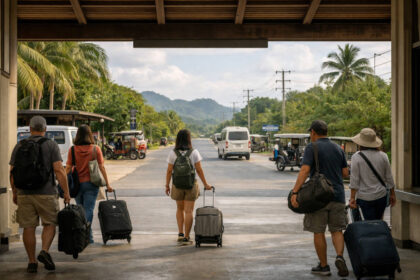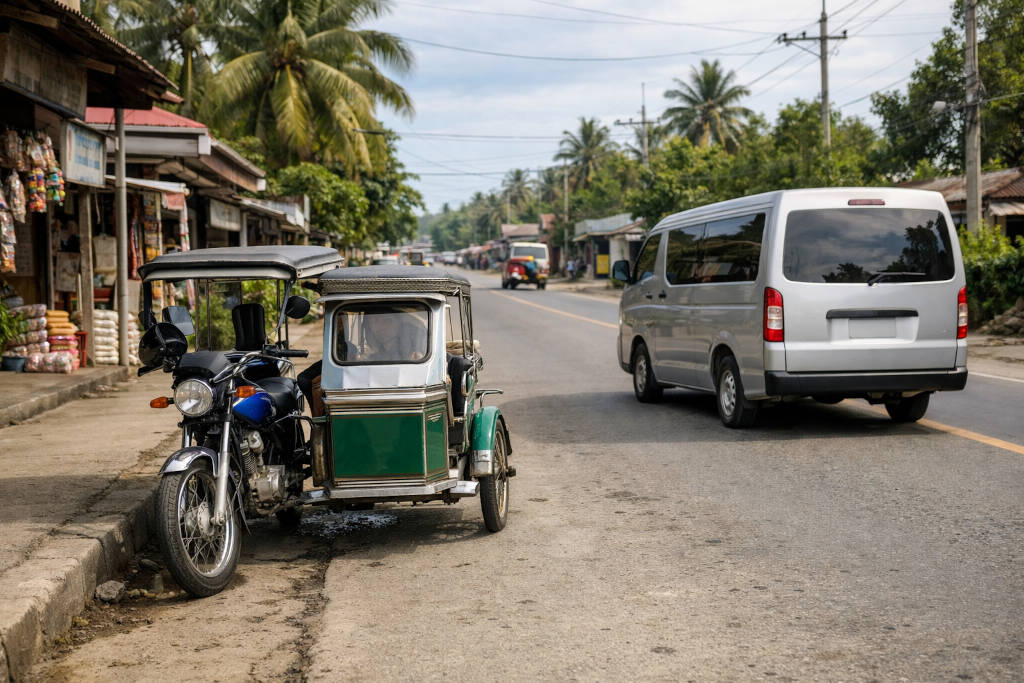
Zambales is a long province with a coastline that stretches far north. That geography is the main reason how to get around Zambales feels different from getting around a compact city: you will often combine a highway ride (bus/jeepney/UV) with a last-mile tricycle, and your base town choice can save (or cost) hours.
This guide is planning-first and flexible. It focuses on decision rules that work even when schedules change: what to take for short hops, medium transfers along the highway, and day trips to beaches and coves. It also covers cost variability, late-night safety, luggage handling, and what proof to keep when booking rides. For a general framework on buffers and choosing a base, keep the Philippines travel planning guide in your notes.
Reality check: In many Zambales towns, “last mile” transport is the limiting factor. The highway is easy; the final few kilometers to a beach road or resort gate is where waiting time and price confusion usually happen.
Start Here: Zambales Is Long, So Base-Town Choice Matters
If the plan is getting around Zambales without a car, start by choosing a base that matches your beaches and day trips. Moving your base every day can increase luggage handling and late arrivals.
Quick Mental Map: South vs Central vs North
- South (Subic / Olongapo): Good for access to transport hubs, errands, and quick connections. Often used as a gateway because it’s closer to Metro Manila and has established terminals.
- Central (San Antonio / San Narciso / San Felipe): Often chosen for beach access patterns: highway stop, then tricycle to resorts and coves. Good if your priority is quick beach mornings without long northbound drives.
- North (Iba / Masinloc / Palauig / Santa Cruz): Better if your targets are in the northern half of the province. Travel times increase significantly if you day-trip north from the south.
If you’re building a no-car itinerary, it can help to compare mindset and pacing with other no-car guides like Manila without a car—the details differ, but the planning principle is the same: reduce long transfers, protect daylight, and keep last-mile plans simple.
Reality check: A “nearby” beach on a map can still mean slow last-mile roads. Ask about travel time in minutes, not just kilometers.
Best Mode By Distance (Short Hops, Medium Transfers, Day Trips)
 Here is a simple decision rule that works across Zambales’s coastline. When choosing how to get around Zambales, decide by distance first, then refine by time of day and luggage.
Short Hops: Tricycle, Local Jeepney, Walking (When Appropriate)
Within the same town proper—market, eateries, barangay roads near the beach—short hops are typically done by:
- Tricycle: Most common for quick point-to-point rides and last-mile access. This is where Zambales tricycle fare questions come up, because pricing depends on shared vs special trip.
- Local jeepney: Available on some corridors, especially around busier town centers. Routes can be informal, so confirm landmarks with locals.
- Walking: Only if it’s practical: daylight, safe road shoulder, manageable heat, and not carrying heavy bags.
Reality check: Sidewalks can be limited. If the road shoulder is narrow or traffic is fast, treat walking as a short, daylight-only option.
Medium Transfers: Bus/Jeepney/UV Along The Highway Plus Last-Mile Tricycle
For transfers between nearby areas or along the main highway, your base pattern is often:
Highway ride (bus/jeepney/UV) → drop-off near town stop → tricycle last mile.
This is the core of a Zambales commute guide. What’s available depends on corridor and time of day, but the planning logic stays consistent.
- Bus: Good for longer inter-town moves. Often the easiest option when you have luggage because it reduces transfers.
- Jeepney: Useful for shorter stretches where it runs frequently. Comfort and space vary; not ideal with bulky luggage.
- UV Express / vans: Can be faster on certain routes, but may wait to fill seats and may have stricter luggage space.
For the basics of bus/jeepney/van expectations in the Philippines (and what to do when vehicles are full), see the Philippines public transport guide.
Reality check: UV/van departures can depend on filling seats. If you must arrive by a set time, a bus can be the safer “predictability” choice.
Day Trips: Special Trip Tricycle vs Van Hire (When Each Makes Sense)
For hard-to-reach beaches, coves, or multiple stops in a day, you’ll usually choose between a tricycle special trip and a Zambales van hire day trip. The right choice depends on distance, group size, and how many hours you need the vehicle to wait.
Choose a tricycle special trip when:
- It’s a short-to-moderate distance from your base, and the route is feasible for a tricycle.
- You want flexibility for 1–2 stops without managing multiple transfers.
- Your group is small and luggage is minimal.
Choose a van/driver when:
- The day trip involves long distances, multiple beaches, or a strict schedule.
- You have a group and want to split costs.
- You need safer luggage handling and more comfort, especially in rain.
Best transport for Zambales day trips: In practice, a hired vehicle (van/driver) often reduces friction if you’re hopping between far-apart stops. For nearer coves or a single beach road, a negotiated tricycle special trip can be enough—if the terms are clear.
Reality check: A “cheap” special trip can become expensive if waiting time charges weren’t discussed. For day trips, waiting time is often the real cost driver.
Tricycles In Zambales: How Pricing Usually Works
 Tricycles are the default last-mile solution in many towns. Confusion happens because there are two common pricing modes: shared and special trip. Understanding this is key to how to commute in Zambales without a car without stress.
Shared vs Special Trip, And Why Tourists Get Confused
- Shared ride: You pay per person or per seat, and the tricycle may pick up other passengers. This can be cheaper but less direct.
- Special trip: You pay for the whole tricycle to take only you (or your group) directly. This is common for resorts, beaches, and routes without steady passenger flow.
Tourists often assume a quoted price is “total,” but sometimes the driver means “per person,” especially if locals usually do shared rides. Always clarify the unit: total for the trip vs per person.
Reality check: In some areas, special trip is the norm for resort roads. Treat it as a private ride product and negotiate like one.
Questions To Ask Before You Ride (Total Cost, Inclusions, Waiting Time)
To avoid being overcharged (or simply to avoid misunderstandings), ask these questions in simple, polite terms before getting in:
- Total fare: “Magkano po lahat hanggang [destination]?” Confirm it is total (not per person) unless it’s clearly a shared ride.
- One-way or roundtrip: “One-way lang po ito o balikan na?”
- Waiting time charges: “May waiting time po ba? Paano po ang computation?” This matters for beaches and coves.
- Add-ons: “Kasama na po ba parking/tolls/entrance/boat fee kung meron?” (If relevant to your route.)
- Stops: “Pwede po ba side trip? Magkano dagdag kung may stop?”
How to avoid being overcharged in tricycle: Agree on the total price before the ride, confirm whether it’s per person or per tricycle, and clarify waiting time if the driver will stay. If there’s a posted fare matrix, use it as a reference point, but still confirm current practice on the ground.
Reality check: Rain, late-night hours, and low driver availability can increase quotes. The goal is not “lowest,” but “clear and agreed.”
Vans And Shared Rides: What They’re Good For (And What They’re Not)
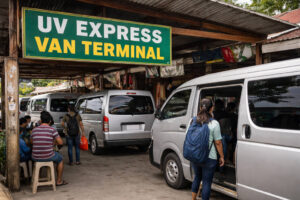 Shared vans/UV Express can be useful for certain inter-town trips, especially along busy corridors. Private vans are useful for day trips and group travel. Here’s a quick guide for Zambales local transport planning.
Shared UV/van is good for:
- Point-to-point travel along known corridors
- Reducing travel time versus slower vehicles (route-dependent)
- Travelers with light luggage who can handle tighter seating
Shared UV/van is not ideal for:
- Strict arrival deadlines (because vans may wait to fill)
- Bulky luggage or surfboards (space and comfort vary)
- Late-night arrivals (availability can drop)
Private van/driver is good for:
- Day trips with multiple stops and waiting time
- Groups splitting costs
- Rainy days when you want more control and shelter
Reality check: For private hire, the most important part is not the vehicle—it’s the written agreement on inclusions, waiting time, and exact pickup plan.
Transport Hubs You’ll Likely Use
Zambales travel often revolves around a few practical hubs, then branches out via tricycle last mile. Knowing these hubs makes how to get around Zambales easier to visualize.
Olongapo/Subic Transport Context (Terminals, Main Gate, Local Jeeps)
In the southern area, travelers often pass through the Olongapo bus terminal zone and the Subic Main Gate area. Olongapo is a common gateway for buses coming from Metro Manila, while Subic has its own internal transport patterns.
Olongapo is also known for color-coded jeepneys. You do not need to memorize the system—just treat it as a local wayfinding feature. Ask drivers or staff at terminals which jeepney color/route matches your landmark, and confirm where to get off.
If you’re planning a Subic-bound leg, the official Subic visitor page can be a useful starting reference for transport context: https://visit.mysubicbay.com.ph/getting-there.
Reality check: Subic/Olongapo can feel busier than beach towns. Keep luggage close at terminals and choose well-lit pickup points, especially at night.
Iba As A Practical Hub For Central Zambales
Iba is commonly treated as a practical hub in central Zambales for errands, supplies, and onward trips north or south. It can also be a place where transport rules and fare reminders are more visible.
Some towns publish ordinances or fare guidance. For example, Iba has an ordinance reference that can help travelers understand what a posted fare matrix might look like: https://www.ibazambales.gov.ph/ordinance-no-21/. Use this as a “what to look for” tip—not a promise that every route will have a posted board or that all drivers quote the same way.
Reality check: Even with fare guidelines, special trips and waiting time are often negotiated. Always confirm the total and inclusions.
San Antonio And San Felipe For Beach Access Patterns
San Antonio and San Felipe are often used for beach access. The common pattern is a highway drop-off, then a tricycle to your resort or beach road. This is where last-mile planning matters: know your nearest landmark, and decide if you need a special trip (direct) or a shared ride.
If you’re doing quick errands or souvenir runs while in these areas, keep short hops simple and daylight-based. This can pair naturally with a low-effort stop like souvenir shopping in Zambales—a practical way to use town proper time without adding long transfers.
Reality check: Beach roads can be darker at night and have fewer drivers available. If arriving late, arrange last-mile pickup through your accommodation when possible.
Cost Expectations And What Can Change
It’s tempting to look for exact fares, but Zambales pricing varies. The safest approach is to think in ranges and confirm locally. As a rough guide:
- Short hops in town: often tens to low hundreds of pesos, depending on shared vs special trip and distance (verify locally).
- Medium inter-town transfers: depends on bus/jeepney/UV corridor and season; luggage and comfort level can change the “best value.”
- Day-trip hires: usually negotiated as a package and can rise quickly with waiting time, side trips, and distance.
What commonly changes prices: distance, time of day (late-night), rain, waiting time, number of passengers, luggage, road conditions, and whether it’s shared or special trip. For hires, also consider tolls, parking, and whether the quote is one-way or roundtrip.
Reality check: The most expensive rides are often the ones arranged when tired, wet, or late. Planning the last mile before you arrive is a real cost saver.
Luggage And Late-Night Safety (Do’s And Don’ts)
When traveling without a car, luggage and timing affect safety more than the vehicle type. These reminders keep how to get around Zambales safer, especially for first-time visitors.
Do:
- Keep bags in sight when possible; label luggage with a name and contact number.
- Choose well-lit pickup points (busy storefronts, terminal entrances, public market area in daylight).
- Arrange night pickups through your accommodation front desk/guard or an established terminal when possible.
- Share trip details (driver contact, route, ETA) with someone you trust.
- Carry small bills and avoid showing large cash during payment.
- Arrive before dark if you can—especially when the last mile is tricycle-only.
Don’t:
- Accept sudden route changes to isolated areas without a clear reason.
- Move to a secluded pickup spot because someone says it’s “easier” without explaining why.
- Leave luggage unattended while negotiating fares.
For broader reminders that apply across terminals and night travel in the Philippines, keep the travel safety guide for the Philippines bookmarked.
Reality check: Most trips are fine, but late-night confusion is when problems happen. A clear meeting point and written agreement are simple protections.
Booking Tips And What To Screenshot Before Paying
For day trips, special trips, and van hires, booking clarity matters more than speed. Here are reliable places to ask and what to record.
Where To Ask (Practical, On-The-Ground Options)
- Accommodation front desk/guard: Often the safest way to arrange early or late pickups.
- Municipal tourism desk (if available): Useful for general guidance and current local practices.
- TODA near public market/transport terminal: Tricycle groups often have a dispatch style and clearer queuing.
- Established UV Express/van terminal: Better for shared routes and clearer departure points.
Reality check: “Random roadside arrangements” can be fine for short hops, but for long hires, it’s safer to book through an identifiable dispatch point.
What To Screenshot Or Write Down Before Paying
This answers a common question: what to screenshot when booking a van or tricycle. Save these details in your phone notes or screenshots:
- Driver name and contact number (or dispatcher contact)
- Vehicle details you can legally record: plate or body number if visible (avoid making it confrontational—just note what you can see)
- Agreed total price and what it includes (one-way vs roundtrip, waiting time rules, side trips)
- Pickup time window and exact meeting point (pin or clear landmark)
- Payment proof: receipt, chat thread, transfer screenshot
- Emergency fallback contact: your accommodation number
Reality check: A screenshot of “PHP ___” without inclusions is not enough. Include the words “roundtrip,” “waiting time,” and the meeting point in the same thread if possible.
Normal Vs Not Normal Checklist (Copyable)
Use this quick check to keep negotiations calm and to spot situations that are likely to cause trouble later.
Normal
- Driver clearly states the price before the ride.
- Clear meeting point and pickup window are agreed.
- Price breakdown makes sense: base fare plus clearly stated add-ons (night pickup, waiting time).
- Driver is okay with confirming details in chat/text.
- Driver answers questions about one-way vs roundtrip and waiting time without irritation.
Not Normal
- Refuses to state a price until after the ride.
- Sudden large add-ons not mentioned upfront.
- Asks you to move to an isolated pickup spot for no clear reason.
- Pressures you to pay in full without any written confirmation of inclusions.
- Threatening language, aggressive upselling, or refusing to let you leave the negotiation.
Reality check: If something feels off, switching to an established terminal, TODA dispatch point, or asking your accommodation to arrange a ride is a reasonable reset.
How To Get Around Zambales FAQ
How to commute in Zambales without a car?
Use a two-step pattern: highway transport (bus/jeepney/UV) for inter-town movement, then tricycle for the last mile to resorts or beaches. For day trips with multiple stops, negotiate a tricycle special trip or hire a van/driver—especially if you need the vehicle to wait.
How to avoid being overcharged in tricycle?
Confirm the total fare before boarding, clarify if it’s per person or total for the tricycle, and ask about waiting time charges for beach stops. If a fare matrix is posted, use it as a reference, but still verify the current practice and inclusions on the ground.
What to screenshot when booking a van or tricycle?
Save driver/dispatcher contact, vehicle details you can note, the agreed total price and inclusions (one-way/roundtrip, waiting time, side trips), the exact meeting point and pickup window, and payment proof. Also save your accommodation contact as a fallback.
Best transport for Zambales day trips?
For multiple stops and longer distances, a van/driver can reduce waiting time and transfer stress—especially for groups splitting cost. For a single nearby beach road, a tricycle special trip can be enough if the price, waiting time, and return plan are clearly agreed in writing.
If you want the same planning principles applied to city transport (short hops, safety, and proof to keep), these guides can help: getting around Cebu City and getting around Iloilo City.
For more local reads, browse Zambales travel guides. For general planning articles, see Tips and inspiration.