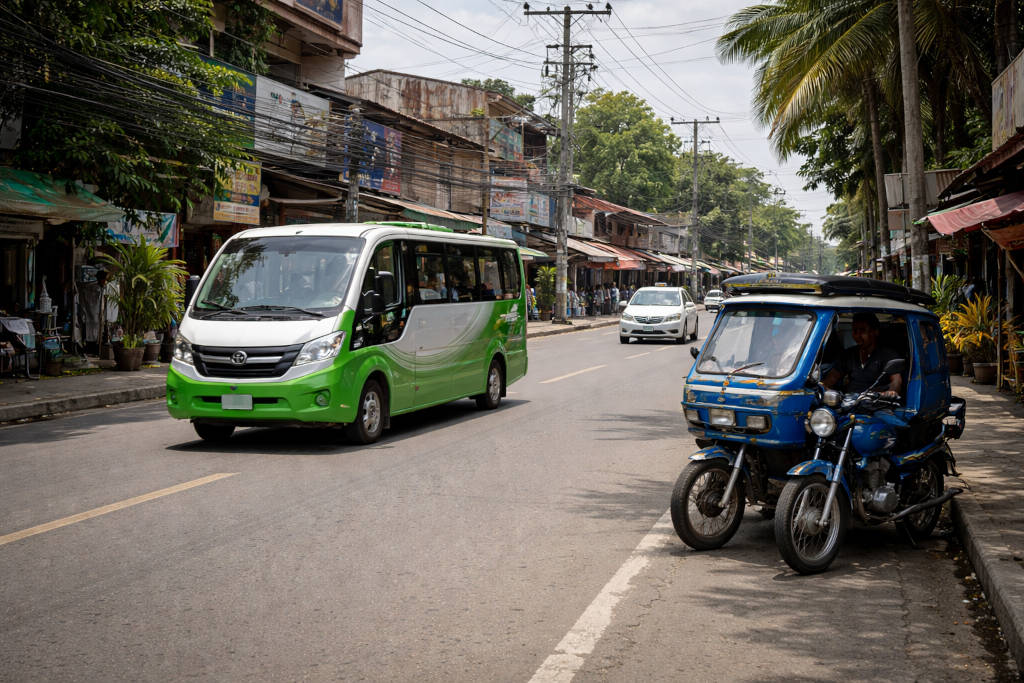
How to get around Iloilo City is mostly about choosing the right “level” of transport for your day: walk and short rides for nearby districts, jeepneys/modern jeeps for most daytime trips, then upgrade to taxi or Grab when you have luggage, it’s raining, or it’s late. Iloilo is generally easier to navigate than some bigger cities, but surprise fees can still happen—usually when the fare basis isn’t clear (special trip, fixed price offers, or luggage add-ons). This Iloilo City transportation guide focuses on plan-changing logistics: time, cost, comfort, weather impact, and safety.
If you’re new to traveling in the country, it helps to keep a simple framework from first-time Philippines travel planning: pick a main “default mode,” keep a late-night fallback, and always confirm the total before you commit.
At-a-Glance
Best daytime default: Jeepney/modern jeep/minibus for district-to-district trips when you’re traveling light.
Lowest-stress option: Metered taxi or Grab, especially in rain or with bags.
Airport plan: Use official counters/queues for shared shuttle vans or book taxi/Grab from the designated pickup.
Rain impact: Expect slower trips, longer waits, and more demand for taxis/Grab.
Late-night backup: Wait in well-lit areas (hotel lobby, mall entrance) and avoid unclear pricing.
Budget band: PUVs are cheapest; taxis/Grab cost more but reduce friction; vans for day trips can be efficient if you board from legitimate terminals.
Reality Check: Any “quick ride” can stretch when it rains—build buffer time for airport transfers and terminal connections.
Intro: Your quick decision guide for Iloilo City transport
For getting around Iloilo City without a car, think in four buckets: short hops, cross-city district moves, airport transfers, and day trips. Choose the simplest option that fits your comfort level, then upgrade when weather, luggage, or late-night safety makes it worth it.
Short hops (under a few km)
Best default: Walk when it’s comfortable and safe; otherwise take a quick tricycle ride in areas where they’re common, or a short PUV ride (jeepney/modern jeep/minibus) if the route is obvious. For how to get around Iloilo City on short hops, the most important step is confirming the total before you sit down—especially if a driver frames it as “special.”
Reality Check: Heat and sudden rain are what usually turn a short hop into a hassle—keep a “rain plan” (taxi/Grab) ready.
Cross-city (district-to-district)
Best value: Iloilo city public transport like jeepneys, modern jeep/e-jeep units, and minibuses often works well for daytime district-to-district trips (City Proper, Jaro, La Paz, Mandurriao, Molo, Arevalo/Villa).
Lowest stress: Taxi/Grab when you want fewer transfers or you’re short on time.
Reality Check: “Cross-city” time depends on traffic near hubs like SM City Iloilo and the Mandurriao area—leave earlier than the map suggests.
Airport transfers
 Most practical: Official shared shuttle vans/UV Express-style services (when operating) or taxi/Grab if you have luggage or an odd arrival time. For how to get around Iloilo City from Iloilo International Airport, prioritize clarity: use official counters/queues and avoid side offers with unclear pricing.
Reality Check: Late arrivals can mean fewer shared options—know your taxi/Grab backup before you land.
Late-night rides
Best default: Taxi/Grab from a well-lit pickup point (hotel lobby, mall entrance, established stand). If rides are limited, ask staff to help you book or direct you to an official queue. Late-night commute decisions should favor safety and clarity over small savings.
Reality Check: “Fixed price” offers are more common late at night—only proceed if you agree on a total before moving.
Day trips outside Iloilo City
For day trips, decide early: faster and more flexible (private car/van split with a group) or cheaper but slower (vans/buses from terminals). Your choice changes departure time, return time, and how tired you’ll be by evening.
Reality Check: If you try to squeeze too many stops, you’ll lose time to waiting and transfers—keep day trips simple.
Iloilo City transport basics you’ll actually use
Iloilo’s transport feels easiest when you think in hubs. Many rides become straightforward once you start from common gathering points (SM City Iloilo area, Festive Walk Transport Hub vicinity, City Proper) and then move outward to districts like Jaro, La Paz, Mandurriao, Molo, and Arevalo (Villa). If you want broader context that applies across the country, this overview of public transport in the Philippines helps explain why terminals and route culture matter.
Reality Check: Not all routes are posted in a tourist-friendly way—expect to ask a guard, dispatcher, or staff member for the correct lane or loading spot.
Small bills, change, and why it matters
Small bills make everything smoother—PUVs, tricycles, and even short taxi rides can become awkward if you only have large notes. For how to get around Iloilo City with fewer delays, keep a mix of coins and small bills and pull out only what you need when paying.
Reality Check: When it’s raining or busy, drivers may have less change available—having smaller cash reduces friction.
Peak traffic windows and what they change (time and cost)
Peak hours can increase your travel time and cost. Metered rides can rise because you’re moving slowly, and app-based rides can become harder to book when demand spikes. Expect heavier traffic near commercial hubs (SM City Iloilo/Mandurriao corridor) and in City Proper during busy hours.
Reality Check: Rain changes everything: slower roads, longer waits, and more people switching from PUVs to taxis/Grab.
The idea of hubs and terminals (SM area, Festive Walk/transport hub references, City Proper, Jaro area)
If you’re building an Iloilo city transportation guide for yourself, identify two “anchor points” you’ll use repeatedly: (1) where you’ll often start (hotel area, City Proper, or Mandurriao/SM City Iloilo zone) and (2) where you’ll often return (Festive Walk Transport Hub vicinity or a main mall area). From these hubs, you can usually find PUVs heading toward Jaro, La Paz, Molo, and Villa/Arevalo, or switch to taxi/Grab when you’re tired.
Reality Check: “Transport hub” areas can shift due to road works or reroutes—confirm the loading point on the day.
Short hops: walking + tricycles + quick PUV rides
Short hops are where travelers either save money smoothly—or get surprised by small add-ons. For how to get around Iloilo City on short distances, clarity matters more than squeezing the last peso.
Reality Check: If the sidewalk situation is poor or crossings feel risky, treat a short paid ride as a comfort and safety upgrade.
When walking is the best option
Walk when the distance is truly short, the route is straightforward, and the weather is manageable. Walking can also be a smart way to move from a busy road to a calmer pickup point for a taxi/Grab, which often reduces wait time and confusion.
Reality Check: If you’re navigating with your phone out the whole time, it may be safer to step into a store entrance to check your map, then continue.
Tricycle reality check: where they’re common, and how to avoid “special trip” surprises
Tricycles are often used for short, local trips, but availability and rules vary by area. In some zones, tricycles operate like shared rides; in others, drivers may quote “special trip” (private hire) pricing by default—especially if you’re off-route, it’s late, or you have luggage. To avoid surprise charges, confirm whether the fare is per person or per ride, and agree on the total before you board.
Reality Check: If you’re on a major road and tricycles are scarce, it may be because they’re not the normal option there—switch to a PUV or taxi/Grab rather than waiting too long.
What to say before you ride (simple scripts to confirm total)
These short lines help keep costs clear:
- “Magkano po lahat hanggang ____?”
- “Per head po ba ito o special?”
- “Kasama na po lahat? Wala nang dagdag?”
For how to get around Iloilo City with fewer misunderstandings, ask before your bag is placed anywhere—once you’re moving, it’s harder to reset expectations.
Reality Check: If the driver won’t give a clear total, step away and choose another ride.
Jeepneys / modern jeeps / minibuses (best value for most daytime trips)
 For many travelers, Iloilo city public transport is easiest in the daytime through jeepneys, modern jeep/e-jeep units, and minibuses. They’re usually the best value for short to medium trips when you’re traveling light and don’t mind sharing space.
Reality Check: These rides can get crowded during peak hours—if you have fragile items or you’re exhausted, it’s okay to upgrade to a taxi/Grab.
When they make sense (budget, short to medium rides, non-luggage)
 Use PUVs when (1) you’re not carrying big luggage, (2) your trip is within common districts (City Proper, Jaro, La Paz, Mandurriao, Molo, Arevalo/Villa), and (3) you can tolerate a bit of waiting. Fares are typically low, but exact minimum fare and distance add-ons can change—treat posted notices and local guidance as the most reliable source on the day.
Reality Check: If it’s raining hard, expect slower loading and heavier crowds—your time cost increases even if the fare stays low.
How to choose a route without memorizing codes (landmarks and asking the right question)
You don’t need route codes to get around. Pick a landmark and ask clearly: “Dadaan po ba ito sa ____?” (Does this pass by ____?) Good anchor landmarks include SM City Iloilo, the Festive Walk area, City Proper, Jaro Plaza area, and La Paz market area. If you’re unsure, ask a guard, dispatcher, or a nearby vendor where the correct loading point is.
Reality Check: Some vehicles take slightly different paths depending on traffic—confirm the “pass-by” rather than assuming.
Comfort and safety basics (bags, phone, where to sit)
Keep your bag in front of you when possible, and avoid placing your phone loosely in a pocket during crowded rides. If you’re carrying a daypack, wear it on your front in dense areas. For how to get around Iloilo City comfortably, choose a seat where you can keep your belongings close and avoid blocking exits.
Reality Check: If the vehicle is too packed for you to keep your items secure, step off and wait for the next one or switch modes.
Taxis and Grab (best for luggage, late-night, low-stress)
When you want the simplest decision, taxis and Grab are usually the easiest. They’re particularly helpful for airport transfers, late-night commutes, and days when weather makes public rides uncomfortable. If you’re comparing options in an Iloilo City transportation guide, this category is often the “pay more, worry less” choice.
Reality Check: During rain or peak hours, availability can drop and prices (especially in-app) can rise—build buffer time.
Metered vs “fixed” pricing: what’s normal, what’s not
Normal: A metered taxi uses the meter from the start, with cost increasing based on distance and time.
Also normal in some situations: A clearly agreed fixed price for a specific transfer, as long as it’s confirmed before you ride and feels consistent with the distance and conditions.
Not normal: Refusing the meter while demanding a high price, or changing the price mid-ride. For how to get around Iloilo City without surprise fees, agreement before movement is the rule.
Reality Check: If you feel pressured at the curb, step back into a lobby or mall entrance and book from there.
Cost expectations by situation (short hop vs cross-city vs airport) without overpromising
Instead of relying on exact numbers, use these planning cues:
- Short hop: Often reasonable on a meter, but can feel “not worth it” if traffic is heavy and the ride is slow.
- Cross-city: Expect the total to rise with congestion; direct routes reduce detours and time cost.
- Airport: Typically higher than an in-city ride due to distance and timing; late-night/early-morning demand can change availability.
For how to get around Iloilo City on a budget, use PUVs in the daytime and reserve taxis/Grab for airport, late nights, and rain-heavy days.
Reality Check: If the total matters a lot, confirm the route and avoid “multiple stop” errands on a metered ride unless you’ve agreed on waiting time expectations.
What to screenshot in the app and what to do if something feels off
If you book in-app, screenshot: driver details, plate number, booking screen, pickup pin, chat thread, and the fare estimate. If something feels off (driver asks you to cancel but still ride, or the pickup is moved to a secluded spot), do not proceed. Cancel, move to a well-lit area, and re-book.
Reality Check: Your best safety tool is the ability to pause and reset—don’t let urgency push you into an unclear ride.
Airport to city: Iloilo International Airport options
Airport transfers are where travelers most want clarity and comfort—especially with bags. Iloilo International Airport is outside the city center, so plan your transfer as a key leg, not an afterthought. For basic airport context, you can reference Iloilo International Airport details, then confirm your actual transport options on the day at the airport.
Reality Check: Late arrivals can mean fewer shared services—know your taxi/Grab backup before landing.
Shared shuttle vans and where they typically go (focus on how to find the legit queue/counter)
Shared shuttle vans (often similar to UV Express setups) can be a practical middle option: cheaper than private rides, simpler than stitching together multiple PUV legs with luggage. Use official counters, designated queues, and staff guidance. Ask where the drop-off points are (City Proper, SM City Iloilo area, or other hubs), and confirm whether the fare is per person and whether luggage changes the cost.
Reality Check: Shared vans may wait to fill seats—if you’re on a tight schedule, a taxi/Grab may be the safer time choice.
Taxi/Grab with luggage: what to confirm before you ride
 With luggage, taxis/Grab usually offer the least friction. Confirm these before you commit:
- Pickup point (official lane or designated pickup area)
- Fare basis (metered taxi vs app estimate vs agreed fixed fare)
- Luggage handling (your bag stays in sight; you can open/close the trunk yourself if appropriate)
To check whether the app’s airport flow is available and how pickup works, use check app availability and airport rides flow before travel (then still confirm on the day).
Reality Check: If a driver tries to add a “luggage fee” only after loading, it’s okay to unload and switch rides.
Timing tips for early flights and late arrivals (buffers, backups)
For early flights, plan a buffer for road conditions and check-in lines. For late arrivals, prioritize a clear, official pickup and avoid wandering outside the designated area looking for “cheaper” rides. If shared vans aren’t running, use taxi/Grab as your fallback. For how to get around Iloilo City without stress, your airport transfer should be your most conservative choice.
Reality Check: If weather is rough, assume everything takes longer—leave earlier and keep a backup option.
Vans and terminals for day trips (the trip-planning section)
Day trips from Iloilo City are popular and doable, but your transport choice can decide whether you enjoy the day or spend it waiting. Treat terminals as part of your itinerary, not a footnote. For more local ideas, keep Iloilo travel guides open as you plan.
Reality Check: A day trip that looks “close” can still eat half your day if you miss the right terminal or depart too late.
When to use vans/buses (day trips, provincial routes)
Use vans or buses when you’re going beyond the city and want a straightforward provincial route. Vans can be faster for some routes (fewer stops), while buses can be cheaper and more spacious for longer rides. The best choice depends on departure frequency, comfort needs, and how early you’re willing to start.
Reality Check: Vans may wait to fill seats; buses may have more stops—either way, build time.
The practical terminal plan (confirm on the day)
Instead of memorizing every terminal detail, use a simple plan:
- Identify the likely terminal area for your direction (northbound vs southbound), commonly referenced as hubs like Tagbak terminal and Mohon terminal.
- Confirm the correct bay/counter on the day—ask your hotel/front desk or a guard at the terminal.
- Confirm the fare basis (per person) and the drop-off point, especially if you’ll connect to another ride.
This approach keeps getting around Iloilo City without a car manageable even when schedules shift.
Reality Check: Terminals can reroute bays due to traffic management—assume you’ll need 10–20 minutes to orient yourself.
Sample day trips people do from Iloilo City and what choice changes your schedule
Common examples travelers consider include:
- Guimaras: Usually involves reaching Iloilo port, then taking a Guimaras ferry. Your schedule changes based on how early you reach the port and how you handle return timing.
- Miag-ao: A classic heritage stop; buses/vans can work well if you leave early and accept a longer ride.
- Garin Farm area: Often easier with a private vehicle or a well-timed terminal departure; plan for weather and heat.
- Northern Iloilo: Better with an early terminal start; late departures can shrink your time on-site.
For how to get around Iloilo City efficiently on day trip days, your biggest lever is departure time. Leaving early reduces traffic, increases options, and gives you room for delays.
Reality Check: If you’re trying to return in time for a flight, choose fewer stops and use the most direct transport you can reasonably afford.
Late-night safety notes (simple and calm)
Late-night planning is less about fear and more about reducing uncertainty: clearer pickup points, clearer pricing, and a shorter chain of decisions. For broader guidance you can apply anywhere in the country, keep travel safety tips in the Philippines handy.
Reality Check: The safest plan is usually the most boring one: well-lit waiting, clear records, and no mid-ride negotiations.
Where to wait (well-lit areas, hotel lobby, mall entrance, official stands)
Wait at hotel lobbies, mall entrances (like SM City Iloilo areas), or official stands where staff and security are visible. If you’re meeting a ride, choose a pickup spot that’s bright, easy to describe, and not tucked away behind buildings.
Reality Check: If you’re standing alone in a dim spot, move—better lighting is an immediate safety upgrade.
What to avoid (isolated pickups, unclear pricing, pressure tactics)
Avoid pickups that require you to walk to an isolated corner, and avoid rides where the driver refuses to state a total or insists you cancel an app booking but still ride. Pressure tactics are a strong signal to reset your plan.
Reality Check: If you feel rushed, you’re more likely to accept unclear terms—pause, step inside, and re-book.
Backup plan if rides are limited (ask hotel, use official taxi, wait for daylight when reasonable)
If rides are limited, ask your hotel/front desk to help you book a taxi or direct you to an official stand. If you’re not in a hurry and conditions feel uncomfortable, waiting in a safe, staffed area can be the better choice than forcing a questionable ride. For how to get around Iloilo City safely, “not moving yet” is sometimes the smartest decision.
Reality Check: A calm delay is often safer than a fast ride with unclear pricing or poor pickup conditions.
Normal vs not normal checklist (make this very scannable)
Use this as a quick scan for how to get around Iloilo City without surprise fees or awkward confrontations. It’s also a good reference point if you’re tired or carrying luggage.
Reality Check: Normal rides feel straightforward. If it feels complicated, it often is.
Normal
- Driver states the total or the fare basis (meter/app estimate) before moving.
- You understand whether it’s a regular ride or a special trip (especially for tricycles).
- Pickup is clear and public (hotel lobby, mall entrance, official stand).
- You can keep your bag with you or in sight, and the luggage plan is agreed.
- App details match the vehicle/driver, and you can screenshot the booking screen.
- You can exit if you feel uncomfortable, without being pressured.
Not normal
- Refuses to say a price, then demands more mid-ride.
- Asks you to cancel a booking but still ride (you lose the record).
- Adds a “luggage fee” only after loading your bag.
- Aggressive pressure or guilt-tripping to accept a quote.
- Requests unsafe seating or overloaded positioning.
- Intoxicated or erratic driving, or behavior that makes you feel unsafe.
- Tries to isolate you from your bag or move you to a secluded pickup.
Reality Check: Routes, pickup points, and fares can change—confirm on the day, especially in rain or peak hours.
FAQ
What’s the easiest way to get around Iloilo City if it’s your first time?
For first-timers, how to get around Iloilo City is easiest with a two-layer plan: use taxi/Grab for airport, luggage, and late-night rides; use jeepneys/modern jeeps/minibuses for daytime district trips once you’ve identified your main hubs (SM City Iloilo/Mandurriao area, City Proper, Jaro). This keeps decisions simple and reduces surprise fees.
Which transport is best for short hops versus cross-city rides?
Short hops: walk when practical; otherwise tricycle (confirm total) or a quick PUV ride. Cross-city: PUVs for best value in the daytime, taxi/Grab for comfort, rain, or time-sensitive trips. This is the core logic of getting around Iloilo City without a car.
Is Grab available in Iloilo City, and when is it better than a regular taxi?
Grab availability can vary by time and area, so it’s smart to check the app before relying on it. When available, it’s often better when you want an upfront estimate and a digital record—especially with luggage or at night. A metered taxi can be equally fine when the meter is used properly and the pickup is clear.
What are the common transport hubs in Iloilo and why do they matter?
 Common hubs include the SM City Iloilo area, the Festive Walk Transport Hub vicinity, City Proper, and the Jaro area. They matter because PUV routes and pickup points often cluster around hubs—starting from these places reduces guesswork when you’re learning how to get around Iloilo City.
How do you get from Iloilo International Airport to the city safely with luggage?
Use official airport queues/counters for shared shuttle vans or take a taxi/Grab from designated pickup areas. Confirm the fare basis before loading luggage and keep your bag in sight. If shared vans are limited (late arrival), taxi/Grab is usually the simplest fallback for how to get around Iloilo City from the airport.
Airport to City Proper vs airport to SM City Iloilo: what’s the practical difference?
The practical difference is your drop-off convenience. City Proper drops may be closer to heritage or downtown areas, while SM City Iloilo/Mandurriao drops can be easier for transfers, malls, and nearby hotels. Before you board a shared van, confirm the exact drop-off so you don’t need extra transfers with luggage.
How do you avoid surprise charges (special trip, luggage add-ons, fixed-rate confusion)?
Confirm the total before you ride, ask whether it’s a special trip or regular, and agree on any luggage handling before loading. For taxis, insist on a meter when that’s the normal basis; for app rides, keep screenshots of the fare estimate and booking details. These habits are the simplest way to protect your how to get around Iloilo City budget.
What’s the safest plan for getting back to your hotel late at night?
Use a taxi/Grab from a well-lit pickup point like a hotel lobby or mall entrance. Avoid isolated pickups and avoid rides that won’t state a price. If rides are limited, ask hotel staff for help or wait in a staffed, well-lit area until you can book a clearer ride.
When should you use jeepneys/modern jeeps instead of taxis or Grab?
Use them for daytime trips when you’re traveling light, the route is direct, and you’re not rushing. They’re usually the best value for how to get around Iloilo City during normal hours—save taxis/Grab for rain, late nights, luggage, or tight schedules.
When should you use vans (UV Express) and where do you find legitimate terminals?
Use vans for day trips and provincial routes when they offer a direct, time-saving ride. Look for legitimate terminals, organized queues, and official counters—often around recognized terminal areas like Tagbak terminal or Mohon terminal depending on direction. Confirm fare per person and drop-off point before boarding.
What should you screenshot or save when booking rides so you can solve problems faster?
Screenshot driver details, plate number, booking screen, pickup pin, chat, and fare estimate. If anything changes (pickup moved, driver asks you to cancel), you’ll have a record to reference. This is especially helpful for late-night rides and airport transfers.
How do you plan day trips (Guimaras, Miag-ao, Garin Farm, northern Iloilo) without wasting half your day?
Start early, pick one main anchor destination, and choose transport that matches your time sensitivity: port-and-ferry planning for Guimaras (factor in Iloilo port timing), terminal departures for Miag-ao and northern routes, and private vehicle splits when you want multiple stops with less waiting. The most important lever for how to get around Iloilo City on day trip days is departure time.
For more route-planning ideas and city-to-province logistics, explore more practical travel tips and browse Iloilo travel guides for itineraries you can pair with a realistic transport plan.
With a simple system—PUVs in the daytime, taxis/Grab for luggage and late nights, and terminals planned in advance—how to get around Iloilo City becomes less about guessing and more about choosing the right tool for the moment.