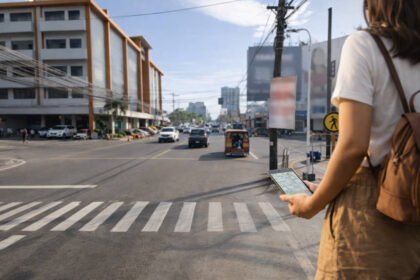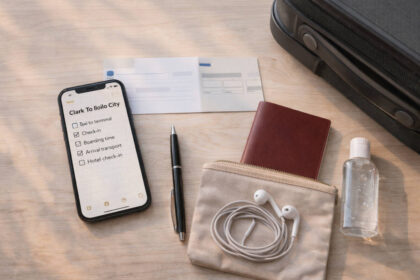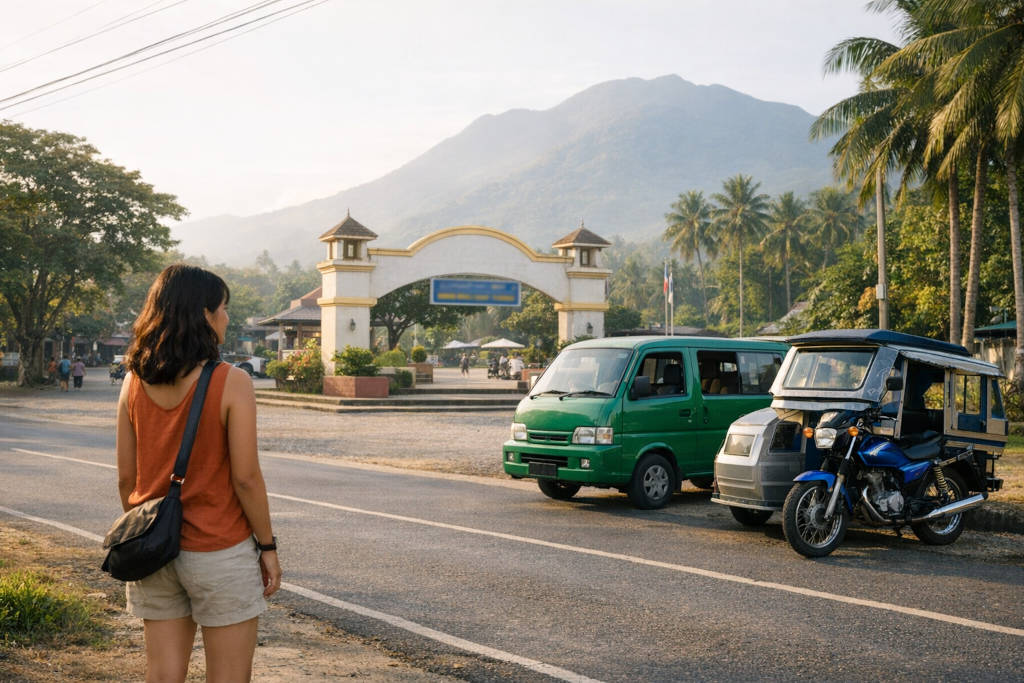
If you’re planning how to get around Camiguin, the best approach is to decide based on your trip type first, then lock in the details (route, total price, waiting time) before you ride. Camiguin is compact, but transport can feel “small-island flexible”: schedules vary, weather changes quickly, and drivers often quote based on distance, time, and how many stops you want.
Quick context (1–2 lines): For a simple overview of the island’s layout and towns, see Camiguin Province Overview.
At-a-Glance
Best time window: Often drier months are easier for two-wheel rides; rainy periods make motorcycles less comfortable and can slow down port crossings. If you’re flexible, plan your most transport-heavy day on your clearest forecast day.
Realistic travel time: Short hops near Mambajao can be 5–15 minutes; point-to-point across towns is often 20–45 minutes depending on hills and road works. A full island loop (with photo stops) can easily take half a day to a full day.
Budget band: Shared rides are usually the lowest cost, while private Tricycle “special trips,” Private Multicab, or Van Rental sits in the comfort-and-control range.
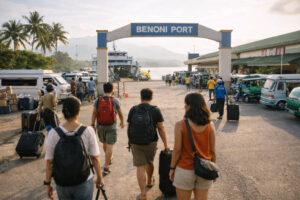
Crowd and demand risk: Demand often spikes around ferry arrivals at Benoni Port, weekends, and festival weeks. That can mean fewer vehicles available right when you need one.
Rain and heat backup: If it rains, switch from two-wheel to Multicab or a car/van, shorten stops, and build a small cash buffer for “extra waiting time” situations.
Reality Check: On small islands, “available now” matters as much as “what’s cheapest.” A calm plan includes a backup option and a little schedule padding.
How to get around Camiguin: Quick Decision Tree: Best Way To Get Around Camiguin By Trip Type
Use this as a planning shortcut. Start with your day’s shape (short hop, point-to-point, touring loop), then pick the ride that matches your comfort level and luggage.
Reality Check: In Camiguin, the “best” ride is often the one that reliably matches your timing and weather, even if it costs a bit more than the budget option.
Short Hops In Town (Mambajao And Nearby)
 Most practical: Tricycle for door-to-door errands, meals, and quick returns to your accommodation.
When it works best: Daytime, light bags, simple routes (one pickup, one drop-off). If you’re doing several quick errands, ask about waiting time and whether the driver can do a short loop.
Calm tip: Say your destination clearly, then ask for the total before you ride. If you’re unsure if it’s per person or per trip, ask directly.
Medium Distance Point-To-Point (One Town To Another)
Most practical: Shared Multicab/jeepney-style rides for budget daytime transfers, or a Tricycle “special trip” for direct travel.
When it works best: If you can travel during common commuting hours and can wait a bit for a ride to fill. For direct point-to-point without waiting, a private ride is simpler.
Calm tip: If you have a fixed appointment time (tour boat meet-up, port schedule, check-in), private transport reduces uncertainty.
Full-Day Loop Or Multi-Stop Day Trip
Easiest for first-timers: Private Multicab or Van Rental with a driver for a set itinerary, especially if you want multiple stops and don’t want to negotiate each leg.
Alternate: Motorbike Rental if you’re confident riding in mixed weather and on curving roads, and you’re traveling light.
Calm tip: For day tours, write your stop list in order. Fewer “surprise detours” means fewer surprise costs.
Traveling With Luggage, Kids, Seniors, Or A Big Group
Most comfortable: Private Multicab or Van Rental for space, shade, and predictable pacing.
Why: Two-wheel options are tiring in heat and risky in rain; tricycles can feel cramped with big suitcases.
Calm tip: Ask where bags will sit (inside vs behind). For any ride, confirm the total price includes waiting and return if that’s the plan.
Late Arrival Or Late-Night Ride Needs
Most reliable: Pre-arranged pickup through your accommodation, especially from Benoni Port or after a late arrival at Mambajao Airport.
Why: Fewer vehicles are available late, and choices narrow quickly (which can affect price and comfort).
Calm tip: If your arrival time is uncertain, book a pickup with a “message me when you dock/land” arrangement and agree on a simple waiting policy.
Transport Options In Camiguin Explained (Pros, Cons, Best Use)
 If you want a broader context for how public and private rides generally work across the country (shared routes, terminals, and common expectations), this can help: Philippines Public Transport Guide For First-Timers.
Reality Check: Transport labels can be flexible. Two vehicles may look similar but operate differently (shared route vs “special trip”), so always confirm how pricing is being counted.
Tricycle (Good For Short, Door-To-Door)
Best for: Short hops, direct drop-offs, quick errands, and rides where you want door-to-door simplicity.
Pros: Easy to find near town centers, flexible routes, usually willing to wait for short tasks if agreed.
Cons: Limited space for large luggage, open-air exposure, and prices vary more on “special trips.”
Planning note: For how to get around Camiguin with minimal friction, tricycles are often the simplest “one ride, one destination” option—just confirm total cost first.
Habal-Habal Or Motorcycle Taxi (Fast, Weather-Dependent)
Best for: Solo travelers with light bags who want speed for short-to-medium distances.
Pros: Quick and can handle narrow roads well.
Cons: Comfort drops sharply in rain and strong sun, and safety depends on helmet quality, road conditions, and rider experience.
Planning note: Choose this only if weather is stable and you’re comfortable on two wheels. If roads are wet, it’s reasonable to switch plans.
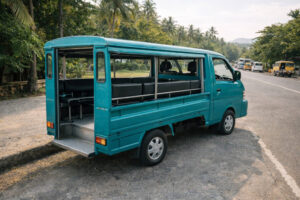
Shared Multicab Or Jeepney-Style Rides (Budget, Limited Hours)
Best for: Daytime budget transfers where timing is flexible.
Pros: Lower cost and “local rhythm” routes between towns.
Cons: Limited late hours, possible waiting time, and less control over exact drop-off points.
Planning note: Ask locals or your accommodation what time shared rides typically thin out in your area. “Last trip” timing often depends on demand.
Private Multicab Or Van With Driver (Best For Groups And Day Tours)
Best for: Families, groups, and anyone doing a multi-stop loop day.
Pros: Shade, space, predictable pacing, easier luggage handling, and less negotiating per leg.
Cons: Higher total cost than shared rides, and prices vary based on itinerary complexity and waiting time.
Planning note: For first-timers mapping out how to get around Camiguin in one full day, this is often the “least mental load” option—especially in rainy season.
Motorbike Or Scooter Rental (Flexibility, Safety Requirements)
Best for: Confident riders who want full freedom and don’t mind planning their own pacing.
Pros: Maximum flexibility and easy photo stops.
Cons: Weather risk, sun exposure, fatigue, and the need to be strict about helmets and safe speeds on curves.
Planning note: If you choose Motorbike Rental, build a conservative plan: earlier start, fewer stops, and a “rain cutoff” rule where you switch to a Multicab or van if conditions turn unsafe.
Typical Costs In Camiguin And How To Avoid Surprises
Because pricing depends on demand, distance, and how “custom” your trip is, treat these as typical ranges—not promises. When planning how to get around Camiguin, the goal is not the lowest number; it’s a clear agreement that matches your route.
Reality Check: The biggest surprise costs usually come from unclear waiting time, extra stops added mid-way, or confusion between per-person vs per-trip pricing.
Typical Ranges (Use As A Starting Point)
Tricycle: Short town trips are often in the lower range; longer point-to-point “special trips” can climb depending on hills, time of day, and waiting. If you’re doing multiple stops, expect the quote to reflect both distance and time.
Shared Multicab/jeepney-style: Usually budget-friendly per person, but limited by route and hours. If you miss the usual window, you may end up taking a private ride instead.
Private Multicab or Van Rental: Often quoted as a total for the vehicle for half-day or full-day use, with the itinerary and waiting time being the biggest price drivers.
Habal-Habal: Often priced per person and distance, but weather and late hours can affect willingness and price.
Important: Entrance fees and boat fees (for island trips or boat-access sites) are typically separate unless clearly stated.
What Changes The Price
Distance and hills: Longer climbs and curving roads take more time and fuel.
Waiting time: “Wait and return” is a different service than point-to-point.
Rain and night hours: Some drivers may quote higher if conditions reduce comfort or availability.
Passengers and luggage: More people and bigger bags can change what vehicle makes sense.
Route complexity: Many stops, detours, and backtracking can increase the quote.
“Special Trip” vs Shared Ride (Plain Meaning)
Shared ride: You’re paying per person (typically), sharing space, and following a route. You may wait for other passengers.
Special trip: You’re paying for the vehicle to take you directly, on your timing, usually as a total for the trip. This is where clarity matters most.
Confirm Before You Go (Mini-Checklist)
Before you commit, take 30 seconds and confirm these in simple language:
- Total price for the whole trip (not per person unless clarified)
- Pick-up and drop-off points (say landmarks, not just barangay names)
- Waiting time: will the driver wait, and will they return you?
- Fuel included or not (especially for long loops)
- Entrance fees and boat fees are separate unless stated
- Night surcharge policy (if any) agreed before leaving
- What happens if you change stops mid-way (how will pricing be adjusted?)
Doing this consistently is one of the simplest ways to keep how to get around Camiguin calm and predictable.
Where To Book And Who To Ask (Low-Stress Booking Flow)
 If you’re building a first-trip checklist beyond transport (cash, SIM, port timing, weather buffers), this is a useful companion: Philippines Travel Planning Guide For First Trip.
Reality Check: The easiest booking flow is often through people who do it daily (front desks and local coordinators). It’s okay to pay a bit more for clarity and reliability, especially on arrival days.
Best Places To Ask First (Hotel Or Homestay Front Desk, Port Area, Town Center)
Accommodation front desk: Usually the lowest-stress option for arranging a day tour or an airport/port pickup, because the driver relationship is clearer.
Benoni Port area: Practical if you’re arriving by ferry. Expect higher demand around docking times, so have your destination written down.
Town center: Good for short hops and quick rides, especially around common waiting areas.
Calm safety habit: Choose meeting points that are bright and easy to describe. For more practical habits that apply even when you’re traveling without your own vehicle, see Getting Around Safely Without A Car (many tips translate well to island travel).
What To Screenshot Or Save Before You Ride
This is a simple routine that reduces misunderstandings. Save what you can, even if it’s just a notes app entry:
- Driver name and contact
- Vehicle plate number (if visible) and a photo of the vehicle
- Agreed route or itinerary list (even a short bullet list)
- Agreed total price and inclusions
- Pick-up time and exact meeting point (landmark + time)
- Payment method and deposit rules (if any)
- A quick note on waiting time and return plan
If you’re coordinating with family or friends, share the screenshot so someone else has the details too.
A Simple Message Template You Can Copy-Paste To Confirm Details
Copy and edit this for your driver or accommodation contact:
Hi! Confirming our transport in Camiguin:
- Date / Pick-up time:
- Pick-up point (landmark):
- Drop-off / stops (in order):
- Waiting time / return included?:
- Total price (for whole trip):
- What’s included (fuel/driver time):
- Notes (rain plan / luggage):
Thank you—please confirm.
This kind of message keeps how to get around Camiguin clear, especially if you change plans mid-trip.
Luggage And Comfort Notes (So You Don’t Regret The Ride)
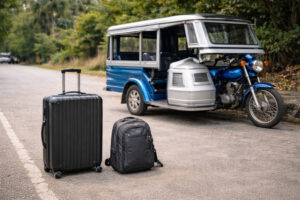 Reality Check: The ride that feels “fine” for a day bag can feel completely different with a big suitcase—especially in heat, rain, or when you’re tired from travel.
Tricycle Space Reality Check (Small Bags vs Big Suitcases)
Tricycles can handle backpacks and small rollers more comfortably than large hard-shell luggage. If you have big suitcases, ask how the bags will fit before you agree, and consider a Multicab or car/van for smoother loading.
For airport and port transfers, it’s reasonable to choose comfort over squeezing in—especially if you’re arriving late or during rain.
Waterproofing Your Bags During Sudden Rain
Rain can come fast. Simple protections help a lot:
- Use a lightweight rain cover or dry bag for valuables
- Put electronics in a waterproof pouch (even a sealed zip bag helps)
- Keep one small towel or cloth in an outer pocket
- If riding open-air, ask where bags will sit so they’re not directly exposed
If the weather looks unstable, shifting your plan for how to get around Camiguin toward covered rides can protect both comfort and gear.
Comfort Options For Longer Rides (Air-Conditioned Van vs Open-Air Multicab)
Air-conditioned van: Helpful if you’re heat-sensitive, traveling with seniors, or doing a long loop day with multiple stops.
Open-air Multicab: Cooler breeze in fair weather, fun for groups, but less comfortable in rain and strong midday sun.
A good rule: if you need to arrive feeling okay (not drenched or overheated), choose the more sheltered option.
If You Get Motion-Sick Or Heat-Sensitive
Plan fewer, longer stops and avoid zig-zag routing. Consider starting earlier, riding in shaded hours, and choosing smoother vehicles for longer distances. Bring water and a light snack so you’re not negotiating rides while feeling off.
Late-Night Safety Notes (Practical, Not Scary)
Reality Check: Late-night transport is mostly about reduced options, not panic. The calm goal is to reduce uncertainty: pre-arrange pickup, confirm meeting points, and choose the most stable ride for your situation.
Safer Habits For Late Arrivals (Pre-Arrange Pick-Up, Share Location, Sit Securely, Helmet Check)
Pre-arrange when you can: If you’re arriving via Benoni Port or Mambajao Airport, ask your accommodation to help set a pickup. Even a simple “driver name + vehicle description + total price” helps.
Share your plan: Send your pickup point and driver details to a friend or travel companion.
Choose a clear meeting point: Prefer well-lit landmarks over “somewhere near the gate.”
Helmet check for two-wheel rides: If the helmet is damaged or missing, it’s okay to switch to a different option.
When To Choose A Car Or Van Over Two-Wheel Options
Choose a car, Multicab, or van if it’s raining, if you have heavy luggage, if you’re traveling with kids/seniors, or if you feel fatigued. For how to get around Camiguin late at night, stability and visibility matter more than speed.
If You’re Solo: Simple Boundaries And “No, Thank You” Lines
Keep your boundaries simple and polite. A few lines that work in most situations:
- “No, thank you. I already have a ride.”
- “Please tell me the total price first.”
- “I’m meeting at the front desk / main gate.”
- “I’ll confirm and message you.”
If anything feels confusing, pause and reset the conversation. You’re allowed to ask again before you ride.
Normal vs Not Normal Checklist (Quick Red Flags Without Panic)
If you want a deeper set of practical safety habits that apply across the country (including what to do when something feels off), this guide can help: Travel Safety In The Philippines Guide.
Reality Check: Most issues come from miscommunication, not malicious intent. This checklist is mainly to help you spot “unclear agreements” early—so you can calmly clarify or walk away.
Normal
- Driver quotes a total before you leave
- Driver confirms whether the price is per person or per trip
- Driver is clear about waiting time and extra stops
- Driver is okay with you taking a screenshot of the agreement
- Driver confirms where you’ll meet and what time
Not Normal
- Refuses to state a price until after arrival
- Adds surprise “port fee” or “tour fee” not mentioned earlier
- Gets angry when you ask for the total or inclusions
- Pressures you to hand over ID or keeps your valuables “for safety”
- Changes the agreed route without your okay
If you hit a “Not Normal” moment, a calm move is to step back to a public area, end the conversation politely, and ask your accommodation or a nearby staff member for help finding a different ride.
Rain, Crowds, And Backup Plans (What Changes Your Transport Plan)
Weather changes both land safety and sea timing. If you’re planning how to get around Camiguin across multiple days, keep one “flex day” mindset: a day where you can swap indoor stops, shorten the loop, or simply rest if conditions turn rough.
Reality Check: Rain does not always cancel plans, but it often changes the safest vehicle choice. Two-wheel rides can go from “fine” to “not worth it” quickly on wet curves.
Rain Plan: Switch Vehicle, Shorten Stops, Start Earlier
Switch to covered rides: If you planned Motorbike Rental, consider shifting to Multicab or Van Rental when roads are wet.
Shorten the loop: Prioritize the stops you care about most, and skip “maybe” stops when visibility and traction are poor.
Start earlier: Earlier rides often avoid heavy afternoon rain patterns (this varies—check your forecast).
Cash buffer: Keep extra cash for “waiting out rain” time or needing a more sheltered ride.
Crowds And Peak Demand: When To Book Earlier
Demand often rises during drier months, weekends, and festival weeks, plus around ferry arrivals at Benoni Port. If your trip dates are busy, arrange day tours and transfers a day earlier instead of negotiating on the spot.
If you want help choosing months with fewer weather disruptions, this is a useful reference: Philippines Weather Travel Guide And Best Months.
If Sites Require Online Booking Or Confirmations
Some destinations may introduce or update e-ticketing or online steps over time. Check official updates close to your trip and keep screenshots of confirmations in case signal is weak on the road. For a reference point on local updates, see: Camiguin E-Ticketing System Update.
A calm habit: save confirmations to your phone’s offline folder and write down your booking name and time in a notes app.
Sample Mini-Plans By Transport Style (So Readers Can Copy A Strategy)
These aren’t “perfect itineraries.” They’re transport strategies you can copy and adjust depending on weather, energy, and who you’re traveling with. If you’re unsure how to get around Camiguin, pick one strategy and keep it consistent for a day—less switching usually means fewer misunderstandings.
Reality Check: The smoothest days usually have fewer vehicle changes. Even budget travelers often choose one “comfort upgrade” day to reduce stress.
Budget Strategy: Mostly Shared Rides + A Few Tricycle Specials
Best for: Flexible travelers who don’t mind waiting.
How it looks: Use shared Multicab/jeepney-style rides for daytime town-to-town movement. Use Tricycle “special trips” only for short hops, late hours, or when you need direct routing.
What to confirm: Last-trip timing for shared rides, and total price for any special trip.
Comfort Strategy: Private Multicab Or Van Day Tour
Best for: First-timers, families, groups, and anyone traveling during rainy periods.
How it looks: Arrange one full-day private vehicle for the multi-stop loop. Keep other days simple with tricycles for meals and short errands.
What to confirm: Stop list, total hours, waiting time, and what happens if you add one extra stop.
Mixed Strategy: One Rental Day + One Hired Day
Best for: Travelers who want flexibility but also want at least one low-stress day.
How it looks: Choose one fair-weather day for Motorbike Rental (short list of stops, early start, strict helmet rule). Choose one day with a hired Multicab/van for longer distances, heavier gear, or uncertain weather.
What to confirm: Your rain cutoff rule and your “return home” plan if conditions change.
FAQs
Reality Check: Local transport answers often depend on timing (day vs night) and weather. When in doubt, ask for the total cost and confirm the route in writing.
What is the easiest way to get around Camiguin for first-timers?
For many first-timers, a private Multicab or Van Rental day tour arranged through an accommodation is the easiest, especially for a multi-stop loop. For short rides near town, tricycles are usually the simplest. If you’re comparing options, “easiest” usually means fewer negotiations and fewer ride changes in one day.
How to get around Camiguin without renting a scooter?
Use tricycles for short hops, shared Multicab rides for daytime budget transfers, and a private Multicab or van with driver for a loop day. The calm approach is to group your stops so you’re not negotiating each leg. On arrival days from Benoni Port or Mambajao Airport, pre-arranged pickups reduce stress the most.
How much is a Tricycle fare in Camiguin?
It often depends on distance, whether it’s a shared ride or a “special trip,” time of day, rain, and waiting time. Instead of relying on a single number, ask for the total price before you ride and confirm if it’s per person or per trip. If you add stops, confirm how the price will adjust before changing the route.
Are there shared Multicab routes in Camiguin and what time do they stop?
Shared Multicab/jeepney-style rides typically run during daytime hours, and “last trip” timing often depends on demand. Your accommodation or nearby locals can usually tell you the typical cut-off in your area. If you’re traveling late, plan on a private ride instead of expecting a shared one.
How do I get from Benoni Port to Mambajao at night?
The simplest option is to pre-arrange a pickup through your accommodation so the driver is expecting you even if docking time shifts. If you’re booking on arrival, choose a well-lit meeting point, confirm the total cost, and keep your route simple. If it’s raining or you have big luggage, a car/van-style option is usually more comfortable than two-wheel rides.
Is Motorbike Rental in Camiguin safe for beginners?
It depends on your riding experience, comfort with curves and wet roads, and whether you can commit to safe speeds and proper helmets. Beginners often feel better choosing a private Multicab/van or tricycle plan, especially in rain or at night. If you do rent, keep the itinerary short, start early, and switch plans if weather turns.
At the end of your planning, the calm version of how to get around Camiguin is simple: choose a transport style that matches your comfort level, confirm the total before you ride, screenshot the agreement, and keep a rain-ready backup option. If you want more planning checklists like this, explore More Tips And Inspiration On Bakasyon.ph.