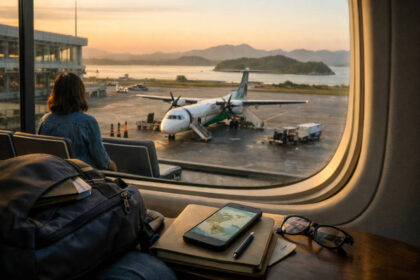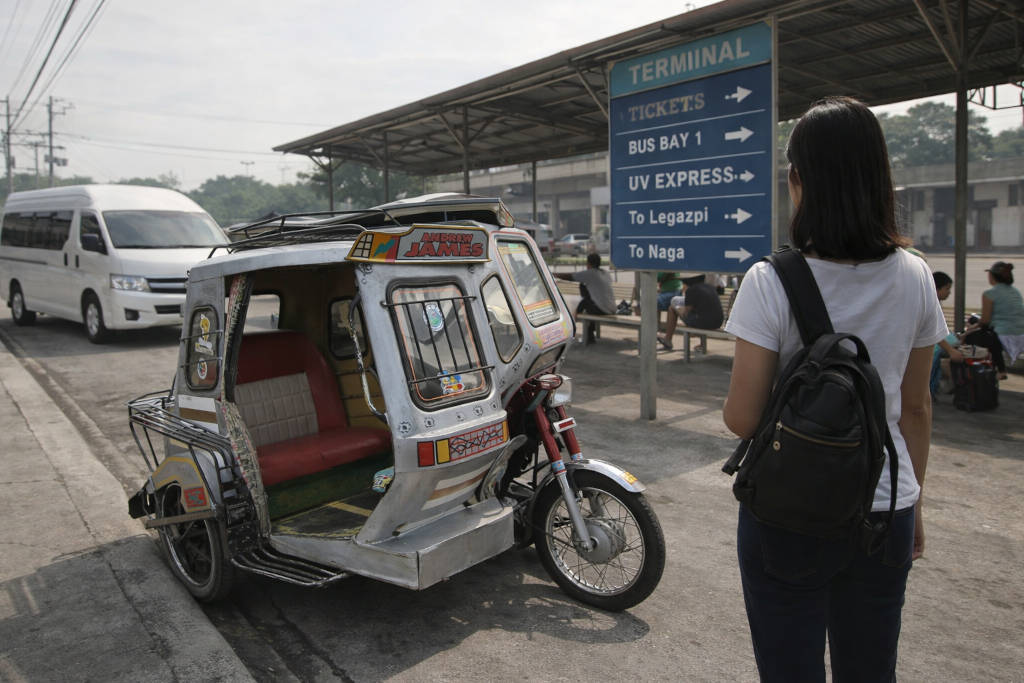
Bicol is a region, not one city—so transport rules, fares, and even “where the terminal is” can change from one municipality to the next. The good news: once the basics are clear (terminals, queues, regular vs special trips, and what’s normal), planning how to get around Bicol becomes much less stressful. This guide keeps things practical, with reliable default options plus backups for late nights, heavy rain, and day-trip juggling.
At-a-Glance: How to Get Around Bicol
- Best time window: Early mornings are smoother for transfers; afternoons can mean heat, traffic, and longer waits. Peak holidays and fiestas can change everything.
- Realistic travel time: Short hops inside a town can be 10–30 minutes; hub-to-hub rides (think Naga–Legazpi–Sorsogon-style) can take a few hours depending on traffic and stops.
- Budget band: Low to mid, but “cheap” can become “pricey” if multiple special trips or late-night rides stack up.
- Crowd and traffic risk: Terminals get busy before work/school hours, weekends, and long weekends; seats can run out on popular routes.
- Rain/heat backup: Keep a buffer, carry a rain cover for bags, and know your backup: bus instead of van, terminal tricycle queue instead of street haggling, app ride where available.
Reality check: Schedules and availability can change by season and time of day. A plan that works at 9:00 AM might not work at 9:00 PM.
Know the “Hubs” Mindset Before Picking a Ride
When planning how to get around Bicol, it helps to think in hubs and spokes. Bigger cities and capital towns tend to have clearer terminals and more frequent departures. Smaller towns may rely on fewer vehicles, earlier cutoffs, or informal waiting points.
Use terminals as your default starting point
For intercity or town-to-town moves, start at official terminals or designated queues when possible. That’s where fare matrices, dispatchers, and “next departure” information are most consistent.
Expect “last mile” rides at both ends
Even if a bus or van gets you close, the final few kilometers often need a tricycle (or a short app ride if available). Build that into time and budget.
Reality check: In some places, vehicles don’t leave “on the hour.” They leave when they’re full, when the dispatcher says go, or when the driver decides it’s worth the trip.
Quick Decision Guide: Best Mode by Distance
If you want a simple decision framework, keep this nearby and treat it as your default for how to get around Bicol. For a broader nationwide framework, the transport decision tree in the Philippines is a helpful companion.
Short hops within town or city (last mile)
Most reliable default: Tricycle from a designated queue or terminal area.
Backup option: App-based ride where available, especially if you have luggage or it’s raining.
Reality check: Street pickups can be uneven—pricing and availability depend heavily on the exact spot, time, and weather.
City-to-town or town-to-town day trips
Most reliable default: UV Express van from a terminal (faster when the route is direct).
Backup option: Bus (often steadier for departures and luggage space, especially on busy routes).
Reality check: Vans commonly wait to fill up. If you’re on a tight schedule, the “faster ride” can still mean a slower start.
Intercity base transfers (Naga–Legazpi–Sorsogon-style hops)
Most reliable default: Bus for longer legs, then tricycle for the last mile.
Backup option: UV Express van if the bus schedule is sparse or you prefer fewer stops (confirm luggage limits first).
Reality check: Travel time can stretch with traffic, roadside stops, and rain. Add buffer if you have check-in times or tours.
Very early/late-night and heavy rain scenarios
Most reliable default: Go to a well-lit terminal or official queue earlier than you think you need.
Backup option: App ride where available, or ask your accommodation for a verified pickup point and realistic timing.
Reality check: Heavy rain can reduce available vehicles and increase waiting time. Late-night bargaining pressure can also rise—stick to clear pricing and safer pickup spots.
Planning Buffers and Backup Options That Actually Work
Transport plans in Bicol work best with small, practical buffers—not complicated spreadsheets. The goal is simple: fewer surprises, easier decisions.
Build a buffer you can “spend” without stress
For short rides, a 15–30 minute buffer helps with queues and sudden rain. For hub-to-hub transfers, consider a 60–90 minute cushion if you have fixed appointments (check-ins, tours, onward trips).
Decide your backup before you need it
Pick a backup mode per day: “If the van isn’t moving in 30–45 minutes, switch to bus,” or “If it’s raining hard, use the terminal tricycle queue instead of street haggling.” For broader planning habits, see the travel planning guide for first trips.
Ask for verified pickup points
Hotel front desks, terminal guards, and dispatcher counters can tell you where vehicles actually line up—so you’re not guessing on a random corner.
Reality check: “Just wait there” advice from strangers can be well-meaning but wrong. Verified queues are boring, but they’re usually safer and clearer.
Tricycles: Last-Mile Workhorse (Regular vs Special)
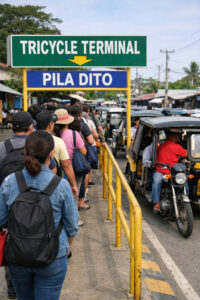 Tricycles solve the last-mile problem in many Bicol towns and cities. They’re convenient, but the key is knowing the difference between regular/shared rides and special trips.
Regular/shared vs “special trip”
Regular/shared usually means you’re paying per person and may share the tricycle with others along a common route. Special trip typically means you’re hiring the whole unit for your route (and you’re paying for the trip, not per passenger—unless the driver states otherwise).
Where to find tricycles with less negotiation
Look for designated tricycle terminals, official queues near markets and transport hubs, and clearly marked loading points. These spots often follow local fare matrices more closely than random street pickups.
When to avoid negotiating on the street
If you have luggage, it’s late, it’s raining, or you’re unfamiliar with the area, prefer official queues. For deeper guidance, the tricycle fare guide (avoid surprise fees) is useful for common scenarios and language to use.
Reality check: Some drivers may quote higher “tourist pricing” if the pickup feels informal. Official queues reduce that friction.
Buses and Jeepneys Basics: Route Rides Without Stress
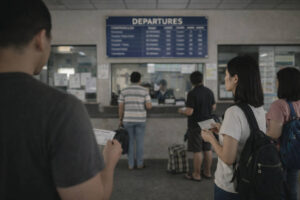 For budget-friendly movement, buses and jeepneys are the backbone. They can feel confusing at first because stops may be landmark-based, and routes can be known more by “where it passes” than by a printed map.
Jeepneys: route-based, landmark drop-offs
Jeepneys generally follow set routes. Instead of exact addresses, think in landmarks: public market, mall, church, barangay hall, school, or terminal. To learn the basics of riding etiquette and payment, the Philippines public transport guide is a solid refresher.
How to ask without overexplaining
Simple questions work best: “Dadaan po ba sa [landmark]?” or “Hanggang saan po ’to?” If you’re unsure, ask the driver or a conductor before you board.
Buses: best for longer intercity rides
For longer legs, buses are often the most reliable default: more luggage space, more standardized ticketing, and clearer terminals. Some operators publish basic schedules and policies online; as a neutral example reference, you can check Bicol Isarog for how operators present routes and contact details. Treat online info as a starting point—confirm at the terminal on travel day.
Reality check: Even with “schedules,” departures can shift with traffic, weather, and demand. Always verify the last trip time.
UV Express Vans: Fast When They Move, Practical for Day Trips
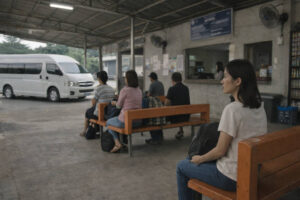 UV Express vans are popular for town-to-town rides and day trips because they can be direct. The trade-off is the fill-up system and tighter space.
Fill-up departures and what “next van” really means
Many vans leave when full. “Next van” might mean “next to fill up,” not “leaving soon.” If you’re pressed for time, set a personal limit (for example, switch modes if there’s no movement after a reasonable wait).
Terminals, dispatchers, and seat assignment
Prefer terminals with dispatchers or counters. You’ll usually get clearer rules: where to queue, where to load, and how payment is handled.
Luggage realities: plan small, pack smart
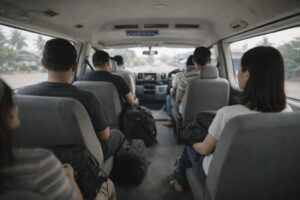 Space can be tight. Smaller bags fit best at your feet or on your lap. Bulky luggage may be placed in the back—confirm how it will be secured and whether it affects pricing.
When to choose a bus instead
If you have large luggage, expect heavy rain, or want a more predictable boarding process, a bus can be the calmer option. For route-fit guidance, see when to use van transfers.
Reality check: Vans can be quick on the road, but the pre-departure waiting time is the variable you must plan around.
App-Based Rides and Motorbike Rides: Use as Fallbacks, Not Assumptions
App rides can be convenient in some areas, but coverage is not guaranteed across the whole region. Motorbike rides can be useful in very specific situations, but they require extra caution.
App-based rides (where available)
Use app rides as a safety and convenience fallback: clearer pricing, traceable trip details, and less negotiation. However, availability can drop during rain, peak hours, or in smaller municipalities.
Motorbike rides (only if it fits the situation)
Motorbike rides may help in traffic or for short solo hops with no luggage, but prioritize safety: a proper helmet, steady driving, and a route that doesn’t require risky speeds. If a helmet isn’t offered, consider it a “no.”
Reality check: If you’re carrying bags, traveling at night, or unfamiliar with roads, motorbike rides are usually not the best default.
Typical Costs and How to Avoid Surprises (With Practical Scripts)
Fares in Bicol vary by city/municipality, time of day, distance, and local ordinances. Instead of relying on a “universal fare table,” focus on how to confirm pricing clearly before you ride.
Expectation ranges (examples only)
Use these as mental ballparks, not promises. Always confirm locally.
- Tricycles: short regular/shared rides can be low-cost, while special trips can jump depending on distance and time.
- Jeepneys: generally budget-friendly for route rides; fares increase with distance and local rules.
- UV Express vans: commonly priced per person per seat; longer routes cost more and can change with fuel and demand.
- Buses: often priced by destination; air-conditioned vs non-air-conditioned can differ, and luggage handling may vary.
Reality check: If someone quotes a price that feels unusually high, don’t argue mid-street. Step back and verify at a counter or official queue.
Agree on price before riding (simple scripts)
Use short, clear questions before you load luggage or sit down:
- “Magkano po, regular or special?”
- “Per person po ba ’yan, o per trip?”
- “May dagdag po ba sa bag?” (Ask before loading.)
- “May sukli po ba kayo?” (So you know if exact fare is needed.)
Small bills and change expectations
Being asked to pay exact fare is common—especially on jeepneys, vans, and busy tricycle queues. Carry small bills in an easy-to-reach pocket so you’re not opening your whole wallet in public.
Fare matrices and LGU ordinances can change
Minimum fares and route pricing can be updated over time through local ordinances and postings. As an example of how cities publish updates, you can refer to Ordinance No. 2024-002 (Naga City). Use it as a reminder that fare rules are official documents and can change—so always confirm current rates at terminals and designated queues.
Luggage, Weather, and Late-Night Safety Notes
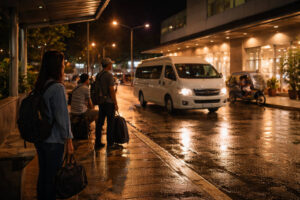 How to get around Bicol smoothly often comes down to two things: how you handle luggage and how you plan for rain and late hours.
What fits comfortably (and what doesn’t)
Tricycles are best for backpacks and small carry-ons. UV vans can handle moderate luggage but feel tight quickly. Buses are usually the easiest for large bags—especially if you’re moving bases.
Protecting bags from rain and road dust
Bring a rain cover, a large plastic bag, or a lightweight pack cover. Road spray and dust can hit bags placed near openings, especially in tricycles and vans.
If the driver wants bags on the roof or outside seating
Before the bag goes up, ask how it will be tied down and whether there’s an extra fee. If you’re not comfortable with the setup, it’s okay to decline and choose another ride—especially in rain.
Late-night planning: safer defaults
Prefer well-lit terminals, official queues, and staffed waiting areas. If app rides are available, they can be a helpful fallback. Avoid isolated pickup points, and share trip details (pickup, route, plate number if visible) with a trusted contact. For broader reminders, the travel safety guide for the Philippines is worth reviewing.
Reality check: Availability drops late at night, and pressure tactics can increase. The calmer you stay, the easier it is to step away and reset at an official queue.
Booking Tips: Where to Ask, What to Screenshot, What to Keep
This section is the “reduce surprises” toolkit—small habits that make transport days smoother.
Where to ask (reliable info points)
- Official terminal counters: best for schedules, destination bays, and ticket rules.
- Dispatchers: helpful for van fill-up timing and seat assignment.
- Guard info desks: good for verified queues and safer pickup spots.
- Hotel front desks: useful for confirmed landmarks and realistic travel times for early departures.
What to screenshot or note
- Agreed fare (and whether it’s per person or special trip).
- Pickup point landmark and drop-off landmark (simple and specific).
- Plate number and any visible body number.
- Driver name if available (or dispatcher stall name).
- For app rides: booking details screen and driver profile.
- For buses: ticket plus a clear photo of the baggage tag if one is issued.
Keep phones dry and charged, especially in rainy months—pack a small power bank and a basic waterproof pouch.
Reality check: Screenshots don’t prevent problems, but they make it easier to clarify misunderstandings quickly.
Normal vs Not Normal: A Simple Checklist for Getting Around Bicol
Use this as a calm filter in terminals and on the street. It’s not about being paranoid—it’s about staying clear and consistent when planning how to get around Bicol.
Normal (usually okay)
- Being asked to wait for a van to fill up.
- Being asked to pay exact fare.
- Being directed to a designated terminal, bay, or queue.
- Landmark-based drop-offs (“sa palengke,” “sa simbahan,” “sa terminal”).
Not normal (red flags) and what to do
- Price changes after luggage is loaded. Calm response: ask to unload the bag first, then re-confirm the price. If it shifts again, step back and return to the terminal counter or official queue.
- Refusal to say whether the price is per person or per trip. Calm response: don’t board. Ask again once (“Per person po ba o per trip?”). If there’s still no clear answer, choose another vehicle.
- Being pushed away from the terminal queue to a “private” ride without clear pricing. Calm response: decline politely and stay in the official line. If you need help, ask a guard or dispatcher where the correct queue is.
- Aggressive urgency tactics (“last trip,” “now or never”) without proof. Calm response: ask what time the next scheduled departure is at the counter. If they can’t verify, don’t rush—choose a verified option.
- No clear drop-off agreement. Calm response: state your drop-off landmark clearly before boarding. If the driver won’t confirm, find another ride that will.
With the right defaults—official queues, clear fare questions, and a backup mode—you can keep transport days steady even when weather and schedules change. That’s the real goal of learning how to get around Bicol: less guessing, fewer surprises, and more energy left for the places you came to see.