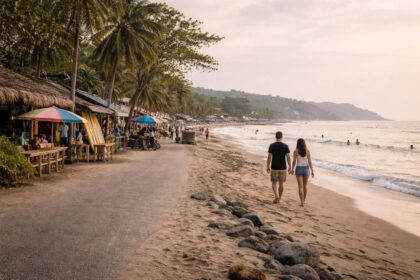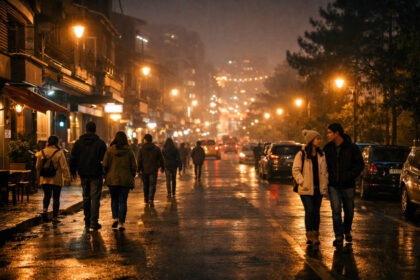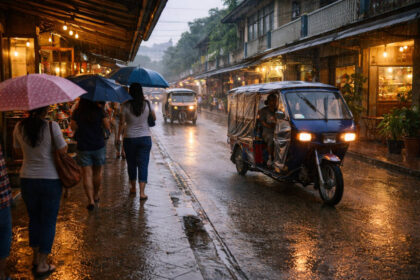
What Glamping Near Manila Really Feels Like
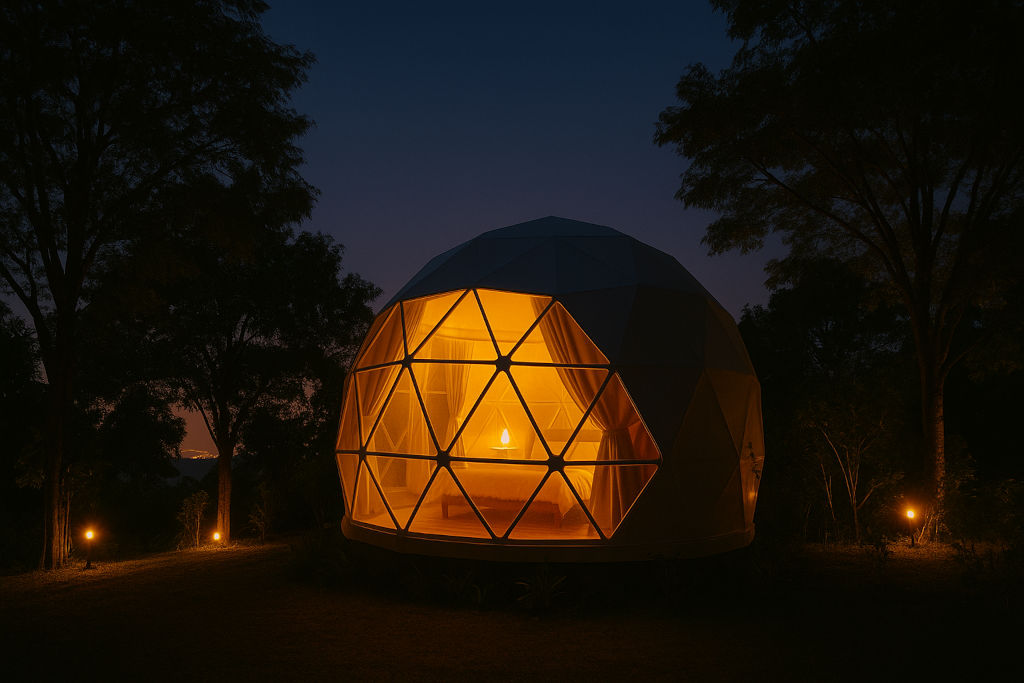
Imagine this: Friday night, you’re inching out of EDSA traffic with a cooler in the back and a half-zipped duffel full of jackets and tsinelas. By the time you climb into the highlands, the air shifts—cooler, thinner, smelling faintly of pine, wet grass, or cow pasture. Ahead, you see little pockets of warm light on a hillside: domes glowing from the inside, A-frame cabins with fairy lights, kubo-style (native hut) lounges where people sip barako coffee and talk softly over the sound of crickets.
You park, stretch, and unzip the door to your dome or tent: proper bed, clean linens, maybe a small AC or electric fan humming, maybe a tiny hot tub waiting outside. This is the promise of glamping near Manila—camping’s closeness to nature, but with hotel-ish comforts so you’re not wrestling with tent poles at midnight. It’s become the go-to search for people who want nature, but also a comfy mattress and a decent CR.
In the Philippine context, “glamping” ranges widely. Some glamping sites near Manila feel almost like boutique resorts with domes and private plunge pools. Others feel closer to camping: bell tents by the river, shared bathrooms, and stars so bright they make up for the occasional cold shower. If you’re a first-timer, it helps to skim some beginner camping tips in the Philippines so you know what you’re signing up for, even when the marketing uses words like “luxury” and “Instagrammable.”
Seasons, Weather, and When to Go Glamping Near Manila
Because most glamping resorts near Manila sit in the highlands or by rivers, timing your trip can make the difference between “cozy and romantic” and “why is it this hot / muddy?”
Cool-dry months: December to February
These are the golden months for cool weather near Manila. In Tagaytay and Cavite highlands, you might wake up needing a jacket, breath fogging slightly in the early morning. In the Rizal mountains or Laguna uplands, fog rolls over ridges, and you might hear rain from the night before dripping from leaves while you sip coffee outside your tent.
Nights feel like real cuddle-weather. Inside domes, portable heaters are rare, but blankets plus the natural chill are usually enough. If you hate Manila humidity, this is peak glamping season.
Hot-dry months: March to May
Tag-init (hot season) is beautiful but intense. In Tagaytay glamping spots, higher elevation softens the hit a little; evenings are still comfortable. In Rizal or Batangas glamping domes, though, afternoons can get mainit to the point where you’ll want a pool, strong fan, or full-on AC.
Expect long sweaty naps, late-afternoon swims, and evenings that finally turn breezy. If your chosen dome glamping near Manila doesn’t have AC, aim your day around shade, river dips, and sundown hangouts instead of high-noon activities.
Rainy season: June to October
Tag-ulan (rainy season) brings its own mood. On a quiet night in Tanay, rain on a tent or dome sounds like someone playing drums on canvas. Rivers swell, trails get muddy, and fog can erase the view in a single sweep. There’s something very cozy about being inside a warm, softly lit dome while the world outside is wet and dark.
The trade-off: slipperier paths, potential leaks in less-maintained tents, and plans that must be flexible. Road conditions can be affected in mountain areas, and some riverside camps feel risky when heavy rains are forecast. Glamping in tag-ulan is best for those who are okay with a bit of mud, extra clothes drying on makeshift lines, and long board game nights when it pours.
Tagaytay and Cavite Highlands – Cool-Weather Glamping for Views and Wellness
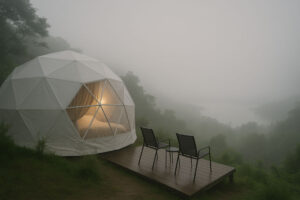 Tagaytay and nearby Cavite highlands are the classic “easy highland escape” from Manila. Officially, Tagaytay is recognized for its cooler climate and tourism vibe—you can even see it in local government promos like those on Tagaytay’s city site. The glamping scene here leans toward comfort over ruggedness.
What Tagaytay glamping feels like
Picture hillside domes with big glass fronts facing Taal Lake or gardens, small firepits or outdoor seating, and access to a café or restaurant on the same property. Many Tagaytay glamping or nearby Cavite stays weave wellness into the experience: massage services, in-room tubs, yoga decks, or farm-to-table breakfasts.
You might wake up to fog hiding the lake, sip kapeng barako on a balcony, and then walk to a nearby café or spa. It’s less about roughing it and more about pretending you moved to a cool-weather town for the weekend.
Who Tagaytay and Cavite glamping suits
This area is perfect for couples who want privacy and views—think domes or villas with private jacuzzis, mood lighting, and short drives to date spots or restos. Families also like it because Tagaytay has parks, playgrounds, and a familiar city feel, with supermarkets and big-box stores a short drive away if you forget something.
If you’re the type who wants nature but also spa treatments, brunch cafes, and well-paved roads, this part of glamping near Manila fits you. It’s less “wild nature” and more “highland mini-honeymoon.” For side-trip ideas, you can also pair your stay with a Tagaytay travel guide so you’re not just staying in your dome all day (unless you want to).
Travel time and traffic reality
On a good early Saturday morning, Manila to Tagaytay or Silang can take about two hours by car. On a Friday night or holiday weekend, that can stretch to three to four hours or more, especially if you hit Cavite or Sta. Rosa traffic. Glamping sites closer to the main Tagaytay ridge feel convenient but also more prone to noise and crowds on peak days; deeper Cavite highlands—like in Silang or Amadeo—often feel quieter but slightly farther.
For 2D1N, Tagaytay is still realistic: leave Manila early, arrive before lunch, and leave Sunday morning before the usual traffic wave starts heading back to the city.
Rizal Glamping – Tanay Rivers, Sierra Madre Views, and Mountain Air
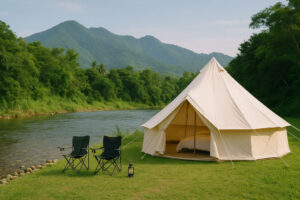 Rizal glamping, especially in Tanay and nearby Sierra Madre ridges, feels closer to “camping with upgrades” than to full resort life. It’s also one of the most accessible places for mountain views and rivers without going too deep into Northern Luzon—and the province highlights this vibe on its own tourism pages like Rizal tourism.
Riverside bell tents and ridge-top domes
In Tanay glamping sites you’ll often see bell tents pitched near a river, with hammocks strung between trees, or domes on ridgelines facing Sierra Madre sunrise views. Facilities range from “almost hotel-like” to “basic but clean”: shared CRs, semi-private bathroom clusters, outdoor sinks, and designated cooking or grilling areas.
Daytime means swimming in cold river pools, hiking short trails, or just tambay (hanging out) under trees while someone cooks silog or ihaw-ihaw on a grill. At night, when skies are clear, you can see stars that never show up in Manila’s glow.
Who Rizal glamping is best for
Rizal mountain glamping is great for barkada who don’t mind a bit of dirt and shared bathrooms, couples who prefer nature and privacy over luxe amenities, and families with slightly older kids who can handle uneven ground and riverside terrain. If you’re traveling with toddlers or anyone who struggles with steep paths, check accessibility carefully.
The vibe here is more chill, more “camp-feel,” and less polished than Tagaytay. For more nature-forward planning, you can match your glamping ideas with Rizal mountain getaways that highlight quiet roads, waterfalls, and viewpoints.
Weather, mud, and mountain road conditions
In tag-ulan, trails and campsite paths can get muddy fast, and rivers may swell; some camps even close temporarily if there’s a high risk of flash floods. Fog can also roll in quickly in the mountains, turning your ridge views into pure white. In tag-init, expect strong sun and dust on unpaved roads, but cooler evenings than Manila.
Many Tanay and Rizal glamping sites sit along steep, sometimes rough access roads. A car with decent clearance and a confident driver helps. Some camps require hiring a local 4×4 or habal-habal (motorbike) from the highway—adventurous, but worth planning for in advance.
Batangas Glamping – Domes, Pools, and Nature Resorts
Batangas glamping tends to attract those who want nature, but with more resort-style service: landscaped gardens, private pools, on-site restaurants, and sometimes views of Taal volcano or Batangas countryside. The province is widely known as a resort and beach hub—something you’ll see reflected in sites like Batangas Magiting—and glamping here leans into that comfort-plus-nature mix.
Domes with pools and barako mornings
Picture geodesic domes or cabin-style tents set on hillsides, each with its own mini plunge pool, jacuzzi, or shared resort pool. Inside: real beds, fluffy pillows, AC or strong fans, maybe a mini-fridge or simple pantry area. Outside: lounge chairs, hammocks, and landscaped pathways that lead to common areas.
In the morning, you step out barefoot onto warm deck boards, smell brewed barako coffee and toasted bread, and hear birds instead of honking. At night, you might soak in a small pool while crickets chirp and your barkada talks about everything and nothing under the stars.
Who Batangas glamping suits
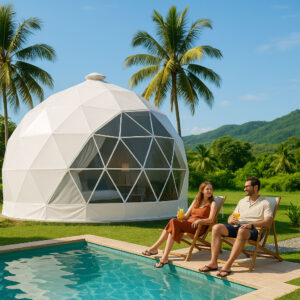 Batangas glamping is perfect for couples who want privacy, views, and pools with minimal “roughing it.” It’s also popular with families who like the idea of kids running around a safe resort, hopping from pool to bed to grill area without needing to hike or cross rivers.
For groups of friends, Batangas glamping works well when you book bigger domes or clusters of tents/cabins and split the cost. Just check house rules: some spots welcome barkada tambay nights; others strictly enforce quiet hours.
Heat, AC, and drive times
Batangas sits lower than Tagaytay, so it’s generally warmer—especially from March to May. In domes without AC, afternoons can feel like being in a greenhouse, so look for stays with good ventilation, shaded decks, or access to water. In cooler months, though, you get the sweet spot of pleasant nights and warm-but-not-brutal days.
Drive-wise, Batangas glamping often means going via SLEX and STAR Tollway or via the Tagaytay–Nasugbu road. On good days, you can reach many Batangas nature resorts in about two to three hours from Manila; on long weekends, that can easily become four or more. Consider leaving very early or late at night to dodge peak traffic.
Nearby Highlands and Lakeside Glamping – Laguna and Around
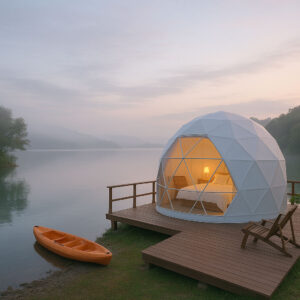 Lakeside and highland Laguna glamping gives you a different texture: water views, misty mornings, and easier access from the city. Spots like lakeside domes or cabins near upland towns mix the feeling of a lake house with a glamping setup.
Lakeside mornings and kayaks
Imagine unzipping your tent to a still lake, the water flat like glass with a few fishermen already out in small boats. It’s quiet—just distant roosters and the clink of paddles. Some Laguna glamping sites offer kayaks, paddle boards, or small swim platforms so you can start your day on the water before the sun gets harsh.
Afternoons can be humid, but breezy when clouds roll in. In tag-ulan, sudden downpours sweep across the lake and pass quickly, leaving everything smelling fresh and slightly cooler.
Laguna weather and access
Compared to Tagaytay, Laguna temperatures tend to be a bit warmer, but still cooler than inner Metro Manila if you’re in upland or lakeside areas with good wind. Tag-ulan brings more consistent rain and the occasional strong habagat downpour, so waterproof shoes or sandals and quick-dry clothes are your best friends.
Drive time from Manila can be surprisingly manageable—often around two to three hours if you time it well. Lakeside Laguna glamping is a good choice if you want nature but need a shorter drive, or if you’re testing if glamping near Manila is your thing before committing to a farther trip.
Matching Glamping Stays to Travelers – Couples, Families, and Barkada
Best glamping near Manila for couples
If you’re traveling as a couple and want romance, prioritize privacy, quiet, and good views. Tagaytay and Cavite highlands are great for cooler air, spa options, and cute cafés a short drive away. Batangas glamping sites with private pools or hillside decks also work well when you want to just stay in your little bubble all weekend.
Look for domes or cabins spaced apart, clear quiet hours, and inclusions like in-room breakfast, hot tubs, or firepits. If you love cuddling in cold weather, schedule around December to February or the cooler shoulder months.
Family-friendly glamping resorts near Manila
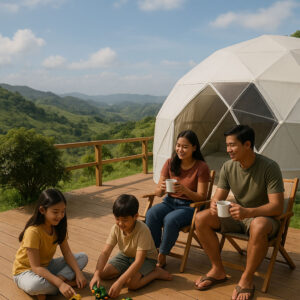 For families, especially with younger kids, think: safe grounds, easy access to food, and not-too-steep terrain. Tagaytay glamping sites with lawns, small playgrounds, or nearby parks are ideal. Batangas glamping with big pools and shallow areas can keep kids entertained all day.
Check photos of paths and staircases; some pretty hillside domes require climbing. Rivers and steep drops can be gorgeous but nerve-wracking with little ones, so always ask how child-friendly the layout really is.
Barkada-friendly glamping sites near Manila
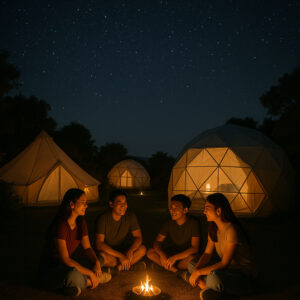 For barkada trips, you want enough space to hang out, cook, and talk late—plus rules that don’t clamp down on every laugh after 10 p.m. Rizal and Tanay glamping spots, with their riverside sites and common bonfire areas, often feel more barkada-oriented. Some Batangas nature resorts also have big domes or multi-tent setups meant for groups.
Look for glamping sites near Manila with shared pavilions, grilling areas, and clear but reasonable noise policies. Remember that you’re sharing the space with other guests; keeping speakers at a respectful volume and wrapping up loud karaoke before midnight goes a long way.
Getting There, Travel Time, and When a Weekend Trip Really Works
Tagaytay and Cavite: quick but traffic-sensitive
From many points in Metro Manila, Tagaytay and nearby Cavite can be about two hours away if you leave very early or on a light-traffic weekday. On Friday nights, long weekends, or December holidays, “two hours” becomes a fantasy—you could be looking at three to four hours or more.
For a 2 days/1 night stay, aim to leave Manila early Saturday morning and drive back late Sunday morning or mid-afternoon (not evening) to avoid the worst congestion.
Rizal and Tanay: mountain roads but closer than you think
Rizal glamping areas like Tanay can be as close as 1.5 to 3 hours from Metro Manila, depending on traffic and the exact site. The first half of the drive is usually highway or main road; the last stretch can be narrow, winding, or partially rough.
For a quick reset, Tanay works even for just a single night, but if the glamping site is extra remote or has activities like hikes and river treks, 3 days/2 nights gives you breathing space.
Batangas and Laguna: longer highways, similar weekend patterns
Batangas and Laguna glamping spots typically sit 2 to 3.5 hours from Manila, depending on your route and the ever-changing moods of SLEX and STAR. Leaving Friday night or very early Saturday helps; heading home Sunday evening almost guarantees traffic.
For truly laid-back mornings—slow silog breakfasts, no rushed packing—3 days/2 nights is ideal. If you only have 2D1N, pick spots that don’t require extra off-road driving or boat transfers so you don’t spend half your weekend in transit.
Costs and What to Expect for Your Budget
Nightly rates and comfort levels
Glamping near Manila tends to cost more than basic camping but less than high-end hotels. Expect to pay more for private domes with pools or nice views, less for simple tents with shared CRs. Couples paying for a single dome or cabin naturally shoulder a higher per-person rate; families and barkada can sometimes book bigger units and split costs more efficiently.
Tagaytay and Batangas glamping often lean mid-range to splurge-level. Rizal riverside camps and some Laguna lakeside sites can be more budget-friendly, especially if you bring your own food and skip add-ons.
Extras: food, corkage, and activities
Food costs vary wildly. Some glamping resorts near Manila include breakfast or offer set meals; others encourage you to bring baon and use shared grills. Corkage may apply if you bring alcohol or canned drinks, so read the fine print.
Activities like kayak rentals, bonfire setups, ATV rides, or spa treatments are often add-ons. Pets might be allowed with extra fees and rules. It’s worth messaging the site in advance about total expected costs so you’re not surprised at checkout.
Transport: car vs commute
By car, budget for tolls plus fuel: quick weekend trips can add up, especially if you’re hitting multiple expressways. Split among four people, it’s often still economical. By commute, some glamping sites offer shuttle or pickup from the nearest town or mall, while others require private transfers or habal-habal rides from the highway.
Overall, a simple 2D1N glamping weekend might range from modest to splurge depending on where you go and how you eat. If you love this style of travel, you can also browse more camping and glamping stories to pick destinations that match your budget before you book.
Packing and Comfort Tips for Glamping Near Manila
Clothes and layers for highlands vs lowlands
For highland glamping in Tagaytay, Cavite, and Rizal, pack layers: a light jacket or hoodie, leggings or joggers, and socks for cool nights, plus shorts and light tops for warm afternoons. For Batangas and lowland Laguna, lean into breezy clothes and pack just one or two warm pieces for windier evenings.
Footwear, toiletries, and small comforts
Bring slippers or sandals for wet grass and quick runs to the CR, plus closed shoes if you’ll be hiking or walking on rocky riverbanks. Many glamping sites provide towels and basic toiletries, but they’re not guaranteed—pack a small towel, soap, toothbrush, and any skincare you can’t live without.
Earplugs and an eye mask help when neighboring tents stay up later than you do. A power bank, extension cord, and small fan can also make life easier in fan-only or limited-outlet setups.
What glamping sites usually provide vs what you should bring
Most sites for glamping near Manila provide beds, linens, basic lighting, and at least one fan or AC unit, depending on the dome. Some include kettles, coffee, and drinking water; others simply give you the structure and bed and let you handle the rest.
Ask ahead about: towels, toiletries, cooking equipment, corkage rules, and whether you should bring your own blankets in cooler months. If you’re new to this, pairing your prep with beginner camping tips in the Philippines makes sure you don’t show up with a suitcase full of cute outfits but no flashlight.
For broader trip-planning mindset and packing ideas beyond just glamping, you can also dive into more tips and inspiration for traveling around the Philippines or explore more Luzon destinations to combine glamping with side trips.
Glamping Near Manila FAQs
Is glamping near Manila closer to camping or closer to a hotel?
It depends on where you go. Tagaytay, Cavite, and some Batangas glamping sites feel closer to boutique hotels with tent or dome aesthetics—think comfy beds, private bathrooms, sometimes even room service. Many Rizal and riverside camps feel more like upgraded camping: great views and nice beds, but basic CRs, shared facilities, and stronger “outdoor” vibes. Expect a hybrid, not a full five-star hotel or a totally DIY campsite.
Which areas are best for cool-weather glamping and when?
Tagaytay and Cavite highlands, plus Rizal’s Sierra Madre slopes, are your best bets for cooler air, especially from December to February. Even March evenings can feel pleasant up there. Batangas and Laguna warm up more in tag-init, but still get decent breezes and milder nights compared to downtown Manila.
Which glamping areas are best for couples vs families vs barkada?
For couples, Tagaytay and Batangas glamping with private domes, pools, and quiet surroundings work beautifully. Families often enjoy Tagaytay and Batangas nature resorts with pools, lawns, and easier access to food and supermarkets. Barkada usually thrives in Rizal glamping and some Batangas sites that welcome groups and have shared hangout areas—but always check rules on noise and alcohol first.
What months are generally best for glamping in Tagaytay, Rizal, Batangas, and nearby highlands?
December to February give you cool, cozy nights almost everywhere, with less rain overall—ideal for hot tubs, bonfires where allowed, and foggy mornings. March to May are great for pools and rivers but can be very hot in lowlands. June to October can still be beautiful but wetter; perfect if you like the sound of rain on canvas and don’t mind muddy slippers.
Do you need a car, or can you commute to some glamping sites?
A car makes life easier, especially for more remote Rizal and Batangas glamping sites that require navigating mountain or farm roads. That said, some sites glamping near Manila are commute-friendly: you can take a bus or van to a nearby town, then a tricycle or pre-arranged shuttle to the property. Always confirm directions and last-mile options before you book, especially if you’ll be arriving after dark.
What should you expect during rainy-season glamping near Manila?
Expect more mud, slicker paths, and on-and-off showers rather than constant storms. River-based glamping might be riskier or closed during very heavy rain. Inside domes and tents, you’ll feel extra cozy when the rain hits, but you’ll also need to manage drying wet clothes and keeping shoes from staying soggy. A flexible attitude, a spare change of clothes, and a hot drink can turn a rainy glamping weekend into a very memorable stay instead of a failed summer outing.
Done right, glamping near Manila is less about creating a perfect Pinterest moment and more about giving yourself a small pause from the city: cool air in your lungs, the sound of leaves instead of honking, and that delicious feeling of waking up somewhere green—with just enough comfort that you still look forward to the next time you pack the car.