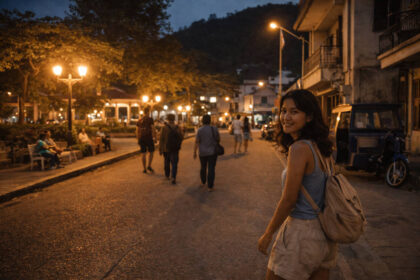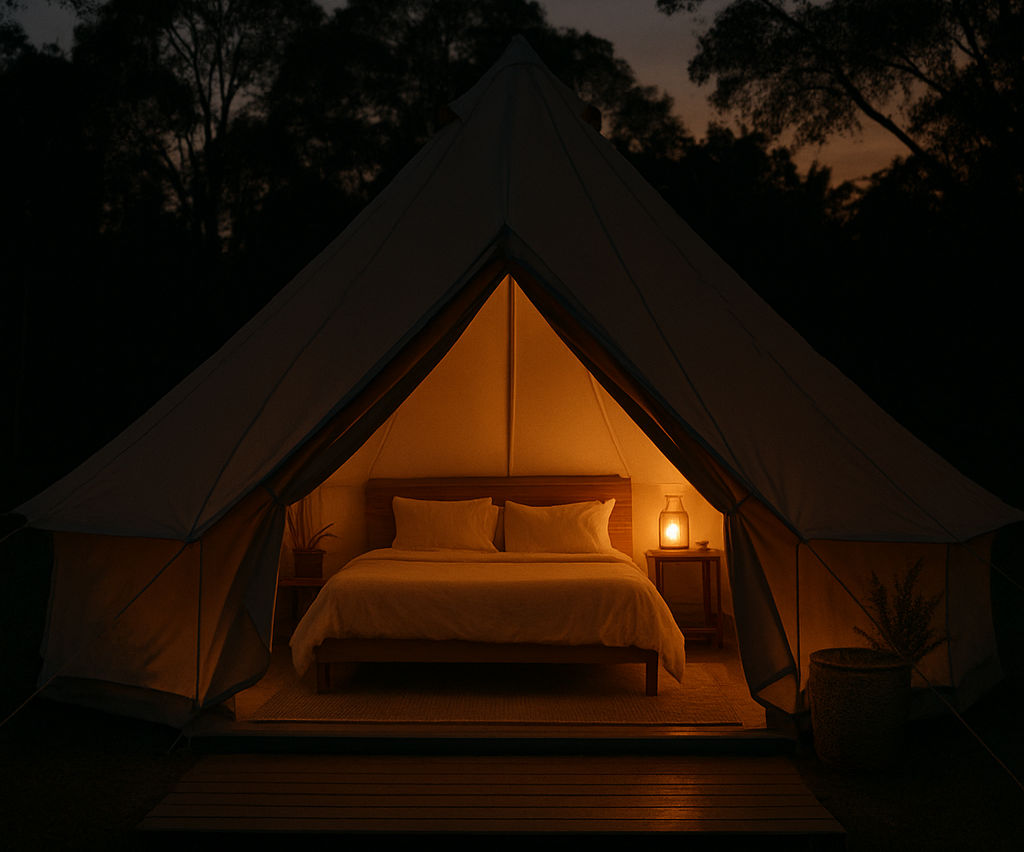
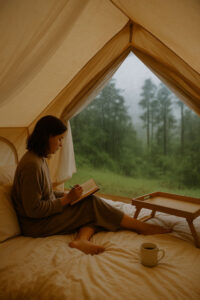
The first thing you notice is the sound. Rain on canvas, like fingers drumming on a tin roof. Somewhere in the dark, frogs croak, a distant rooster is confused about the time, and the sea is a low, steady hush. You’re lying on a real mattress, under a white kulambo, with a small electric fan humming in the corner and warm fairy lights tracing the curve of the tent. You’re close enough to smell wet earth and the salt on the breeze—but far from the cold, hard floor of a traditional camping setup. This is glamping in the Philippines on a rainy night, and it’s both softer and wilder than you expected.
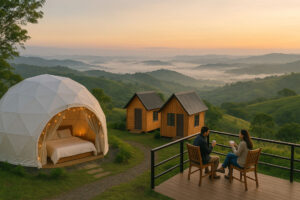 Around the world, “glamping” (short for “glamorous camping”) usually means sleeping in a tent, dome, or cabin with hotel-like comforts. Global definitions—like the description in the Wikipedia article on glamping—focus on the idea of nature plus a real bed, sometimes with aircon, private bathrooms, and even butler service. In our tropical islands, though, the concept has its own flavor: bamboo kubo-style cabins, fan-cooled safari tents, beachfront domes, and homestay-run eco camps where your host might be grilling liempo while you watch the sunset.
Here, glamping sits on a wide spectrum. On one end, you have simple nature stays in the Philippines with basic fan-cooled tents, shared CR, and a walk to the beach. On the other, you’ll find high-end eco lodges in the Philippines with hot showers, curated meals, and guided activities. Most of us fall somewhere in the middle: looking for comfort without losing the magic of mountains, waves, forests, and the quiet that doesn’t always exist in the city. For many travelers, glamping in the Philippines is a way to test the waters of outdoor life without jumping straight into hardcore camping.
What Glamping in the Philippines Really Means
So what does glamping in the Philippines actually look like in real life?
Think of it as a middle ground between pitching your own tent and checking into a hotel. Instead of wrestling with tent poles in the dark, you arrive to find your space already set up: mattress, pillows, bedsheets, maybe a small table with a lamp, sometimes even a coffee press waiting on a tray. You still hear the crickets, feel the humidity, and maybe share your space with a friendly gekko, but you don’t have to pack your whole bahay just to sleep comfortably.
Compared to traditional camping, glamping in the Philippines usually means:
- A real bed or thick mattress instead of a thin sleeping pad.
- A sturdier tent, geodesic dome, cabin, tiny house, or treehouse instead of your own tent.
- Access to toilets and showers—sometimes shared, sometimes private.
- Electricity for lights and charging, and often Wi-Fi (though signal can be moody in the probinsya).
- Optional add-ons like set breakfast, dinner, or bonfire setups.
There’s no single glamping meaning, especially here. Some glamping sites in the Philippines are rustic: you’ll get a fan, mosquito net, and basic bathrooms. Others feel like small boutique hotels, just built closer to nature. In all cases, you trade some of the “I survived this” camping drama for a gentler, more accessible way to experience the outdoors—especially if you’re new to camping, traveling with kids, or simply tired from Metro Manila life.
Types of Glamping and Nature Stays You’ll Find Here
From beach tents to mountain cabins, glamping in the Philippines comes in many forms. Here are some of the styles you’re likely to find—and who they’re best for.
Tents and Domes Under the Tropical Sky
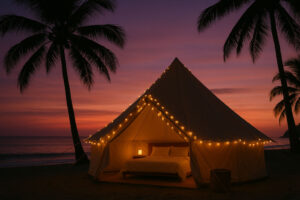
Picture a large canvas bell tent or white geodesic dome, pitched under coconut trees or beside a river. Inside: a low bed, woven rugs, battery-powered lanterns, maybe a small fan or standing lamp. When it rains, the sound is immersive; when the sky is clear, you unzip the flap and see stars framed by palm fronds.
This kind of glamping Philippines travelers love is for those who want the full “camping but cute” vibe. Expect to hear your neighbors laugh through thin walls, smell someone’s bonfire drifting through, and walk a few meters to the shared CR. It’s romantic and photogenic, but remember: you’re still basically in a tent, just upgraded.
Cabins and Tiny Houses in the Hills
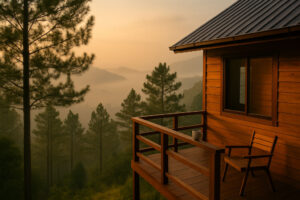 Cabins and tiny houses are a good compromise if you like the idea of nature but don’t love canvas walls. A mountain cabin stay might mean a small wooden house with big windows facing pine trees or rice terraces, a balcony for coffee, and proper doors you can lock.
These nature stays in the Philippines work well for families or barkadas who want privacy and a more solid structure during intense rain, wind, or typhoons. In cooler places like Tagaytay, Baguio, or the Cordillera, you might even need a jacket at night—rare for a country where we’re used to asking, “May aircon ba?” For cooler-weather glamping in the Philippines, these cabins are often the most comfortable choice.
Treehouses and Hilltop Kubo Huts
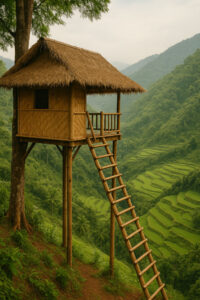 Treehouse stays Philippines style are often inspired by the classic kubo—bamboo walls, nipa roof, sometimes perched on stilts overlooking a valley or river. You climb up a wooden ladder or staircase and sleep close to the wind, with views that change from morning mist to golden-hour glow.
Hilltop huts are perfect if you’re okay with a little bit of sacrifice (steep steps, shared bathrooms down below) in exchange for views and silence. It’s glamorous camping, yes, but roosters, tricycles, and karaoke from the nearby barangay might still drift up in the distance. That’s part of the charm of glamping in the Philippines: you’re never fully sealed off from local life.
Homestay-Run Eco Camps
 Some of the most meaningful glamping sites in the Philippines are small, family-run spaces. A local family might set up a few tents or simple cabins in their farm or beside their house, cook you breakfast with eggs from their chickens, and show you their garden or fishpond.
These homestay-run eco camps are great if you like community energy: kids playing nearby, tita-style chitchat in the background, someone walking to the sari-sari store. It’s less polished, more probinsya, and often more affordable. It’s also a beautiful way to support local livelihoods directly while enjoying glamping in the Philippines in a more grounded way.
Higher-End Eco-Resorts and Lodges
On the higher end, you’ll find eco resorts in the Philippines that offer villas or luxury tents with private decks, hot-and-cold showers, curated meals, and activities like guided hikes or island-hopping. These nature resort Philippines stays can feel like small sanctuaries: hammocks, plunge pools, board games, library corners, maybe even yoga decks.
They’re ideal for special occasions—anniversaries, mini-moons, or big birthdays—if you’re okay spending more in exchange for comfort and thoughtful design. If you want your first experience of glamping in the Philippines to feel extra special, this tier is where you’ll likely look.
Where to Go Glamping in the Philippines: Beaches, Mountains, and Cool-Weather Escapes
Once you know which style of glamping you like, the next question is where to go. The good news: from beach coves to riverside jungles, the options for glamping in the Philippines are growing every year.
Glamping Near Manila and Tagaytay
If you only have a weekend, glamping near Manila is the easiest way to turn city burnout into a quick reset. In nearby provinces like Rizal, Laguna, and Cavite, you’ll find riverside tents, hilltop domes, and cabins tucked into small farms. Expect drives of 1.5 to 3 hours if traffic behaves.
Tagaytay glamping often means cool nights, foggy mornings, and views of Taal Volcano or rolling farmland. Cabins and tiny houses are the stars here—many with huge windows and decks where you can sip kapeng barako while the wind whistles outside. If you need help mapping out your routes, you can pair your stay with ideas from the best weekend getaways near Manila for 2025 to build an easy, low-stress escape.
Beachfront Glamping in Zambales, Batangas, and Beyond
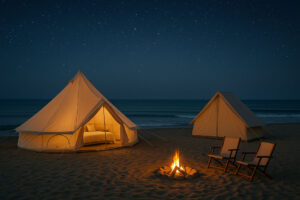 For many of us, the dream is simple: a tent or dome just a few steps from the sea. Zambales glamping has become almost iconic for this—think coves with pine-fringed beaches, starry skies, and bonfires by the shore. Domes and bell tents often face the water, so you wake up to that silvery pre-sunrise light spilling in through the zipper.
Batangas glamping, on the other hand, often mixes beach and reef. You might stay in a hut or tent above rocky shores where you can snorkel in the morning and nap in a hammock all afternoon. Farther north or south along Luzon, you’ll find similar setups: simple beach camps, small glamping resorts in the Philippines where kayaks wait by the sand, and almost-silent nights broken only by waves and the occasional late-night videoke from a neighbor’s house.
Mountain and River Glamping in Rizal and the Highlands
If you’re more “bundok” than “dagat”, mountain glamping near Manila is surprisingly accessible. In Rizal, you’ll find tents and A-frame cabins perched on ridges overlooking rolling hills and clouds. Some spots sit beside rivers where you can take cold plunges, grill fish, or join locals who are washing clothes at the shallow part of the stream.
Farther up in the Cordillera and Luzon highlands, eco lodges Philippines style might mean wooden guesthouses or tiny cabins with views of rice terraces. Nights are colder here; you’ll want layers, socks, and maybe a beanie. But the payoff is huge: sunrise turning the mountains gold, fog drifting up past your balcony, and the quiet of a town that still sleeps early. If you love this vibe, you might also enjoy browsing off-the-beaten-path Philippines escapes for more under-the-radar mountain communities.
Island Glamping in Palawan, Siargao, and Bohol
For longer trips, island hopping meets camping in Palawan glamping experiences—domes by limestone cliffs, beach cabins on far-from-town islands, or tents on sandbar-style shores. The scenery is dramatic, but the logistics are more complex: expect boat transfers, limited signal, and sometimes fixed meal times because everything comes from one small kitchen.
Siargao glamping often mixes surf culture and slow island life. You might stay in a boho-inspired tent under coconut trees, wake up before sunrise for the first surf session, then nap in a hammock while the afternoon rain drums on the roof. Bohol nature stays, meanwhile, can place you near rivers like Loboc or between the hills. Cabin-style or tiny-house stays are common here, with easy trips to waterfalls or quiet coastal areas. For many island lovers, this is glamping in the Philippines at its dreamiest.
How Much Glamping Costs in the Philippines (and What Comfort You Get)
One of the biggest questions people have is how much glamping in the Philippines usually costs—and what you can realistically expect at each price point. Prices change over time, of course, but here’s a general idea in pesos.
Budget (around ₱800–₱1,500 per person per night)
- Often simple tents or basic cabins with shared bathrooms.
- Usually fan-cooled, sometimes just natural ventilation.
- May or may not include breakfast.
- Best for friends used to rougher conditions who just want a more comfortable base than a DIY tent.
Midrange (around ₱1,500–₱3,500 per night for two)
- Better mattresses, thoughtful interiors, maybe fairy lights and rugs.
- Fan or aircon, with more solid walls (domes, cabins, or tiny houses).
- Often includes breakfast; some have simple dinner menus.
- This is where many “best glamping sites in the Philippines for first-time campers” tend to sit—comfortable without feeling overly fancy.
Higher-End (around ₱4,000–₱10,000+ per night)
- Larger spaces with private bathrooms, hot showers, stylish interiors.
- Often in more remote or scenic locations: private coves, hilltop estates, or secluded valleys.
- Frequently include breakfast, sometimes set menus or farm-to-table dining.
- Here, you start paying as much for design and photos as for actual function. That’s not always bad—but read reviews carefully to see if guests feel the experience matches the price.
Whatever your budget, look at photos closely and read reviews that mention noise, comfort of the bed, quality of bathrooms, and heat at night. Sometimes a simple fan-cooled kubo in a breezy spot is more comfortable than an airconditioned dome in a humid, windless field.
Best Time to Go and Weather Realities
Glamping resorts in the Philippines are deeply affected by the weather. Our dry and rainy seasons, plus the occasional typhoon, can make or break your trip.
Dry Season (roughly December to May)
- Best for beach-focused stays and island-hopping-based glamping in the Philippines.
- Hotter months (March to May) can make tents feel like ovens by late morning, so choose breezy sites, domes with ventilation, or cabins with fans/aircon.
- Bring light, breathable clothing and a reusable water bottle you can refill often.
 Rainy Season (roughly June to November)
- Lush landscapes, fewer crowds, and softer prices in some areas.
- Also: mud, leaks, slippery trails, and the real risk of storms, especially during typhoon peaks.
- Beachfront glamping can feel dramatic—waves crashing, wind howling—but make sure the property has solid safety plans and isn’t right at the waterline.
Mountain cabin stays are often nicest during the cooler months, when nights feel crisp and you can layer up. Always check the forecast before your trip and watch out for heavy rain warnings, especially if your route involves river crossings or rough, unpaved roads. When in doubt, message your host and ask directly if conditions are safe.
How to Choose Ethical, Eco-Conscious Glamping Stays
“Eco” is one of the most misused words in travel. Sustainable tourism in the Philippines should mean more than just bamboo decor and a green logo in the corner of a website. When you’re choosing a glamping resort in the Philippines that claims to be eco-friendly, look beyond the aesthetic and ask: what are they actually doing?
Here are some signs you’re booking an eco-conscious nature resort Philippines travelers can feel good about:
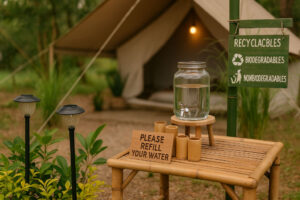
- Waste Management: Do they offer waste segregation? Refill stations instead of single-use water bottles? Reusable plates and utensils, or are they still handing out plastic spoons at every meal?
- Water and Energy: Do they mention saving water, using low-flow showers, or incorporating renewable energy like solar lights?
- Local Employment: Are staff from the local barangay or nearby town? Do reviews mention kind, well-treated staff?
- Respect for Communities: Are they built on land that respects indigenous rights and local customs? Are they fencing off beaches that locals used to access freely, or working with the community instead?
These questions connect to a wider conversation on sustainable tourism in the Philippines, and resources like the sustainable tourism in the Philippines overview from Tourism Knowledge Center can give useful context on why our travel choices matter.
As a guest, you can also practice eco-conscious travel yourself: follow Leave No Trace principles, avoid being noisy late at night, support local eateries and palengke stalls, and choose activities that benefit the community instead of exploiting it. For more everyday ideas, you can browse a Filipino guide to sustainable travel practices and a step-by-step guide on how to plan a sustainable summer getaway to help align your glamping trips with your values.
Packing, Comfort, and Safety Tips for Glamping
Glamping might be softer than traditional camping, but nature is still nature. A little preparation can make your stay more comfortable, safer, and lighter on the environment.
Packing Light but Smart
- Layers: Even in the tropics, nights in the mountains or by the sea can get breezy. Bring a light jacket, comfortable pants or leggings, and socks.
- Insect Protection: Mosquito repellent, citronella patches, or a gentle lotion can help. If you react strongly to bites, pack antihistamines.
- Light: A small headlamp or flashlight makes late-night CR trips easier than relying on your phone alone.
- Reusable Gear: Bring a reusable water bottle, utensils, and food containers for leftovers or snacks. This fits perfectly with smart packing tips and helps cut down on waste.
- Quick-Dry Towels and Clothes: Useful during rainy season or beach trips when nothing seems to fully dry.
Staying Comfortable in Heat, Noise, and Bugs
Heat and humidity can surprise first-time visitors to glamping resorts in the Philippines. Choose fan- or aircon-equipped units if you run hot, and look for mentions of shade and breeze in reviews. A small hand fan, mist spray bottle, or even a pamaypay from the palengke can make afternoons more bearable.
Noise is another reality: habal-habal engines on the road, neighbors chatting late, waves crashing a little too loudly, or early-morning roosters. Earplugs can be a sanity-saver, especially in more populated coastal barangays.
For bugs, avoid bright white lights near open tent flaps at night, keep food sealed, and wear light, long sleeves if you’ll be out after dark. Many eco lodges Philippines side also provide mosquito nets; use them properly and tuck them in around your mattress.
Safety for Solo Travelers, Couples, and Families
Nature stays in the Philippines are generally welcoming, but basic safety still matters, especially when choosing glamping over city hotels:
- Research the area: read reviews, and note comments on access roads, lighting, and how guests felt arriving at night.
- Check weather and local advisories, especially in typhoon season or when rivers might swell.
- Inform someone of your plans, especially if you’re heading somewhere more remote or off-grid.
- For families, ask about child-safe features: railings on loft beds or balconies, distance from steep drops or deep water.
- If you’re traveling solo and want more reflection on pacing, the art of slow travel—why I stopped rushing vacations is a good reminder to build rest and margin into your route.
Planning Your Own Glamping-Focused Itinerary in the Philippines
 Instead of hopping from hotel to hotel, you can design a whole trip around glamping and nature stays. Start with your travel window and budget, then mix near-Manila weekends with longer journeys further out.
One simple pattern looks like this:
- A Friday-to-Sunday stay at a glamping near Manila site—maybe a riverside tent in Rizal or a tiny house in Tagaytay.
- A few weeks or months later, a longer trip with island glamping in Palawan, Siargao, or Bohol, staying at least two or three nights in each place instead of rushing.
Slow travel fits glamping perfectly. Instead of cramming five destinations into a week, you linger: two nights in the same cabin, getting to know the rhythm of the tides or roosters; quiet afternoons reading on a veranda while rain taps the roof; conversations with staff about local life. If this resonates with you, you might enjoy reading more about the art of slow travel to inspire your pace.
For those who love hidden corners, you can combine glamping with ideas from off-the-beaten-path Philippines escapes—maybe spending a few nights in a simple homestay-run eco camp near a lesser-known beach or mountain village. Build in weather flexibility, expect rough roads, and allow yourself days that are just about hammocks, card games, and listening to the wind.
Glamping in the Philippines: Quick FAQs
What does glamping in the Philippines feel like compared to traditional camping?
Compared to pitching your own tent, glamping Philippines experiences are softer: you get a real bed, access to bathrooms, and at least basic electricity. But you still feel the elements—heat, wind, rain, insects, and the music of the barangay. It’s closer to sleeping in a very simple nature-focused guesthouse than to a full-service city hotel.
What types of glamping and nature stays are available, and who are they best for?
You’ll find tents and domes (great for couples or friends who want that Instagram-friendly camping vibe), mountain cabin stays (ideal for families or those who prefer solid walls), treehouse stays Philippines style (for adventurous guests who love views), homestay-run eco camps (for travelers who value local connection), and higher-end eco-resorts (best for special occasions and those who prioritize comfort and design).
Where should I go for beaches, mountains, or cooler weather?
For beaches, look at Zambales glamping, Batangas glamping, and island stays in Palawan or Siargao. For rivers and hills close to the city, Rizal glamping is a popular choice. For cooler weather, Tagaytay glamping or cabins in the Cordillera and Baguio area are your best bet. If you’re overwhelmed, you can cross-check ideas with the best weekend getaways near Manila list and pick what fits your style.
How much does glamping generally cost, and what comfort level can I expect?
Budget stays around ₱800–₱1,500 per person per night usually mean simple tents and shared bathrooms. Midrange around ₱1,500–₱3,500 per night for two gives you nicer beds, decor, and sometimes aircon. High-end options at ₱4,000–₱10,000+ per night offer private baths, elevated design, and more curated experiences. Read recent reviews to see whether past guests felt they got good value or were mostly paying for the photo.
What’s the best season for glamping, and how do I avoid bad weather?
Dry season is safest for beaches and islands, but can be hot. Rainy season brings lush landscapes and quieter sites but also mud, leaks, and typhoon risks. Always check forecasts, consider travel advisories, and be ready to move dates—nature doesn’t run on our schedule.
How do I avoid “greenwashed” stays and choose truly eco-friendly options?
Look for clear information on waste management, water and energy use, local employment, and community engagement. Check if guests mention good practices in reviews. Compare what a place claims with what you know about responsible tourism and sustainable tourism in the Philippines, and favor stays that are transparent and honest about both their efforts and limitations.
What safety tips matter for solo travelers, couples, and families?
Regardless of who you’re with, share your itinerary, arrive before dark when possible, and keep valuables minimal. Solo travelers might choose more established camps with multiple reviews, while families should ask about child-safe layouts. Coupled-up guests should still remember basic precautions—locks, lighting, and location matter as much in a tent or cabin as in any guesthouse.
What should I pack to balance comfort and a lighter footprint?
Focus on reusable items (bottles, utensils, containers), quick-dry clothing, insect protection, and a small headlamp. Pack only what you’ll use so you’re not overwhelmed by stuff. If you want to refine your approach, pairing your plans with tips from sustainable travel guides helps you build habits you can carry into future trips.
In the end, comfort without losing the magic is exactly what makes glamping in the Philippines special. You get soft sheets instead of a thin mat, a warm shower instead of a cold-bucket surprise, and maybe even coffee delivered to your veranda at sunrise. But you also get the real soundtrack of the countryside: wind, rain, waves, distant roosters, tricycles on the road, and kids laughing by the shore. When you choose glamping sites in the Philippines that honor the land and communities who host you, you’re not just booking a cute tent—you’re saying yes to a way of traveling that’s soft, wild, and deeply connected to place.