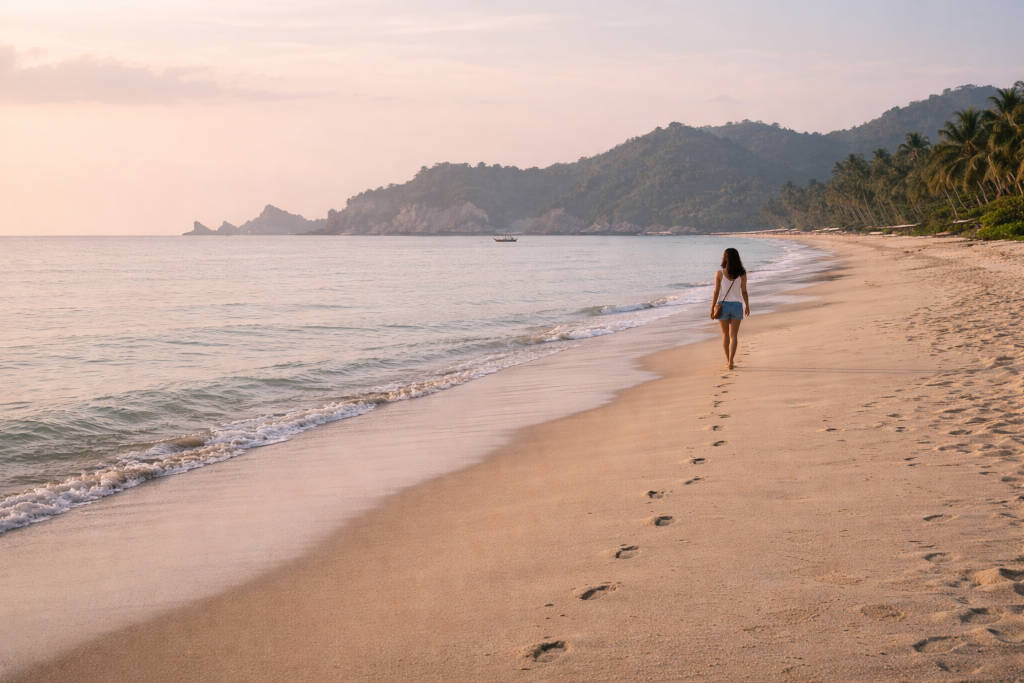
Rest days in Zambales are usually less about “finding attractions” and more about staying comfortable between check-out times, long commutes, and your next beach plan. This guide focuses on Free Things to Do in Zambales that are realistic without tours—meaning short walks, easy loops near town centers, and small decisions that protect your energy in the heat.
If you’re building your itinerary from scratch, start with Trip Planning Guide for First-Timers so your rest day fits your transport schedule (not the other way around).
At-a-Glance
 Best time window: Early morning (before 8:00 AM) and late afternoon (after 4:00 PM). Midday is for shade, naps, and short indoor stops.
Realistic travel time: Even “nearby” can mean 15–30 minutes by tricycle plus waiting time. If you’re on a highway corridor (San Felipe, San Narciso, Castillejos), factor road crossings and limited sidewalks.
Budget band: Free-to-cheap works best when you cap transport and comfort buys. Plan a small “friction fund” for tricycle rides, water refills, and snacks.
Crowd and traffic risk: Weekends and holidays can feel busy in Subic, Olongapo, and Liwliwa. Markets and baywalk areas get crowded late afternoon.
Rain/heat backup: If it’s too hot or unstable, switch to a market loop, a shaded plaza sit, or a quiet cafe reset—then do your outdoor walk near sunset.
What “Free” Really Means in Zambales
In Zambales, “free” usually means the activity itself has no ticket—like a beach walk, town plaza loop, or church stop. But you still pay for the parts that make the day workable: short rides, water, and small convenience costs. On a rest day, these small costs matter because they can quietly add up and eat your time.
Reality Check: A “free” plan can still feel stressful if you’re forced into a long, hot walk because transport is limited where you’re staying.
Small costs you may still pay (transport, parking, environmental fees, donations, comfort buys)
These are common small expenses that show up even on low-key days:
- Tricycle or jeep rides: Short rides save energy, especially under a high heat index. Expect waiting time in quieter barangays.
- Parking fees: If you have a car or scooter, beach access points and some public areas may have small parking collections.
- Environmental fees or access collections: Some coastal entry points collect small fees. If you’re only walking a short shoreline section, ask first so you don’t pay for something you won’t use.
- Church donations: Not required, but bringing small bills is practical if you want to contribute.
- Comfort buys: Water refills, fruit, electrolyte drinks, and a simple merienda. These can be “worth it” if they prevent heat stress.
If you want a realistic sense of daily costs across different travel styles, use Philippines Travel Budget Examples as a baseline, then adjust for short rides and extra hydration in Zambales.
Quick decision rule: walk vs ride vs skip
Use this simple rule before you commit:
- Walk if it’s under 20 minutes one-way, has shade or safe sidewalks/shoulders, and you’re outside peak heat hours.
- Ride if the route crosses fast highways, lacks shade, or you’ll arrive already sweaty and tired (especially before a long bus trip).
- Skip if rain is building, crowds are heavy, or you’re forcing a detour that will steal your rest—save it for a day you can actually enjoy.
Free Things to Do in Zambales: Free and Cheap Rest Day Ideas You Can Do Almost Anywhere
Think of this section as “good enough” ideas that fit most towns—Subic, Olongapo, Iba, San Antonio, San Felipe, and even smaller areas—because they rely on public spaces and short loops, not tours.
Reality Check: Some beaches can be narrow, rocky, or have washed-up trash depending on tides and season. A short, well-timed walk still counts as a win.
Sunrise or late-afternoon beach walk (timing rules, footwear, tide and trash reality)
For comfort, aim for sunrise or late afternoon. Midday sand glare and heat can feel punishing, especially if you’re carrying a bag after check-out.
- Timing rule: Start early (cool air, fewer people) or go late (soft light, calmer pace).
- Footwear: Bring sandals with grip or light sneakers. Some shoreline sections have sharp shells, rocks, or uneven concrete edges.
- Tide and shoreline reality: A high tide can shrink your walking space. If you see debris, keep your loop short and stick to cleaner sections near maintained access points.
Town plaza and church stop (quiet minutes, shade breaks, respectful clothing)
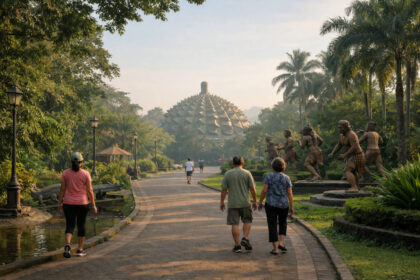
 A town plaza is one of the easiest rest-day anchors: shade, benches, and a natural “pause” without paying for anything. Pair it with a quick church visit for a cooler indoor reset.
- Respect cues: Keep clothing modest (especially inside churches). Move quietly and avoid blocking pathways.
- Shade-first pacing: Use the plaza as a recovery stop between short errands (ATM, water refill, market).
Public market browse for merienda and fruit (cheap, practical, quick)
Public markets are practical rest-day stops because they solve real problems: fruit for the bus ride, bread for merienda, and sometimes an inexpensive meal without committing to a long sit-down.
- What to look for: Bananas, mangoes (seasonal), local kakanin, and easy-to-carry snacks.
- Comfort tip: If you’re commuting later, buy something that won’t leak in your bag and pack tissues for sticky hands.
Sunset viewing and simple shoreline reset (short, low-energy)
If you only do one outdoor thing, make it sunset. It’s naturally lower effort: you can sit, breathe, and watch the light shift without needing a “destination.”
Tradeoff: Popular shoreline spots can get busy at golden hour, especially in Liwliwa and town baywalk areas. Go a bit earlier to claim a comfortable spot.
Photo walk with a “one loop only” rule (avoid overheating)
A photo walk is an easy way to enjoy a place without over-planning—just keep it bounded.
- One-loop rule: Choose a loop you can finish in 30–45 minutes, then stop. No “one more street” during peak heat.
- Best subjects: Tricycle lines, signage, market color, church facades (from a respectful distance), and soft shoreline textures.
Clear list of realistic free or cheap activities (keep it practical)
- Short beach walk during cooler hours (not midday)
- Sunset viewing from a calm, accessible shoreline spot
- Town plaza loop and shaded sitting break
- Heritage church visit and a quiet cooldown inside
- Public market browse for fruit and merienda
- Window-shopping loop with a spending cap rule (or a no-buy rule)
- Photo walk with a single-loop boundary (avoid long exposure)
- Early dinner instead of late-night wandering (safety and rest)
- Simple journaling or planning hour for the next day (reduces stress)
- Pack, laundry, device charging, and budget check as a “rest activity”
- Optional cheap comfort buys that help recovery (water, fruit, electrolyte drink)
Low-Key Ideas by Base Area
This section helps answer the big rest-day question: “Where can I do this without planning too much?” The easiest bases are the ones with walkable clusters—plaza, market, church, and a shoreline or baywalk-style area within a short ride.
Reality Check: Outside town centers, distances can be deceiving. A map may show “near,” but the walking route may be hot, shoulder-only, or uncomfortable.
Subic and Olongapo: easy sidewalks, public spaces, window shopping, quick coffee breaks (not a spending day)
Subic and Olongapo are among the easiest places for a no-plan rest day because you can find sidewalks, shaded areas, and practical stops (shops, water, bathrooms) without committing to an attraction.
- Doable rest-day loop: Short walk + window-shopping + shaded sit.
- Spending guardrail: Decide your rule before you go: no-buy, or a small cap. If you want a focused “buy list” instead of impulse shopping, use Souvenir Shopping in Zambales as a reference.
San Felipe and Liwliwa: short beach time blocks, shade-first pacing, early/late timing
Liwliwa and nearby San Felipe areas are best for simple beach resets—short walks, sitting breaks, and early/late timing. Keep your plan minimal so you don’t turn “rest day” into a long day under the sun.
- Best rhythm: Early beach walk, long shade break, late-afternoon sunset.
- Tradeoff: Weekends can be busy, and midday heat can feel intense on open sand. If you’re tired, treat the beach as a “look and sit” place, not a “walk forever” place.
San Antonio and Pundaquit: port-side views, market prep if doing a cove later, short local strolls
San Antonio and Pundaquit are practical if your bigger plan is a future island/cove day. Your rest day can be a light prep day: short port-side views, a quick market stop, and an early night.
- Keep it local: Do one short stroll near the port area, then return to rest.
- If you’re deciding whether to pay later: Read Zambales Island Camping and Coves Guide when you have time, then commit on a day you can actually start early.
Iba: low-effort heritage stops and short-town loop (church and nearby markers)
Iba works well for a low-effort town loop: plaza, church, small local markers, and market stops without long detours. For current local references and updates, check Iba Tourism before you set expectations about what’s open.
Comfort note: Plan a shaded reset after your loop. Even a short walk can feel heavier in humid weather.
If you’re farther north or rural: keep it simple (one stop, one meal, back to rest)
If you’re staying in a quieter, more rural area, “free” plans are best when they’re small: one scenic stop, one practical errand, and then back. Your goal is recovery, not coverage.
If you unexpectedly have extra energy, keep it low-stakes and close—browse Zambales Hidden Gems and pick only one nearby idea that won’t add long transport time.
When Paying Is Worth It (And When It’s Not)
A rest day is the wrong day to prove you can “do it all.” Paying a little can be smart when it reduces friction—especially if it prevents heat stress or keeps your bags secure.
Reality Check: The hidden cost is time. A cheap detour can still become expensive if it triggers missed buses, long waits, or a tired travel day.
Worth paying if: it saves unsafe walking, prevents heat exhaustion, or turns a chaotic day into a smooth one
Pay when it solves a real problem:
- A short tricycle ride that avoids a fast highway shoulder
- Storage fees that let you walk without dragging a backpack in the heat
- A simple shaded stop (even a modest drink) when you need to cool down safely
Not worth paying if: you’re tired, the weather is unstable, or transport/queues will eat your rest day
Skip paid plans if they introduce uncertainty:
- Long travel to “see one spot,” then rushing back
- Peak-hour queues that turn your day into waiting
- Weather that could cancel your main reason for going (rough seas, on-and-off heavy rain)
Examples of “pay to reduce friction” (short tricycle rides, secure storage, day pass only if you will actually use it)
- Short rides: Use tricycles for the hottest stretch of the day, then walk only in cooler hours.
- Secure storage: If you’re between check-out and travel, storage can make the whole half-day calmer.
- Day pass (only if true): Consider it only if you will actually use showers, shade, and facilities for several hours—not just to “enter and take photos.”
Examples of “skip today” (long treks, crowded peak-hour attractions, far detours)
- Long treks under a high heat index
- Overcrowded weekend hotspots when you’re already depleted
- Far detours that risk missed rides or late arrivals
Walking-Day Safety Notes for Zambales
 Most rest-day plans are walking plans. Keeping them safe is mostly about timing, road choices, and not pushing through discomfort. For a broader safety framework, read Travel Safety in the Philippines and apply the parts that fit your base area.
Reality Check: Some roads have limited sidewalks. Even if traffic feels “not that fast,” the shoulder can be narrow and stressful for long walks.
Daylight rule, road-shoulder rule, and buddy rule
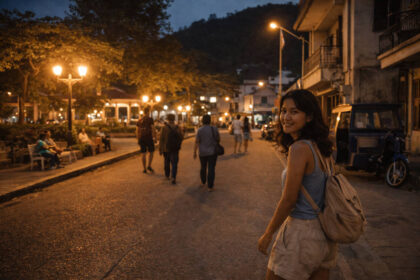
- Daylight rule: Do your walking loops in daylight. If you want night food, take a short ride and keep it close.
- Road-shoulder rule: If there’s no sidewalk and the shoulder is narrow, treat it as a “ride” route—not a walking route.
- Buddy rule: If you’re unsure about an area, walk with a companion or keep your route within busy, well-lit zones.
Belongings and cash: what to bring, what to leave
- Bring: Small cash in mixed bills, one card if needed, a charged phone, and a copy/photo of key IDs.
- Leave: Extra cards, excess cash, and anything you’d regret losing on a crowded baywalk or market day.
- Bag choice: A small crossbody worn in front is usually easier than a backpack in crowds.
Water, shade, and breaks: preventing heat stress
Heat management is the difference between a calm rest day and a miserable commute day.
- Drink before you feel thirsty.
- Use shade breaks on purpose (churches and plazas are useful for this).
- Wear a cap, light layers, and comfortable footwear.
What to do if you feel unwell (cool down, hydrate, ride back, do not push)
If you feel dizzy, unusually tired, or headachy: stop, find shade, cool your neck/wrists, and hydrate. If you don’t improve quickly, take a ride back. Don’t force a “last stop” just to finish your loop.
Heat and Rain Planning Tips
Zambales weather can swing between intense heat and quick rain. Planning for comfort is not overthinking—it’s what keeps your day functional.
Reality Check: Even short outdoor tasks can feel harder when humidity is high. Build a slower pace than you think you need.
Best walking windows (early morning and late afternoon)
Plan outdoor time in the first two hours after sunrise, and again late afternoon. Put errands, packing, and seated breaks in the middle of the day.
Use the heat index to decide your schedule (link to PAGASA heat index)
Before you head out, check PAGASA Heat Index. If the heat index is high, shorten your loop and shift walking to early/late windows. Treat midday as recovery time, not exploration time.
Rainy day backups (market loop, quiet cafe time, indoor reset, early dinner)
 If it’s raining steadily, don’t try to “squeeze” a beach walk. Do a quick market loop between showers, then choose a sheltered reset: a warm drink, a calm meal, and an early dinner so you can pack and sleep.
Sea conditions and “don’t force it” rule for coastal plans
If your plan depends on sea conditions (boat rides, exposed shorelines), keep a strict “don’t force it” rule. A rest day is allowed to be boring—especially if it protects your next travel day.
Simple Half-Day Rest Plan (Pick One)
These half-day plans are designed for common Zambales timing problems: late check-out, waiting for a bus, or needing recovery after a beach day. Each plan keeps you close to your base and avoids far detours.
Reality Check: Your best plan may be the one that ends early. A calm half-day can feel better than squeezing in one more stop.
Plan A Hot and Sunny Half-Day (early walk, shaded stop, slow lunch, nap, sunset)
- 6:30–7:30 AM: Short beach walk or quiet street loop (one-loop rule).
- 7:30–8:30 AM: Market fruit and a simple merienda; refill water.
- 9:00–11:30 AM: Shade-first reset (plaza sit or church cooldown), then back to your stay.
- 11:30 AM–3:30 PM: Slow lunch, shower, nap, charge devices, pack.
- 4:30–5:45 PM: Sunset sit—short, low-energy, close to your base.
Plan B Rainy Half-Day (market, sheltered short loop, warm drink, early dinner, pack)
- Morning: Market loop during a lighter patch of rain (keep it quick).
- Late morning: Sheltered reset (quiet cafe time or covered seating) and a warm drink.
- Afternoon: Pack, laundry, budget check, and device charging.
- Early evening: Early dinner close to your stay, then rest.
Plan C Between Check-Out and Travel (bag storage, one nearby loop, no far detours)
- Step 1: Secure your bag (ask your accommodation or find a safe option nearby).
- Step 2: Choose one nearby loop only: plaza + church, or market + short baywalk.
- Step 3: Set a hard return time (at least 60–90 minutes before departure) to avoid rushing.
- Step 4: Hydrate and cool down before the commute—your travel time will feel easier.
FAQ
Is it safe to walk in Zambales at night
It depends on the area. Subic and some parts of Olongapo can feel more structured, while rural roads can be dark with limited sidewalks. For rest days, follow a simple rule: do your walking loops in daylight, and use short rides at night if you need to go out for food.
How much cash should I carry for a mostly free day
Carry enough for short rides, snacks, and small fees—without bringing your full budget. A practical approach is to keep small bills for tricycles and markets, plus a little buffer for “pay to reduce friction” moments (like a ride back if you feel unwell).
What are the most realistic free activities if I’m not doing coves
The most realistic options are the simplest: a cooler-hour beach walk, plaza sitting breaks, a heritage church visit, a public market browse, and a sunset sit. These are the core of Free Things to Do in Zambales that don’t depend on tours or perfect weather.
Which town is easiest for a low-effort rest day
Subic and Olongapo are often easiest for no-plan days because sidewalks and practical stops are more available. Iba can also be low-effort if you stay near the town center. In San Felipe and Liwliwa, rest days work best when you stick to short beach time blocks and avoid midday walks.
What time should I do a beach walk in Zambales
Go early morning or late afternoon. Avoid midday, especially in the dry season when heat builds fast. If it’s humid or the heat index is high, shorten your walk and prioritize shade and hydration.
Closing Notes and More Zambales Reads
The calmest rest day is usually the one that stays close: one short loop, one practical stop, and enough time to cool down before your next commute. If you treat comfort as part of the plan—not an afterthought—Free Things to Do in Zambales become genuinely restorative instead of just “things to fill time.”
For more ideas around the province, browse Zambales Travel Guides and Zambales Travel Guide. For broader planning help, you can also explore Tips and Inspiration.