Some of the most moving moments in my travels have taken place beside the sea—those quiet in-betweens when the tide shifts, the light softens, and families begin preparing food in the same way their parents and grandparents once did. Across the archipelago, fisherfolk hold stories that live far beyond recipes. These are the tales of weather-worn hands filleting fresh catch at dawn, of mothers tending to fires on sandy shores, of children learning the language of waves long before they learn to read. These are the rhythms that shape fisherfolk food stories—narratives woven from salt, smoke, memory, and care.
In small coastal barangays, food is never just food. It is identity, survival, tradition, joy, grief, and resilience all at once. And as I followed fisherfolk from morning markets to shoreline kitchens, I found myself stepping into a world where every dish is tied to a moment, a belief, or the sea itself. This is a journey into their stories—stories told through cooking, through laughter, through the quiet pride of families who continue to shape the Philippines’ coastal heritage. All of these moments are part of the wider tapestry of fisherfolk food stories that define the archipelago.
Cooking with Fisherfolk: Stories from the Philippine Coast
Dawn at the Shore: Where Food and Memory Begin
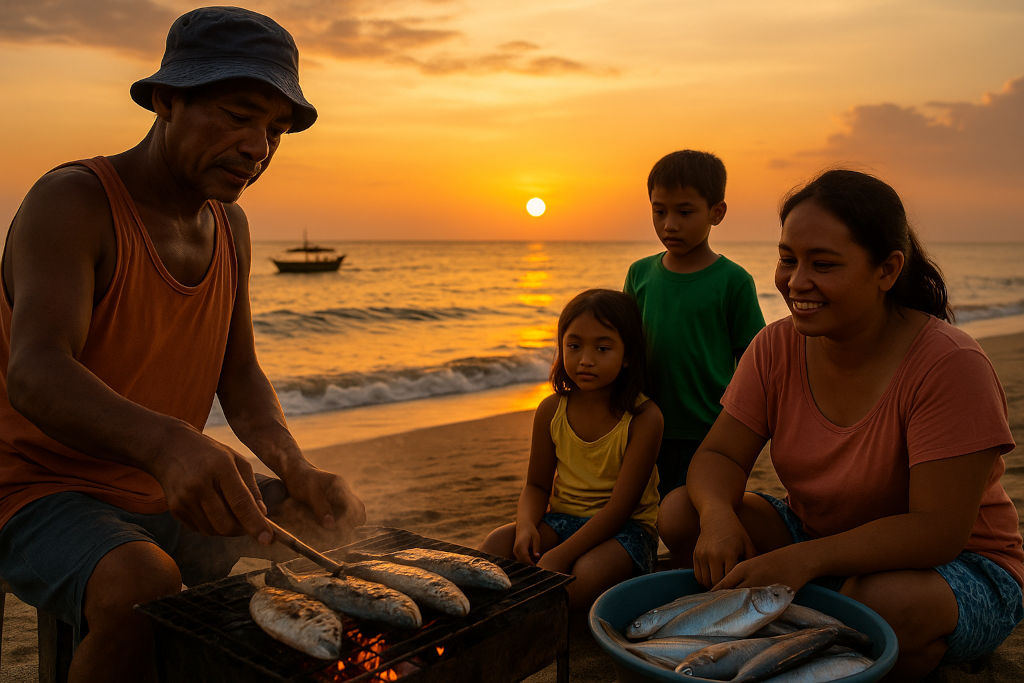
Along the coasts of Quezon, Bohol, Leyte, Palawan, and countless islands, days begin before the sun. The horizon is still dark blue when fishermen return from the water, their bancas gently knocking against each other as they unload the morning’s catch. Nearby, wives and daughters prepare tables on the sand, sorting fish by size, color, and type—a method learned through years of repetition and silently passed through generations. Every shoreline has its own fisherfolk food stories waiting with the morning catch.
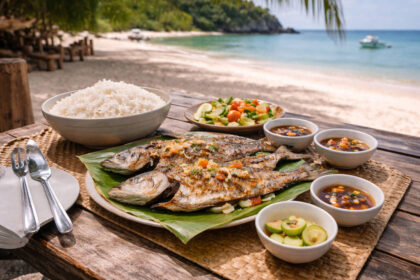
It’s here where many ask: what makes coastal Filipino cooking special? The answer is in its simplicity. Fisherfolk cook with what the sea offers at that exact moment—kitang, danggit, malunggay snails, tiny shrimp, octopus, seaweed, or sometimes only the humblest fish, fried crisp and shared with steaming rice. In these villages, fisherfolk food stories are told with whatever the tide brings.
I once watched a lola in Baler prepare kinilaw in the gentlest way: slicing fish with practiced precision, squeezing calamansi in one hand, and telling her granddaughter how storms shaped the recipes of their elders. She talked about the year when “adaptation turns fisherfolk into farmers” after typhoons devastated their fishing grounds. They planted root crops, cooked with whatever vegetables survived, and transformed their coastline cuisine into something new. Even now, she mixes fish with cassava or taro—an edible memory of resilience, and one of the many fisherfolk food stories she passes down between knife strokes and raindrops.
Fire by the Shore: Ancestral Ways of Preparing the Sea’s Gifts
There is magic in cooking beside the sea. Driftwood fires crackle in the breeze. The air shifts between salty, smoky, and sweet. Children gather dried coconut husks while elders clean fish on large wooden boards. Meals become communal, open, honest—no walls, no rush, just people and the ocean. In these scenes, fisherfolk food stories turn into living rituals shared in real time.
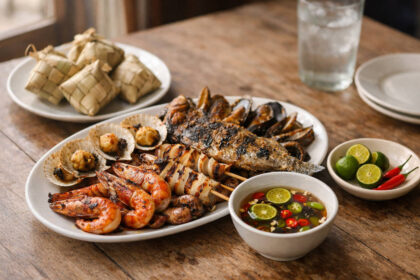
The flavors born here can never be replicated in a restaurant. Grilled squid stuffed with tomatoes and ginger picks up the faint scent of the sea breeze. Tinola made with freshly caught maya-maya tastes brighter, almost sweeter, when cooked beside the tide. Even the simplest inihaw na isda becomes a celebration. Each bite feels like another chapter in the ongoing fisherfolk food stories of the community.
In Sorsogon, I joined a family preparing a dish taught by their great-grandfather: fish wrapped in banana leaves and buried beneath hot stones. As we waited, the father told me about “climate adaptation turns fisherfolk,” describing how each generation learns to adjust—to shifting currents, warmer waters, and migrating fish. Their recipes evolve too, shaped by environmental changes but anchored in memory, creating some of the most vivid fisherfolk food stories I have ever heard.
As we ate, he mentioned that their story would fit perfectly into the growing movement of “fish storytelling at terra madre,” where food producers worldwide share traditional knowledge on global stages. It reminded me of “slow fish storytelling at terra,” a celebration of cooking traditions that resist the erasures of modern life and give space for fisherfolk food stories to be heard beyond their shorelines.
Emotional Recipes: Love, Loss, and the Sea
Every coastal community carries at least one dish tied to a love story, a loss, or a survival tale. These emotional recipes are the heart of fisherfolk food stories—never written down but always remembered. They are cooked during fiestas, funerals, reunions, and quiet Sundays. They are dishes that soothe grief, strengthen bonds, or mark the return of someone who’s been away too long.
One mother in Iloilo shared her recipe for linabog na hipon, explaining that she prepares it whenever her sons come home from fishing during storm season. “We do not talk about our fears,” she said, stirring ginger broth over a clay stove. “We talk through food.” The dish, simple and fragrant, carried a tenderness that lingers even now, one of those fisherfolk food stories that says everything without needing words.
In Pangasinan, a young fisherman told me he learned to cook pinaputok na tilapia the same day he learned how to mend nets. He said his father’s version always tasted slightly smoky—something he only realized as an adult came from a secret: his father added a small piece of driftwood to the coals for scent. Now he teaches the same trick to his own children, making sure their fisherfolk food stories continue with every new generation.
To understand these recipes is to understand the people behind them. Their dishes are shaped by storms survived, seasons endured, and communal celebrations that outlive hardship. Listen closely during community meals and you will hear fisherfolk food stories in every shared bowl and pot.
For travelers wanting to connect more deeply with local food traditions, coastal cooking workshops are slowly emerging across the country. Some are led by community groups; others are informal family gatherings where you’re treated not as a tourist but as a relative. Joining these sessions lets visitors respectfully step inside fisherfolk food stories instead of just observing from afar. These are some of the most transformative cultural experiences you can have—ones that echo long after the waves recede.
If you’re curious about exploring more cultural traditions across the Philippines, Bakasyon.ph features moving stories about local communities, such as their guide to cultural immersion with Filipino families, a natural companion to the intimate fisherfolk food stories unfolding in coastal barangays.
Beyond the Philippines, an insightful global perspective on food heritage can be found in the principles of the Slow Food movement, which highlights the importance of protecting traditional recipes and community-based foodways, giving global recognition to fisherfolk food stories that might otherwise fade.
In the end, the most powerful lessons I learned from fisherfolk food stories had nothing to do with techniques or measurements. They were about presence, gratitude, and the quiet ways people pass down love. Coastal cooking reminds us that food connects generations, heals communities, and brings people home—even if only for a meal.